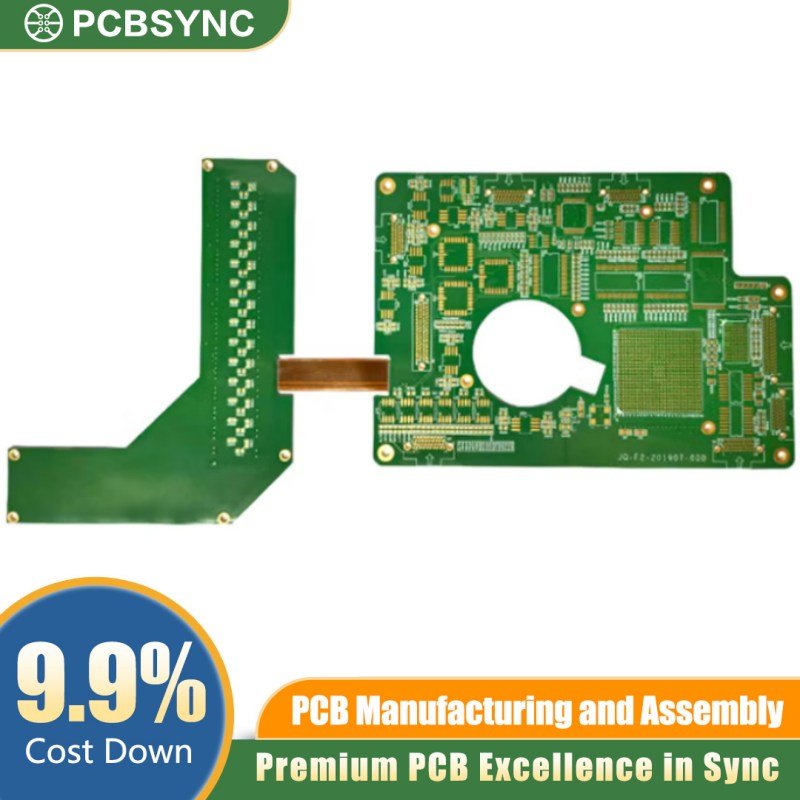
When designing antenna systems for modern wireless communications, material selection directly impacts signal integrity and overall performance. The Rogers RO4350B substrate has become an industry standard for RF and microwave applications, offering exceptional electrical properties combined with cost-effective manufacturing processes.
Understanding Rogers RO4350B Material Properties
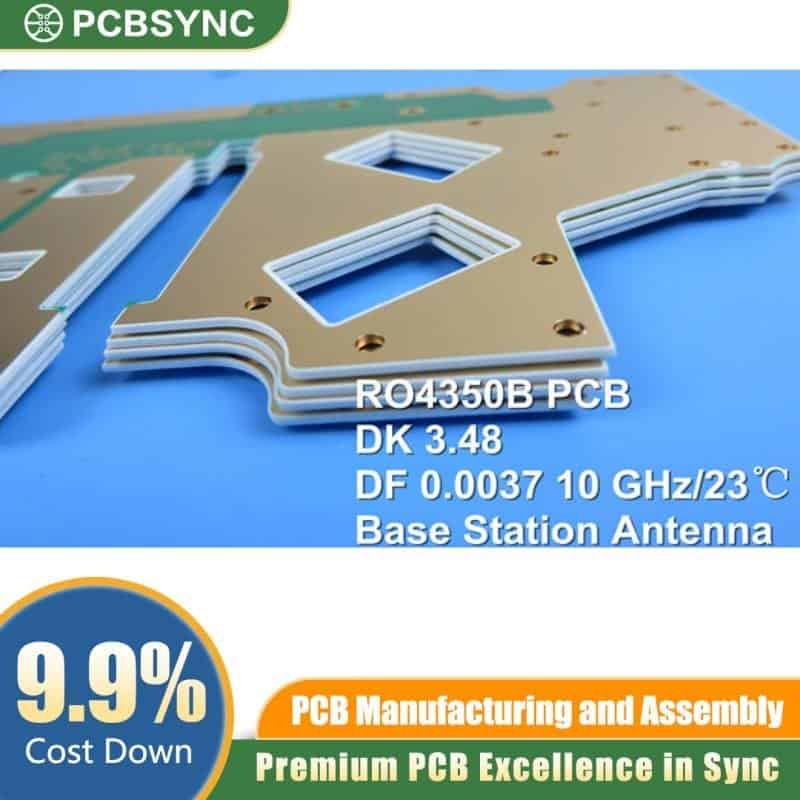
Rogers RO4350B belongs to the hydrocarbon ceramic laminate family, engineered specifically for high-frequency circuit applications. This material maintains a stable dielectric constant of 3.48 across a wide frequency range, which is critical for antenna designs requiring consistent performance. The low dissipation factor of 0.0037 at 10GHz minimizes signal loss, making it ideal for applications where every decibel matters.
The 1.8mm thickness specification provides mechanical stability while maintaining manageable impedance control for antenna feed lines and matching networks. This thickness strikes an optimal balance between structural integrity and electrical performance, particularly for outdoor antenna installations that must withstand environmental stress.
Heavy Copper Construction Benefits
The 3oz copper weight specification significantly enhances current-carrying capacity and thermal management. For antenna PCBs, this heavy copper construction offers several advantages. First, it reduces conductor losses at high frequencies, improving antenna efficiency and radiation patterns. Second, the increased copper mass provides better heat dissipation, essential for power amplifier stages and active antenna systems.
Heavy copper also improves mechanical durability during assembly and field installation. The robust traces resist damage during connector soldering and can better withstand the thermal cycling that outdoor antennas experience throughout their operational lifetime.
ENIG Surface Finish Advantages
Electroless Nickel Immersion Gold (ENIG) finish represents the premium choice for RF applications. The nickel layer provides excellent corrosion resistance and creates a flat, uniform surface for component mounting. The thin gold layer ensures optimal solderability and maintains low contact resistance for RF connectors.
For antenna PCBs specifically, ENIG offers superior performance compared to alternative finishes. The flat surface minimizes skin effect losses at microwave frequencies, while the gold layer prevents oxidation that could degrade connector interfaces over time. This finish also supports wire bonding when required for specialized RF components.
Two-Layer Design Optimization
The 2-layer stackup configuration provides sufficient routing flexibility for most antenna designs while maintaining cost efficiency. The top layer typically accommodates the radiating elements and feed network, while the bottom layer serves as a continuous ground plane. This arrangement creates a well-defined reference for controlled impedance transmission lines and minimizes unwanted radiation from feed structures.
A solid ground plane also improves antenna performance by providing a stable reference for radiation patterns and reducing back-lobe radiation. For applications requiring specific polarization characteristics or directional patterns, the 2-layer approach offers adequate design freedom without the complexity and cost of multilayer constructions.
Application Scenarios
This PCB specification suits various antenna applications including 5G base stations, satellite communications, radar systems, and IoT wireless modules. The Rogers RO4350B material handles frequencies from several hundred MHz to millimeter-wave bands, making it versatile for both legacy and emerging wireless standards.
The combination of stable electrical properties, heavy copper construction, and premium surface finish ensures reliable performance in demanding environments. Whether deployed in telecommunications infrastructure or aerospace applications, this PCB configuration delivers the consistency and durability that professional RF engineers require.