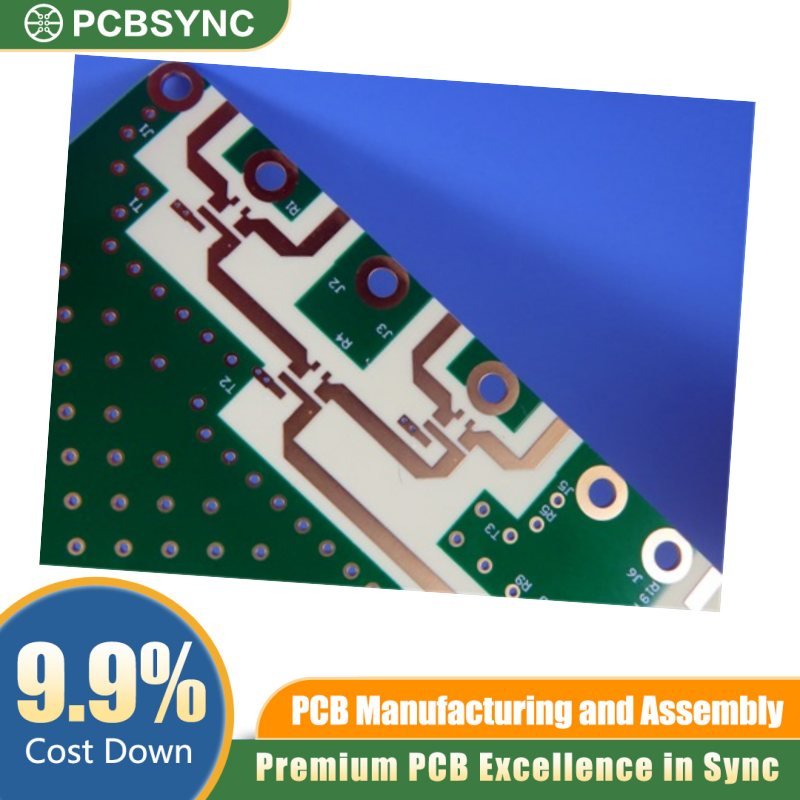
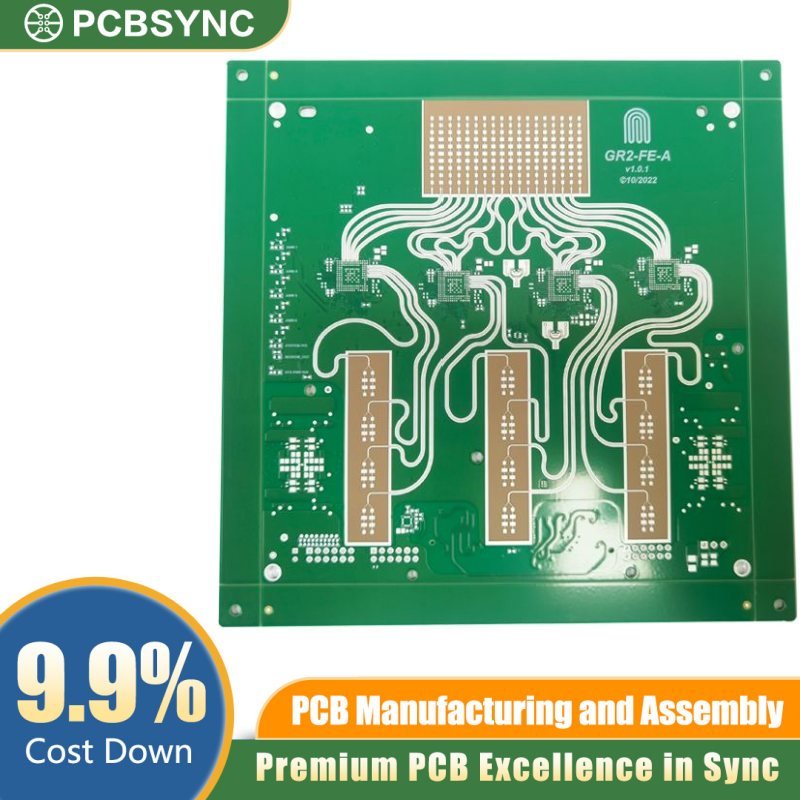
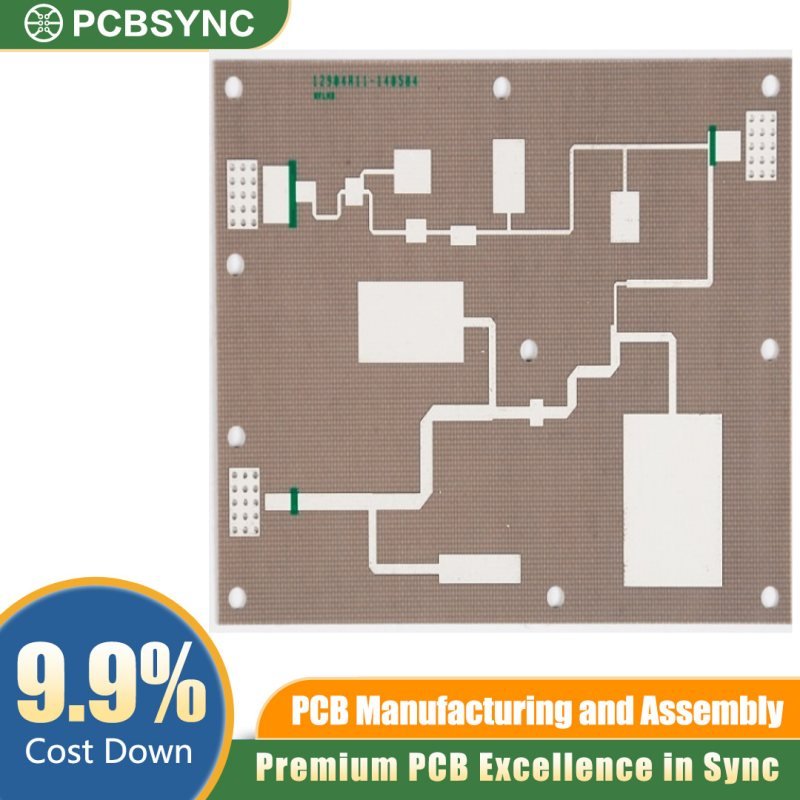
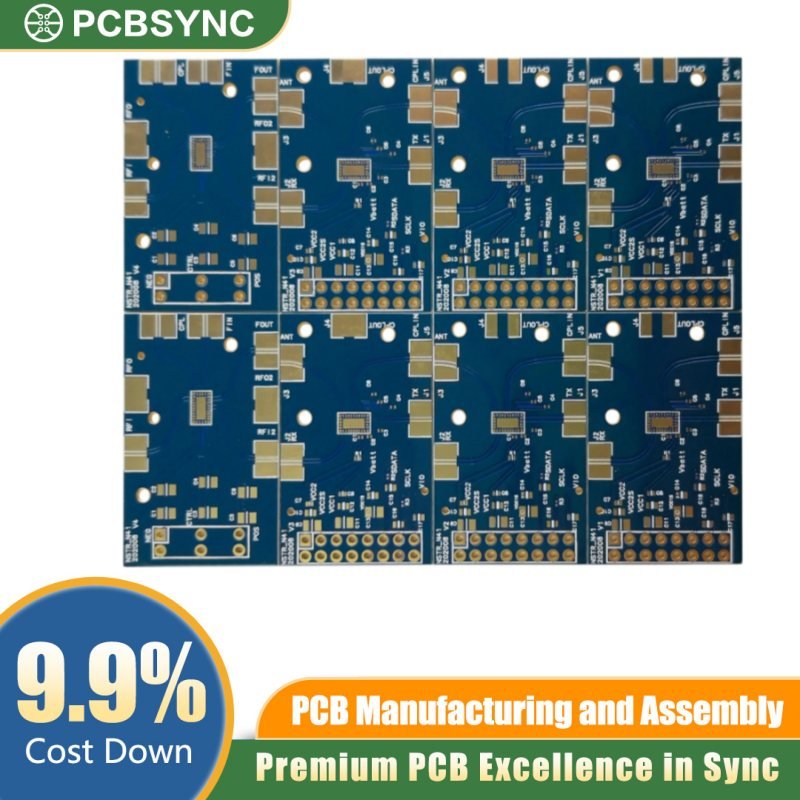
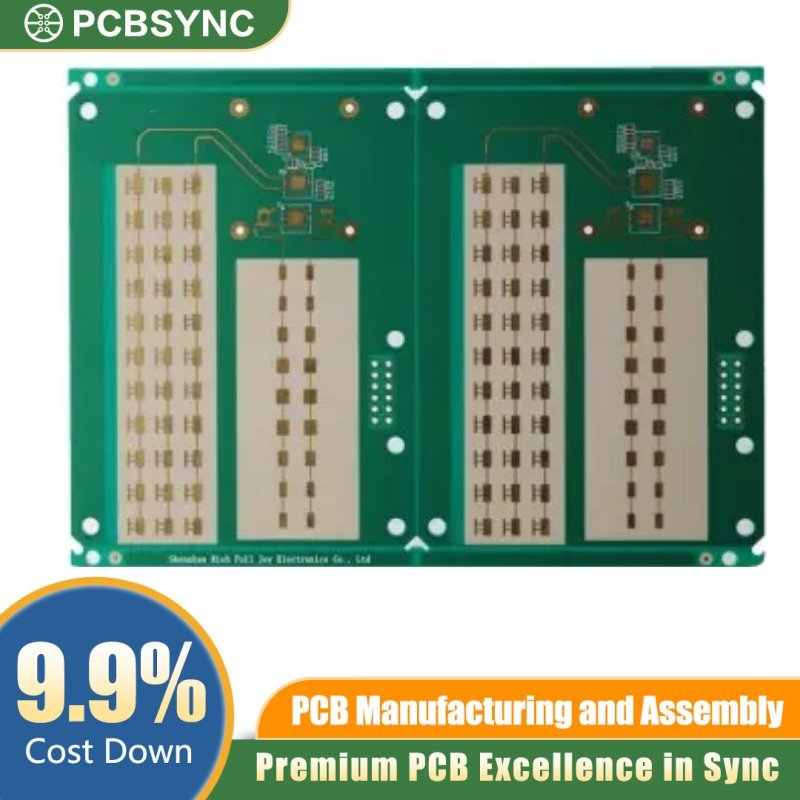
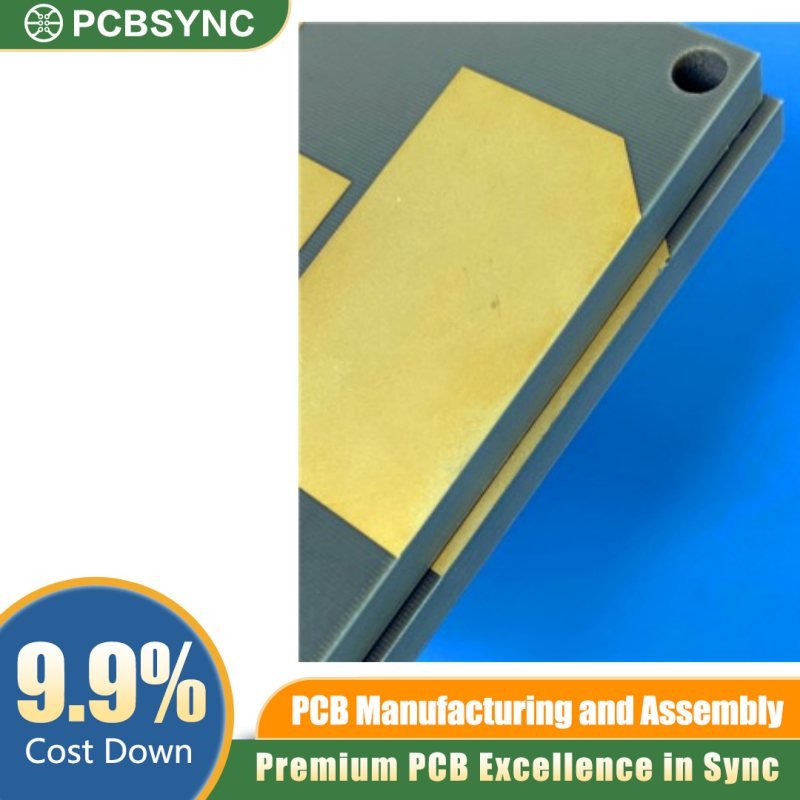
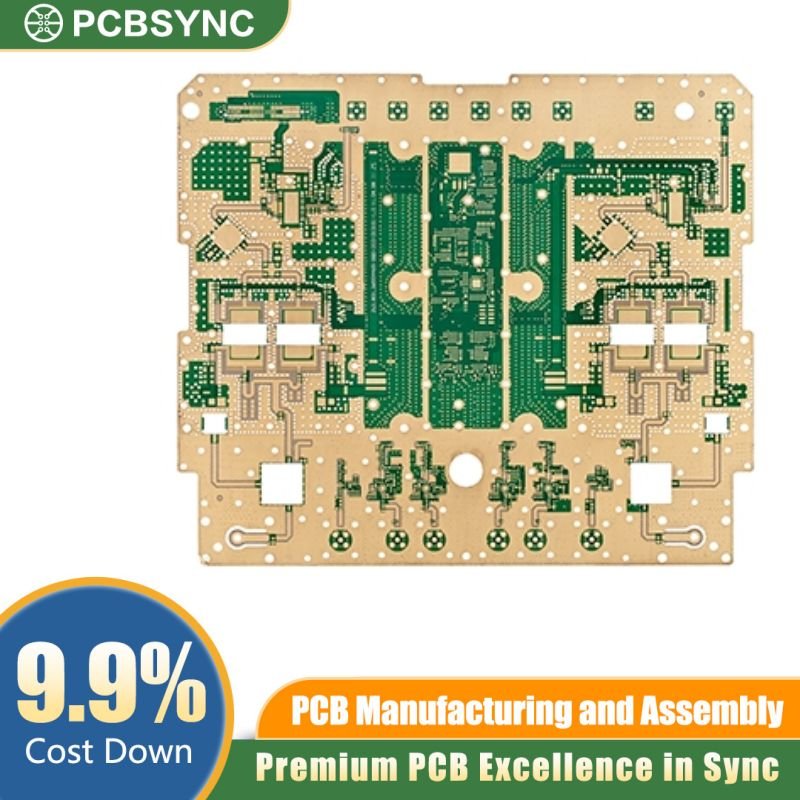
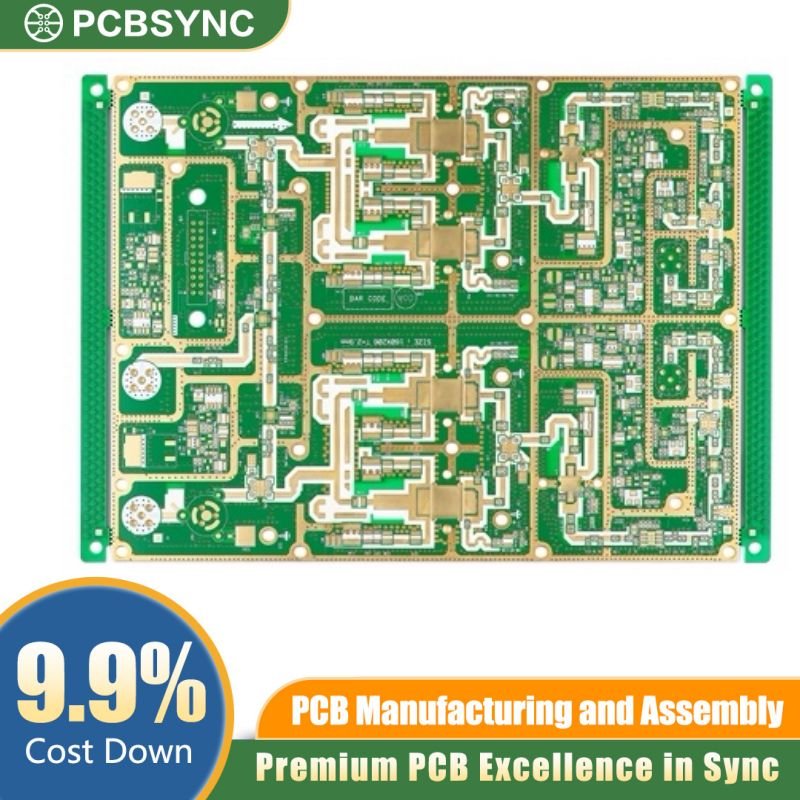
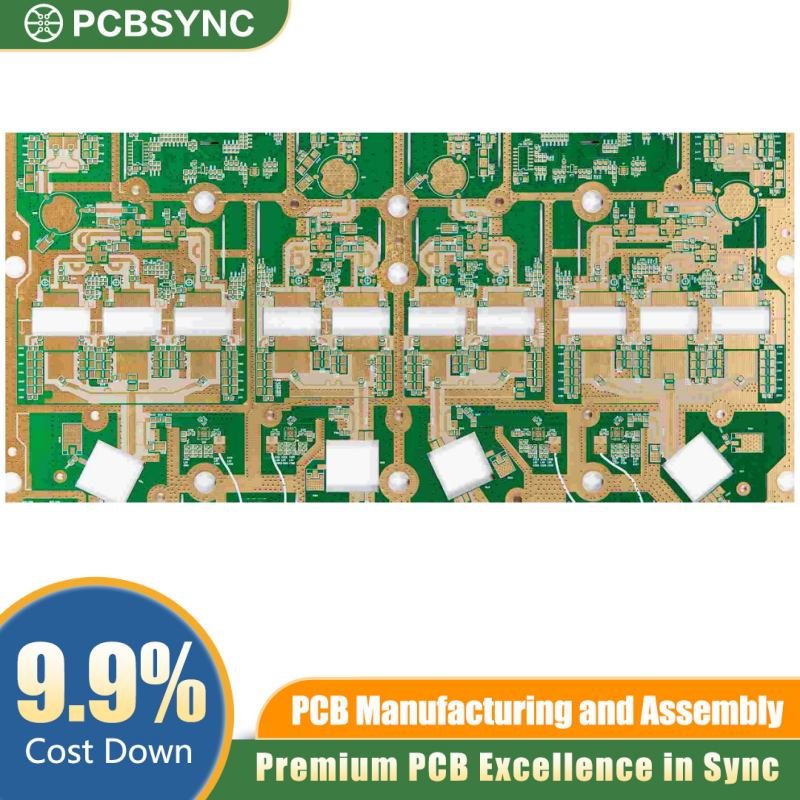
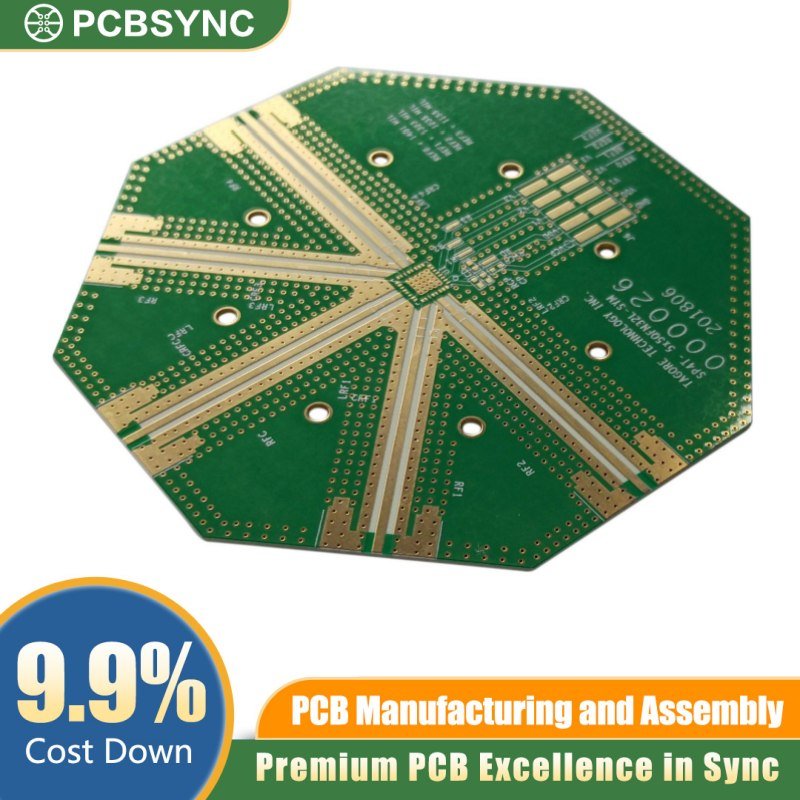
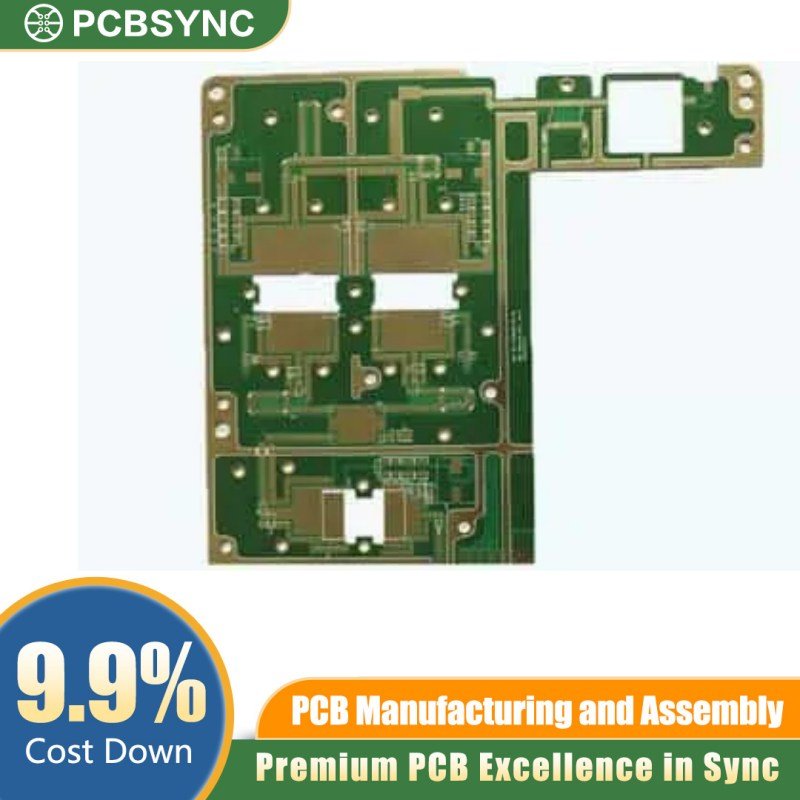
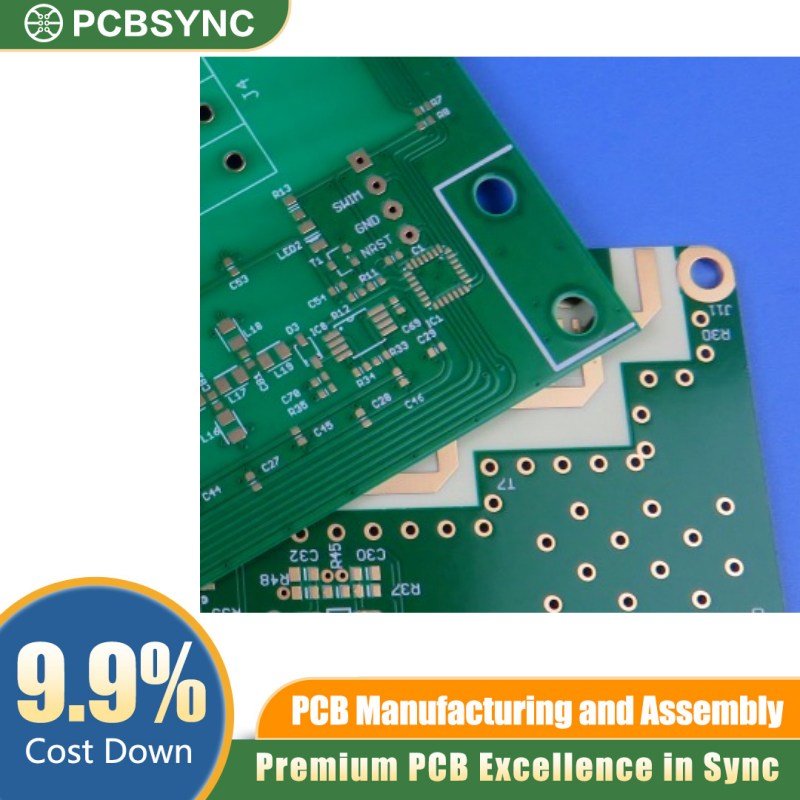
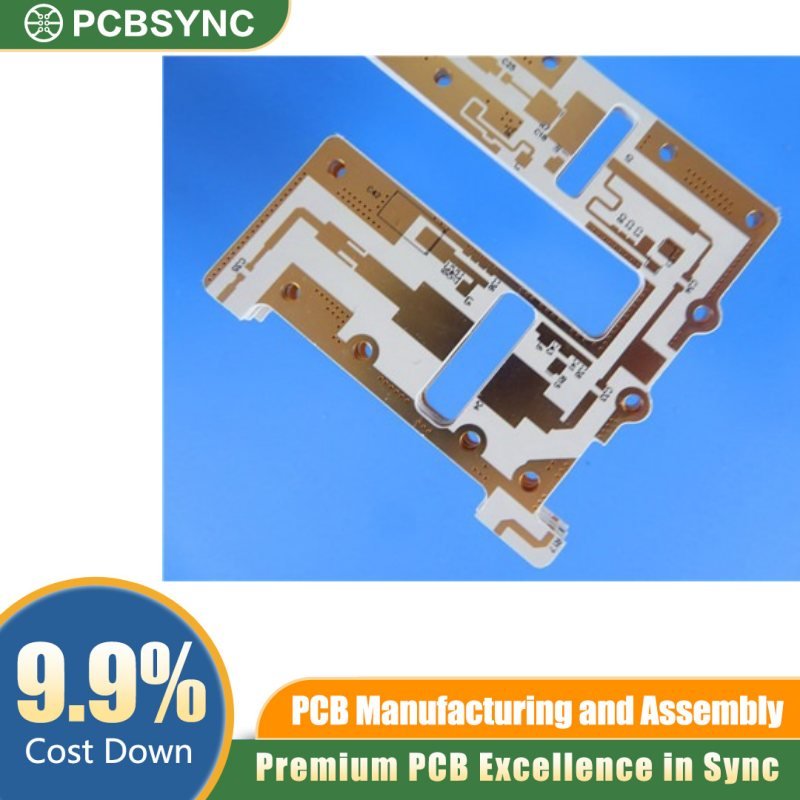
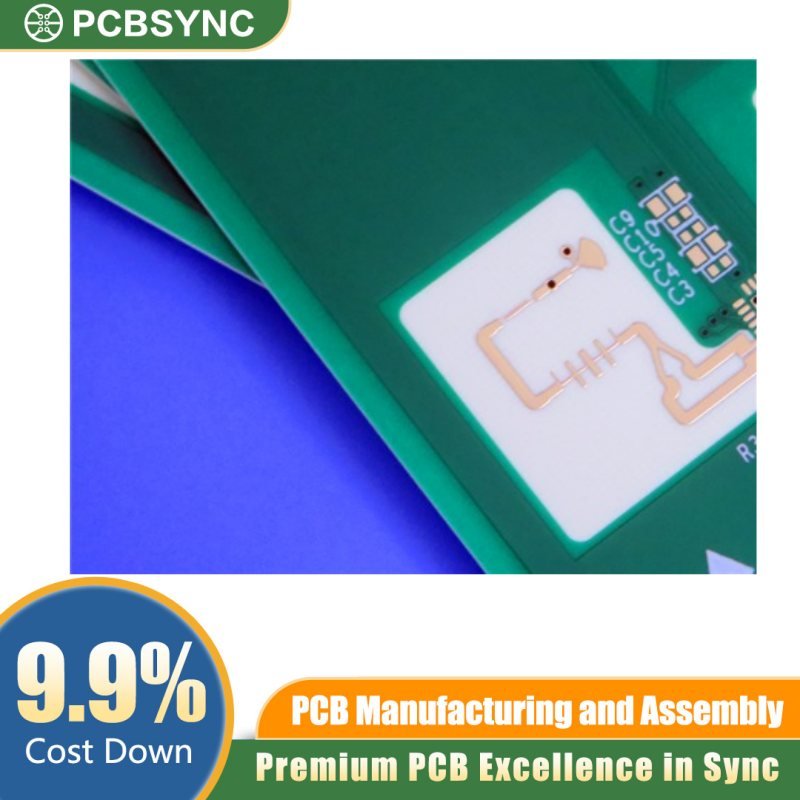
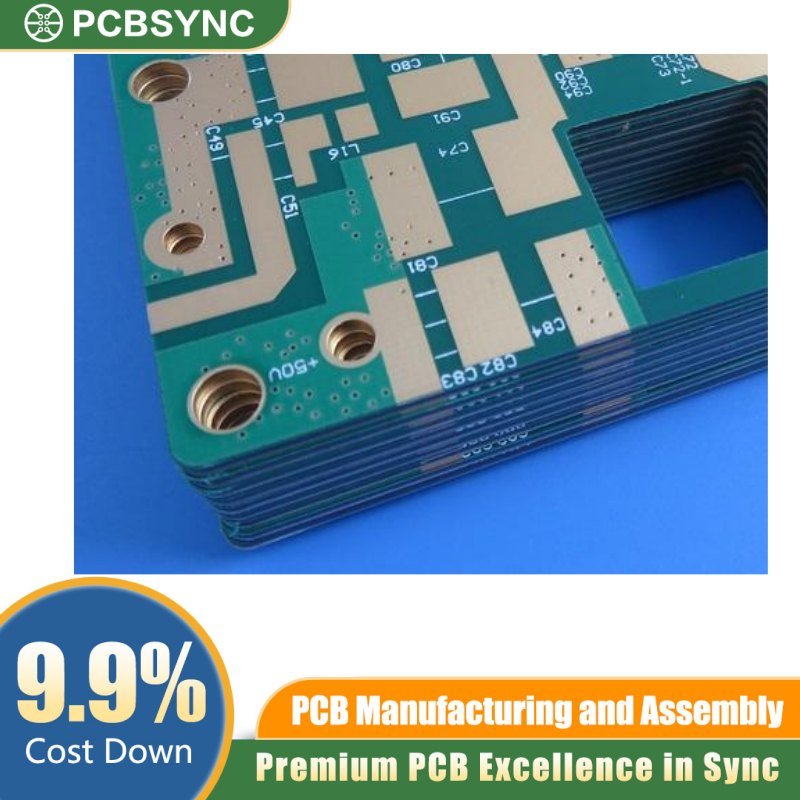
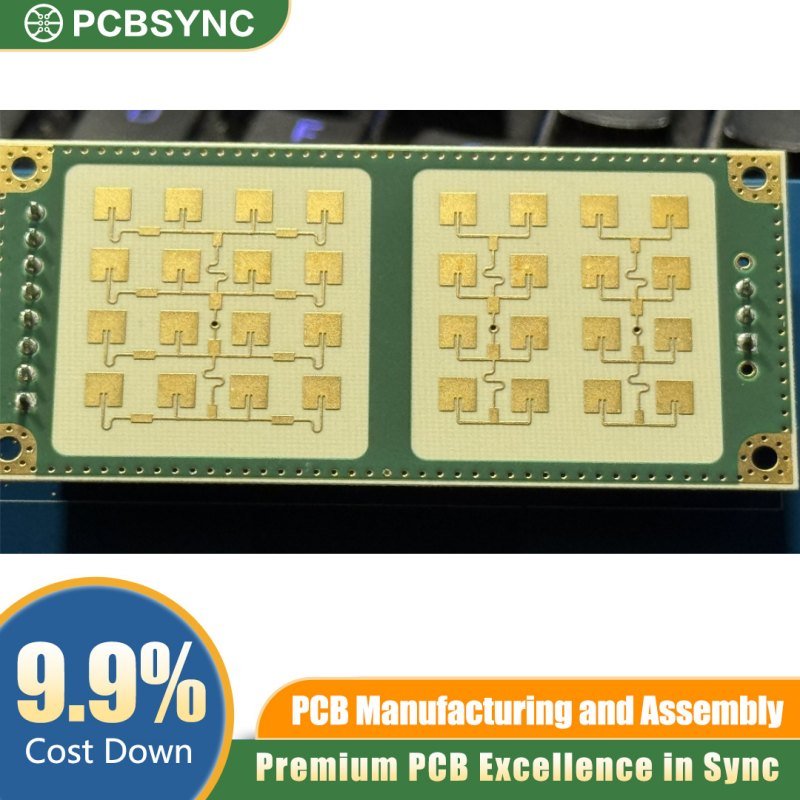
The PCBSync Rogers RO4350B 6-layer printed circuit board represents a significant advancement in high-frequency wireless infrastructure applications. Built on a 1.0mm substrate with 1oz copper weight and finished with 10µ” gold plating, this board delivers exceptional performance for demanding RF and microwave systems.
Superior Material Performance
Rogers RO4350B stands as one of the industry’s most reliable high-frequency laminates. The material offers a dielectric constant (Dk) of 3.48 at 10GHz with remarkably low loss characteristics. This stability across temperature variations and frequency ranges makes it ideal for wireless base stations, power amplifiers, and antenna systems. Unlike standard FR-4 materials, RO4350B maintains consistent electrical properties even under harsh environmental conditions, ensuring reliable signal integrity in critical infrastructure deployments.
Optimized Layer Stack-up
The 6-layer configuration provides designers with maximum routing flexibility while maintaining controlled impedance throughout the board. This multi-layer approach allows for proper power distribution, ground plane integrity, and signal isolation—essential factors in high-frequency circuit design. The 1.0mm total thickness strikes an optimal balance between mechanical stability and electrical performance, making it suitable for both compact and standard form factor applications.
Enhanced Copper and Surface Finish
The 1oz copper weight provides adequate current-carrying capacity for power distribution while maintaining fine-line capability for high-density routing. This specification works particularly well with the RO4350B substrate, offering low insertion loss and excellent thermal management. The 10µ” (microinch) gold finish delivers superior contact reliability and corrosion resistance. This hard gold plating ensures long-term durability in edge connector applications and maintains low contact resistance over thousands of mating cycles.
Wireless Infrastructure Applications
This board configuration excels in multiple wireless infrastructure scenarios. Cellular base station equipment benefits from the material’s low loss tangent and stable Dk, which directly translates to improved signal quality and reduced power consumption. Distributed antenna systems (DAS) leverage the board’s consistent performance across wide frequency bands. Small cell and femtocell applications gain from the compact 1.0mm profile while maintaining the electrical performance required for modern 4G and 5G networks.
Manufacturing Excellence
PCBSync’s manufacturing process ensures tight tolerance control critical for high-frequency applications. The Rogers RO4350B material processes similarly to standard epoxy/glass laminates, which translates to cost-effective production without sacrificing performance. The 6-layer stack-up undergoes rigorous impedance testing and quality control measures to guarantee specification compliance.
Design Advantages
Engineers appreciate RO4350B’s compatibility with lead-free assembly processes and its excellent dimensional stability. The material’s low Z-axis expansion coefficient minimizes reliability concerns in plated through-holes. When combined with the 6-layer construction, designers can implement complex RF circuits with proper shielding, reducing electromagnetic interference and crosstalk between sensitive signal paths.
Investment in Reliability
Choosing Rogers RO4350B material represents a commitment to long-term system reliability. The combination of proven substrate technology, appropriate copper weight, and durable gold finish creates a foundation for wireless infrastructure that performs consistently throughout its operational lifetime. This board specification meets the demanding requirements of modern telecommunications while providing the manufacturing reliability needed for volume production.
For wireless infrastructure projects requiring proven high-frequency performance, the PCBSync Rogers RO4350B 6-layer board delivers the technical specifications and manufacturing quality that engineers depend on.