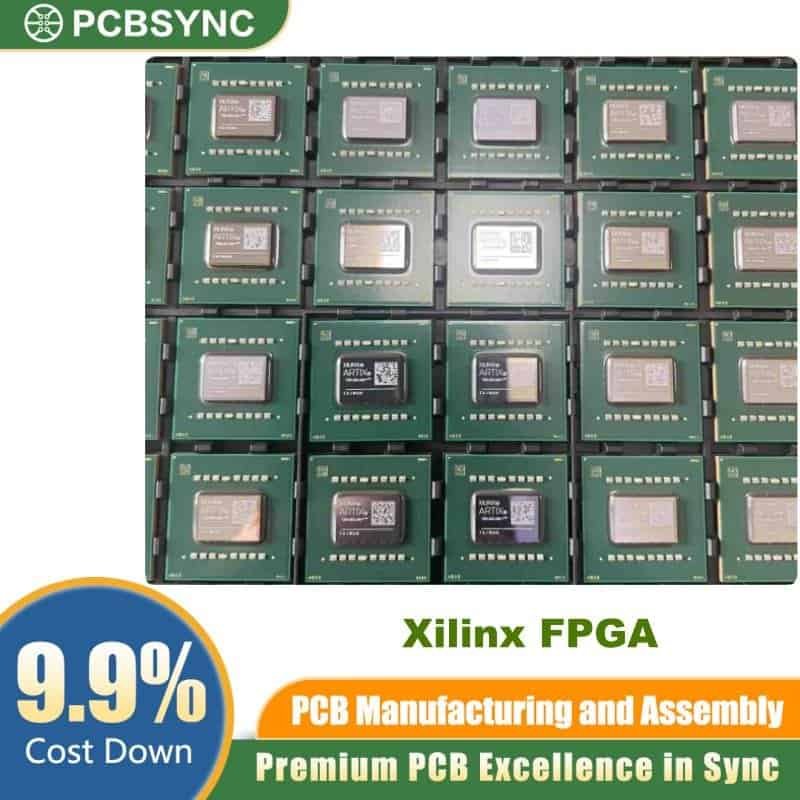
The XC2S200-6FGG1383C represents a pivotal solution in the Xilinx Spartan-II family, designed to bridge the gap between high-density programmable logic and cost-sensitive consumer applications. As a Field Programmable Gate Array (FPGA), this component offers a flexible architecture that allows engineers to implement complex digital circuits without the high NRE costs associated with custom ASICs.
Whether you are designing for telecommunications, industrial control, or consumer electronics, the XC2S200-6FGG1383C provides the reliability and performance required for modern embedded systems.
Key Technical Specifications of XC2S200-6FGG1383C
The XC2S200 series is engineered to deliver high logic capacity while maintaining low power consumption. Below is a detailed breakdown of the primary technical parameters for the XC2S200-6FGG1383C model.
Core Architecture and Logic Capacity
| Feature |
Specification |
| System Gates |
200,000 |
| Logic Cells |
5,292 |
| CLB Array (Rows x Cols) |
28 x 42 |
| Distributed RAM Bits |
75,264 |
| Block RAM Bits |
56,320 |
| Maximum User I/O |
284 |
Operating Electrical Characteristics
| Parameter |
Value |
| Core Supply Voltage (Vccint) |
2.5V |
| I/O Supply Voltage (Vcco) |
1.5V to 3.3V |
| Speed Grade |
-6 (High Performance) |
| Operating Temperature |
0°C to 85°C (Commercial) |
| Package Type |
FGG1383 (Fine-Pitch Ball Grid Array) |
Advanced Features and Functional Benefits
The XC2S200-6FGG1383C is more than just a collection of logic gates. It incorporates several advanced features that simplify system-level integration.
Versatile I/O Standards
This FPGA supports a wide array of I/O signaling standards, including LVTTL, LVCMOS, PCI, and HSTL. This versatility ensures that the device can interface seamlessly with various peripheral components and high-speed memory interfaces.
Flexible Power Management
With a 2.5V core voltage, the Spartan-II family significantly reduces power dissipation compared to older 3.3V or 5V logic families. Moreover, the independent I/O banks allow the chip to operate in mixed-voltage environments, supporting 1.5V, 1.8V, 2.5V, and 3.3V signals simultaneously.
Efficient Memory Utilization
The architecture includes dedicated Block SelectRAM+ resources. These are ideal for creating deep FIFOs, dual-port buffers, or high-speed cache, allowing for efficient data handling without consuming valuable logic cells.
Target Applications for XC2S200 Series FPGAs
Due to its balance of cost and performance, the XC2S200-6FGG1383C is frequently utilized in several high-growth industries.
-
Industrial Automation: Used for motor control, sensor fusion, and real-time industrial Ethernet protocols.
-
Telecommunications: Ideal for line cards, protocol converters, and base station interface modules.
-
Consumer Electronics: Powering high-definition video processing and digital set-top boxes.
-
Medical Imaging: Handling high-speed data acquisition and signal processing for diagnostic equipment.
Why Choose the XC2S200-6FGG1383C for Your Project?
Selecting the right FPGA involves balancing performance requirements with budget constraints. The XC2S200-6FGG1383C excels in this regard by offering a “Best-of-Both-Worlds” scenario. Furthermore, the extensive support from Xilinx design tools ensures a rapid time-to-market.
In addition to its hardware strengths, the Spartan-II family benefits from a mature ecosystem of IP cores, including PCI controllers and memory interfaces, which can be easily integrated into your design.
If you are looking for a robust, low-cost, and high-capacity programmable logic solution, the Xilinx FPGA lineup remains the industry standard for excellence.
Summary of XC2S200-6FGG1383C Advantages
-
Cost-Effective Density: 200,000 gates at a price point accessible for high-volume production.
-
Ease of Integration: Multiple I/O standards and low-voltage operation simplify PCB design.
-
Proven Reliability: Based on the high-performance Virtex architecture, ensuring stable operation in demanding environments.
-
Scalability: Allows for easy migration across the Spartan-II family as your design requirements evolve.