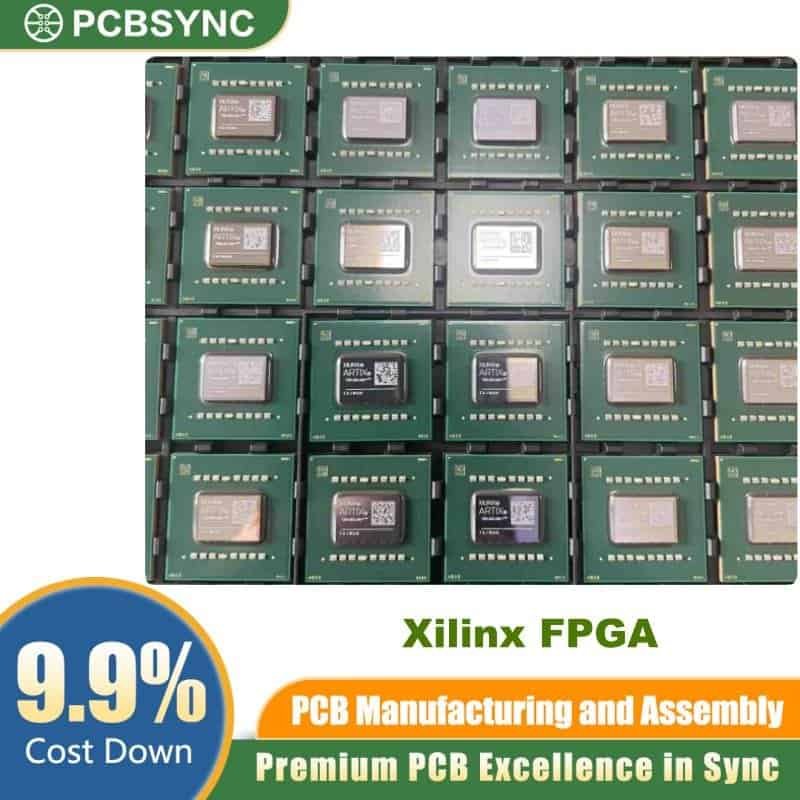
The XC2S200-6FGG1338C is a member of the renowned Xilinx Spartan-II family, designed to provide a cost-effective solution for high-volume consumer electronics and industrial applications. This Field Programmable Gate Array (FPGA) offers a perfect balance between logic density, performance, and power efficiency, making it a go-to choice for legacy support and specific embedded control systems.
By leveraging the 0.22µm process technology, the XC2S200-6FGG1338C delivers up to 200,000 system gates and high-speed performance that rivals many CPLDs and high-end ASICs.
Key Technical Specifications of XC2S200-6FGG1338C
The Spartan-II series is built on the foundation of the Virtex architecture, ensuring that users get high-end features at a fraction of the cost. Below is a detailed breakdown of the technical parameters for this specific FPGA.
Technical Parameter Table
| Feature |
Specification |
| Part Number |
XC2S200-6FGG1338C |
| Family |
Spartan-II |
| System Gates |
200,000 |
| Logic Cells |
5,292 |
| CLB Array (Rows x Cols) |
28 x 42 |
| Total CLBs |
1,176 |
| Maximum User I/O |
284 |
| Block RAM Bits |
57,344 |
| Distributed RAM Bits |
75,264 |
| Operating Voltage (Core) |
2.5V |
| Speed Grade |
-6 (High Speed) |
Advanced Architecture and Functional Features
The XC2S200-6FGG1338C is not just about raw gate counts; it incorporates several advanced architectural features that simplify design and enhance system performance.
Flexible SelectIO Technology
One of the standout features of this FPGA is its SelectIO™ technology. This allows the device to interface with a wide variety of signaling standards. It supports up to 16 different I/O standards, including:
-
LVTTL / LVCMOS2
-
PCI (33MHz and 66MHz)
-
GTL/GTL+
-
SSTL2 / SSTL3
-
HSTL
Optimized Memory Hierarchy
The XC2S200-6FGG1338C provides a versatile memory hierarchy. It features dedicated Block RAM, which is ideal for large data buffers and FIFOs. Additionally, the Configurable Logic Blocks (CLBs) can be used as Distributed RAM, providing fast, localized memory for shift registers and small look-up tables (LUTs).
Digital Delay-Locked Loops (DLLs)
To manage clock distribution and eliminate clock skew, the device includes high-performance DLLs. These ensure precise clock timing across the entire chip, which is critical for high-speed synchronous designs.
Common Applications for XC2S200-6FGG1338C
Due to its versatility and high I/O count, the XC2S200-6FGG1338C is utilized across various industries. Its ability to handle complex logic tasks while remaining budget-friendly makes it ideal for:
-
Industrial Control Systems: Handling motor control, sensor fusion, and real-time automation.
-
Telecommunications: Used in line cards, protocol converters, and base station management.
-
Consumer Electronics: Supporting high-definition video processing and digital interface bridging.
-
Legacy System Maintenance: Replacing obsolete ASICs or older PLD devices in long-lifecycle aerospace and defense equipment.
Why Choose Xilinx Spartan-II Series?
Choosing the right FPGA depends on the specific needs of your project, such as I/O flexibility, power consumption, and cost. The Spartan-II series remains a staple for engineers who need reliable, proven technology for middle-density logic applications.
Comparison: Spartan-II vs. Competitors
| Feature |
Spartan-II (XC2S200) |
Standard CPLDs |
| Logic Density |
High (200k Gates) |
Low |
| On-chip RAM |
Extensive (Block + Distributed) |
Limited/None |
| Flexibility |
High (Reprogrammable) |
Moderate |
| System Integration |
High (Integrated DLLs) |
Low |
For engineers looking to source reliable components or explore newer alternatives in the Xilinx ecosystem, it is essential to partner with a trusted distributor. You can find comprehensive data and sourcing options for your next Xilinx FPGA project to ensure long-term stability and performance.
Design and Development Support
Designing with the XC2S200-6FGG1338C is streamlined through the Xilinx ISE® Design Suite. This software provides a comprehensive environment for:
-
Synthesis and Simulation: Ensuring logic accuracy before hardware implementation.
-
Place and Route: Optimizing the physical layout of the design on the silicon.
-
Power Analysis: Estimating thermal and power requirements to ensure system reliability.