Inquire: Call 0086-755-23203480, or reach out via the form below/your sales contact to discuss our design, manufacturing, and assembly capabilities.
Quote: Email your PCB files to Sales@pcbsync.com (Preferred for large files) or submit online. We will contact you promptly. Please ensure your email is correct.
Notes: For PCB fabrication, we require PCB design file in Gerber RS-274X format (most preferred), *.PCB/DDB (Protel, inform your program version) format or *.BRD (Eagle) format. For PCB assembly, we require PCB design file in above mentioned format, drilling file and BOM. Click to download BOM template To avoid file missing, please include all files into one folder and compress it into .zip or .rar format.
Power Supply Capacitor: The Complete Filtering & Smoothing Guide
The power supply capacitor is one of those components that looks straightforward on paper but reveals its complexity the moment something goes wrong on the bench — a switcher that fails EMC testing, an audio amplifier with a persistent 100Hz hum, or a microcontroller that resets intermittently under load. In every case, the filtering and smoothing capacitors are either part of the solution or part of the cause.
This guide covers power supply capacitor selection from first principles to final layout, with a focus on the decisions that actually matter in production designs. Whether you’re specifying the bulk filter cap on a linear PSU, selecting output caps for a 500kHz buck converter, or choosing decoupling strategy for a mixed-signal board, the same understanding of ESR, ESL, self-resonance, and ripple current handling applies.
How a Power Supply Capacitor Actually Works: Filtering vs. Smoothing
These terms get used interchangeably in casual conversation, but they describe functionally different behaviors that require different design approaches.
Smoothing refers specifically to the bulk energy storage function at the output of a rectifier. Adding a smoothing capacitor to a rectified output changes the output dramatically — the lowest voltage rises from 0V to near the peak voltage, and the ripple voltage is approximately: Vpk-pk ripple = Iload / (4 × f × C), where f is the frequency before rectification and C is the capacitor value. Skillbank A smoothing capacitor stores charge during each rectifier conduction pulse and releases it during the gaps, maintaining the DC output voltage between pulses. Its sizing is governed by load current, acceptable ripple voltage, and supply frequency.
Filtering is broader — it covers suppressing noise, ripple, and interference at specific frequency ranges throughout the power circuit. A filter capacitor’s primary function is to block low-frequency or DC signals while allowing higher frequency AC signals to pass, or vice versa. In smoothing circuits in power supplies, filter capacitors store energy during voltage peaks and release it during dips, thereby reducing ripple and achieving a steadier output voltage. Anypcba
The key insight from a PCB engineering perspective: large capacitors filter low-frequency waves, and small capacitors filter high-frequency waves. This explains why large electrolytics handle mains-frequency ripple while small ceramics handle switching noise — the resonant frequency of each type determines its effective operating range. Utmel
Understanding ESR and ESL: The Parameters That Actually Determine Performance
If you’re specifying a power supply capacitor based only on capacitance and voltage rating, you’re making design decisions with incomplete information. ESR and ESL determine whether your capacitor actually performs its intended function at the frequencies your circuit operates at.
Equivalent Series Resistance (ESR)
Every real capacitor has some resistance in series with the ideal capacitive element. ESR is particularly important in applications where capacitors handle significant current. A high ESR value means more energy is lost as heat, reducing circuit efficiency. For example, in a switching power supply operating at 100kHz, a capacitor with an ESR of 100mΩ passing a ripple current of 1A will dissipate 0.1W as heat (I²R = 1² × 0.1). ALLPCB
The ripple voltage across the output capacitor in an SMPS has two components: one from the capacitance (ΔV = ΔQ/C) and one directly from ESR (ΔVESR = Iripple × ESR). At high switching frequencies, the ESR is so predominant that in calculations for the minimum capacitance to mitigate ripple using electrolytic capacitors, you can effectively ignore the capacitance and use the ESR only, as it is the feature which dominates. Hackaday
Equivalent Series Inductance (ESL)
At high frequencies, ESL causes the capacitor’s impedance to rise, reducing its effectiveness as a filter or decoupling component. Standard electrolytic capacitors can have ESL values of 5–10 nH compared to MLCCs which can be as low as 0.5 nH. ALLPCB
The point at which ESL begins dominating impedance is the self-resonant frequency (SRF). Below SRF, the capacitor behaves as a capacitor. Above SRF, it behaves as an inductor — making it worse than useless for filtering at those frequencies. This is why a single large capacitor cannot filter both 120Hz mains ripple and 500kHz switching noise simultaneously. You need fundamentally different components for each frequency range.
ESR/ESL Comparison by Capacitor Technology
Technology
Typical ESR
Typical ESL
SRF Range
Best Frequency Range
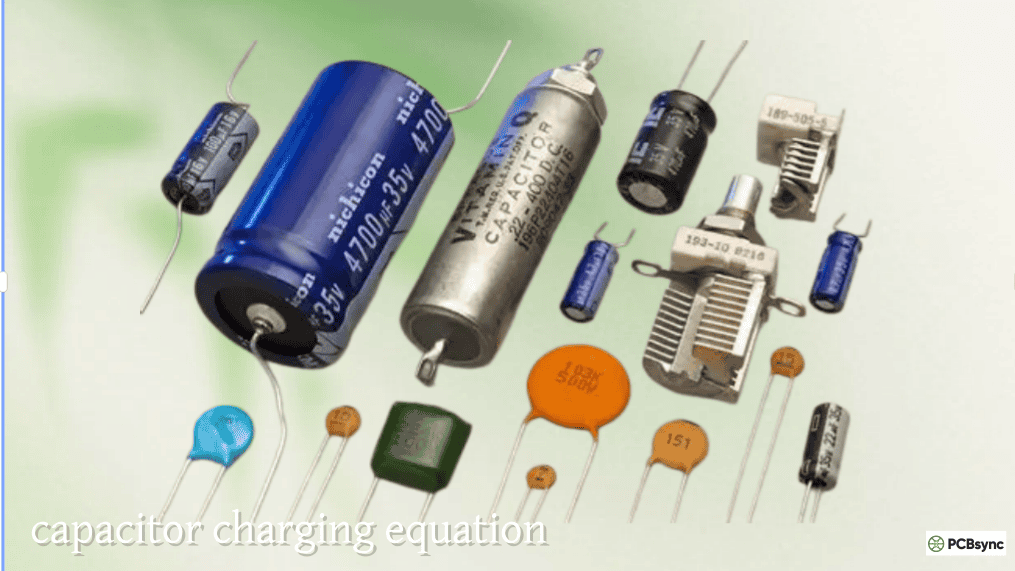
Aluminum Electrolytic
50 mΩ – 5 Ω
5 – 20 nH
10 kHz – 1 MHz
DC to ~100 kHz
Polymer Electrolytic
5 – 50 mΩ
3 – 10 nH
100 kHz – 5 MHz
DC to ~1 MHz
Tantalum (MnO₂)
0.1 – 2 Ω
2 – 5 nH
100 kHz – 10 MHz
DC to ~500 kHz
Polymer Tantalum
10 – 100 mΩ
1 – 5 nH
1 – 20 MHz
DC to ~5 MHz
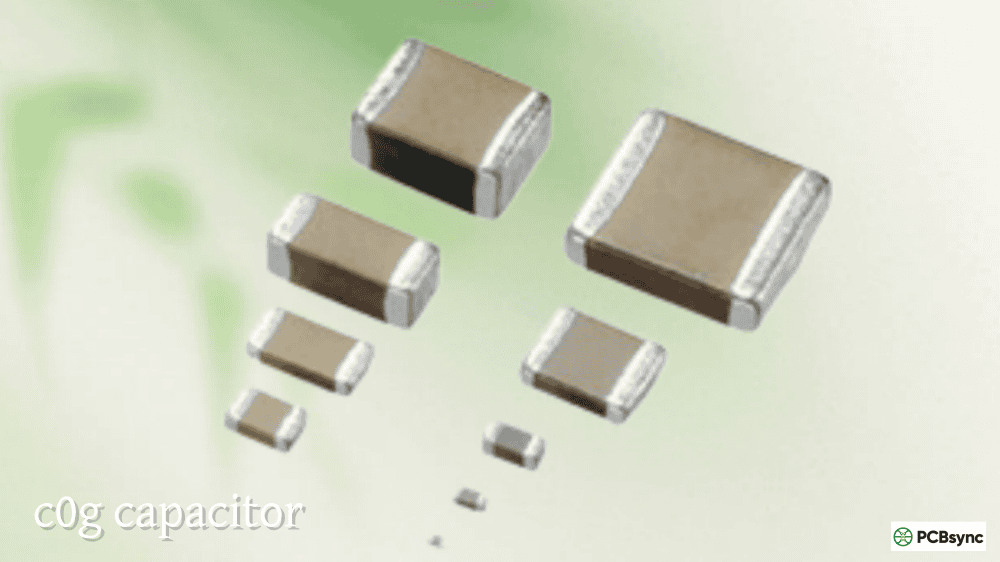
MLCC (X7R)
1 – 50 mΩ
0.5 – 2 nH
1 – 300 MHz
100 kHz to ~1 GHz
MLCC (C0G/NP0)
0.1 – 10 mΩ
0.3 – 1 nH
10 MHz – 1 GHz
1 MHz to several GHz
Film (Polypropylene)
1 – 100 mΩ
5 – 30 nH
100 kHz – 5 MHz
AC-rated, precision apps
The Four Capacitor Roles in Power Supply Design
Bulk Reservoir / Smoothing Capacitor
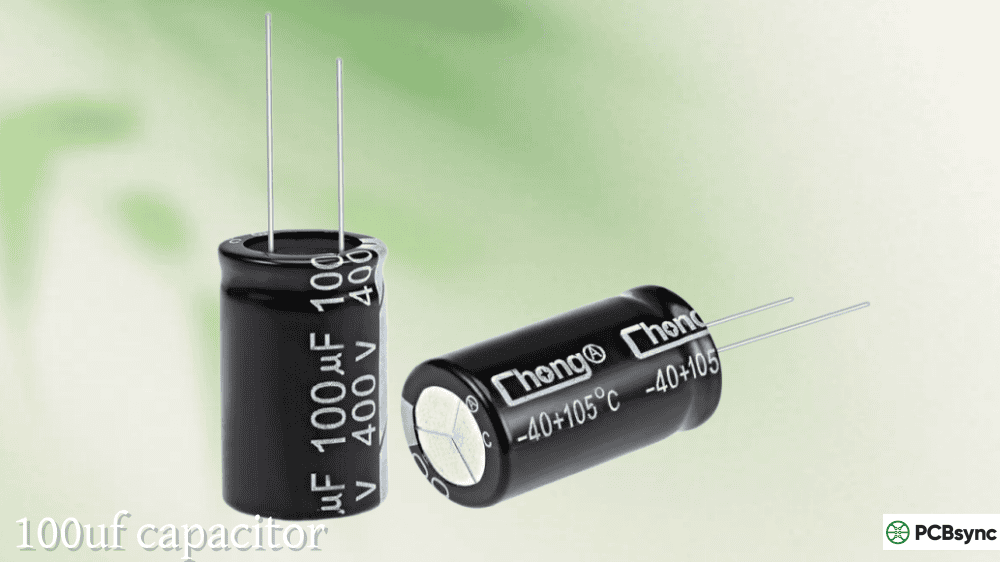
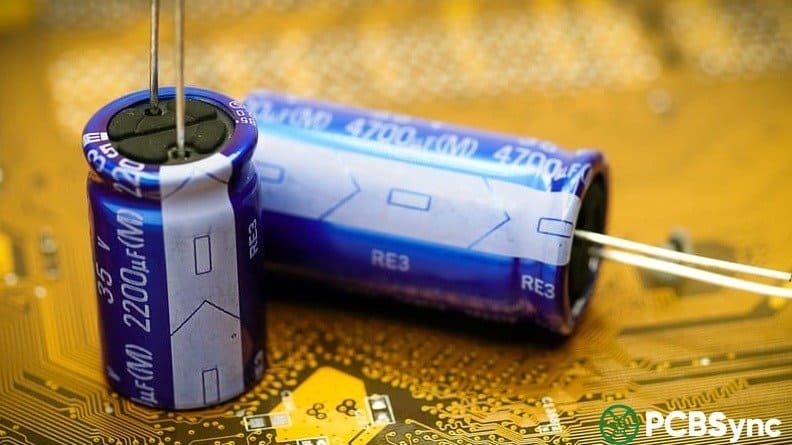
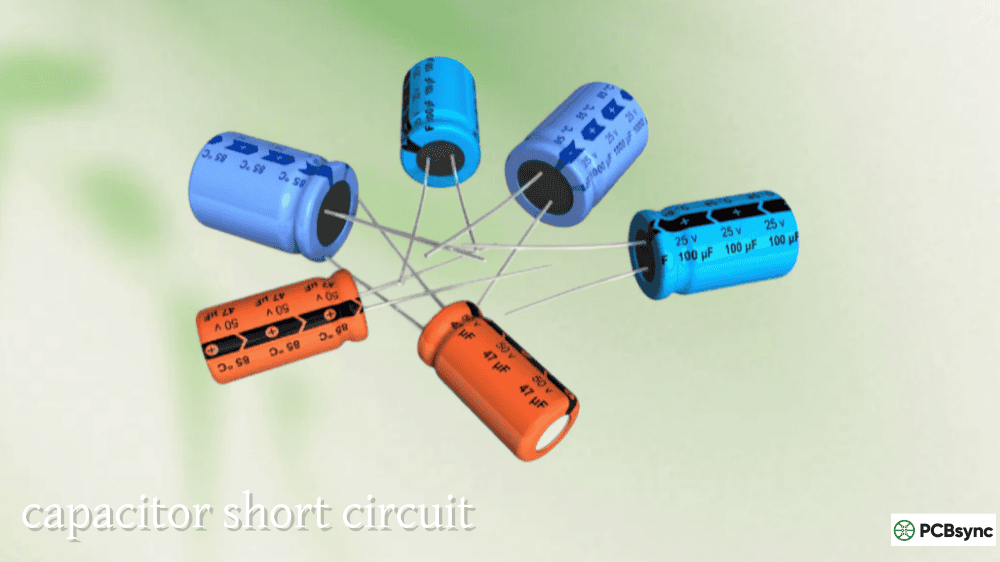
This is the large capacitor at the output of a rectifier in a linear power supply, or on the primary DC bus in an SMPS. Its job is pure energy storage — hold up the DC voltage between rectifier conduction pulses in a linear supply, or supply the peak current bursts that the switching transistors demand in an SMPS. The electrolytic family provides an excellent, cost-effective low-frequency filter component because of the wide range of values, a high capacitance-to-volume ratio, and a broad range of working voltages — available from below 10V up to about 500V and in size from 1 µF to several thousand µF. Analog Devices
Sizing the reservoir capacitor for a linear supply uses the ripple formula directly: C = Iload / (4 × f × Vripple) for a full-wave rectified supply. For a 5A load at 50Hz with 1V ripple allowed, you need C = 5 / (4 × 50 × 1) = 25,000 µF. This explains why large linear power supplies have physically huge capacitor banks.
Input Filter Capacitor (SMPS)
The input capacitor of a switch-mode supply handles the discontinuous current drawn by the switching transistors. It must supply peak current during the transistor on-time, absorb high-frequency switching noise to prevent it propagating back onto the supply bus, and sustain the input voltage between switching cycles. Multilayer X5R or X7R ceramic capacitors are excellent choices for the input decoupling of step-up converters as they have extremely low ESR and are available in small footprints. Input capacitors must be located as close as possible to the device. Electrical Engineering
However, there is an important nuance. When a ceramic capacitor is used at the input and power is being supplied through long wires, a load step at the output can induce ringing at the VIN pin. An electrolytic capacitor acting as a snubber in parallel with the ceramic capacitors — with its ESR working as resistance for damping — is a practical and cost-effective solution. Electrical Engineering
Output Filter Capacitor (SMPS)
The output capacitor determines the output ripple voltage and the transient response of the supply to load steps. The key factors for SMPS filtering capacitor selection include ESR, ESL, capacitance density, temperature characteristics, dielectric constant, voltage characteristics, and frequency characteristics. Passive Components
For ceramic-output designs: ripple voltage is dominated by capacitance (ΔVOUT = ΔIL × Ts / (8 × COUT) for a buck converter), and you need sufficient capacitance to meet ripple and transient specs. For electrolytic-output designs at lower switching frequencies: the ESR component dominates output ripple (ΔVOUT ≈ ΔIL × ESR), which is why low-ESR polymer electrolytics or tantalum types are preferred over standard wet aluminum electrolytics at the output of modern SMPS.
Decoupling and Bypass Capacitors
These are the high-frequency capacitors placed directly at IC power pins throughout the PCB. Decoupling is generally done with a combination of electrolytic capacitors for low-frequency decoupling, ceramic capacitors for high-frequency decoupling, and possibly ferrite beads. Analog Devices
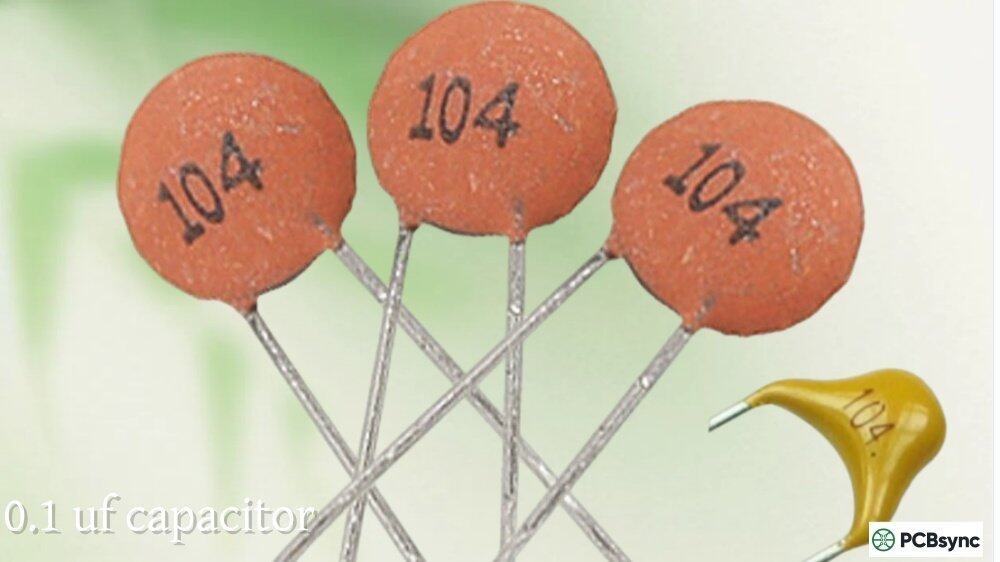
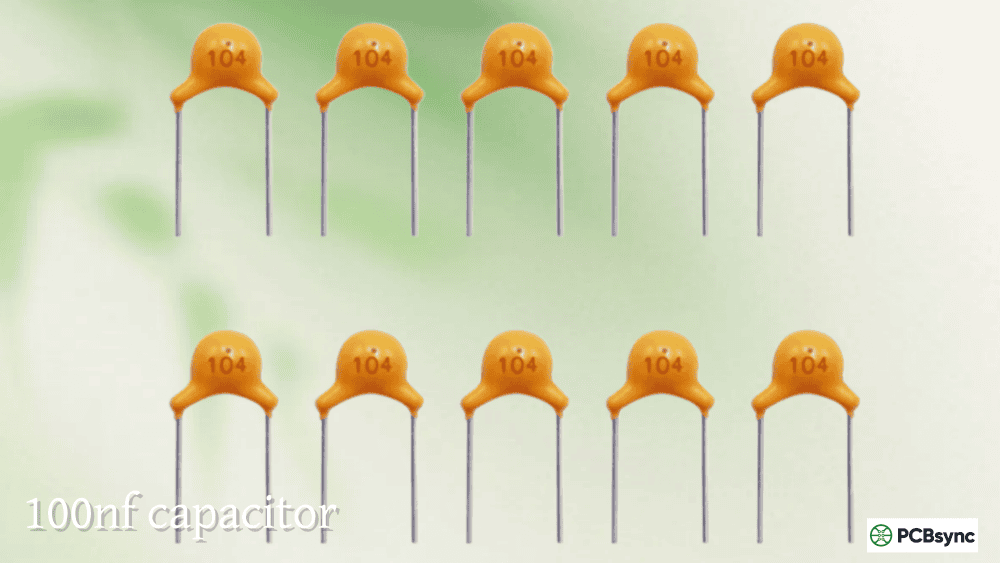
Every microcontroller needs a 0.1µF ceramic capacitor near VCC and GND to suppress noise. Without these, microcontrollers may reset due to power spikes. Trickycircuit The 100nF value isn’t arbitrary — it provides good impedance at the 1–10MHz range where most digital logic noise is concentrated, while being small enough to achieve low ESL in compact packages.
Linear Power Supply vs. SMPS: Different Capacitor Strategies
The power supply topology fundamentally changes what you need from a capacitor. Getting this wrong is a common source of failures in redesigns where engineers borrow capacitor selection from one topology and apply it to the other.
Linear Power Supply Capacitor Selection
In a linear supply, the dominant noise frequency is at 2× the mains frequency (100Hz for 50Hz systems, 120Hz for 60Hz systems). The main filter capacitor needs high capacitance to reduce this ripple, and ESR matters less than in SMPS applications at these frequencies.
At 60Hz/120Hz power supply frequency, there isn’t much problem with ESR in caps. ESR for power supplies is more important in switch-mode designs, where high frequency and high ripple current is involved and thus high power loss exists. For 60Hz power, the time constant approach matters more than ESR optimization. diyAudio
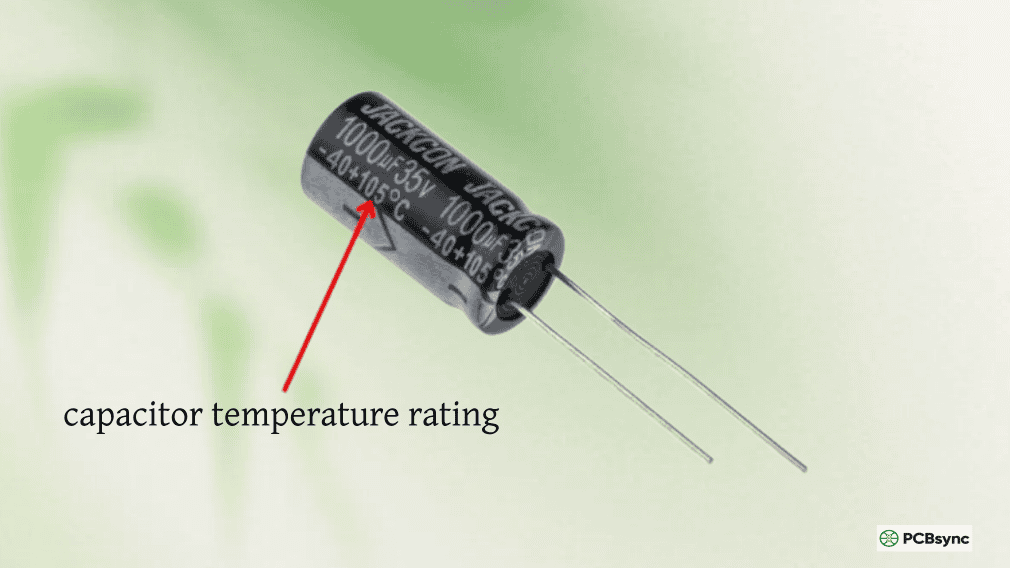
For linear supplies, the design rules are: high capacitance for bulk storage, voltage rating with 20–40% margin above peak DC bus voltage, and adequate ripple current rating. Temperature rating is the reliability factor — a 105°C rated capacitor in a 65°C ambient environment will have dramatically longer service life than an 85°C rated unit.
SMPS Capacitor Selection
Switching supplies operate at frequencies from 50kHz to several MHz, which completely changes the priorities. The types of capacitors commonly used for input and output filtering in SMPS systems include aluminum electrolytic, tantalum, ceramic, and film capacitors. Passive Components
Ceramic capacitors offer extremely low levels of ESR and ESL and predictable performance characteristics related to temperature, voltage, and frequency, making them the preferred choice for high-reliability, high-frequency SMPS applications. Emc However, the capacitance density limitation of ceramics means that at high capacitance values for output filtering, polymer electrolytic or hybrid capacitors often provide better practical performance.
Conductive polymer hybrid aluminum electrolytic capacitors combine the advantages of both conductive polymer and electrolyte liquid, featuring large capacity, low ESR, low leakage current, and high reliability — and can replace configurations of MLCCs and aluminum electrolytic capacitors in appropriate frequency ranges. Panasonic
Linear PSU vs. SMPS Capacitor Requirements
Parameter
Linear PSU
SMPS Input
SMPS Output
Primary ripple frequency
100/120 Hz
Switching freq (50k–2 MHz)
Switching freq (50k–2 MHz)
Capacitance requirement
High (mF range)
Moderate (10–1000 µF)
Low to moderate (1–470 µF)
ESR priority
Low
High
Very high
ESL priority
Low
Moderate
High
Best technology
Aluminum electrolytic
Al electrolytic + ceramic
Polymer/ceramic
Voltage derating
20–40%
20–30%
20–30%
Ripple current
Moderate
High
High
Calculating Ripple and Sizing the Smoothing Capacitor
This is the calculation engineers most commonly get wrong by using approximate formulas without understanding their assumptions.
Full-Wave Rectified Linear Supply
The fundamental sizing equation for a full-wave rectified supply is:
C = Iload / (2 × f × ΔV)
Where: Iload is the maximum load current (A), f is the mains frequency (Hz), ΔV is the allowable peak-to-peak ripple voltage (V).
For a 24V, 3A supply at 50Hz with 2V ripple allowed: C = 3 / (2 × 50 × 2) = 15,000 µF. In practice, add 20–30% margin for capacitance tolerance and aging effects, giving you 18,000–22,000 µF — pointing to a 22,000 µF standard value.
SMPS Output Capacitor Sizing
For a synchronous buck converter with ceramic output capacitors:
COUT(min) = ΔIL × Ts / (8 × ΔVOUT)
Where: ΔIL is inductor ripple current (A), Ts is switching period (s), ΔVOUT is allowable output voltage ripple (V).
For electrolytic output capacitors where ESR dominates:
PCB Layout for Power Supply Capacitors: Where Engineers Lose Performance
Selecting the right capacitor is only half the battle. Our engineering team emphasizes one principle above all: the PCB layout is your final filter. We have seen designs with optimal component selection fail EMC testing due to a single long Y-capacitor ground trace. Conversely, thoughtful layout extracts maximum performance from cost-effective components. Hilelectronic
Placement Rules for Bulk Capacitors
Large reservoir capacitors in linear supplies and bulk input capacitors in SMPS designs must be placed as physically close to the rectifier or switch node as possible. Long PCB traces between the rectifier and the bulk cap create series inductance that defeats the purpose of the capacitor at the high-frequency end of the spectrum.
For SMPS input capacitors, the current return path is as important as the forward path. The switching current loop — comprising the input capacitor, the high-side switch, the inductor, and the return through ground — should be minimized in area. A large loop area means a large magnetic antenna, which is the primary source of conducted and radiated EMI in switching supplies.
Placement Rules for Decoupling Capacitors
Decoupling capacitors should be on the same layer as the IC, directly adjacent to the power pins, with short, wide traces to the pins and a solid ground plane. Kynix The actual physical inductance of the trace from the capacitor to the IC pin can easily exceed the ESL of the capacitor itself if you place the 0402 MLCC more than a few millimeters away from the power pin.
For multi-layer PCBs, placing the decoupling capacitor via on the same side as the pad — rather than routing to a via on the opposite side — significantly reduces the effective ESL of the decoupling network.
The Parallel Capacitor Strategy
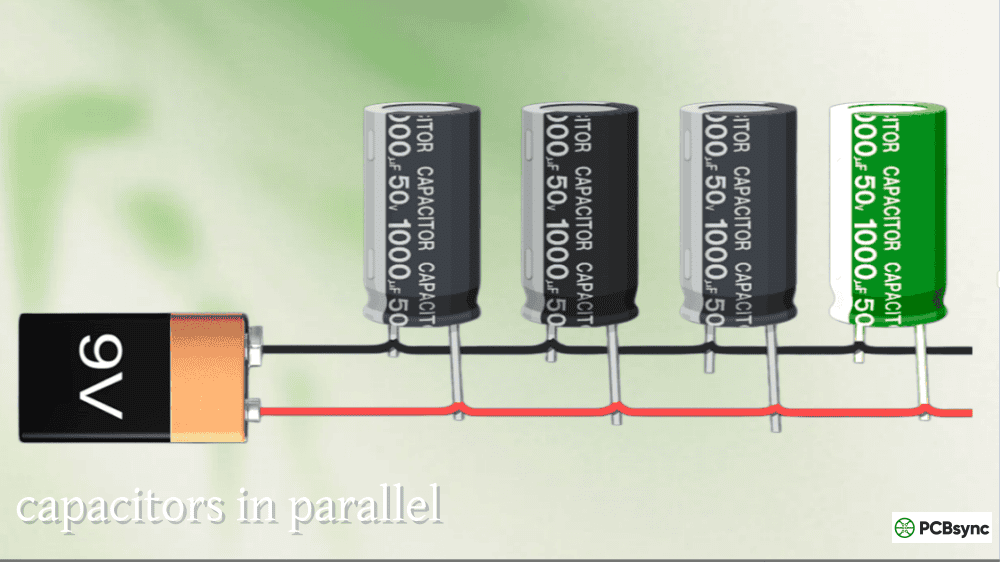
Using capacitors of different construction technologies in parallel will both reduce the impedance and spread the impedance effects wider in frequency. Placing smaller value ceramic capacitors in parallel with electrolytic capacitors of larger values is effective because the electrolytic capacitors address higher energy and lower frequency issues while the ceramic capacitors address higher-frequency transients. Analog Devices
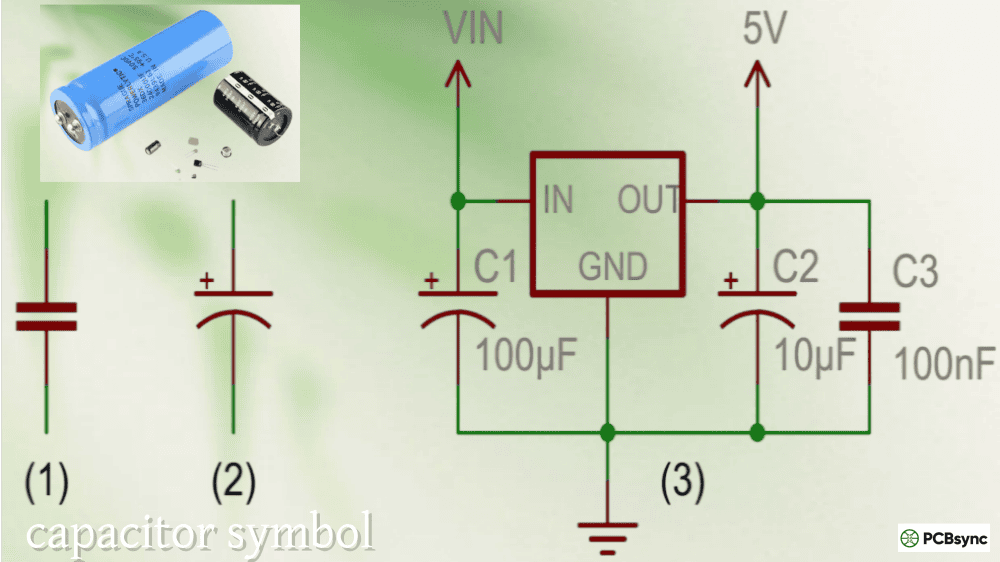
A practical three-tier approach for power supply output filtering: a 1000µF aluminum electrolytic handles bulk energy storage and mains-frequency ripple, a 10µF polymer tantalum handles mid-frequency transients and switching ripple, and a 100nF X7R ceramic handles high-frequency noise and fast load transients. Each capacitor does its job effectively because each is optimized for its frequency range.
Layered Filtering Strategy by Frequency Band
Frequency Band
Capacitor Role
Best Technology
Typical Value
Placement
DC to 1 kHz
Reservoir/Smoothing
Al Electrolytic
100 µF – 47,000 µF
Near rectifier/bulk bus
1 kHz – 100 kHz
Bulk decoupling
Low-ESR Al or Polymer
10 µF – 1000 µF
At converter output
100 kHz – 10 MHz
Switching ripple
Polymer/Tantalum + ceramic
1 µF – 47 µF
Near switch node/output
10 MHz – 1 GHz
HF noise/EMI
MLCC (X7R or C0G)
10 nF – 1 µF
At IC power pins
1 GHz+
Very HF bypass
MLCC (C0G, small package)
100 pF – 10 nF
As close to pins as possible
Useful Resources for Power Supply Capacitor Selection
Frequently Asked Questions About Power Supply Capacitors
How do I calculate the right capacitor value for smoothing in a linear power supply?
Use the full-wave rectifier ripple formula: C = Iload / (2 × f × ΔV) where Iload is your maximum load current in amps, f is the supply frequency (50 or 60Hz), and ΔV is the acceptable ripple voltage in volts. For a 12V supply requiring less than 1V peak-to-peak ripple at a 2A load on a 50Hz supply: C = 2 / (4 × 50 × 1) = 10,000 µF. Skillbank Always add 20–30% margin to this calculated value to account for capacitance tolerance (typically ±20% for electrolytics), aging-related capacitance loss, and supply voltage variations.
Why does my SMPS output capacitor get hot even though the voltage rating is correct?
The heat is almost certainly from excessive ripple current causing I²×ESR losses inside the capacitor. Lower ESR and ESL capacitors are preferred as output filters in SMPS circuits because the switching frequency is high — typically hundreds of kHz to several MHz. High ESR capacitors in high-frequency ripple current applications generate significant heat, which degrades the electrolyte and reduces service life. CircuitDigest Check the ripple current rating on the datasheet against your actual inductor ripple current. If the capacitor is handling more ripple current than rated, either switch to a lower ESR type (polymer electrolytic, tantalum, or ceramic), increase capacitance to reduce ripple current, or parallel multiple capacitors to share the ripple current load.
Can I use a ceramic MLCC as the only output capacitor on my buck converter?
Yes, but with important caveats. Ceramic MLCCs offer excellent ESR and ESL performance, making them ideal for high-frequency switching designs. However, when ceramic capacitors are used and power is being supplied through long wires or traces, a load step at the output can induce ringing. In this circumstance, place additional bulk capacitance — such as a tantalum or aluminum electrolytic capacitor — to reduce ringing that can occur between the inductance of the source leads and the ceramic input capacitor. Electrical Engineering Additionally, check the DC bias characteristic of your specific MLCC — X7R types can lose 50–70% of their capacitance at rated voltage, meaning a 22µF X7R at its rated voltage might only be providing 8–12µF in your circuit.
What is the difference between a bypass capacitor and a decoupling capacitor?
In practice these terms are often used interchangeably, but there’s a useful distinction. A bypass capacitor provides a low-impedance path for AC signals to ground, effectively bypassing them away from the circuit. A decoupling capacitor isolates one part of the circuit from power supply noise generated by another part. Every microcontroller needs a 0.1µF ceramic capacitor near VCC and GND — these suppress switching noise and prevent microcontrollers from resetting due to power spikes. Trickycircuit From a placement perspective, both functions require the capacitor to be physically adjacent to the IC pins they serve, with minimal trace inductance between capacitor and power pin.
How does capacitor aging affect power supply filtering performance over time?
Aluminum electrolytic capacitors are the most aging-sensitive component in power supply designs. The electrolyte gradually evaporates over time, causing capacitance to decrease and ESR to increase. End-of-life ESR for an electrolytic capacitor is generally 2× the initial ESR due to electrolyte evaporation, and this degradation is directly related to operating temperature. Hackaday At rated temperature and ripple current, most quality aluminum electrolytics are specified for 2,000–10,000 hours. Doubling the ripple current above rated reduces life dramatically; operating 10°C above rated temperature roughly halves the life. For long-life designs, use 105°C rated capacitors in 85°C ambient conditions, or switch to polymer electrolytic or hybrid technology which ages much more gracefully.
Inquire: Call 0086-755-23203480, or reach out via the form below/your sales contact to discuss our design, manufacturing, and assembly capabilities.
Quote: Email your PCB files to Sales@pcbsync.com (Preferred for large files) or submit online. We will contact you promptly. Please ensure your email is correct.
Notes: For PCB fabrication, we require PCB design file in Gerber RS-274X format (most preferred), *.PCB/DDB (Protel, inform your program version) format or *.BRD (Eagle) format. For PCB assembly, we require PCB design file in above mentioned format, drilling file and BOM. Click to download BOM template To avoid file missing, please include all files into one folder and compress it into .zip or .rar format.