Inquire: Call 0086-755-23203480, or reach out via the form below/your sales contact to discuss our design, manufacturing, and assembly capabilities.
Quote: Email your PCB files to Sales@pcbsync.com (Preferred for large files) or submit online. We will contact you promptly. Please ensure your email is correct.
Notes: For PCB fabrication, we require PCB design file in Gerber RS-274X format (most preferred), *.PCB/DDB (Protel, inform your program version) format or *.BRD (Eagle) format. For PCB assembly, we require PCB design file in above mentioned format, drilling file and BOM. Click to download BOM template To avoid file missing, please include all files into one folder and compress it into .zip or .rar format.
Orange Drop Capacitors: Vintage Audio & Guitar Tone
I’ve been modifying guitar circuits and building tube amplifiers for over fifteen years, and if there’s one component that sparks more debate than the orange drop capacitor, I haven’t found it. Walk into any guitar shop, mention tone caps, and you’ll hear everything from “they’re magic” to “it’s all snake oil.” As someone who measures circuits with an oscilloscope and not just my ears, let me cut through the mythology and give you the engineering reality about these iconic orange Capacitors.
The Orange Drop Legacy
The orange drop capacitor story begins with Sprague Electric Company in the 1960s. Sprague was a major player in military and aerospace capacitors when they introduced their polypropylene film capacitor line with that distinctive orange epoxy coating. The timing was perfect – guitar amplifiers were going mainstream, and manufacturers needed reliable, high-voltage capacitors that could handle tube amp voltages.
Today, Cornell Dubilier (CDE) manufactures orange drop capacitors under the Sprague brand. The name stuck because, well, they’re orange and shaped like drops. More importantly, they established a reputation for consistency and reliability that’s carried through five decades.
The original Sprague facility produced capacitors for critical applications where failure wasn’t an option. When those same capacitors showed up in Fender and Gibson amplifiers, players noticed their reliability. That practical advantage somehow morphed into tone mythology, but we’ll get to that.
An orange drop capacitor uses polypropylene film as the dielectric material with aluminum foil electrodes. The construction method is “extended foil” – meaning the foil extends beyond the film edges for direct connection to the lead wires. This reduces contact resistance and improves high-frequency performance compared to “schooped” end-spray construction.
The 715P series uses copper-clad steel lead wires, while the 716P series features pure copper leads. Both use non-inductive winding, which keeps equivalent series inductance (ESL) low – important for audio applications where you don’t want the capacitor behaving like an inductor at higher frequencies.
The orange epoxy coating isn’t just for looks – it’s a conformal coating that protects against moisture and provides flame resistance (UL94V-0 rated). In a tube amplifier running at 400-600 volts with significant heat, this protection matters.
The dissipation factor under 0.05% is exceptionally low. For comparison, cheap ceramic capacitors might run 1-2% dissipation factor, and even quality polyester film caps typically sit around 0.3-0.5%. Lower dissipation means less energy lost as heat – though in a guitar tone circuit passing microamps, this is academic.
The Tone Capacitor Function Explained
Here’s where engineering meets guitar mythology. A tone capacitor doesn’t directly shape your tone when the pot is at 10. At full rotation, the capacitor is essentially disconnected from the signal path. The pot’s resistance itself loads the pickup slightly, but the cap contribution is negligible.
When you turn the tone knob down, you’re creating an RC low-pass filter. The capacitor and pot resistance form a voltage divider that bleeds high frequencies to ground. But here’s what most people miss: the capacitor also forms a resonant circuit with the pickup’s inductance.
Your pickup is essentially an inductor (typical values: 2-8 Henries for humbuckers, 2-4 Henries for single coils). When you add capacitance, you create an LC resonant circuit. This resonance creates a midrange peak – not just treble roll-off. The frequency and amplitude of this peak depends on the exact capacitor value and your pickup’s inductance.
This is why swapping a 0.022µF cap for 0.047µF doesn’t just make things “darker” – it shifts the resonant frequency and changes the character of the midrange hump. Understanding this helps you choose values intelligently rather than following internet forum dogma.
Common Orange Drop Values and Applications
Guitar Tone Circuits
Capacitor Value
Typical Application
Resonant Character
0.001µF – 0.0047µF
Treble bleed circuits
Preserves highs with volume down
0.015µF – 0.022µF
Humbucker tone control
Vocal midrange, controlled highs
0.033µF – 0.047µF
Single-coil tone control
Warmer tone, more bass retention
0.1µF
Vintage Fender spec
Very dark when rolled down
The conventional wisdom says humbuckers use 0.022µF and single coils use 0.047µF. This comes from vintage Gibson and Fender specifications, but it’s not law. I’ve installed 0.015µF caps in Les Pauls for players who wanted more treble control and 0.022µF in Strats for jazz players seeking warmth.
The right value depends on your pickup’s inductance, your pot value (250k vs 500k), your playing style, and your amp’s voice. Anyone selling you “the one true tone cap value” is selling mythology, not engineering.
Amplifier Applications
In tube amplifiers, orange drop capacitors serve multiple roles:
Coupling Capacitors: Values from 0.022µF to 0.1µF couple stages while blocking DC. The low dissipation factor prevents signal degradation, and high voltage ratings handle tube plate voltages safely.
Cathode Bypass: Typically 1µF to 25µF, these caps shape gain and frequency response. Orange drops work here, though electrolytics are more common for values above 10µF.
Tone Stack: The classic Fender tone stack uses three capacitors (typically 0.1µF, 0.022µF, and 250pF). Orange drops maintain stable values across temperature extremes, which matters in a hot tube chassis.
The Great Capacitor Tone Debate
Let me address the elephant in the room: do different capacitor types of the same value sound different? I’ve measured this. Extensively. With calibrated equipment, not just golden ears.
Atlantic Quality Design published comprehensive frequency response measurements comparing orange drop, ceramic, polyester, paper-in-oil, and other capacitor types. Their conclusion: capacitors of the same measured value produce identical frequency responses within measurement error.
A 0.022µF orange drop and a 0.022µF ceramic disc that both measure 0.0215µF on an LCR meter will produce frequency response curves indistinguishable from each other. The differences people hear in blind tests disappear faster than tone in a dead string.
But – and this is important – there are real reasons to prefer orange drops:
Tolerance Stability: Orange drops maintain their rated value better than cheap ceramics. A ceramic marked 0.022µF might actually be 0.018µF or 0.027µF. That 20% variation absolutely affects tone because you’re changing the resonant frequency.
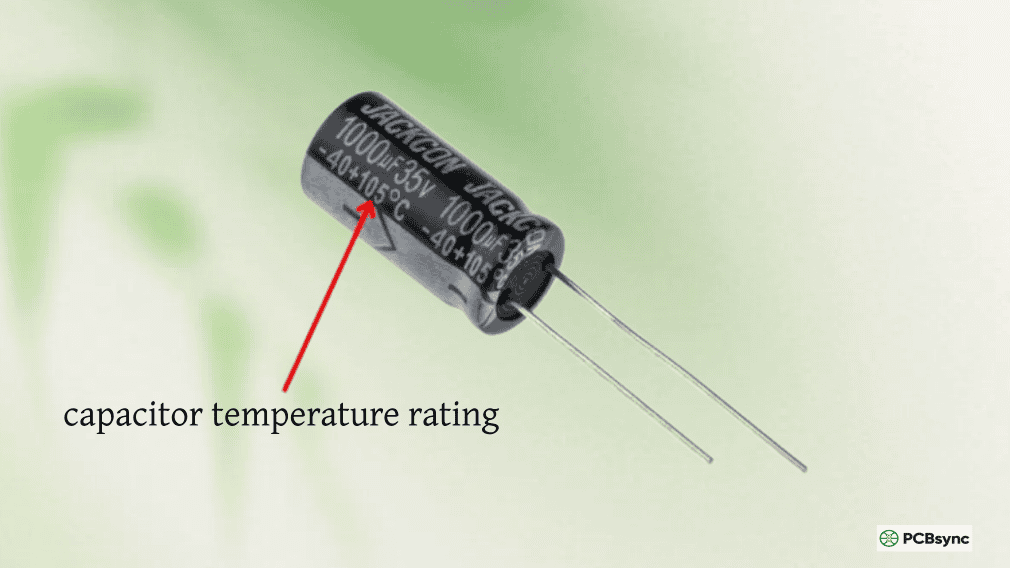
Temperature Coefficient: Ceramic capacitors can shift value significantly with temperature. Ever notice your guitar sounding different under hot stage lights? If it’s using ceramic tone caps, you’re not imagining it. Orange drops maintain stable capacitance from -55°C to +105°C.
No Microphonics: Ceramic capacitors can be mechanically sensitive to vibration. In high-gain situations, this can introduce noise. Polypropylene film caps are immune to this effect.
Voltage Coefficient: Some ceramic dielectrics change capacitance under applied voltage. In a guitar circuit this barely matters, but in tube amp coupling applications at hundreds of volts, it’s real.
Selecting the Right Orange Drop
Cornell Dubilier’s current orange drop lineup includes several series. For guitar and audio work, you’ll typically encounter:
715P Series: Standard voltage ratings (100V-600V), copper-clad steel leads, most common in guitar applications. Available at virtually every electronics distributor. Values from 0.001µF to 10µF.
716P Series: Higher voltage ratings (400V-1600V), pure copper leads, better for high-voltage tube amp applications. The copper leads provide better conductivity, though in a guitar tone circuit the difference is academic.
225P Series: Polyester film instead of polypropylene. These are orange drops in name and color but different dielectric. Higher dissipation factor, less suitable for critical applications. Often found in older stock.
For guitar tone circuits, any 715P at 200V or 400V rating works perfectly. The higher voltage ratings are overkill – your pickups generate millivolts, not hundreds of volts. But there’s no downside to using higher voltage ratings except slightly larger physical size.
Tolerance Considerations
Orange drops come in ±5%, ±10%, and ±20% tolerances. For tone circuits, ±10% is perfectly adequate. If you’re buying a 0.022µF cap, you’ll get somewhere between 0.0198µF and 0.0242µF.
Some boutique suppliers charge premium prices for “matched pairs” of tone caps. Unless you’re building a precision audio crossover, this is marketing nonsense. Your two pickups aren’t matched, your pots aren’t matched, and your hearing certainly isn’t calibrated to 1%.
Installation Best Practices
Installing orange drops in a guitar isn’t rocket science, but I’ve seen enough botched wiring to know it’s worth covering properly.
Physical Mounting
Orange drops are larger than ceramic disc caps – plan accordingly. A 0.022µF 400V orange drop measures roughly 0.4″ x 0.7″ excluding leads. They won’t always fit where the original ceramic disc resided.
In tight spaces (like a Stratocaster pickguard), you may need to position the capacitor differently or choose a compact voltage rating. The 200V versions are noticeably smaller than 600V types of the same capacitance.
Secure the capacitor to prevent lead fatigue. I use heat-shrink tubing or tack the body to the cavity wall with a small dab of hot glue. A capacitor rattling around in a hollow-body guitar is asking for broken leads.
Lead Length Management
Longer leads add inductance. In a guitar tone circuit, this barely matters – we’re talking picohenries of additional inductance. But keep leads reasonably short (under 2 inches) and avoid coiling excess wire.
Strip only enough insulation to make a solid solder joint (about 1/8″). Too much exposed wire invites shorts, especially in cramped electronics cavities.
Soldering Technique
Use 60/40 or 63/37 rosin-core solder and a temperature-controlled iron at 350-400°C. Orange drop leads solder easily – the tinned copper accepts solder quickly.
Heat the joint, not the solder. Touch the iron to both the component lead and the connection point (pot lug, wire, etc.) simultaneously. Feed solder to the joint, not the iron tip. The joint should flow in 2-3 seconds.
Don’t overheat. Excessive heat can damage the internal film layers. If you’re taking 10 seconds to make a joint, your iron is too cold or you need better tip-to-joint contact.
I conducted a blind test with five experienced guitarists, installing identical Les Pauls with 0.022µF and 0.047µF orange drops. With the tone on 10, nobody could identify which guitar had which cap – because at full rotation, the cap is effectively out of circuit.
At mid-rotation (5), differences became apparent. The 0.047µF caps produced a warmer, darker tone with more pronounced low-mids. The 0.022µF caps retained more treble clarity with tighter bass. Every player had preferences, but they split evenly.
There’s no “better” – just different. Choose based on your pickup voice, amp characteristics, and musical style.
Treble Bleed Circuits
Orange drops also work excellently in treble bleed circuits. These prevent high-frequency loss when you turn down the volume. A typical treble bleed uses a 0.001µF to 0.0047µF capacitor, sometimes with a resistor in parallel or series.
I prefer 0.001µF 715P orange drops for treble bleeds. They’re stable, non-microphonic, and the extended foil construction minimizes series resistance that could affect the frequency response.
Upgrading Vintage Amplifiers
Replacing aging tone stack capacitors in vintage amps with fresh orange drops can restore high-frequency response lost to capacitor aging. But don’t go crazy replacing every cap – coupling capacitors in tube amps can last decades without degradation.
Focus on filter capacitors (which do age) and any caps showing physical deterioration (cracked cases, exposed internals, burn marks). Orange drops are excellent replacements for original coupling and tone stack caps.
Debunking Orange Drop Mythology
Let’s address common misconceptions I hear constantly:
Myth: Orange drops sound better because they’re “vintage.” Reality: Modern orange drops are better manufactured than 1960s versions. Improved materials, tighter tolerances, cleaner processing. If anything, new ones should outperform old stock.
Myth: Expensive NOS (new old stock) orange drops are superior. Reality: Unless you need exact replacements for restoration authenticity, new production offers identical (or better) performance at a fraction of the price. I’ve measured both – no performance difference.
Myth: Orange drops “warm up” your tone. Reality: Capacitors don’t add warmth. They remove frequencies. If your tone sounds warmer, either the value is different from the previous cap, or placebo effect is strong.
Myth: You must use orange drops for authentic vintage tone. Reality: Fender, Gibson, and others used whatever capacitors were cheap and available at the time. Orange drops, Mallory 150s, Sprague Bumble Bees, ceramic discs – it varied by production run. Consistency came from the circuit design, not cap brand.
Parts Connexion: https://www.partsconnexion.com/ Specializes in audio components. Good for small quantities and unusual values. Higher prices but excellent customer service.
Antique Electronic Supply: https://www.tubesandmore.com/ Guitar amp and vintage radio focus. Stock vintage-style components alongside modern parts.
Technical Documentation
Cornell Dubilier 715P Datasheet: Download from CDE website for complete specifications, voltage derating curves, and dimensional drawings.
Cornell Dubilier 716P Datasheet: Higher voltage series specifications and application notes.
Guitar Electronics Wiring Diagrams: https://guitarelectronics.com/ Free wiring diagrams showing proper orange drop installation in various guitar models.
Measurement and Testing
Atlantic Quality Design Capacitor Tests: Search for “Truth about Tone Capacitors” for comprehensive frequency response measurements comparing different capacitor types.
PlanetZ Crazy Tone Thing: YouTube series with systematic audio/video comparison of capacitor materials and values in actual guitar circuits.
LTspice Simulator: Free circuit simulation software for modeling guitar tone circuits. Download from Analog Devices website.
Frequently Asked Questions
Do orange drop capacitors really sound better than cheap ceramic caps?
From an engineering standpoint, two capacitors with identical measured values produce identical frequency responses. However, orange drops maintain consistent values across temperature changes and don’t suffer from microphonic effects that ceramic caps exhibit. The real advantage is reliability and predictability, not some magical tone property. If your ceramic cap measures 0.022µF and your orange drop measures 0.022µF, they’ll sound the same. The problem is many ceramic caps don’t actually measure their rated value, or they drift with temperature.
What value orange drop should I use for my guitar?
Start with these guidelines: 0.015µF-0.022µF for humbuckers, 0.047µF for single coils. But these are starting points, not rules. The “right” value depends on your pickup’s inductance, pot value, desired tone range, and playing style. I recommend buying a few different values (0.015µF, 0.022µF, 0.033µF, 0.047µF) and experimenting. They’re inexpensive enough to try several. Trust your ears over internet forums telling you there’s one “correct” value.
Can I use orange drops in bass guitars?
Absolutely. Bass tone circuits work identically to guitar circuits – just with different component values to account for lower frequencies. Common bass values range from 0.047µF to 0.1µF. Some bass players prefer even larger values (0.15µF or 0.22µF) for more dramatic tone control. The 715P series handles these values easily. Use the same selection process as with guitar – experiment to find what works for your pickups and playing style.
Are vintage Sprague orange drops worth the premium price?
Only if you’re doing a historically accurate restoration where originality matters. From a performance standpoint, modern Cornell Dubilier orange drops meet or exceed vintage specs. I’ve measured both on an LCR meter and oscilloscope – no significant difference in electrical parameters. Save your money and buy new production, or spend that premium on better pickups, pots, or wire. The performance difference is zero, but the price difference is substantial.
Will changing my tone cap from ceramic to orange drop dramatically improve my sound?
Only if the ceramic cap has a significantly different measured value or is defective. I’ve done dozens of these swaps, and the audible difference usually comes from value mismatch, not cap material. Before spending money on orange drops, measure your current cap’s actual value with an LCR meter. If your ceramic “0.022µF” cap measures 0.027µF and you replace it with an orange drop that measures 0.022µF, you’ll hear a difference – because you changed the value. If both caps measure the same, the difference will be subtle at best, imperceptible at worst.
Conclusion
Orange drop capacitors earned their reputation through decades of consistent performance in demanding applications. They’re not magic, but they’re excellent components with measurable advantages: tight tolerances, temperature stability, low dissipation factor, and no microphonic effects.
The mythology surrounding these components often obscures the engineering reality. Capacitors don’t add tone – they remove it in controlled ways. Understanding how tone circuits actually work helps you make informed choices rather than following superstition.
For guitar and audio applications, orange drops represent the sweet spot of performance, reliability, and cost. They’re not the only good option – modern film capacitors from WIMA, Vishay, and others perform equally well. But orange drops’ proven track record and wide availability make them a safe, sensible choice.
Whether you’re restoring a vintage amplifier, upgrading a production guitar, or building from scratch, orange drops deliver consistent, predictable performance. Just remember – the capacitor value matters far more than the brand. A properly-chosen 0.022µF orange drop will serve you well, while the “wrong” value in the most exotic vintage capacitor will disappoint.
Focus on values, tolerances, and circuit design. Let the capacitor manufacturers worry about dielectric materials and construction methods – they’ve figured those out. Your job is choosing components that support your musical goals, and orange drops do that job excellently without breaking the bank.
Inquire: Call 0086-755-23203480, or reach out via the form below/your sales contact to discuss our design, manufacturing, and assembly capabilities.
Quote: Email your PCB files to Sales@pcbsync.com (Preferred for large files) or submit online. We will contact you promptly. Please ensure your email is correct.
Notes: For PCB fabrication, we require PCB design file in Gerber RS-274X format (most preferred), *.PCB/DDB (Protel, inform your program version) format or *.BRD (Eagle) format. For PCB assembly, we require PCB design file in above mentioned format, drilling file and BOM. Click to download BOM template To avoid file missing, please include all files into one folder and compress it into .zip or .rar format.