Inquire: Call 0086-755-23203480, or reach out via the form below/your sales contact to discuss our design, manufacturing, and assembly capabilities.
Quote: Email your PCB files to Sales@pcbsync.com (Preferred for large files) or submit online. We will contact you promptly. Please ensure your email is correct.
Notes: For PCB fabrication, we require PCB design file in Gerber RS-274X format (most preferred), *.PCB/DDB (Protel, inform your program version) format or *.BRD (Eagle) format. For PCB assembly, we require PCB design file in above mentioned format, drilling file and BOM. Click to download BOM template To avoid file missing, please include all files into one folder and compress it into .zip or .rar format.
MKP Capacitors: Metallized Polypropylene Film Guide
After debugging my thousandth power supply and replacing yet another failed electrolytic Capacitor, I developed a deep appreciation for MKP capacitors. These metallized polypropylene film components have saved countless hours of reliability headaches in my designs. Let me share what I’ve learned about these workhorses of power electronics.
Understanding MKP Capacitor Technology
An MKP capacitor uses metallized polypropylene film as its dielectric material. The “M” stands for metallized, “K” represents the German word “Kunstoff” (meaning plastic), and “P” indicates polypropylene. Unlike foil-based film capacitors where separate metal sheets form the electrodes, MKP capacitors have an ultra-thin aluminum or zinc layer directly vacuum-deposited onto the polypropylene film.
This metallization process creates electrodes typically just 20-50 nanometers thick – about 1000 times thinner than aluminum foil. The thin metallization enables what makes MKP capacitors truly special: self-healing properties that prevent catastrophic failures.
Here’s where MKP capacitors get interesting. When a dielectric breakdown occurs due to overvoltage or a defect in the film, the ultra-thin metallization around the fault point vaporizes instantly from the energy released. This creates a small insulating gap around the defect, isolating it and restoring the capacitor’s function.
I’ve witnessed this firsthand during a lightning surge test. The MKP capacitor in our inverter design took a hit that would have destroyed an electrolytic cap – it sparked briefly, the metallization cleared the fault, and the circuit kept running. The capacitance dropped by maybe 0.5%, which was well within tolerance.
The self-healing process happens in microseconds and can occur thousands of times over the capacitor’s lifetime without significant performance degradation. This makes MKP capacitors incredibly reliable for applications with voltage transients and surges.
Core Technical Specifications
Dissipation Factor and ESR
The dissipation factor (tan δ) measures energy loss in the capacitor. For MKP capacitors, typical values range from 0.0002 to 0.0020 (0.02% to 0.2%) at 1 kHz – significantly lower than electrolytic capacitors.
The relationship between dissipation factor and equivalent series resistance (ESR) is:
ESR = tan δ / (2π × f × C)where:tan δ = dissipation factorf = frequency (Hz)C = capacitance (F)
For example, a 10µF MKP capacitor with tan δ = 0.001 at 10 kHz has an ESR of approximately: ESR = 0.001 / (2π × 10,000 × 0.00001) ≈ 1.59 ohms
Lower ESR means less power dissipation and heat generation – critical for high-frequency power applications.
Capacitor Type
Typical tan δ @ 1kHz
Typical ESR (10µF @ 10kHz)
MKP Film
0.0002 – 0.002
0.16 – 1.6 Ω
MKT (Polyester)
0.005 – 0.02
8 – 32 Ω
Electrolytic Aluminum
0.05 – 0.20
80 – 320 Ω
Temperature Performance
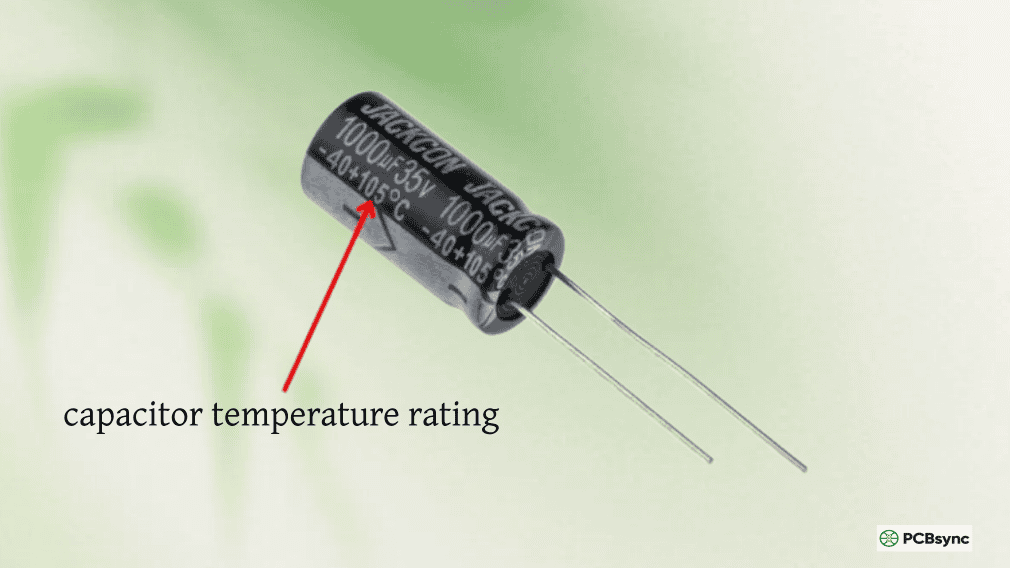
MKP capacitors exhibit excellent temperature stability. Capacitance variation typically stays within ±2.5% from -40°C to +85°C, and specialty grades handle up to +105°C or even +125°C.
The temperature coefficient is approximately -200 ppm/°C, which is predictable and linear. This makes MKP capacitors suitable for precision applications where electrolytic capacitors would drift unacceptably.
Voltage Ratings and Derating
Standard MKP capacitors are available from 63V DC to 3000V DC, with AC ratings from 250V RMS to 1000V RMS. For power applications, you’ll commonly encounter:
DC link capacitors: 450V – 1200V DC
AC filter capacitors: 275V AC, 350V AC, 480V AC
Snubber capacitors: 630V – 2000V DC
Unlike ceramic capacitors, MKP capacitors don’t lose capacitance under DC bias. The rated capacitance remains essentially constant across the entire voltage range. This is huge for DC link applications where voltage swing is substantial.
However, proper voltage derating extends life. I typically design with 70-80% of the rated voltage for critical applications, especially in high-temperature environments.
Insulation Resistance and Leakage
MKP capacitors offer extremely high insulation resistance – typically >10,000 MΩ at 25°C for small values, or >100,000 MΩ-µF for larger capacitances. This makes them excellent for timing circuits and sample-and-hold applications where low leakage is essential.
The self-discharge time constant (τ = R × C) typically exceeds 1000 seconds, far superior to electrolytic capacitors which might discharge significantly in minutes.
Common Applications in Power Electronics
DC Link Capacitors
In motor drives, solar inverters, and EV charging systems, MKP capacitors serve as the DC link – storing energy and smoothing the rectified voltage. Key advantages here:
High ripple current capability due to low ESR
Excellent pulse handling from low equivalent series inductance (ESL)
Long lifetime even at elevated temperatures
No electrolyte to dry out
I’ve designed 50kW solar inverters using TDK B2562 series MKP capacitors rated for 100,000+ hours at 85°C. Compare that to electrolytic capacitors that might only last 5,000-10,000 hours in the same conditions.
AC Filter Capacitors
For three-phase inverters, MKP capacitors handle harmonic filtering on both input and output. The IEC 61071 compliant types meet stringent requirements for:
Reactive power compensation
Harmonic distortion reduction
Power factor correction
EMI attenuation
These applications demand high VAR ratings. A typical 40µF, 480V AC filter capacitor might handle 55 kVAR continuously – that’s serious power handling in a compact package.
Snubber and Damping Circuits
In IGBT and MOSFET switching applications, MKP snubbers protect semiconductors from voltage spikes. The key specifications:
High dV/dt capability (typically 50-200 V/µs)
Low inductance for fast response
Pulse current handling (often 100x rated current for microseconds)
The self-healing property is critical here. Repeated voltage transients that would destroy other capacitor types are routine for MKP snubbers.
Motor Run and Motor Start Capacitors
AC motors require phase-shifting capacitors for starting and running. MKP motor run capacitors (often called CBB65 or similar) offer:
Compact size for capacitance/voltage rating
Self-healing for reliability
Temperature rating suitable for motor enclosures
Safety approvals (UL, VDE, CQC)
I’ve used EPCOS B32370 series for commercial HVAC compressors. The aluminum can construction dissipates heat well, and the overpressure disconnector provides fail-safe operation.
MKP vs Other Film Capacitors
MKP vs MKT (Metallized Polyester)
Parameter
MKP (Polypropylene)
MKT (Polyester)
Dissipation Factor
0.0002-0.002
0.005-0.02
Temperature Range
-40°C to +105°C
-55°C to +85°C
Temperature Coefficient
-200 ppm/°C
+400 ppm/°C
Max Frequency
1 MHz+
100 kHz
Dielectric Absorption
0.02-0.05%
0.2-0.5%
Cost
Medium-High
Low-Medium
MKT capacitors work fine for general coupling and bypass applications where temperature stability isn’t critical. For precision circuits, timing applications, or power electronics, MKP is worth the extra cost.
MKP vs Electrolytic Capacitors
The comparison isn’t even close for high-frequency, high-ripple applications. Electrolytic capacitors have their place for bulk energy storage at low frequencies, but MKP wins for:
ESR (100x lower typical)
Lifetime (10x longer at elevated temperatures)
Ripple current handling (per unit volume)
Reliability (no electrolyte degradation)
The trade-off is volumetric efficiency. A 1000µF electrolytic is tiny compared to an equivalent MKP capacitor. I use electrolytics for bulk storage and MKP for filtering and AC applications.
Real-World Design Considerations
Thermal Management
Power dissipation in an MKP capacitor follows:
P = I²RMS × ESRwhere:P = power dissipation (W)IRMS = RMS current (A)ESR = equivalent series resistance (Ω)
The resulting temperature rise depends on the thermal resistance of the package. For plastic case MKP capacitors, typical values are 10-25°C/W. This means 1W dissipation raises the case temperature 10-25°C above ambient.
Always measure actual temperature in your design. I use thermocouples on the capacitor case during qualification testing. If you’re exceeding 85°C case temperature with a 105°C rated part, you’re cutting into your design margin.
Ripple Current Calculations
Inverter applications involve complex current waveforms. Rather than trying to calculate RMS current from switching patterns, I use manufacturer-provided curves or simulation tools.
For example, TDK’s SpiMLCC tool models MKP capacitor behavior under various conditions. You input the voltage, current waveform, and ambient temperature, and it predicts temperature rise and lifetime.
Frequency Considerations
MKP capacitors perform well from DC to several hundred kHz. Above 100 kHz, parasitic inductance becomes significant. The equivalent series inductance (ESL) is typically 5-50 nH depending on package size and construction.
For a 10µF capacitor with 20 nH ESL, the self-resonant frequency is:
Above this frequency, the capacitor looks inductive, not capacitive. For high-frequency applications, use smaller capacitance values or parallel multiple capacitors.
Mechanical Stress and PCB Layout
Film capacitors are sensitive to mechanical flexing. I learned this the hard way when several MKP capacitors in a vibration-prone automotive application failed after 6 months. The issue wasn’t electrical – the leads cracked from PCB flexure during thermal cycling.
Best practices:
Use flexible lead materials (copper, not steel)
Allow 2-3mm lead length between capacitor body and PCB
Avoid placing capacitors near PCB edges or connectors
Consider conformal coating for vibration resistance
Use 4-terminal designs where available to reduce lead stress
Selection and Sizing Guidelines
Determining Required Capacitance
For DC link applications, the capacitance requirement depends on acceptable voltage ripple:
C = (IRMS × Δt) / ΔVwhere:IRMS = ripple currentΔt = time periodΔV = acceptable voltage ripple
Don’t forget to account for capacitance tolerance. If you need exactly 100µF, specify 110µF with ±10% tolerance to ensure you get at least 99µF worst-case.
Reading Part Numbers
Manufacturer part numbers encode critical information. Here’s a typical TDK example:
B32776G1606K000│││││││││││││││││││││└───────── Tolerance (K = ±10%)│││││└────────── Capacitance code (606 = 60µF)││││└─────────── Voltage rating (1 = 1000V)│││└──────────── Series code (G)││└───────────── Lead pitch│└────────────── Case size└─────────────── Series family (B32776)
Always verify the datasheet – part numbering schemes aren’t standardized across manufacturers.
Manufacturer Selection
Major MKP capacitor suppliers offer different strengths:
TDK/EPCOS: Comprehensive range, excellent for power electronics, strong automotive qualifications KEMET: Good high-voltage options, competitive pricing Vishay: Reliable general-purpose types, good availability WIMA: High-quality signal and power capacitors, premium pricing Panasonic: Strong in motor run applications
For production designs, qualify at least two manufacturers to manage supply chain risk. MKP capacitors from different suppliers with similar specs are generally interchangeable, unlike some specialty components.
The most frequent error I see is calculating RMS current from average values. In a full-bridge inverter, the capacitor current waveform is complex with high peaks. Use proper RMS calculation or simulation – the difference between naive averaging and true RMS can be 2-3x.
Ignoring Temperature Rise
Specifying an 85°C rated capacitor for an 85°C ambient application is asking for trouble. You need margin for self-heating. Always calculate or measure actual operating temperature.
Parallel Connection Issues
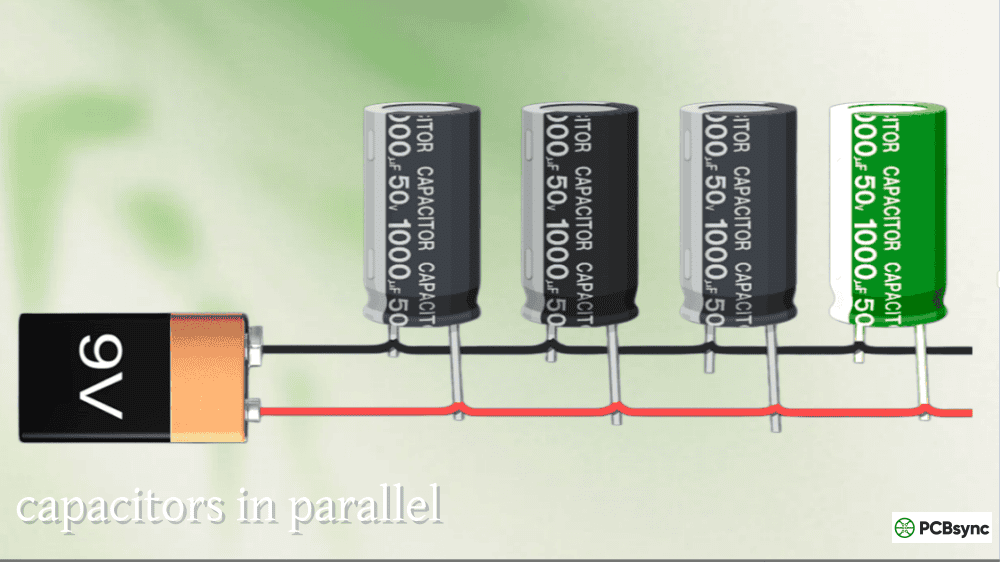
Paralleling MKP capacitors for higher capacitance seems straightforward, but watch for current sharing imbalances if ESR or lead lengths differ significantly. Use similar types and match lead geometries.
Substituting MKT for MKP
In a pinch, you might think swapping an MKP for an MKT of the same capacitance/voltage would work. It might – for a while. But the higher dissipation factor means more heating, and temperature coefficient differences will affect performance. Don’t do this in production designs.
Testing and Qualification
Incoming Inspection
For critical applications, test sample capacitors from each production lot:
Capacitance and dissipation factor at rated frequency
Insulation resistance at rated voltage
Visual inspection for physical damage
Marking verification against purchase order
I use a Wayne Kerr 6500B impedance analyzer for production testing. It measures capacitance, tan δ, ESR, and phase angle automatically.
Life Testing
Accelerated life testing at elevated temperature and voltage stresses the capacitors. A common profile:
Temperature: 105°C (for 85°C rated parts)
Voltage: 1.1-1.25 × rated voltage
Duration: 1000-2000 hours
Measurement intervals: 168, 500, 1000, 2000 hours
Measure capacitance change, tan δ increase, and insulation resistance degradation. Acceptable limits vary, but typically ±5% capacitance change and 2x tan δ increase are failure criteria.
TDK Power Capacitor Design Tool: Available through TDK field application engineers. Calculates temperature rise, lifetime, and current capability based on waveforms.
LTspice Models: Most manufacturers provide SPICE models for their MKP series. Import these for circuit simulation rather than using ideal capacitor models.
IEC 61071: Power capacitors for AC applications IEC 60384-1: Fixed capacitors for electromagnetic interference suppression UL 810: Capacitors for radio and television interference suppression VDE 0560: Capacitors and RC units for power application
These standards define testing requirements, safety features, and performance criteria. Understanding them helps interpret datasheet specifications.
Technical Documentation
Film Capacitor General Technical Information (TDK Electronics): Comprehensive 60+ page guide covering theory, applications, and design calculations.
Vishay MKP Technology Explanation: Detailed technical document on metallized film construction and self-healing properties.
Application Notes: Search manufacturer websites for specific application notes like “DC Link Capacitors for Motor Drives” or “Film Capacitors in Solar Inverters.”
Frequently Asked Questions
What’s the difference between MKP and MPP capacitors?
Both use polypropylene dielectric, but construction differs. MKP has metallized electrodes deposited directly on the film, while MPP (or more accurately, foil/film PP) uses separate metal foil electrodes. MPP offers better pulse current handling but larger size. MKP has self-healing properties that MPP lacks. For most power electronics, MKP is the better choice due to size and reliability advantages.
Can I use MKP capacitors for audio applications?
Absolutely. MKP capacitors excel in audio crossovers and coupling applications due to extremely low distortion, minimal dielectric absorption, and excellent temperature stability. Many audiophile-grade crossover networks use MKP types (sometimes marketed as “MCap” or similar). The low dissipation factor ensures minimal signal degradation. Just avoid cheap motor-run types for audio – use proper signal-grade MKP capacitors.
Why did my MKP capacitor fail in a high-frequency application?
Most likely, you exceeded the dV/dt rating or operated above the self-resonant frequency. MKP capacitors can’t handle infinitely fast voltage changes – there’s a maximum dV/dt spec (typically 50-200 V/µs depending on series). Also check if you’re operating near or above the resonant frequency where impedance rises and heating increases. Use smaller values or different construction (4-terminal types have lower ESL) for very high frequencies.
How long do MKP capacitors last in solar inverters?
Properly designed and operated, MKP DC link capacitors in solar inverters should last 15-20 years. This assumes operation within thermal limits (case temperature under 85°C) and appropriate voltage derating (70-80% of rated voltage). TDK B2562 series, for example, rates 100,000+ hours at 85°C. Compare this to electrolytic capacitors which might need replacement every 5-7 years in the same application. The longer life and higher reliability make MKP capacitors cost-effective despite higher initial price.
Are MKP capacitors suitable for automotive applications?
Yes, but choose automotive-qualified types. Standard industrial MKP capacitors may not meet vibration, moisture, and temperature cycling requirements for automotive use. Look for AEC-Q200 qualified parts (like TDK B32774P series) that pass stringent automotive testing. These include additional mechanical reinforcement, moisture-resistant sealing, and extended temperature ranges (-40°C to +125°C). The self-healing property is particularly valuable in automotive environments with transient voltage spikes from alternator load dumps and other electrical disturbances.
Conclusion
MKP capacitors represent mature, proven technology that combines high performance with excellent reliability. The self-healing metallized construction provides fault tolerance unmatched by other capacitor technologies, making MKP types ideal for demanding power electronics applications.
Understanding the core specifications – dissipation factor, ESR, voltage rating, and temperature limits – enables proper selection and application. The key is matching the capacitor characteristics to your specific requirements: pulse current capability for DC links, dV/dt rating for snubbers, VAR capacity for AC filters.
While MKP capacitors cost more than electrolytic alternatives, the total cost of ownership favors film technology in many applications. Longer lifetime, higher reliability, and superior high-frequency performance often justify the premium. I’ve seen systems where replacing electrolytic capacitors with MKP types eliminated field failures and extended service intervals by years.
The resources and databases I’ve outlined provide the detailed parametric data needed for component selection and circuit design. Take advantage of manufacturer simulation tools – they’ve invested heavily in modeling to help engineers design reliable systems.
After two decades designing power electronics, I reach for MKP capacitors first for any application involving AC voltage, high ripple current, or demanding environmental conditions. They’ve earned that trust through consistent, reliable performance across countless designs.
Inquire: Call 0086-755-23203480, or reach out via the form below/your sales contact to discuss our design, manufacturing, and assembly capabilities.
Quote: Email your PCB files to Sales@pcbsync.com (Preferred for large files) or submit online. We will contact you promptly. Please ensure your email is correct.
Notes: For PCB fabrication, we require PCB design file in Gerber RS-274X format (most preferred), *.PCB/DDB (Protel, inform your program version) format or *.BRD (Eagle) format. For PCB assembly, we require PCB design file in above mentioned format, drilling file and BOM. Click to download BOM template To avoid file missing, please include all files into one folder and compress it into .zip or .rar format.