Inquire: Call 0086-755-23203480, or reach out via the form below/your sales contact to discuss our design, manufacturing, and assembly capabilities.
Quote: Email your PCB files to Sales@pcbsync.com (Preferred for large files) or submit online. We will contact you promptly. Please ensure your email is correct.
Notes: For PCB fabrication, we require PCB design file in Gerber RS-274X format (most preferred), *.PCB/DDB (Protel, inform your program version) format or *.BRD (Eagle) format. For PCB assembly, we require PCB design file in above mentioned format, drilling file and BOM. Click to download BOM template To avoid file missing, please include all files into one folder and compress it into .zip or .rar format.
LED Driver Capacitors: Power Factor & Filtering for Reliable Lighting Designs
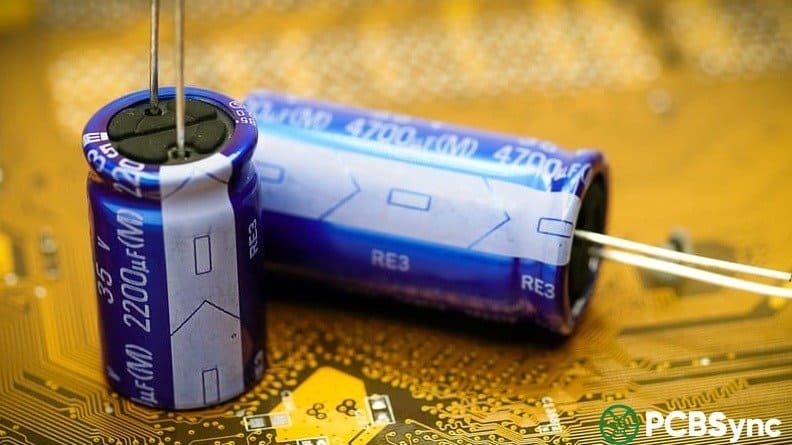
Spend enough time debugging LED driver boards and you’ll eventually trace a flicker complaint, an EMC failure, or a premature driver death back to a capacitor — wrong type, wrong value, wrong placement, or simply worn out. The LED capacitor doesn’t generate light. It doesn’t switch current. But it controls the quality of the power that reaches the LEDs, and without it working correctly, nothing else in the system performs as intended.
LED drivers have to solve several electrical problems at once: rectifying AC mains voltage, correcting power factor to meet regulatory limits, filtering out switching noise, and delivering a smooth, regulated DC current to the LED string. Capacitors are involved at every single one of those stages. Getting each one right requires understanding not just the capacitance value but the technology, the voltage rating, the ripple current capability, and the thermal environment — all of which interact in ways that a quick BOM substitution can completely undermine.
This guide covers the full picture from a board-level engineering perspective, with the practical detail that generic component overviews tend to leave out.
The LED Driver Power Chain: Where Each LED Capacitor Lives
A typical offline LED driver — the kind powering a commercial luminaire from 120V or 230V AC — has a clearly defined signal chain. Understanding where capacitors appear and what they’re doing at each stage is the foundation for making good selection decisions.
EMI Filter Stage: X and Y safety capacitors filter conducted emissions before the mains voltage enters the rectifier. These are safety-rated components.
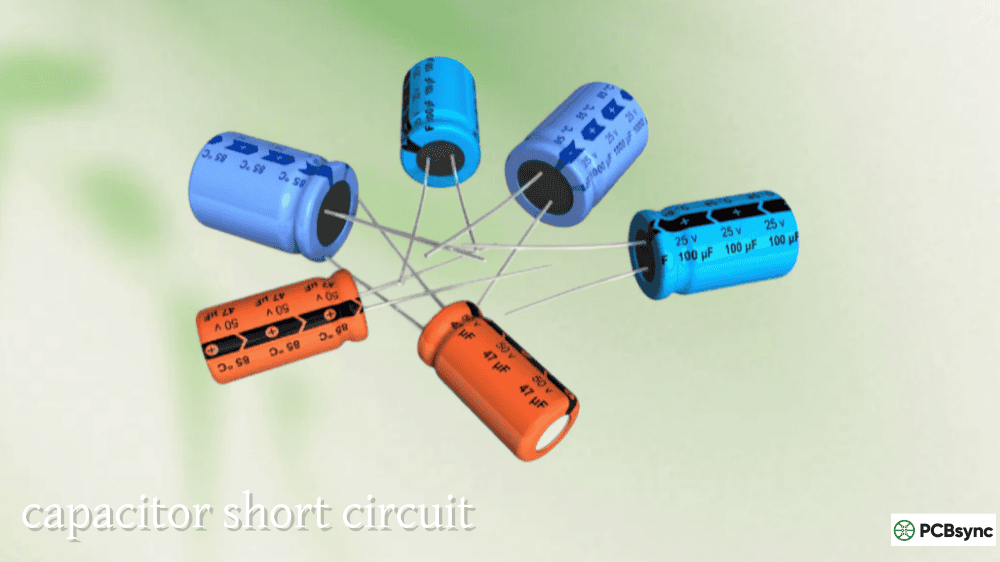
Bridge Rectifier Output: A bulk electrolytic capacitor smooths the rectified DC and is the primary energy storage element. This is often the highest-stress LED capacitor in the entire design.
Power Factor Correction (PFC) Stage: In drivers above 25W (required by IEC 61000-3-2), an active PFC boost stage uses a dedicated output capacitor to maintain the regulated high-voltage DC bus.
Switching Converter Stage: The DC-DC converter (flyback, buck, buck-boost) that regulates current to the LEDs uses both input decoupling and output filter capacitors.
LED Output Filter: A small capacitor across the LED string smooths the output current ripple, reducing flicker and protecting sensitive LED junctions.
Each position has its own set of requirements. Treating them as interchangeable is where designs start to fail.
EMI Filter LED Capacitors: Safety Ratings Are Non-Negotiable
X-Capacitors and Y-Capacitors in LED Driver Input Stages
Before the mains voltage reaches your rectifier, it passes through an EMI filter designed to suppress both differential-mode and common-mode noise generated by your switching converter. X-capacitors (connected line-to-line) and Y-capacitors (connected line-to-earth) are the shunt elements in this filter.
These are not general-purpose film capacitors. They must be certified to IEC 60384-14, which defines failure mode requirements for capacitors connected across or to mains voltage. A Y-capacitor that fails short-circuit connects the mains line directly to the enclosure — a lethal outcome. The standard mandates that Y-caps fail open, and manufacturers test to certify this.
EMI Cap Type
Connection
Safety Class
Capacitance Range
Voltage Rating
X1 Capacitor
Line-to-Line
IEC Class X1
100nF – 1µF
440V AC
X2 Capacitor
Line-to-Line
IEC Class X2
100nF – 1µF
275V AC
Y1 Capacitor
Line-to-Earth
IEC Class Y1
1nF – 10nF
500V AC
Y2 Capacitor
Line-to-Earth
IEC Class Y2
1nF – 10nF
300V AC
For most residential and commercial LED drivers operating on 230V mains, X2 and Y2 capacitors are standard. Always verify that your specific supply chain part number carries the correct certification marking — substituting an uncertified part in these positions is both a compliance failure and a safety risk that no cost saving justifies.
Bulk Electrolytic LED Capacitor: The Reliability Bottleneck
Why the Bulk Capacitor Is the Weakest Link in Most LED Drivers
The aluminum electrolytic capacitor sitting after the bridge rectifier is statistically the most common cause of LED driver failure in the field. This is well-documented in lighting reliability literature and it’s not a design philosophy problem — it’s physics. Electrolytic capacitors have a finite service life defined by electrolyte evaporation, and that evaporation rate is an exponential function of temperature. Every 10°C rise above rated temperature roughly halves the operational life.
In a luminaire, the driver is often in a thermally enclosed space close to the LED heat sink. Ambient temperatures of 70–85°C inside the driver housing are common. A capacitor rated for 2,000 hours at 85°C operating in an 80°C environment with ripple current self-heating pushing its core to 88°C might deliver 1,600 effective hours — a fraction of the 25,000–50,000 hour luminaire lifetime target.
One point worth emphasizing: long-life electrolytic series (Nichicon HE, Panasonic FR, Rubycon ZLH) are not marketing differentiators — they use improved electrolyte formulations and higher-grade aluminum foil that genuinely extend service life by 2–4× over standard series. The price difference on a BOM is typically less than $0.15 per unit. The reliability difference in the field is significant.
The Ripple Current Calculation Every LED Capacitor Designer Should Do
The 100Hz (or 120Hz for 60Hz mains) ripple current flowing through the bulk electrolytic is the primary thermal driver. For a simplified non-PFC driver:
I_ripple ≈ P_out / (V_dc × η) × k
Where k ≈ 0.48 for a full-wave rectifier, V_dc is the average DC bus voltage, and η is converter efficiency. For a 30W driver on a 310V DC bus at 88% efficiency: I_ripple ≈ 30 / (310 × 0.88) × 0.48 ≈ 53mA. This is a modest value, but add the switching frequency component and verify the capacitor’s combined ripple current rating at both 100Hz and the switching frequency — manufacturers typically specify ripple current with a frequency correction factor table.
Power Factor Correction and the PFC LED Capacitor
Why PFC Matters in LED Driver Design
IEC 61000-3-2 Class C limits apply to lighting equipment above 25W connected to public mains supplies. Without power factor correction, a simple rectifier-capacitor input draws current in narrow peaks, creating harmonic distortion that utilities, regulators, and increasingly energy codes all penalize. Most commercial LED drivers above 25W include an active PFC boost stage to achieve power factor > 0.9.
The PFC stage output capacitor is a high-voltage (typically 400–450V), medium-to-large capacitance (47µF–470µF) electrolytic that holds the regulated boost output voltage (usually 380–400V DC). This LED capacitor sees the full combined ripple from both the 100Hz mains ripple and the boost converter switching frequency.
PFC Output LED Capacitor Requirements
Parameter
Typical Requirement
Notes
Capacitance
47µF – 470µF
Scale with output power (~2µF/W typical)
Voltage Rating
400V or 450V DC
PFC output is typically 380–400V
Temperature Grade
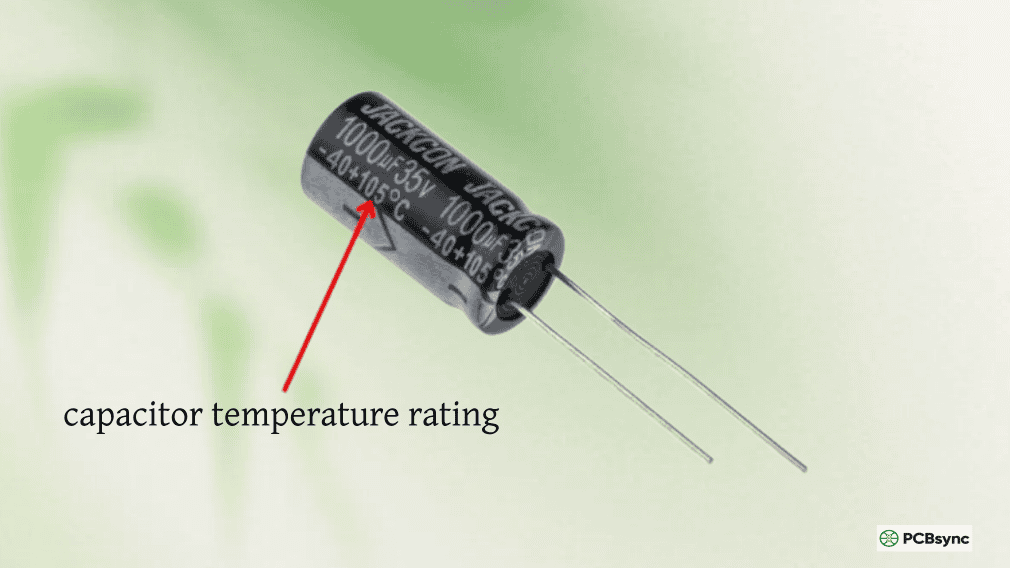
105°C
Non-negotiable in enclosed drivers
Ripple Current
High — combined 100Hz + switching
Check manufacturer frequency correction tables
ESR
Low-impedance series
Minimizes self-heating
Life Rating
≥ 5,000 hrs at 105°C
Extrapolate to actual operating conditions
In designs targeting very long luminaire life (>50,000 hours), some engineers replace the PFC output electrolytic with a bank of metallized polypropylene film capacitors. The capacitance density of film is far lower (you need roughly 5–8× the volume for the same capacitance), but the lifetime extension is dramatic. This trade-off makes sense in high-end commercial or architectural lighting where replacement cost is prohibitive.
The DC-DC converter stage (most commonly a flyback or buck topology in LED drivers) needs local decoupling capacitance across its input to handle the high-frequency switching current. This LED capacitor needs low ESL and low ESR at the switching frequency (typically 50kHz–200kHz in modern drivers).
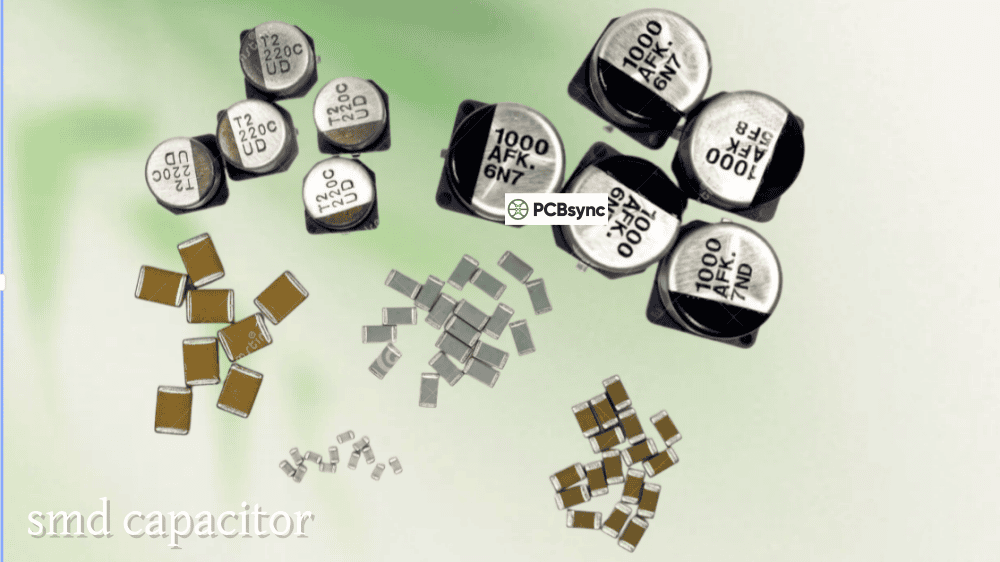
Here, ceramic MLCCs (X7R or C0G/NP0 for smaller values) are appropriate for the high-frequency bypass role, while a small electrolytic handles bulk charge storage. Apply DC bias derating carefully to any X7R MLCC in this position — at 300V+ DC bus voltage, most standard X7R values will have lost 50–70% of their nominal capacitance.
Output Filter LED Capacitor: The Direct Impact on Flicker
The capacitor across the LED string at the driver output directly affects light output ripple — what humans perceive as flicker. IEEE 1789-2015 and IEC TR 61547-1 both define acceptable flicker limits for LED lighting. The output filter LED capacitor smooths the residual ripple current from the converter, reducing the peak-to-average variation in LED drive current.
Output Cap Parameter
Recommended Spec
Impact
Capacitance
10µF – 100µF
Higher = lower ripple, less flicker
Voltage Rating
1.5× max LED string voltage
Include transient margin
ESR
Low
Higher ESR reduces filtering effectiveness
Type
Electrolytic or film
Film preferred for long-life designs
Temp Rating
105°C
Matches bulk cap requirement
A practical note: in constant-current buck or flyback drivers, the output capacitor interacts with the current regulation loop. Too much capacitance can cause instability or slow transient response. Always verify loop stability with your actual cap value using either simulation (SIMPLIS, LTspice) or bench measurement of the closed-loop Bode response.
Ceramic LED Capacitors: Where They Help and Where They Mislead
COG vs. X7R in LED Driver Circuits
Ceramic capacitors appear in several supporting roles in LED driver designs: gate drive bypass, IC VCC decoupling, snubber networks, and feedback filter components. The key is choosing the right dielectric for each position.
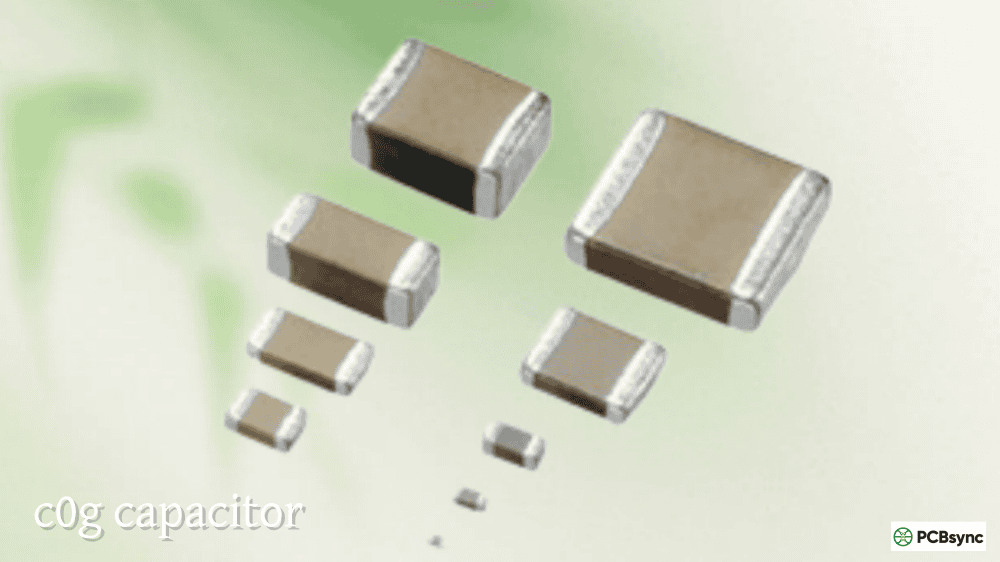
COG (NP0): Stable capacitance across temperature and voltage. Ideal for timing, filtering, and feedback networks where accuracy matters. Limited to typically 1µF maximum at low voltages.
X7R: High capacitance density but significant voltage coefficient and temperature coefficient. Appropriate for bulk bypass where nominal value is acceptable with derating applied. Completely inappropriate for frequency-setting or timing applications.
Ceramic Type
Temp Coefficient
DC Bias Derating
Best LED Driver Use
C0G / NP0
±30ppm/°C
Negligible
Timing, feedback, snubbers
X7R
±15% over -55°C to 125°C
Significant (30–70% at rated V)
Bypassing, non-critical filtering
X5R
±15% over -55°C to 85°C
Significant
Low-voltage bypass only
Y5V
+22/-82%
Severe
Avoid in any precision role
For a comprehensive reference on capacitor types, dielectric classifications, and parametric selection, the Capacitor guide at PCBSync covers the full technology landscape in practical detail.
PCB Layout Considerations for LED Capacitor Performance
Layout mistakes are responsible for a surprising share of LED driver failures and EMC non-conformances. A few principles that consistently matter in production:
Bulk electrolytic placement relative to thermal sources. Keep the bulk LED capacitor away from transformer cores, MOSFET drain pads, and heat sinks. Heat dissipates radially — placing the cap directly adjacent to a hot transformer shortens its life regardless of your derating calculations. Even 5–10mm separation can meaningfully reduce steady-state cap core temperature.
Minimize loop area for switching stage bypass caps. The high-frequency decoupling cap on the converter input should be within 3–5mm of the switching MOSFET drain and source pins, with direct low-inductance routing. A bypass cap mounted 20mm away from the device with 15nH of trace inductance between them provides almost no high-frequency filtering.
Y-capacitor earthing. The Y-capacitor return path must connect directly to the safety earth terminal, not to the signal ground. Sharing ground paths between Y-caps and signal circuitry introduces common-mode noise into your control circuits — a subtle EMC issue that can be difficult to isolate on a production board.
Electrolytic orientation in hot environments. Mount electrolytic caps with their vent away from heat sources. Aluminum electrolytics vent pressure through the pressure relief valve in the top of the can — mounting them vent-down adjacent to a hot PCB copper pour reduces the thermal gradient that allows vented gas to escape.
Useful Resources for LED Capacitor Design
Resource
Description
Link
Nichicon Aluminum Electrolytic Catalog
Full parametric database including long-life series
Capacitors in an LED driver perform several distinct roles depending on their position. The bulk electrolytic smooths rectified mains voltage and stores energy to supply the converter during low-current mains intervals. The PFC output capacitor holds the regulated boost bus voltage. Output filter capacitors reduce current ripple delivered to the LED string, minimizing flicker. EMI filter capacitors suppress conducted noise from reaching the mains. Each LED capacitor position has its own requirements — they are not interchangeable.
Q2: Why do LED drivers fail after a few years even though LEDs last 50,000 hours?
The most common answer is the electrolytic bulk capacitor. LED junctions themselves can last 50,000+ hours, but the aluminum electrolytic capacitor in the driver operating in a warm luminaire at reduced ripple current rating degrades within 10,000–20,000 hours in typical conditions. As the cap ages, its capacitance drops and ESR rises, leading to increased ripple voltage, control loop instability, and eventually driver failure. This is why luminaire system lifetime is often limited by the driver electronics, not the LEDs.
Q3: Can I replace a failed LED driver capacitor myself?
Component replacement requires matching the exact capacitance, voltage rating, temperature rating, and physical dimensions. Electrolytic capacitors are polarized — reverse installation causes rapid failure and potential venting or rupture. More importantly, LED driver boards operate from rectified mains voltage and can hold charge on the bulk capacitor long after disconnection. Unless you have appropriate electrical safety knowledge and discharge procedures, driver board repair is best left to qualified technicians.
Q4: What capacitor value is needed for good power factor in an LED driver?
Power factor correction in LED drivers is handled by circuit topology (active PFC boost stage) rather than a single capacitor value. The PFC output LED capacitor — typically 2µF per watt of output power at 400–450V — stores the regulated boost output voltage and supplies the downstream converter. But the actual power factor improvement comes from the PFC control loop shaping the input current waveform, not the capacitor value alone. For passive PFC (valley fill circuits), capacitor values and arrangement are more directly tied to PF performance.
Q5: How do I choose between electrolytic and film capacitors for a long-life LED driver?
The primary factor is target lifetime versus available board space and budget. Aluminum electrolytics offer high capacitance density and low cost but are the limiting reliability factor in most drivers — expect 15,000–30,000 hours in a well-designed thermally derated circuit. Metallized film capacitors offer 100,000+ hour lifetimes but require 3–8× the board area for equivalent capacitance. For luminaires targeting ≥50,000 hour system life — high-bay industrial, tunnel lighting, healthcare — the case for film capacitors in critical positions is compelling despite the size penalty.
Getting LED Capacitor Design Right Pays Off in the Field
The LED capacitor is a small component with a disproportionate impact on lighting system reliability, efficiency, and compliance. The bulk electrolytic that fails at year three, the undersized Y-capacitor that triggers an EMC rejection, the output filter cap that allows enough ripple to cause perceptible flicker — these are board-level decisions made during design that show up as warranty claims and field returns months or years later.
Applying proper voltage derating, selecting 105°C-rated long-life electrolytic series, accounting for DC bias derating in ceramic caps, and locating thermal stress sources away from capacitor bodies — none of these steps are complicated, but collectively they separate drivers that hit their rated lifetime from the ones that don’t.
Inquire: Call 0086-755-23203480, or reach out via the form below/your sales contact to discuss our design, manufacturing, and assembly capabilities.
Quote: Email your PCB files to Sales@pcbsync.com (Preferred for large files) or submit online. We will contact you promptly. Please ensure your email is correct.
Notes: For PCB fabrication, we require PCB design file in Gerber RS-274X format (most preferred), *.PCB/DDB (Protel, inform your program version) format or *.BRD (Eagle) format. For PCB assembly, we require PCB design file in above mentioned format, drilling file and BOM. Click to download BOM template To avoid file missing, please include all files into one folder and compress it into .zip or .rar format.