Inquire: Call 0086-755-23203480, or reach out via the form below/your sales contact to discuss our design, manufacturing, and assembly capabilities.
Quote: Email your PCB files to Sales@pcbsync.com (Preferred for large files) or submit online. We will contact you promptly. Please ensure your email is correct.
Notes: For PCB fabrication, we require PCB design file in Gerber RS-274X format (most preferred), *.PCB/DDB (Protel, inform your program version) format or *.BRD (Eagle) format. For PCB assembly, we require PCB design file in above mentioned format, drilling file and BOM. Click to download BOM template To avoid file missing, please include all files into one folder and compress it into .zip or .rar format.
KEMET Capacitors: Complete Product Line & Applications Guide
If you’ve been designing PCBs long enough, you’ve probably reached for a KEMET part more than once without really thinking about it. That’s actually a compliment to the brand — they’ve become the kind of supplier you reach for automatically when you need something reliable. But beyond just grabbing whatever shows up first on DigiKey, there’s a lot to know about KEMET’s product portfolio that can actually make your designs better.
KEMET, now a subsidiary of Yageo Corporation since 2020, has been in the capacitor game since 1919. Their lineup now covers nearly 5 million distinct part configurations across tantalum, ceramic, film, aluminum electrolytic, and polymer technologies. For a working PCB engineer, knowing how to navigate that catalog — and understanding when to use what — is genuinely useful knowledge.
This guide breaks down the full KEMET capacitor product line, explains where each type shines, and gives you the specs, tables, and resources you actually need on the bench.
Why KEMET Capacitors Are a Go-To Choice in PCB Design
KEMET holds more than 1,600 patents and trademarks worldwide. They’ve built a reputation for tight tolerances, strong application engineering support, and a product line that spans everything from consumer-grade bypass caps to MIL-PRF-qualified space-grade components.
Their acquisition of TOKIN Corporation (2017), Evox Rifa (2008), and Arcotronics (2008) means their product depth now covers technologies most competitors simply can’t match. When you’re spec’ing a cap for an automotive ECU, a medical implant, or a 5G base station front-end — KEMET likely has a qualified part.
KEMET Capacitor Technologies: Full Product Line Overview
## Multilayer Ceramic Capacitors (MLCCs)
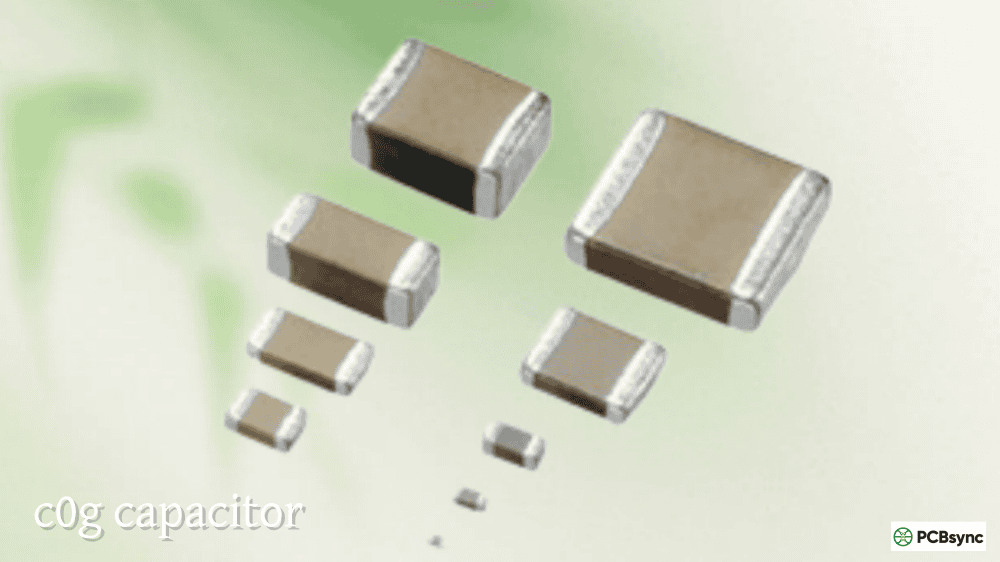
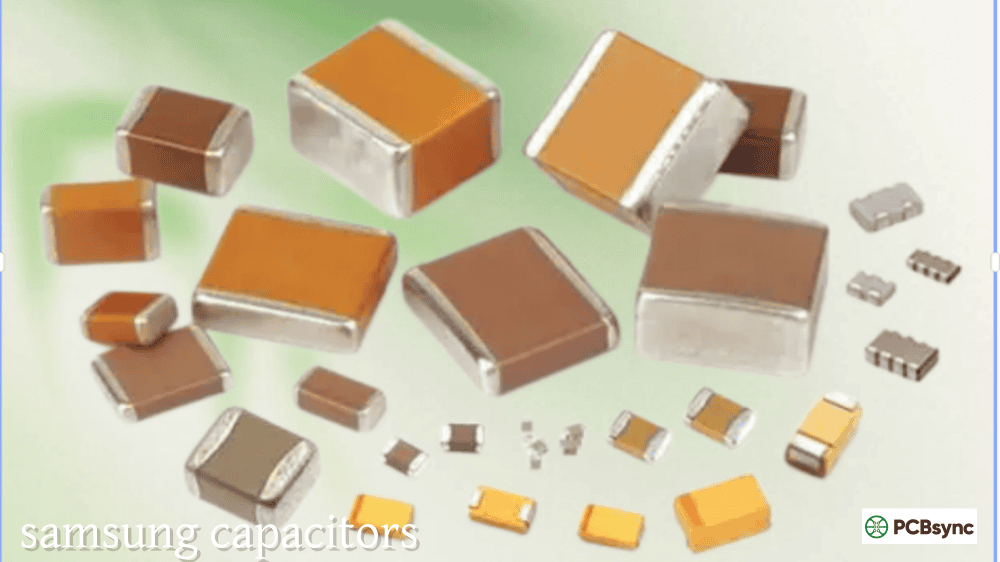
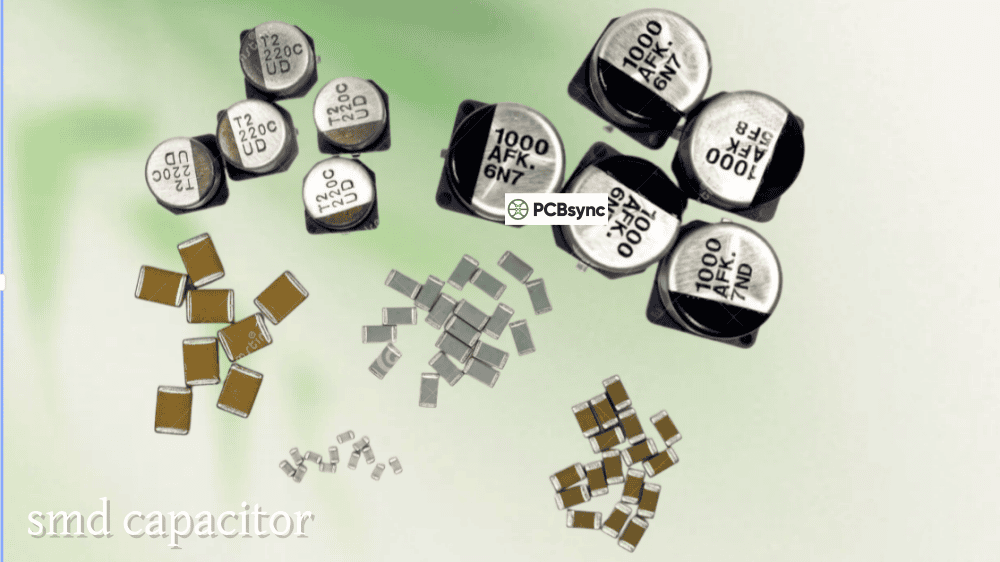
KEMET’s MLCC lineup is one of the broadest in the industry, covering everything from sub-picofarad RF caps to high-capacitance bulk decoupling in compact SMD packages. If you’re doing high-frequency work, this is where you’ll spend most of your time.
KEMET MLCC Dielectric Types Explained
Understanding the dielectric is non-negotiable when selecting an MLCC. Here’s a breakdown:
Dielectric
Temp Coefficient
Cap Range
Voltage Stability
Typical Use
C0G (NP0)
±30 ppm/°C
0.1 pF – 100 nF
Excellent (linear)
RF filters, oscillators, timing circuits
X7R
±15% over −55 to +125°C
100 pF – 100 µF
Good
Decoupling, bypass, general purpose
X5R
±15% over −55 to +85°C
1 µF – 100 µF
Good
Consumer electronics, low-voltage rails
Y5V
+22/−82% over −30 to +85°C
Up to 100 µF
Poor (highly nonlinear)
Non-critical filtering, not recommended for precision
U2J
±30 ppm/°C
0.5 pF – 10 nF
Excellent
RF, microwave
From a design standpoint, C0G is your best friend for anything where you need cap value stability over temperature — think tank circuits, compensation networks, or RF impedance matching. X7R covers the bulk of decoupling work. Avoid Y5V in anything where DC bias or temperature swing will shift your actual capacitance significantly — it’s more common than you’d think for a “100 µF” Y5V cap to measure 20 µF under DC bias conditions.
KEMET MLCC Key Series
KEMET’s standard SMD MLCC series uses the “C” prefix in part numbers. The KC-Link series is worth calling out specifically — it’s designed for high-frequency power conversion (GaN and SiC switching converters), with extremely low ESR and ESL optimized for >1 MHz operation. For DC link filtering in modern wide-bandgap power designs, this series is a serious option.
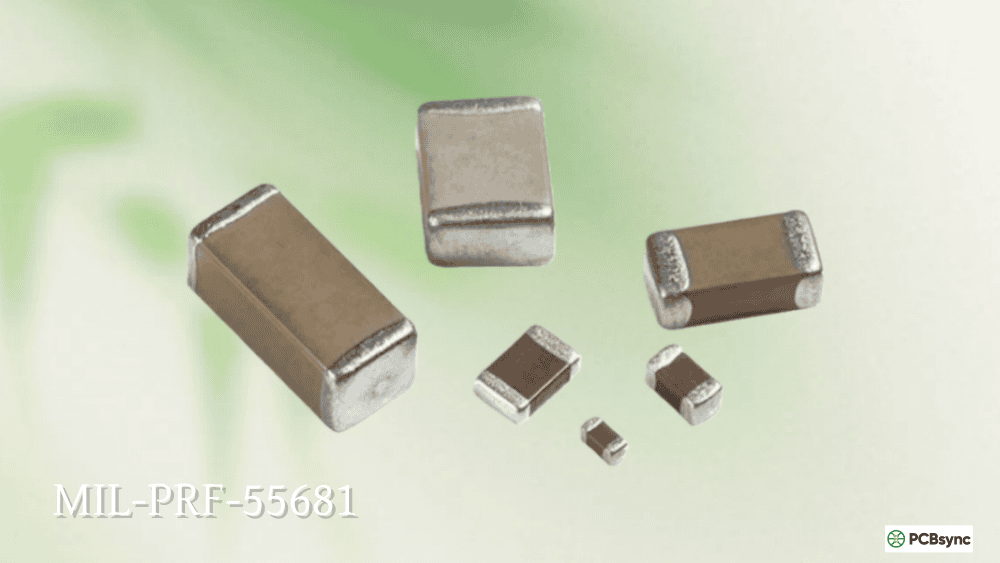
KEMET also offers AxiMax (axial-lead, through-hole) MLCCs for legacy designs and through-hole assembly environments. For defense and aerospace, the MIL-PRF-32535 series (C0G and X7R) covers established reliability requirements.
## Tantalum Capacitors
Tantalum caps are where KEMET’s heritage runs deepest — they shifted their entire market focus to tantalum back in 1958. Today they offer two main tantalum families: MnO2-cathode (traditional) and polymer-cathode (KO-CAP).
Traditional MnO2 Tantalum Capacitors
The workhorse of KEMET’s tantalum line. High volumetric efficiency, stable capacitance, good shelf life. The key series here:
Series
Grade
Key Feature
T491
Industrial
Standard SMD, general purpose
T494
Industrial
Low ESR version
T495
Industrial
Surge-robust design
T496
Industrial
Fail-safe with built-in fuse
T492
Military (CWR11)
MIL-PRF-55365/8 compliant
The T496 “fail-safe” series is worth highlighting. Traditional MnO2 tantalum caps fail short (not open), which can take down an entire power rail. The T496 includes a built-in fuse link that converts a potentially catastrophic short to an open circuit. In high-reliability industrial and medical designs, this is a meaningful reliability upgrade.
One thing to always watch with tantalum: voltage derating. KEMET’s standard recommendation is to derate to 50% of rated voltage for general applications, and tighter for high-reliability or automotive work. Don’t skip this step.
KO-CAP is KEMET’s branded polymer tantalum technology, and it’s a genuinely better capacitor in most modern design contexts. The polymer cathode replaces MnO2 with a conductive polymer, which delivers:
Ultra-low ESR (as low as 7 mΩ in some series)
Better high-frequency capacitance retention
Benign failure mode (fails open, not short)
Long operational life even at elevated temperature
KO-CAP Series
Max Voltage
Operating Temp
Key Application
T520
Up to 35V
125°C
General purpose, DC/DC converters
T521
Up to 75V
125°C
High-voltage 12V–48V rails
T525
Up to 35V
125°C extended
Higher temperature general purpose
T529
Up to 35V
125°C
Ultra-compact (substrate terminal)
T591
Up to 35V
125°C
Automotive, AEC-Q200, high humidity
T598
Up to 35V
125°C
Automotive, AEC-Q200 extended life
T599
Up to 35V
150°C
First AEC-Q200 polymer at 150°C
T545
Up to 35V
125°C
High energy density (TSP stack design)
For automotive ECU decoupling or power supply output filtering in ADAS systems, the T598 and T599 are where you want to be. The T599 is notable as the first AEC-Q200 qualified polymer tantalum rated at 150°C — important for under-hood applications near powertrain components.
For defense and aerospace, the T580/T581 series are now qualified to MIL-PRF-32700, the first polymer tantalum parts to achieve full MIL-PRF status. This is a relatively new development (2024) that opens polymer tantalum to QPL-driven procurement in military programs.
KEMET’s aluminum electrolytic line covers both standard liquid electrolyte types and hybrid polymer-aluminum designs. These are the high-capacitance workhorses — bulk filtering, energy storage, power conditioning.
Standard Aluminum Electrolytic Series
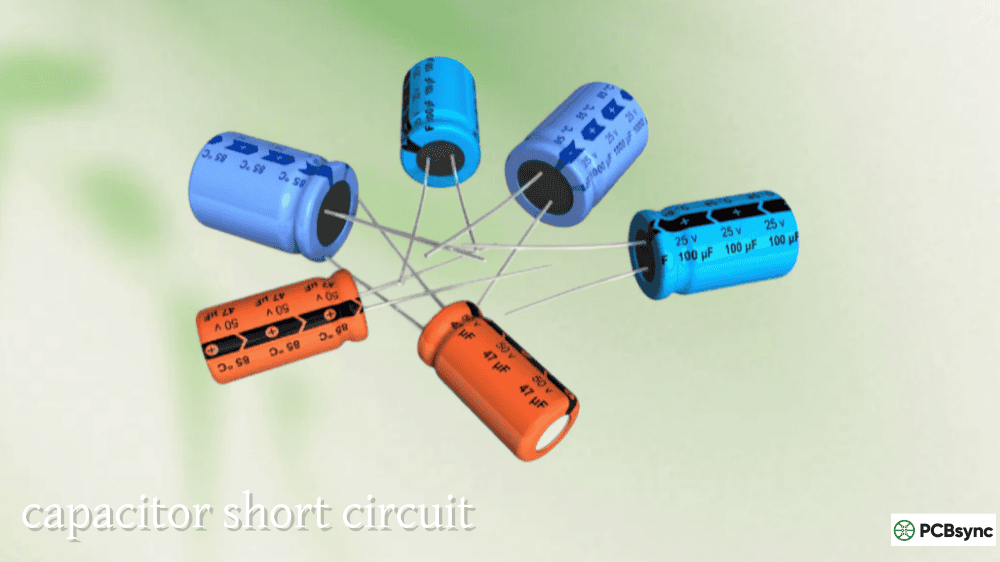
KEMET’s aluminum electrolytics come in radial, axial, snap-in, and screw-terminal configurations. Key series designators use the “ALS” and “ALN” prefix families. The ALF20 and ALF40 press-fit series are designed for PCB assemblies that need robust mechanical connection without soldering, common in industrial motor drives and power conversion equipment.
Key specs to watch:
Parameter
Typical Range
Capacitance
1 µF – 1,200,000 µF
Voltage
4V – 550V
Operating Temp
−55°C to +125°C (series dependent)
ESR
10 mΩ – several Ω
Life
1,000 – 10,000 hours (rated conditions)
Ripple current rating is often the limiting factor in power supply design — check this carefully before finalizing an electrolytic selection. KEMET publishes ripple current derating curves as a function of frequency, which is essential when your converter runs at a non-standard switching frequency.
Hybrid Polymer Aluminum Capacitors
KEMET’s hybrid polymer aluminum series combines the high capacitance of wet aluminum electrolytics with the low ESR of polymer technology. They’re specifically being positioned for AI hardware and edge computing applications where both bulk capacitance and fast transient response are needed in the same package. This is a growing segment worth watching for next-generation server and AI accelerator designs.
## Film and Paper Capacitors
KEMET’s film capacitor portfolio is large and sometimes underappreciated. For high-voltage, high-precision, or power electronics applications, film is often the right answer where ceramic or electrolytic falls short.
The C4AQ series is KEMET’s automotive-grade power film capacitor — AEC-Q200 qualified, designed for DC link filtering in EV inverters and onboard chargers. As EV powertrains push toward higher switching frequencies with SiC/GaN devices, power film caps in the DC bus are seeing renewed design activity.
For EMI/RFI suppression at AC mains, KEMET’s safety-rated X and Y capacitors are widely used. These are specifically certified to IEC/UL safety standards and carry the required safety agency marks (X1/X2 for line-to-line, Y1/Y2 for line-to-ground).
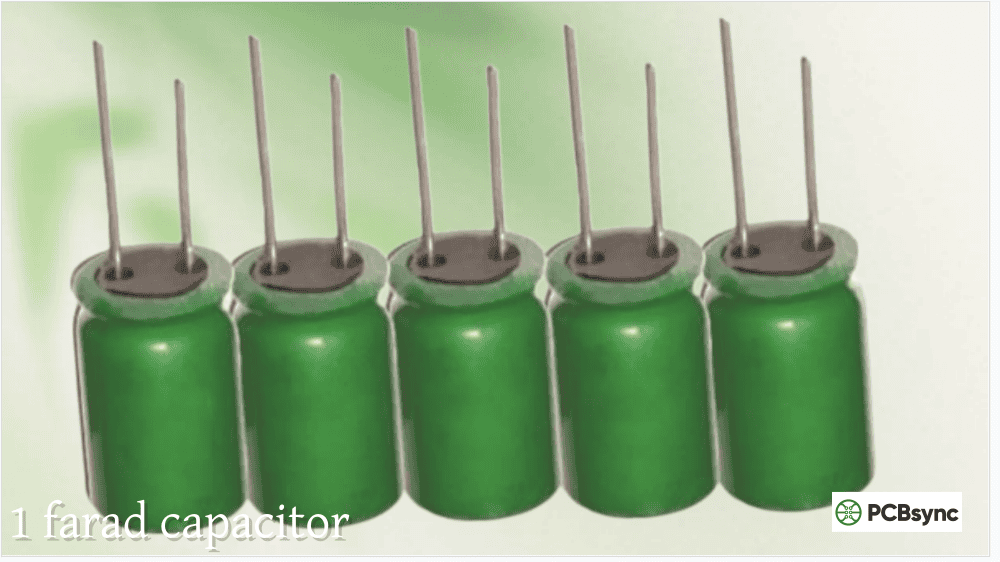
KEMET offers supercapacitors (also called ultracapacitors or EDLCs) in capacitance values ranging from fractions of a farad up to thousands of farads. These are completely different beasts from conventional capacitors — they store energy electrostatically at the electrode-electrolyte interface and can deliver much higher energy density than standard electrolytics, though at lower voltage (typically 2.7V per cell).
Applications include backup power for real-time clocks and SRAM, energy harvesting buffer storage, regenerative braking systems, and peak power shaving in industrial drives. Not every design needs a supercap, but when you need a rechargeable energy storage element that survives a million charge/discharge cycles, it’s worth evaluating.
KEMET Capacitor Applications by Industry
## Automotive Electronics
KEMET’s automotive portfolio is built around AEC-Q200 qualification. Their automotive-grade tantalum polymer (T591, T598, T599), ceramic (X7R, C0G in AEC grades), and power film (C4AQ) capacitors cover the range from low-voltage ECU decoupling to high-voltage inverter DC bus filtering. The T599’s 150°C rating is specifically relevant for powertrain control modules and battery management systems in harsh thermal environments.
## Industrial and Power Electronics
For variable frequency drives (VFDs), power supplies, and motor control, KEMET’s film capacitors (especially polypropylene DC link types), aluminum electrolytics, and polymer tantalum caps cover most design needs. KEMET publishes a DC Link Capacitor Selection Guide specifically for VFD design — it’s worth downloading if you’re working on motor drive applications.
## Aerospace, Defense, and Hi-Rel
KEMET’s defense portfolio includes MIL-PRF-55365 (MnO2 tantalum), MIL-PRF-32535 (ceramic MLCC), and the new MIL-PRF-32700 (polymer tantalum T580/T581). Their Space and Avionics Brochure covers the full range. Screening options include surge current testing, burn-in, and visual/electrical inspections that go well beyond commercial grade.
## Medical Electronics
KEMET offers medical-grade capacitors in tantalum and ceramic technologies with enhanced traceability, lot documentation, and low ESR for implantable and life-support equipment. Long-term availability commitments are critical in medical — KEMET’s medical series typically have 10+ year longevity commitments.
## Telecommunications and 5G
High-frequency MLCCs (C0G, U2J) and polymer tantalum for power supply filtering in base station equipment. KEMET’s KC-Link MLCC is particularly relevant for the high-efficiency power conversion stages in 5G radio units.
KEMET Part Number Decoding: How to Read a KEMET Part Number
Understanding KEMET’s part numbering system saves time during component selection and cross-referencing. The general structure for tantalum SMD parts like T491B107M010AS:
Position
Example
Meaning
Series
T491
Product series (tantalum industrial)
Case Size
B
EIA case size code
Capacitance
107
10 × 10⁷ pF = 100 µF
Tolerance
M
±20%
Voltage
010
10V
Termination
A
Standard Sn/Pb (or Pb-free variant)
Packaging
S
7″ reel tape and reel
For ceramic MLCCs, the format differs. KEMET provides an online parametric search and part number configurator at kemet.com that’s far faster than parsing the datasheets manually.
5 Frequently Asked Questions About KEMET Capacitors
Q1: What’s the difference between KEMET’s T491 and T494 tantalum series?
Both are industrial-grade MnO2 tantalum SMD capacitors. The T494 is specifically designed for low-ESR applications — it uses a different powder metallurgy and cathode construction to achieve lower equivalent series resistance than the standard T491. If you’re using the cap in a DC/DC converter output filter or anywhere where high ripple current is a concern, T494 is the better starting point. T491 is fine for general decoupling and timing applications where ESR is less critical.
Q2: When should I use KO-CAP polymer instead of a standard MnO2 tantalum?
The main reasons to go KO-CAP are low ESR, high-frequency performance, and failure mode. KO-CAP polymer fails open rather than short, which is safer in most system architectures. If your design has tight transient response requirements, operates at high switching frequencies, or is in an automotive/hi-rel application where a shorted cap could cause system failure — polymer is worth the cost premium. For simple bypass decoupling in non-critical consumer designs, standard MnO2 tantalum is usually adequate and cheaper.
Q3: How do I account for DC bias voltage derating in KEMET X7R MLCCs?
This is one of the most common design mistakes with modern high-capacitance MLCCs. A 10 µF X7R MLCC rated at 10V may only have 3–5 µF actual capacitance when biased at 5V DC due to the ferroelectric nature of the dielectric. KEMET’s K-SIM tool lets you simulate actual capacitance vs. DC bias for any part in their catalog — use it before finalizing your decoupling cap values. As a rule of thumb, plan for 50–70% capacitance loss at the rated voltage for high-K dielectrics.
Q4: Are KEMET capacitors RoHS and REACH compliant?
Yes, the vast majority of KEMET’s standard commercial product line is compliant with RoHS Directive 2011/65/EU and REACH regulations. KEMET provides full compliance declarations through their product pages and distributor data channels. For military and aerospace parts that specifically require SnPb (Pb) terminations, KEMET offers non-RoHS exempt versions — check the part number suffix to confirm termination material.
Q5: What’s the best KEMET capacitor for a 48V automotive bus decoupling application?
For 48V mild hybrid applications, you want to look at the T521 KO-CAP polymer tantalum series (rated up to 75V, AEC-Q200 compliant models available) or KEMET’s C4AQ power film capacitor series for higher capacitance requirements. The T521 handles up to 75V rated voltage — with proper derating to 60–80% of rated voltage for automotive steady-state, a 63V or 75V rated T521 is appropriate for a 48V rail. Always account for transient overvoltages per ISO 7637 in your derating calculation.
Final Thoughts: Navigating the KEMET Catalog as a PCB Engineer
KEMET’s product breadth is genuinely impressive — and a little overwhelming if you’re looking at it fresh. The practical approach is to use KEMET’s parametric search tool as your first filter, nail down the technology family based on your capacitance/voltage/ESR/temperature requirements, and then cross-check your choice against their application-specific selection guides.
A few things worth keeping in mind from a real-world design standpoint: always derate tantalum capacitors (MnO2 types especially), always simulate DC bias effects on X7R MLCCs, and if you’re working in automotive or defense, start with AEC-Q200 or MIL-PRF-qualified parts from day one — retrofitting qualification late in a project is painful.
With KEMET now under the Yageo umbrella, the combined Yageo-KEMET-Pulse portfolio is one of the most complete passive component lineups in the industry. That’s good news for engineers who prefer to consolidate BOM suppliers without sacrificing technology options.
Inquire: Call 0086-755-23203480, or reach out via the form below/your sales contact to discuss our design, manufacturing, and assembly capabilities.
Quote: Email your PCB files to Sales@pcbsync.com (Preferred for large files) or submit online. We will contact you promptly. Please ensure your email is correct.
Notes: For PCB fabrication, we require PCB design file in Gerber RS-274X format (most preferred), *.PCB/DDB (Protel, inform your program version) format or *.BRD (Eagle) format. For PCB assembly, we require PCB design file in above mentioned format, drilling file and BOM. Click to download BOM template To avoid file missing, please include all files into one folder and compress it into .zip or .rar format.