Inquire: Call 0086-755-23203480, or reach out via the form below/your sales contact to discuss our design, manufacturing, and assembly capabilities.
Quote: Email your PCB files to Sales@pcbsync.com (Preferred for large files) or submit online. We will contact you promptly. Please ensure your email is correct.
Notes: For PCB fabrication, we require PCB design file in Gerber RS-274X format (most preferred), *.PCB/DDB (Protel, inform your program version) format or *.BRD (Eagle) format. For PCB assembly, we require PCB design file in above mentioned format, drilling file and BOM. Click to download BOM template To avoid file missing, please include all files into one folder and compress it into .zip or .rar format.
ESR Capacitor: Equivalent Series Resistance Explained
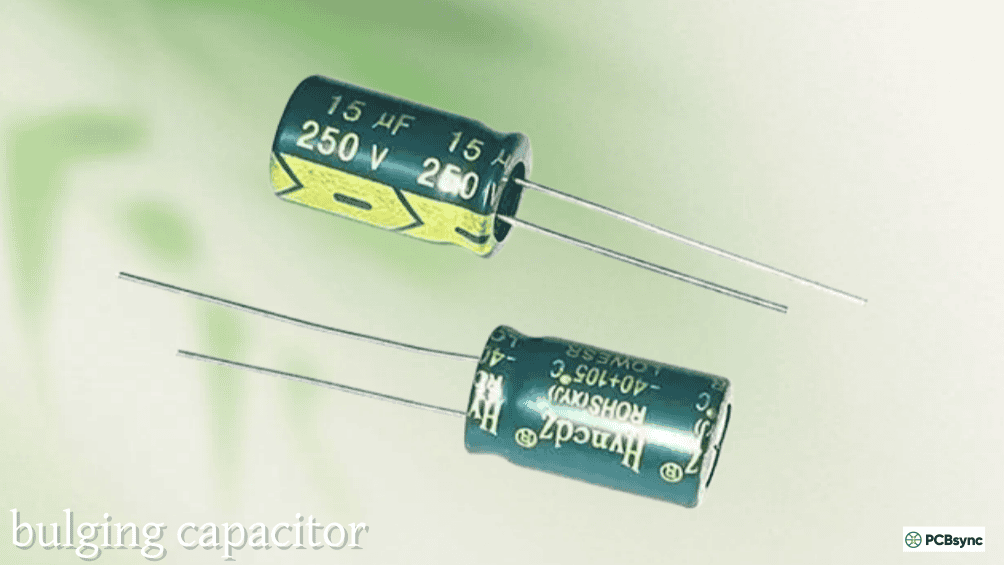
Walk through the repair history of any failed switching power supply and one component appears in the suspect list more than almost anything else: an electrolytic capacitor with elevated ESR. The capacitance may still measure fine. The voltage rating is still adequate. But the ESR has climbed from a few hundred milliohms to several ohms, and that seemingly small increase has destabilised the output voltage, created excessive heat, caused ripple current to spike, and ultimately killed the supply — often taking other components with it.
ESR (Equivalent Series Resistance) is the single most important parameter for capacitor selection in power applications, and one of the most commonly misunderstood. This guide covers what ESR actually is, where it comes from physically, how it varies with frequency and temperature, what it does to your circuit, how to measure it, and how different capacitor technologies compare. Written from a PCB engineer’s perspective, with the detail needed to make confident component decisions.
ESR is the sum total of all resistive losses inside a real capacitor, represented as a single equivalent resistance connected in series with the ideal capacitor element. It is why real capacitors generate heat when carrying AC current, why power supplies produce more output ripple than theory predicts, and why a capacitor that passes a capacitance check can still be causing circuit problems.
An ideal capacitor is a pure reactive element — it stores and returns energy without any loss. In the real world, every capacitor has internal resistance contributions from multiple sources, and ESR lumps them all together into one measurable, datasheetable number. The complete equivalent circuit for a real capacitor is:
Z_real = ESR + jωESL − j/(ωC)
Where ESR is the real (resistive) part, jωESL is the parasitic inductive reactance, and −j/(ωC) is the capacitive reactance. ESR is what you’re looking at when you see the bottom of the V-shaped impedance curve — at the self-resonant frequency, XC and XL cancel, and the remaining impedance is purely ESR.
## The Physical Sources of ESR
ESR is not a single thing. It is the sum of several distinct physical loss mechanisms, and understanding each one explains why different capacitor types have radically different ESR values, and why ESR changes with frequency and temperature.
### Electrode and Lead Resistance
Every current path through the capacitor — from the external terminal, through the lead or termination, along the electrodes, and back — has some ohmic resistance. For through-hole electrolytic capacitors with aluminium foil electrodes and external leads, this contributes several milliohms. For SMD MLCCs with nickel or copper electrodes and direct solder terminations, this contribution is much smaller. At high frequencies, the skin effect concentrates current in the surface layer of conductors, increasing the effective resistance above its DC value.
For wet aluminium electrolytic capacitors, the electrolyte (a liquid or gel that forms the effective negative plate) has significant ionic resistance. This is the dominant ESR contribution in most aluminium electrolytics and is strongly temperature-dependent: ESR typically falls as temperature rises (ionic conductivity improves with temperature) and rises sharply at low temperatures. This explains why aluminium electrolytic capacitors can have extremely high ESR at −40°C and why circuits using them sometimes fail in cold environments.
### Dielectric Loss (All Capacitor Types)
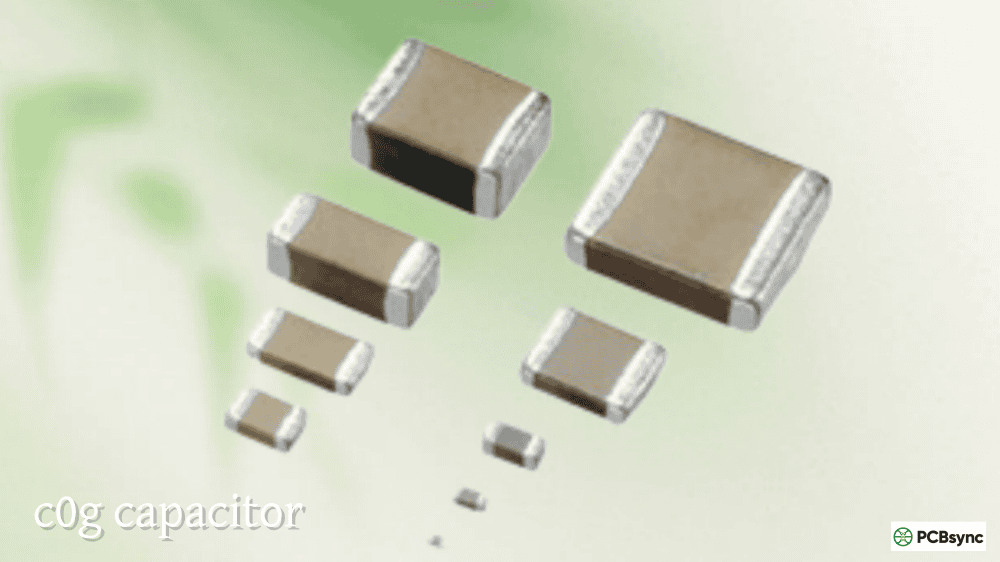
The dielectric material between the electrodes is not a perfect insulator — molecular polarisation and interfacial polarisation absorb energy from the alternating electric field, converting it to heat. This is quantified by the dissipation factor (tan δ, also written as DF), which is the ratio of energy dissipated to energy stored per cycle. Dielectric loss is frequency-dependent and is the primary ESR contributor in MLCCs. Class I (C0G/NP0) ceramics use paraelectric dielectrics with extremely low dielectric loss; Class II (X7R, X5R) and Class III (Y5V, Z5U) ceramics use ferroelectric materials with higher loss — and therefore higher ESR. Film capacitors (polypropylene, polyester) also have low dielectric loss, making them attractive for audio and precision applications.
### Contact Resistance
Internal connections between electrodes, foil layers, tabs, and terminations all contribute small but real resistance. In multi-layer ceramic capacitors, the contact resistance between internal electrode layers and the end terminations is the primary ESR contribution below the skin-effect frequency.
ESR Components by Source — Summary:
Loss Source
Dominant Capacitor Types
Temperature Behaviour
Frequency Behaviour
Electrolyte ionic resistance
Wet Al. electrolytic
High at low temp, falls as temp rises
Relatively flat; worse at very high f
Electrode/foil metallic resistance
All types; dominant in large Al. caps
Slight rise with temperature
Skin effect increases above ~100kHz
Dielectric loss (tan δ)
Dominant in MLCC (Class II/III), film
Varies by dielectric material
Varies with frequency; complex
Contact/termination resistance
MLCC, SMD tantalum
Relatively stable
Relatively stable at lower frequencies
Oxide layer losses
Tantalum (MnO₂ type)
Temperature dependent
Frequency dependent; high at low f
## ESR and Dissipation Factor: The Relationship
Datasheets for ceramic and film capacitors often specify dissipation factor (DF or tan δ) rather than ESR directly. The relationship between the two is:
ESR = tan δ / (ωC) = DF / (2π × f × C)
Or equivalently: tan δ = ESR × ωC = ESR × 2π × f × C
For a 100nF X7R ceramic capacitor with tan δ = 0.02 (2%) at 1kHz: ESR = 0.02 / (2π × 1,000 × 100×10⁻⁹) = 31.8 Ω
This illustrates why ESR is always measured at a specified frequency, and why the quoted ESR in a datasheet is only valid at that frequency. The IEC standard specifies ESR measurement at 100kHz for switching power supply capacitors and at 120Hz (100Hz in Europe) for linear power supply filter capacitors.
## Typical ESR Values by Capacitor Type
The range of ESR values across capacitor technologies spans five orders of magnitude — from a few milliohms for optimised polymer MLCCs to tens of ohms for low-value electrolytic capacitors. This table gives practical working ranges for component selection decisions:
Typical ESR Ranges by Capacitor Type and Value:
Capacitor Type
Typical Value Range
Typical ESR (at 100kHz)
Key Characteristics
MLCC C0G/NP0 (0402)
1pF–10nF
0.1–1 Ω
Lowest loss; Class I; extremely stable
MLCC X7R (0402)
10nF–1µF
20–100 mΩ
Good HF decoupling; Class II
MLCC X7R (0805)
100nF–10µF
30–200 mΩ
Larger package = slightly higher ESR
Film (polypropylene)
100pF–10µF
5–50 mΩ
Very low loss; good for precision/audio
SMD tantalum (MnO₂)
1µF–100µF
100 mΩ–2 Ω
Higher than polymer; worse at low f
SMD tantalum (polymer)
10µF–470µF
10–100 mΩ
Much lower than MnO₂; stable vs temp
Al. electrolytic (standard)
1µF–47,000µF
50 mΩ–5 Ω
Strongly temp/age dependent
Al. electrolytic (low ESR series)
47µF–10,000µF
10–200 mΩ
Designed for SMPS; 3–5× lower ESR
Al. polymer electrolytic
10µF–1,000µF
5–50 mΩ
Best Al. type; stable over temp range
Supercapacitor (EDLC)
0.1F–3,000F
1–200 mΩ (mΩ for large values)
High ESR relative to capacitance
## What High ESR Does to Your Circuit
### Heat Generation: The I²R Problem
When ripple current flows through the capacitor’s ESR, power is dissipated as heat: P = I²rms × ESR. This is the same I²R relationship as any resistor. For an aluminium electrolytic in a 5A ripple current environment with ESR = 0.5Ω, the power dissipated is 5² × 0.5 = 12.5W — a substantial heat load inside a sealed can. That heat accelerates electrolyte evaporation and degradation, which raises ESR further, which generates more heat. This is the thermal runaway mechanism that kills electrolytic capacitors in switching power supplies. The capacitor that started at 0.5Ω ESR might reach 5Ω over a few thousand hours of operation at elevated temperature, at which point its filtering effectiveness is gone and it’s generating 125W internally.
The Arrhenius relationship governs the rate of degradation: every 10°C rise in capacitor core temperature approximately halves the expected lifespan. A capacitor rated for 5,000 hours at 85°C operating temperature runs for roughly 10,000 hours at 75°C and only 2,500 hours at 95°C. ESR-induced self-heating is one of the primary mechanisms that moves the operating temperature above the ambient value.
### Ripple Voltage: The ESR × I Voltage Drop
The AC voltage drop across the capacitor’s ESR is: V_ripple_ESR = I_ripple × ESR
In a switching power supply with 1A of switching ripple current and a filter capacitor with ESR = 0.2Ω, the ESR alone contributes 200mV of output ripple — completely independent of the capacitance value. Switching regulators operating at 200kHz or higher create ripple at high enough frequency that the capacitive reactance of a large electrolytic is already near zero; at those frequencies, the output ripple is dominated entirely by ESR, not capacitance. This is why low-ESR capacitors matter enormously in SMPS designs, and why specifying “100µF 25V” without specifying ESR will get you whatever the cheapest supplier puts on the shelf.
### Stability Issues in Regulators
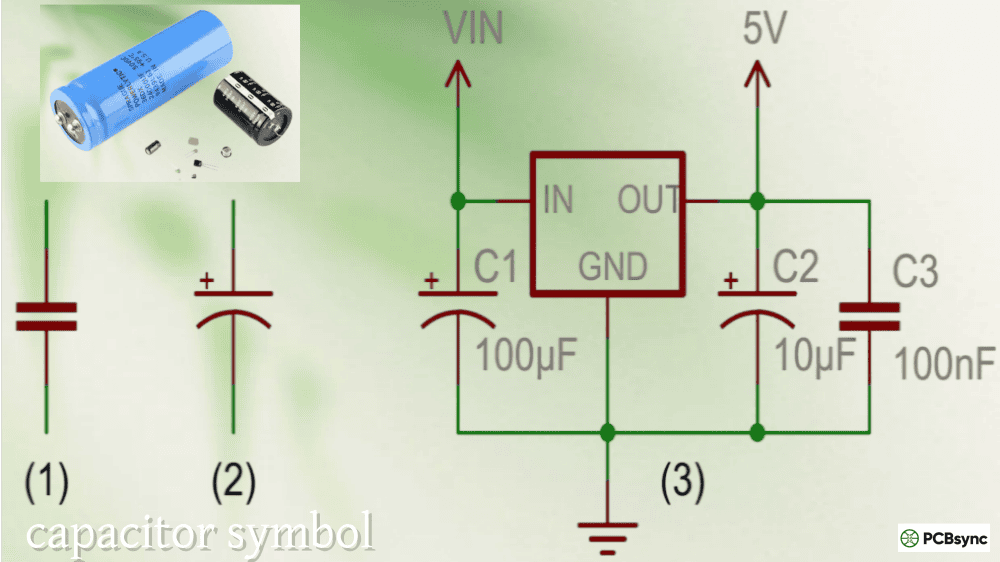
Some LDO (low-dropout) voltage regulators require a minimum ESR on their output capacitor for stable feedback loop operation. This is a real design constraint in older LDO architectures: too low an ESR reduces the phase margin of the regulation loop and can cause oscillation. The datasheet for such regulators specifies a minimum and maximum ESR range for the output capacitor. Replacing a specified electrolytic with a low-ESR polymer capacitor of the same capacitance, or adding a ceramic in parallel without reading the stability requirements, can destabilise the regulator. This is one situation where low ESR is not unconditionally desirable, and where reading the datasheet stability section carefully before changing component types is essential.
### Dissipation Factor and Q in Resonant Circuits
For capacitors used in resonant tanks, LC oscillators, bandpass filters, and RF matching networks, ESR determines the Q factor of the circuit: Q = 1/(ωC × ESR) = XC/ESR. Higher ESR means lower Q, which means broader resonance, less frequency selectivity, and more insertion loss. C0G ceramic capacitors and film capacitors (particularly polypropylene) are preferred for resonant applications precisely because their ESR — and therefore their dielectric loss — is minimal.
## ESR Aging in Electrolytic Capacitors: The Silent Failure Mode
The most dangerous aspect of ESR in electrolytic capacitors is that it rises significantly with age and use, while capacitance often stays within specification until very late in the failure process. An electrolytic capacitor in a failed power supply may measure 98µF against a 100µF rating — within 5% tolerance — but have ESR of 8Ω against an initial specification of 0.2Ω. The capacitance check passes; the ESR check catastrophically fails.
The mechanisms driving ESR aging in wet aluminium electrolytics are well understood. The liquid electrolyte slowly evaporates through the seal at the base of the capacitor — a process accelerated by heat and ripple current. As electrolyte volume decreases, the ionic resistance rises. Oxygen depletion in the electrolyte also increases resistance over time. Temperature cycling causes mechanical stress at the foil-to-tab connection, increasing contact resistance.
Polymer electrolytic capacitors replace the liquid electrolyte with a solid conductive polymer. The polymer cannot evaporate, does not dry out, and maintains low and stable ESR across the full temperature range from −55°C to +105°C. This is why polymer capacitors largely replaced wet aluminium electrolytics on computer motherboards from around 2007 onward, following the “capacitor plague” failures of 2002–2007 in which millions of boards failed due to ESR-failed wet aluminium capacitors.
## Measuring ESR: Instruments and Methods
### Dedicated ESR Meters
An ESR meter injects a small-amplitude AC signal at typically 100kHz through the capacitor under test and measures the resistive component of the resulting voltage/current ratio. The 100kHz frequency and low signal amplitude (usually 250mV or less) are chosen specifically because they are too small to forward-bias semiconductor junctions, allowing in-circuit measurement without desoldering. Most electrolytics in sizes above 1µF can be measured with an ESR meter while still soldered to the board, provided the capacitor is discharged first.
### LCR Meters
A quality LCR meter with ESR function measures impedance magnitude, capacitance, and ESR at a selectable frequency. This is the most accurate method for known capacitor values and provides the complete picture — capacitance, ESR, and dissipation factor simultaneously. Use series mode (Cs/Rs) for capacitors with low impedance (large values, high frequencies) and parallel mode (Cp/Rp) for high-impedance small capacitors.
### Ripple Voltage / Ripple Current Method
If you know the ripple current through the capacitor and can measure the AC voltage across it at the switching frequency, ESR = V_ripple / I_ripple. This requires current measurement (a current probe or sense resistor in series) but gives you ESR under actual operating conditions, which may differ from bench measurement. It’s most useful for verifying that a replacement capacitor meets ESR requirements in circuit.
### Vector Network Analyser (VNA)
For high-frequency capacitor characterisation above 100MHz — particularly for MLCCs in RF and high-speed digital applications — a VNA measuring S11 gives the complete impedance profile from which ESR can be extracted at any frequency. This is the gold standard for MLCC characterisation but requires appropriate fixturing and is a laboratory instrument rather than a repair tool.
## ESR in Circuit Design: Practical Selection Guidance
### When ESR is Critical
ESR is most critical in switching power supply output and input filter capacitors (high ripple current, high frequency), bulk storage capacitors on DC rails in high-speed digital designs, capacitors across output terminals of voltage regulators, and bypass capacitors for power stages in motor drives and inverters. In all these applications, specify ESR explicitly from the datasheet, not just capacitance and voltage rating.
### When ESR Matters Less
ESR has negligible effect in DC signal coupling applications (large impedance circuit; ESR-induced voltage drop is insignificant), small-value timing capacitors in low-current RC networks, and most signal-path ceramic capacitors in analogue front ends where the current levels are microamps. A 1µF coupling capacitor in a preamplifier circuit with input impedance of 100kΩ sees so little current that even an ESR of 10Ω would contribute less than 100µV of noise voltage — far below the signal level.
### The Parallel Capacitor Strategy
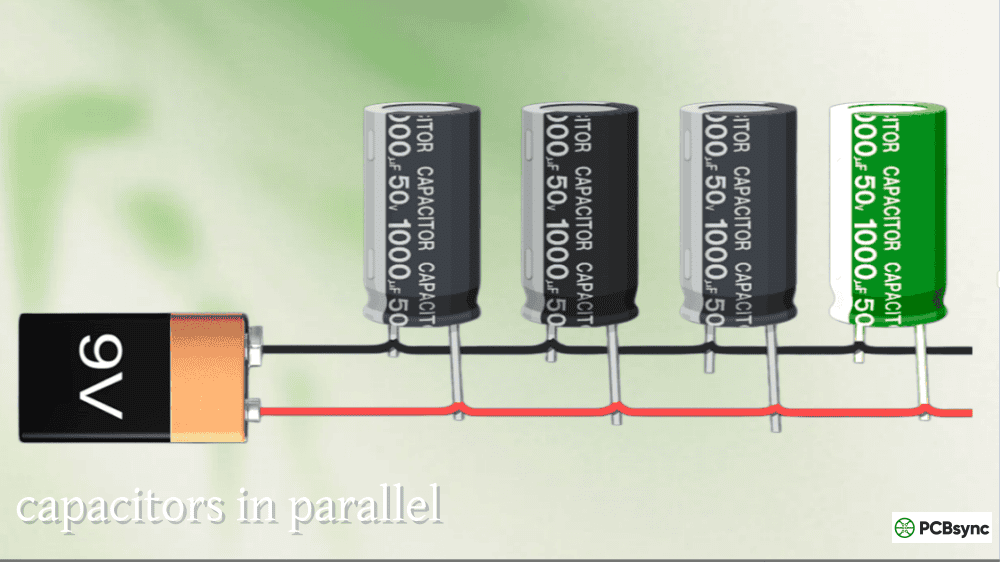
When a single capacitor cannot simultaneously meet ESR, capacitance, and SRF requirements across the needed frequency range, parallel combinations address each range: a large-value aluminium electrolytic (low ESR for bulk, low-frequency filtering), a mid-value polymer or tantalum (better ESR and stability at intermediate frequencies), and small-value MLCCs (lowest ESR, highest SRF for high-frequency bypass).
ESR Selection Quick Reference by Application:
Application
Recommended Type
Key ESR Requirement
Notes
SMPS output filter (100kHz–2MHz)
Al. polymer or low-ESR Al. electrolytic
<100mΩ at 100kHz
Check ripple current rating vs. I²ESR heating
LDO output capacitor
Check datasheet stability region
Specified ESR range
Some LDOs need minimum ESR for stability
Digital bulk decoupling (10µF)
Polymer tantalum or X5R MLCC
<50mΩ
Stable over DC bias voltage
High-frequency bypass (100nF)
X7R MLCC 0402/0201
<50mΩ at 10MHz
Choose package for low ESL/high SRF
RF resonant tank
C0G MLCC or film (PP)
<5mΩ
Dielectric loss dominates; tan δ critical
Precision timing RC
C0G MLCC or film
Low, but not usually critical
Capacitance stability more important
Audio signal coupling
Film (polypropylene or PET)
Low tan δ at audio freq
ESR affects Q and phase at audio frequencies
## Resources for ESR Research and Measurement
Technical References and Application Notes
Murata — Impedance/ESR Frequency Characteristics — Authoritative manufacturer explanation of the impedance V-curve, ESR vs. frequency, dielectric loss by class, and how package size affects ESR in MLCCs
Wikipedia — Equivalent Series Resistance — Thorough technical overview covering physical sources of ESR, measurement standards (100kHz vs. 120Hz), frequency dependence, and the aging mechanism in electrolytic capacitors
Murata SimSurfing — Plots actual impedance and ESR vs. frequency for specific Murata MLCC part numbers using S-parameter data; the most accurate tool for real-world MLCC ESR verification
DigiKey Capacitor Parametric Search — Filter electrolytic capacitors by ESR specification, ripple current rating, voltage, and temperature rating; essential for low-ESR series selection
Measurement Tools
Peak Electronic Design — ESR Meters — One of the best-regarded manufacturers of bench ESR meters for in-circuit capacitor testing; their ESR60 and ESR70 models are widely used in repair and QC
TDK Product Database — Manufacturer parametric search for TDK MLCCs with ESR data; includes impedance and dissipation factor specifications
## 5 FAQs: ESR Capacitor
Q1: My capacitor’s capacitance measures fine but the power supply is still malfunctioning — could ESR be the cause?
Yes, and this is the classic ESR failure scenario. Capacitance and ESR are independent parameters, and ESR can degrade catastrophically while capacitance remains within specification. A wet aluminium electrolytic capacitor can lose 95% of its electrolyte through evaporation, raise its ESR from 0.2Ω to 4Ω, and still measure 95µF against a 100µF rating. The capacitance check passes; the ESR is twenty times out of spec. The failure symptoms depend on where the capacitor sits in the circuit: an output filter capacitor with elevated ESR will show increased output voltage ripple (V_ripple = I_ripple × ESR), excessive heat in the capacitor body, and possible regulator instability. An input filter cap with elevated ESR will show poor rectified voltage smoothing, increased stress on the rectifier diodes, and supply voltage sag under load. If you’re troubleshooting a power supply and the capacitance checks out, always measure ESR before concluding the capacitor is good.
Q2: What is the difference between ESR and DC resistance, and why can’t I just use a multimeter to measure it?
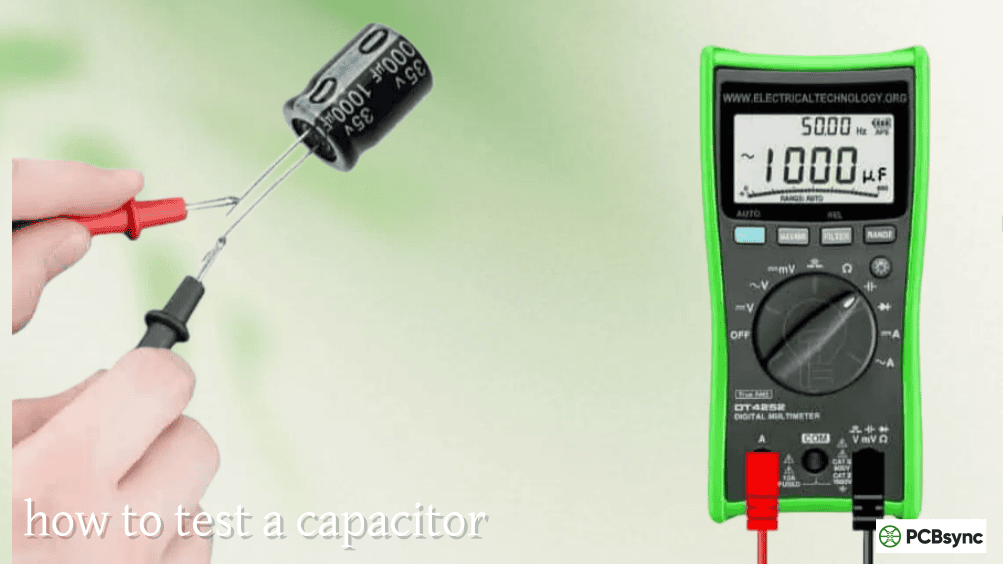
ESR and DC resistance are different quantities. DC resistance of a capacitor is effectively infinite (the dielectric blocks DC, so no DC current flows and an ohmmeter reads open circuit). ESR is an AC resistance — it represents losses in the alternating current path through the capacitor. A standard multimeter applies a DC test voltage and measures DC resistance, so it cannot measure ESR at all. Dedicated ESR meters apply a high-frequency AC signal (typically 100kHz) at low amplitude, measure the voltage and current in the AC path, and calculate the resistive component of the impedance. An LCR meter with ESR mode does the same thing at selectable frequencies. Some modern multimeters claim a “capacitor test” mode but most only measure capacitance — verify that any meter you use specifically offers ESR measurement, not just C measurement.
Q3: How much ESR is “too much” — what value should trigger capacitor replacement?
There’s no single universal threshold because “too much” depends on the circuit context. For troubleshooting purposes, the most practical rule is: if ESR is more than 2–3× the new-condition specification for that capacitor at the test frequency, the capacitor is suspect; if it’s more than 5× the new-condition specification, replace it immediately. Typical new-condition ESR for a 1000µF 25V general-purpose electrolytic at 100kHz is around 100–200mΩ. If you measure 500mΩ–1Ω, it’s aging but may still function marginally; if you measure 2Ω or higher, it’s failed from an ESR standpoint regardless of what the capacitance reads. For switching power supply capacitors where ESR directly sets output ripple, the calculation is more precise: if the measured ESR produces ripple voltage (V = I_ripple × ESR) that exceeds the circuit’s specification, the capacitor must be replaced even if its absolute ESR value seems low in isolation.
Q4: Why does ESR matter more in switching power supplies than in linear power supplies?
Two factors make ESR more critical in switching regulators than in linear supplies. First, switching regulators operate at high frequency (typically 50kHz–2MHz), and at these frequencies the ESR of even a large aluminium electrolytic can dominate the capacitor’s impedance — the capacitive reactance at 200kHz for a 100µF capacitor is only about 8mΩ, so the ESR of 100mΩ or more is the dominant term. The output voltage ripple from a switching regulator is approximately V_ripple ≈ I_ripple × ESR at frequencies where XC << ESR. In a linear supply at 120Hz ripple, a 100µF capacitor has XC ≈ 13.3Ω, which dominates over even a 1Ω ESR. Second, switching regulators produce much larger ripple currents than equivalent linear supplies, so the I²ESR power dissipation and resulting heat are much larger in magnitude. A linear supply with a 3A load might see 500mA of ripple current; a 3A switching regulator might see 1.5–2A of ripple current at the switching frequency, quadrupling the ESR-related power dissipation.
Q5: I replaced a failed electrolytic with what seems like an equivalent polymer capacitor of the same capacitance and voltage rating, but the circuit behaves differently. Why?
Polymer capacitors have significantly lower ESR than wet aluminium electrolytics of the same value — often 5–20× lower. For most applications this is a strict improvement, but there are circuits where the original ESR was part of the design, not just an unfortunate side effect. The most common case is an LDO linear regulator designed with a specific minimum ESR for output stability. Many older LDO datasheets specify an ESR range for the output capacitor, typically between 0.1Ω and 10Ω, because the ESR provides a zero in the feedback loop’s frequency response that maintains phase margin. Replace a 0.5Ω electrolytic with a 10mΩ polymer cap, and the LDO may oscillate. The solution is either to use a polymer capacitor specifically tested with that regulator, to select a more modern LDO architecture designed for use with low-ESR ceramic or polymer capacitors, or to add a small series resistance (typically 0.1–0.5Ω, a low-inductance surface-mount resistor) in series with the replacement capacitor to restore the needed minimum ESR.
## ESR Defines the Real-World Capacitor
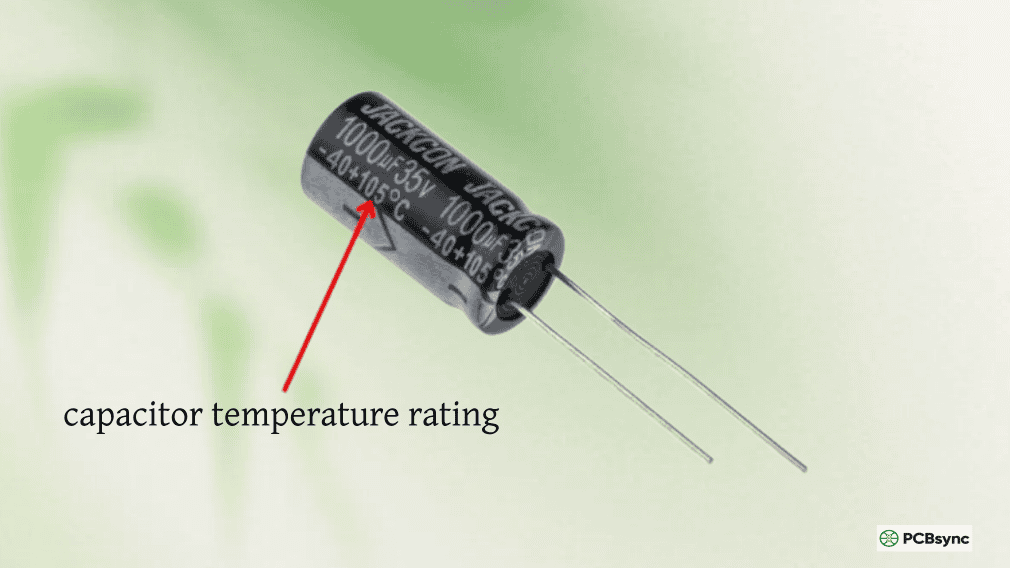
Every engineering decision about capacitor selection comes back, at some level, to ESR. It sets the maximum allowable ripple current (via I²ESR heating), determines the output ripple of switching regulators (via V_ripple = I × ESR), controls the Q factor of resonant circuits, governs the stability of LDO feedback loops, and provides the most reliable early indicator of electrolytic capacitor aging before outright failure.
The ideal capacitor of circuit textbooks has zero ESR. Every real one has a finite ESR that you need to understand, measure, and account for. Choose a capacitor by capacitance and voltage rating alone and you’ve made half a decision. Add ESR to the selection criteria — alongside ripple current rating, temperature rating, and physical package — and you’re making the complete engineering decision that keeps the circuit running at specification throughout its design lifetime.
Inquire: Call 0086-755-23203480, or reach out via the form below/your sales contact to discuss our design, manufacturing, and assembly capabilities.
Quote: Email your PCB files to Sales@pcbsync.com (Preferred for large files) or submit online. We will contact you promptly. Please ensure your email is correct.
Notes: For PCB fabrication, we require PCB design file in Gerber RS-274X format (most preferred), *.PCB/DDB (Protel, inform your program version) format or *.BRD (Eagle) format. For PCB assembly, we require PCB design file in above mentioned format, drilling file and BOM. Click to download BOM template To avoid file missing, please include all files into one folder and compress it into .zip or .rar format.