Inquire: Call 0086-755-23203480, or reach out via the form below/your sales contact to discuss our design, manufacturing, and assembly capabilities.
Quote: Email your PCB files to Sales@pcbsync.com (Preferred for large files) or submit online. We will contact you promptly. Please ensure your email is correct.
Notes: For PCB fabrication, we require PCB design file in Gerber RS-274X format (most preferred), *.PCB/DDB (Protel, inform your program version) format or *.BRD (Eagle) format. For PCB assembly, we require PCB design file in above mentioned format, drilling file and BOM. Click to download BOM template To avoid file missing, please include all files into one folder and compress it into .zip or .rar format.
Capacitor Tolerance: Accuracy & Application Selection Every PCB Engineer Must Get Right
There is a category of circuit problem that appears rational at first — the design calculates correctly, the simulation runs clean, the first prototype boards work fine — and then drifts out of specification in production. The oscillator frequency is consistently 8% off target. The filter corner frequency is shifted enough to cause audio colouration. The RC timing interval varies by 15% unit-to-unit. In each case, the design is arithmetically correct but the circuit uses a ±10% or ±20% capacitor tolerance where the application actually demands ±1% or better.
Tolerance is one of the least glamorous capacitor specifications and one of the most consequential. It defines the band within which the actual capacitance of any individual component will fall relative to the marked nominal value — and in any circuit where capacitance value directly determines a frequency, timing interval, filter characteristic, or impedance, that band translates directly into the accuracy band of the circuit’s output. Getting capacitor tolerance selection right from the start costs nothing at the schematic stage. Getting it wrong shows up as production yield problems, field calibration failures, and expensive rework that traces back to a component specification that was never questioned.
This guide covers the capacitor tolerance code systems, the tolerance grades available across dielectric technologies, how to match tolerance to application requirements, the common substitution mistakes that create tolerance problems, and the specific circuit types where tight tolerance selection is non-negotiable — written from a working engineer’s perspective on what these specifications mean in production hardware.
What Capacitor Tolerance Means and How It Is Specified
The Basic Definition and Its Implications
Capacitor tolerance defines the maximum permissible deviation of the actual measured capacitance from the nominal marked value, expressed as a percentage (±5%, ±10%, ±20%) or as an absolute value in picofarads for small-value capacitors (±0.5pF, ±1pF). A 100nF capacitor with ±10% tolerance may measure anywhere from 90nF to 110nF on any individual unit and still be within specification.
The tolerance specification represents the initial accuracy at room temperature under standard measurement conditions (typically 1kHz test frequency, no DC bias, 23°C ±2°C). It does not include the additional capacitance variation that occurs over temperature (temperature coefficient), under DC bias (voltage coefficient for Class II ceramics), or over time (aging for ferroelectric ceramics). In a complete worst-case circuit analysis, all these variation sources must be combined to determine the total capacitance uncertainty the circuit must tolerate.
EIA Tolerance Code Letters
The EIA standard defines single-letter codes for capacitor tolerance, used consistently across ceramic, film, and other capacitor types in catalog and datasheet specifications:
EIA Code
Tolerance
Applicable Range
Typical Application
B
±0.1pF
Absolute (small values)
Ultra-precision RF, timing
C
±0.25pF
Absolute (small values)
Precision RF matching
D
±0.5pF
Absolute (small values)
RF circuit tuning
F
±1%
Percentage
Precision filters, timing
G
±2%
Percentage
Precision applications
J
±5%
Percentage
General precision
K
±10%
Percentage
General purpose
M
±20%
Percentage
Bulk bypass, non-critical
Z
+80% / –20%
Percentage
Non-critical bypass only
The Z tolerance code — +80%/–20% — deserves particular mention because it appears in some Y5V ceramic specifications and occasionally in older component library entries. A 100nF/Z-grade capacitor may measure anywhere from 80nF to 180nF. This is entirely unsuitable for any application where capacitance value affects circuit behavior, yet it occasionally appears in designs because the nominal value matched the requirement and the tolerance code was not scrutinized.
Absolute vs. Percentage Tolerance for Small Values
For capacitance values below approximately 10pF, percentage tolerances become meaninglessly tight in absolute terms and are replaced by absolute picofarad tolerances. A ±5% tolerance on a 1pF capacitor would be ±0.05pF — a precision that is difficult to measure reliably and exceeds the stray capacitance management capability of most PCB layouts. For values below 10pF, the relevant tolerance grades are ±0.1pF (B), ±0.25pF (C), and ±0.5pF (D), which represent the practical limits of what can be achieved and used meaningfully in RF and microwave circuit design.
Capacitor Tolerance by Dielectric Technology
COG/NP0 Ceramic: The Precision Tolerance Standard
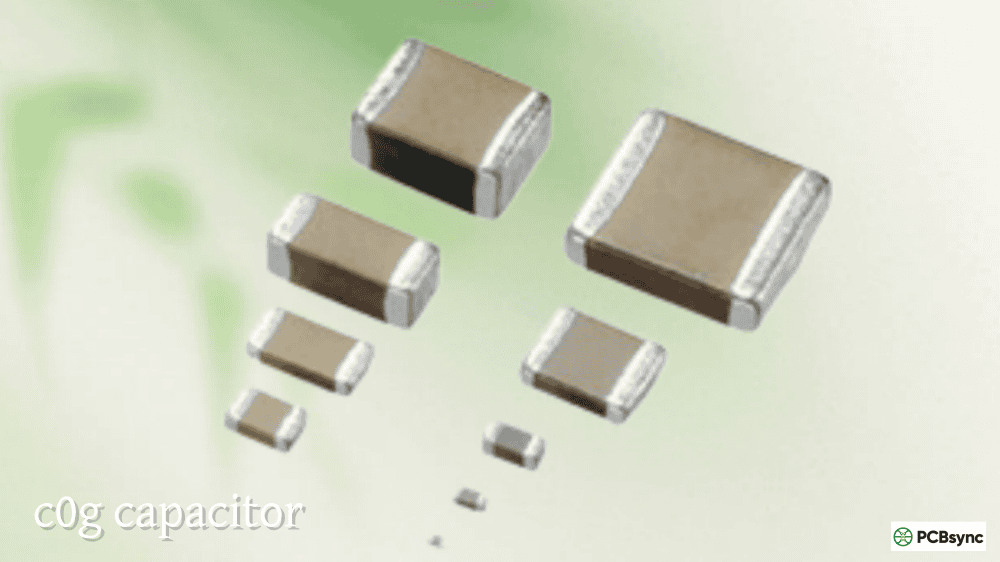
COG/NP0 ceramics offer the tightest tolerance grades available in mass-production SMD capacitors, with ±1% (F grade) available as standard catalog items from major manufacturers across a wide range of values and package sizes. This tight tolerance, combined with COG’s near-zero temperature coefficient (±30 ppm/°C) and negligible voltage coefficient, makes COG the mandatory choice for any application where initial tolerance and long-term capacitance stability both matter.
For precision filter, timing, and RF circuit applications, the ±1% COG tolerance represents the complete initial accuracy — because COG’s temperature and voltage coefficients are so small, the total capacitance variation from all sources combined is still dominated by the ±1% initial tolerance rather than any secondary effects.
X7R and X5R Ceramic: The Tolerance Trap
X7R and X5R ceramics are widely specified in ±10% (K grade) tolerance as standard catalog items, with ±5% (J grade) available at modest cost premium and ±20% (M grade) sometimes appearing in high-capacitance value parts. The tolerance band alone makes X7R unsuitable for precision applications — but the complete picture is significantly worse than the tolerance code suggests.
In a practical circuit, the actual capacitance variation for an X7R capacitor at operating conditions is the combination of:
Variation Source
Typical Magnitude
Notes
Initial tolerance (K grade)
±10%
At 23°C, 0V bias, 1kHz
Temperature coefficient
±15%
Over –55°C to +125°C full range
DC bias derating
–30% to –70%
At rated operating voltage
Aging (first year)
–1% to –3%
Logarithmic, ongoing
Combined worst-case
–60% to +10%
Realistic operating conditions
A nominally 100nF X7R capacitor on a 5V rail in a –20°C to +85°C environment may present anywhere from approximately 30nF to 110nF across real operating conditions. For filter, timing, or frequency-setting applications, this is not a capacitor with ±10% tolerance — it is a component with capacitance that varies by more than 3:1 in real deployment. Using X7R in any circuit where the capacitance value directly determines frequency, timing, or filter accuracy is a design methodology error, regardless of how precisely the nominal value was calculated.
Film Capacitor Tolerances: Precision Without DC Bias Concern
Metallized polypropylene (MKP) and polyester (MKT) film capacitors offer standard tolerances of ±5% and ±10%, with ±1% and ±2% available in polypropylene types from manufacturers including WIMA, Vishay, and Kemet. Their key advantage over Class II ceramics for precision applications is that film capacitors do not exhibit significant voltage coefficient — the ±1% or ±2% tolerance is the actual capacitance variation the circuit sees, not just the initial room-temperature starting point before DC bias and temperature effects add their contribution.
Film Type
Standard Tolerance
Tight Tolerance Available
Voltage Coeff
TC
Polypropylene (MKP)
±5%, ±10%
±1%, ±2%
Negligible
–200 ppm/°C
Polyester (MKT)
±5%, ±10%, ±20%
±5% standard min
Negligible
+400 ppm/°C
PPS Film
±5%, ±10%
±2% available
Negligible
+80 ppm/°C
Aluminum Electrolytic Capacitor Tolerance: Accepting the Limitation
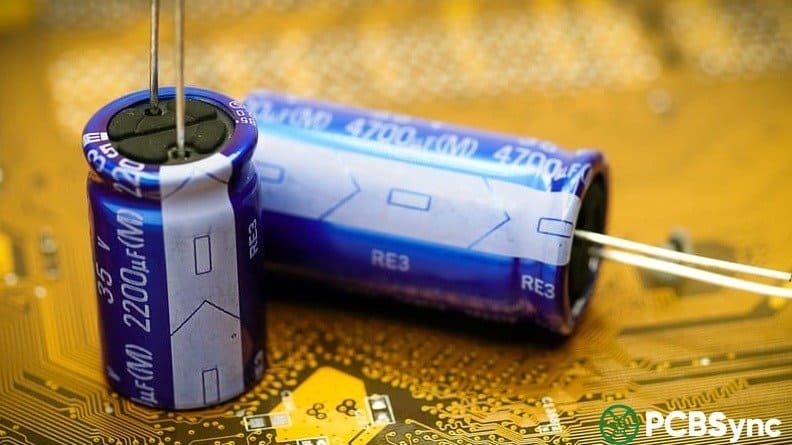
Aluminum electrolytic capacitors are fundamentally not precision components. Standard tolerance is ±20% (M grade), and tight-tolerance electrolytics at ±10% represent the practical limit for most series. The wide tolerance is an inherent consequence of the electrolytic manufacturing process — variations in oxide layer thickness, electrolyte fill volume, and electrode surface area all contribute to capacitance spread that cannot be economically tightened beyond ±10–20%.
For any application that depends on electrolytic capacitance for accuracy — which should be essentially none in a well-designed circuit — this is a fundamental incompatibility. Electrolytic capacitors belong in roles where their absolute capacitance value is not critical: bulk energy storage for power supply filtering, where a factor-of-two variation in capacitance changes the ripple voltage by only the square root of that factor.
Matching Capacitor Tolerance to Application Requirements
Timing Circuits: Where Tolerance Directly Equals Accuracy
In an RC timing circuit — 555 timer monostable, microcontroller external RC oscillator, op-amp integrator with defined reset interval — the timing interval is proportional to the product of R and C. Capacitor tolerance directly and linearly translates into timing accuracy. A ±10% capacitor tolerance produces ±10% timing variation before any other error source is considered.
For a 555 monostable with a 10ms nominal timing interval used as a safety shutdown delay, if the timing capacitor has ±20% tolerance and the resistor has ±5% tolerance, the actual timing interval range from worst-case analysis (minimum C, minimum R versus maximum C, maximum R) is:
The delay ranges from 8.36ms to 13.86ms — a 66% spread on a 10ms nominal. If the safety shutdown must trigger within 8–12ms, this design fails worst-case analysis before any other error is considered. Replacing the timing capacitor with a ±1% COG ceramic and the resistor with a ±1% metal film produces a range of 9.78ms to 10.22ms — a 4.4% spread that easily meets the requirement.
Precision Active Filters: Tolerance Budgeting Is Mandatory
In a Sallen-Key or multiple feedback active filter, the capacitors and resistors together determine the corner frequency, Q factor, and filter shape. For a second-order Butterworth low-pass filter at 1kHz, the sensitivity of the corner frequency to each component value is approximately unity — a 1% change in any capacitor value produces approximately a 0.5% change in corner frequency (depending on filter topology and section sensitivity).
For a filter specified to ±2% corner frequency accuracy, the combined tolerance contribution from capacitors and resistors must sum to less than ±2%. With two capacitors in the second-order section, each contributing equally, each capacitor must have initial tolerance of ±1% or better — COG/NP0 ceramic or polypropylene film, not X7R.
RF Impedance Matching and Load Capacitors: Absolute Tolerance Matters
At RF frequencies, matching network components are sized to achieve specific impedance transformations, and crystal oscillator load capacitors are sized to achieve specific oscillation frequencies. For a crystal specified at 12pF load capacitance, a ±5% tolerance on 12pF load capacitors means each cap can vary by ±0.6pF — producing several ppm of frequency pulling relative to the crystal’s nominal frequency.
For a 32.768kHz RTC crystal where 1pF of load capacitance error causes approximately 30ppm of frequency error (equivalent to ~15 minutes/year of timekeeping drift), using J-grade (±5%) COG capacitors introduces up to 18ppm of systematic frequency error from tolerance alone. Specifying F-grade (±1%) COG capacitors reduces this to ~3.6ppm — a meaningful improvement in timekeeping accuracy at negligible BOM cost impact.
Common Capacitor Tolerance Selection Mistakes in PCB Design
Specifying X7R for filter and timing applications. The combination of ±10% initial tolerance, ±15% temperature coefficient, and severe DC bias derating makes X7R entirely unsuitable for any precision timing or filter role. The nominal value is correct; the actual value in circuit is not. This is the single most common tolerance-related design error.
Using the same tolerance grade for all capacitors regardless of function. A ±10% bypass capacitor and a ±10% timing capacitor carry very different consequences for circuit performance. Bypass capacitors for digital supply decoupling can use ±10% or ±20% without any impact on circuit function. Timing capacitors for the same design need ±1% or ±2%. Applying uniform tolerance selection across a design either wastes money (specifying ±1% for bypass caps) or causes circuit failures (specifying ±10% for timing caps).
Ignoring aging in ceramic timing capacitors. X7R ceramics lose 1–3% of capacitance per decade hour of operation through ferroelectric aging. A timing circuit that is calibrated at first power-on will drift over months and years as the ceramic ages. COG ceramics do not exhibit this aging — they maintain their initial capacitance indefinitely under normal operating conditions. For any timing or frequency-setting application with a long product life, COG is not just a precision choice, it is a stability choice.
Substituting a lower-tolerance grade during a parts shortage. A design that specifies ±5% and is substituted with ±10% during production due to supply chain constraints represents a real change to circuit performance. The engineering team must evaluate whether the application’s tolerance budget accommodates the substitution — not assume it does because the nominal value is unchanged.
For comprehensive reference on capacitor tolerance codes, dielectric-specific tolerance grades, and the parametric databases that enable accurate tolerance-aware component selection, the Capacitor guide at PCBSync covers all major capacitor families with practical selection guidance.
Frequently Asked Questions About Capacitor Tolerance
Q1: What capacitor tolerance do I need for a 555 timer circuit?
It depends entirely on how accurately the timing interval needs to be defined. For a simple LED blink or non-critical delay where ±15–20% timing variation is acceptable, a ±10% (K grade) film or ceramic capacitor is adequate. For any timing application with a defined accuracy requirement — safety delays, communication timing, measurement intervals — calculate the required tolerance from the timing accuracy budget, subtract the resistor tolerance and 555 IC threshold tolerance contributions, and what remains is the allowable capacitor tolerance. In practice, specifying a ±1% polypropylene film capacitor (COG for values below 1nF) combined with a ±1% metal film resistor and a precision CMOS 555 variant produces timing accuracy within ±3–4% over temperature — achievable without calibration and suitable for most precision timing applications.
Q2: Why does capacitor tolerance matter more than voltage tolerance in most circuits?
Voltage tolerance in a capacitor means the variation in the maximum voltage it can withstand — a safety margin parameter that doesn’t affect normal circuit operation as long as the rated voltage is maintained with appropriate derating. Capacitor tolerance, by contrast, directly affects circuit function: every circuit where capacitance determines a frequency, time constant, filter response, or impedance is affected by every percentage point of capacitor tolerance variation. Voltage tolerance is a reliability specification; capacitor tolerance is a performance specification. Both matter, but they matter in completely different ways, and capacitor tolerance typically requires more careful consideration at the circuit design stage.
Q3: Is ±20% tolerance on a bypass capacitor acceptable?
Yes, in most cases. Bypass and decoupling capacitors for digital IC supply rails serve as local charge reservoirs and high-frequency noise filters. Whether the 100nF bypass capacitor measures 80nF or 120nF has negligible effect on its ability to supply instantaneous switching current to the IC or attenuate high-frequency noise — the impedance at the frequencies of interest changes by less than 1.5dB across this range, which is completely inconsequential for decoupling performance. The ±20% (M grade) tolerance available in many high-value X7R MLCCs is entirely acceptable for bypass and decoupling applications. Reserve tight-tolerance components for the circuit positions where tolerance directly affects performance specifications.
Q4: What is the difference between ±5% J-grade and ±10% K-grade capacitors in practice?
At the component level, J-grade (±5%) means the actual capacitance falls within a band half as wide as K-grade (±10%) around the nominal value. The practical significance depends entirely on the circuit. In a filter or timing application, J-grade halves the worst-case frequency or timing error contribution from the capacitor alone compared to K-grade. In a decoupling or bypass application, there is no meaningful practical difference. The cost premium for J-grade over K-grade is typically small for standard ceramic values. For film capacitors, ±5% is often the standard grade rather than a premium selection. When in doubt between J and K for a moderately precision application, specify J — the cost difference rarely justifies the risk of K-grade variability narrowing the overall tolerance budget.
Q5: Can I mix different tolerance grades in a matched-pair filter circuit?
You can, but it significantly complicates the tolerance budget analysis and risks defeating the purpose of specifying tight tolerance on the other components. A two-capacitor Sallen-Key filter section where one capacitor is ±1% and the other is ±10% has a combined tolerance contribution dominated by the ±10% component — the tight-tolerance cap contributes negligibly to the error budget while the loose-tolerance cap determines it. For matched-pair applications — stereo audio filters, differential signal conditioning, precision instrumentation — both capacitors should be the same tolerance grade, ideally from the same manufacturer lot to minimize the within-lot variation that makes production unit-to-unit matching tighter than the full tolerance specification implies.
Capacitor Tolerance Is the Specification That Connects Schematic to Production Performance
The capacitor tolerance is the bridge between the circuit you designed on paper and the circuit you get from the production line. Every unit coming off the assembly line has capacitors that measured somewhere within their tolerance band — and the performance of every unit is correspondingly distributed across the range those tolerances define. If that range is wider than the performance specification allows, production yield suffers, field calibration is required, or units fail their acceptance tests in ways that trace directly back to a component specification decided in ten seconds during schematic entry.
Specifying COG/NP0 ceramics at ±1% for timing and precision filter positions, using polypropylene film at ±1–2% for larger values, reserving X7R and loose-tolerance electrolytics for the bypass and bulk storage positions where they belong, and explicitly budgeting the tolerance contributions of every capacitor in a precision circuit — these habits cost almost nothing during design and prevent the expensive discovery, during production qualification or in the field, that the circuit was designed with more precision than the components selected to build it can actually deliver.
Inquire: Call 0086-755-23203480, or reach out via the form below/your sales contact to discuss our design, manufacturing, and assembly capabilities.
Quote: Email your PCB files to Sales@pcbsync.com (Preferred for large files) or submit online. We will contact you promptly. Please ensure your email is correct.
Notes: For PCB fabrication, we require PCB design file in Gerber RS-274X format (most preferred), *.PCB/DDB (Protel, inform your program version) format or *.BRD (Eagle) format. For PCB assembly, we require PCB design file in above mentioned format, drilling file and BOM. Click to download BOM template To avoid file missing, please include all files into one folder and compress it into .zip or .rar format.