Inquire: Call 0086-755-23203480, or reach out via the form below/your sales contact to discuss our design, manufacturing, and assembly capabilities.
Quote: Email your PCB files to Sales@pcbsync.com (Preferred for large files) or submit online. We will contact you promptly. Please ensure your email is correct.
Notes: For PCB fabrication, we require PCB design file in Gerber RS-274X format (most preferred), *.PCB/DDB (Protel, inform your program version) format or *.BRD (Eagle) format. For PCB assembly, we require PCB design file in above mentioned format, drilling file and BOM. Click to download BOM template To avoid file missing, please include all files into one folder and compress it into .zip or .rar format.
Ripple Current Rating: Capacitor Selection Criteria Every PCB Engineer Must Know
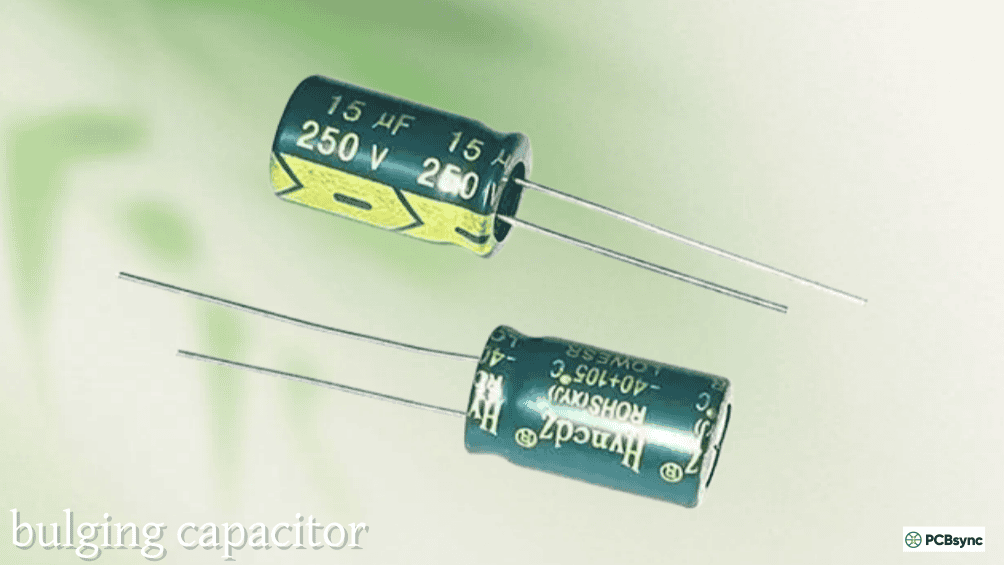
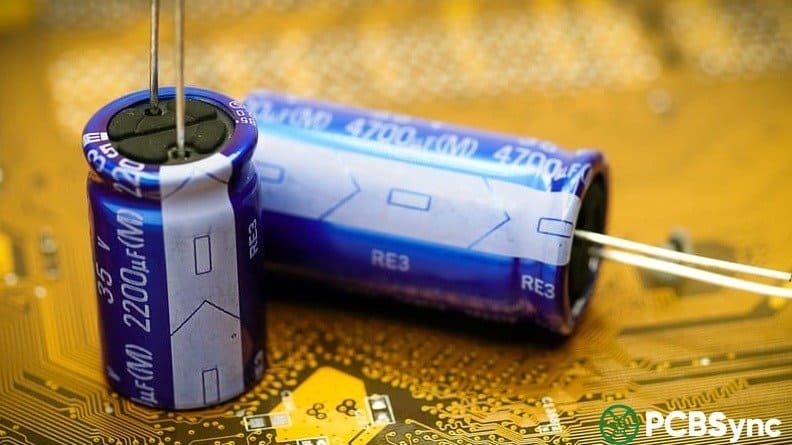
Power supply failures rarely announce themselves dramatically. More often, a switching converter that ran fine in the lab starts producing increasing output ripple after eighteen months in the field. Then the downstream processor starts resetting intermittently. Then the electrolytic capacitor on the output rail starts bulging. The postmortem always reveals the same thing: a capacitor that was correctly rated for voltage and nominally correct for capacitance, but never properly evaluated for the one parameter that determined its thermal fate — capacitor ripple current.
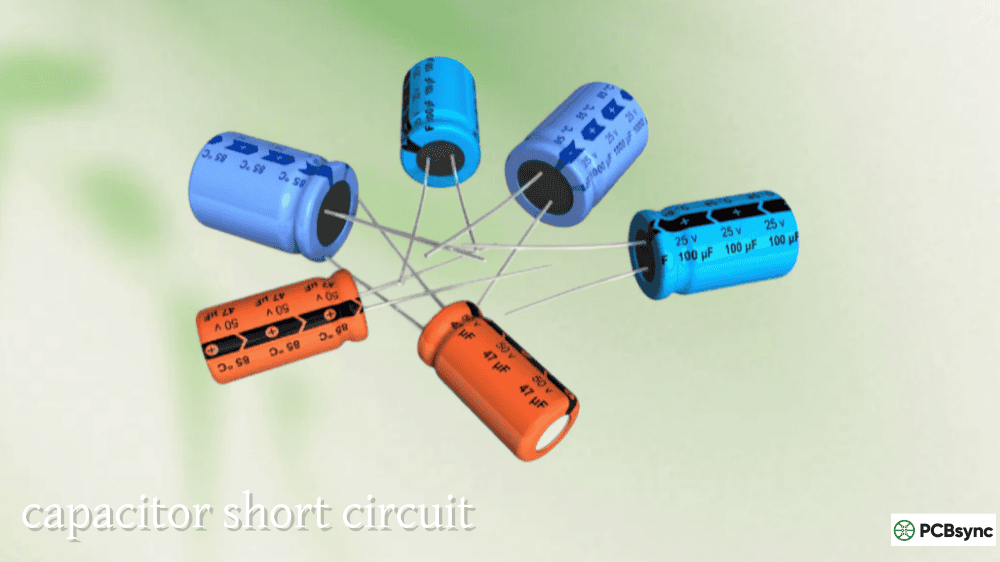
Ripple current is the AC component of current flowing through a capacitor in any circuit where charge and discharge cycles occur at a defined frequency. In a switching power supply, this is the switching frequency. In a linear power supply rectifier stage, it is twice the mains frequency. In a motor drive DC bus, it is a combination of the switching frequency and motor electrical frequency. Every time ripple current flows through the capacitor’s equivalent series resistance (ESR), power is dissipated: P = I²_rms × ESR. That power heats the capacitor internally. Internal heating is the primary aging and failure mechanism for aluminum electrolytic capacitors, and it is entirely determined by how well the ripple current specification was handled during component selection.
This guide covers what capacitor ripple current rating means, how to calculate the ripple current in common circuit topologies, how to derate correctly for temperature and frequency, and the specific mistakes that turn a nominally adequate capacitor selection into a field reliability problem.
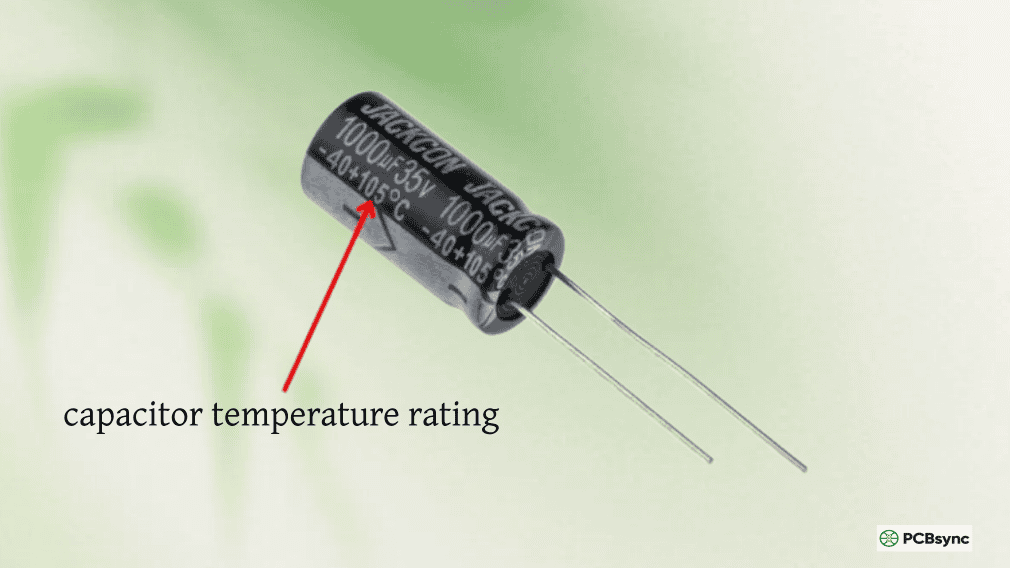
The ripple current rating of a capacitor is not an arbitrary electrical limit — it is a thermal limit expressed as an equivalent current. The manufacturer determines the maximum rated ripple current by calculating the maximum AC current that produces internal heating sufficient to raise the capacitor’s core temperature to its rated maximum (typically 85°C or 105°C) when operating at the specified maximum ambient temperature.
The internal power dissipation from ripple current is governed by:
P_internal = I²_ripple × ESR
For an electrolytic capacitor with ESR of 100mΩ and a rated ripple current of 1A RMS at 105°C ambient: P = 1² × 0.1 = 100mW of internal heating. When the ambient temperature is lower than the rated maximum, additional ripple current beyond the rated value is permissible because the thermal budget has more headroom. This is why ripple current ratings come with temperature correction factors — specifying, for example, that the rated 1A applies at 105°C ambient, but 1.2A is permissible at 85°C ambient and 1.4A at 65°C ambient.
The critical insight: the ripple current rating is inextricably linked to the operating temperature. Evaluating a capacitor’s ripple current rating without accounting for the actual operating temperature — and applying the manufacturer’s temperature correction factor — produces a fundamentally incomplete assessment.
Frequency Dependence of Ripple Current Rating
ESR is frequency-dependent. At low frequencies (100–120Hz, the mains ripple frequency in rectifier circuits), ESR is higher than at switching frequencies (20kHz–500kHz) because the frequency-dependent components of ESR — the impedance of the electrolyte and the dielectric losses — are larger at low frequencies. Since P = I² × ESR, a given ripple current generates more heat at low frequency than at high frequency.
Manufacturers address this by specifying ripple current ratings at a reference frequency (typically 100kHz for switching-grade electrolytics) and publishing frequency correction factors that reduce the permissible ripple current at lower frequencies. Applying only the 100kHz-rated ripple current value to a design where a significant portion of the ripple occurs at 120Hz — as in a boost PFC stage with combined 120Hz and switching-frequency ripple — underestimates the thermal stress and leads to premature capacitor aging.
Frequency
Typical ESR Multiple vs. 100kHz
Ripple Current Correction Factor
50Hz / 60Hz
5× – 15×
0.25 – 0.40
100Hz / 120Hz
4× – 10×
0.30 – 0.50
1kHz
2× – 4×
0.50 – 0.70
10kHz
1.2× – 1.8×
0.75 – 0.90
100kHz
1.0× (reference)
1.0 (reference)
300kHz+
0.9× – 1.1×
1.0 – 1.05
The frequency correction factors in this table are representative averages — actual values vary significantly by capacitor series and manufacturer. Always use the specific correction factor table from the component datasheet, not generic industry estimates.
Calculating Capacitor Ripple Current in Common Circuit Topologies
Switching Power Supply Output Filter
The output filter capacitor of a buck converter carries the inductor ripple current. For a continuous-conduction mode buck converter, the peak-to-peak ripple current through the output capacitor is approximately equal to the inductor current ripple:
I_ripple_pp = (V_in – V_out) × D / (L × f_sw)
Where D is duty cycle, L is inductance, and f_sw is switching frequency. The RMS ripple current through the capacitor is:
I_ripple_rms = I_ripple_pp / (2√3)
For a 12V to 5V buck converter at 10A output, 300kHz switching frequency, 10µH inductor:
This is the minimum ripple current rating required for the output capacitor — before any derating for temperature or frequency correction.
Boost PFC Stage Output Capacitor
The boost PFC output capacitor faces the most complex ripple current stress of any standard topology, carrying combined ripple from two sources: the 100/120Hz envelope of the rectified mains current, and the high-frequency switching ripple at the boost converter switching frequency. These two components must be evaluated separately against their respective frequency-corrected ripple current ratings and combined as RMS values:
I_ripple_total = √(I²_100Hz + I²_sw)
For a 500W PFC stage at 400V output: I_100Hz ≈ P / (2 × V_out) = 500 / 800 ≈ 0.625A RMS, and I_sw might be 0.8–1.2A RMS at switching frequency. Combined: I_total ≈ √(0.625² + 1.0²) ≈ 1.18A RMS. Now apply the frequency correction factor for the 100Hz component — if the capacitor’s permissible 100Hz ripple current is 40% of its 100kHz rating, the 100Hz component of 0.625A requires a 100kHz-equivalent rating of 0.625/0.4 = 1.56A at 100kHz. This is the correct way to evaluate combined-frequency ripple — not by simply comparing total RMS current against the 100kHz ripple rating.
Rectifier Input Capacitor in Linear Power Supplies
The bulk filter capacitor in a linear power supply (transformer + bridge rectifier + electrolytic) carries a substantially different ripple waveform than a switching converter capacitor. The capacitor charges in brief peaks near the mains voltage peaks and discharges relatively slowly between peaks. The resulting ripple current is rich in harmonics and occurs primarily at 100/120Hz.
This simplified formula shows why large output current with small ripple voltage (large capacitance) produces high ripple current — the charge must be delivered in narrow peaks at the top of the mains cycle. For a 5V/5A linear supply with 1V ripple voltage on a 7.07V peak: the ripple current approaches 3–5× the DC output current. Linear power supply filter capacitors are frequently undersized for ripple current despite being correctly sized for capacitance, because the ripple current in this topology is dramatically larger than the DC load current.
Ripple Current Derating: The Rules That Extend Capacitor Life
Temperature Derating Applied Correctly
The rated ripple current applies at the rated maximum operating temperature. At lower ambient temperatures, additional ripple current headroom exists because the thermal budget between ambient and the rated maximum core temperature is larger. Most electrolytic capacitor datasheets publish temperature correction factors as a multiplier on the rated ripple current.
Operating Ambient Temperature
Typical Ripple Current Multiplier (105°C rated caps)
105°C
1.0× (rated value)
85°C
1.15× – 1.30×
65°C
1.30× – 1.50×
45°C
1.45× – 1.70×
25°C
1.60× – 2.00×
The values above are representative — use the specific table in your component datasheet. The practical implication: a capacitor installed in a 45°C environment can handle 45–70% more ripple current than its rated value, which is a meaningful design margin that can justify selecting a smaller or lower-cost capacitor in applications with well-controlled thermal environments.
Design Margin and Safety Factor Application
Even with correct ripple current calculations and temperature corrections applied, professional design practice applies an additional safety margin — typically specifying the capacitor such that the calculated worst-case ripple current does not exceed 70–80% of the temperature-corrected rated value. This margin accounts for:
Component-to-component variation in ESR. ESR has a manufacturing tolerance — a capacitor with nominally 100mΩ ESR might measure anywhere from 70mΩ to 150mΩ within its specification. A capacitor at the high end of the ESR tolerance produces proportionally more internal heat for the same ripple current.
ESR increase with aging. As an electrolytic capacitor ages, its ESR increases. A capacitor that starts within its ripple current rating may exceed it after 5 years of operation as ESR climbs, accelerating its own degradation.
Operating condition uncertainty. Worst-case analysis requires combining maximum ambient temperature, maximum ripple current (at maximum load), and maximum ESR (tolerance + aging) simultaneously. The probability of all worst-case factors coinciding simultaneously is low, but in safety-critical or long-life applications it must be designed against.
Capacitor Ripple Current Rating by Technology Type
Not all capacitor technologies are created equal for ripple current handling. Understanding which technologies offer the best ripple current capability for a given size and cost is essential for power supply design:
Technology
Ripple Current Capability
ESR Level
Self-Healing
Key Limitation
Standard Aluminum Electrolytic
Moderate
100–500mΩ
No
ESR increase with age
Low-Impedance Electrolytic (e.g., Nichicon HE)
High
20–100mΩ
No
Service life at high ripple
Polymer Aluminum (OS-CON)
Very High
5–30mΩ
No
Cost vs. electrolytic
Polymer Tantalum (POSCAP/KEMET T598)
High
5–50mΩ
No
Lower capacitance density
Metallized PP Film
Very High
1–10mΩ
Yes
Large size for equivalent C
X7R MLCC (large value)
Very High
< 5mΩ
No
DC bias derating reduces C
Supercapacitor (EDLC)
High (low frequency)
1–100mΩ
No
Not suited for high-freq ripple
The polymer aluminum (OS-CON) and polymer tantalum categories deserve specific emphasis for high-ripple-current applications. Their solid conductive polymer electrolyte gives them ESR values 5–10× lower than equivalent liquid electrolytic types, directly reducing the internal heating per unit of ripple current by the same factor. For a given ripple current, a polymer capacitor runs dramatically cooler than a liquid electrolytic — or conversely, can handle dramatically more ripple current in the same physical package. In switching converter output stages operating at 300kHz+, MLCCs and polymer electrolytics have largely displaced liquid aluminum electrolytics precisely because of their superior ripple current handling and lower ESR at switching frequencies.
Paralleling Capacitors to Meet Ripple Current Requirements
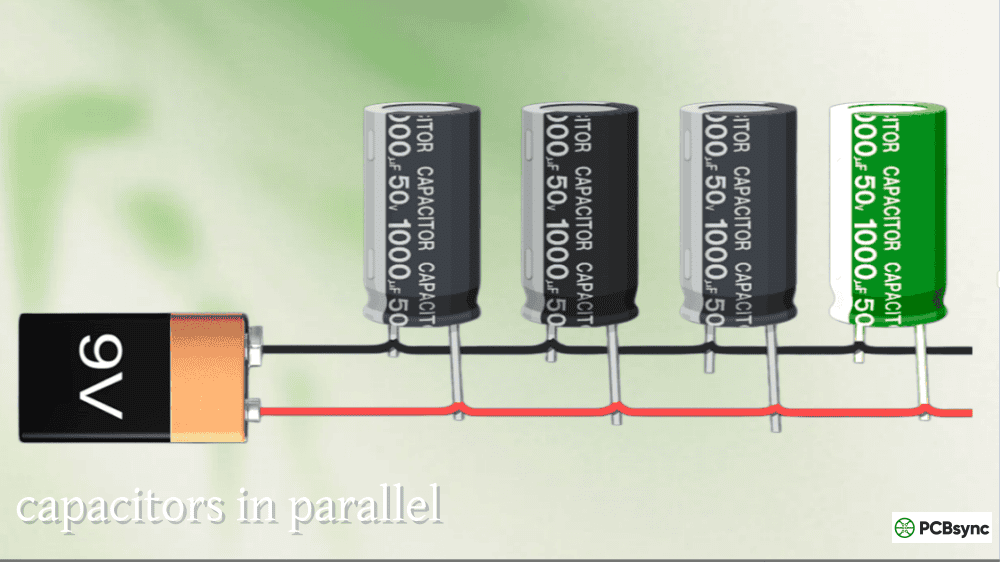
When a single capacitor cannot meet the required ripple current specification, paralleling multiple capacitors is the standard solution. Multiple capacitors in parallel divide the ripple current between them (assuming equal ESR) and also reduce the combined ESR, which further reduces per-unit heating.
For N identical capacitors in parallel, each carries I_ripple / N of the total ripple current, and the combined ESR is ESR_unit / N. Total internal dissipation across all N capacitors is:
P_total = N × (I_ripple/N)² × ESR_unit = I²_ripple × ESR_unit / N
Total dissipation decreases with N — spreading ripple current across parallel capacitors genuinely reduces thermal stress, not just redistributes it. This is why switching power supply designs targeting high ripple current handling and long service life typically use multiple smaller electrolytics in parallel rather than a single large unit.
A practical note on parallel capacitor layout: parallel capacitors should have matched lead lengths and symmetric PCB routing to ensure ripple current divides equally between them. In high-current designs, asymmetric routing causes one capacitor to carry more than its share of ripple current — negating the benefit of paralleling and potentially driving that unit beyond its individual ripple current rating.
For comprehensive reference on ripple current ratings by capacitor series, ESR data, and parametric selection tools across all major capacitor families, the Capacitor guide at PCBSync provides detailed coverage to support accurate design calculations.
Useful Resources for Capacitor Ripple Current Selection and Calculation
Resource
Description
Link
Nichicon Ripple Current Calculation Tool
Online tool for electrolytic ripple current and life estimation
Frequently Asked Questions About Capacitor Ripple Current
Q1: What happens if ripple current exceeds the capacitor’s rated value?
When ripple current exceeds the rated value, internal power dissipation (P = I² × ESR) exceeds the thermal budget the manufacturer designed for. The core temperature rises above the rated maximum. For aluminum electrolytic capacitors, elevated core temperature accelerates electrolyte evaporation — every 10°C above rated maximum roughly doubles the degradation rate. The capacitor’s ESR increases, which further increases internal heating for the same ripple current, creating a positive feedback loop. Early symptoms are increasing output ripple voltage. Progressive failure leads to capacitance loss, eventual ESR-driven thermal instability, and ultimately physical failure — venting, bulging, or in severe cases, rupture of the pressure relief vent.
Q2: How do I calculate the ripple current through my filter capacitor?
The calculation depends on the circuit topology. For a buck converter output capacitor, RMS ripple current ≈ I_ripple_pp / (2√3), where I_ripple_pp is the peak-to-peak inductor current ripple. For a boost PFC output capacitor, calculate the 100/120Hz component (≈ P_out / (2 × V_out)) and the switching-frequency component separately, then combine as √(I²_low_freq + I²_high_freq). For a linear power supply rectifier capacitor, ripple current is 3–5× the DC output current depending on the ripple voltage ratio and capacitance. Circuit simulation with LTspice or a dedicated power supply design tool (TI WEBENCH, Analog Devices LTpowerPlanner) will give accurate results for complex topologies where hand calculation is insufficient.
Q3: Can I use multiple capacitors in parallel to increase ripple current handling?
Yes, and this is a standard and effective technique. N identical capacitors in parallel divide the ripple current by N and reduce combined ESR by N, so total internal dissipation across all units decreases by a factor of N compared to a single capacitor of equivalent ESR. Ensure routing symmetry so each capacitor carries an equal share — asymmetric trace lengths cause unequal current sharing that can stress one unit beyond its individual rating. For high-power designs, using four 470µF capacitors in parallel often outperforms a single 2200µF unit on ripple current handling, ESR, and thermal distribution, even if the capacitance values are similar.
Q4: Why does the ripple current rating change with frequency?
Because ESR changes with frequency, and ripple current rating is fundamentally a thermal (ESR-based) limit. At low frequencies (100Hz), electrolyte ionic resistance and dielectric losses contribute significantly to ESR, making it higher than at 100kHz. Since internal dissipation is P = I² × ESR, a given current produces more heat at 100Hz than at 100kHz. To maintain the same thermal stress level (same core temperature rise), the permissible ripple current must be reduced at lower frequencies. Manufacturers publish frequency correction factors that give the multiplier to apply to the 100kHz-rated ripple current value at each frequency. Always apply these corrections when your circuit has significant ripple at frequencies below the rated reference frequency.
Q5: Is the ripple current rating the same for ceramic and film capacitors as for electrolytics?
Ceramic MLCCs and film capacitors have much lower ESR than electrolytics, so for the same ripple current, they dissipate dramatically less heat. Their ripple current ratings are correspondingly higher and less often the limiting design constraint. That said, ceramic MLCC datasheets for power application types do specify ripple current and self-heating limits — particularly important for large-value X7R types used in switching converter output filters, where significant ripple current can cause measurable temperature rise even at milliohm ESR levels. Film capacitors used as DC bus capacitors in motor drives and inverters have explicit ripple current ratings that must be respected, especially at the lower end of their frequency rating where dielectric losses increase. Always check the ripple current specification regardless of capacitor technology — it is not exclusively an electrolytic concern.
Capacitor Ripple Current Deserves as Much Attention as Voltage Rating
The capacitor ripple current specification is the thermal life equation of every capacitor in a power circuit. An electrolytic that is perfectly rated for voltage and capacitance will fail prematurely — sometimes within months of its design life target — if the ripple current rating was checked only against the 100kHz-rated value without applying frequency correction factors, temperature derating, and a reasonable safety margin against ESR aging.
Calculating actual ripple current for the specific circuit topology, applying the manufacturer’s frequency correction table, accounting for the real ambient temperature rather than room temperature, and specifying the capacitor such that calculated worst-case ripple current stays within 70–80% of the corrected rated value — these steps add thirty minutes to a capacitor selection task and years to the service life of the design. The return on that investment speaks for itself in the warranty data.
Inquire: Call 0086-755-23203480, or reach out via the form below/your sales contact to discuss our design, manufacturing, and assembly capabilities.
Quote: Email your PCB files to Sales@pcbsync.com (Preferred for large files) or submit online. We will contact you promptly. Please ensure your email is correct.
Notes: For PCB fabrication, we require PCB design file in Gerber RS-274X format (most preferred), *.PCB/DDB (Protel, inform your program version) format or *.BRD (Eagle) format. For PCB assembly, we require PCB design file in above mentioned format, drilling file and BOM. Click to download BOM template To avoid file missing, please include all files into one folder and compress it into .zip or .rar format.