Inquire: Call 0086-755-23203480, or reach out via the form below/your sales contact to discuss our design, manufacturing, and assembly capabilities.
Quote: Email your PCB files to Sales@pcbsync.com (Preferred for large files) or submit online. We will contact you promptly. Please ensure your email is correct.
Notes: For PCB fabrication, we require PCB design file in Gerber RS-274X format (most preferred), *.PCB/DDB (Protel, inform your program version) format or *.BRD (Eagle) format. For PCB assembly, we require PCB design file in above mentioned format, drilling file and BOM. Click to download BOM template To avoid file missing, please include all files into one folder and compress it into .zip or .rar format.
Top Capacitor Manufacturers: Brand Guide & Comparison
When you’re laying out a PCB at 2 AM and need to specify capacitors, brand selection matters more than you might think. I’ve been designing boards professionally for over a decade, and I’ve seen firsthand how the right capacitor brands can make the difference between a product that ships on time and one that comes back with field failures.
Let me walk you through the capacitor brands that actually matter in real-world PCB design, based on what I’ve learned from countless board spins, RMA data, and late-night debugging sessions.
Understanding Capacitor Brands: Why They Actually Matter
Here’s something they don’t always teach in engineering school: not all Capacitor brands are created equal, even when the datasheet specs look identical. I learned this the hard way on a power supply design where swapping from a tier-one Japanese brand to a cheaper alternative resulted in a 15% failure rate in the field. Same capacitance, same voltage rating, completely different reliability story.
The capacitor brands you choose directly impact several critical factors:
Long-term reliability under real operating conditions – Datasheets tell you what happens in ideal conditions. Brand reputation tells you what happens in your customer’s hands after three years of 24/7 operation in a dusty warehouse.
ESR consistency across temperature ranges – I once debugged a switching power supply that worked perfectly at room temperature but failed at -20°C. The culprit? Off-brand capacitors with ESR that tripled in cold conditions.
Supply chain availability – During component shortages, tier-one brands generally have better allocation. I’ve saved projects by specifying brands with multiple authorized distributors.
Counterfeit resistance – Popular brands get counterfeited, but reputable distributors have verification processes. Lesser-known brands? Good luck telling real from fake.
Top-Tier Japanese Capacitor Brands: The Gold Standard
When I need components I can trust without question, I turn to the Japanese manufacturers. These brands have earned their reputation through decades of consistent quality.
Murata Manufacturing
Murata dominates the MLCC market with an iron fist, and for good reason. Their GRM series ceramic capacitors are what I specify for nearly every high-frequency decoupling application. What sets Murata apart is their manufacturing precision – batch-to-batch variation is minimal, which matters when you’re designing for high-volume production.
Key strengths: Industry-leading MLCC technology, excellent high-frequency performance, extensive product range from 0201 to large power capacitors
Common series: GRM (MLCC), LQG (inductors), and their automotive-grade products
Where I use them: Smartphone designs, RF circuits, any application where size and performance matter more than cost
Nichicon Corporation
If I’m designing audio equipment or a power supply that needs to last 10+ years, Nichicon electrolytics are my go-to. Their UHE and PW series have saved me more times than I can count. The ripple current ratings are conservative – meaning when they say 2A ripple, you can actually run 2A ripple without thermal issues.
Key strengths: Superior aluminum electrolytic capacitors, excellent temperature stability, long-life ratings that are actually achievable
Popular series: UFW (long-life), UHE (audio-grade), PW (low-impedance)
Real-world performance: I’ve pulled Nichicon caps from 15-year-old industrial equipment that still measured within 10% of nominal capacitance
Rubycon
Rubycon’s ZL and YXG series are workhorses in switch-mode power supplies. What I appreciate most is their engineering support – they actually answer technical questions with useful information, not marketing fluff. Their automotive-grade capacitors handle temperature cycling like champions.
Key strengths: Exceptional endurance in high-temperature applications, low ESR electrolytics, strong automotive product line
Series to know: ZL (low-impedance), YXG (high-ripple), MCZ (miniature)
Engineering tip: Their ripple current derating curves are realistic – use them for thermal calculations
Panasonic (formerly Matsushita)
Panasonic offers the broadest product portfolio of any capacitor manufacturer. Need a specialty capacitor for a weird application? Panasonic probably makes it. Their ECPU polymer capacitors have become my standard for modern power supply outputs – solid polymer electrolyte means no dry-out failures.
Key strengths: Massive product catalog, polymer aluminum electrolytics, competitive pricing for a tier-one brand
Notable series: FC (polymer aluminum), ECQ (film), ECA (standard aluminum)
Supply chain note: Multiple manufacturing sites mean better availability during shortages
TDK Corporation (includes EPCOS)
TDK’s acquisition of EPCOS gave them serious muscle in the film capacitor market. Their MLCC offerings compete directly with Murata, and I’ve had good results with both. The C-series ceramic caps perform well in automotive temperature ranges.
Key strengths: Strong film capacitor lineup, automotive-qualified products, good technical documentation
Where they excel: Motor drives, power factor correction, automotive applications
American and European Capacitor Brands: Different Strengths
The Western manufacturers approach capacitor design differently – often focusing on specialized applications rather than trying to compete in high-volume commodity markets.
KEMET (now part of Yageo)
KEMET’s tantalum capacitors are legendary for good reason. Their polymer tantalum technology offers ESR down in the milliohm range, which is invaluable for low-voltage, high-current applications like CPU power delivery. I specify KEMET T520 series for nearly every VRM design.
Design consideration: Pay attention to their voltage derating recommendations – running tantalums above 50% rated voltage is asking for trouble
Vishay Intertechnology
Vishay bought so many capacitor companies that they now offer everything. What I value most is their film capacitor selection – the MKP and MKT series are go-to choices for power electronics. Their AC line filter caps are rock-solid reliable.
Strong areas: Film capacitors, high-voltage ceramics, specialty power capacitors
Engineering note: Their SMPS application notes are actually useful – worth reading
Cornell Dubilier (CDE)
When I need a capacitor that will survive nuclear winter, I specify Cornell Dubilier. Their aluminum electrolytics are overbuilt in the best possible way. Yes, they’re expensive. Yes, they’re worth it for critical applications.
Focus areas: Industrial-grade electrolytics, power factor correction, motor-run capacitors
Trusted series: 380LX (snap-in), SLP (screw-terminal), ALS (axial)
Best use cases: Industrial equipment, power distribution, anywhere failures are unacceptable
Würth Elektronik
Würth occupies an interesting niche – high-quality components with excellent engineering tools. Their WCAP-PSLP series polymer capacitors compete with Japanese brands at better pricing. The free samples program and detailed simulation models make them easy to evaluate.
Product range: WCAP (ceramic and electrolytic series), power inductors, EMI components
Design support: Their Redexpert tool is genuinely useful for component selection
Asian Capacitor Brands: Value Players with Growing Quality
Several Asian manufacturers have significantly improved quality while maintaining cost advantages. I wouldn’t have trusted these brands ten years ago, but they’ve earned consideration for cost-sensitive designs.
Samsung Electro-Mechanics
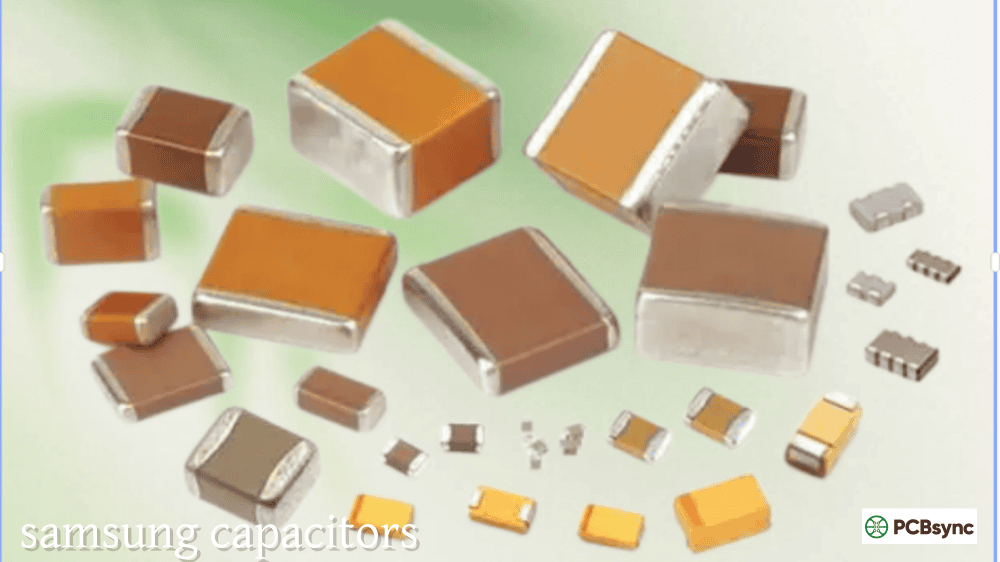
Samsung’s MLCC production capacity is second only to Murata. Their CL-series ceramic capacitors offer 80-90% of Murata’s performance at 60-70% of the cost. I use them for mid-tier consumer products where cost matters but reliability can’t be compromised.
Market position: High-volume MLCC manufacturer, competitive with tier-one Japanese brands
Series to consider: CL (MLCC), NP0/X7R/Y5V dielectrics across all common sizes
Reliability data: Field failure rates comparable to tier-one brands in my experience
Yageo Corporation
Yageo has been quietly buying up capacitor companies (including KEMET) and improving manufacturing quality. Their house-brand passive components now rival established players in many applications. Good value for non-critical designs.
Current status: Second-largest passive component maker globally after Murata
Product focus: MLCCs, resistors, standard aluminum electrolytics
Strategic positioning: Acquiring technology through M&A while expanding capacity
Taiyo Yuden
Primarily known for MLCCs and inductors, Taiyo Yuden offers an interesting middle ground between top-tier Japanese brands and cost-focused Asian competitors. Their TMK series ceramics work well for general-purpose applications.
Competitive edge: Solid technical specifications, reasonable pricing, good availability
Main products: TMK (MLCC), NR (inductors), low-inductance capacitor arrays
Design note: Less aggressive DC bias characteristics than some competitors
Capacitor Brand Comparison Tables
Electrolytic Capacitor Brands Comparison
Brand
Origin
Quality Tier
Lifetime Rating
ESR Performance
Price Point
Best Applications
Nichicon
Japan
Tier 1
5,000-10,000h @ 105°C
Excellent
High
Audio, Long-life power supplies
Rubycon
Japan
Tier 1
5,000-10,000h @ 105°C
Excellent
High
Automotive, SMPS
Panasonic
Japan
Tier 1
2,000-5,000h @ 105°C
Very Good
Medium-High
General purpose, Polymer
KEMET
USA
Tier 1
2,000-5,000h @ 105°C
Excellent (Polymer)
High
VRM, High-current
Cornell Dubilier
USA
Tier 1
5,000+ hours
Good
Very High
Industrial, Power
Würth Elektronik
Germany
Tier 1
2,000-5,000h @ 105°C
Very Good
Medium
General industrial
Samwha
Korea
Tier 2
2,000-3,000h @ 105°C
Good
Medium
Cost-sensitive consumer
Lelon
Taiwan
Tier 2
2,000h @ 105°C
Fair-Good
Low-Medium
Budget consumer
MLCC Capacitor Brands Comparison
Brand
Origin
Quality Tier
Capacitance Range
Voltage Range
DC Bias Stability
Price
Availability
Murata
Japan
Tier 1
0.1pF – 100µF
2.5V – 3kV
Excellent
High
Excellent
TDK
Japan
Tier 1
0.22pF – 100µF
4V – 3kV
Excellent
High
Excellent
Samsung
Korea
Tier 1
0.5pF – 100µF
4V – 630V
Very Good
Medium-High
Excellent
Yageo
Taiwan
Tier 1-2
0.5pF – 47µF
6.3V – 630V
Good
Medium
Very Good
Taiyo Yuden
Japan
Tier 1
0.1pF – 100µF
4V – 630V
Very Good
Medium-High
Good
Vishay
USA
Tier 1
1pF – 10µF
10V – 3kV
Good
Medium
Good
KEMET
USA
Tier 1
1pF – 47µF
16V – 3kV
Very Good
Medium-High
Very Good
Specialty Capacitor Applications
Application
Recommended Brands
Key Parameters
Why These Brands
Audio Equipment
Nichicon, Elna, Panasonic (FC)
Low ESR, Low leakage
Proven audio performance, minimal distortion
Automotive (AEC-Q200)
Murata, TDK, Rubycon
Temperature cycling, Vibration
Qualified to automotive standards
Power Supplies (SMPS)
Rubycon, Nichicon, Panasonic
High ripple current, Low ESR
Thermal stability, Long life
RF Circuits
Murata, TDK, Johanson
Low loss, Tight tolerance
Minimal parasitics, Consistent specs
Safety-Critical Industrial
Cornell Dubilier, WIMA, EPCOS
Long life, Conservative ratings
Proven reliability, Overbuilt designs
High-Voltage Applications
TDK, Vishay, Cornell Dubilier
>1kV ratings, Safety margins
Engineering depth in HV applications
Polymer Capacitors
Panasonic, KEMET, Rubycon
Ultra-low ESR, Solid electrolyte
Leading polymer technology
How PCB Engineers Actually Select Capacitor Brands
Let me share the practical process I use when specifying capacitors for production boards:
Step 1: Define Your Quality Requirements
Not every capacitor on your board needs to be tier-one. I typically categorize positions:
Critical positions (power supply primary, VRM output) – Specify tier-one brands only. The cost difference is negligible compared to field failure risk.
Important positions (power supply secondary, bulk decoupling) – Tier-one preferred, but tier-two acceptable if properly derated.
Non-critical positions (general-purpose bypass, low-frequency filtering) – Any reputable brand works. Focus on availability and cost.
Step 2: Check Real-World Performance Data
Datasheets lie, or at least they’re optimistic. I maintain a personal database of how different brands actually perform:
ESR measurements at operating temperature (not 25°C)
Capacitance drift over first 1000 hours
Failure modes I’ve actually seen
Which brands show up in my RMA reports
This accumulated knowledge is worth more than any marketing material.
Step 3: Supply Chain Validation
A perfect component you can’t buy is useless. Before committing to a brand:
Check stock at major distributors (Digi-Key, Mouser, Arrow, Avnet)
Verify lead times for production quantities
Identify at least one acceptable substitute
Consider franchised distributors only – the counterfeit risk isn’t worth broker savings
Step 4: Cost-Benefit Analysis
Here’s my rule of thumb: spending an extra $0.50 on capacitors for a $50 product is negligible. Spending an extra $20 on capacitors for a $30 product requires serious justification.
Calculate the real cost impact: (component cost increase) × (quantity per board) × (production volume) vs. (expected warranty cost reduction)
Step 5: Engineering Samples and Testing
For new-to-me brands or critical applications, I always order engineering samples:
ESR sweep across temperature range
Capacitance measurement with DC bias applied
Ripple current testing at maximum rated temperature
Long-term stress testing (if time permits)
This catches surprises before they become production problems.
Through painful experience, I’ve learned to spot problematic capacitor brands:
Warning signs of sketchy brands:
Brand name suspiciously similar to established manufacturer (Muchicon, Naichicon)
No verifiable company website or technical support
Only available from brokers or non-franchised distributors
Prices dramatically below comparable components
Poorly printed markings or inconsistent packaging
No test reports or certifications available
Brands that have earned skeptical scrutiny:
I won’t name specific current problem brands to avoid legal issues, but community sites like Badcaps maintain lists of manufacturers with documented quality problems. Before using an unfamiliar Asian brand, I check these forums for failure reports.
The counterfeit problem:
Premium brands get counterfeited aggressively. I’ve encountered fake Nichicon, Rubycon, and Panasonic capacitors with alarming frequency. Stick to franchised distributors, and if a deal seems too good to be true, it probably is.
Useful Resources for Capacitor Selection
Manufacturer Resources
Parametric Search Tools:
Murata SimSurfing: Interactive tool for MLCC selection with actual DC bias characteristics
TDK Product Portal: Comprehensive specifications with frequency response data
KEMET ToolBox: Useful for tantalum and polymer capacitor selection
Panasonic Industrial Devices: Good technical documentation and application notes
Distributor Resources
Digi-Key (digikey.com) – Best parametric search, excellent technical filtering, reliable stock information
Mouser Electronics (mouser.com) – Competitive with Digi-Key, sometimes better international shipping
Arrow Electronics (arrow.com) – Design tools integration, good for BOM optimization
Avnet (avnet.com) – Strong for high-volume procurement, technical support
Engineering Tools and Databases
LTspice – Free SPICE simulator with capacitor models from major manufacturers. Download: analog.com/ltspice
SnapEDA / Ultra Librarian – Free PCB footprints and symbols for most capacitor families
AllDatasheet.com – Searchable database of capacitor datasheets from all manufacturers
Octopart – Cross-reference tool for finding substitutes and comparing distributor pricing
Technical References
Capacitor Technology Selection Guide (Cornell Dubilier) – Excellent overview of different capacitor technologies and their trade-offs
Film Capacitor Application Guide (WIMA) – Deep dive into film capacitor physics and application
MLCC Design Guidelines (AVX/KYOCERA) – Critical information about ceramic capacitor DC bias and temperature effects
Critical RF positions: Murata only (performance requirement)
Result: 0.3% field failure rate, met cost targets, acceptable warranty costs
Example 3: Industrial Motor Controller
Requirement: 480VAC motor control, -40°C to +70°C ambient, harsh vibration environment
Capacitor strategy:
DC bus: Cornell Dubilier screw-terminal electrolytics, automotive-grade
Snubber circuits: WIMA FKP film capacitors
Gate drive: Würth ceramic with automotive qualification
All capacitors derated to 60% voltage rating minimum
Result: Survived extensive environmental testing, no premature failures in field trials
Understanding Capacitor Quality Tiers
Not all engineers agree on exact tier classifications, but here’s the generally accepted hierarchy I use:
Tier 1 – Premium Reliability
Japanese majors (Murata, Nichicon, Rubycon, Panasonic, TDK), top Western brands (Cornell Dubilier, Vishay, KEMET, Würth)
Use when: Medical, automotive, aerospace, long-life industrial, any failure-critical application
Typical failure rates: <100 FIT (failures in billion hours)
Cost premium: 20-100% vs. tier 2
Tier 2 – Good Quality for Commercial Applications
Established Asian brands (Samsung, Yageo, Taiyo Yuden, Samwha, Lelon when fresh stock)
Use when: Consumer electronics, standard commercial equipment, properly derated designs
Typical failure rates: 100-500 FIT
Cost advantage: 30-50% savings vs. tier 1
Tier 3 – Budget Components
Lesser-known Asian manufacturers with inconsistent quality. I avoid specifying these for production but they appear in cost-reduced versions of products.
Use when: Extreme cost pressure, non-critical positions, short product lifecycles
Typical failure rates: Highly variable, 500+ FIT
Risk assessment: Only with extensive testing and higher warranty reserves
Emerging Trends in Capacitor Technology
The capacitor industry evolves slowly, but several trends affect brand selection:
Solid polymer electrolytes are replacing liquid electrolytes in aluminum capacitors. Panasonic and KEMET lead here, offering longer life and better ESR. I’m gradually shifting designs to polymer where cost permits.
High-capacitance MLCCs (100µF and above) increasingly replace electrolytics in compact designs. Murata and Samsung push the boundaries, but watch out for DC bias – a 100µF MLCC might only give you 30µF at operating voltage.
Automotive qualification (AEC-Q200) is becoming standard for more applications. TDK, Murata, and Rubycon invest heavily in automotive-grade products, which benefit industrial applications too.
Sustainability and lead-free manufacturing is universal now, but affects reliability testing. Early lead-free products had issues; modern versions from tier-one brands perform fine.
Frequently Asked Questions
Q1: Are expensive Japanese capacitor brands really worth the extra cost?
For critical applications, absolutely yes. The price premium ranges from 20-100%, but this translates to maybe $2-5 extra per board. Compare this to warranty costs, field service calls, and reputation damage from failures. In my experience, field failure rates differ by 3-10x between tier-one and tier-three brands.
For non-critical applications in cost-sensitive consumer products, you can save money with tier-two brands if you derate properly and accept slightly higher warranty costs. I run the math for each project – sometimes cheap components are smart engineering, sometimes they’re penny-wise and pound-foolish.
Q2: How can I tell if I’m buying counterfeit capacitors?
Counterfeiting is rampant for popular brands like Nichicon, Rubycon, and Panasonic. Here’s my verification process:
Buy only from franchised distributors – Digi-Key, Mouser, Arrow, Avnet, and manufacturer-direct. Never broker stock for production.
Check packaging and printing quality – Authentic capacitors have crisp, consistent printing. Counterfeits often show blurry markings or misspellings.
Verify date codes – Manufacturers provide date code formats. Check these match expected production dates.
Test suspicious parts – If you must buy questionable stock, measure capacitance and ESR. Fakes usually fail basic parametric testing.
Price signals – If pricing is 30%+ below distributor market rates, suspect counterfeits.
Q3: What capacitor brands do professional engineers actually use most often?
Based on conversations with colleagues and reviewing production BOMs, these are the most commonly specified brands:
For tantalums: KEMET (50%), AVX/Kyocera (25%), Vishay (15%), others (10%)
For film capacitors: TDK/EPCOS (30%), Vishay (25%), WIMA (20%), others (25%)
These percentages vary by industry – audio equipment uses more Nichicon and Elna, automotive leans heavily toward AEC-Q200 qualified parts from Murata and TDK.
Q4: How important is voltage derating for different capacitor brands?
Voltage derating philosophy varies dramatically by capacitor type and brand:
Ceramic capacitors (MLCC) require significant derating due to DC bias effects. I typically derate to 50% of rated voltage regardless of brand, though tier-one brands lose less capacitance with applied voltage.
Aluminum electrolytics depend on brand quality. Tier-one Japanese brands can safely run at 80% of rated voltage. Tier-two brands should stay below 70%. This dramatically affects lifetime – running at 50% rated voltage can double or triple service life.
Tantalum capacitors are notorious for catastrophic failures when overstressed. I never exceed 50% of rated voltage, and 33% is safer. KEMET’s polymer tantalums are more forgiving but I still derate conservatively.
Film capacitors handle full rated voltage well from quality brands, but I derate to 70-80% for pulse applications or high ambient temperatures.
The better the brand, the more realistic their voltage ratings – but derating still extends life and provides safety margin for voltage transients.
Q5: Should I specify multiple approved brands for production flexibility?
Absolutely yes, but with caveats. I specify 2-3 approved brands for most capacitor positions:
Primary brand: The component used in design validation and initial production. This goes in the BOM and documentation.
Approved alternates: 1-2 substitutes with verified equivalent performance. These must be tested, not just “same specs on paper.”
Documentation requirements:
Note alternates on BOM
Verify assembly house knows to check approval status
Maintain internal database of tested substitutes
Document any performance differences
What I don’t do: Leave capacitor selection up to purchasing or CM. Seemingly equivalent parts can have different ESR, DC bias characteristics, or package dimensions. Every substitute needs engineering approval.
During the recent component shortage, having approved alternates saved multiple projects from multi-month delays. The engineering time to qualify substitutes pays for itself in supply chain resilience.
Conclusion: Making Smart Capacitor Brand Choices
After designing hundreds of boards and dealing with all the headaches that come with component selection, here’s what I’ve learned: capacitor brands matter more than the datasheets suggest but less than the vendor sales pitches claim.
For critical positions affecting safety, long-term reliability, or core performance, specify tier-one brands without hesitation. The cost difference is minimal compared to the consequences of failure. For everything else, tier-two brands from established manufacturers work fine if you design properly – adequate derating, thermal analysis, and realistic lifetime expectations.
What really matters is understanding your application requirements, doing proper thermal and electrical analysis, and building relationships with distributors who can keep you supplied. Brand reputation provides a shortcut – it tells you which manufacturers consistently deliver quality – but it’s not a substitute for good engineering.
Keep learning, test your assumptions, and maintain your own database of what works in your applications. The capacitor brands that work best for aerospace won’t be the same ones that make sense for disposable consumer electronics, and that’s okay.
Now get back to your layout – those decoupling capacitors aren’t going to place themselves.
Inquire: Call 0086-755-23203480, or reach out via the form below/your sales contact to discuss our design, manufacturing, and assembly capabilities.
Quote: Email your PCB files to Sales@pcbsync.com (Preferred for large files) or submit online. We will contact you promptly. Please ensure your email is correct.
Notes: For PCB fabrication, we require PCB design file in Gerber RS-274X format (most preferred), *.PCB/DDB (Protel, inform your program version) format or *.BRD (Eagle) format. For PCB assembly, we require PCB design file in above mentioned format, drilling file and BOM. Click to download BOM template To avoid file missing, please include all files into one folder and compress it into .zip or .rar format.