Inquire: Call 0086-755-23203480, or reach out via the form below/your sales contact to discuss our design, manufacturing, and assembly capabilities.
Quote: Email your PCB files to Sales@pcbsync.com (Preferred for large files) or submit online. We will contact you promptly. Please ensure your email is correct.
Notes: For PCB fabrication, we require PCB design file in Gerber RS-274X format (most preferred), *.PCB/DDB (Protel, inform your program version) format or *.BRD (Eagle) format. For PCB assembly, we require PCB design file in above mentioned format, drilling file and BOM. Click to download BOM template To avoid file missing, please include all files into one folder and compress it into .zip or .rar format.
Capacitor Analyzers: Professional Testing Equipment Every Serious Engineer Should Know
There is a clear dividing line in capacitor measurement work. On one side sits the handheld ESR meter and the multimeter capacitance function — tools that answer the binary question “is this capacitor serviceable or not?” quickly, cheaply, and with good enough accuracy for most repair and maintenance contexts. On the other side sits the professional capacitor analyzer: an instrument designed not just to screen components but to fully characterize them — measuring capacitance, ESR, dissipation factor, equivalent series inductance, leakage current, and insulation resistance across a range of test frequencies, temperatures, and DC bias voltages that reflect actual operating conditions.
The distinction matters because there are engineering tasks that handheld tools genuinely cannot perform. Verifying that an MLCC’s capacitance meets specification at its operating DC bias voltage. Characterizing the impedance-versus-frequency profile of a film capacitor to confirm it will perform as a filter element at 500kHz. Confirming that a batch of incoming electrolytic capacitors from a new supplier matches the ESR specification in the datasheet at production volumes. Generating impedance vs. frequency plots that feed into PDN simulation models. These are not edge cases — they come up regularly in product development, incoming inspection, failure analysis, and production test. For all of them, a professional capacitor analyzer is the correct tool.
This guide covers the categories of professional capacitor analyzer, the measurement parameters they provide, the specifications that differentiate instrument grades, and the real-world applications that justify the investment — written from a working engineer’s perspective on what these instruments actually contribute to design and production work.
A basic capacitance meter reads one number. A professional capacitor analyzer builds a complete parameter profile of the component under test. Understanding what each parameter represents and when it matters is the foundation for selecting the right instrument grade.
Capacitance (C): The fundamental charge storage parameter, measured with high accuracy (±0.05% to ±0.1% in professional instruments) at multiple selectable test frequencies. The frequency dependence of capacitance is itself diagnostic — a capacitor that measures significantly different values at 1kHz versus 100kHz is exhibiting frequency-dependent dielectric behavior that matters for filter and timing applications.
Equivalent Series Resistance (ESR / Rs): The total resistive loss at the test frequency. At 100kHz, ESR is the primary health indicator for aluminum electrolytic capacitors and the primary performance parameter for switching power supply filter design. Professional analyzers measure ESR with four-terminal Kelvin connections, eliminating contact resistance errors that make two-terminal ESR measurements unreliable below 100mΩ.
Dissipation Factor (D / tan δ): The ratio of energy dissipated to energy stored per cycle — mathematically equivalent to ESR × ω × C. For film capacitors used in precision filters, audio signal paths, and RF circuits, dissipation factor is the critical loss parameter. High-Q RF capacitors are specified at tan δ < 0.001; general-purpose ceramic capacitors at 0.01–0.05.
Equivalent Series Inductance (ESL): The parasitic inductance of the capacitor package, leads, and internal structure. ESL determines the self-resonant frequency (SRF) above which the capacitor becomes inductive. For RF bypass, high-frequency filter, and power electronics snubber applications, ESL must be characterized to predict behavior above the SRF.
Insulation Resistance (IR) / Leakage Current: The DC resistance of the capacitor dielectric, measured by applying a DC voltage and measuring the resulting leakage current. Critical for timing circuits, sample-and-hold applications, tantalum capacitor health assessment, and any high-impedance circuit where leakage current creates an unacceptable DC error.
Impedance vs. Frequency (Z-f Plot): The full complex impedance profile across a swept frequency range — the measurement that reveals SRF, identifies ESL, shows the capacitive-to-inductive transition region, and provides data that feeds directly into simulation models for PDN analysis and filter design.
Categories of Professional Capacitor Analyzers
Benchtop LCR Meters: The Engineering Workhorse
The benchtop LCR meter is the entry point of professional capacitor analysis. These instruments measure L, C, and R simultaneously at selectable test frequencies, typically from 20Hz to 200kHz or 2MHz depending on the model, with basic accuracy specifications of ±0.05% to ±0.1%. They include DC bias capability (allowing measurement under operating voltage conditions), four-terminal Kelvin measurement connections, and compensation routines that null fixture parasitics before measurement.
For most PCB engineering work — component incoming inspection, design verification, filter component characterization up to a few hundred kHz — a mid-range benchtop LCR meter covers the full measurement requirement. The Hioki IM3523, Keysight E4980AL, and GW Instek LCR-8000G series represent instruments that balance professional measurement capability with reasonable cost.
Benchtop LCR Meter
Frequency Range
Basic Accuracy
DC Bias Capability
Four-Terminal
Price Range
GW Instek LCR-6002
10Hz – 200kHz
±0.1%
Optional add-on
Yes
$600–$1,000
Tonghui TH2816B
20Hz – 200kHz
±0.1%
Optional
Yes
$500–$900
Hioki IM3523
40Hz – 200kHz
±0.08%
Up to 5V DC
Yes
$1,500–$2,500
Keysight E4980AL
20Hz – 1MHz
±0.05%
Up to 40V DC
Yes
$2,000–$3,500
Hioki IM3536
4Hz – 8MHz
±0.05%
Up to 40V DC
Yes
$3,500–$5,000
Keysight E4980A
20Hz – 2MHz
±0.05%
Up to 40V DC
Yes
$4,000–$6,000
The DC bias capability is the single feature that most separates a professional benchtop LCR capacitor analyzer from a basic instrument for MLCC characterization work. Without it, you cannot measure the actual capacitance of an X7R or X5R ceramic capacitor at its operating voltage — and that measurement is the one that determines whether your decoupling or filter network performs as designed.
Impedance Analyzers: Full Frequency Characterization
Where benchtop LCR meters measure at discrete selectable test frequencies, impedance analyzers sweep continuously across a defined frequency range and plot the full impedance-versus-frequency characteristic of the component. This produces the Z-f and phase-versus-frequency plots that reveal self-resonant frequency, identify ESL, and characterize the capacitor’s behavior across its entire useful operating range.
The Keysight E4990A and Hioki IM3570 are the reference instruments in this category, sweeping from 20Hz to 120MHz and 4Hz to 5MHz respectively with accuracy maintained across the full sweep. The impedance analyzer is the correct capacitor analyzer for RF component characterization, power electronics capacitor modeling for simulation, and any application where understanding the full frequency behavior of a capacitor is required rather than just a value at one or two test points.
Impedance Analyzer
Frequency Range
Basic Accuracy
DC Bias
Key Application
Hioki IM3570
4Hz – 5MHz
±0.08%
Up to 5V
Power electronics, audio
Keysight E4990A
20Hz – 120MHz
±0.045%
Up to 40V
RF, high-speed digital PDN
Keysight E4991B
1MHz – 3GHz
±0.65%
Up to 40V
RF/microwave components
Wayne Kerr 6500B
20Hz – 2MHz
±0.05%
Up to 40V
General purpose impedance
Hioki IM7585
1MHz – 300MHz
±0.3%
No
RF capacitor characterization
Dedicated Component Analyzers with Auto-Identification
The Peak Electronics Atlas and similar auto-identifying component analyzers sit at a different point on the capability spectrum — less measurement depth than a benchtop LCR meter but with automatic component identification, fast workflow, and practical portability that makes them genuinely useful in production floor and field service contexts. These instruments automatically determine whether a connected component is a capacitor, resistor, inductor, diode, or transistor and measure the appropriate parameters without operator configuration.
For production incoming inspection at high throughput — quickly screening batches of received components against specification without requiring operator LCR meter expertise — auto-identifying component analyzers provide a practical balance of speed, usability, and adequate accuracy.
Automated Test Equipment (ATE) LCR Integration
In volume production environments, capacitor analysis is integrated into automated test equipment that combines an LCR measurement module with component handling, pass/fail sorting, and data logging. Instruments like the Keysight E4981A (designed specifically for high-speed production testing), the Hioki IM3590 (battery internal resistance analyzer with LCR), and dedicated ATE LCR cards from National Instruments and Pickering enable fully automated capacitor test at rates of hundreds of components per minute.
The integration of production capacitor analyzers with statistical process control (SPC) systems allows manufacturing teams to track capacitance drift, ESR variation, and lot-to-lot consistency over time — catching supplier quality degradation trends before they affect product reliability.
Professional Capacitor Analyzer Applications in Real Engineering Work
Incoming Inspection and Counterfeit Screening
The counterfeit component problem in the electronics supply chain has made professional capacitor analysis a mandatory step in incoming inspection for any organization that purchases components outside the original manufacturer’s franchise distribution network. Counterfeit electrolytic capacitors — relabeled low-grade or salvaged components in legitimate-appearing packaging — are a documented problem that cannot be detected by visual inspection alone.
A professional capacitor analyzer performing capacitance, ESR, and leakage measurement against manufacturer datasheets identifies capacitors that don’t meet specification with high confidence. When combined with X-ray inspection and marking authentication, LCR-based electrical characterization is the definitive test of component identity and quality.
DC Bias Characterization of MLCC Capacitors
This is the application that most clearly demonstrates the gap between a handheld tool and a professional capacitor analyzer. Class II ceramic capacitors (X7R, X5R) lose 30–70% of their nominal capacitance at their rated operating voltage due to the voltage coefficient of their ferroelectric dielectric. A 10µF/10V X7R MLCC operating at 5V may present only 4–6µF in circuit — significantly less than the value used in filter and decoupling calculations.
The measurement procedure with a DC bias-capable capacitor analyzer:
Run four-terminal OPEN and SHORT compensation at the target DC bias voltage
Apply DC bias equal to the circuit operating voltage (3.3V, 5V, 12V as appropriate)
Allow 10 seconds for dielectric polarization to stabilize
Measure capacitance at 1kHz — this is the effective in-circuit capacitance
Plot capacitance vs. voltage across the rated range to characterize the full derating curve
This measurement directly determines whether a specified capacitor value actually delivers the required capacitance in circuit — a determination that cannot be made from the datasheet nominal value alone.
Filter Component Verification and PDN Modeling
For switching converter output filter design, the impedance vs. frequency profile of the filter capacitor determines the actual filter performance rather than the nominal capacitance value. An impedance analyzer sweep from 1kHz to 10MHz on the output filter capacitor reveals its self-resonant frequency, its ESL, and the exact frequency above which its impedance begins rising — parameters that feed directly into accurate filter design models.
Similarly, for PDN (power distribution network) analysis of high-speed digital designs, accurate capacitor impedance models incorporating measured ESL, ESR, and capacitance are required inputs to simulation tools like Cadence Sigrity and Ansys SIwave. Measurements from a professional capacitor analyzer provide the component models that make PDN simulation accurate.
Failure Analysis and Reliability Testing
In product failure analysis and accelerated life testing programs, a professional capacitor analyzer tracks the evolution of capacitor parameters over time under stress conditions — elevated temperature, elevated ripple current, high-voltage stress. The ability to measure ESR, capacitance, and leakage at multiple frequencies before and after stress, and to generate parameter trend data over thousands of hours, is the foundation of capacitor reliability characterization.
For understanding the full range of capacitor types being evaluated in reliability programs, the Capacitor reference at PCBSync provides comprehensive parametric coverage of all major capacitor families — useful context for setting acceptance criteria and interpreting analyzer measurements against rated specifications.
PCB and Test Fixture Considerations for Professional Capacitor Analysis
The accuracy of a professional capacitor analyzer is only realized when the test fixture and measurement setup are appropriate to the measurement task. These are the considerations that matter in practice:
Four-terminal Kelvin fixtures for low-impedance measurement. For ESR measurements below 100mΩ — polymer electrolytics, large MLCCs, low-inductance film capacitors — two-terminal measurement is dominated by contact and lead resistance. Four-terminal Kelvin fixtures (separate current and voltage terminals at each end of the component) are mandatory. The Hioki IM9103 SMD test fixture and Keysight 16034H/G series are standard accessories for benchtop LCR meters used in this way.
Shielded fixtures for small-capacitance measurement. Measurements below 10pF require shielded fixtures with guard terminals to prevent stray capacitance from adjacent conductors and the operator’s body from coupling into the measurement. Unshielded measurement of a 5pF capacitor with 2pF of stray fixture capacitance produces a 40% error regardless of the instrument’s intrinsic accuracy.
Temperature-controlled test environments for production characterization. Capacitor parameters are temperature-dependent. Comparing measurements from different lots, different suppliers, or different production runs requires that all measurements be taken at the same temperature — typically 23°C ±2°C for standard electrical characterization or at specified temperature points for temperature coefficient verification.
Frequently Asked Questions About Capacitor Analyzers
Q1: What is the difference between a capacitor analyzer and an LCR meter?
In practical usage, the terms are largely interchangeable — most professional LCR meters function as complete capacitor analyzers by measuring capacitance, ESR, dissipation factor, and ESL simultaneously. The term “capacitor analyzer” sometimes refers more specifically to instruments designed primarily for capacitor characterization with additional features like automated DC bias sweeps, leakage current measurement, and impedance vs. frequency plotting. An impedance analyzer is a more specialized instrument that sweeps continuously across a frequency range to produce full Z-f plots — more capability than a standard LCR meter but at significantly higher cost. For most engineering applications, a professional benchtop LCR meter with DC bias capability serves as a fully adequate capacitor analyzer.
Q2: Do I need DC bias capability in my capacitor analyzer for MLCC testing?
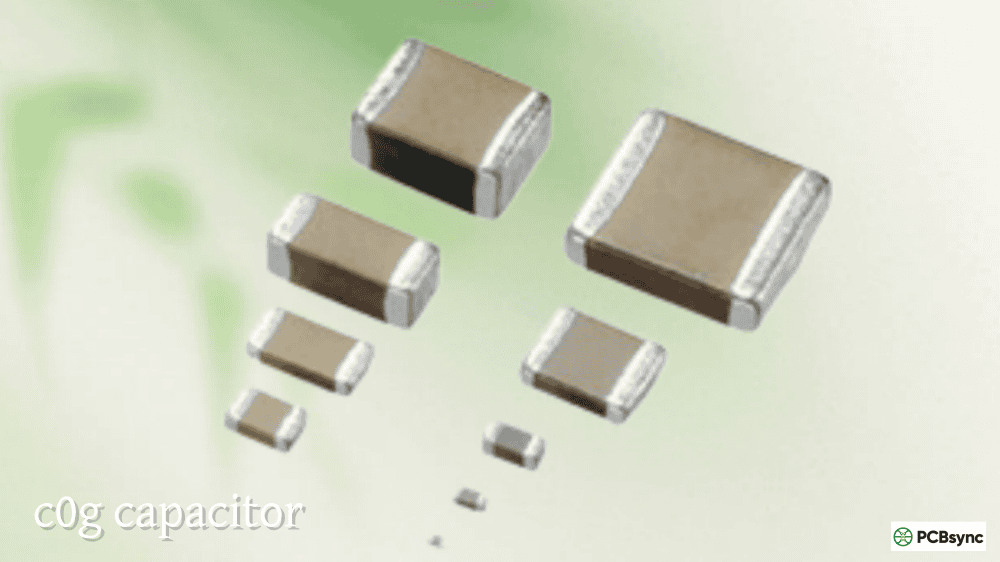
Yes, if you are designing with or verifying Class II ceramic capacitors (X7R, X5R, Y5V). Without DC bias capability, you can only measure the nominal capacitance at 0V — which significantly overstates the effective capacitance at operating voltage due to the voltage coefficient of these dielectrics. A 10µF X7R MLCC on a 5V rail may present only 5–6µF in circuit, and that derating is only measurable with DC bias applied during the measurement. For COG/NP0 ceramics and film capacitors, which have negligible voltage coefficient, DC bias measurement is less critical — but it remains good practice to verify.
Q3: What test frequency should I use when characterizing capacitors with an analyzer?
Use the test frequency that matches the application. For switching power supply filter capacitors, 100kHz reflects the operating frequency and gives a directly relevant ESR reading. For audio signal path capacitors, 1kHz is appropriate. For timing and precision filter components, 1kHz with attention to frequency-dependent drift. For RF bypass and coupling capacitors, sweep from 1MHz to the operating frequency range using an impedance analyzer to characterize SRF and ESL. For large electrolytic capacitors where the datasheet specifies capacitance at 120Hz, use 120Hz to compare directly against the specification. Always record the test frequency alongside the measurement — a capacitance value without a stated test frequency is incomplete data.
Q4: How often should professional capacitor analyzers be calibrated?
Annual calibration against traceable standards is the minimum requirement for professional instruments used in product testing, incoming inspection, or any application where measurement results have contractual or regulatory significance. Many calibration services offer ISO 17025-accredited calibration certificates that provide the traceability documentation required for quality system compliance (ISO 9001, IATF 16949). For instruments used in internal development work without regulatory requirements, annual calibration is still good practice — instrument drift in the ±0.1% accuracy range can occur over 12–18 months of regular use and temperature cycling. Always run the instrument’s internal self-check and verification against known reference standards (calibration artifacts) at the start of each measurement session.
Q5: Can a professional capacitor analyzer replace a dedicated ESR meter for electrolytic capacitor testing?
For out-of-circuit bench measurement, yes — a benchtop LCR meter set to 100kHz test frequency and measuring Rs (series resistance) provides ESR data equal to or more accurate than a dedicated handheld ESR meter. For in-circuit testing on a powered-down board, a dedicated ESR meter is faster and more practical than connecting a benchtop instrument to surface-mount capacitors one at a time. The workflows complement each other: use the dedicated ESR meter for fast in-circuit screening to identify suspects, then use the benchtop LCR capacitor analyzer to perform accurate out-of-circuit characterization on removed suspects and confirm the failure mechanism before replacement.
Investing in the Right Capacitor Analyzer Level for Your Work
The capacitor analyzer you need is determined by what questions you’re trying to answer with your measurements. A handheld ESR meter answers “is this electrolytic degraded?” quickly and in-circuit. A quality handheld LCR meter answers “does this component meet its nominal specification?” across capacitance and ESR. A professional benchtop LCR meter with DC bias answers “what does this component actually deliver in circuit under operating conditions?” — the question that actually determines design performance. An impedance analyzer answers “how does this component behave across the full relevant frequency range?” — the question that makes simulation models accurate and filter designs reliable.
Inquire: Call 0086-755-23203480, or reach out via the form below/your sales contact to discuss our design, manufacturing, and assembly capabilities.
Quote: Email your PCB files to Sales@pcbsync.com (Preferred for large files) or submit online. We will contact you promptly. Please ensure your email is correct.
Notes: For PCB fabrication, we require PCB design file in Gerber RS-274X format (most preferred), *.PCB/DDB (Protel, inform your program version) format or *.BRD (Eagle) format. For PCB assembly, we require PCB design file in above mentioned format, drilling file and BOM. Click to download BOM template To avoid file missing, please include all files into one folder and compress it into .zip or .rar format.