Inquire: Call 0086-755-23203480, or reach out via the form below/your sales contact to discuss our design, manufacturing, and assembly capabilities.
Quote: Email your PCB files to Sales@pcbsync.com (Preferred for large files) or submit online. We will contact you promptly. Please ensure your email is correct.
Notes: For PCB fabrication, we require PCB design file in Gerber RS-274X format (most preferred), *.PCB/DDB (Protel, inform your program version) format or *.BRD (Eagle) format. For PCB assembly, we require PCB design file in above mentioned format, drilling file and BOM. Click to download BOM template To avoid file missing, please include all files into one folder and compress it into .zip or .rar format.
When designing precision RF circuits, oscillators, or timing networks, the Capacitor you select can make or break your design. I’ve spent years debugging circuits where someone swapped a C0G capacitor for an X7R to save a few cents, only to watch the oscillator drift or the filter response shift with temperature. Let me walk you through everything you need to know about C0G capacitors based on real-world experience.
What is a C0G Capacitor?
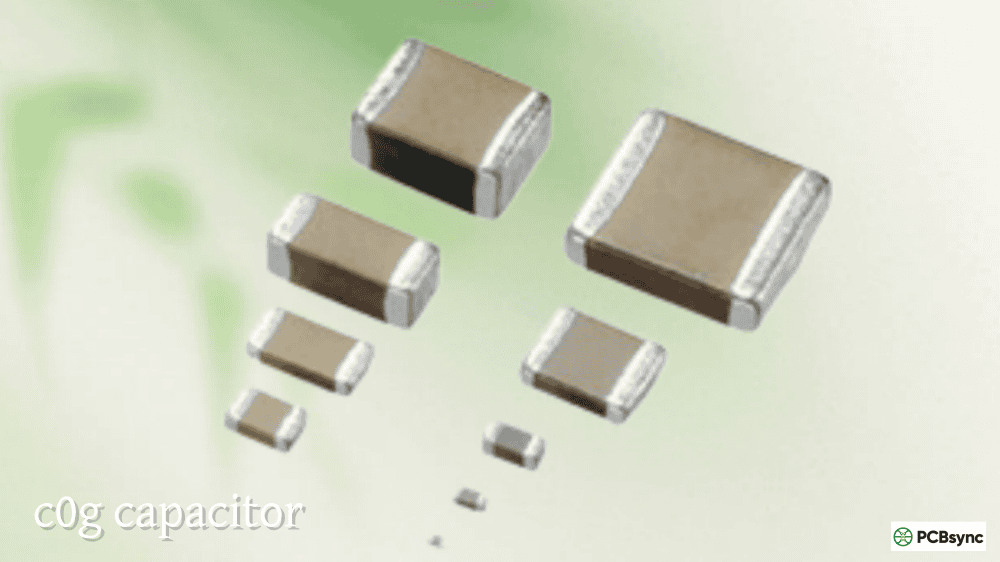
A C0G capacitor (also known as NP0) represents the gold standard in ceramic capacitor stability. The designation comes from the EIA classification system where “C0G” indicates its temperature coefficient: 0 ppm/°C with a tolerance of ±30 ppm/°C. The “NP0” designation from the older military specification means the same thing – Negative-Positive-Zero temperature coefficient.
These Class I ceramic capacitors use a non-ferroelectric dielectric material, typically based on titanium dioxide (TiO2) doped with rare earth oxides like neodymium and samarium. Unlike their Class II cousins (X7R, Y5V), C0G capacitors offer exceptional stability across temperature, voltage, and frequency.
The standout feature of any C0G capacitor is its near-zero temperature coefficient. Over the full military temperature range of -55°C to +125°C, capacitance variation stays under ±0.3%. Compare this to X7R capacitors which can swing ±15% over the same range, and you understand why RF engineers reach for C0G parts first.
Parameter
C0G (NP0)
X7R
Y5V
Temperature Coefficient
0 ±30 ppm/°C
±15%
+22% / -82%
Temperature Range
-55°C to +125°C
-55°C to +125°C
+10°C to +85°C
Voltage Coefficient
Negligible
Significant
Very High
Aging Effect
None
Present
Significant
Dielectric Absorption
<0.6%
~2.5%
~5%
High Q Factor and Low ESR
Quality factor (Q) determines how much energy a capacitor dissipates versus stores. C0G capacitors typically exhibit Q values exceeding 1000 at 1 MHz – some specialized RF types push beyond 10,000. This translates directly to extremely low equivalent series resistance (ESR).
For RF applications, low ESR means minimal signal loss. In a typical 0805 C0G capacitor at 900 MHz, you might see ESR around 0.11 ohms. The exact value varies with frequency, but C0G consistently outperforms other dielectric types in the RF spectrum.
Here’s something that surprises many engineers: C0G capacitors don’t age. X7R and other Class II dielectrics lose capacitance over time – sometimes 2-5% in the first year alone. You can restore aged X7R caps by heating to their Curie temperature, but that’s not practical in the field.
With C0G, the capacitance you measure today will be essentially identical five years from now. For precision circuits like crystal oscillators or RF filters, this stability is non-negotiable.
RF Applications Where C0G Excels
Oscillator Circuits
Crystal oscillators rely on precise capacitance values for frequency stability. The load capacitors in a crystal circuit directly determine oscillation frequency. Even a 1% capacitance shift translates to significant frequency error.
I learned this lesson early in my career when debugging a GPS receiver that couldn’t lock satellites. The 10 MHz reference oscillator was built with X7R load capacitors instead of the specified C0G parts. Temperature variations in the field caused frequency drift exceeding the GPS receiver’s tracking range. Swapping to C0G capacitors solved it immediately.
RF Filter Networks
Bandpass, lowpass, and highpass filters depend on exact component values to maintain their response characteristics. C0G capacitors ensure:
Stable cutoff frequencies across temperature
Minimal insertion loss due to low ESR
Predictable phase response
No piezoelectric effects that could introduce distortion
Impedance Matching
In RF power amplifiers and antenna tuning networks, impedance matching networks must maintain precise values. Voltage swings in PA circuits can be substantial – 50V or more at the drain of a power MOSFET. Class II capacitors lose significant capacitance under DC bias, but C0G parts remain rock-solid.
Timing and Sampling Circuits
Precision timing circuits in ADCs, sample-and-hold amplifiers, and delay lines require capacitors with minimal dielectric absorption. C0G capacitors exhibit DA typically below 0.6%, comparable to expensive film capacitors but in a compact SMD package.
Real-World Design Considerations
Capacitance Range Limitations
The main trade-off with C0G technology is volumetric efficiency. You won’t find a 10µF C0G capacitor in an 0603 package – the physics doesn’t allow it. Practical C0G range tops out around 1µF in larger case sizes, with most applications using values from 1pF to 0.1µF.
Package Size
Typical Max C0G Value
Typical Max X7R Value
01005
10pF
100nF
0201
47pF
470nF
0402
100pF
1µF
0603
1nF
4.7µF
0805
10nF
10µF
1206
100nF
47µF
Voltage Rating Selection
Unlike Class II dielectrics, C0G capacitors maintain their rated capacitance regardless of applied DC voltage. This is huge for bias networks and coupling applications. An X7R capacitor rated for 10µF might drop to 3µF with just half its rated voltage applied. C0G stays at its marked value.
Always verify the voltage rating covers your worst-case condition with adequate margin. For RF circuits with high VSWR, peak voltages can exceed RMS values by significant factors.
Self-Resonant Frequency
Every real capacitor becomes an inductor above its self-resonant frequency (SRF). The SRF depends on package size and capacitance value – smaller packages and lower capacitance values yield higher SRF.
For a typical 0402 package:
10pF C0G: SRF ~7 GHz
100pF C0G: SRF ~2 GHz
1nF C0G: SRF ~800 MHz
Match the capacitor’s SRF to your application frequency. Operating near SRF gives minimum impedance (useful for bypass applications), while matching/tuning circuits need to stay well below SRF where the part behaves purely capacitively.
PCB Layout Considerations
C0G capacitors are more mechanically robust than X7R due to their stiffer dielectric. However, they still crack under mechanical stress. Key layout practices:
Pad Design: Follow IPC-7351 land pattern recommendations. Oversized pads improve solder joint reliability but increase parasitic capacitance to ground.
Via Placement: For RF applications, place vias as close to the capacitor pads as possible to minimize series inductance. Multiple vias in parallel further reduce inductance.
Keep-Out Zones: High-Q C0G capacitors can be microphonic despite lacking piezoelectric effects. Keep them away from mechanically noisy areas like relays or power inductors.
Component Selection Strategy
Reading Part Numbers
Manufacturer part numbers encode critical specifications. Here’s a typical KEMET C0G part number breakdown:
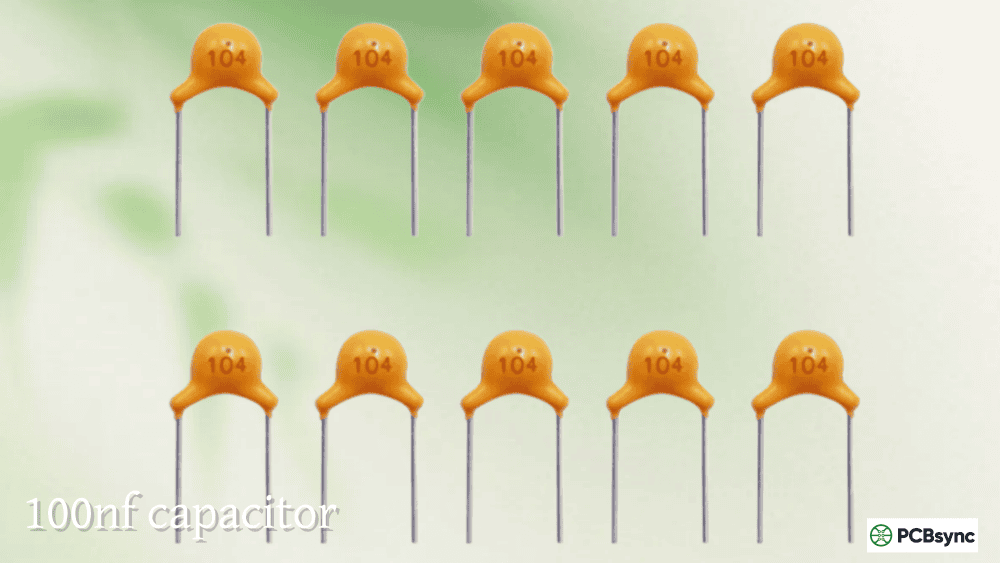
C0805C104J3GACTU│││││ │││││││││││││└ Capacitance Code (104 = 100,000 pF = 100 nF)│││└─ Case Size (0805)││└── Dielectric (C = C0G)│└─── Lead Style (C = Chip/SMD)└──── Series Identifier ││││││││ │││││││└ Packaging ││││││└─ Termination │││││└── Special Characteristics ││││└─── Voltage Rating (3 = 25V) │││└──── Tolerance (J = ±5%) ││└───── Dielectric (3 = C0G) │└────── Temperature Characteristic (G) └─────── Capacitance Code (A)
Tolerance Selection
For most RF work, ±5% (J tolerance) suffices. Oscillators and precision filters might need ±2% (G) or ±1% (F). Values under 10pF often use absolute tolerances like ±0.5pF or ±0.25pF rather than percentage.
Tighter tolerances cost more and have longer lead times. Balance your actual circuit requirements against procurement realities. Sometimes it’s cheaper to design with standard tolerances and add tuning provisions.
Manufacturer Differences
Major suppliers (Murata, TDK, KEMET, AVX) offer comparable C0G performance, but subtle differences exist:
Murata GRM series: Excellent high-frequency performance, widely stocked TDK C series: Good Q factors, competitive pricing KEMET C0G: Strong voltage ratings, good for power applications AVX/Kyocera: Ultra-low ESR options for RF power
For production designs, qualify multiple manufacturers to avoid single-source risks. C0G specifications are standardized enough that cross-referencing is usually safe, but always verify critical parameters.
Common Mistakes to Avoid
Substituting X7R for C0G
This is the most frequent error I see. Someone runs out of C0G parts, sees X7R in the same package with the same capacitance, and substitutes it “temporarily.” The circuit might work initially, but:
Temperature cycling causes frequency drift
DC bias reduces effective capacitance
Aging changes values over time
Piezoelectric singing in audio circuits
If you must substitute, at least derate the X7R value – use 2-3x the required capacitance to account for bias effects.
Ignoring DC Bias Effects
This applies when mixing C0G with other types. Your 10µF X7R bypass capacitor might only provide 3µF of actual capacitance at operating voltage. C0G maintains its value, so your parallel combination behaves differently than expected.
Overlooking Mechanical Stress
C0G capacitors are more brittle than you’d think. Excessive PCB flexure during handling, depanelization, or connector insertion can crack the ceramic. Smaller case sizes (0402 and below) are particularly vulnerable.
Design with flexible keep-out zones around large connectors. Use rounded board corners and avoid routing cuts near capacitors. For products subjected to vibration, consider conformal coating for additional mechanical support.
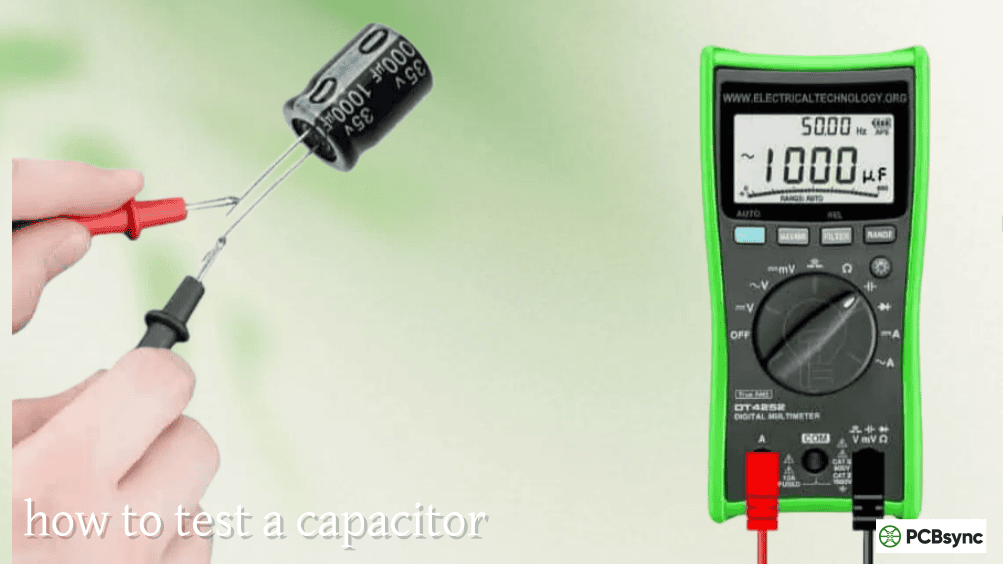
Measuring capacitance in-circuit is tricky with C0G parts in RF applications. Parallel components, PCB parasitics, and test lead inductance all affect readings. Best practices:
Use proper test frequency: 1 MHz for values ≤1000 pF, 1 kHz above that
Calibrate with known standards in similar circuit configurations
Account for PCB capacitance – your “100 pF” capacitor plus pads might read 105 pF
Temperature testing: Verify stability across your operating range
Quality Control
Counterfeit and remarked capacitors are real problems. For critical applications:
Source from authorized distributors (Digi-Key, Mouser, Arrow)
Sample-test incoming lots with precision LCR meters
Look for consistent physical appearance and markings
Cross-reference date codes with manufacturer production data
KEMET KONNEKT: https://www.kemet.com/en/us/konnekt Parametric search with DC bias curves and aging characteristics. Good for understanding real-world behavior.
IPC-7351 Land Pattern Calculator: For optimal pad geometries EIA-198 Ceramic Capacitor Standards: Full specification details Application Notes: All major manufacturers publish RF design guides
SPICE Models
Most manufacturers provide SPICE models for their C0G lines. These typically include:
Equivalent circuit with parasitic L, R, C
Frequency-dependent impedance
Temperature coefficients
For designs above 1 GHz, request S-parameter data instead of lumped models.
When Not to Use C0G
Despite their advantages, C0G capacitors aren’t always the right choice:
Bulk energy storage: Their low volumetric efficiency makes them impractical for large-value decoupling. Use X7R or electrolytic capacitors here.
Cost-sensitive consumer products: C0G parts cost 2-5x more than equivalent X7R values. For non-critical bypass applications, save the money.
Very high capacitance needs: Above 1µF, C0G parts become physically huge. X7R or film capacitors make more sense.
Extremely high voltage: While C0G is available up to 500V or more, high-voltage film capacitors often provide better performance and reliability.
Frequently Asked Questions
What’s the difference between C0G and NP0?
They’re identical. C0G is the EIA designation, while NP0 comes from the older MIL-SPEC naming convention. Both indicate the same Class I dielectric with 0 ±30 ppm/°C temperature coefficient. Some manufacturers use one term, some use both – they’re interchangeable.
Can I use C0G capacitors for audio applications?
Absolutely. C0G capacitors excel in audio circuits because they have no piezoelectric effects (unlike X7R which can literally sing), extremely low distortion, and minimal dielectric absorption. They’re perfect for coupling, timing, and filter applications in audio gear. The only limitation is their reduced capacitance range – you won’t find 100µF C0G parts for output coupling.
Why do my C0G capacitors cost so much more than X7R?
C0G dielectrics have lower permittivity (ε) than ferroelectric materials used in X7R capacitors. To achieve the same capacitance, you need thinner layers or larger physical size. The rare earth oxide materials (neodymium, samarium) used in modern C0G formulations also cost more than barium titanate used in X7R. You’re paying for performance – ultra-stable capacitance, zero aging, and no voltage coefficient effects.
Do C0G capacitors work at microwave frequencies?
They can, but you need to consider self-resonant frequency (SRF) carefully. The smaller the package and lower the capacitance value, the higher the SRF. A 1 pF capacitor in 0201 package might work up to 10 GHz or beyond. For microwave work above 10 GHz, consider chip capacitors specifically designed for RF/microwave applications with optimized electrode structures, or use other technologies like thin-film capacitors.
How do I identify C0G capacitors on a populated PCB?
Visually distinguishing C0G from X7R after assembly is nearly impossible – both are ceramic chip capacitors with similar appearance. Some manufacturers use color coding (C0G often appears gray or tan while X7R may be brown), but this isn’t reliable. Your best bet is careful component tracking during assembly. If you must identify them post-assembly, measure capacitance at different temperatures – C0G will remain stable while X7R changes significantly. X-ray inspection can sometimes distinguish them based on layer count and density, but this requires specialized equipment.
Conclusion
C0G capacitors represent the pinnacle of ceramic capacitor technology for applications demanding stability and precision. While they cost more and offer lower volumetric efficiency than Class II alternatives, the performance benefits are indisputable for RF circuits, oscillators, timing networks, and precision filters.
The key is knowing when to specify them. Don’t use C0G everywhere – that’s wasteful. But in circuits where temperature stability, low loss, and predictable long-term performance matter, C0G capacitors are worth every penny.
Understanding the technical characteristics, proper selection criteria, and application guidelines I’ve outlined here will help you make informed decisions in your designs. The resources and databases I’ve shared provide the detailed parametric data you need for component selection and circuit simulation.
After years of designing RF circuits, I can say with confidence: when your oscillator needs to stay locked, your filter response needs to stay centered, or your timing needs to stay accurate across temperature extremes, reach for C0G capacitors. They’re the workhorse of precision electronics for good reason.
Inquire: Call 0086-755-23203480, or reach out via the form below/your sales contact to discuss our design, manufacturing, and assembly capabilities.
Quote: Email your PCB files to Sales@pcbsync.com (Preferred for large files) or submit online. We will contact you promptly. Please ensure your email is correct.
Notes: For PCB fabrication, we require PCB design file in Gerber RS-274X format (most preferred), *.PCB/DDB (Protel, inform your program version) format or *.BRD (Eagle) format. For PCB assembly, we require PCB design file in above mentioned format, drilling file and BOM. Click to download BOM template To avoid file missing, please include all files into one folder and compress it into .zip or .rar format.