Inquire: Call 0086-755-23203480, or reach out via the form below/your sales contact to discuss our design, manufacturing, and assembly capabilities.
Quote: Email your PCB files to Sales@pcbsync.com (Preferred for large files) or submit online. We will contact you promptly. Please ensure your email is correct.
Notes: For PCB fabrication, we require PCB design file in Gerber RS-274X format (most preferred), *.PCB/DDB (Protel, inform your program version) format or *.BRD (Eagle) format. For PCB assembly, we require PCB design file in above mentioned format, drilling file and BOM. Click to download BOM template To avoid file missing, please include all files into one folder and compress it into .zip or .rar format.
400V Capacitor: European Standard Guide for Run Capacitor Selection
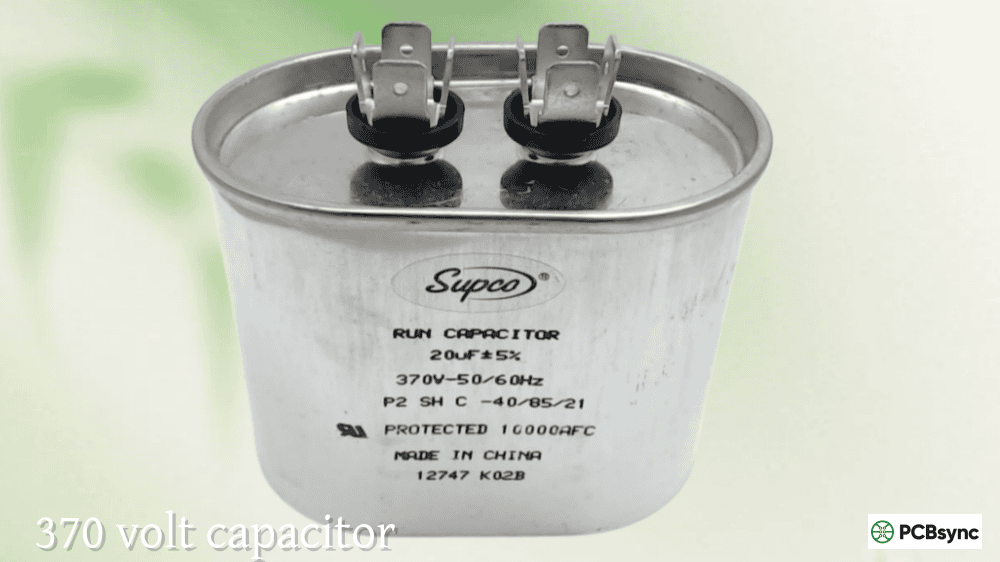
Ask any field engineer working with European single-phase motor equipment — heat pumps, washing machines, industrial fans, refrigeration compressors — and they’ll tell you the same thing: the 400V capacitor is everywhere. It’s the default run capacitor voltage rating across European and Asian Pacific markets, while North American equipment typically uses 370V or 440V. Understanding why that number exists, what it means technically, and how to specify or replace these components correctly is something that separates people who actually understand motor circuits from those who just swap parts.
The 400V rating on a run capacitor refers to the maximum continuous AC voltage the component can sustain. In a European 230V single-phase supply system, the theoretical peak voltage hits around 325V. A general rule of thumb is to choose capacitors rated at twice the motor’s voltage — so 400V for 220V AC motors. Motors and Pump That 75V of headroom above peak accounts for supply voltage tolerances (which can legally run up to 253V in Europe), transient overvoltages from switching, and the gradual voltage stress that degrades dielectric material over the capacitor’s service life.
This guide goes deep into the technical specifications, the European standard framework (IEC/EN 60252-1), construction types, application areas, and how to make the right call when selecting or replacing a 400V run capacitor.
The European Standard Behind the 400V Capacitor: IEC/EN 60252-1
What IEC 60252-1 Actually Covers
IEC 60252-1 applies to motor capacitors intended for connection to windings of asynchronous motors supplied from a single-phase system having a frequency up to and including 100 Hz, and to capacitors connected to three-phase asynchronous motors so that these motors may be supplied from a single-phase system. This standard covers impregnated or unimpregnated capacitors having a dielectric of paper, plastic film, or a combination of both, either metallized or with metal-foil electrodes, with rated voltages up to and including 660V. Amazon
The IEC 60252-1 standard was created by the International Electrotechnical Commission and is mainly used in Europe and Asia Pacific. It applies only to capacitor motor run applications and uses one acceleration factor — applied voltage — for the reliability test. Industrial Equipment News This is worth noting for anyone comparing European and American spec sheets: the test methodology differs from the US-centric Tecumseh H-115 and EIA-456-A standards, so “60,000-hour life” claims cannot be directly compared across standards without knowing which test was applied.
EN 60252-1 Operational Classes Explained
The most practically important part of IEC/EN 60252-1 is the classification system for operational service life. Different class ratings specify different field life for capacitors depending on the amount of test hours completed. Industrial Equipment News Here’s the full breakdown:
Standard motor run applications, general industrial
Class C
3,000 h
Economy/short-term applications
Class D
1,000 h
Intermittent duty, low-cycle machinery
A 400V capacitor rated Class A to EN 60252-1 at 85°C is a very different product from a Class D unit that shares the same voltage and capacitance values. Manufacturer datasheets for quality European MKP capacitors clearly state the class and test standard — for example, “400V 50/60Hz +85°C continuous service, approved EN60252-1 Class A (30,000 h).” Mouser When you’re specifying a replacement for a heat pump that runs continuously for 8 months of the year, this distinction matters enormously.
Key Performance Parameters Defined by the Standard
IEC 60252 defines key performance specifications including capacitance value, voltage rating, insulation resistance, dissipation factor, temperature rating, and requirements for overcurrent and overvoltage protection. China Gauges The standard also addresses endurance testing methodology, marking requirements, and installation guidance.
In practical terms, the parameters you’ll need to verify for any 400V capacitor are:
Parameter
Typical Specification
Notes
Rated Voltage
400V AC
Maximum continuous operating voltage
Capacitance Range
1 µF – 60 µF
Application-dependent
Capacitance Tolerance
±5% or ±10%
Run caps: ±5%; some accept ±10%
Dissipation Factor (tan δ)
≤ 0.002 at 50Hz
Lower = less heat generation
Insulation Resistance
≥ 3000 MΩ·µF
At 20°C after 1 min charge
Operating Temperature
−25°C to +85°C
Verify for compressor locations
Rated Frequency
50/60 Hz
European standard is 50Hz
Climatic Category
25/85/21 or 40/85/21
Per IEC 60068 test standard
MKP Capacitors: The Dominant 400V Run Capacitor Technology in Europe
Why MKP Became the European Standard
MKP stands for Metallized (Kunststoff) Polypropylene — metallized polypropylene film. This technology dominates the European motor run capacitor market for reasons that become obvious once you understand what actually happens inside the component during AC motor operation.
Polypropylene film offers several properties that make it ideal for continuous AC duty. It has an inherently low dissipation factor, meaning very little of the energy cycled through the capacitor is lost as heat. It is chemically stable and doesn’t absorb moisture. And critically for safety and longevity, metallized polypropylene exhibits self-healing behavior: when a localized dielectric defect causes a micro-breakdown, the zinc-aluminum metallization vaporizes around the fault site, clearing it without propagating the failure or creating a short circuit. MKP capacitors utilize a metalized polypropylene dielectric, which provides self-healing properties and high reliability in motor run applications. Sourcify China
This self-healing property is what allows MKP capacitors to achieve the 30,000-hour Class A ratings required by European appliance manufacturers. Without it, a single manufacturing defect or transient overvoltage that causes even a pinhole breakdown in the dielectric would destroy the capacitor.
MKP Construction Variants for 400V Applications
European 400V motor run capacitors come in two primary housing formats, each suited to different installation environments:
Plastic Box (Radial or Lead Terminals): The rectangular plastic box format is the most common for domestic appliance and light industrial applications. TDK offers a comprehensive range of AC film capacitors with national and international third-party approvals including UL, VDE, CQC, ISI, and CE, available in versions meeting UL810 and IEC 60252-1 or IEC 60252-2 standards. TDK Electronics The box design makes panel mounting and clip-mounting straightforward, and the flat profile fits well into motor terminal boxes.
Aluminum Can (Cylindrical): Higher capacitance values and compressor duty applications use an aluminum-encased cylindrical format, usually vacuum-impregnated with mineral oil or synthetic fluid. These handle higher thermal loads and physical vibration better than plastic-cased types. You’ll see these on refrigeration compressors, heat pump compressors, and industrial pump motors where the mounting environment is harsh.
Feature
Plastic Box MKP
Aluminum Can MKP
Housing Material
Flame-retardant ABS/PP
Aluminum + sealed cap
Filler
Resin or open-core
Oil/synthetic impregnant
Mounting
Clip, bracket, or panel
Strap bracket or stud
Typical µF Range
1 – 30 µF
10 – 60 µF
Vibration Resistance
Moderate
High
Typical Applications
Fans, pumps, appliance motors
Compressors, heat pumps
Certifications
VDE, CE, IMQ
VDE, CE, UL
400V Capacitor Applications Across European Motor Systems
Single-Phase Induction Motors: The Core Application
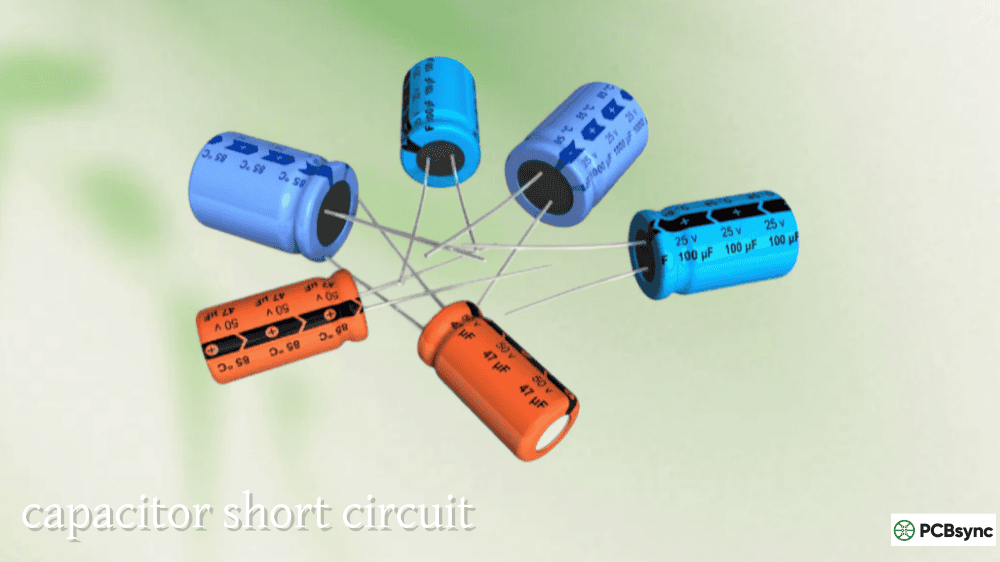
Every single-phase induction motor requires either a start capacitor, a run capacitor, or both to generate the phase shift needed for motor rotation and sustained torque. The run capacitor always remains energized and connected in the motor’s electrical circuit, designed for continuous duty. A typical run capacitor rating ranges from 2 µF to 80 µF. Industrial Equipment News
In European 230V motor systems, the 400V capacitor is the standard run capacitor. It appears in washing machine drum motors, refrigerator compressor motors (fan side), central heating pump motors, extractor fan motors, and the wide range of single-phase equipment that makes up most residential and light commercial electrical installations.
Asynchronous motors powered by AC film capacitors include heat pumps, air conditioning systems, washing machines, refrigerators, dryers, fans, and pumps. TDK Electronics The commonality across all these applications is a 230V single-phase supply with a motor that runs continuously or semi-continuously for extended periods.
HVAC and Heat Pump Systems
The growing adoption of heat pump technology across Europe has made 400V run capacitor selection more critical than it used to be. Heat pump compressors run for much longer cumulative hours than traditional gas-fired heating systems, and they often operate in outdoor units exposed to temperature extremes from −20°C in winter to +50°C ambient in a hot outdoor enclosure in summer.
For these applications, a Class A EN 60252-1 capacitor rated to +85°C is the minimum sensible specification. A Class B or Class C capacitor might look identical and cost less, but it will fail years earlier in a high-duty-cycle heat pump application. The service call cost and the disruption of a winter heating failure make the upfront cost difference irrelevant.
Industrial Pumps and Ventilation
Industrial single-phase motors in pumping stations, ventilation systems, and process equipment follow the same 400V convention. Here, the emphasis shifts slightly toward vibration resistance and ambient temperature performance. Film capacitors designed for refrigeration systems, HVAC systems, pumps, fans, small to medium motors, and industrial machinery require UL, VDE, and CSA recognition for trusted industrial and commercial applications requiring stable and efficient capacitive support. Ascapacitor
For outdoor pump installations or motors in ventilated enclosures where condensation is possible, the climatic category marking on the capacitor is important. The “40/85/21” classification means the unit is tested to −40°C lower limit, 85°C upper, and 21 days damp heat — appropriate for outdoor use. The less demanding “25/85/21” classification (lower limit only to −25°C) may be inadequate for Nordic applications or refrigerated storage environments.
Run capacitor sizing is governed by the motor manufacturer’s specifications, full stop. Never guess or use “rule of thumb” values for a permanent installation. The motor nameplate or technical documentation will specify the required capacitance in µF.
Run capacitors range from 2.5 to 100 µF in terms of capacitance values. For AC motor capacitors, the general guideline is to choose capacitors rated at twice the motor’s voltage. Motors and Pump For European 230V motors, that logic gives you 460V minimum — which is why the standard European voltage ratings are 400V, 450V, and 480V, providing adequate margin depending on supply tolerance and transient conditions.
Capacitance Tolerance and Performance Impact
The ±5% tolerance on a 400V run capacitor is tighter than it might seem in the context of motor performance. Running a motor with a significantly undersized capacitor reduces starting torque, increases running current, and causes the motor to run hotter. Running it with an oversized capacitor can also cause overheating and, in some designs with PTC or centrifugal start-switch protection, prevent the start-winding circuit from opening correctly.
As a replacement guideline: match the original capacitance value exactly if possible, or stay within ±10% maximum for motor run applications. For voltage rating, always match or exceed — replacing a 400V unit with a 450V or 480V type of the same capacitance is electrically acceptable and often beneficial.
Sizing Reference by Motor Application
Motor Type
Typical Power
Typical Capacitance
Voltage Rating
Ceiling/exhaust fan motor
50 – 150 W
1.5 – 5 µF
400V AC
Washing machine drum motor
300 – 600 W
8 – 12 µF
400V AC
Central heating pump
50 – 150 W
2 – 6 µF
400V AC
Refrigerator fan motor
15 – 60 W
1.5 – 3 µF
400V AC
Compressor motor (small)
500 W – 2 kW
15 – 35 µF
400V / 450V AC
Industrial pump motor
370 W – 2.2 kW
10 – 40 µF
400V / 450V AC
Pool/spa pump
1.1 – 2.2 kW
20 – 50 µF
400V / 450V AC
Selecting a 400V Capacitor: European Market Considerations
Certifications and Approval Marks to Look For
In the European market, legitimate 400V run capacitors carry specific third-party approval marks. These aren’t just marketing stamps — they represent actual independent testing to the EN 60252-1 standard.
VDE (Verband Deutscher Elektrotechniker) — German testing institute, widely respected across Europe as the most rigorous motor capacitor certification body.
IMQ (Istituto Italiano del Marchio di Qualità) — Italian quality mark, common on Southern European manufactured capacitors.
CE — Mandatory for all electrical components sold in the EU. Indicates conformance with relevant EU directives but is self-declared rather than third-party verified.
CQC — Chinese quality certification, required for Chinese-manufactured components sold in China, often also present on export products. Indicates compliance with Chinese national standards (GB/T 3667) which largely mirror IEC 60252.
RoHS — EU Restriction of Hazardous Substances compliance. Standard requirement for components sold in Europe.
TDK’s comprehensive range of AC film capacitors carries national and international third-party approvals including UL, VDE, CQC, ISI, and CE. TDK Electronics
When sourcing from lower-cost suppliers, always ask for actual test certificates rather than accepting printed markings at face value. Counterfeit or uncertified components with false certification marks are a real problem in the motor capacitor market.
Leading European 400V Run Capacitor Manufacturers
Manufacturer
Country
Key Series
Certifications
TDK Electronics (EPCOS)
Germany/Japan
B32 series (MKP)
VDE, UL, CQC, CE
Ducati Energia
Italy
Motor run MKP
IMQ, CE, VDE
Vishay/Roederstein
Germany/USA
MKP series
VDE, UL, CE
Kemet (RIFA/Evox)
Sweden/USA
PHE series
VDE, CE, UL
Panasonic
Japan
ECQ series
VDE, CE, UL
Arcotronics/Kemet
Italy
R series motor caps
IMQ, CE
Wima
Germany
MKP10 series
VDE, CE
Useful Resources for 400V Capacitor Selection
Standards and Technical Documents
IEC 60252-1:2010 — The core motor run capacitor standard: webstore.iec.ch
EN 60252-1 — European equivalent (identical to IEC 60252-1): available via national standards bodies (BSI, DIN, AFNOR)
What is the difference between a 400V and a 450V run capacitor?
Both are AC-rated motor run capacitors using metallized polypropylene dielectric, and they will often perform identically in a 230V European motor application. The 450V rating simply provides slightly more voltage headroom above the 325V peak of a 230V supply, which is useful in situations with poor supply quality or long cable runs causing voltage instability. You can use a capacitor with a voltage rating at or above the original capacitor’s rating. InspectApedia Replacing a 400VAC run capacitor with a 450VAC unit of the same capacitance is perfectly acceptable and may extend service life marginally in high-stress applications.
Can a 400V DC capacitor be used in place of a 400V AC motor run capacitor?
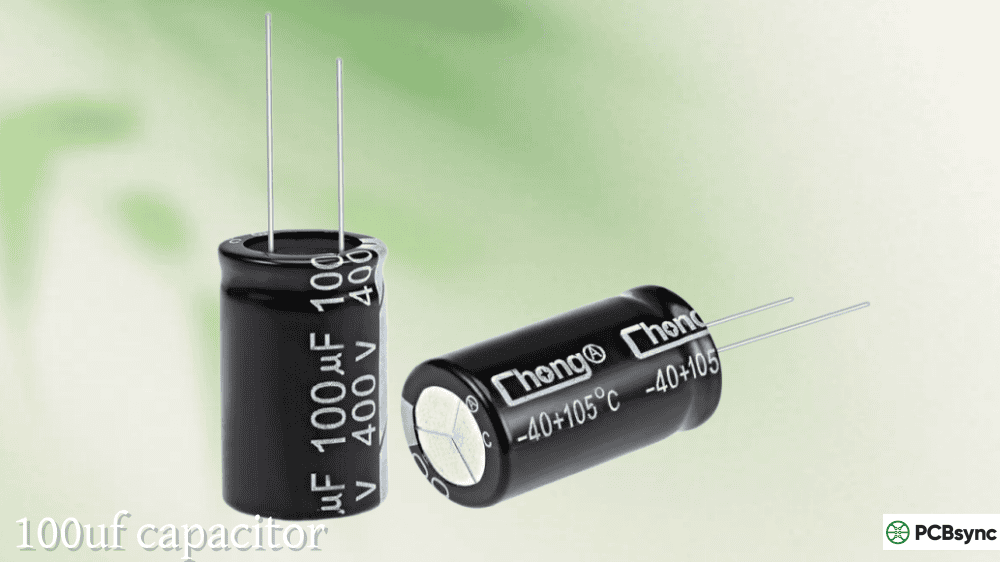
Absolutely not, and this is a common and dangerous mistake. A 400V DC rating on an electrolytic capacitor means the component can handle 400V of unipolar direct current. An AC motor run capacitor must withstand a continuously reversing sinusoidal voltage — it sees positive and negative voltage alternating 50 times per second. Electrolytic capacitors are polarized and will be destroyed almost immediately in an AC circuit, with a real risk of venting, fire, or explosion. Always confirm the “VAC” (AC voltage) designation on any motor capacitor.
How do I read the climatic category code on a 400V capacitor?
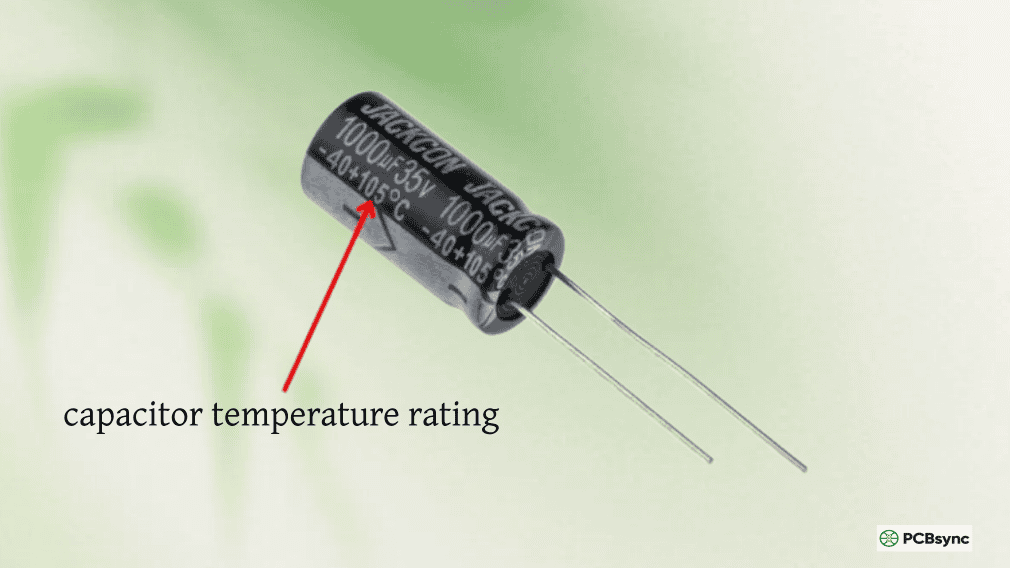
The climatic category appears as three numbers — for example, 25/85/21. The first number is the lower category temperature limit in degrees Celsius (so −25°C). The second is the upper category temperature limit (+85°C). The third is the number of days in the damp heat endurance test (21 days). A capacitor marked 40/85/21 is rated for colder environments down to −40°C. For European outdoor HVAC installations, look for 40/85/21 or better.
What happens if I install a 400V capacitor with the wrong capacitance value?
Running a motor with an incorrect run capacitor capacitance has real consequences. An undersized capacitor (too low µF) reduces the phase shift to the auxiliary winding, causing the motor to develop less torque, draw higher current, and run at elevated temperature. Over time this shortens motor winding life significantly. An oversized capacitor causes the auxiliary winding to be over-excited, which also increases current draw and heat. In motors with centrifugal start-switch protection, an oversized run cap can suppress start-winding voltage enough to interfere with switch operation. When replacing an electric motor capacitor, never put in a lower rated capacitor, and if you cannot find an exact match in µF, it is acceptable to use a capacitor rated one step higher in capacitance. InspectApedia
Does EN 60252-1 Class A really matter for domestic appliances?
In practice, it matters more than most installers realize. Consider that a modern heat pump installed in a Northern European home might run the compressor for 3,000 to 4,000 hours per year. A Class B capacitor with a 10,000-hour probable life rating might last 2.5 to 3 years of continuous service before the cumulative electrical and thermal stress degrades it to the point of failure. A Class A unit rated at 30,000 hours under the same conditions would last 7 to 10 years. The Tecumseh H-115 estimates that a capacitor will last roughly 2 to 3 years of applied service hours, while the EIA-456-A standard estimates roughly 10 to 12 years Industrial Equipment News — illustrating that the testing class chosen has enormous implications for real-world service life expectations.
Inquire: Call 0086-755-23203480, or reach out via the form below/your sales contact to discuss our design, manufacturing, and assembly capabilities.
Quote: Email your PCB files to Sales@pcbsync.com (Preferred for large files) or submit online. We will contact you promptly. Please ensure your email is correct.
Notes: For PCB fabrication, we require PCB design file in Gerber RS-274X format (most preferred), *.PCB/DDB (Protel, inform your program version) format or *.BRD (Eagle) format. For PCB assembly, we require PCB design file in above mentioned format, drilling file and BOM. Click to download BOM template To avoid file missing, please include all files into one folder and compress it into .zip or .rar format.