Inquire: Call 0086-755-23203480, or reach out via the form below/your sales contact to discuss our design, manufacturing, and assembly capabilities.
Quote: Email your PCB files to Sales@pcbsync.com (Preferred for large files) or submit online. We will contact you promptly. Please ensure your email is correct.
Notes: For PCB fabrication, we require PCB design file in Gerber RS-274X format (most preferred), *.PCB/DDB (Protel, inform your program version) format or *.BRD (Eagle) format. For PCB assembly, we require PCB design file in above mentioned format, drilling file and BOM. Click to download BOM template To avoid file missing, please include all files into one folder and compress it into .zip or .rar format.
100nF Capacitor Guide: Ceramic & Film Types Explained
When you’re spec’ing components for a new PCB design, the choice between ceramic and film capacitors can make or break your circuit’s performance. I’ve learned this the hard way after years of debugging boards where someone chose the wrong type of 100nf capacitor for the application. Today, I’m going to walk you through everything you need to know about these two technologies—not from a textbook perspective, but from the trenches of actual PCB design work.
The 100nF capacitor (also written as 0.1µF) is probably the most common value you’ll encounter in electronics. But here’s what many engineers miss: not all 100nF capacitors are created equal. The difference between ceramic and film types goes far beyond just the physical construction—it affects reliability, performance, cost, and even whether your circuit will pass regulatory testing.
Understanding the 100nF Value: Why It’s Everywhere
Before we dive into the ceramic versus film debate, let’s talk about why 100nF became the de facto standard. This value didn’t emerge randomly—it’s the result of decades of practical experience in digital circuit design.
In the frequency domain, a 100nf capacitor has an impedance of about 16 ohms at 100 kHz and drops to 1.6 ohms at 1 MHz. This makes it incredibly effective at shunting mid-to-high frequency noise to ground, which is exactly where most switching noise from digital ICs occurs. Whether you’re working with microcontrollers, memory chips, or logic gates, the 100nF value hits the sweet spot for local decoupling.
The real genius is that 100nF is large enough to store meaningful charge for transient current demands, yet small enough to maintain low impedance at MHz frequencies. Smaller values (like 10nF) have better high-frequency response but less charge storage. Larger values (like 1µF) store more charge but have higher impedance at high frequencies due to increased ESL.
Ceramic Capacitors: The Modern Workhorse
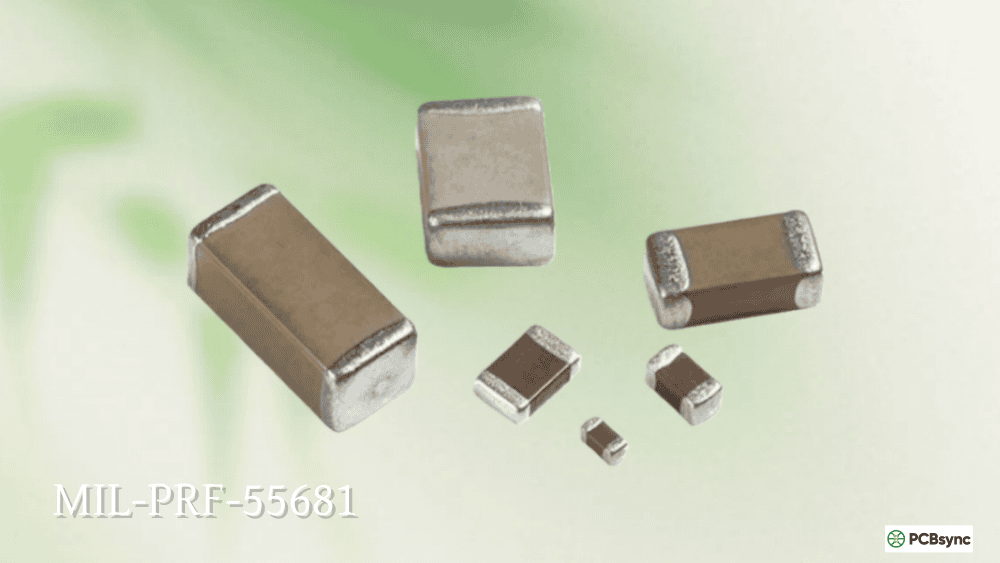
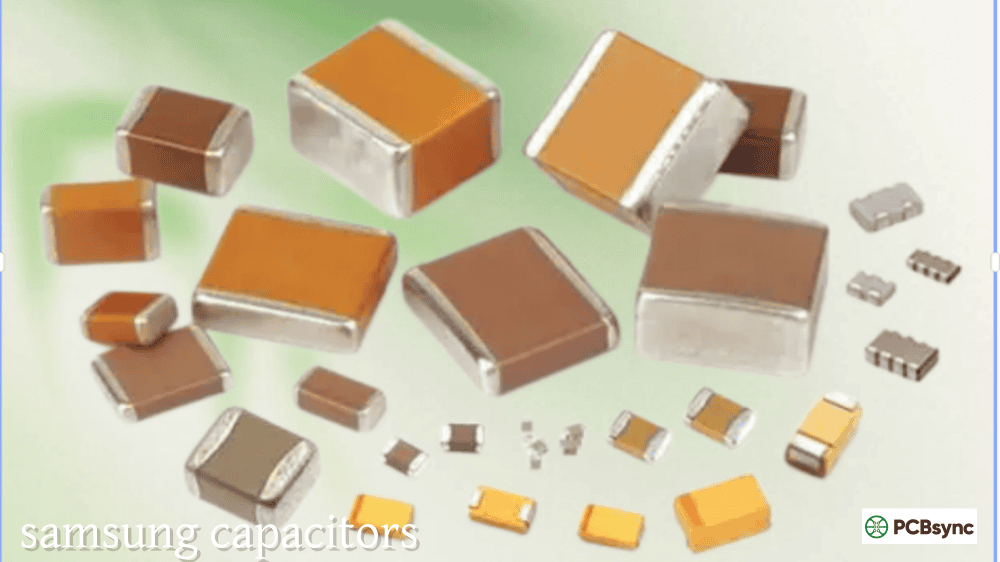
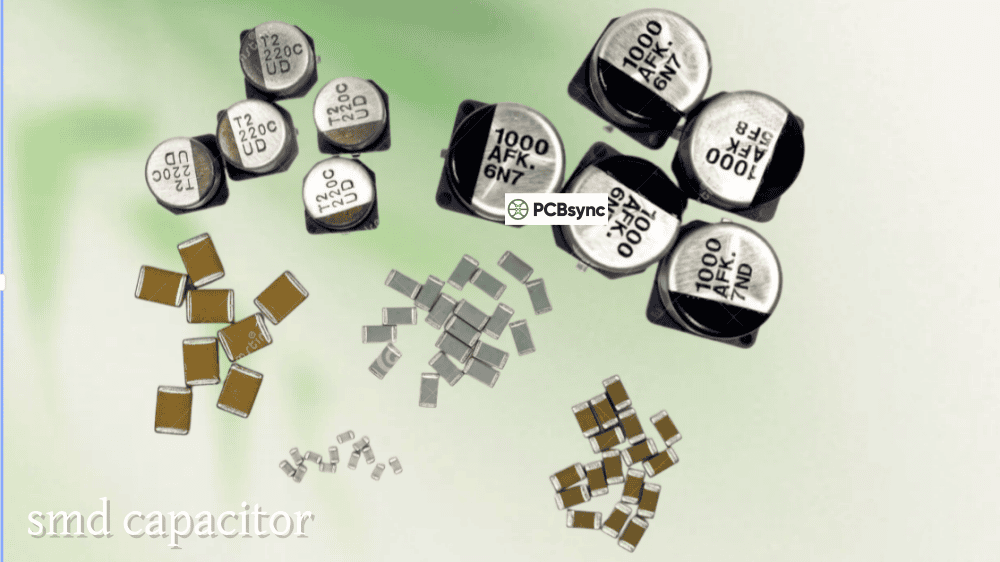
Ceramic capacitors have dominated the electronics industry for good reason—they’re compact, inexpensive, and perform well in most applications. When I say “ceramic,” I’m referring to multilayer ceramic capacitors (MLCCs), which have largely replaced older ceramic disc types.
How Ceramic Capacitors Work
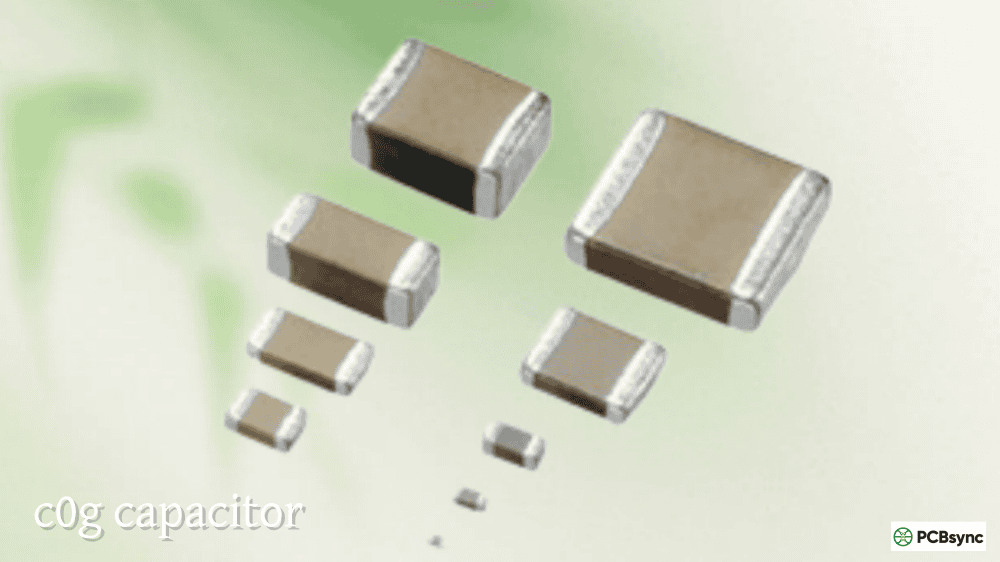
A ceramic capacitor consists of alternating layers of ceramic dielectric material and metal electrodes. A typical 100nF ceramic capacitor might have 50-200 layers stacked together, all connected in parallel. This construction gives ceramic capacitors their small size and good high-frequency characteristics.
The ceramic material itself is the key differentiator. Different formulations create different dielectric classes with vastly different performance characteristics.
Ceramic Dielectric Classes Explained
Dielectric Type
Temperature Coefficient
Capacitance Stability
DC Bias Effect
Typical Applications
C0G/NP0 (Class I)
±30 ppm/°C
Excellent (±5%)
Minimal
Precision timing, filters, analog circuits
X7R (Class II)
±15% over temp range
Good
Moderate (30-40% loss)
Digital decoupling, general purpose
X5R (Class II)
±15% over temp range
Good
Moderate-High (40-50% loss)
Consumer electronics, cost-sensitive
Y5V (Class II)
-82% to +22%
Poor
Severe (70-80% loss)
Bulk capacitance only, avoid for critical circuits
Here’s what this means in practice: I was once debugging a temperature-sensitive measurement circuit that worked perfectly at room temperature but drifted at 60°C. The problem? Someone had used X7R ceramic capacitors in the analog front-end filter. We switched to C0G/NP0, and the temperature drift disappeared. That board redesign cost the company three months and about $15,000 in respins.
DC Bias Characteristics: The Hidden Problem
This is where ceramic capacitors can really bite you. Unlike film capacitors, ceramic caps (especially Class II types) lose significant capacitance when you apply DC voltage across them. A 100nf capacitor rated for 25V might only provide 60nF of actual capacitance when you apply 12V.
I’ve seen engineers size capacitors based on nominal values without accounting for DC bias, then wonder why their circuit doesn’t perform as simulated. Always check the manufacturer’s DC bias curves and design with the actual capacitance under operating voltage, not the nominal value.
Advantages of Ceramic 100nF Capacitors
Size: This is the big one. A 0805 ceramic 100nf capacitor is roughly 2mm × 1.25mm. Try fitting a film capacitor in that space—it won’t happen.
Cost: In volume, ceramic capacitors cost $0.01-0.03 each. Film capacitors typically cost 5-10× more for the same capacitance value.
High-Frequency Performance: Low ESL and ESR make ceramic caps excellent for RF and high-speed digital applications. A good ceramic 100nF capacitor maintains low impedance well into the tens of MHz range.
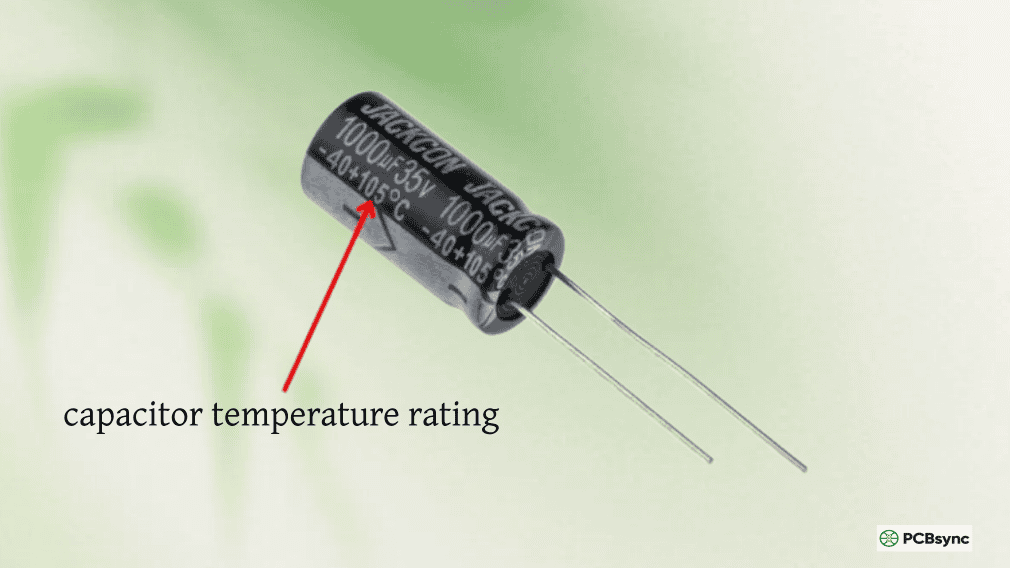
Temperature Range: Many ceramic types work from -55°C to +125°C or even +150°C, which is essential for automotive and industrial applications.
Disadvantages of Ceramic Capacitors
Microphonic Effects: Ceramic capacitors can physically vibrate when exposed to AC signals, and conversely, mechanical vibration can induce voltage changes. I avoid ceramic caps in audio circuits for this reason—you can literally hear the difference.
Aging: Class II dielectrics lose capacitance over time. A typical X7R might lose 2-5% of its capacitance over 10 years. Not usually a dealbreaker, but worth knowing.
Voltage Coefficient: We already discussed DC bias, but AC voltage also affects capacitance. High-amplitude signals cause nonlinear distortion.
Cracking: Ceramic capacitors are brittle. Excessive board flexing during assembly or in service can crack them, causing shorts or open circuits. I’ve diagnosed numerous field failures traced to cracked ceramics from thermal cycling or physical stress.
Film Capacitors: The Old Guard Still Has Tricks
Film capacitors have been around since the 1960s and remain the gold standard for many applications despite being larger and more expensive than ceramics. When I need absolutely predictable, linear behavior, I reach for film capacitors without hesitation.
Film Capacitor Construction Types
Film capacitors use thin plastic film as the dielectric material. The film is metallized (has a thin metal layer deposited on it) or has separate metal foil layers, then wound or stacked to create the capacitor structure.
Common film types for 100nF capacitors:
Polyester (PET – Polyethylene Terephthalate): The economy option. Good for general-purpose filtering and decoupling where precision isn’t critical. Temperature coefficient around ±5% from -55°C to +125°C.
Polypropylene (PP): The premium choice. Extremely low loss, excellent temperature stability, no piezoelectric effects. This is what I use for audio circuits, precision filters, and anywhere linearity matters.
Polyphenylene Sulfide (PPS): High-temperature capable (up to +150°C), good moisture resistance. Common in automotive applications.
Film Capacitor Performance Characteristics
Parameter
Polyester (PET)
Polypropylene (PP)
Polyphenylene Sulfide (PPS)
Temperature Range
-55°C to +125°C
-55°C to +105°C
-55°C to +150°C
Temperature Coefficient
±5%
±2.5%
±3%
Dielectric Absorption
0.2-0.5%
0.02-0.1%
0.1-0.2%
ESR (typical)
10-50 mΩ
5-20 mΩ
10-40 mΩ
DC Voltage Coefficient
Minimal
Negligible
Minimal
Relative Cost
Low
Medium
High
Why Film Capacitors Excel
Linearity: Film capacitors don’t suffer from voltage coefficients like ceramics do. A 100nf film capacitor remains 100nF regardless of applied voltage (within ratings). This makes them essential for precision analog circuits, active filters, and audio applications.
No Piezoelectric Effects: You can mount film capacitors on a vibrating motor controller without worrying about induced voltages. They’re mechanically stable in ways ceramics can never be.
Self-Healing: Metallized film capacitors have a unique property: if a defect causes a short circuit, the thin metal layer vaporizes locally, isolating the defect. The capacitor loses a tiny amount of capacitance but continues functioning. I’ve seen film capacitors survive electrical abuse that would destroy a ceramic cap instantly.
Aging: Film capacitors are remarkably stable over time. Capacitance drift is typically under 1% over 20+ years.
Dielectric Absorption: This is crucial for sample-and-hold circuits and timing applications. Film caps have very low dielectric absorption compared to ceramics—they release charge more completely when discharged.
Where Film Capacitors Fall Short
Size: A 100nf film capacitor is typically 5-10× larger than an equivalent ceramic. For space-constrained designs, this is often a dealbreaker.
Cost: Expect to pay $0.10-0.30 per piece in volume—much more than ceramic alternatives.
High-Frequency Limitations: Film capacitors have higher ESL than ceramics due to their construction. They’re not ideal for RF work or very high-speed digital decoupling above 50 MHz.
Limited Availability: The industry has moved toward ceramics for most applications, so finding the exact film capacitor you need in the package style you want can be challenging.
Ceramic vs Film: Application-Specific Recommendations
After designing hundreds of boards, I’ve developed some rules of thumb for when to use each type. These aren’t absolute—engineering is about tradeoffs—but they’ll keep you out of trouble 90% of the time.
Digital Circuit Decoupling
Use Ceramic (X7R or X5R): No contest. You need small size, low cost, and good high-frequency performance. The capacitance variation under DC bias doesn’t matter much for power supply decoupling because you’re not relying on precise values.
I place ceramic 100nf capacitors on every IC power pin in digital designs. The exact capacitance might vary from 70nF to 100nF depending on voltage and temperature, but that’s fine—we’re just creating a low-impedance path for high-frequency current.
Audio Circuits
Use Film (Polypropylene preferred): The difference is audible. Ceramic capacitors introduce distortion through piezoelectric effects and voltage coefficients. Film capacitors provide clean, linear performance.
In one project, we compared the same audio amplifier with ceramic versus polypropylene coupling capacitors. The film version measured 0.001% THD, while the ceramic version showed 0.015% THD at high output levels. Audiophiles hear these differences, even if measurements suggest they shouldn’t.
Precision Analog Filters
Use Film or C0G Ceramic: This is where you need stability. For active filters with tight tolerance requirements, use C0G ceramic if space is limited or film if performance is paramount.
I designed a fourth-order Butterworth filter for a medical device where the corner frequency had to stay within ±1% across temperature and time. Film capacitors were the only viable choice. C0G would have worked but wasn’t available in the exact values needed.
Motor Controllers and Power Electronics
Use Film (PPS or PP): The AC ripple currents in these applications can be substantial. Film capacitors handle ripple current much better than ceramics and won’t crack from vibration. Many motor controllers run at elevated temperatures where film’s stability shines.
RF and High-Speed Digital
Use Ceramic (C0G for RF, X7R for digital): You need low ESL and compact size. Film capacitors simply can’t compete above 100 MHz.
In a recent 2.4 GHz RF design, I used C0G ceramic 100nf capacitors for all the RF bypass applications. Their low loss and small size were essential for meeting the board’s performance targets.
Timing and Oscillator Circuits
Use Film or C0G Ceramic: Capacitance stability directly affects timing accuracy. Both film and C0G ceramics provide the stability needed, though C0G offers better temperature tracking if you’re pairing it with NP0 capacitors in the oscillator circuit.
Real-World Design Examples
Let me walk you through a few projects where capacitor selection made a significant difference.
Project 1: Industrial PLC Controller
The circuit had 24V power rails and operated from -40°C to +85°C. Initial design used X7R ceramic 100nf capacitors throughout for cost reasons. We ran into two problems:
First, at 24V DC bias, the X7R capacitors rated for 50V were only providing about 55nF of actual capacitance—far less than the 100nF we’d counted on for our power supply filtering calculations. The ripple voltage exceeded specifications.
Second, at -40°C, the ceramic capacitors lost an additional 15% capacitance. Combined with DC bias effects, we had less than half the expected capacitance under worst-case conditions.
Solution: We switched to 63V-rated X7R ceramics to reduce DC bias effects and added film capacitors for the bulk filtering where temperature stability mattered. Total cost increase: about $2 per board. Cost of the original field failures and rework: over $50,000.
Project 2: Audiophile DAC Design
This was a high-end digital-to-analog converter where sound quality was everything. The original design used generic ceramic 100nf capacitors in the analog output stage.
During listening tests, users reported a harsh, unnatural quality to the high frequencies. Spectrum analysis showed elevated harmonic distortion that wasn’t present in the digital signal.
We replaced all ceramics in the signal path with polypropylene film capacitors. The measured THD dropped by a factor of 10, and the subjective listening quality improved dramatically. Yes, the board got larger and more expensive, but for this market, performance justified the cost.
Project 3: Battery-Powered IoT Sensor
Space and power consumption were critical. We needed 100nf capacitors for power supply decoupling and sensor filtering.
Ceramic was the obvious choice for the digital circuitry—we used X7R in 0603 packages to minimize board space. For the precision analog sensor front-end, we wanted film capacitors but literally couldn’t fit them.
The solution: we used C0G ceramic capacitors for the analog filtering. They cost about 3× more than X7R but provided the stability we needed in a package size we could accommodate. Sometimes you need to find the middle ground.
Selecting the Right 100nF Capacitor
Here’s my decision framework for choosing between ceramic and film 100nf capacitors:
Quick Selection Guide
Requirement
Best Choice
Alternative
Smallest footprint
Ceramic (0402/0603)
No good alternative
Lowest cost
Ceramic X7R
Ceramic X5R if less stability acceptable
Best high-frequency performance (>50MHz)
Ceramic C0G or X7R
None
Most stable over temperature
Film PP or Ceramic C0G
Film PPS
Audio/precision analog
Film PP
Ceramic C0G
High vibration environment
Film (any type)
Avoid ceramic entirely
High ripple current
Film PP or PPS
Ceramic with derating
Most linear (no voltage coefficient)
Film (any type)
Ceramic C0G
Longest lifetime
Film PP
Film PPS
Reading Ceramic Capacitor Codes
Understanding capacitor markings prevents ordering mistakes. For ceramic capacitors:
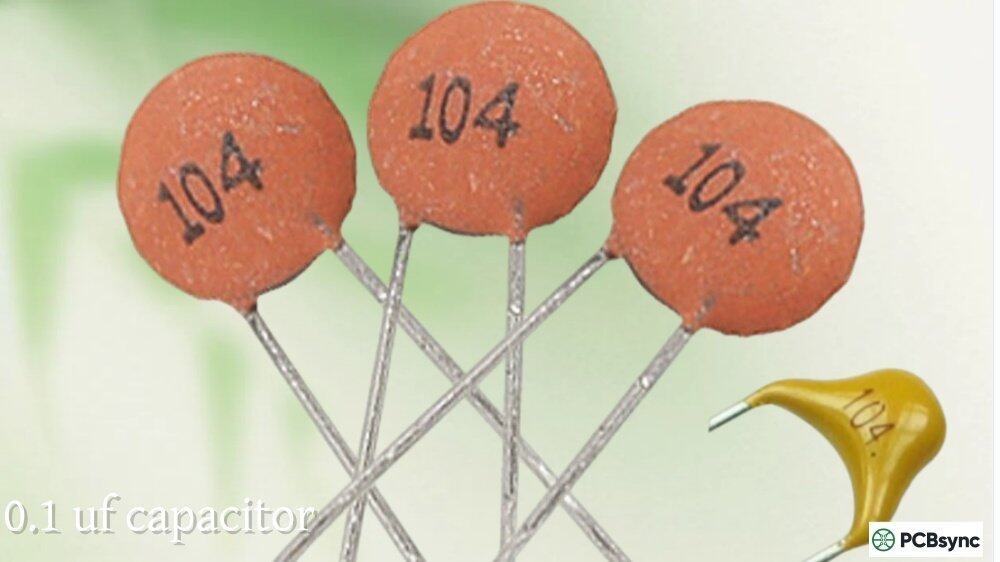
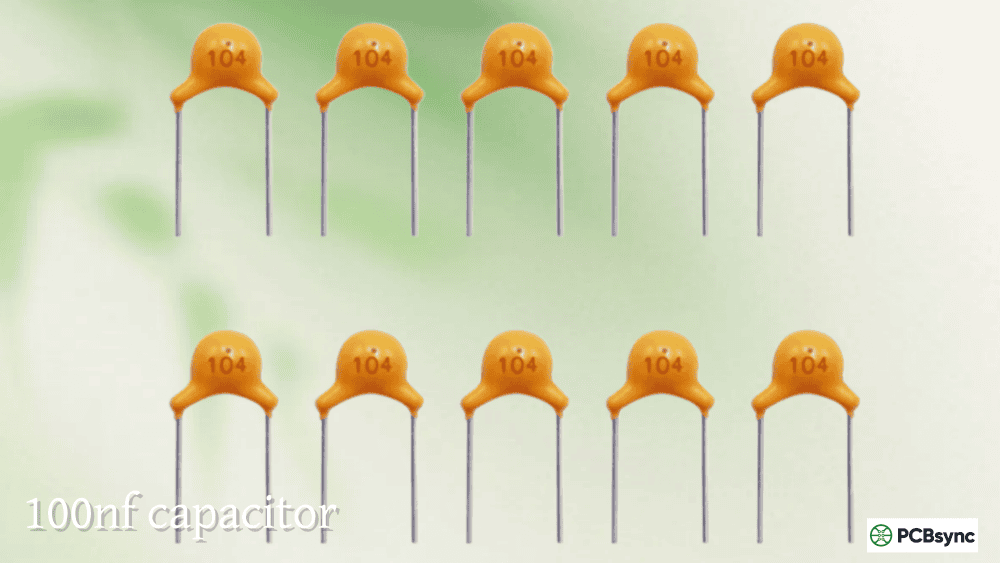
The code “104” on a ceramic capacitor means: 10 × 10^4 picofarads = 100,000pF = 100nF
Other common markings:
“100nF” or “0.1µF” – direct marking
“104K” – 100nF with ±10% tolerance (K)
“104M” – 100nF with ±20% tolerance (M)
Temperature characteristics are coded as: X7R, C0G, Y5V, etc. (as discussed earlier)
Voltage Rating Selection Rules
I always derate capacitors for voltage. Here’s my standard practice:
Ceramic capacitors: Use at least 2× the maximum circuit voltage. For a 12V circuit, use 25V or 50V rated parts. This reduces DC bias effects and improves reliability.
Film capacitors: Use 1.5× the maximum circuit voltage as a minimum. Film capacitors don’t suffer from DC bias effects like ceramics, but derating improves long-term reliability.
For AC applications, consider peak voltage, not RMS. A 24V AC circuit has peaks around 34V, so I’d use a 63V rated capacitor minimum.
How do you verify you’ve chosen the right capacitor type? Here are practical tests I use:
Capacitance Measurement Under Operating Conditions
Don’t just trust the nominal value. Measure the actual capacitance with DC bias applied:
Use an LCR meter with DC bias capability
Apply your operating voltage
Measure capacitance at relevant frequencies (1 kHz for general, 100 kHz for switching supplies)
Compare to your design assumptions
I’ve caught numerous design errors this way. A circuit might work fine at room temperature with no load, then fail when you apply full operating voltage and temperature.
Temperature Sweep Testing
For temperature-sensitive applications:
Place the board in a temperature chamber
Monitor critical circuit parameters while sweeping temperature
Watch for discontinuities that might indicate capacitor-related issues
On one medical device, we found that the device calibration drifted at low temperatures. The culprit was X7R capacitors in the reference voltage filter. Switching to C0G fixed it.
Mechanical Stress Testing
For ceramic capacitors in high-vibration environments:
Subject the board to vibration testing per your application requirements
Monitor for cracks using microscope inspection or X-ray
Perform electrical testing before and after mechanical stress
I learned this lesson the hard way on an automotive project. Ceramic capacitors were cracking under thermal cycling, causing intermittent failures that took weeks to diagnose.
Common Mistakes to Avoid
Over 15 years of PCB design, I’ve seen these mistakes repeatedly:
Mistake 1: Ignoring DC Bias Effects on Ceramics
Designing a filter with the assumption that your 100nf ceramic capacitor provides 100nF at operating voltage is asking for trouble. Always check DC bias curves and design with the actual capacitance under load.
Mistake 2: Using the Cheapest Ceramic for Everything
Y5V dielectrics are cheap, but their terrible stability makes them unsuitable for most applications. The few cents you save isn’t worth the headaches. Stick with X7R or better unless you’re only doing bulk energy storage.
Mistake 3: Film Capacitors in Space-Constrained Designs
I’ve reviewed designs where someone specified film capacitors without checking if they’d physically fit. Always verify package dimensions early in the design process.
Mistake 4: Mixing Dielectric Types Without Understanding Consequences
Using X7R and C0G capacitors in the same precision filter creates temperature tracking mismatches. Keep dielectric types consistent within critical circuits.
Mistake 5: Insufficient Voltage Rating
Using 16V rated ceramics in a 12V circuit seems reasonable until you account for transients, DC bias effects, and the fact that rated voltage is absolute maximum. Derate generously.
Practical Sourcing and Cost Considerations
Capacitors are commodity parts, but smart sourcing saves money:
Preferred Manufacturers
For ceramic 100nf capacitors, I routinely use:
Murata – premium quality, excellent documentation
TDK – good balance of performance and cost
Samsung – cost-effective for high-volume
Kemet – wide selection, good for film types
Vishay – excellent film capacitors
For film capacitors:
WIMA – my go-to for audio and precision applications
Panasonic – wide selection of polyester and polypropylene
Kemet – good PPS options for automotive
Volume Pricing Strategy
At quantities over 10,000 pieces, negotiate. Capacitor pricing drops dramatically in volume. I’ve gotten 40% discounts just by committing to a year’s worth of volume up front.
Standardization Benefits
Limit your BOM to a few capacitor values and types. I use primarily:
100nF X7R ceramic, 0805, 50V
100nF C0G ceramic, 0805, 50V
10µF X7R ceramic, 0805, 25V
This standardization improves inventory management and volume pricing.
Useful Resources and Design Tools
Here are the resources I use regularly when working with 100nf capacitors:
Digi-Key: Best parametric search and filtering options
Mouser: Good inventory availability and technical resources
Arrow: Often has good pricing on volume orders
LCSC: Cost-effective options for Asian manufacturers
Application Notes Worth Reading
“Ceramic Capacitor Aging Made Simple” – Kemet Engineering Bulletin
“Understanding DC Bias Characteristics” – Murata Technical Journal
“Film Capacitor Application Guide” – WIMA
“High-Frequency Bypass and Decoupling” – Analog Devices (AN-1325)
SPICE Models and Simulation
Most major manufacturers provide SPICE models for their capacitor lines. Download these for accurate circuit simulation:
LTspice from Analog Devices (free) includes extensive capacitor models
Altium Designer has built-in component libraries with real capacitor characteristics
KiCad libraries increasingly include detailed SPICE models
Frequently Asked Questions
Q1: Is a 100nF capacitor the same as 0.1µF, and can I use them interchangeably?
Yes, they’re identical—just different notation systems. 100nF (nanofarads) = 0.1µF (microfarads) = 100,000pF (picofarads). In datasheets, you might see any of these notations, and on the physical component, you’ll often see “104” which is code for 10 × 10^4 pF.
You can absolutely use them interchangeably, but pay attention to the other specifications. A 100nF ceramic capacitor behaves very differently from a 100nF film capacitor even though they have the same nominal capacitance. The dielectric type, voltage rating, and package style all matter more than whether it’s marked “100nF” or “0.1µF”.
In my schematics, I typically use µF notation because it’s what most technicians recognize immediately, but I’ve seen well-designed boards using nF notation throughout. Just be consistent within your documentation.
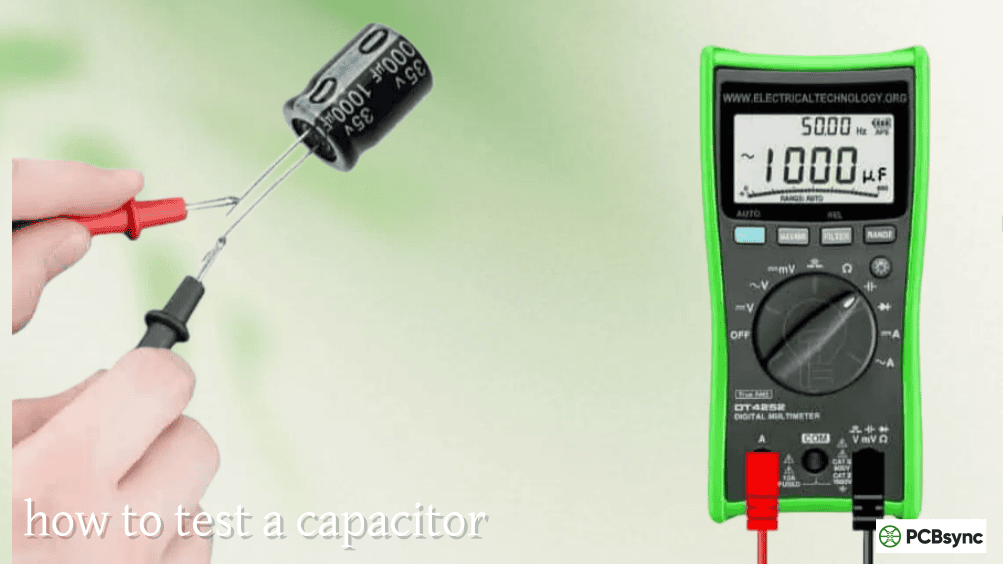
Q2: Why do my ceramic 100nF capacitors measure less than 100nF with my multimeter?
Your multimeter is probably showing you the real story, and it’s revealing the DC bias effect I discussed earlier. Most multimeters apply a small DC voltage during capacitance measurement. Even that small voltage reduces the measured capacitance on Class II ceramics (X7R, X5R, Y5V).
Additionally, multimeters typically measure at 120 Hz or 1 kHz. Ceramic capacitor specifications are often given at higher frequencies (like 1 kHz or 100 kHz) where the measurement might be slightly different.
For accurate capacitance measurement, you need an LCR meter that lets you specify the test frequency and DC bias conditions. When I measure a 100nF X7R capacitor with 10V bias applied, I often see 65-75nF—that’s the actual capacitance my circuit will experience.
C0G ceramics and film capacitors, by contrast, will measure very close to 100nF regardless of applied voltage. That’s why they’re preferred for precision applications.
Q3: Can I substitute a film capacitor with a ceramic one to save space and cost?
Maybe, but you need to understand what you’re trading off. I make this substitution all the time in digital circuits where the precise capacitance value doesn’t matter—swapping film for ceramic works fine for power supply decoupling.
But in precision analog circuits, timing networks, or audio applications, the substitution often fails. Ceramic capacitors (except C0G) introduce:
I once debugged a circuit where someone substituted X7R ceramics for film capacitors in an audio crossover filter. The sound quality degraded noticeably, and measurements showed significant harmonic distortion that wasn’t there with the film caps.
My rule: if the original designer specified film capacitors, there was probably a reason. Understand that reason before substituting. For cost reduction, look at other components first.
Q4: What happens if I exceed the voltage rating of my 100nF capacitor?
For ceramic capacitors, exceeding the rated voltage can cause catastrophic failure—the capacitor can crack, short out, or even explode in extreme cases. I’ve seen ceramic capacitors that were subjected to overvoltage develop cracks that created intermittent shorts. These failures are insidious because they’re not always immediate.
Film capacitors are somewhat more forgiving due to their self-healing property. If you moderately exceed the voltage rating, the capacitor might survive but with reduced capacitance and shortened lifetime. The thin metal layer can vaporize at defect sites, isolating the damaged area.
That said, don’t intentionally exceed voltage ratings on any capacitor. Always derate:
Ceramic: Use at ≤50% of rated voltage for long-term reliability (≤30% for X5R/Y5V under DC bias)
Film: Use at ≤67% of rated voltage
In one product, we had a 15V rail and used 16V-rated ceramic capacitors—technically within spec. After 6 months in the field, we started seeing failures from voltage transients during power-up. We changed to 35V-rated parts and the failures stopped completely. The lesson: generous voltage derating prevents field failures.
Q5: How long do 100nF capacitors last, and do they need to be replaced periodically?
This depends entirely on the capacitor type and operating conditions:
Ceramic capacitors (except C0G): Experience aging where capacitance decreases over time. X7R typically loses 2-3% per decade-hour (a decade being a 10× time multiplier). After 1000 hours, expect about 2% loss. After 10 years, maybe 5-7% total loss. This is usually acceptable—I don’t replace them unless operating in an ultra-precision application.
C0G/NP0 ceramic and film capacitors: Extremely stable. I’ve measured 20-year-old film capacitors that still tested within their original specifications. These don’t need periodic replacement unless they’ve been subjected to electrical or mechanical stress.
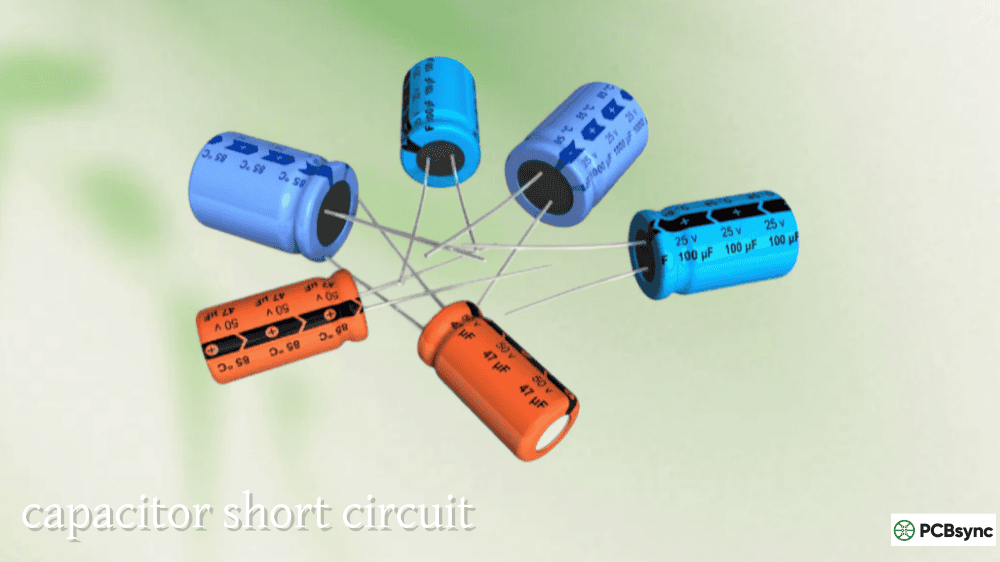
Electrolytic capacitors (not what we’re discussing, but worth mentioning): These DO need periodic replacement, typically every 5-15 years depending on operating temperature.
For most applications, 100nF ceramic and film capacitors outlast the product lifetime. I’ve repaired 30-year-old equipment where the film capacitors still measured perfectly.
High ripple current applications (generates internal heat)
Mechanical stress environments (vibration can crack ceramics)
Critical timing or precision analog circuits (even small drift matters)
In medical devices and aerospace applications, we sometimes replace all capacitors as preventive maintenance every 10-15 years, but that’s extreme caution, not necessity.
Conclusion: Choosing Wisely for Long-Term Success
The choice between ceramic and film 100nf capacitors isn’t about which technology is “better”—it’s about matching the capacitor characteristics to your application requirements. Ceramic capacitors dominate because they’re small, cheap, and good enough for most digital electronics. Film capacitors persist in precision applications because they offer stability and linearity that ceramics can’t match.
After years of making these decisions, my advice is simple: understand the tradeoffs, don’t blindly follow datasheets, measure actual performance under operating conditions, and don’t cut corners on critical components to save pennies. A $0.20 film capacitor that ensures your circuit works flawlessly is infinitely better than a $0.02 ceramic capacitor that makes your product unreliable.
Whether you choose ceramic or film, make sure it’s an informed decision based on your circuit’s real needs, not just what’s cheapest or smallest. Your future self—and your customers—will thank you.
Inquire: Call 0086-755-23203480, or reach out via the form below/your sales contact to discuss our design, manufacturing, and assembly capabilities.
Quote: Email your PCB files to Sales@pcbsync.com (Preferred for large files) or submit online. We will contact you promptly. Please ensure your email is correct.
Notes: For PCB fabrication, we require PCB design file in Gerber RS-274X format (most preferred), *.PCB/DDB (Protel, inform your program version) format or *.BRD (Eagle) format. For PCB assembly, we require PCB design file in above mentioned format, drilling file and BOM. Click to download BOM template To avoid file missing, please include all files into one folder and compress it into .zip or .rar format.