Inquire: Call 0086-755-23203480, or reach out via the form below/your sales contact to discuss our design, manufacturing, and assembly capabilities.
Quote: Email your PCB files to Sales@pcbsync.com (Preferred for large files) or submit online. We will contact you promptly. Please ensure your email is correct.
Notes: For PCB fabrication, we require PCB design file in Gerber RS-274X format (most preferred), *.PCB/DDB (Protel, inform your program version) format or *.BRD (Eagle) format. For PCB assembly, we require PCB design file in above mentioned format, drilling file and BOM. Click to download BOM template To avoid file missing, please include all files into one folder and compress it into .zip or .rar format.
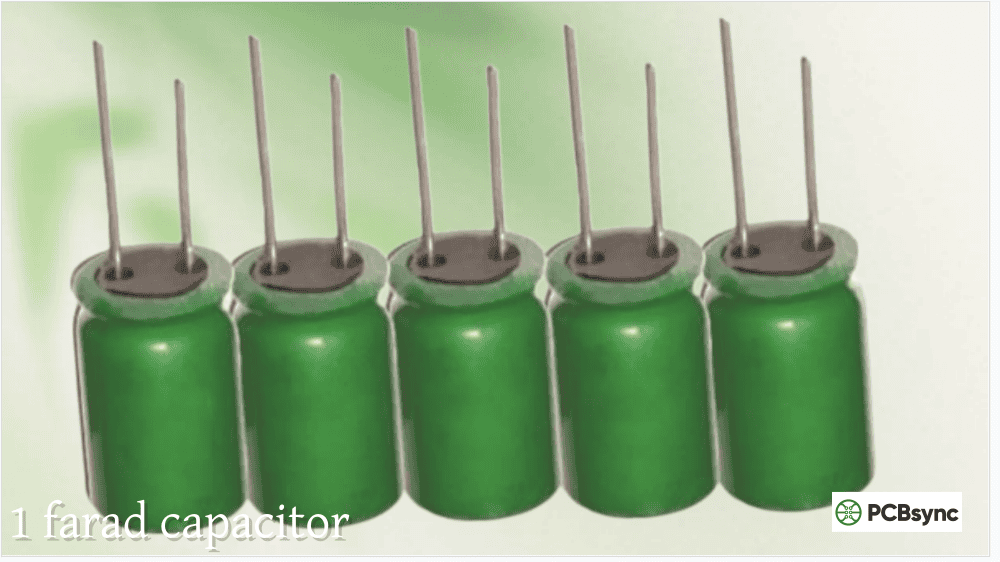
The first time I held a 1 farad capacitor in my hand, I couldn’t believe something the size of a coin could store so much energy. Traditional capacitors top out at maybe a few thousand microfarads in practical sizes, but supercapacitors shattered those limitations. Now, after integrating these components into dozens of designs—from IoT sensors to automotive systems—I can tell you that understanding when and how to use a 1 farad capacitor can fundamentally change how you approach energy storage in embedded systems.
Supercapacitors, also called ultracapacitors or electric double-layer capacitors (EDLCs), occupy a unique space between traditional capacitors and batteries. A 1 farad capacitor can deliver high burst power like a conventional capacitor but store energy like a small battery. This combination has opened up applications that were previously impractical or impossible, and I’m going to show you exactly how to take advantage of this technology.
Understanding What a 1 Farad Capacitor Really Means
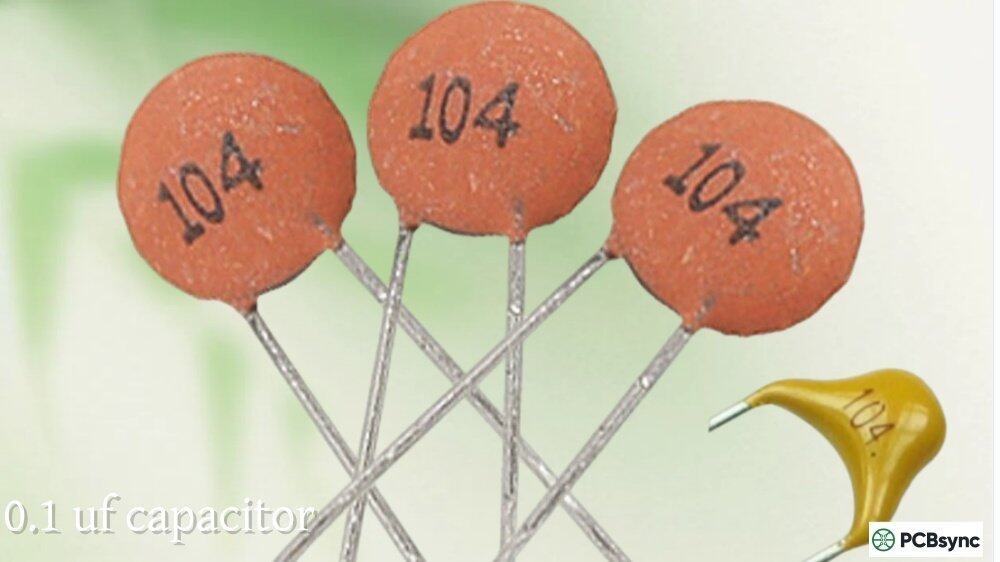
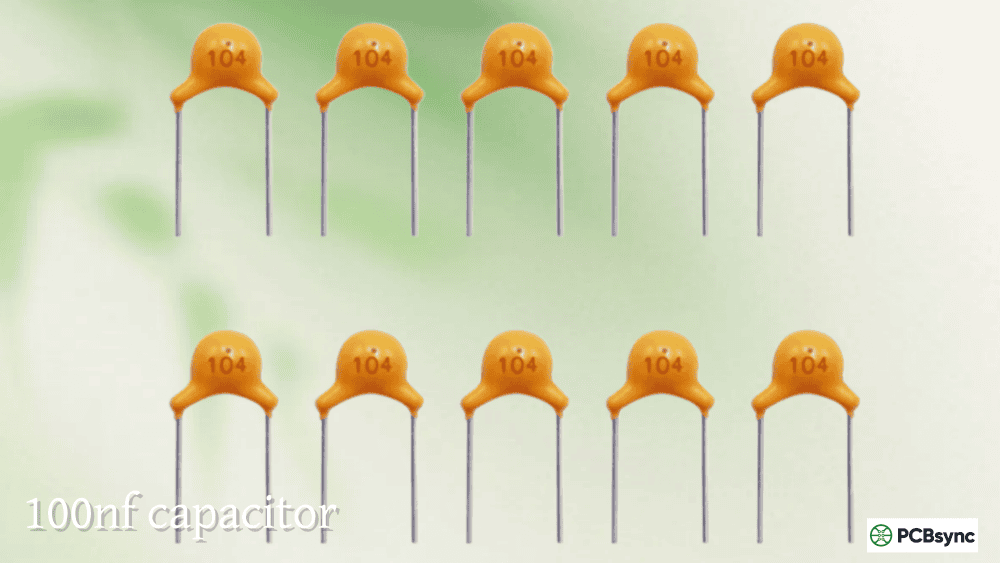
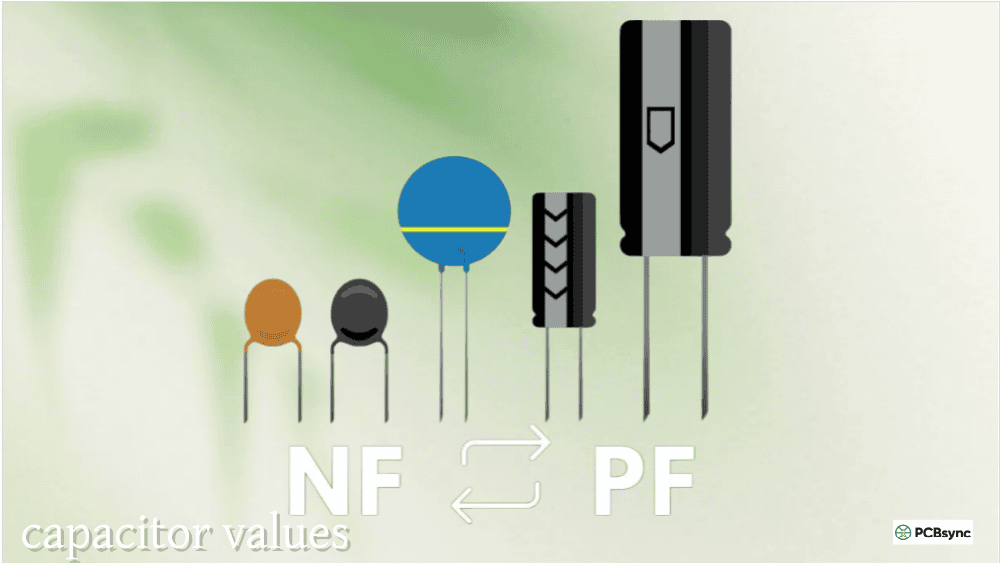
Let’s put 1 farad into perspective. A typical ceramic decoupling capacitor might be 0.1µF (0.0000001 farads). A large electrolytic could be 1000µF (0.001 farads). A 1 farad capacitor is literally one million times larger than that ceramic cap. This isn’t just a bigger capacitor—it’s a fundamentally different technology.
The key metric for understanding energy storage is: Energy (Joules) = ½CV². For a 1 farad capacitor charged to 2.7V (a common rating), that’s about 3.6 joules of stored energy. That might not sound like much—it’s roughly equivalent to lifting a 1kg weight about 37cm—but delivered as high current pulses, it’s incredibly useful.
I’ve used this exact calculation countless times when sizing supercapacitors for real products. In one IoT sensor design, we needed to supply 500mA pulses for 2 seconds during cellular transmission while running from a low-current energy harvesting source. A 1 farad capacitor at 3.3V gave us exactly the energy reserve we needed without the complexity of a battery.
Supercapacitor Technology: How They Achieve 1 Farad
Traditional capacitors store energy in an electric field between two conductive plates separated by a dielectric. The capacitance depends on the plate area, dielectric constant, and separation distance. To get high capacitance, you maximize area and minimize distance—but there are physical limits.
Supercapacitors use a completely different mechanism. They store charge in an electrochemical double layer at the interface between a high-surface-area activated carbon electrode and an electrolyte. The “plates” are effectively atomic-scale layers, giving astronomical effective areas in small packages.
Supercapacitor Construction
A typical 1 farad capacitor contains:
Activated carbon electrodes: Massive surface area (1000-2000 m²/gram)
Separator membrane: Prevents short circuits while allowing ion flow
Electrolyte: Organic or aqueous solution enabling ion movement
Current collectors: Metal foils conducting charge to terminals
Hermetic seal: Critical for preventing electrolyte evaporation
The carbon particles are porous at microscopic scales, creating a surface area equivalent to several football fields in a component the size of a quarter. This is why supercapacitors achieve capacitances that would be impossible with conventional dielectric materials.
Key Specifications That Actually Matter
When I’m selecting a 1 farad capacitor for a design, I look beyond just the capacitance value. Here are the specifications that determine whether your design will work reliably.
Critical Supercapacitor Parameters
Parameter
Typical Range for 1F
Why It Matters
Capacitance
0.8-1.2F (±20% typical)
Affects energy storage and voltage droop rate
Voltage Rating
2.5V, 2.7V, 5.5V common
Determines energy storage (E = ½CV²)
ESR (DC)
50-500 mΩ
Affects charge/discharge efficiency and power capability
Leakage Current
10-50 µA typical
Determines self-discharge rate and hold-up time
Operating Temperature
-40°C to +65°C typical
Limits application environments
Cycle Life
500,000-1,000,000 cycles
Far exceeds batteries
Calendar Life
10-15 years
Temperature-dependent
Voltage Rating Considerations
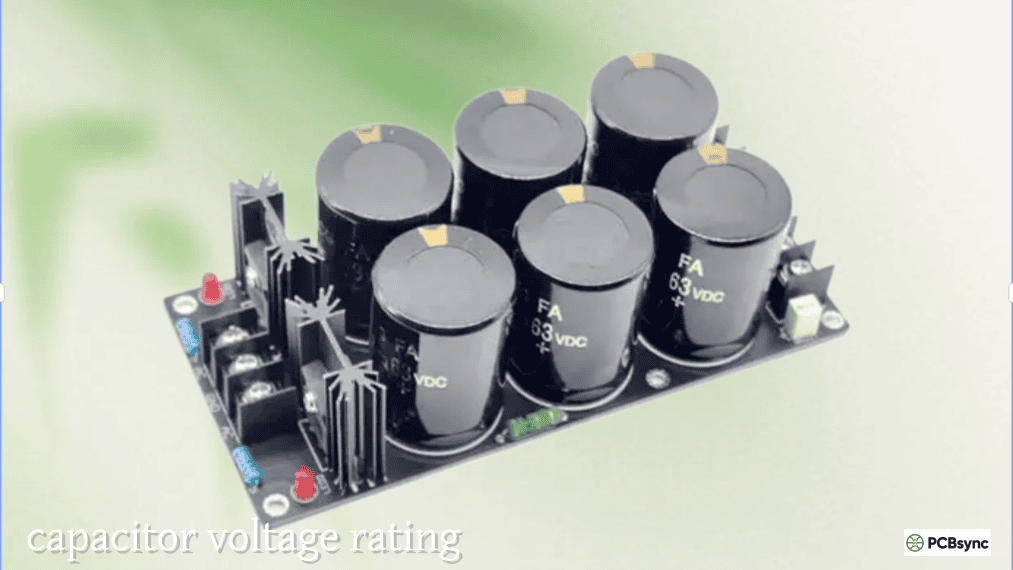
The voltage rating is absolutely critical. Unlike traditional capacitors where you might run close to the rated voltage, supercapacitors are more sensitive. I always derate to at least 80% of rated voltage for long-term reliability.
Here’s something that caught me off guard in my first supercapacitor design: the voltage rating is absolute maximum, and even occasionally exceeding it—even by 0.1V—can significantly reduce lifespan. I learned this debugging a field failure where voltage transients during charging were slowly degrading the supercapacitors.
For a 2.7V rated 1 farad capacitor, I design for a maximum operating voltage of 2.5V. If I need higher voltage, I either select a higher-rated device or use multiple capacitors in series with proper balancing.
ESR: The Performance Bottleneck
Equivalent Series Resistance (ESR) determines how quickly you can charge and discharge the capacitor and how much heat gets generated in the process. A 1 farad capacitor with 100mΩ ESR delivering 1A will drop 100mV across its internal resistance and dissipate 100mW as heat.
I’ve seen designs fail because someone looked only at capacitance and voltage, ignoring ESR. In one automotive application, the supercapacitor needed to deliver 5A pulses. With 200mΩ ESR, that meant 1V was lost internally, and 5W of heat was generated. The component overheated and failed prematurely.
Lower ESR costs more but enables higher current applications. For low-current backup applications, 500mΩ might be fine. For peak power assist, I look for 50-100mΩ or lower.
Real-World Applications of 1 Farad Capacitors
Let me walk you through the applications where I’ve successfully deployed 1 farad capacitors, along with the design challenges and solutions.
Backup Power for Real-Time Clocks and SRAM
This was my introduction to supercapacitors. The application required maintaining an RTC and 64KB of SRAM during power outages lasting up to 48 hours.
Design Requirements:
Current draw: 10µA average
Hold-up time: 48 hours (172,800 seconds)
Minimum voltage: 2.0V
Operating voltage: 3.3V (but supercap rated for 2.7V max)
The challenge was the voltage mismatch. The solution involved a buck-boost converter stepping down 3.3V to charge the supercap to 2.5V, then boosting back to 3.3V during backup operation.
Calculating required capacitance: Q = I × t = 10µA × 172,800s = 1.728 coulombs
With voltage drop from 2.5V to 2.0V (0.5V range): C = Q/ΔV = 1.728/0.5 = 3.456F
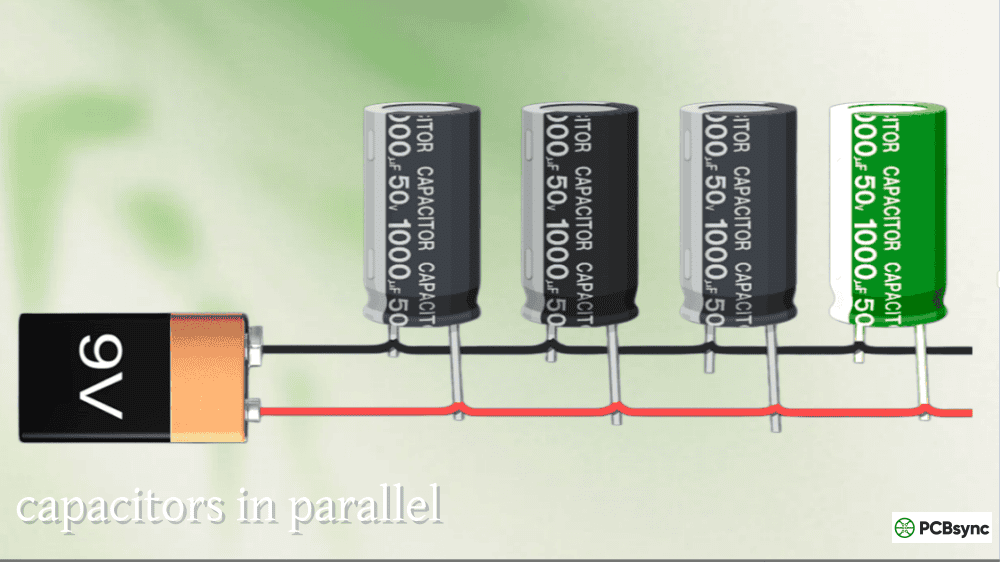
We used four 1 farad capacitors in parallel (4F total) to provide margin. The system worked flawlessly, providing 60+ hours of backup in testing.
Peak Power Assist for Cellular IoT Devices
IoT devices using cellular modems face a challenging power profile: the modem sits idle at 5mA most of the time, then jumps to 500mA during transmission bursts lasting 1-2 seconds. Many energy harvesting sources or small batteries can’t provide these peaks.
In one solar-powered environmental sensor, we used a 1 farad capacitor as a power buffer:
System Design:
Solar panel: 50mA maximum
Base load: 5mA average
Cellular transmission: 500mA for 2 seconds every 15 minutes
Supercap: 1F at 5.5V
During the 13-minute idle period, the solar panel charges the supercap. During transmission, the supercap provides most of the 500mA while the solar panel contributes its 50mA. This works because the supercap can deliver high current (limited by ESR) without the voltage collapse that batteries exhibit.
The math: 500mA × 2s = 1 coulomb. From a 1F cap: ΔV = Q/C = 1/1 = 1V drop. Starting at 5.0V, we end at 4.0V—still well within the system’s operating range.
Automotive Stop-Start Systems
Modern vehicles shut off the engine at stoplights to save fuel, but this creates electrical challenges. The alternator stops, yet systems like steering control, brake-by-wire, and infotainment need continuous power.
I worked on a system using a bank of 1 farad capacitors (60F total) to bridge this gap:
Application Requirements:
Supply 14V nominal (12V automotive system)
Deliver 20A during engine restart
Maintain minimum 10V for 5 seconds
Operating temperature: -40°C to +85°C
Multiple 1 farad capacitors were configured in series-parallel arrangements to achieve the required voltage and capacitance. Each series string needed balancing circuits to prevent individual cells from over-voltage.
The supercaps provided instant high current during engine cranking when the battery voltage sagged, preventing voltage dips that would reset electronic control units. The system also extended the start-stop capability in situations where the battery alone couldn’t support it.
Energy Harvesting Systems
Energy harvesting from solar, vibration, or thermal sources produces inconsistent, low-level power. A 1 farad capacitor acts as an energy buffer, accumulating charge slowly then delivering it in useful bursts.
I designed a bridge monitoring sensor powered by vibration harvesting:
System Characteristics:
Energy harvester: 1-10mW intermittent
Sensor measurement: 200mA for 100ms
Communication: 100mA for 1 second
Measurement interval: Every 10 minutes when sufficient energy available
The 1 farad capacitor at 3.3V stored energy from vibrations until reaching a threshold voltage (3.0V). The system then performed a measurement cycle, dropping to 2.0V, then resumed harvesting.
Energy per cycle: ½ × 1F × (3.0² – 2.0²) = ½ × 1 × 5 = 2.5 joules
This matched our measurement energy budget perfectly. Without the supercap buffer, the inconsistent harvester output couldn’t power the sensor’s peak demands.
Comparing 1 Farad Capacitors to Batteries
This comparison comes up in every design review where I propose using supercapacitors. Both store energy, but they’re fundamentally different and suit different applications.
Supercapacitor vs Battery Comparison
Characteristic
1 Farad Supercapacitor
Small Battery (e.g., CR2032)
Energy Density
3-5 Wh/kg
100-200 Wh/kg
Power Density
10,000 W/kg
100-500 W/kg
Cycle Life
500,000-1,000,000
300-1000
Charge Time
Seconds to minutes
Hours
Operating Temperature
-40°C to +65°C
-20°C to +60°C (worse at extremes)
Self-Discharge
High (days to weeks)
Low (months to years)
Cost per Wh
High
Low
Environmental
No heavy metals
Contains lithium/heavy metals
When to use a 1 farad capacitor instead of a battery:
Very frequent cycling: If you’re charge/discharge cycling thousands of times per day, batteries die quickly. I’ve seen applications where batteries lasted 3 months but supercaps are still going strong after 5 years.
High peak power: When you need multiple amps for short periods, supercaps excel. Batteries have internal resistance that limits peak current and causes voltage sag.
Wide temperature range: Supercaps work at -40°C where many batteries barely function. I’ve used them in outdoor equipment operating in Minnesota winters.
Fast charging: Supercaps charge in seconds. One application required topping up energy storage during a 10-second user interaction—impossible with batteries.
End-of-life disposal: Supercaps are environmentally benign compared to lithium batteries.
When to use batteries instead:
Long hold-up times: For maintaining backup power over days or weeks, batteries win. Their much higher energy density means smaller size.
Consistent voltage: Batteries maintain relatively flat voltage during discharge. Supercaps drop linearly with charge loss.
Low self-discharge: Batteries hold charge for months. Supercaps lose significant charge in weeks.
Cost per energy unit: For the same stored energy, batteries are cheaper.
Practical Design Considerations
Here’s what I’ve learned the hard way about integrating 1 farad capacitors into real products.
Charging Circuit Design
You can’t just connect a voltage source directly to a supercapacitor. The initial current rush when charging a fully discharged capacitor can be enormous.
Example: Connecting a 1F supercap (discharged to 0V) to a 5V supply with 0.1Ω source resistance:
Initial current: I = V/R = 5V/0.1Ω = 50A!
This will blow fuses, damage regulators, or create voltage dips affecting other circuits. I always use a current-limiting charge circuit.
Typical Charging Approaches:
Series Resistor: Simple but wastes energy. I use this only for very low-power applications.
Constant Current Charger: Linear or switching regulator configured for current limiting. This is my go-to for most designs.
Dedicated Supercap Charger IC: Parts like the LTC3350 or BQ25570 handle charging, balancing, and monitoring. Worth the cost for production designs.
Voltage Balancing for Series Configurations
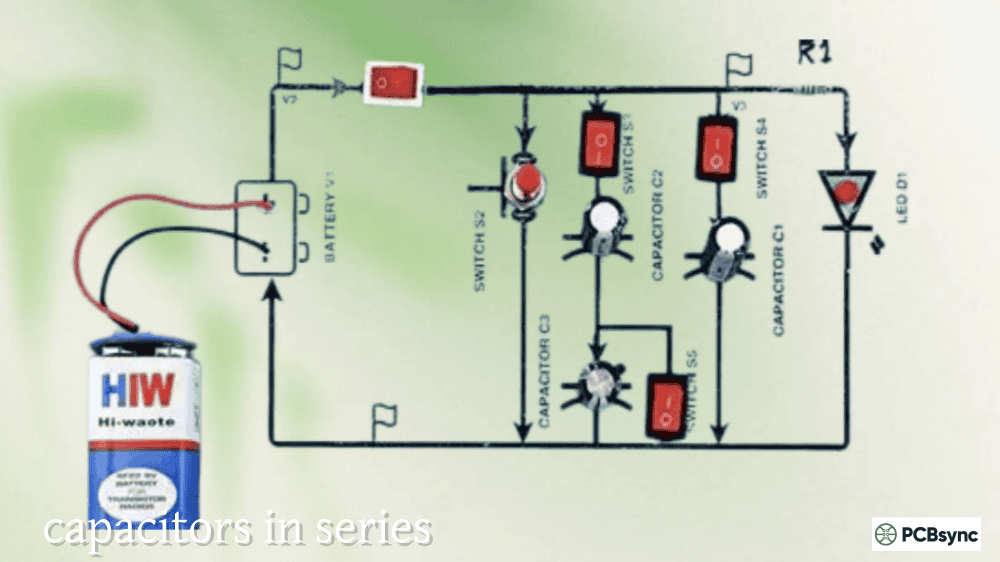
To achieve voltages above 2.7V or 5.5V, you must connect supercaps in series. But here’s the catch: tolerance in capacitance and leakage current means they won’t naturally balance. One cell can end up over-voltage while others are underutilized.
In a 2-cell series configuration (two 1 farad capacitors to create a ~5.4V system), if one cell has 20% lower capacitance, it will see proportionally higher voltage—potentially exceeding its rating and failing.
Balancing Solutions:
Passive balancing: Resistors across each cell (10kΩ – 100kΩ typical). Simple but increases leakage.
Active balancing: IC monitors and redistributes charge. More efficient but adds cost.
For any series configuration with more than two cells, I insist on active balancing. The cost is justified by improved reliability and lifespan.
Physical Mounting and Thermal Considerations
Supercapacitors are heavier than you expect—a 1 farad capacitor can weigh 5-8 grams. In vibration environments, they need proper mechanical support.
I learned this in an automotive application where repeated vibration caused solder joint fatigue. The solution was adding mechanical support brackets and using multiple smaller vias to spread the stress.
Thermal management matters too. During fast charging or high current discharge, the ESR generates heat. In one design, I measured a 1F supercap reaching 65°C during 2A charging—right at the temperature limit. We reduced charging current to keep temperature under 55°C, extending component life.
Advanced Applications and Design Techniques
Beyond basic energy storage, here are some sophisticated ways I’ve used 1 farad capacitors.
Hybrid Energy Storage Systems
Combining batteries with supercapacitors leverages the strengths of both:
Battery provides baseline power and long-term energy storage
Supercap handles peak power demands and absorbs regenerative energy
Battery life extends dramatically because peak currents don’t stress it
I designed a system for a mobile robot where the battery supplied continuous power while a bank of 1 farad capacitors (5F total) handled motor acceleration bursts. Battery lifespan increased by 3× because it never saw currents above 500mA despite motors drawing 5A during acceleration.
The control system monitored battery and supercap voltages, dynamically allocating load between them based on power requirements.
Regenerative Braking Energy Recovery
Electric vehicles and elevators can recover energy during deceleration, but batteries charge slowly and can’t absorb high regenerative currents without damage.
In an elevator system, we used 30F of supercapacitor storage (thirty 1 farad cells) to capture regenerative energy during descent. The captured energy then powered the next ascent, reducing grid power consumption by 40%.
The supercaps could accept charging at 20A (limited by the motor controller), something that would severely degrade a battery pack.
Ultra-Low-Power System Hold-Up
Modern microcontrollers in deep sleep modes draw only microamps. A 1 farad capacitor can sustain these for extraordinary periods.
I designed a sensor that needed to survive power outages while maintaining memory contents. The system drew 3µA in sleep mode. With a 1F supercap charged to 2.5V and a minimum operating voltage of 1.8V:
Hold-up time = C × ΔV / I = 1F × 0.7V / 3µA = 233,333 seconds ≈ 65 hours
In practice, leakage current limited this to about 40 hours, but that exceeded requirements by a wide margin.
Common Design Mistakes and How to Avoid Them
I’ve made—and debugged—plenty of supercapacitor mistakes over the years. Learn from my expensive lessons.
Mistake 1: Ignoring Leakage Current
Early in my career, I designed a backup system that theoretically should hold data for 48 hours based on load current calculations. It barely made 12 hours.
The problem: I calculated based on load current alone (5µA) but the supercap itself had 20µA leakage. The total current was 25µA, not 5µA, cutting hold-up time dramatically.
Lesson: Always include leakage current in your calculations, and design for worst-case leakage (it increases with temperature).
Mistake 2: Treating Them Like Batteries
Batteries maintain relatively constant voltage until depletion. Supercaps drop linearly with charge loss. If your circuit needs 2.5V minimum and you charge to 3.0V, you can only use 0.5V of range—that’s less than 20% of stored energy!
Solution: Use a buck-boost converter to extract energy across a wider voltage range, or design circuits that work down to lower voltages.
Mistake 3: Inadequate Protection
Supercapacitors have polarity. Reverse voltage damages or destroys them instantly. I’ve seen field failures where connector mismate or installation error applied reverse voltage.
Solution: Add blocking diodes or active protection. The few cents cost is nothing compared to field failures.
Mistake 4: Underestimating Inrush Current
Connecting a discharged supercap to a power rail without current limiting can trigger overcurrent protection, brown out other circuits, or damage the supply.
Solution: Always use controlled charging, even if it’s just a series resistor for low-power applications.
Mistake 5: Neglecting End-of-Life Behavior
Supercapacitors degrade over time—capacitance decreases and ESR increases. A system that works with a new 1F/50mΩ supercap might fail with a degraded 0.7F/150mΩ unit after 10 years.
Solution: Design with margin. Assume 30% capacitance loss and 3× ESR increase over lifetime.
Selecting the Right 1 Farad Capacitor
Not all 1 farad capacitors are created equal. Here’s my selection framework:
Before committing to production, I always test supercapacitors thoroughly:
Basic Electrical Tests
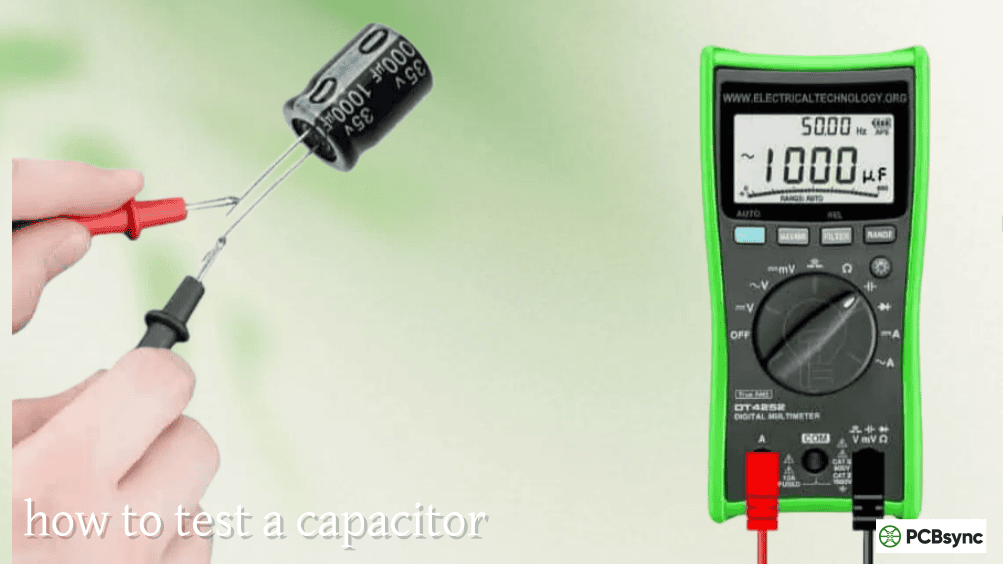
Capacitance verification: Use an LCR meter at 120Hz or 1kHz. Verify it’s within tolerance.
ESR measurement: Critical for high-current applications. I use an ESR meter or measure voltage drop at known current.
Leakage current: Charge to rated voltage, disconnect, and measure voltage decay over 24-48 hours.
Charge/discharge cycles: Cycle 100-1000 times at expected current levels, monitor for degradation.
Environmental Testing
Temperature sweep: Verify operation from -40°C to max rated temperature.
Thermal shock: Rapid temperature cycling (-40°C to +85°C) reveals mechanical weaknesses.
Humidity/moisture: Important for non-hermetic packages.
Long-Term Reliability Testing
For critical applications, I do accelerated life testing at elevated temperature (65-85°C) for 1000+ hours. This reveals infant mortality issues and predicts long-term performance.
Useful Resources and Design Tools
Here are the tools and resources I use regularly when working with 1 farad capacitors:
Manufacturer Resources
Maxwell Technologies (Tesla Energy):
Application notes on series/parallel configurations
Arrow: Often has competitive pricing on volume orders
Newark/Element14: Strong in European markets
Frequently Asked Questions
Q1: How long can a 1 farad capacitor hold a charge?
This is the most common question I get, and the answer is “it depends”—primarily on leakage current. A typical 1 farad capacitor has leakage current of 10-50µA. Let’s do the math:
Starting at 2.5V with 30µA leakage, the voltage decays following V(t) = V₀ × e^(-t/RC). For practical purposes, with only leakage current, you’ll lose about 50% voltage in 1-2 weeks and be essentially discharged after a month.
However, if you’re powering a circuit, discharge is much faster. A 10µA load will discharge a 1F cap from 2.5V to 1.5V in about 100,000 seconds (27 hours). At 100µA load, that drops to 2.7 hours.
The key insight: supercapacitors aren’t for long-term storage (weeks/months)—that’s what batteries do. They’re for short-to-medium term storage (seconds to days) with the ability to deliver high power.
In one real-world design, I needed 12-hour backup for a 20µA circuit. Accounting for both load and leakage (total 50µA), I calculated: Time = C × ΔV / I = 1F × 1.0V / 50µA = 20,000s ≈ 5.5 hours. Not enough! I used three 1 farad capacitors in parallel (3F total) to meet the requirement with margin.
Q2: Can I charge a 1 farad capacitor directly from a power supply?
Technically yes, but practically it’s a terrible idea—and I’ve seen the damage it causes. When you connect a fully discharged 1F supercap to a 5V supply, the initial current is limited only by the wire and supply resistance. This can be 10-50A for a fraction of a second.
What happens:
Fuses blow
Voltage rail collapses, resetting other circuits
Connector contacts arc and degrade
Power supply enters current-limiting mode or shuts down
In extreme cases, PCB traces can vaporize
The correct approach is controlled charging. Even a simple series resistor works. For 5V charging through a 10Ω resistor, initial current is limited to 500mA. The charge time becomes roughly 5RC = 5 × 10Ω × 1F = 50 seconds—perfectly acceptable for most applications.
For production designs, I use dedicated charger ICs that regulate current precisely and provide status monitoring. Parts like the LTC4425 or BQ25570 cost $2-5 but prevent all these problems.
One exception: in some designs where the system starts with the supercap pre-charged and maintained, you might have very controlled conditions where direct connection is acceptable. But even then, I add at least a small series resistance for safety.
Q3: What’s the difference between a 1 farad supercapacitor and a 1 farad electrolytic capacitor?
They’re completely different animals despite having the same capacitance value. Let me break it down from experience:
Physical Size: A 1 farad electrolytic capacitor would be enormous—roughly the size of a large soup can or bigger. A 1 farad supercapacitor fits in a coin cell package (similar to a CR2032 battery).
Voltage Rating: Electrolytic caps can handle higher voltages (hundreds of volts). Supercaps are limited to 2.5-3.0V per cell (though you can series them).
ESR: Electrolytic caps have higher ESR (typically several ohms for 1F). Supercaps have much lower ESR (50-500mΩ).
Application: Electrolytics are used for filtering and ripple reduction in power supplies. Supercaps are used for energy storage and backup power.
Polarity: Both are polarized, but supercaps are even more sensitive to reverse voltage.
Lifespan: Supercaps last longer (500k-1M cycles vs. 2k-10k for electrolytics).
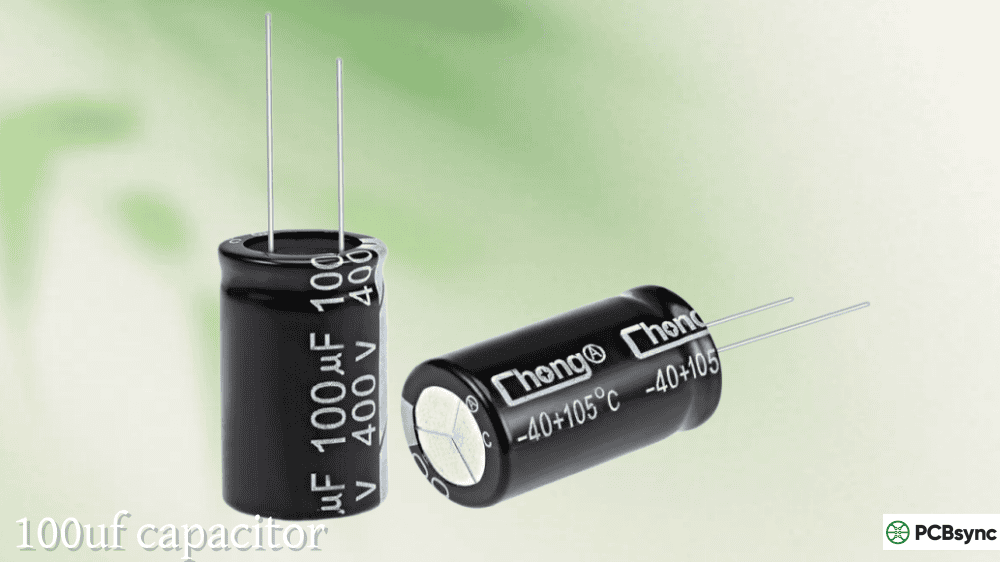
In practice, you almost never see 1 farad electrolytic capacitors—the size makes them impractical. If someone says “1 farad capacitor,” they almost certainly mean a supercapacitor. I’ve been designing electronics for 15 years and have never used an electrolytic above 47,000µF (0.047F).
Q4: Do I need special PCB layout considerations for 1 farad capacitors?
Absolutely, and ignoring this cost me several prototype iterations early in my career. Here are the critical layout issues:
Mechanical Stress: Supercaps are heavy (5-10g for a 1F part). Without proper support, vibration causes solder joint fatigue. I always:
Use multiple vias to distribute mechanical stress
Add mechanical support brackets for vibration-prone applications
Keep supercaps away from board edges where flex is highest
Thermal Management: During fast charging or high-current discharge, supercaps generate heat from ESR losses. I’ve measured 20°C temperature rises during 2A charging. Keep supercaps away from other heat-generating components and ensure adequate airflow.
Current Handling: The traces connecting to supercaps carry high current. I size them generously—typically 50-100 mils (1.25-2.5mm) width minimum for 1-5A applications. Inadequate traces can cause voltage drops and heating.
Polarity Protection: Add clear silkscreen markings and consider keyed connectors. I’ve seen field failures from reversed supercaps installed by technicians who didn’t check polarity carefully enough.
Ground Connection: Use a solid ground connection with low inductance—especially important for applications with rapidly changing currents.
In one automotive project, we had intermittent failures traced to cold solder joints on the supercap. The vibration combined with the component’s weight gradually degraded the connections. Adding a bracket and using 4 solder points instead of 2 solved it completely.
Q5: How do supercapacitor specs change with temperature?
Temperature has significant effects that you must account for in design. I learned this debugging a system that failed in winter field testing—it worked perfectly in the lab at 25°C but failed at -20°C.
Capacitance: Typically decreases 10-30% at -40°C compared to 25°C. This directly affects your energy storage. That 1 farad capacitor might only be 0.7-0.8F in cold conditions.
ESR: Increases dramatically at low temperature—sometimes 5-10× higher at -40°C compared to 25°C. This limits current capability and increases resistive losses. A supercap with 100mΩ ESR at 25°C might be 500-800mΩ at -40°C.
Leakage Current: Decreases at low temperature, increases at high temperature. At 65°C, leakage might be 2-3× the 25°C value, shortening hold-up time.
Charging Time: Increases at low temperature due to higher ESR. That 30-second charge time at 25°C might become 2 minutes at -40°C.
Lifespan: Elevated temperature accelerates aging. Operating continuously at 65°C might reduce calendar life from 15 years to 5 years.
In the design I mentioned, the solution was:
Oversize the supercapacitor bank to compensate for reduced capacitance and increased ESR at -40°C
Reduce maximum charging current at low temperature to prevent excessive voltage drop
Add temperature monitoring and adapt system behavior accordingly
Always check the manufacturer’s temperature curves in the datasheet. The variation can be dramatic, and assuming room-temperature specs will lead to failures in real-world conditions.
Conclusion: Maximizing the Potential of 1 Farad Capacitors
After integrating 1 farad capacitors into everything from tiny IoT sensors to multi-kilowatt automotive systems, I can confidently say they’re one of the most enabling technologies in modern electronics. They occupy a unique niche that neither conventional capacitors nor batteries can fill effectively.
The key to successful supercapacitor implementation is understanding their characteristics—high power density, moderate energy density, linear discharge, fast charging, and extreme cycle life. When your application needs these traits, supercapacitors are unbeatable. When you need long-term storage or high energy density, stick with batteries.
Design conservatively: account for leakage current, temperature effects, and end-of-life degradation. Use proper charging circuits, implement balancing for series configurations, and pay attention to mechanical mounting. The few dollars spent on proper implementation will save thousands in field failures and warranty claims.
Whether you’re buffering energy harvesting, providing backup power, enabling regenerative energy recovery, or delivering peak power assist, the 1 farad capacitor is a powerful tool in your design arsenal. Master it, and you’ll find applications you never imagined were possible.
Inquire: Call 0086-755-23203480, or reach out via the form below/your sales contact to discuss our design, manufacturing, and assembly capabilities.
Quote: Email your PCB files to Sales@pcbsync.com (Preferred for large files) or submit online. We will contact you promptly. Please ensure your email is correct.
Notes: For PCB fabrication, we require PCB design file in Gerber RS-274X format (most preferred), *.PCB/DDB (Protel, inform your program version) format or *.BRD (Eagle) format. For PCB assembly, we require PCB design file in above mentioned format, drilling file and BOM. Click to download BOM template To avoid file missing, please include all files into one folder and compress it into .zip or .rar format.