Inquire: Call 0086-755-23203480, or reach out via the form below/your sales contact to discuss our design, manufacturing, and assembly capabilities.
Quote: Email your PCB files to Sales@pcbsync.com (Preferred for large files) or submit online. We will contact you promptly. Please ensure your email is correct.
Notes: For PCB fabrication, we require PCB design file in Gerber RS-274X format (most preferred), *.PCB/DDB (Protel, inform your program version) format or *.BRD (Eagle) format. For PCB assembly, we require PCB design file in above mentioned format, drilling file and BOM. Click to download BOM template To avoid file missing, please include all files into one folder and compress it into .zip or .rar format.
INA219 Arduino: Complete Guide to Current & Power Measurement
As a PCB engineer working on embedded systems, I’ve learned that accurate current and power monitoring is crucial for battery-powered devices, motor control systems, and power management applications. The INA219 Arduino current sensor has become my go-to solution for these measurement tasks. This sensor eliminates the hassle of using multiple multimeters and provides precise digital readings over I2C.
The INA219 is a Texas Instruments chip that monitors both high-side current and bus voltage simultaneously. When paired with Arduino, it delivers a complete power monitoring solution that’s both affordable and accurate. Let me walk you through everything you need to know about implementing this sensor in your projects.
The INA219 is a zero-drift, bidirectional current and power monitor with an I2C/SMBus-compatible interface. Unlike simple current sensing circuits, this IC integrates a 12-bit ADC, programmable gain amplifier (PGA), and automatic power calculation into a single package.
Key Technical Specifications
Parameter
Specification
Supply Voltage (VCC)
3.0V to 5.5V
Bus Voltage Range
0V to 26V
Maximum Current (Default)
±3.2A
Maximum Current (Custom Shunt)
Up to 15A
Current Resolution (Default)
0.1mA to 0.8mA
Voltage Accuracy
±0.5% (INA219B)
I2C Addresses
16 programmable (0x40-0x4F)
Operating Temperature
-40°C to +125°C
Interface
I2C/SMBus
Package Types
SOIC-8, SOT-23
The INA219 comes in two grades – A and B. The B grade offers superior accuracy with ±0.5% maximum error over temperature compared to ±1% for the A grade.
How the INA219 Works: High-Side Current Sensing
Understanding the measurement principle helps you get the most from this sensor. The INA219 uses high-side current sensing, meaning the shunt resistor sits between your power source and the load.
Measurement Process
The sensor measures two critical voltages:
Shunt Voltage (V_shunt): The voltage drop across the shunt resistor caused by load current. With the default 0.1Ω resistor and maximum current of 3.2A, the maximum shunt voltage is 320mV.
Bus Voltage (V_bus): The voltage at the load side (VIN- to GND), which is your supply voltage minus the shunt voltage drop.
From these two measurements, the INA219 calculates:
Load Voltage: V_load = V_shunt + V_bus
Current: I = V_shunt / R_shunt
Power: P = V_bus × I
All calculations happen inside the chip using programmable calibration registers, giving you direct readouts in amperes and watts.
Why High-Side Sensing Matters
High-side sensing offers several advantages over low-side alternatives:
Detects shorts to ground in your load
Prevents ground loops in your measurement circuit
Works with grounded loads
Provides better noise immunity
The downside is that your measurement voltage floats above ground, but the INA219 handles this complexity internally.
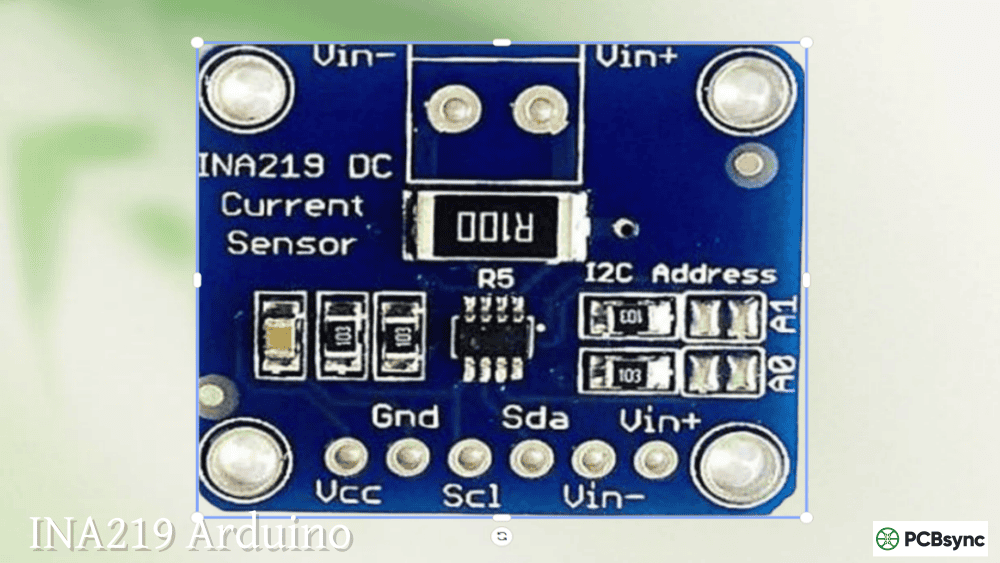
INA219 Module Pinout and Hardware Configuration
Most Arduino projects use breakout modules rather than the bare IC. These modules include the necessary support components and make prototyping straightforward.
Standard Module Pinout
Pin
Function
Connection
VCC
Power Supply
Arduino 5V or 3.3V
GND
Ground
Arduino GND
SCL
I2C Clock
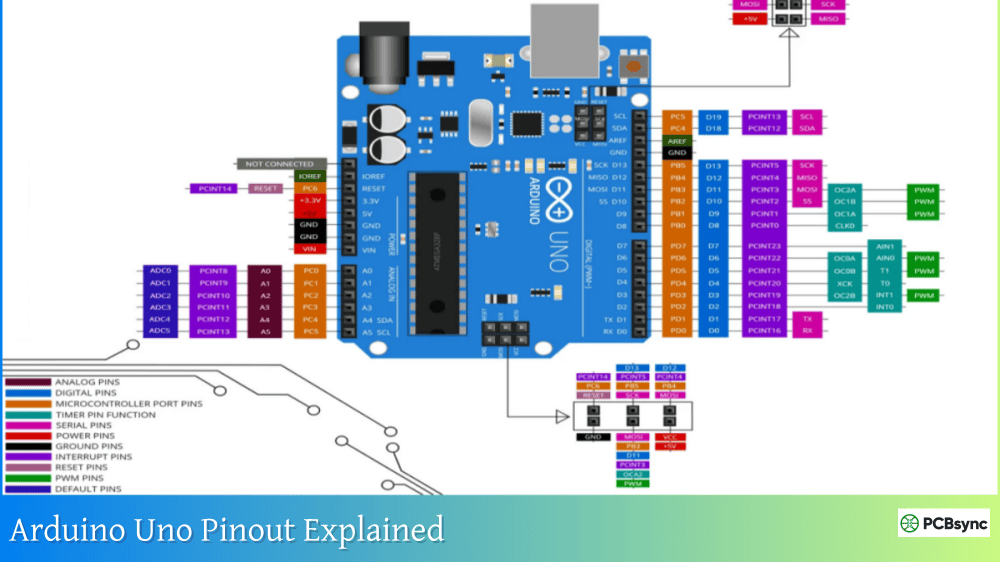
Arduino A5 (Uno) / Pin 22 (Mega) / D1 (ESP8266)
SDA
I2C Data
Arduino A4 (Uno) / Pin 21 (Mega) / D2 (ESP8266)
VIN+
Positive Terminal
Connect to Power Source (+)
VIN-
Negative Terminal
Connect to Load (+)
I2C Address Configuration
The default I2C address is 0x40, but you can configure up to 16 different addresses by bridging the A0 and A1 pads:
A1
A0
I2C Address
GND
GND
0x40 (Default)
GND
VS+
0x41
GND
SDA
0x42
GND
SCL
0x43
VS+
GND
0x44
VS+
VS+
0x45
VS+
SDA
0x46
VS+
SCL
0x47
SDA
GND
0x48
SDA
VS+
0x49
SDA
SDA
0x4A
SDA
SCL
0x4B
SCL
GND
0x4C
SCL
VS+
0x4D
SCL
SDA
0x4E
SCL
SCL
0x4F
This addressing scheme allows you to connect up to 16 INA219 sensors on the same I2C bus – perfect for multi-channel power monitoring.
The connection is straightforward, requiring only four wires for the I2C interface plus two terminals for your power circuit.
Basic Arduino Uno Connection
INA219 Module Arduino Uno
———– ———–
VCC ——– 5V
GND ——– GND
SCL ——– A5
SDA ——– A4
Power Circuit:
Power Supply (+) –> VIN+ (INA219)
VIN- (INA219) –> Load (+)
Load (-) –> Power Supply (-)
Critical Wiring Note: For accurate voltage and power measurements, you must connect the Arduino GND to your power circuit GND. If you only need current measurement, this connection is optional.
Connection for Different Arduino Boards
Board
SDA Pin
SCL Pin
Arduino Uno
A4
A5
Arduino Mega
20
21
Arduino Nano
A4
A5
Arduino Leonardo
2
3
ESP8266
GPIO4 (D2)
GPIO5 (D1)
ESP32
GPIO21
GPIO22
Testing Circuit Example
For initial testing, I recommend this simple setup:
5V Power Supply (+)
|
V
VIN+ (INA219)
|
VIN-
|
V
220Ω Resistor
|
V
LED
|
V
GND
This circuit draws approximately 20-22mA, perfect for verifying your sensor works correctly.
Arduino Libraries for INA219
Several libraries are available for the INA219. From my experience, I’ll cover the three most reliable options.
Adafruit INA219 Library
The Adafruit library is the most popular choice for beginners due to its simplicity.
Installation via Arduino IDE:
Open Tools > Manage Libraries
Search for “Adafruit INA219”
Click Install (this also installs the Adafruit BusIO dependency)
Key Features:
Three pre-calibrated measurement ranges
Simple function calls
Excellent documentation
Wide board compatibility
Available Calibration Functions:
Function
Bus Voltage
Max Current
Current Resolution
setCalibration_32V_2A()
32V
2A
1mA
setCalibration_32V_1A()
32V
1A
0.5mA
setCalibration_16V_400mA()
16V
400mA
0.1mA
INA219_WE Library
Wolfgang Ewald’s library provides more advanced control for experienced users.
Key Advantages:
Programmable gain settings
Configurable ADC resolution
Trigger and continuous modes
Correction factors for calibration
Overflow detection
This library is my choice when I need fine-tuned control or must optimize for low power consumption.
RobTillaart INA219 Library
A lightweight alternative focused on performance.
Features:
Manual calibration support
Lower memory footprint
Fast I2C communication
Unit conversion helpers
Library Comparison Table
Feature
Adafruit
INA219_WE
RobTillaart
Ease of Use
★★★★★
★★★☆☆
★★★☆☆
Features
★★★☆☆
★★★★★
★★★★☆
Memory Usage
Medium
Medium
Low
Documentation
Excellent
Good
Good
Best For
Beginners
Advanced Users
Performance
Basic Arduino Code Examples
Let me share working code examples from actual projects.
Simple Current and Voltage Monitor
#include <Wire.h>
#include <Adafruit_INA219.h>
Adafruit_INA219 ina219;
void setup() {
Serial.begin(115200);
// Wait for serial connection
while (!Serial) {
delay(10);
}
Serial.println(“INA219 Current Sensor Test”);
// Initialize the sensor
if (!ina219.begin()) {
Serial.println(“Failed to find INA219 chip”);
while (1) {
delay(10);
}
}
// Set calibration to 16V, 400mA for maximum resolution
I2C Scanner Sketch: Available in Arduino IDE Examples > Wire > i2c_scanner
PCB Footprints: Available on SnapEDA and Component Search Engine
Purchase Sources
Adafruit INA219 Module: $9.95 from Adafruit (highest quality)
Generic INA219 Modules: $2-5 from AliExpress, eBay
Bare INA219 IC: Available from Digi-Key, Mouser, Arrow
Community Resources
Arduino Forum: Active INA219 discussion threads
Stack Exchange: Electronics Q&A for troubleshooting
Reddit r/arduino: Project showcase and help
Frequently Asked Questions (FAQs)
1. Can I measure AC current with the INA219?
No, the INA219 is designed specifically for DC current measurement. For AC current sensing, consider the ACS712 Hall effect sensor or a current transformer with rectification circuit. The INA219’s bidirectional measurement capability only means it can measure DC current flowing in either direction, not alternating current.
2. How many INA219 sensors can I connect to one Arduino?
You can connect up to 16 INA219 sensors on a single I2C bus by configuring different addresses using the A0 and A1 pads. Practically, I’ve successfully used 8 sensors simultaneously on an Arduino Mega without issues. Beyond that, you may encounter I2C bus capacitance limitations or need to use I2C multiplexers.
3. What’s the difference between bus voltage and load voltage?
Bus voltage is measured at the load side (VIN- pin) relative to ground. Load voltage is the actual voltage across your load, which equals bus voltage plus the small voltage drop across the shunt resistor. For example, with a 5V supply, the bus voltage might be 4.97V, the shunt drop is 0.03V, so load voltage is 5.00V.
4. Can I use the INA219 to measure battery discharge?
Absolutely! The INA219 is excellent for battery monitoring applications. Set it up in series between your battery and load. The bidirectional sensing allows you to monitor both discharge and charging currents. I’ve used this configuration in solar charge controllers and battery capacity testers with great results.
5. Why do I need to connect Arduino GND to my power circuit GND?
All voltages are measured relative to a common reference point. Without a shared ground connection, the INA219 cannot accurately measure the bus voltage. The Arduino’s ADC and the INA219 need the same ground reference for proper I2C communication and accurate voltage measurements. Current-only measurements can work without this connection, but you’ll lose voltage and power data.
Conclusion: Why the INA219 Arduino Combination Works
After implementing the INA219 in dozens of projects, from simple hobby builds to commercial products, I can confidently say this sensor delivers professional-grade measurements at a hobbyist-friendly price point. The combination of high accuracy, easy I2C integration, and multiple library options makes it an essential tool in any maker’s arsenal.
The key to success with the INA219 Arduino setup is understanding its limitations and working within its specifications. Don’t exceed the current range, maintain proper wiring practices, and choose the right calibration for your application. With these fundamentals in place, you’ll have a reliable power monitoring solution that rivals equipment costing hundreds of dollars more.
Whether you’re building a solar monitoring system, optimizing battery life, or simply need to track power consumption, the INA219 provides the accurate measurements you need. Start with the basic examples I’ve provided, experiment with different configurations, and soon you’ll be designing your own power monitoring solutions with confidence.
Inquire: Call 0086-755-23203480, or reach out via the form below/your sales contact to discuss our design, manufacturing, and assembly capabilities.
Quote: Email your PCB files to Sales@pcbsync.com (Preferred for large files) or submit online. We will contact you promptly. Please ensure your email is correct.
Notes: For PCB fabrication, we require PCB design file in Gerber RS-274X format (most preferred), *.PCB/DDB (Protel, inform your program version) format or *.BRD (Eagle) format. For PCB assembly, we require PCB design file in above mentioned format, drilling file and BOM. Click to download BOM template To avoid file missing, please include all files into one folder and compress it into .zip or .rar format.