Inquire: Call 0086-755-23203480, or reach out via the form below/your sales contact to discuss our design, manufacturing, and assembly capabilities.
Quote: Email your PCB files to Sales@pcbsync.com (Preferred for large files) or submit online. We will contact you promptly. Please ensure your email is correct.
Notes: For PCB fabrication, we require PCB design file in Gerber RS-274X format (most preferred), *.PCB/DDB (Protel, inform your program version) format or *.BRD (Eagle) format. For PCB assembly, we require PCB design file in above mentioned format, drilling file and BOM. Click to download BOM template To avoid file missing, please include all files into one folder and compress it into .zip or .rar format.
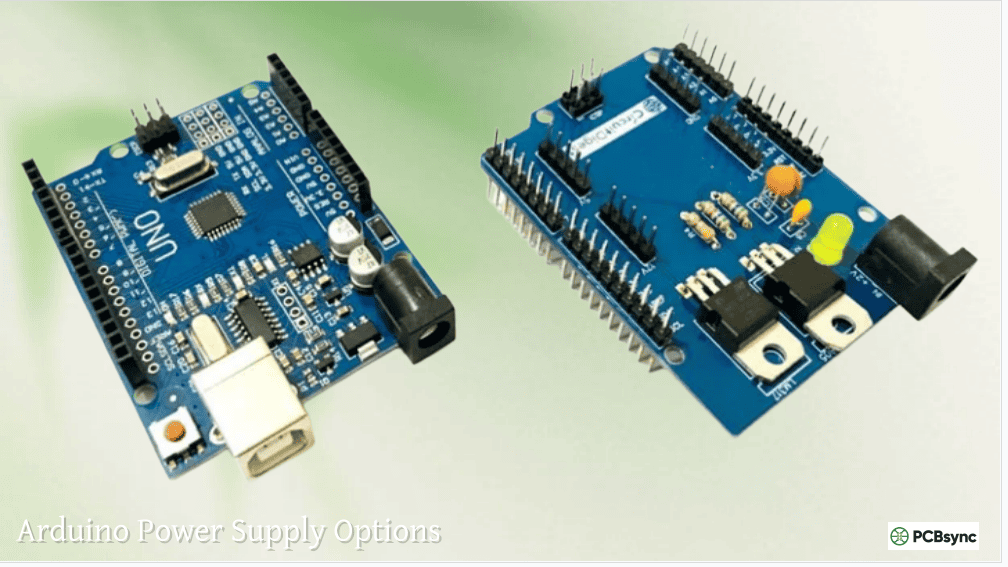
Arduino Power Supply Options: USB, Battery & AC Adapter Guide
After designing dozens of custom PCBs and troubleshooting countless student projects, I can tell you that power supply issues cause more <a href=”https://pcbsync.com/arduino/”>Arduino</a> headaches than faulty code or wiring mistakes combined. Choosing the wrong Arduino power supply options leads to unstable operation, mysterious resets, component damage, or projects that work perfectly on your bench but fail miserably in the field. Understanding how to properly power your Arduino isn’t just about making LEDs blink—it’s about building reliable systems that perform consistently across different operating conditions.
The Arduino platform’s flexibility extends to its power requirements. You can energize boards through USB cables during development, switch to battery packs for portable applications, or deploy AC adapters for permanent installations. But each method comes with voltage requirements, current limitations, and specific use cases that determine whether your project succeeds or frustrates. This guide cuts through the confusion to explain exactly how different Arduino power supply options work, when to use each method, and how to avoid the common mistakes that damage boards or create unreliable behavior.
From benchtop prototyping to battery-powered field deployments, from wall-powered home automation to solar-charged remote sensors, we’ll cover every practical power scenario you’ll encounter. Whether you’re a beginner wondering why your Arduino keeps resetting or an experienced developer optimizing power consumption for commercial deployment, this comprehensive examination of Arduino power supply options provides the technical knowledge needed to make informed decisions.
Before exploring specific power sources, understanding your Arduino’s electrical requirements prevents mistakes and ensures reliable operation across all project phases.
Voltage and Current Specifications
Different Arduino boards have slightly different power requirements, but the Uno—Arduino’s most popular board—serves as our reference model for this guide.
Arduino Board
Operating Voltage
Recommended Input Voltage
Absolute Maximum Input
Typical Current Draw
Arduino Uno R3
5V
7-12V (via barrel jack)
6-20V
50-100mA (idle)
Arduino Nano
5V
7-12V (via Vin)
6-20V
40-80mA (idle)
Arduino Mega
5V
7-12V (via barrel jack)
6-20V
70-120mA (idle)
Arduino MKR WiFi
3.3V
5V (via USB or 3.7V LiPo)
3.3-5V
30-50mA (idle)
Arduino Nano 33 IoT
3.3V
5V (via USB)
4.5-5.5V
25-45mA (idle)
Understanding Operating Voltage: Arduino boards operate internally at either 5V (older models like Uno, Mega) or 3.3V (newer models like MKR series, Nano 33). This voltage powers the microcontroller chip and GPIO pins. All logic-level signals reference this voltage—when you write digitalWrite(pin, HIGH), the output goes to 5V on Uno or 3.3V on MKR boards.
Input Voltage Range: The “recommended input voltage” differs from operating voltage because Arduino includes onboard voltage regulators. These regulators convert higher input voltages down to the stable 5V or 3.3V the microcontroller needs. The 7-12V recommendation for Uno reflects the regulator’s efficient operating range—lower voltages may not regulate properly, while higher voltages generate excessive heat.
Current Consumption Reality: The specifications above show idle current—just the Arduino board with no peripherals. Real projects draw significantly more current depending on connected components:
Each standard LED: 15-20mA
LCD1602 display: 50-80mA
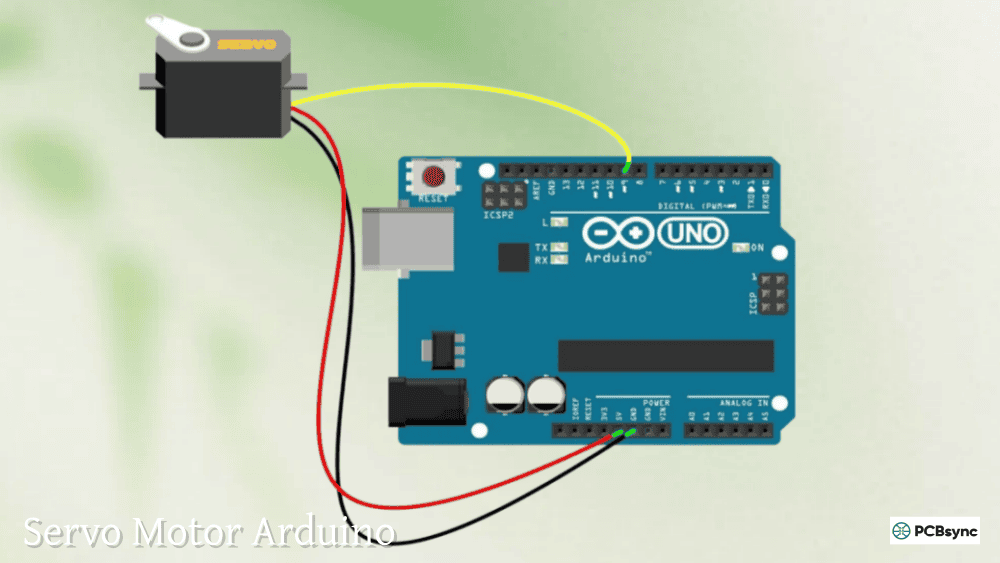
Servo motor: 100-500mA under load
HC-SR04 ultrasonic sensor: 15mA active
ESP8266 WiFi module: 70-170mA transmitting
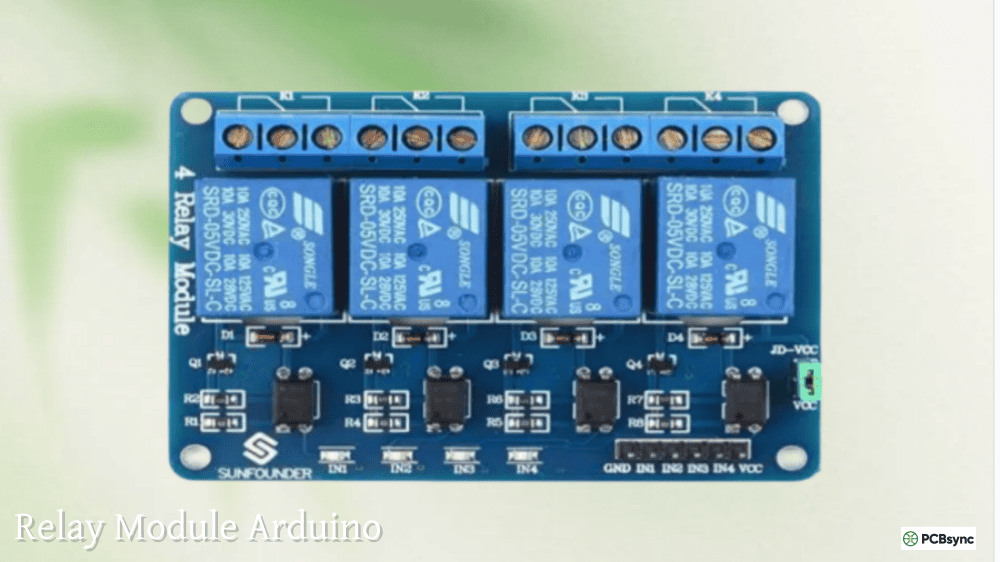
Relay module: 60-100mA coil activation
Total current requirements equal the Arduino base plus all peripheral current consumption. This calculation determines which power supply method suits your project.
The Onboard Voltage Regulator
Understanding Arduino’s voltage regulator explains many power-related behaviors and limitations. Most Arduino boards use a linear voltage regulator—typically the NCP1117 or similar LDO (Low Dropout) regulator.
How Linear Regulators Work: Linear regulators maintain constant output voltage by dissipating excess input voltage as heat. The power dissipated equals:
Power (Watts) = (Vin – Vout) × Current
When you power an Arduino Uno drawing 100mA through a 12V adapter, the regulator dissipates:
(12V – 5V) × 0.1A = 0.7 Watts as heat
This heat generation explains why Arduino’s barrel jack recommendation stops at 12V. At higher voltages, excessive heat can damage the regulator or require additional cooling. It also reveals why battery power (operating closer to 5V) runs cooler and more efficiently than 12V adapters.
Voltage Regulator Limitations: The onboard regulator typically provides 800-1000mA maximum current. This limit becomes critical when powering motors, multiple servos, or power-hungry modules. Exceeding regulator capacity causes voltage sag, erratic behavior, or thermal shutdown. For high-current applications, power peripherals separately rather than drawing everything through Arduino’s regulator.
USB Power Supply for Arduino Development
USB power represents the most convenient option during development and testing phases. Understanding USB power capabilities and limitations prevents frustrating debugging sessions.
USB 2.0 and 3.0 Power Delivery
Modern computers provide USB ports conforming to different standards with varying power capabilities:
USB Standard
Voltage
Maximum Current
Total Power
Typical Use
USB 2.0
5V
500mA
2.5W
Most desktop/laptop ports
USB 3.0
5V
900mA
4.5W
Newer computers, blue ports
USB 3.1
5V
1.5A
7.5W
Latest motherboards
USB-C PD
5V
3A+
15W+
Modern laptops, dedicated chargers
Practical USB Limitations: While specifications define maximum current, actual delivery depends on:
Port Type: Front panel USB ports often share power between multiple ports, reducing per-port availability. Rear motherboard ports typically provide full rated current.
USB Hub Usage: Unpowered USB hubs split available current between all connected devices. A 4-port hub on a 500mA USB 2.0 port theoretically provides 125mA per device.
Computer Load: Laptop USB ports may reduce power delivery when running on battery to conserve energy.
Cable Quality: Poor USB cables with thin power conductors create voltage drop under load, reducing available voltage at Arduino.
When USB Power Works Well:
Basic Arduino sketches with LEDs and simple sensors
Development and programming phases
Projects drawing under 400mA total current
Educational demonstrations using classroom computers
Debugging and troubleshooting existing projects
When USB Power Fails:
Projects with motors or multiple servos
High-brightness LED arrays or strips
Power-hungry wireless modules (ESP32, LoRa)
Multiple sensors and displays simultaneously
Remote deployments without computer access
USB Power Banks for Portable Applications
Modern USB power banks designed for charging phones work excellently for powering Arduino projects. These rechargeable lithium-ion battery packs provide stable 5V output through USB ports.
Selecting Appropriate Power Banks:
Capacity: Measured in milliamp-hours (mAh). A 10,000mAh power bank theoretically provides 100mA for 100 hours, or 500mA for 20 hours. Account for conversion losses (typically 20-30%) and your Arduino’s actual current draw.
Output Current: Check specifications—most power banks provide 1-2.4A per port, sufficient for Arduino projects. Avoid ultra-cheap options advertising unrealistic specifications.
Always-On Feature: Some power banks automatically shut off when current draw drops below 50-100mA, interpreting low consumption as “nothing connected.” Look for power banks with low-current modes or disable auto-shutoff features for Arduino use.
Multiple Outputs: Power banks with 2+ USB ports enable powering Arduino plus accessories (like a Raspberry Pi) from one battery pack.
Power Bank Advantages:
Rechargeable reduces ongoing costs versus disposable batteries
Standard USB charging means universal compatibility
Battery Power Options for Portable Arduino Projects
Battery power enables truly portable Arduino applications—from wearable electronics to remote environmental sensors. Selecting appropriate battery chemistry and configuration determines runtime, reliability, and maintenance requirements.
9V Alkaline Batteries
The classic 9V rectangular battery represents the simplest battery power option, particularly popular in educational settings.
Connection Method: 9V batteries use snap connectors. Purchase a “9V battery snap to 2.1mm barrel jack adapter” enabling direct connection to Arduino’s DC barrel jack. Alternatively, connect red wire to Vin and black wire to GND on Arduino’s power pins.
Advantages:
Widely available at any store
Simple connection with snap connectors
No special charging equipment needed
Safe chemistry with no fire risk
Disadvantages:
Limited capacity (~500-600mAh)
Poor performance under higher current loads
Voltage drops significantly as battery depletes
Expensive per watt-hour of energy
Not environmentally friendly (disposable)
Realistic Runtime: A 9V battery powering an Arduino Uno (50mA base + 20mA for simple sensor) provides approximately 7-8 hours runtime before voltage drops too low for stable operation. Adding motors or wireless modules dramatically reduces this runtime.
Best Applications: Quick prototypes, classroom demonstrations, temporary projects where convenience outweighs efficiency concerns.
AA Battery Packs
AA batteries in multi-cell holders provide superior capacity and flexibility compared to single 9V batteries.
Configuration Options:
Battery Count
Nominal Voltage
Voltage Range
Suitable For Arduino?
4x AA
6V
6.0V (fresh) to 4.0V (depleted)
Yes, barely adequate
6x AA
9V
9.0V to 6.0V
Yes, ideal range
8x AA
12V
12.0V to 8.0V
Yes, but generates more heat
Battery Chemistry Comparison:
Alkaline AA: Cheap, widely available, 2500-3000mAh capacity. Voltage starts at 1.5V but drops steadily during discharge. Non-rechargeable.
NiMH Rechargeable AA: Lower voltage (1.2V nominal) but stable throughout discharge. Capacity 2000-2500mAh. Rechargeable hundreds of times. Best environmental choice for frequent use.
Lithium AA: Premium option with 3000mAh capacity, excellent cold-weather performance, and very flat discharge curve. Expensive but longest-lasting disposable option.
Recommended Configuration: 6x AA batteries (either alkaline or NiMH) provide optimal voltage for Arduino’s regulator while delivering 2000-3000mAh capacity. This configuration powers an Arduino Uno with moderate peripherals (sensors, LCD display) for 24-48 hours continuous operation.
Lithium-Ion and LiPo Batteries
Lithium-based rechargeable batteries offer the highest energy density and performance, making them ideal for serious portable projects despite requiring more sophisticated charging infrastructure.
Single Cell LiPo (3.7V Nominal):
Lithium Polymer batteries commonly used in drones and RC vehicles typically output 3.7V nominal (4.2V fully charged, 3.0V depleted). This voltage sits below Arduino Uno’s recommended 7V minimum for the barrel jack.
Connection Options:
Direct to 5V Pin: NOT RECOMMENDED. While 3.7V may power the Arduino, it bypasses voltage regulation and protection circuitry. Voltage varies with charge state, potentially causing unstable operation.
Through Boost Converter: Use a DC-DC boost converter (like the Pololu U3V12F5) to step 3.7V up to stable 5V. This provides clean, regulated power suitable for Arduino’s 5V pin.
Suitable Boards: Arduino MKR series and some Pro Mini variants accept 3.7V LiPo directly through dedicated battery connectors with integrated charging circuits.
Two-Cell LiPo (7.4V Nominal):
Two lithium cells in series provide 7.4V nominal (8.4V charged, 6.0V depleted), fitting perfectly within Arduino Uno’s recommended input range. Connect to barrel jack or Vin pin normally.
LiPo Advantages:
Highest energy density (capacity per weight/volume)
Flat discharge curve maintains consistent voltage
Rechargeable thousands of times
Various capacities and form factors available
Excellent high-current delivery for motors
LiPo Safety Requirements:
Never overdischarge: Discharging below 3.0V per cell permanently damages batteries
Never overcharge: Charging above 4.2V per cell risks fire
Use protection circuits: LiPo charging modules with overcharge/discharge protection
Monitor temperature: Discontinue use if battery becomes hot
Proper storage: Store at 3.7-3.8V per cell for longevity
AC Adapter Power for Permanent Installations
When projects operate in fixed locations with AC power access, wall adapters provide reliable, maintenance-free power indefinitely.
Selecting Correct AC-DC Adapters
Not all wall adapters suit Arduino. Following these specifications ensures compatibility and reliability:
Critical Specifications:
Output Voltage: 7-12V DC for Arduino Uno. 9V represents the sweet spot—high enough for stable regulation, low enough to minimize heat generation.
Output Current: Minimum 1A (1000mA) recommended. Calculate total project current (Arduino + all peripherals) and select an adapter rated at least 50% higher. For a project drawing 500mA, use a 750mA or 1A adapter.
Polarity: Center-positive is essential. The center pin must be positive (+), and the outer barrel negative (-). Most Arduino adapters are center-positive, but always verify the polarity symbol on the adapter label.
Connector Size: Arduino uses 2.1mm center-positive barrel connectors. The outer diameter is 5.5mm, inner pin diameter 2.1mm. This standard size fits most Arduino-compatible adapters.
Regulation: “Regulated” adapters maintain stable output voltage under varying loads. Avoid “unregulated” or “no-load” rated adapters showing voltage significantly higher than rated when not connected to Arduino.
Adapter Type Comparison:
Adapter Type
Efficiency
Size
Cost
Heat
Noise
Best For
Linear
40-60%
Large/Heavy
Low
High
Silent
Low-current, legacy projects
Switching
80-90%
Compact
Moderate
Low
Minimal
Modern projects, efficiency matters
Modern switching power supplies provide superior efficiency in compact packages. The slight electromagnetic noise they generate rarely affects Arduino projects but might interfere with sensitive analog measurements.
Common AC Adapter Problems
Voltage Too High: Using 15V or 18V laptop chargers with Arduino generates excessive heat in the voltage regulator. While within the absolute maximum rating (20V), sustained operation above 12V reduces component lifespan and may trigger thermal protection.
Insufficient Current Rating: Adapters rated below project requirements cause voltage sag under load. Symptoms include Arduino resets when motors activate, LCD display flickering, or erratic sensor readings. Always oversize adapter current ratings.
Polarity Reversal: Connecting center-negative adapters to Arduino (designed for center-positive) risks immediate damage. Arduino Uno includes a polarity protection diode preventing catastrophic failure, but operating with reversed polarity doesn’t work and may damage protection circuits.
Ground Loop Issues: When Arduino connects to computers via USB while powered by AC adapter, ground potential differences between computer and adapter can cause issues. Arduino’s intelligent power switching selects the higher voltage source, typically the AC adapter, disconnecting USB power. However, ground loops occasionally cause noise in analog readings or serial communication glitches.
Alternative and Specialized Power Solutions
Beyond the standard USB, battery, and AC adapter options, specialized applications benefit from alternative power approaches.
Solar Power for Remote Installations
Solar panels combined with battery storage enable indefinite operation in remote locations without grid access.
System Components:
Solar Panel: Size depends on daily energy consumption and available sunlight. Calculate watt-hours needed: (Arduino current in amps) × (hours per day) × (operating voltage). Account for 3-4x panel oversizing for cloudy days and seasonal variations.
Charge Controller: Regulates solar panel output to safely charge batteries without overcharging. MPPT (Maximum Power Point Tracking) controllers provide best efficiency but cost more. PWM controllers work adequately for small systems.
Battery Bank: Lead-acid or lithium batteries store energy for nighttime and cloudy day operation. Capacity should provide 3-5 days autonomy (days of operation without sun).
Voltage Regulation: Step panel/battery voltage to Arduino’s requirements using DC-DC converters.
Example System: Arduino weather station operating continuously at 100mA average draws 0.1A × 24 hours = 2.4Ah daily. With 12V battery system, that’s 28.8Wh per day. A 10W solar panel in moderate sunlight locations (4-5 peak sun hours) generates 40-50Wh daily, providing adequate energy with margin for losses and weather variability.
Supercapacitors for Backup Power
Supercapacitors provide short-term backup power during brief AC outages or battery swaps without project interruption.
Typical Configuration: Connect supercapacitor bank (5.5V, 1-10F) to Arduino’s 5V rail through diode for isolation. During normal operation, capacitor charges from main power supply. When power fails, capacitor maintains voltage temporarily.
Runtime Calculation: A 10F supercapacitor charged to 5V storing energy:
Energy = 0.5 × C × V² = 0.5 × 10F × 5V² = 125 Joules
Powering an Arduino drawing 100mA (0.5W) provides:
Runtime = 125J / 0.5W = 250 seconds = ~4 minutes
This brief backup allows finishing data logging cycles, saving state to EEPROM, or orderly shutdown without data corruption.
Power Over Ethernet (PoE) Solutions
PoE delivers both data and power through standard Ethernet cables, ideal for networked Arduino installations.
PoE Standards: IEEE 802.3af provides up to 15.4W over Ethernet cables. PoE splitters separate power from data, providing 5V or 12V output suitable for powering Arduino.
Benefits: Single cable installation simplifies wiring for networked projects. Central power management enables remote power cycling for troubleshooting.
Voltage Regulator Considerations and Power Optimization
Understanding power efficiency and consumption patterns extends battery life and reduces heat generation.
Improving Power Efficiency
Clock Speed Reduction: Arduino Uno runs at 16MHz by default. Reducing clock speed to 8MHz cuts power consumption roughly in half. This requires burning a new bootloader but dramatically extends battery life for non-time-critical applications.
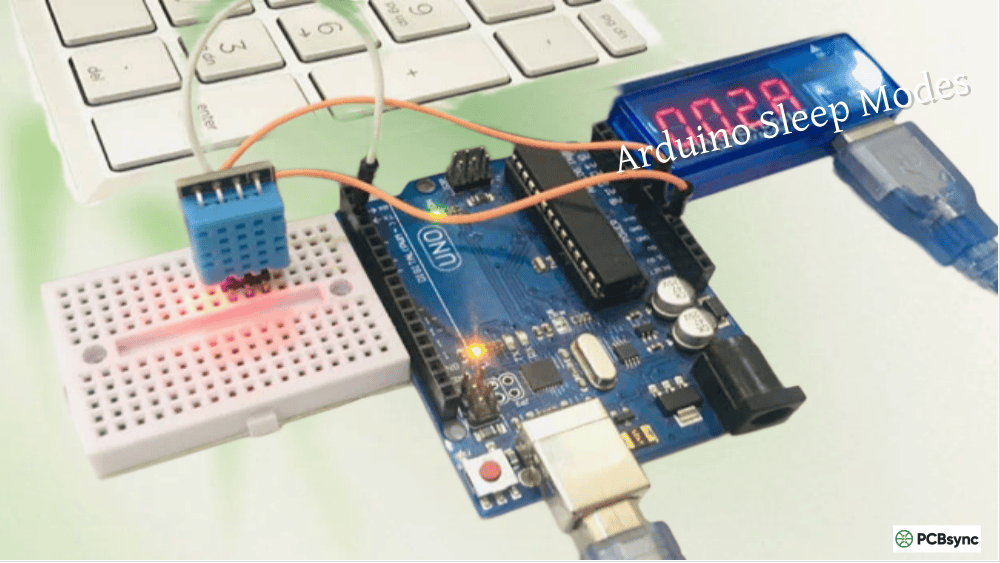
Using sleep modes, well-optimized Arduino projects achieve months of operation from single battery pack by sleeping between sensor readings.
Component Selection: Choose low-power sensors and modules. Many “Arduino-compatible” modules include inefficient voltage regulators and LEDs consuming unnecessary power. Remove power indicator LEDs to save 10-20mA.
Bypassing the Voltage Regulator
For battery-powered projects where efficiency matters critically, bypass Arduino’s onboard regulator by providing pre-regulated voltage directly.
Method: Use external switching buck/boost converter providing exactly 5V. Connect converter output to Arduino’s 5V pin (NOT Vin) and common ground. This bypasses the inefficient linear regulator.
Advantages: Switching regulators achieve 85-95% efficiency versus linear regulators’ 40-60%. Battery life nearly doubles with identical usage patterns.
Caution: Providing unregulated voltage or voltage exceeding 5.5V to the 5V pin damages Arduino permanently. Only use this method with confirmed regulated 5V sources and proper testing.
Useful Resources for Arduino Power Projects
Official Documentation
Arduino Official Power Supply Guide: https://support.arduino.cc/hc/en-us/articles/360018922259 Comprehensive official reference covering all Arduino board power specifications and recommendations.
Arduino Hardware Documentation: https://docs.arduino.cc/hardware Detailed specifications for each Arduino board including voltage tolerances and current consumption.
Component Suppliers
Pololu DC-DC Converters: https://www.pololu.com/category/131/voltage-regulators High-quality step-up and step-down voltage regulators for battery-powered projects.
Adafruit Power Management: https://www.adafruit.com/category/44 LiPo chargers, battery protection circuits, and power supplies specifically tested with Arduino.
SparkFun Power Supplies: https://www.sparkfun.com/categories/54 AC adapters, battery holders, and power accessories with Arduino compatibility documentation.
Calculation Tools
Battery Life Calculator: https://www.digikey.com/en/resources/conversion-calculators/conversion-calculator-battery-life Estimates runtime based on battery capacity and project current consumption.
Power Dissipation Calculator: Online tools for calculating voltage regulator heat generation and determining if heatsinks are required.
Frequently Asked Questions
Q: Can I power Arduino through USB and barrel jack simultaneously?
A: Yes, this is completely safe. Arduino includes intelligent power selection circuitry that automatically chooses the higher voltage source. When both USB (5V) and barrel jack (typically 9-12V) are connected, Arduino selects barrel jack power and ignores USB power. The USB connection still functions for serial communication and programming. This design enables programming your Arduino while powered by external power supply without any conflicts or damage risk.
Q: Why does my Arduino reset when I activate a motor or relay?
A: This indicates insufficient power supply current or voltage drop. Motors and relays draw surge current when activating, creating voltage sag if power supply can’t deliver adequate current. Solutions include: (1) Use separate power supplies for Arduino and motors, connecting only grounds together, (2) Add large capacitors (1000μF or greater) across Arduino’s power pins to buffer current spikes, (3) Upgrade to higher-current power supply exceeding total project requirements by 50%, or (4) Use relay/motor driver modules with their own power inputs rather than powering through Arduino.
Q: What’s the minimum voltage Arduino can operate on?
A: Arduino Uno requires approximately 6.5-7V minimum on Vin/barrel jack input for the voltage regulator to function properly. Below this, the regulator cannot maintain stable 5V output. If providing pre-regulated 5V directly to the 5V pin (bypassing regulator), Arduino operates down to approximately 4.5V before the ATmega328P microcontroller becomes unstable. For critical applications, maintain at least 4.7V to ensure reliable operation. Modern Arduino MKR boards designed for battery operation handle lower voltages (3.3V systems) more gracefully than older 5V boards.
Q: Can I use a phone charger to power Arduino?
A: Modern USB phone chargers (5V output) work excellently for powering Arduino through its USB port. Ensure the charger provides at least 500mA, though most phone chargers supply 1-2.4A, plenty for Arduino projects. However, wall adapters with barrel plugs designed for phones typically output 5V, which is too low for Arduino’s DC barrel jack (which expects 7-12V). Only use phone chargers through Arduino’s USB port, not the barrel jack, unless you verify the voltage specification matches Arduino’s requirements.
Q: How do I calculate battery life for my Arduino project?
A: First, measure actual current consumption using a multimeter in series with power supply. Run your code through typical operating cycles including all peripherals. Note peak and average current. Battery life equals: (Battery capacity in mAh) ÷ (Average current in mA) × (Efficiency factor). Use 0.8 efficiency factor accounting for voltage conversion losses and battery characteristics. Example: 2000mAh AA pack powering Arduino drawing average 100mA provides approximately (2000 ÷ 100) × 0.8 = 16 hours runtime. For projects with sleep modes, calculate separate active/sleep current consumption weighted by time spent in each mode.
Conclusion: Matching Power Supply to Project Requirements
Selecting appropriate Arduino power supply options depends entirely on your project’s deployment environment, current requirements, and operational constraints. USB power excels during development for its convenience and ubiquitous availability but limits portability and current delivery. Battery power enables mobile applications with runtime determined by capacity versus consumption tradeoffs. AC adapters provide maintenance-free operation for permanent installations where grid access exists.
The key to successful Arduino power design lies in accurate current consumption measurement, appropriate voltage selection within recommended ranges, and matching power source capabilities to actual requirements with adequate safety margins. Undersized power supplies cause mysterious resets and erratic behavior that waste hours debugging. Oversized supplies work perfectly but may add unnecessary cost and bulk.
Remember that Arduino’s onboard voltage regulator, while convenient, wastes energy as heat—critical consideration for battery-powered applications where efficiency directly impacts runtime. Advanced projects benefit from external switching regulators, sleep modes, and component selection prioritizing low-power operation.
Whether prototyping on your bench or deploying sensors across remote installations, understanding these Arduino power supply options transforms power from an afterthought into a deliberately engineered aspect of reliable system design.
Inquire: Call 0086-755-23203480, or reach out via the form below/your sales contact to discuss our design, manufacturing, and assembly capabilities.
Quote: Email your PCB files to Sales@pcbsync.com (Preferred for large files) or submit online. We will contact you promptly. Please ensure your email is correct.
Notes: For PCB fabrication, we require PCB design file in Gerber RS-274X format (most preferred), *.PCB/DDB (Protel, inform your program version) format or *.BRD (Eagle) format. For PCB assembly, we require PCB design file in above mentioned format, drilling file and BOM. Click to download BOM template To avoid file missing, please include all files into one folder and compress it into .zip or .rar format.