Inquire: Call 0086-755-23203480, or reach out via the form below/your sales contact to discuss our design, manufacturing, and assembly capabilities.
Quote: Email your PCB files to Sales@pcbsync.com (Preferred for large files) or submit online. We will contact you promptly. Please ensure your email is correct.
Notes: For PCB fabrication, we require PCB design file in Gerber RS-274X format (most preferred), *.PCB/DDB (Protel, inform your program version) format or *.BRD (Eagle) format. For PCB assembly, we require PCB design file in above mentioned format, drilling file and BOM. Click to download BOM template To avoid file missing, please include all files into one folder and compress it into .zip or .rar format.
USBtinyISP: Burn Bootloader & Program AVR Microcontrollers
As a PCB engineer who’s programmed countless AVR microcontrollers in production environments, the USBtinyISP programmer has become my go-to tool for burning bootloaders and programming bare Arduino chips. Whether you’re building custom PCBs with ATmega328P chips or recovering bricked Arduino boards, understanding how to properly use a USBtinyISP saves both time and money compared to constantly buying pre-programmed microcontrollers.
The USBtinyISP is an open-source USB AVR programmer originally designed by Dick Streefland and later improved by Adafruit. It implements the In-System Programming (ISP) protocol that allows direct communication with AVR microcontrollers through their SPI interface. Unlike USB-to-serial programmers that require a bootloader already present on the chip, the USBtinyISP can program completely blank microcontrollers fresh from the distributor.
From a hardware design perspective, the USBtinyISP solves the classic “chicken and egg” problem: you need a programmer to program chips, but how do you program the programmer? By purchasing or building a pre-programmed USBtinyISP, you gain the ability to program unlimited AVR chips without dependency on serial bootloaders.
Key advantages for PCB engineers:
Direct flash programming: Write firmware directly to blank microcontrollers without bootloaders Bootloader burning: Restore Arduino bootloaders on boards that lost them Fuse bit configuration: Set critical chip configuration that bootloaders cannot modify Cost savings: Program bulk ATmega328P chips yourself instead of buying Arduino-compatible boards Recovery tool: Rescue “bricked” microcontrollers that won’t respond to serial programming
USBtinyISP Hardware Specifications
Understanding the USBtinyISP hardware capabilities ensures you specify the right tool for your projects.
Specification
Value
Engineering Notes
Communication Protocol
USB-based SPI
Native USB, not USB-to-serial
Max Programming Clock
400 kHz
Sufficient for most AVRs
Write Speed
~1 KB/s
ATmega328P takes ~30 seconds
Read/Verify Speed
~2 KB/s
Twice as fast as writing
Target Flash Limit
64 KB
Does NOT work with ATmega1280/2560
Power Output
5V @ 100mA max
Can power target during programming
Operating Systems
Windows, macOS, Linux
Universal compatibility
Driver Type
libusb-win32
No serial/COM port created
Cable Types
6-pin and 10-pin ISP
Standard AVR ISP connectors
Critical limitation: The USBtinyISP cannot program AVR chips with more than 64KB flash memory. For ATmega1280, ATmega2560, or ATmega2561, you’ll need alternative programmers like AVRISP mkII or USBasp with firmware modifications.
Understanding ISP Pinout and Connections
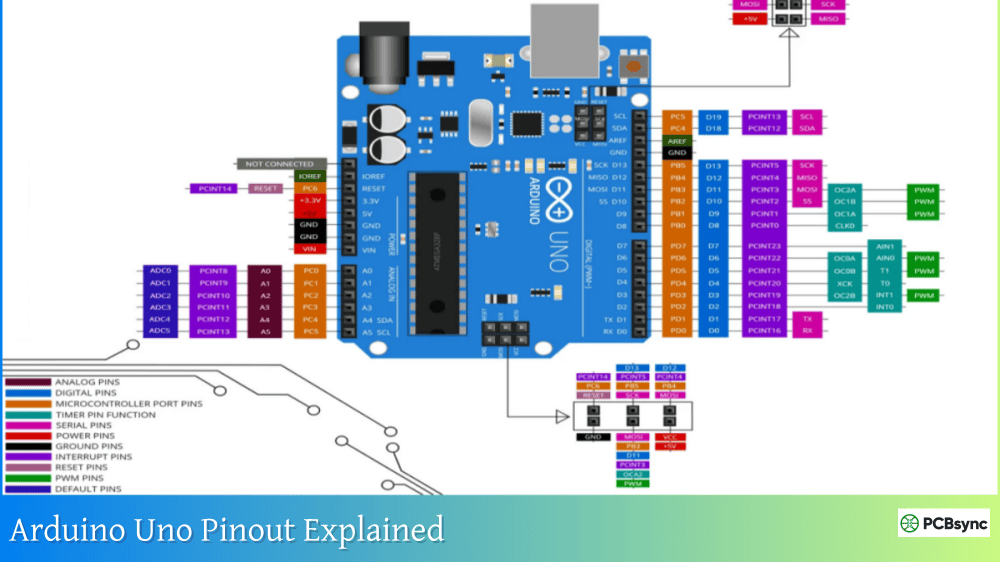
Proper wiring between the USBtinyISP and target AVR prevents programming failures and potential hardware damage. The standard 6-pin ISP connector uses this pinout:
Pin Number
Signal Name
Function
Arduino Pin (ATmega328P)
1
MISO
Master In Slave Out
D12 (PB4)
2
VCC
Target Power (5V)
VCC
3
SCK
Serial Clock
D13 (PB5)
4
MOSI
Master Out Slave In
D11 (PB3)
5
RESET
Reset/Programming Enable
RESET
6
GND
Ground
GND
PCB design tip: When designing custom boards, always include a 6-pin ISP header using the standard 2×3 0.1″ pitch connector. Place it near the microcontroller with short, direct traces to minimize signal integrity issues. Orient pin 1 (MISO) toward a corner or mark clearly with silkscreen.
Power Jumper Configuration
Most USBtinyISP programmers include a power jumper labeled “PWR” or “5V”. This jumper controls whether the programmer supplies 5V to the target board:
Jumper INSTALLED: Programmer powers the target (convenient for bare chips or breadboard circuits) Jumper REMOVED: Target must have external power supply (use for complete Arduino boards)
Engineering consideration: When programming production PCBs that have their own power regulation, ALWAYS remove the power jumper. Applying 5V from the programmer while your board’s regulator also supplies power can create ground loops or damage components.
Driver Installation for Windows Systems
Installing USBtinyISP drivers on Windows requires specific steps due to driver signature requirements. Modern Windows versions (8, 10, 11) enforce strict driver signing, making installation challenging without the right tools.
Method 1: Zadig Driver Installation (Recommended)
This method works on all Windows versions without disabling driver signature enforcement:
Download Zadig from https://zadig.akeo.ie/
Plug in your USBtinyISP programmer
Run Zadig (no installation needed)
Select “USBtinyISP” from the device dropdown
Ensure driver type shows “libusb-win32 (v1.2.6.0)”
Click “Install Driver” and wait for completion
Verify installation in Device Manager under “libusb-win32 devices”
Troubleshooting: If the device shows as “Unknown Device #1” instead of USBtinyISP, select it anyway. Zadig identifies devices by hardware ID, not friendly names.
Method 2: Adafruit Driver Package
Adafruit provides a complete driver installer that includes USBtinyISP support:
Download Adafruit driver package from https://learn.adafruit.com/usbtinyisp/drivers
Extract and run the installer executable
Follow installation wizard prompts
Restart computer if prompted
Plug in USBtinyISP to verify driver installation
macOS and Linux Driver Support
Good news: USBtinyISP works immediately on macOS and Linux without additional drivers. The libusb library is natively supported by these operating systems. Simply plug in the programmer and proceed to burning bootloaders or programming chips.
Burning Arduino Bootloaders with USBtinyISP
Burning bootloaders is the most common use case for the USBtinyISP. This process writes the small program that enables Arduino boards to accept sketches uploaded via USB-to-serial.
Step-by-Step Bootloader Burning Procedure
Hardware Setup:
Connect USBtinyISP 6-pin cable to Arduino’s ICSP header
Ensure pin 1 (red wire) aligns with MISO marking
If programming a bare ATmega328P chip, install power jumper on programmer
For complete Arduino boards, remove power jumper and power board normally
Connect programmer to computer via USB cable
Arduino IDE Configuration:
Open Arduino IDE (version 1.6.8 or later recommended)
Select Tools → Board and choose your target Arduino board (Uno, Nano, etc.)
Select Tools → Programmer → USBtinyISP
Click Tools → Burn Bootloader
Expected behavior: The red LED on the USBtinyISP illuminates. The “busy” LED (if present) flashes during programming. The entire process takes 30-60 seconds for ATmega328P chips.
Verification: After successful bootloader burning, the Arduino will blink its onboard LED (pin 13) briefly on power-up—the bootloader’s “ready” indication.
Common Bootloader Burning Errors
Error Message
Probable Cause
Solution
“Initialization failed, rc=-1”
Bad USB connection
Try different USB port, use hub with power supply
“Target doesn’t answer”
Wrong ICSP connection
Verify pin 1 orientation, check cable continuity
“rc=-4” or timeout
SPI communication failure
Add 10kΩ resistor between RESET and VCC on target
“Device signature = 0x000000”
No power to target
Check power jumper, verify target VCC voltage
“Cannot set sck period”
Clock speed too high
Add “-B 10” to command line (slows SCK)
PCB engineer tip: When designing boards for production programming, add a 10kΩ pull-up resistor on the RESET line. This prevents floating RESET conditions that cause intermittent programming failures.
Programming AVR Without Bootloader Using USBtinyISP
The USBtinyISP can program AVR chips directly, bypassing the bootloader entirely. This technique reclaims the ~2KB flash memory normally occupied by the bootloader—useful for space-constrained applications.
Direct Programming Configuration
Open your Arduino sketch
Select Tools → Board (your target board type)
Select Tools → Programmer → USBtinyISP
Click Sketch → Upload Using Programmer (or hold Shift and click Upload)
Important: After programming without a bootloader, the Arduino can no longer be programmed via USB-to-serial. You must continue using the USBtinyISP for all future uploads, or burn the bootloader again to restore serial programming capability.
Command-Line Programming with AVRDUDE
For production environments, command-line programming with AVRDUDE provides scripting capabilities:
Fuse bits control critical AVR configuration that cannot be changed through normal programming. The USBtinyISP can read and write these settings.
Important AVR Fuse Bits
Fuse Bit
Function
Default (Arduino)
Notes
CKSEL
Clock Source
External Crystal
Selects internal RC or external crystal
CKDIV8
Divide Clock by 8
Disabled
Reduces clock speed if enabled
BOOTRST
Boot Reset Vector
Bootloader
Points RESET vector to bootloader
SPIEN
SPI Enable
Enabled
NEVER disable! Prevents ISP programming
RSTDISBL
Reset Disable
Disabled
Converts RESET pin to GPIO (dangerous)
CRITICAL WARNING: Incorrect fuse bit settings can permanently brick your AVR chip. The SPIEN and RSTDISBL fuses are particularly dangerous. Always verify fuse calculations using online calculators like http://www.engbedded.com/fusecalc/ before writing.
This command displays current fuse settings in hexadecimal format. Document original fuse values before making changes to ensure you can restore them if needed.
After programming hundreds of AVR chips in production, these are the issues I encounter most frequently with USBtinyISP programmers.
USB 3.0 Compatibility Problems
Symptom: Programmer works on USB 2.0 ports but fails on USB 3.0 (blue) ports with “initialization failed” errors.
Solution: Use USB 2.0 ports exclusively. Some USBtinyISP clones have timing issues with USB 3.0 controllers. Alternatively, use a powered USB 2.0 hub between the computer and programmer.
Target Chip Not Detected
Diagnostic steps:
Verify 5V present on target chip VCC pin with multimeter
Check continuity of all six ISP cable wires
Confirm RESET pin reaches 0V during programming attempt
Try different USB cable (some cables have poor data lines)
Long Cable Runs Cause Failures
SPI communication is susceptible to noise on long cables. When programming a board mounted inside an enclosure or at a distance:
Keep ISP cable length under 6 inches when possible
Use twisted pair or shielded cable for runs over 12 inches
Add 100pF capacitors between MISO/MOSI/SCK lines and ground at target end
Reduce SCK frequency with -B parameter in AVRDUDE
Essential Resources for USBtinyISP Users
Official Documentation and Downloads
Resource
Description
URL
Adafruit USBtinyISP Guide
Complete assembly and usage tutorial
https://learn.adafruit.com/usbtinyisp
AVRDUDE Documentation
Command-line programmer manual
https://www.nongnu.org/avrdude/
USBtiny Firmware GitHub
Original source code and schematics
https://github.com/adafruit/USBtinyISP
Arduino Bootloader HEX Files
Pre-compiled bootloaders
Included in Arduino IDE installation
Zadig Driver Installer
Universal USB driver tool
https://zadig.akeo.ie/
Hardware Suppliers
Official Adafruit USBtinyISP Kit: Available at https://www.adafruit.com (includes both 6-pin and 10-pin cables)
Compatible Clone Programmers: Widely available on Amazon, eBay, and AliExpress ($5-$15 typical cost)
Recommendation: For professional work, purchase the Adafruit original. For hobby projects, clones work adequately but may have inconsistent component quality.
Programming Reference
ATmega328P Datasheet: Essential for understanding fuse bits and memory maps – https://ww1.microchip.com/downloads/en/DeviceDoc/Atmel-7810-Automotive-Microcontrollers-ATmega328P_Datasheet.pdf
Fuse Calculator: Online tool for safe fuse bit configuration – http://www.engbedded.com/fusecalc/
Frequently Asked Questions (FAQs)
1. Can I use USBtinyISP to program ATmega2560 chips in Arduino Mega boards?
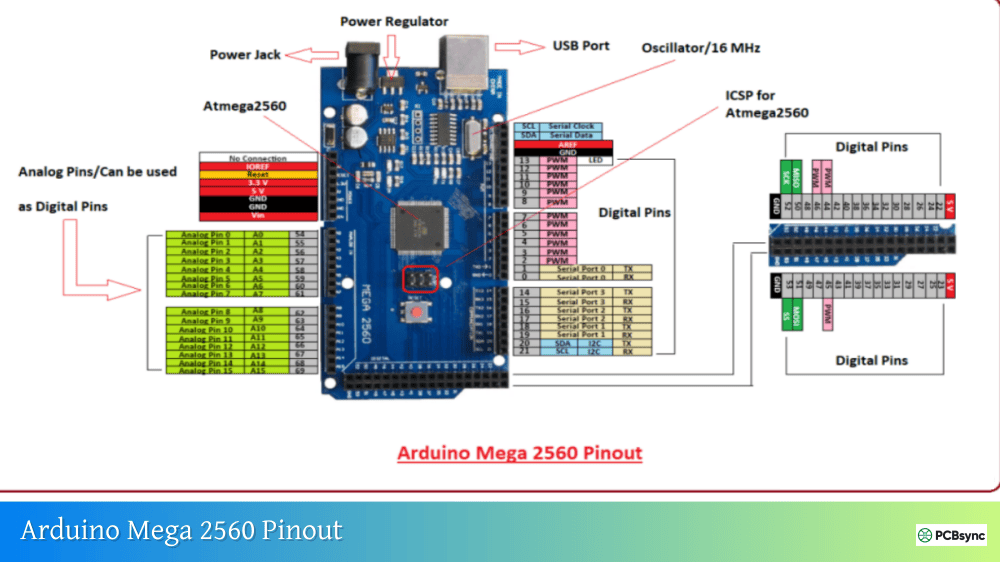
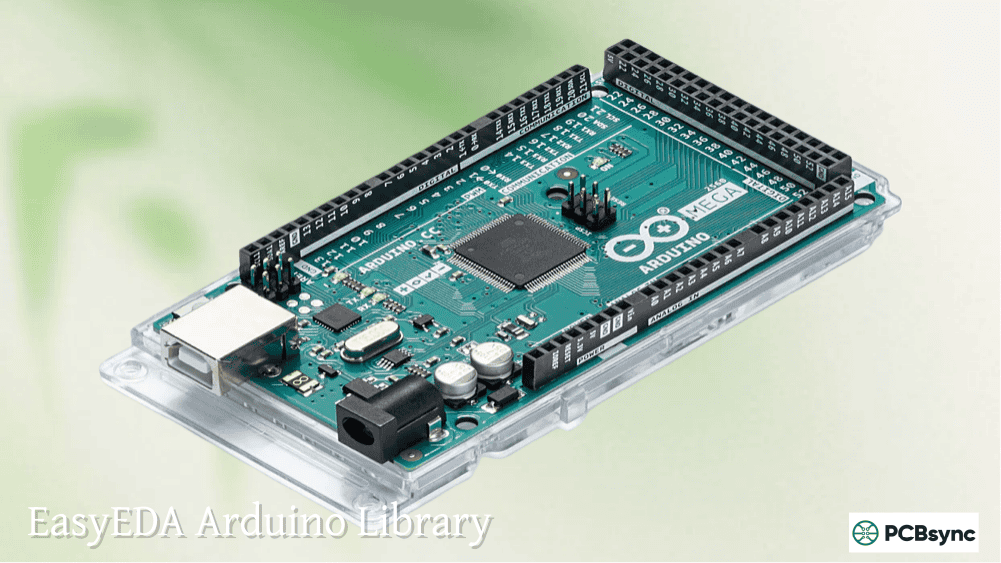
No, the USBtinyISP has a hard-coded 64KB flash memory limit. The ATmega2560 has 256KB flash, exceeding this limitation. For programming Mega boards, use an AVRISP mkII, USBasp (with firmware supporting large chips), or another Arduino configured as ArduinoISP. This limitation stems from the USBtiny firmware’s memory addressing design and cannot be overcome without complete firmware rewrite.
2. Why does my Arduino sketch work via serial upload but fail when programmed with USBtinyISP?
When programming directly via USBtinyISP (without bootloader), the code starts executing immediately at address 0x0000. Arduino sketches compiled for bootloader environments expect certain memory initialization that the bootloader provides. To fix this, select “Arduino as ISP” instead of “USBtinyISP” as programmer in Arduino IDE, or ensure your Board selection matches exactly. The Board setting determines compiler flags like boot section addresses.
3. How do I recover an AVR with the RSTDISBL fuse accidentally set?
Setting the RSTDISBL fuse converts the RESET pin to a GPIO pin, preventing ISP programming entirely. Recovery requires High Voltage Serial Programming (HVSP) or High Voltage Parallel Programming (HVPP), which applies 12V to specific pins to force the chip into programming mode. The USBtinyISP cannot perform HVSP/HVPP. You need specialized tools like AVR Dragon, STK500, or DIY HVSP programmers. Prevention: Never set RSTDISBL unless you have HVSP recovery tools available.
4. Can USBtinyISP program non-Arduino AVR chips like ATtiny85 or custom PCBs?
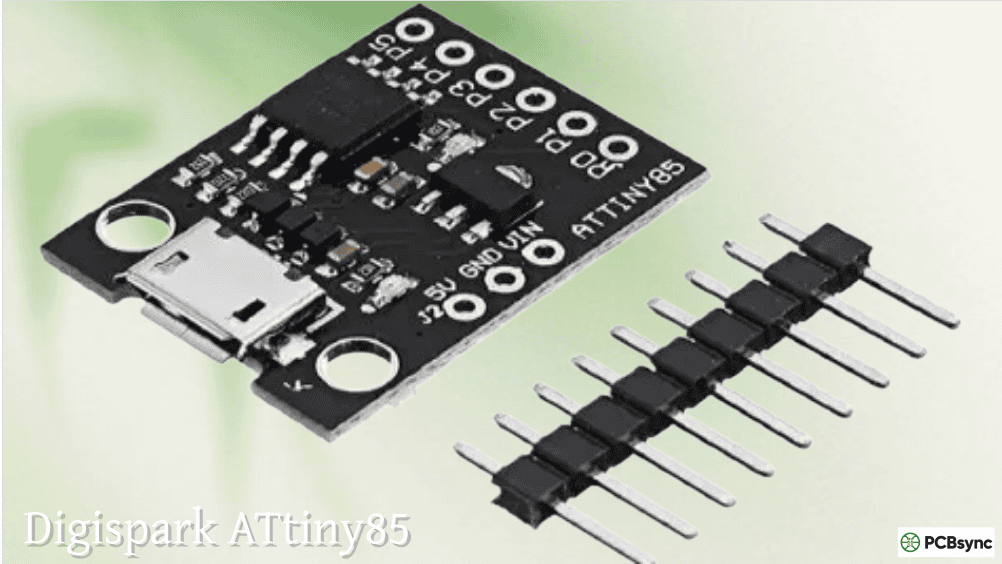
Absolutely! The USBtinyISP programs any AVR microcontroller with 64KB or less flash memory, not just Arduino-branded boards. Common applications include ATtiny85, ATtiny84, ATtiny2313, ATmega8, ATmega168, and custom PCB designs using these chips. Use AVRDUDE command line with appropriate -p parameter for your specific chip model. For ATtiny programming in Arduino IDE, install the ATTinyCore board definitions from https://github.com/SpenceKonde/ATTinyCore.
5. Why does Device Manager show my USBtinyISP but programming still fails?
Proper driver installation requires specific libusb-win32 drivers, not Windows generic USB drivers. In Device Manager, the USBtinyISP should appear under “libusb-win32 devices,” NOT under “Universal Serial Bus devices” or “Other devices.” If listed incorrectly, uninstall the device, run Zadig, and reinstall proper drivers. Additionally, verify Arduino IDE recognizes the programmer by checking Tools → Programmer menu for “USBtinyISP” option. Some IDE versions require restart after driver installation.
Conclusion: Mastering AVR Programming with USBtinyISP
The USBtinyISP programmer represents an essential tool for anyone serious about AVR microcontroller development. Whether you’re a PCB engineer programming production runs of custom boards, a maker recovering bricked Arduinos, or a hobbyist building projects with bare ATmega chips, understanding how to properly use this programmer saves time and expands your capabilities.
From burning bootloaders to configuring fuse bits, direct flash programming to production workflows, the USBtinyISP handles these tasks reliably despite its simple design and low cost. The open-source nature ensures long-term availability and community support, while compatibility with industry-standard tools like AVRDUDE provides professional-grade functionality.
Remember to always verify connections before programming, document fuse bit changes, and keep backup hex files of working firmware. With proper technique and understanding of the ISP protocol, the USBtinyISP becomes an invaluable addition to your electronics workbench.
Inquire: Call 0086-755-23203480, or reach out via the form below/your sales contact to discuss our design, manufacturing, and assembly capabilities.
Quote: Email your PCB files to Sales@pcbsync.com (Preferred for large files) or submit online. We will contact you promptly. Please ensure your email is correct.
Notes: For PCB fabrication, we require PCB design file in Gerber RS-274X format (most preferred), *.PCB/DDB (Protel, inform your program version) format or *.BRD (Eagle) format. For PCB assembly, we require PCB design file in above mentioned format, drilling file and BOM. Click to download BOM template To avoid file missing, please include all files into one folder and compress it into .zip or .rar format.