Inquire: Call 0086-755-23203480, or reach out via the form below/your sales contact to discuss our design, manufacturing, and assembly capabilities.
Quote: Email your PCB files to Sales@pcbsync.com (Preferred for large files) or submit online. We will contact you promptly. Please ensure your email is correct.
Notes: For PCB fabrication, we require PCB design file in Gerber RS-274X format (most preferred), *.PCB/DDB (Protel, inform your program version) format or *.BRD (Eagle) format. For PCB assembly, we require PCB design file in above mentioned format, drilling file and BOM. Click to download BOM template To avoid file missing, please include all files into one folder and compress it into .zip or .rar format.
SIM900 Arduino: Complete GPRS Internet Connection Guide for IoT Projects
If you’ve ever worked on a remote monitoring project where WiFi coverage was non-existent, you know the frustration. I spent three weeks debugging a sensor network at a farm location before realizing that cellular connectivity was the only viable option. That’s when I discovered the SIM900 Arduino combination, and it completely changed my approach to IoT projects in areas without reliable WiFi infrastructure.
This guide walks through everything you need to establish a solid GPRS internet connection using the SIM900 GSM/GPRS module with Arduino. Whether you’re building environmental monitors, asset trackers, or remote data logging systems, mastering the SIM900 Arduino interface opens up connectivity options that WiFi simply cannot match.
What is the SIM900 Module and Why Use It With Arduino?
The SIM900 is a quad-band GSM/GPRS module manufactured by SIMCOM that operates on 850/900/1800/1900 MHz frequencies. This coverage means it works in virtually any country with 2G cellular networks. At just 24mm x 24mm x 3mm, the module packs serious capability into a small footprint.
From a hardware design perspective, the SIM900 Arduino pairing makes sense for several reasons. The module handles all the cellular protocol complexity internally, exposing a simple UART interface that Arduino can easily manage through AT commands. You don’t need deep RF engineering knowledge to get cellular connectivity working.
SIM900 Module Technical Specifications
Parameter
Specification
Frequency Bands
Quad-band: 850/900/1800/1900 MHz
GPRS Class
Multi-slot Class 10
Data Rate
Upload: 85.6 kbps, Download: 42.8 kbps
Operating Voltage
3.2V to 4.8V (typical 4.0V)
Peak Current
2A during transmission
Sleep Mode Current
1.5mA
Operating Temperature
-40°C to +85°C
Dimensions
24mm x 24mm x 3mm
Interface
UART, GPIO, ADC, PWM
The integrated TCP/IP stack is particularly valuable. Rather than implementing network protocols in your Arduino code, you issue simple AT commands and the SIM900 handles packet assembly, transmission, and acknowledgment internally.
SIM900 Arduino Hardware Setup and Wiring Configuration
Getting the physical connections right is critical before touching any code. I’ve seen countless forum posts where engineers struggled with communication issues that turned out to be basic wiring problems or power supply deficiencies.
Essential Hardware Components
Before starting your SIM900 Arduino project, gather these components:
Component
Purpose
Notes
Arduino UNO/Mega
Main controller
Mega recommended for complex projects
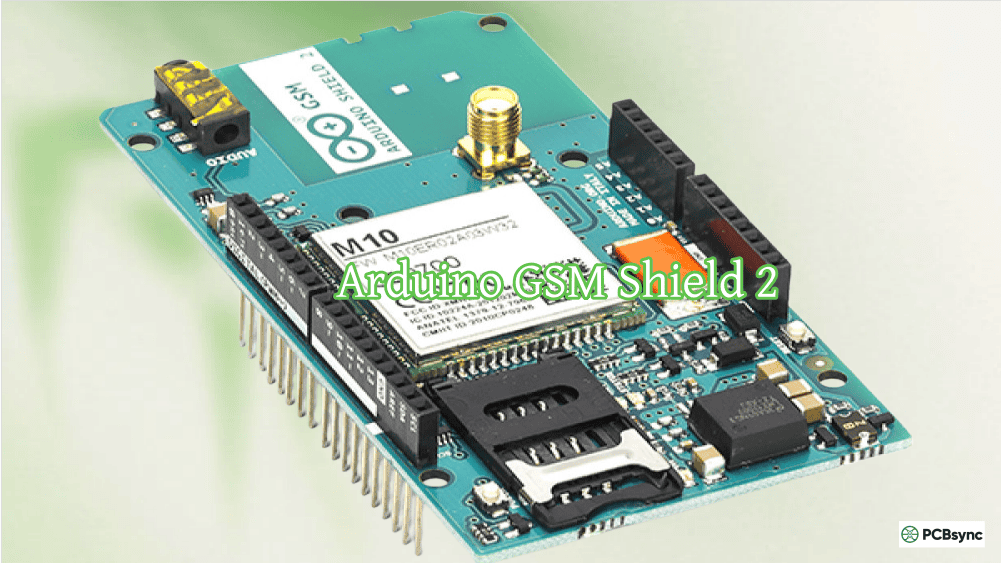
SIM900 GSM/GPRS Shield
Cellular connectivity
Ensure antenna connector matches your antenna
External Power Supply
Module power
5V 2A minimum, 9V-12V 2A recommended
GSM Antenna
RF transmission
SMA or U.FL connector based on shield version
Activated 2G SIM Card
Network access
Use data-enabled prepaid plan for testing
Jumper Wires
Connections
For serial port configuration
SIM900 Arduino Wiring Diagram
The SIM900 shield typically mounts directly on Arduino UNO, but serial port configuration requires attention. Most shields offer jumper selection between hardware serial (D0, D1) and software serial (D7, D8).
Connection Table for Software Serial Configuration:
SIM900 Shield Pin
Arduino Pin
Function
TX
D7
Data from SIM900 to Arduino
RX
D8
Data from Arduino to SIM900
VCC
External 5V 2A
Module power input
GND
GND
Common ground (critical)
PWRKEY
D9 (optional)
Software power control
Important: Software serial is the preferred approach because it leaves hardware serial available for debugging through the Serial Monitor. Configure the jumper caps on your shield to select software serial pins before uploading code.
Power Supply Requirements for SIM900 Arduino Projects
This section deserves emphasis because inadequate power supply causes more SIM900 Arduino failures than any other issue. The SIM900 draws up to 2A peak current during RF transmission bursts. USB power from your computer cannot supply this current reliably.
When the module attempts to register on a network or transmit data without sufficient power, it resets repeatedly. You’ll see the status LED blinking rapidly or the module failing to respond to AT commands.
Power Supply Recommendations:
Configuration
Voltage
Current Capacity
Suitability
USB Only
5V
500mA max
Not recommended
Arduino VIN
7-12V
Depends on adapter
Marginal
External 5V Supply
5V
2A+
Recommended
External 9-12V Supply
9-12V
2A+
Best option
Always use the shield’s dedicated power input with an external supply capable of 2A or more. Connect grounds between the power supply, shield, and Arduino to establish a common reference.
Understanding AT Commands for SIM900 GPRS Configuration
AT commands control every aspect of the SIM900’s operation. These text-based instructions originated with Hayes modem standards and have been extended for cellular applications. The SIM900 responds to commands with either “OK” for success or “ERROR” for failures.
Essential AT Commands for SIM900 Arduino GPRS Connection
Learning these commands is fundamental to working with the SIM900 Arduino combination. Here’s a practical reference organized by function:
Basic Module Control Commands:
Command
Description
Expected Response
AT
Check communication
OK
AT+CPIN?
Check SIM status
+CPIN: READY
AT+CREG?
Network registration
+CREG: 0,1 (registered)
AT+CSQ
Signal strength
+CSQ: 15,0 (0-31 scale)
ATE0
Disable command echo
OK
ATE1
Enable command echo
OK
AT+CGATT?
GPRS attachment status
+CGATT: 1 (attached)
GPRS Connection Setup Commands:
Command
Description
Example
AT+CIPSHUT
Close any existing connection
SHUT OK
AT+CIPMUX=0
Single connection mode
OK
AT+CIPMODE=0
Non-transparent mode
OK
AT+CSTT=”APN”,”user”,”pass”
Set APN credentials
OK
AT+CIICR
Activate GPRS context
OK
AT+CIFSR
Get assigned IP address
Returns IP
AT+CIPSTART=”TCP”,”server”,”port”
Open TCP connection
CONNECT OK
AT+CIPSEND
Initiate data send
Returns > prompt
AT+CIPCLOSE
Close connection
CLOSE OK
Configuring APN Settings for Different Carriers
The Access Point Name (APN) configuration varies by cellular carrier and region. This setting tells the SIM900 how to connect to your carrier’s GPRS gateway. Using incorrect APN settings is a common source of connection failures.
Common APN Settings by Region:
Carrier
Region
APN
Username
Password
AT&T
USA
“broadband”
“”
“”
T-Mobile
USA
“epc.tmobile.com”
“”
“”
Vodafone
UK
“internet”
“web”
“web”
Airtel
India
“airtelgprs.com”
“”
“”
Telstra
Australia
“telstra.internet”
“”
“”
Rogers
Canada
“internet.com”
“”
“”
Check your carrier’s documentation or contact support if the standard APN doesn’t work. Some carriers require additional authentication credentials while others accept empty username and password fields.
Complete Arduino Code for SIM900 GPRS Internet Connection
Now let’s examine working code that establishes a GPRS connection. This example demonstrates the command sequence needed to connect your SIM900 Arduino setup to the internet and communicate with a remote server.
Beyond simple HTTP requests, the SIM900 Arduino combination supports full TCP/IP communication for bidirectional data exchange. This capability enables real-time monitoring applications where the server needs to push commands back to your device.
Establishing TCP Client Connection
The TCP client approach works well when your Arduino needs to initiate connections to known servers. The command sequence follows a predictable pattern: configure GPRS context, open connection, send data, receive response, close connection.
Modern IoT platforms often expect JSON-formatted data via HTTP POST. The SIM900 supports this through its HTTP application toolkit, which simplifies bearer configuration and content handling:
After debugging dozens of SIM900 Arduino projects, I’ve compiled the most common issues and their solutions. Systematic troubleshooting saves considerable time compared to random experimentation.
Common Problems and Solutions
Problem
Symptoms
Likely Cause
Solution
No AT Response
Module silent, no “OK”
Power/wiring issue
Check power supply (2A minimum), verify TX/RX connections
“NO CARRIER” suggests network disconnection or server unavailable
“+PDP: DEACT” means GPRS context deactivated unexpectedly
Useful Resources and Downloads for SIM900 Arduino Development
Having proper documentation accelerates development significantly. Here are essential resources for SIM900 Arduino projects:
Official Documentation
Resource
Description
Link
SIM900 Hardware Design Guide
Pin descriptions, electrical specs
simcom.ee/documents/SIM900
SIM900 AT Command Manual
Complete AT command reference
SIMCOM official documentation
Arduino SoftwareSerial Library
Serial communication reference
Arduino.cc reference
Recommended Arduino Libraries
Library
Purpose
Installation
SoftwareSerial
Additional serial ports
Built into Arduino IDE
GPRS_Shield_Arduino
Simplified SIM900 functions
GitHub: Seeed-Studio
TinyGSM
Multi-module GSM support
Arduino Library Manager
IoT Platforms Compatible with SIM900 Arduino
Platform
Protocol
Use Case
ThingSpeak
HTTP GET/POST
Data visualization, MATLAB analysis
Blynk
HTTP API
Mobile app control
MQTT Brokers
TCP (via MQTT library)
Real-time bidirectional communication
Custom Servers
TCP/HTTP
Full control over backend
Frequently Asked Questions About SIM900 Arduino GPRS
Can I power the SIM900 shield directly from Arduino’s 5V pin?
Technically possible, but not recommended for reliable operation. The Arduino’s onboard regulator cannot supply the 2A peak current the SIM900 demands during transmission. You’ll experience random resets and failed connections. Always use an external power supply rated for at least 2A current capacity.
Why does my SIM900 Arduino setup fail to register on the network?
Network registration failures typically stem from three causes: inadequate power supply preventing proper RF transmission, poor antenna connection reducing signal reception, or SIM card issues such as PIN lock enabled or incompatible network technology (the SIM900 only supports 2G GSM networks). Start by verifying power supply current capacity, then check antenna attachment, and finally confirm your SIM works in a basic phone on the same network.
What’s the difference between TCP and HTTP modes in SIM900?
TCP mode provides raw socket communication where you handle all protocol formatting yourself. HTTP mode uses the SIM900’s built-in HTTP stack to manage headers, content-type, and connection handling automatically. Use TCP for custom protocols or when you need precise control. Use HTTP for standard web API communication where the module handles protocol overhead.
How do I reduce power consumption in battery-powered SIM900 Arduino projects?
Implement sleep modes between transmissions. The SIM900 supports slow clock mode (1.5mA) where it maintains network registration while minimizing power draw. Send AT+CSCLK=1 to enable sleep mode, then toggle DTR pin to wake the module when needed. Combine this with Arduino sleep modes for significant power savings in remote deployments.
Can I use the SIM900 for real-time data streaming applications?
The SIM900 supports GPRS data rates up to 85.6 kbps upload and 42.8 kbps download. While adequate for sensor data and periodic updates, these rates limit real-time streaming applications. For video or high-frequency data streaming, consider newer modules like SIM7000 (LTE CAT-M1) or SIM7600 (4G LTE) that offer substantially higher throughput. The SIM900 remains excellent for low-bandwidth IoT applications where reliability matters more than speed.
Conclusion
The SIM900 Arduino combination provides a robust foundation for cellular IoT projects. While the 2G technology is aging, it remains viable in many regions and offers proven reliability that newer technologies are still matching. The straightforward AT command interface and integrated TCP/IP stack make implementation accessible even without deep telecommunications expertise.
Success with SIM900 projects comes down to three fundamentals: adequate power supply, correct APN configuration, and systematic debugging when issues arise. Master these basics, and you’ll have reliable cellular connectivity for remote monitoring, asset tracking, environmental sensing, and countless other applications where WiFi coverage falls short.
For projects requiring higher data rates or 4G connectivity, consider the SIM7000 or SIM7600 series as direct upgrade paths. The AT command structure remains similar, making code migration relatively straightforward when project requirements evolve beyond 2G capabilities.
Inquire: Call 0086-755-23203480, or reach out via the form below/your sales contact to discuss our design, manufacturing, and assembly capabilities.
Quote: Email your PCB files to Sales@pcbsync.com (Preferred for large files) or submit online. We will contact you promptly. Please ensure your email is correct.
Notes: For PCB fabrication, we require PCB design file in Gerber RS-274X format (most preferred), *.PCB/DDB (Protel, inform your program version) format or *.BRD (Eagle) format. For PCB assembly, we require PCB design file in above mentioned format, drilling file and BOM. Click to download BOM template To avoid file missing, please include all files into one folder and compress it into .zip or .rar format.