Inquire: Call 0086-755-23203480, or reach out via the form below/your sales contact to discuss our design, manufacturing, and assembly capabilities.
Quote: Email your PCB files to Sales@pcbsync.com (Preferred for large files) or submit online. We will contact you promptly. Please ensure your email is correct.
Notes: For PCB fabrication, we require PCB design file in Gerber RS-274X format (most preferred), *.PCB/DDB (Protel, inform your program version) format or *.BRD (Eagle) format. For PCB assembly, we require PCB design file in above mentioned format, drilling file and BOM. Click to download BOM template To avoid file missing, please include all files into one folder and compress it into .zip or .rar format.
RFID RC522 Arduino: Complete Access Control Tutorial
Radio Frequency Identification technology has evolved from exclusive commercial applications to accessible hobbyist projects, transforming how we approach security and authentication systems. The RFID RC522 Arduino combination represents one of the most cost-effective entry points into contactless identification technology, enabling makers and engineers to build everything from simple card readers to sophisticated multi-user access control systems. For under $5, you gain access to the same fundamental technology powering building security, inventory management, and payment systems worldwide.
As someone who has designed RFID systems from prototype breadboard circuits through production PCB implementations, I’ve learned that successful RFID RC522 Arduino integration requires understanding both the underlying 13.56MHz RF communication principles and practical considerations like antenna coupling, power supply stability, and read range optimization. This comprehensive tutorial examines the Arduino RFID RC522 module from hardware fundamentals through complete access control projects, covering topics that typical quick-start guides skip but that prove essential for reliable real-world deployments.
The RC522 module, based on NXP’s MFRC522 integrated circuit, provides a complete 13.56MHz RFID reader/writer solution in a compact, inexpensive package. Unlike simple RFID readers that only detect presence, the RC522 can read unique identifiers, authenticate using cryptographic algorithms, and write data to tag memory – capabilities that enable sophisticated access control implementations.
Technical Specifications and Capabilities
Specification
Value
Notes
Operating Frequency
13.56 MHz
ISM band (license-free)
Supported Tags
ISO/IEC 14443 A, MIFARE, NTAG
Industry-standard protocol
Communication Interface
SPI, I2C, UART
SPI offers best performance
Supply Voltage
2.5V – 3.3V
Module VCC pin
Logic Pin Voltage
5V tolerant (disputed)
See voltage considerations below
Read Range
5-7 cm (typical)
Depends on tag type and antenna
Data Rate
Up to 10 Mbps (SPI)
Actual throughput lower
Power Consumption
13-26mA (active)
<80µA (power-down mode)
Module Dimensions
40mm × 60mm
Standard size
What’s Included in RC522 Kit
Most RC522 RFID modules ship as complete kits containing:
RC522 Reader Module: Main RFID reader with integrated PCB antennaMIFARE 1K Card: Credit-card sized RFID tag with 1KB memory MIFARE Key Fob: Keychain-sized tag, same 1KB memory
Both included tags use MIFARE Classic 1K technology, providing 1024 bytes of user-programmable memory organized into 16 sectors. Each sector contains 4 blocks of 16 bytes, with the last block of each sector reserved for access keys and permissions.
How RFID RC522 Communication Works
The RC522 generates a 13.56MHz electromagnetic field through its antenna. When a passive RFID tag enters this field, it harvests energy from the radio waves to power its internal circuit. The tag then modulates the field by changing its electrical load, creating data transmission back to the reader through a technique called backscatter modulation.
Communication Sequence:
RC522 continuously emits 13.56MHz carrier wave
Tag enters field and powers up from harvested energy
Reader sends command (REQA – Request Type A)
Tag responds with ATQA (Answer to Request Type A)
Reader initiates anti-collision sequence for UID
Tag transmits its unique identifier
Reader selects specific tag (if multiple present)
Authentication and data transfer occur
This process happens in milliseconds, appearing instantaneous from the user perspective.
Hardware Setup: RFID RC522 Arduino Connection
Pin Configuration and SPI Interface
The RC522 communicates with Arduino primarily through SPI (Serial Peripheral Interface), offering the fastest data transfer of the three supported protocols. Understanding proper pin connections prevents the most common beginner mistakes.
RC522 to Arduino Uno/Nano Connection:
RC522 Pin
Arduino Uno Pin
Arduino Mega Pin
Function
VCC
3.3V
3.3V
Power supply (DO NOT use 5V)
RST
9 (configurable)
9 (configurable)
Reset control
GND
GND
GND
Ground
IRQ
Not connected
Not connected
Interrupt (optional)
MISO
12
50
SPI Master In Slave Out
MOSI
11
51
SPI Master Out Slave In
SCK
13
52
SPI Clock
SDA/SS
10 (configurable)
53 (configurable)
SPI Slave Select
Critical Wiring Notes:
The MISO, MOSI, and SCK pins MUST connect to Arduino’s hardware SPI pins (not configurable). Only RST and SDA/SS pins can be assigned to different digital pins if needed.
ESP32 Connections:
RC522 Pin
ESP32 Pin
Function
VCC
3.3V
Power
RST
GPIO 17
Reset
GND
GND
Ground
MISO
GPIO 19
SPI MISO
MOSI
GPIO 23
SPI MOSI
SCK
GPIO 18
SPI Clock
SDA
GPIO 21
SPI SS
Power Supply Considerations and the 5V Controversy
The RC522 power requirements generate considerable confusion in the Arduino community. Here’s the definitive explanation based on MFRC522 datasheet specifications:
Supply Voltage (VCC): The MFRC522 chip operates at 2.5V to 3.3V maximum. Connecting 5V to VCC permanently damages the module. Always use Arduino’s 3.3V output.
Logic Pin Voltage (Disputed 5V Tolerance): Many tutorials claim the RC522’s logic pins (MISO, MOSI, SCK, RST, SDA) are “5V tolerant.” However, examination of the MFRC522 datasheet (NXP document number MFRC522.pdf) shows absolute maximum input voltage specification as VDD + 0.5V. With VDD = 3.3V, maximum safe input voltage is 3.8V, NOT 5V.
Practical Reality:
Many users successfully connect 5V Arduino logic pins directly to RC522 without immediate failure. The module may function for months or years before developing reliability issues. For hobby projects, this risk may be acceptable. For production designs or long-term reliability, use one of these solutions:
Solution 1 – Voltage Divider (Simple):
Arduino Pin –> 1kΩ Resistor –> RC522 Pin
|
2kΩ Resistor
|
GND
This creates a 2/3 voltage divider, reducing 5V to approximately 3.3V.
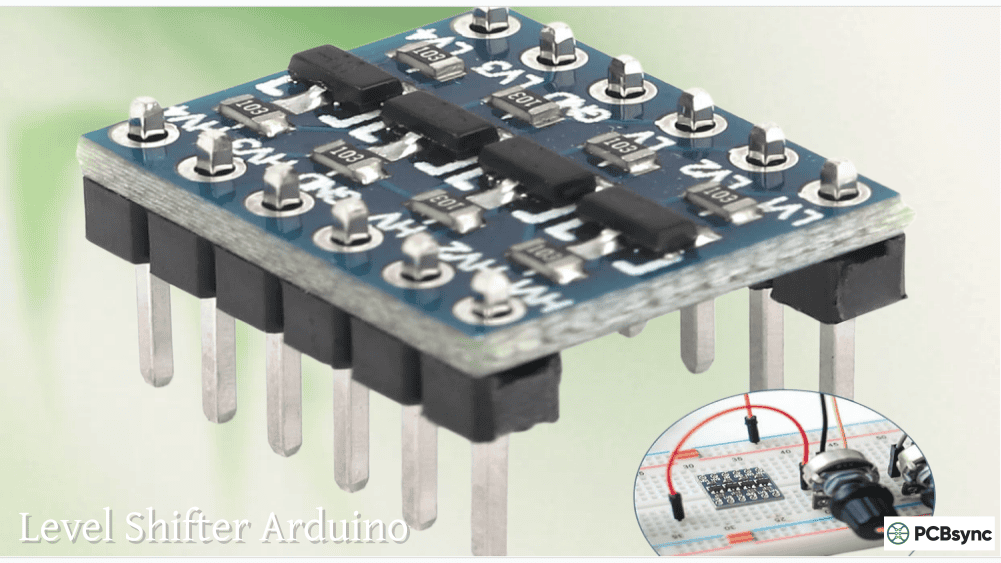
Solution 2 – Bidirectional Level Shifter (Recommended): Use a dedicated level shifter module (like BSS138-based shifters) for clean, reliable voltage translation.
Solution 3 – 3.3V Arduino (Ideal): Arduino Pro Mini 3.3V, Due, or Zero operate at native 3.3V logic, eliminating level shifting entirely.
Decoupling Capacitors and Power Stability
The RC522 draws current spikes when transmitting RF energy. Without adequate decoupling capacitance, these spikes cause voltage droops and reading failures.
Recommended Decoupling:
10µF electrolytic capacitor across VCC and GND (near module)
0.1µF ceramic capacitor directly at module VCC/GND pins
These capacitors smooth power delivery during transmission bursts, dramatically improving read reliability.
Arduino RFID Library Installation and Setup
Installing the MFRC522 Library
The MFRC522 library by GitHub user miguelbalboa provides comprehensive RFID functionality with examples covering basic reading through advanced cryptographic operations.
Navigate to Sketch → Include Library → Manage Libraries
Search for “MFRC522”
Install “MFRC522 by GithubCommunity”
Close Library Manager
Installation Method 2 – Manual ZIP Installation:
Download library from https://github.com/miguelbalboa/rfid
Sketch → Include Library → Add .ZIP Library
Select downloaded ZIP file
Library installs automatically
Verification:
After installation, verify by checking File → Examples → MFRC522. You should see multiple example sketches including DumpInfo, ReadUIDMultiReader, and others.
Reading RFID Tag UID – Basic Example
This fundamental example reads and displays tag Unique Identifiers (UIDs) via Serial Monitor:
#include <SPI.h>
#include <MFRC522.h>
#define RST_PIN 9
#define SS_PIN 10
MFRC522 mfrc522(SS_PIN, RST_PIN);
void setup() {
Serial.begin(9600);
while (!Serial); // Wait for serial port to connect
SPI.begin();
mfrc522.PCD_Init();
Serial.println(“Scan an RFID tag to read its UID…”);
for (int i = 0; i < sizeof(authorizedUIDs)/sizeof(authorizedUIDs[0]); i++) {
if (uid == authorizedUIDs[i]) {
return true;
}
}
return false;
}
void grantAccess() {
Serial.println(“Access GRANTED”);
lcd.clear();
lcd.setCursor(0, 0);
lcd.print(“Access Granted”);
lcd.setCursor(0, 1);
lcd.print(“Welcome!”);
// Unlock door (servo to 90 degrees)
doorLock.write(90);
delay(3000);
// Lock door
doorLock.write(0);
}
void denyAccess(String uid) {
Serial.println(“Access DENIED”);
Serial.print(“Unauthorized UID: “);
Serial.println(uid);
lcd.clear();
lcd.setCursor(0, 0);
lcd.print(“Access Denied”);
lcd.setCursor(0, 1);
lcd.print(“Invalid Card!”);
}
void resetDisplay() {
lcd.clear();
lcd.setCursor(0, 0);
lcd.print(“RFID Access Ctrl”);
lcd.setCursor(0, 1);
lcd.print(“Scan Your Card”);
}
Hardware for Advanced System:
Arduino Uno
RC522 RFID module
16×2 I2C LCD (address 0x27 typical)
SG90 or MG996R servo motor
External 5V power supply for servo (important!)
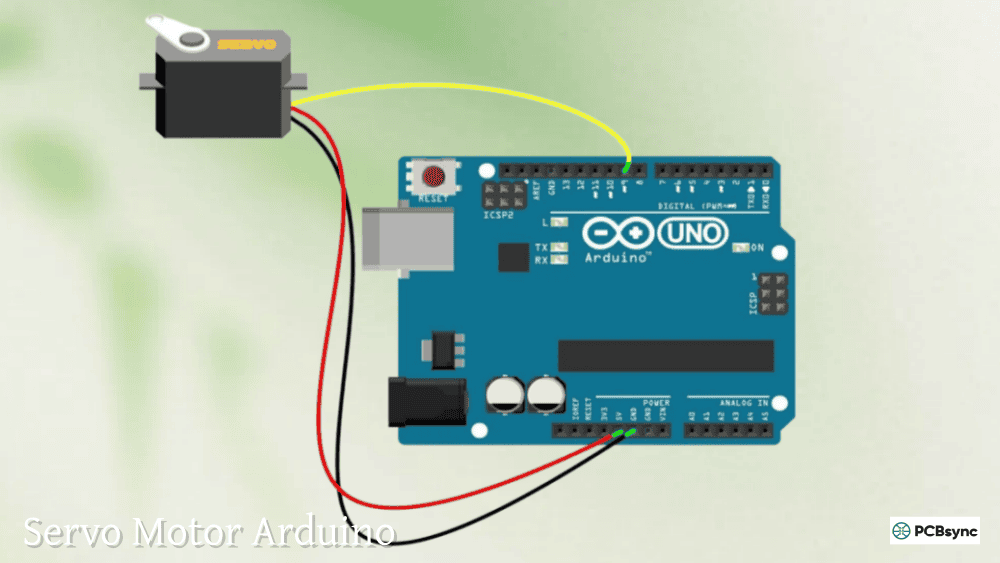
Important Servo Note: Do not power servos directly from Arduino 5V pin. Use external power supply and connect grounds together.
Writing Data to RFID Tags
Beyond simple UID reading, the RC522 can write custom data to MIFARE Classic tags, enabling applications like electronic wallets or configuration storage.
#include <SPI.h>
#include <MFRC522.h>
#define RST_PIN 9
#define SS_PIN 10
MFRC522 mfrc522(SS_PIN, RST_PIN);
MFRC522::MIFARE_Key key;
void setup() {
Serial.begin(9600);
SPI.begin();
mfrc522.PCD_Init();
// Prepare default key (FFFFFFFFFFFFh)
for (byte i = 0; i < 6; i++) {
key.keyByte[i] = 0xFF;
}
Serial.println(“Write data to RFID tag”);
Serial.println(“Scan a tag to write…”);
}
void loop() {
if (!mfrc522.PICC_IsNewCardPresent() || !mfrc522.PICC_ReadCardSerial()) {
return;
}
// Prepare data to write (16 bytes for one block)
byte dataBlock[] = {
‘A’, ‘r’, ‘d’, ‘u’, ‘i’, ‘n’, ‘o’, ‘ ‘,
‘R’, ‘F’, ‘I’, ‘D’, ‘ ‘, ‘0’, ‘1’, ‘\0’
};
// Write to block 4 (sector 1, block 0)
byte block = 4;
byte status;
// Authenticate using key A
status = mfrc522.PCD_Authenticate(MFRC522::PICC_CMD_MF_AUTH_KEY_A, block, &key, &(mfrc522.uid));
Block 0 contains manufacturer data (do NOT write to this block)
Blocks 4, 5, 6 (sector 1) are safe for user data
Every 4th block (3, 7, 11, etc.) contains sector trailer with keys
Writing to sector trailers requires advanced understanding
Troubleshooting Common RFID RC522 Issues
Problem: Module Not Detected or No Response
Symptoms: Sketch compiles and uploads but nothing happens when scanning cards
Diagnostic Steps:
Verify Wiring:
Confirm VCC connected to 3.3V (NOT 5V)
Check all SPI connections (MISO, MOSI, SCK must be on hardware SPI pins)
Verify RST and SS_PIN match code definitions
Ensure solid ground connection
Test with DumpInfo Example:
File → Examples → MFRC522 → DumpInfo
This comprehensive test sketch reports module status and firmware version.
Check Serial Monitor Baud Rate: Ensure Serial Monitor baud rate matches Serial.begin() value in code.
Problem: Inconsistent or Short Read Range
Symptoms: Module works but only at very close range (<1cm) or intermittently
Common Causes and Solutions:
Cause
Solution
Insufficient power supply
Add 10µF capacitor near module VCC/GND
Voltage drop on breadboard
Use short, heavy-gauge wires for VCC/GND
Interference from other devices
Separate from WiFi modules, motors
Poor antenna coupling
Ensure tag approaches antenna center
Weak RF output
Check module with known-good card
Problem: Cards Read But Wrong UID Displayed
Symptoms: Scanner detects cards but shows incorrect or garbled UIDs
Resolution Steps:
Verify byte order in UID display code
Check for proper HEX formatting (leading zeros for values <0x10)
Confirm tag type matches expected protocol (ISO 14443A)
Try different card to eliminate tag defects
Problem: Cannot Write to Tag
Symptoms: Read works perfectly but write operations fail with authentication errors
Common Issues:
Default Key Changed: Someone previously changed sector keys from default 0xFFFFFFFFFFFF Wrong Block Selected: Attempting to write to block 0 (manufacturer data) or sector trailer blocks Tag Write-Protected: Some tags can be permanently write-protected
Workaround: Use different blocks (4-6 generally safe) or obtain correct authentication keys.
1. Can I use multiple RC522 readers on one Arduino?
Yes, multiple RC522 modules can share the SPI bus (MISO, MOSI, SCK) but each requires a unique SS (Slave Select) pin. Connect each module’s SDA/SS pin to different Arduino digital pins and create separate MFRC522 objects. The shared SPI lines can cause issues with cheap modules that don’t properly tri-state MISO, so test thoroughly. For production applications with multiple readers, consider using an SPI multiplexer or separate Arduino boards.
2. What’s the maximum read range and how can I increase it?
Standard RC522 modules achieve 5-7cm read range with included card tags and key fobs. This is fundamentally limited by 13.56MHz physics and the passive tag power harvesting. To maximize range: ensure clean power supply with proper decoupling capacitors, use high-quality tags (cheap tags have poor antennas), position the tag parallel to the reader antenna for optimal coupling, and avoid metal objects near the antenna (which detune the resonant circuit). Active RFID systems or UHF RFID achieve longer ranges but cost significantly more.
3. Is the RC522 really 5V tolerant on the logic pins?
This remains a contentious topic. The MFRC522 datasheet specifies absolute maximum input voltage as VDD + 0.5V (3.8V if powered at 3.3V), suggesting 5V logic is out of specification. However, countless Arduino projects use direct 5V connections without immediate failure. The truth: 5V connections may work but reduce long-term reliability and potentially damage the module over time. For hobby projects accepting some risk, direct connection often works. For production or long-term reliability, use voltage dividers or level shifters.
4. Why does my access control sometimes grant access to unauthorized cards?
This usually stems from improper UID comparison in code. Common causes include: string comparison issues with leading/trailing spaces (use .trim() and ensure consistent formatting), case sensitivity problems (convert UIDs to uppercase before comparison), incomplete UID reading where only partial UID is compared, or timing issues where the previous card’s UID remains in memory. Debug by printing both the read UID and expected UID to Serial Monitor, examining them character-by-character for subtle differences.
5. Can I use RC522 for payment or high-security applications?
The RC522 supports MIFARE Classic tags which use the proprietary CRYPTO1 cipher – this encryption has known vulnerabilities allowing determined attackers to clone tags or decrypt data. For hobby projects and moderate-security access control (office doors, club membership), MIFARE Classic suffices. For payment systems or high-security applications, use MIFARE DESFire tags (supporting 3DES and AES encryption) or migrate to newer NTAG authentication schemes. Always implement additional security layers (server-side validation, transaction logging) beyond tag authentication alone.
Conclusion
The RFID RC522 Arduino combination provides an accessible, affordable entry point into contactless identification technology that proves capable of both simple experiments and production-ready access control systems. Understanding the underlying 13.56MHz RFID principles, proper SPI communication, and voltage level requirements transforms the RC522 from a temperamental module into a reliable security component. Success with RFID RC522 Arduino projects requires attention to power supply stability, correct wiring of SPI connections, and thoughtful implementation of UID comparison logic that avoids common string-handling pitfalls.
From basic card reading tutorials through advanced multi-user access control with LCD feedback and servo-actuated locks, the RC522 demonstrates remarkable versatility for a module costing less than a cup of coffee. The extensive MFRC522 library ecosystem, active community support, and abundance of example code ensure rapid development cycles even for complex applications. While security-critical deployments should carefully consider the cryptographic limitations of MIFARE Classic tags and implement appropriate mitigations, the RC522 module serves admirably for countless authentication applications.
Whether building office door access, attendance tracking systems, or electronic membership verification, mastering the RFID RC522 Arduino interface opens opportunities for practical embedded systems that bridge the physical and digital worlds through simple contactless interaction.
Inquire: Call 0086-755-23203480, or reach out via the form below/your sales contact to discuss our design, manufacturing, and assembly capabilities.
Quote: Email your PCB files to Sales@pcbsync.com (Preferred for large files) or submit online. We will contact you promptly. Please ensure your email is correct.
Notes: For PCB fabrication, we require PCB design file in Gerber RS-274X format (most preferred), *.PCB/DDB (Protel, inform your program version) format or *.BRD (Eagle) format. For PCB assembly, we require PCB design file in above mentioned format, drilling file and BOM. Click to download BOM template To avoid file missing, please include all files into one folder and compress it into .zip or .rar format.