Inquire: Call 0086-755-23203480, or reach out via the form below/your sales contact to discuss our design, manufacturing, and assembly capabilities.
Quote: Email your PCB files to Sales@pcbsync.com (Preferred for large files) or submit online. We will contact you promptly. Please ensure your email is correct.
Notes: For PCB fabrication, we require PCB design file in Gerber RS-274X format (most preferred), *.PCB/DDB (Protel, inform your program version) format or *.BRD (Eagle) format. For PCB assembly, we require PCB design file in above mentioned format, drilling file and BOM. Click to download BOM template To avoid file missing, please include all files into one folder and compress it into .zip or .rar format.
PubSubClient MQTT Arduino: IoT Messaging Tutorial for Embedded Systems
After designing dozens of IoT devices and PCB boards that communicate over networks, I’ve come to rely heavily on the PubSubClient MQTT Arduino library. Whether you’re building smart home sensors, industrial monitoring systems, or remote control devices, MQTT provides the lightweight, reliable messaging protocol that constrained microcontrollers desperately need. This tutorial covers everything you need to implement production-grade MQTT communication in your Arduino projects.
Understanding MQTT and Why It Matters for IoT Hardware
MQTT (Message Queuing Telemetry Transport) is a publish-subscribe messaging protocol designed specifically for resource-constrained devices and low-bandwidth networks. As a PCB engineer, I appreciate MQTT’s efficiency—it uses minimal packet overhead compared to HTTP, making it perfect for battery-powered devices where every byte transmitted consumes precious power.
The PubSubClient MQTT Arduino library brings this protocol to Arduino-compatible microcontrollers, enabling bidirectional communication between your embedded devices and cloud services, home automation platforms, or custom applications. Unlike REST APIs that require constant polling, MQTT establishes persistent connections where devices receive messages instantly when published.
Key advantages for embedded hardware designers:
Low bandwidth consumption: MQTT headers are just 2 bytes, compared to HTTP’s hundreds of bytes Persistent connections: Eliminates connection overhead from repeated requests Quality of Service levels: Guarantees message delivery when network conditions vary Bidirectional communication: Devices can both send data and receive commands Last Will and Testament: Automatically notifies when devices disconnect unexpectedly
PubSubClient Library Overview and Limitations
The PubSubClient MQTT Arduino library, developed by Nick O’Leary, has been the standard for Arduino MQTT implementations since 2009. Understanding its capabilities and constraints is critical for successful hardware deployment.
Feature
Specification
Impact on Design
Protocol Version
MQTT 3.1.1 (default)
Configurable to MQTT 3.1
Publish QoS
QoS 0 only
Fire-and-forget, no delivery guarantee
Subscribe QoS
QoS 0 or QoS 1
Can receive acknowledged messages
Keepalive Interval
15 seconds
Configurable via code or header
Memory Footprint
Minimal
Suitable for ATmega328
Platform Support
Universal
Works with any Client implementation
Engineering insight: The 256-byte buffer limitation often catches developers by surprise. When designing message formats, account for topic strings (which count toward this limit) plus your payload. For a topic like sensors/temperature/room1/current (32 bytes), you have only 224 bytes remaining for payload data.
Installing PubSubClient MQTT Arduino Library
Installation methods vary based on your development environment:
Arduino IDE Installation
Open Arduino IDE
Navigate to Sketch → Include Library → Manage Libraries
Search for “PubSubClient”
Install the library by Nick O’Leary
Verify installation by checking File → Examples → PubSubClient
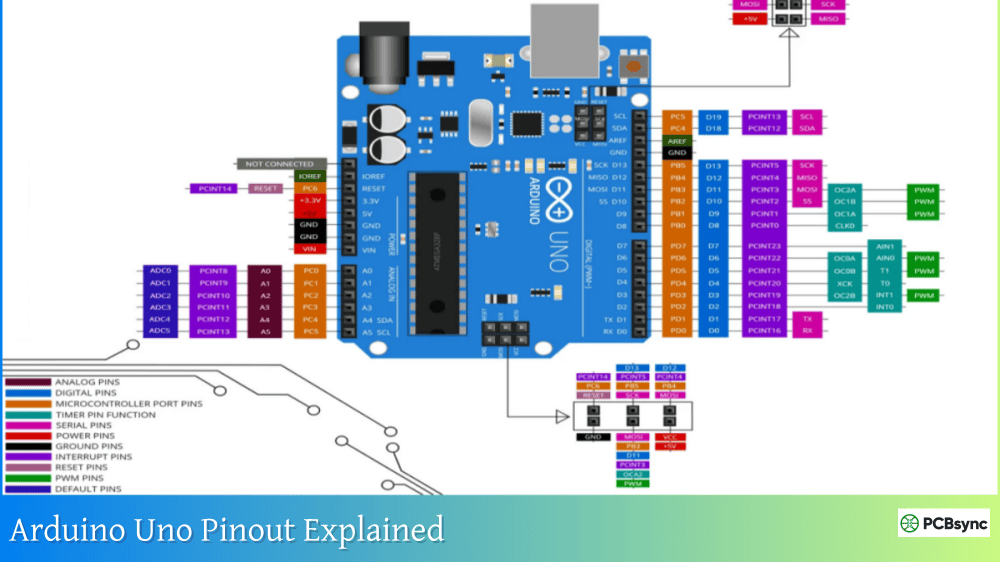
The PubSubClient MQTT Arduino library works with any Arduino board that provides a network Client implementation. Here’s how different hardware configurations map to this library:
Hardware Platform
Network Interface
Client Type
Notes
Arduino Uno + Ethernet Shield
Wired Ethernet
EthernetClient
Most stable, recommended for prototyping
ESP8266
WiFi
WiFiClient
Built-in WiFi, very popular
ESP32
WiFi + Bluetooth
WiFiClient
Dual-core, excellent performance
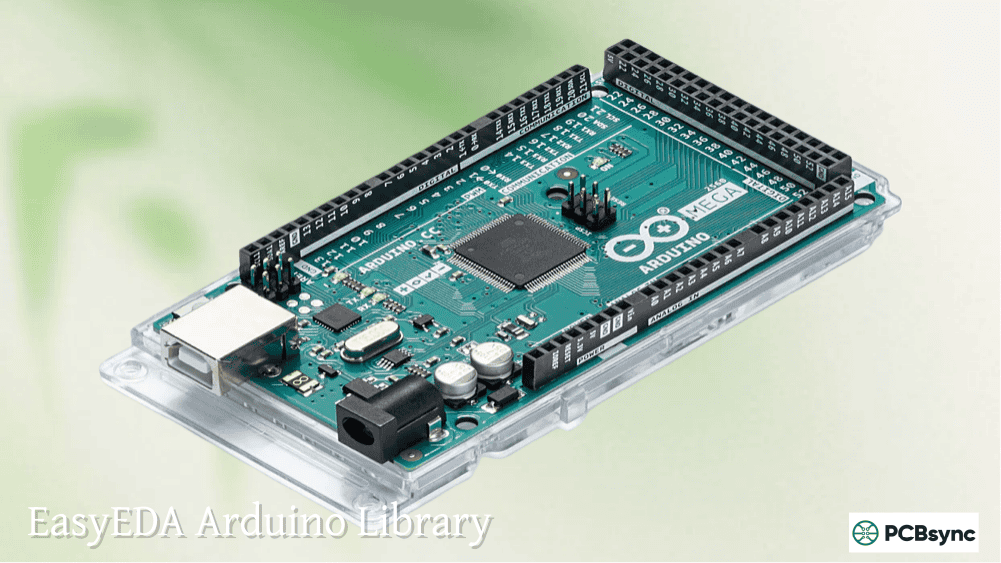
Arduino Mega + W5500
Ethernet
EthernetClient
More RAM than Uno
Arduino + SIM800L
Cellular GPRS
Client
Requires custom implementation
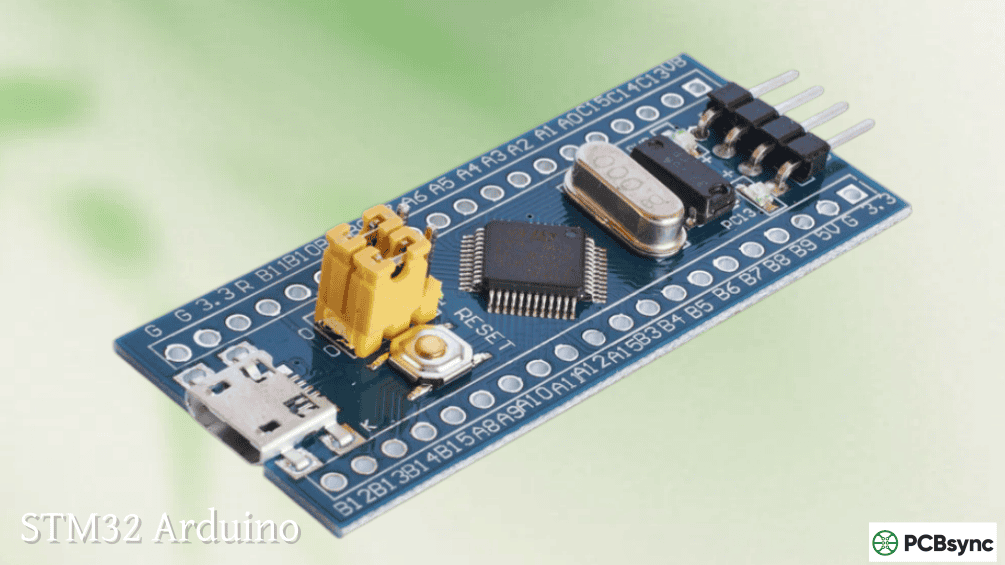
STM32 + Ethernet
Wired Ethernet
EthernetClient
ARM Cortex performance
PCB design consideration: When specifying microcontrollers for MQTT projects, I always ensure at least 8KB RAM. The ATmega328 (2KB) works but leaves very little headroom for complex applications.
Basic PubSubClient MQTT Arduino Implementation
Let’s build a complete, production-ready MQTT client from scratch. This example demonstrates proper connection handling, publishing, and subscribing.
Client ID must be unique across all devices connecting to same broker
client.loop() must be called frequently to process incoming messages and maintain connection
Non-blocking reconnection prevents system lockup during network issues
Temperature converted to string using dtostrf() for MQTT transmission
Advanced Configuration for Production Systems
Increasing Buffer Size for Larger Messages
The default 256-byte limit is insufficient for many applications. Modify before connecting:
void setup() {
client.setBufferSize(512); // Set to 512 bytes
client.setServer(mqtt_server, mqtt_port);
// Continue setup…
}
Memory trade-off: Every byte added to buffer size reduces available RAM for other variables. On ATmega328, carefully balance buffer size against total memory usage.
Configuring Keepalive Interval
Keepalive determines how often the client sends PING packets to maintain connection:
void setup() {
client.setKeepAlive(60); // 60 seconds instead of default 15
// Continue setup…
}
Network consideration: Longer keepalive intervals reduce bandwidth consumption but increase time before detecting disconnections. For battery-powered devices, I typically use 30-60 seconds. For critical real-time systems, stick with 15 seconds.
Authentication and Secure Connections
Many production brokers require authentication:
void reconnect() {
const char* username = “device_user”;
const char* password = “secure_password”;
if (client.connect(mqtt_client_id, username, password)) {
Serial.println(“Authenticated successfully”);
}
}
For TLS/SSL encryption (MQTTS), use WiFiClientSecure on ESP8266/ESP32:
// For topic “sensors/building/floor2/room5/temperature” (40 bytes)
// Plus 100-byte JSON payload
// Need minimum: 40 + 100 + 10 = 150 bytes
client.setBufferSize(200); // Add safety margin
Issue: Frequent Disconnections
Cause: Keepalive timeout or WiFi power saving interference.
Solution: Adjust keepalive and disable WiFi sleep mode on ESP8266/ESP32:
void setup() {
WiFi.setSleepMode(WIFI_NONE_SLEEP); // Disable WiFi power saving
client.setKeepAlive(30);
}
Issue: “Failed, rc=-2” Error
Cause: DNS resolution failure or incorrect broker address.
Solution: Use IP address instead of hostname, or implement better DNS handling:
IPAddress broker_ip(192, 168, 1, 100);
client.setServer(broker_ip, 1883);
Best Practices for Production PCB Designs
From years of deploying IoT devices, these practices improve reliability:
Power Supply Decoupling: Place 10μF and 0.1μF capacitors near WiFi modules. MQTT transmission causes current spikes that can reset microcontrollers if power supply is poorly decoupled.
Watchdog Timer Implementation: Use hardware watchdog timers to recover from network stack hangs. ESP8266 includes automatic WDT; configure appropriately.
Status LED Indicators: Design PCBs with LEDs indicating: Power, WiFi connected, MQTT connected, Message activity. Simplifies field troubleshooting.
Over-the-Air Updates: Plan for OTA firmware updates. MQTT-triggered updates allow fixing bugs without physical access to deployed devices.
Persistent Configuration: Store WiFi credentials and broker settings in EEPROM/Flash. Allows configuration without recompiling firmware.
Essential Resources for PubSubClient MQTT Arduino
Official Documentation and Libraries
Resource
Description
URL
PubSubClient GitHub
Source code and issue tracking
https://github.com/knolleary/pubsubclient
API Documentation
Complete function reference
https://pubsubclient.knolleary.net/api
Arduino Library Manager
Direct installation
Search “PubSubClient” in IDE
MQTT.org
Protocol specification
https://mqtt.org/
MQTT Broker Options
Free Public Brokers (testing only, no reliability guarantee):
broker.hivemq.com (port 1883)
test.mosquitto.org (port 1883)
broker.emqx.io (port 1883)
Self-Hosted Brokers:
Mosquitto: Lightweight, open-source, runs on Raspberry Pi
EMQ X: Scalable, supports millions of connections
HiveMQ: Commercial-grade with cloud options
Cloud MQTT Services:
AWS IoT Core: Enterprise scalability
Azure IoT Hub: Microsoft ecosystem integration
CloudMQTT: Managed Mosquitto instances
Example Code Downloads
Download complete working examples:
Basic Publish/Subscribe: Included with PubSubClient library
1. Can I use PubSubClient MQTT Arduino with multiple brokers simultaneously?
Yes, create multiple PubSubClient instances with separate network clients. Each requires its own Client object (WiFiClient, EthernetClient, etc.). This configuration is useful for redundancy or connecting to different services simultaneously. However, memory constraints on smaller Arduinos may limit practical implementation to ESP32 or similar platforms with adequate RAM.
2. Why can’t PubSubClient publish messages with QoS 1 or QoS 2?
The library intentionally omits QoS 1/2 publishing to minimize memory footprint and code complexity. QoS 1 requires storing unacknowledged messages and handling PUBACK responses. QoS 2 needs even more complex four-way handshake management. For resource-constrained microcontrollers, these features consume too much RAM. If you absolutely need guaranteed delivery, implement application-level acknowledgments or consider AsyncMQTTClient library for ESP8266/ESP32.
3. How do I send binary data or large payloads via PubSubClient?
For binary data, use the publish(topic, payload, length) variant that accepts byte arrays. For payloads exceeding buffer size, either: (1) Increase buffer with setBufferSize() before connecting, (2) Fragment large payloads into multiple messages with sequence numbers, or (3) Compress data before transmission. Remember that buffer size impacts available RAM—on Arduino Uno with 2KB RAM, staying under 512 bytes total buffer is advisable.
4. What causes “Attempting MQTT connection…failed, rc=-4” errors?
Error code -4 (MQTT_CONNECTION_TIMEOUT) indicates the client couldn’t complete the connection handshake within the timeout period. Common causes include: network congestion, broker overload, firewall blocking port 1883, or incorrect broker address. Verify broker reachability with ping tests. Increase timeout with client.setSocketTimeout(). Check if firewall rules allow outbound TCP port 1883 connections.
5. How can I reduce power consumption for battery-powered MQTT devices?
Implement deep sleep between transmissions using ESP8266/ESP32 sleep modes. Increase keepalive interval to 60+ seconds to reduce ping traffic. Use QoS 0 to avoid acknowledgment overhead. Disable WiFi between transmissions and reconnect only when needed. Consider MQTT-SN (MQTT for Sensor Networks) for extremely low-power applications. Design PCBs with efficient voltage regulators (LDO or buck converters depending on current requirements) and measure actual power consumption to optimize sleep/wake cycles.
Conclusion
The PubSubClient MQTT Arduino library provides embedded developers with reliable, efficient IoT messaging capabilities. From basic sensor reporting to complex bidirectional control systems, MQTT’s publish-subscribe architecture simplifies network communication while consuming minimal resources.
As a PCB engineer, I’ve found that successful MQTT implementations require understanding both the protocol’s strengths and the library’s limitations. Proper buffer sizing, robust reconnection logic, and careful memory management separate prototypes from production-ready devices.
Whether you’re building smart home devices, industrial sensors, or agricultural monitoring systems, mastering PubSubClient MQTT Arduino enables your embedded hardware to participate in IoT ecosystems professionally. The library’s broad platform support means your investment in learning transfers across Arduino Uno, ESP8266, ESP32, and numerous other compatible boards.
Start with the basic examples provided, gradually add authentication and reconnection logic, then optimize for your specific hardware constraints. With proper implementation, MQTT provides the reliable, scalable messaging infrastructure your IoT products demand.
Suggested Meta Description:
“Complete PubSubClient MQTT Arduino tutorial for IoT devices. Learn message publishing, subscribing, buffer configuration, reconnection strategies, and troubleshooting from a PCB engineer’s perspective with practical examples.”
Inquire: Call 0086-755-23203480, or reach out via the form below/your sales contact to discuss our design, manufacturing, and assembly capabilities.
Quote: Email your PCB files to Sales@pcbsync.com (Preferred for large files) or submit online. We will contact you promptly. Please ensure your email is correct.
Notes: For PCB fabrication, we require PCB design file in Gerber RS-274X format (most preferred), *.PCB/DDB (Protel, inform your program version) format or *.BRD (Eagle) format. For PCB assembly, we require PCB design file in above mentioned format, drilling file and BOM. Click to download BOM template To avoid file missing, please include all files into one folder and compress it into .zip or .rar format.