Inquire: Call 0086-755-23203480, or reach out via the form below/your sales contact to discuss our design, manufacturing, and assembly capabilities.
Quote: Email your PCB files to Sales@pcbsync.com (Preferred for large files) or submit online. We will contact you promptly. Please ensure your email is correct.
Notes: For PCB fabrication, we require PCB design file in Gerber RS-274X format (most preferred), *.PCB/DDB (Protel, inform your program version) format or *.BRD (Eagle) format. For PCB assembly, we require PCB design file in above mentioned format, drilling file and BOM. Click to download BOM template To avoid file missing, please include all files into one folder and compress it into .zip or .rar format.
PIR Motion Sensor HC-SR501 Arduino Tutorial: Complete Guide for Your Projects
I’ve worked with dozens of motion sensors over the years, and the HC-SR501 remains my go-to choice for most prototypes and production boards. This PIR Motion Sensor HC-SR501 Arduino combination offers the sweet spot between cost, reliability, and ease of integration that most projects need.
In this tutorial, I’ll walk you through everything from basic wiring to advanced configurations, sharing practical tips I’ve picked up from countless hours on the bench.
The HC-SR501 is a passive infrared (PIR) motion detection module built around the BISS0001 micro-power PIR controller IC and the RE200B pyroelectric sensing element. Unlike active sensors that emit signals, this sensor passively detects changes in infrared radiation within its field of view.
Every object with a temperature above absolute zero emits infrared radiation. When a warm body like a human moves through the sensor’s detection zone, the change in IR levels triggers the output. The white dome you see on the module is a Fresnel lens that focuses incoming IR radiation onto the pyroelectric element while widening the detection angle.
What makes the HC-SR501 particularly attractive for Arduino projects is its plug-and-play nature. The module includes all necessary signal conditioning circuitry, so you get a clean digital output without needing external op-amps or comparators.
HC-SR501 Technical Specifications
Before diving into the wiring, here are the specs you need for your design calculations:
Parameter
Value
Operating Voltage
4.5V to 20V DC (5V typical)
Quiescent Current
< 50µA
Output Voltage (HIGH)
3.3V TTL
Output Voltage (LOW)
0V
Detection Range
3 to 7 meters (adjustable)
Detection Angle
< 110° cone
Delay Time
0.3 seconds to 5 minutes (adjustable)
Blocking Time
2.5 seconds (default)
Operating Temperature
-15°C to +70°C
Board Dimensions
32mm × 24mm
The 3.3V TTL output is worth noting. It interfaces directly with both 5V Arduino boards and 3.3V platforms like ESP8266 or ESP32 without level shifting.
HC-SR501 Pinout Configuration
The module exposes three pins along one edge of the PCB:
Pin
Label
Function
1
VCC
Power supply input (4.5V-20V)
2
OUT
Digital output signal
3
GND
Ground reference
Some boards have the pin order reversed, so always verify against the silkscreen markings before powering up. I’ve seen a few modules let the magic smoke out because someone assumed standard pinout without checking.
Understanding the Onboard Adjustments
The HC-SR501 includes two potentiometers and a jumper that let you fine-tune behavior without touching code.
Sensitivity Potentiometer
This adjustment controls the detection range, essentially setting the gain on the analog front-end. Rotating clockwise increases sensitivity (up to 7 meters), while counterclockwise decreases it (down to 3 meters). I typically start at mid-position and adjust based on actual installation conditions.
Time Delay Potentiometer
This sets how long the output stays HIGH after motion is detected. The range spans from about 3 seconds (fully counterclockwise) to 5 minutes (fully clockwise). For most Arduino projects, I keep this at minimum and handle timing in software for more precise control.
Trigger Mode Jumper
The jumper selects between two operating modes:
Jumper Position
Mode
Behavior
L (Single Trigger)
Non-Repeatable
Output goes HIGH once, then LOW after delay regardless of continued motion
H (Repeat Trigger)
Repeatable
Output stays HIGH as long as motion continues, delay timer resets with each detection
For alarm systems, I recommend the H position since it keeps the output active while someone is present. For counting or logging applications, L position gives you discrete detection events.
Wiring the PIR Motion Sensor HC-SR501 to Arduino
The hardware setup couldn’t be simpler. You need just three wires:
HC-SR501 Pin
Arduino Pin
Wire Color (suggested)
VCC
5V
Red
OUT
Digital Pin 2
Yellow/Green
GND
GND
Black
Position the sensor so the dome faces the area you want to monitor. The dual-element design inside works best when motion occurs perpendicular to the sensor face rather than directly toward or away from it.
Basic Arduino Code for Motion Detection
Here’s a minimal sketch to get you started:
// PIR Motion Sensor HC-SR501 Arduino Basic Example
// Detects motion and controls onboard LED
const int pirPin = 2; // PIR sensor output connected to digital pin 2
const int ledPin = 13; // Onboard LED
int motionState = 0; // Variable to store sensor state
void setup() {
pinMode(pirPin, INPUT);
pinMode(ledPin, OUTPUT);
Serial.begin(9600);
// Allow sensor to calibrate (30-60 seconds recommended)
Serial.println(“Calibrating sensor…”);
delay(30000);
Serial.println(“Sensor ready”);
}
void loop() {
motionState = digitalRead(pirPin);
if (motionState == HIGH) {
digitalWrite(ledPin, HIGH);
Serial.println(“Motion detected!”);
} else {
digitalWrite(ledPin, LOW);
Serial.println(“No motion”);
}
delay(100);
}
Upload this code, open the Serial Monitor at 9600 baud, and wait for the calibration period. Wave your hand in front of the sensor, and you should see the detection messages appear.
Building a Motion-Triggered Alarm System
Let’s build something more practical. This project adds an active buzzer that sounds when motion is detected:
Components Required
Component
Quantity
Notes
Arduino UNO/Nano
1
Any Arduino board works
HC-SR501 PIR Sensor
1
Adjust sensitivity as needed
Active Buzzer
1
5V, any frequency
LED (Red)
1
Optional visual indicator
220Ω Resistor
1
Current limiting for LED
Breadboard
1
For prototyping
Jumper Wires
Several
Male-to-male
Wiring Connections
Component
Pin
Arduino Pin
HC-SR501 VCC
VCC
5V
HC-SR501 OUT
OUT
D2
HC-SR501 GND
GND
GND
Buzzer (+)
Positive
D4
Buzzer (-)
Negative
GND
LED (Anode)
Long leg
D3 (via 220Ω)
LED (Cathode)
Short leg
GND
Alarm System Code
// PIR Motion Sensor HC-SR501 Arduino Alarm System
// Triggers buzzer and LED on motion detection
const int pirPin = 2;
const int ledPin = 3;
const int buzzerPin = 4;
boolean motionDetected = false;
unsigned long lastMotionTime = 0;
const unsigned long alarmDuration = 5000; // 5 seconds
void setup() {
pinMode(pirPin, INPUT);
pinMode(ledPin, OUTPUT);
pinMode(buzzerPin, OUTPUT);
Serial.begin(9600);
// Calibration period
Serial.println(“System initializing…”);
for(int i = 30; i > 0; i–) {
Serial.print(i);
Serial.println(” seconds remaining”);
delay(1000);
}
Serial.println(“System armed!”);
}
void loop() {
int sensorValue = digitalRead(pirPin);
if (sensorValue == HIGH) {
if (!motionDetected) {
Serial.println(“ALERT: Motion detected!”);
motionDetected = true;
lastMotionTime = millis();
}
}
// Keep alarm active for specified duration
if (motionDetected) {
if (millis() – lastMotionTime < alarmDuration) {
digitalWrite(ledPin, HIGH);
digitalWrite(buzzerPin, HIGH);
} else {
digitalWrite(ledPin, LOW);
digitalWrite(buzzerPin, LOW);
motionDetected = false;
Serial.println(“System reset – monitoring…”);
}
}
delay(50);
}
This code includes proper state management so the alarm triggers once per detection event and automatically resets after the specified duration.
Important Timing Considerations
Two delay periods built into the HC-SR501 hardware trip up many beginners:
Initialization Period
When first powered on, the sensor needs 30-60 seconds to calibrate to ambient IR levels. During this time, you’ll see random triggers as the BISS0001 chip establishes baseline readings. Always include a calibration delay in your setup() function and keep the detection area clear of movement during this period.
Blocking Time (Dead Zone)
After the output transitions from HIGH to LOW, the sensor enters a blocking period of approximately 2.5 seconds. During this window, no motion will be detected. This is hardcoded in the BISS0001 chip and cannot be adjusted via software. Factor this into your timing calculations for applications requiring rapid consecutive detections.
This is the most common complaint I hear. Several factors cause spurious detections:
Power supply noise: The HC-SR501 is sensitive to voltage fluctuations. Add a 100µF electrolytic capacitor across VCC and GND close to the sensor. For really noisy environments, a 220nF ceramic capacitor across pins 12 and 13 of the BISS0001 IC helps filter RF interference.
Environmental factors: Direct sunlight, air currents from HVAC systems, and nearby heat sources all cause false triggers. Position the sensor away from windows and vents.
RF interference: If you’re using WiFi modules like ESP8266 nearby, the RF emissions can induce triggers. Increasing physical distance between the PIR and radio module helps, as does reducing WiFi transmit power.
No Detection
If the sensor never triggers:
Verify power supply voltage at the sensor terminals
Check that the output pin is correctly connected to a digital input configured with INPUT mode
Try a different sensor module to rule out hardware defects
Inconsistent Detection Range
Detection range varies with ambient temperature. In hot weather, the temperature differential between a human body and surroundings decreases, reducing effective range. Some HC-SR501 boards include pads labeled RT for adding a thermistor to compensate, though most applications work fine without it.
Advanced Applications and Project Ideas
Once you’ve mastered the basics, consider these practical applications for your PIR Motion Sensor HC-SR501 Arduino setup:
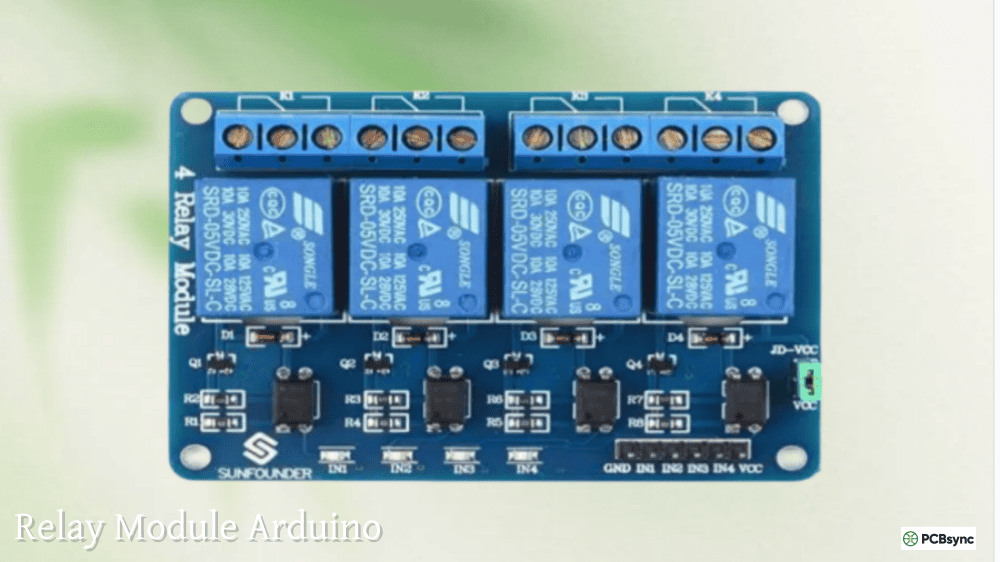
Automatic lighting control: Trigger relay modules to switch mains-powered lights. Remember to observe proper isolation when working with AC voltages.
Wildlife monitoring: Combine with a camera module to capture images of backyard visitors. The low power consumption makes battery operation feasible.
Security systems: Multiple sensors can cover different zones, with an Arduino tracking which area detected motion and logging events to SD card.
Energy management: Detect room occupancy to control HVAC and reduce power consumption in unoccupied spaces.
Halloween props: The motion-triggered output is perfect for activating animatronics or sound effects when trick-or-treaters approach.
Adafruit’s excellent tutorial on PIR operating principles
Frequently Asked Questions
Can the HC-SR501 detect animals or only humans?
The sensor detects any warm-blooded object that moves and generates sufficient infrared differential against the background. Cats, dogs, and even larger birds can trigger it depending on sensitivity settings and distance. For human-only detection, you would need more sophisticated sensors or AI-based image processing.
How do I extend the detection range beyond 7 meters?
The 7-meter range is a hardware limitation of the Fresnel lens and pyroelectric element combination. For longer ranges, consider the HC-SR312 module or industrial-grade PIR sensors. Alternatively, you can use multiple HC-SR501 sensors positioned to cover a larger area with overlapping detection zones.
Can I use the HC-SR501 outdoors?
The sensor itself has no weatherproofing. For outdoor use, you must house it in a weatherproof enclosure while ensuring the lens has an unobstructed view. Be aware that temperature extremes, direct sunlight, and wind-driven objects can cause false triggers or reduced sensitivity.
Why does my sensor work fine standalone but give false triggers with Arduino?
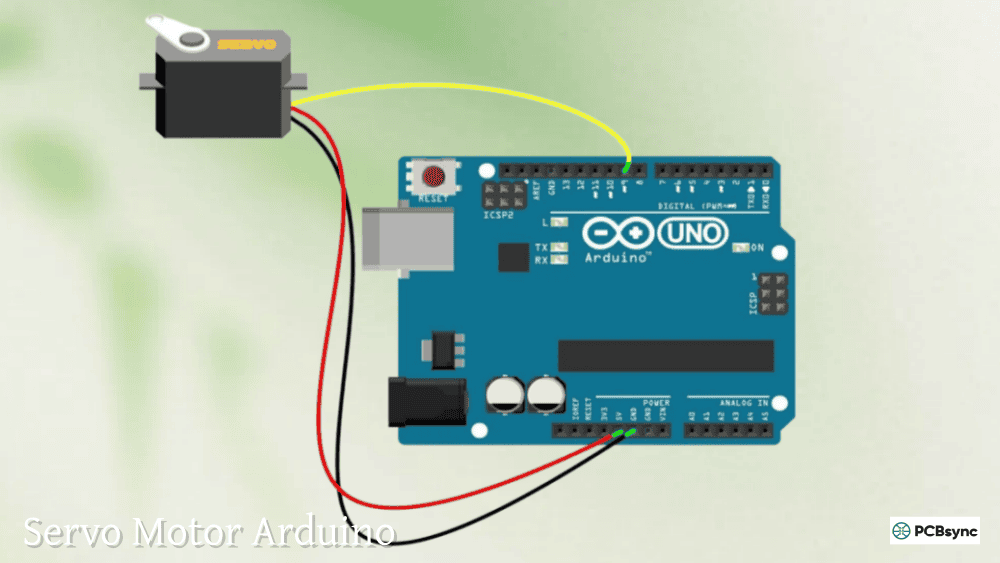
This usually indicates power supply issues. When the Arduino and sensor share a power source, current spikes from servo motors, relay coils, or wireless modules can disturb the sensitive PIR circuitry. Use separate power rails with proper decoupling, or power the sensor from an independent regulated source.
How do I adjust the blocking time from the default 2.5 seconds?
The blocking time is determined by passive components on the BISS0001 chip. Modifying it requires calculating new RC values based on the datasheet formulas and soldering surface-mount components. For most applications, it’s easier to handle timing logic in your Arduino code instead.
Wrapping Up
The PIR Motion Sensor HC-SR501 Arduino combination remains one of the most accessible entry points into motion detection projects. The module handles all the analog signal processing internally, presenting a clean digital interface that even beginners can work with immediately.
Start with the basic detection example, then progress to the alarm project once you’re comfortable with the timing characteristics. Pay attention to the calibration and blocking periods since these catch most newcomers off guard. With proper power supply filtering and thoughtful sensor placement, the HC-SR501 delivers reliable performance across a wide range of applications.
Got a project idea or running into issues I didn’t cover? The key is understanding that PIR sensors react to changes in infrared radiation, not presence itself. Work with that fundamental principle, and you’ll find creative solutions to most challenges.
Meta Description Suggestion:
“Learn how to use the PIR Motion Sensor HC-SR501 with Arduino in this complete tutorial. Includes wiring diagrams, code examples, alarm projects, specifications table, and troubleshooting tips for reliable motion detection.”
Inquire: Call 0086-755-23203480, or reach out via the form below/your sales contact to discuss our design, manufacturing, and assembly capabilities.
Quote: Email your PCB files to Sales@pcbsync.com (Preferred for large files) or submit online. We will contact you promptly. Please ensure your email is correct.
Notes: For PCB fabrication, we require PCB design file in Gerber RS-274X format (most preferred), *.PCB/DDB (Protel, inform your program version) format or *.BRD (Eagle) format. For PCB assembly, we require PCB design file in above mentioned format, drilling file and BOM. Click to download BOM template To avoid file missing, please include all files into one folder and compress it into .zip or .rar format.