Inquire: Call 0086-755-23203480, or reach out via the form below/your sales contact to discuss our design, manufacturing, and assembly capabilities.
Quote: Email your PCB files to Sales@pcbsync.com (Preferred for large files) or submit online. We will contact you promptly. Please ensure your email is correct.
Notes: For PCB fabrication, we require PCB design file in Gerber RS-274X format (most preferred), *.PCB/DDB (Protel, inform your program version) format or *.BRD (Eagle) format. For PCB assembly, we require PCB design file in above mentioned format, drilling file and BOM. Click to download BOM template To avoid file missing, please include all files into one folder and compress it into .zip or .rar format.
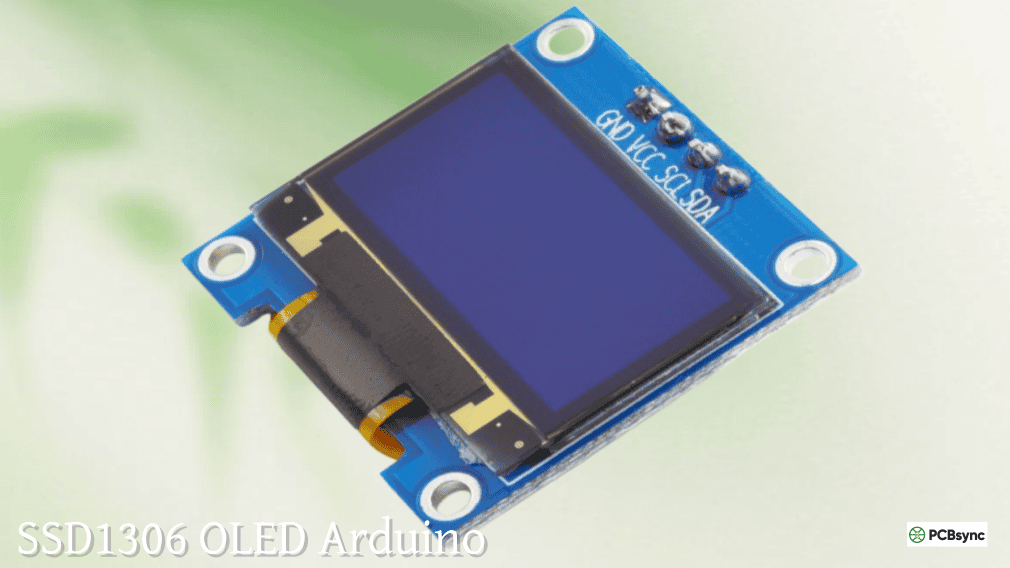
Working with character LCDs gets old fast. The limited resolution, poor contrast, and clunky parallel wiring make them a pain for any serious embedded project. After designing dozens of PCBs with various display options, I can tell you that OLED displays changed everything. The OLED display Arduino combination delivers sharp visuals, minimal power consumption, and dead-simple wiring that makes prototyping a genuine pleasure.
This guide covers everything you need to master OLED displays with Arduino, from basic text output to smooth animations and custom bitmap graphics. Whether you’re building a sensor dashboard, a portable meter, or adding visual flair to your next project, you’ll find practical code and real-world advice here.
Understanding OLED Display Technology for Arduino Projects
OLED stands for Organic Light-Emitting Diode. Unlike traditional LCDs that require a backlight, each pixel in an OLED display produces its own light. This fundamental difference creates several advantages that matter for embedded projects.
First, the contrast ratio is exceptional. Black pixels are truly black because they’re simply turned off, not blocking a backlight. This makes text incredibly crisp and readable, even in dark environments. Second, power consumption scales with actual content. A mostly-black screen draws almost no current, which extends battery life significantly in portable applications.
Common OLED Display Types for Arduino
The market offers various OLED displays, but these specifications matter most when selecting one for your Arduino project:
Specification
Common Options
Notes
Resolution
128×64, 128×32, 64×48
128×64 offers best flexibility
Size
0.91″, 0.96″, 1.3″
0.96″ is most popular
Color
Monochrome (white/blue), Dual-color
Monochrome simplest to program
Interface
I2C, SPI
I2C uses fewer pins
Controller
SSD1306, SH1106
SSD1306 has better library support
For beginners, I recommend starting with a 0.96-inch 128×64 pixel display using the SSD1306 controller and I2C interface. This combination offers the best balance of features, price, and library support.
How OLED Display Memory Works
Understanding the SSD1306’s memory architecture helps when debugging display issues. The controller contains 1KB of Graphic Display Data RAM (GDDRAM) organized into 8 pages. Each page holds 128 columns, and each column stores 8 bits vertically.
This means the 128×64 display uses all 8 pages (8 pages × 8 bits = 64 rows), while a 128×32 display uses only 4 pages. When you call display functions, you’re manipulating this internal buffer before pushing it to the screen.
Wiring Your OLED Display to Arduino
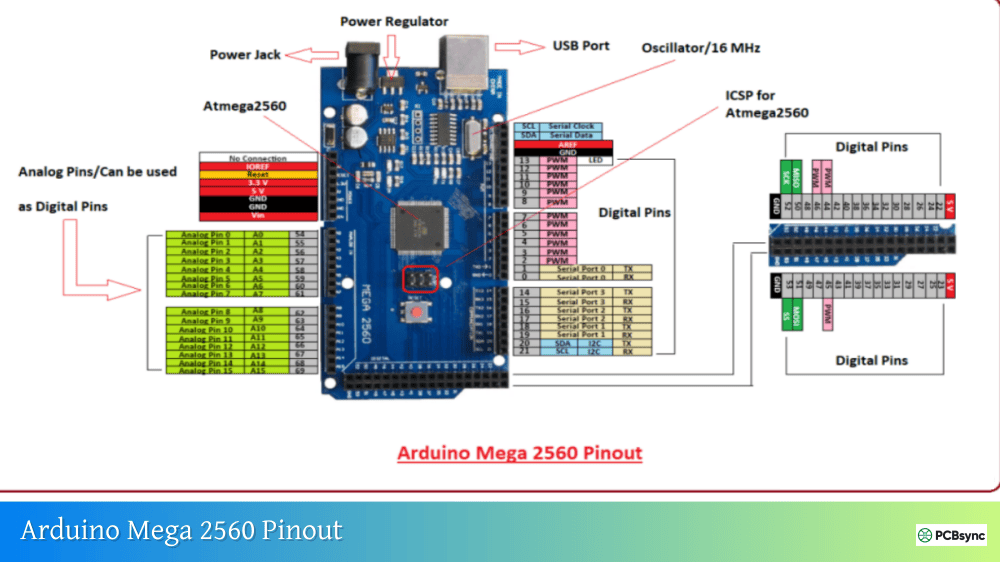
The I2C interface reduces wiring to just four connections. Here’s the pinout for common Arduino boards:
OLED Pin
Arduino Uno/Nano
Arduino Mega
Arduino Leonardo
VCC
5V
5V
5V
GND
GND
GND
GND
SDA
A4
Pin 20
Pin 2
SCL
A5
Pin 21
Pin 3
OLED Display Arduino Wiring Best Practices
From my experience debugging customer boards, these wiring tips prevent most common issues:
Keep I2C lines short. Longer wires increase capacitance and can cause communication failures. Anything under 20cm typically works fine without external pull-up resistors.
Most OLED modules include built-in pull-up resistors for I2C. If you’re connecting multiple I2C devices, you might need to remove some pull-ups to prevent the combined resistance from becoming too low.
The VCC pin accepts 3.3V to 5V on most modules. Check your specific module’s datasheet, but standard Chinese modules from major suppliers handle both voltages without issues.
Installing Required Libraries for OLED Display Arduino Projects
Two libraries handle most OLED display Arduino applications: Adafruit SSD1306 and Adafruit GFX. The SSD1306 library manages hardware communication while GFX provides drawing functions.
Library Installation Steps
Open Arduino IDE and navigate to Sketch → Include Library → Manage Libraries. Search for “SSD1306” and install the Adafruit SSD1306 library. When prompted about dependencies, click “Install All” to automatically install Adafruit GFX and Adafruit BusIO.
After installation, restart Arduino IDE to ensure the libraries load correctly.
Finding Your OLED I2C Address
Most SSD1306 displays use address 0x3C, but some modules ship with 0x3D. Run this I2C scanner sketch to find your display’s address:
#include <Wire.h>
void setup() {
Wire.begin();
Serial.begin(9600);
Serial.println(“Scanning for I2C devices…”);
}
void loop() {
for (byte address = 1; address < 127; address++) {
Wire.beginTransmission(address);
if (Wire.endTransmission() == 0) {
Serial.print(“Device found at 0x”);
Serial.println(address, HEX);
}
}
delay(5000);
}
Displaying Text on OLED Display Arduino
Text display forms the foundation of most OLED projects. The Adafruit GFX library provides comprehensive text functions that handle fonts, positioning, and formatting.
Basic OLED Text Display Code
This complete example demonstrates essential text functions:
Custom graphics elevate projects from functional to professional. The process involves converting images to byte arrays that the Arduino can store and display.
Converting Images to Bitmap Arrays
Several tools convert images to Arduino-compatible format. The most popular is image2cpp, available at javl.github.io/image2cpp. Follow these steps:
Resize your image to fit the display (128×64 maximum for standard OLEDs)
The drawBitmap function takes the starting position (x, y), bitmap array pointer, width, height, and color.
Memory Considerations for Bitmaps
A full-screen 128×64 bitmap requires 1024 bytes (128 × 64 / 8). The Arduino Uno has only 2KB of RAM, so storing multiple bitmaps quickly exhausts memory. Using PROGMEM stores data in flash memory (32KB on Uno), leaving RAM free for program execution.
Animations bring displays to life. From simple bouncing shapes to complex frame-based sequences, the OLED display Arduino platform handles various animation techniques.
Frame-Based Animation Approach
The simplest animation method cycles through pre-defined frames:
The SSD1306 library includes hardware scrolling functions:
void scrollDemo() {
display.clearDisplay();
display.setTextSize(2);
display.setCursor(0, 0);
display.println(“Scrolling”);
display.println(“Text Demo”);
display.display();
delay(1000);
display.startscrollright(0x00, 0x07); // Scroll entire display right
delay(3000);
display.stopscroll();
display.startscrollleft(0x00, 0x07); // Scroll entire display left
delay(3000);
display.stopscroll();
}
Scrolling Function Reference
Function
Parameters
Description
startscrollright()
start, stop
Scrolls right from start page to stop page
startscrollleft()
start, stop
Scrolls left from start page to stop page
startscrolldiagright()
start, stop
Diagonal scroll right
startscrolldiagleft()
start, stop
Diagonal scroll left
stopscroll()
none
Stops all scrolling
OLED Display Arduino Troubleshooting Guide
Display Shows Nothing
Check these items in order:
Verify I2C address matches your code (run I2C scanner)
Confirm SDA and SCL connections to correct pins
Check power supply (3.3V-5V required)
Ensure display.begin() returns true
Don’t forget display.display() after drawing
Display Shows Garbled Output
This usually indicates wrong display dimensions or driver mismatch. Verify SCREEN_WIDTH and SCREEN_HEIGHT match your physical display. Some 1.3″ displays use the SH1106 controller instead of SSD1306, requiring a different library.
“Allocation Failed” Error
The SSD1306 library allocates a screen buffer in RAM. On Arduino Uno, this 1KB buffer consumes half the available RAM. Solutions include using a smaller display (128×32), switching to the SSD1306Ascii library (text only, much smaller), or upgrading to Arduino Mega or ESP32.
Display Flickers or Updates Slowly
Minimize clearDisplay() calls when possible. Instead of clearing and redrawing everything, overwrite specific areas with fillRect() before drawing new content. This reduces the amount of data transferred to the display.
OLED Display Arduino Resources and Downloads
Essential Libraries
Library
Purpose
Download
Adafruit SSD1306
Display driver
Arduino Library Manager
Adafruit GFX
Graphics functions
Arduino Library Manager
SSD1306Ascii
Text-only (low memory)
github.com/greiman/SSD1306Ascii
U8g2
Alternative graphics library
github.com/olikraus/u8g2
Useful Online Tools
Tool
Purpose
URL
image2cpp
Image to bitmap converter
javl.github.io/image2cpp
LCD Assistant
Bitmap converter
en.radzio.dxp.pl/bitmap_converter
OLED Font Creator
Custom font generator
oleddisplay.squix.ch
Wokwi Simulator
Online Arduino simulator
wokwi.com
Recommended OLED Modules
For reliable results, purchase from established suppliers. Generic modules from major electronics distributors typically include proper pull-up resistors and voltage regulators. Avoid the cheapest options as they sometimes have incorrect component values or missing parts.
Frequently Asked Questions
What is the difference between SSD1306 and SH1106 OLED displays?
Both are OLED controllers, but they handle memory differently. The SSD1306 maps its internal RAM directly to display pixels, while the SH1106 has a slightly larger internal buffer with offset addressing. Most 0.96″ displays use SSD1306, while many 1.3″ displays use SH1106. Using the wrong library results in partial or shifted display output. The Adafruit SH110X library supports SH1106 displays.
Can I connect multiple OLED displays to one Arduino?
Yes, but with limitations. I2C allows multiple devices, but each needs a unique address. Most SSD1306 modules have address selection pads that let you choose between 0x3C and 0x3D, allowing two displays maximum on one I2C bus. For more displays, use an I2C multiplexer (TCA9548A) or switch to SPI displays, which use separate chip-select pins.
How do I reduce memory usage with OLED displays?
The standard Adafruit library uses about 1KB of RAM for the screen buffer. To reduce this, consider the SSD1306Ascii library which eliminates the frame buffer entirely by writing directly to the display. This limits you to text-only output but dramatically reduces memory usage, making it ideal for Uno-based projects with other memory-intensive features.
Why does my OLED display show random pixels or noise?
Random pixels typically indicate electrical noise or insufficient power. Add a 10µF capacitor between VCC and GND close to the display. Also check that your I2C pull-up resistors aren’t too weak (4.7kΩ works well) and that cable lengths are reasonable. Extremely long I2C cables may need lower value pull-ups around 2.2kΩ.
How long will an OLED display last in continuous operation?
OLED displays experience gradual brightness degradation over time, especially with static content. Typical lifespan ranges from 10,000 to 50,000 hours depending on brightness level and content variation. For projects displaying static content 24/7, consider implementing screen dimming during idle periods or rotating displayed elements to prevent burn-in patterns.
Conclusion
The OLED display Arduino combination delivers professional-quality visuals without the complexity of more advanced display systems. Starting with basic text, progressing through geometric graphics, and finally implementing custom bitmaps and animations gives you complete control over visual output.
The key to success lies in understanding the display’s memory architecture, choosing appropriate libraries for your memory constraints, and following systematic troubleshooting when issues arise. With the foundation covered in this guide, you’re equipped to add compelling visual interfaces to any Arduino project.
Whether you’re displaying sensor readings, creating a handheld game, or building an information dashboard, the OLED display provides crisp, power-efficient output that elevates your projects from hobbyist experiments to polished, professional devices.
Inquire: Call 0086-755-23203480, or reach out via the form below/your sales contact to discuss our design, manufacturing, and assembly capabilities.
Quote: Email your PCB files to Sales@pcbsync.com (Preferred for large files) or submit online. We will contact you promptly. Please ensure your email is correct.
Notes: For PCB fabrication, we require PCB design file in Gerber RS-274X format (most preferred), *.PCB/DDB (Protel, inform your program version) format or *.BRD (Eagle) format. For PCB assembly, we require PCB design file in above mentioned format, drilling file and BOM. Click to download BOM template To avoid file missing, please include all files into one folder and compress it into .zip or .rar format.