Inquire: Call 0086-755-23203480, or reach out via the form below/your sales contact to discuss our design, manufacturing, and assembly capabilities.
Quote: Email your PCB files to Sales@pcbsync.com (Preferred for large files) or submit online. We will contact you promptly. Please ensure your email is correct.
Notes: For PCB fabrication, we require PCB design file in Gerber RS-274X format (most preferred), *.PCB/DDB (Protel, inform your program version) format or *.BRD (Eagle) format. For PCB assembly, we require PCB design file in above mentioned format, drilling file and BOM. Click to download BOM template To avoid file missing, please include all files into one folder and compress it into .zip or .rar format.
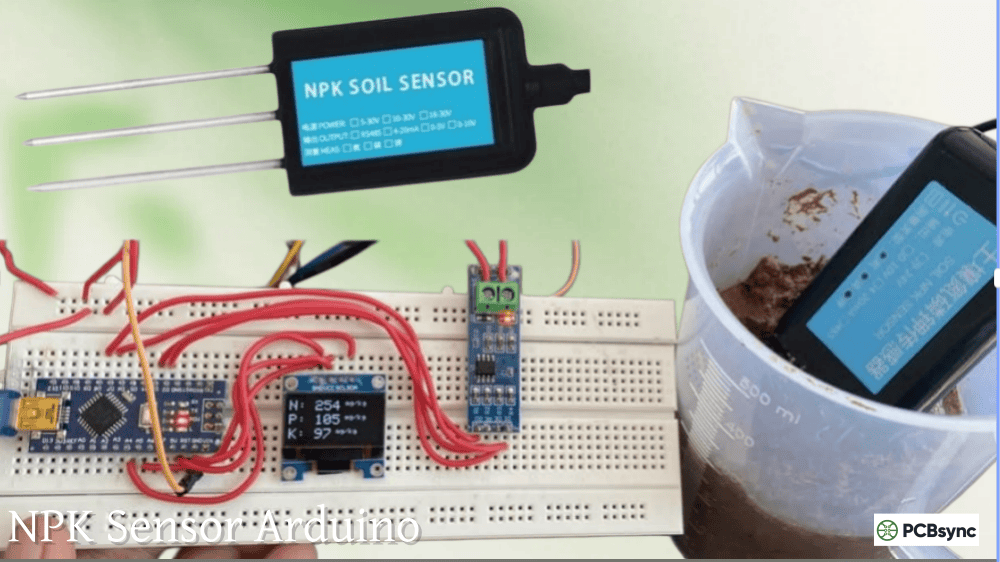
Getting reliable readings from an NPK sensor Arduino setup requires understanding both the Modbus communication protocol and the limitations of these conductivity-based sensors. I’ve deployed these sensors in greenhouse automation and small-scale farming projects, and the learning curve involves more than just wiring up components.
This guide covers the practical knowledge needed to interface JXCT-style NPK sensors with Arduino, including the RS485 communication setup, Modbus command structure, and realistic expectations about measurement accuracy.
NPK represents the three primary macronutrients essential for plant growth: Nitrogen (N), Phosphorus (P), and Potassium (K). These elements form the foundation of soil fertility and appear as the three numbers on every fertilizer package.
What Each Nutrient Does for Plants
Nutrient
Chemical Symbol
Primary Function
Deficiency Symptoms
Nitrogen
N
Leaf growth, chlorophyll production
Yellowing leaves, stunted growth
Phosphorus
P
Root development, flowering, fruiting
Purple-tinted leaves, weak roots
Potassium
K
Disease resistance, water regulation
Brown leaf edges, weak stems
Nitrogen drives vegetative growth and gives plants their green color through chlorophyll production. Plants move nitrogen from older leaves to newer growth when deficient, causing lower leaves to yellow first.
Phosphorus supports root formation and reproductive processes like flowering and seed development. Unlike nitrogen deficiency, phosphorus-deficient plants often show darker green or purple-red coloration because chlorophyll production continues while cell expansion stops.
Potassium acts as a regulator, controlling water movement through stomata and activating enzymes throughout the plant. It doesn’t form plant tissue directly but determines how efficiently plants use other nutrients and resist environmental stress.
Typical NPK Levels in Soil
Classification
Nitrogen (mg/kg)
Phosphorus (mg/kg)
Potassium (mg/kg)
Very Low
0-50
0-5
0-75
Low
50-100
5-15
75-150
Medium
100-200
15-30
150-250
High
200-300
30-50
250-350
Very High
>300
>50
>350
These ranges vary by region, soil type, and testing methodology. The ideal ratio often cited is 4:2:1 (N:P:K), though specific crops require different balances at different growth stages.
How NPK Sensors Work
Most affordable NPK sensors marketed for Arduino projects are actually electrical conductivity (EC) sensors that estimate nutrient content based on how well the soil conducts electricity. This is an important distinction that affects accuracy expectations.
Conductivity-Based Measurement Principle
When dissolved ions (including NPK nutrients) are present in soil moisture, they increase electrical conductivity. The sensor measures this conductivity and uses algorithms to estimate individual nutrient concentrations.
The limitation is obvious: the sensor cannot distinguish between nitrogen ions and other conductive elements like iron, calcium, or sodium. High readings might indicate rich nutrient content or simply salty soil.
Sensor Construction
Component
Description
Stainless Steel Probes
Corrosion-resistant electrodes that contact soil
Signal Processing Board
Converts conductivity to digital values
RS485 Interface
Industrial communication standard for data transmission
Sealed Housing
IP68-rated protection for field deployment
The probe material matters for long-term reliability. Quality sensors use 316 stainless steel that resists the corrosive salts and acids found in agricultural soils.
JXCT Soil NPK Sensor Specifications
The JXCT sensor has become the standard choice for Arduino NPK projects due to its availability and reasonable accuracy for hobbyist applications.
Parameter
Specification
Power Supply
5V to 30V DC
Working Current
20-25 mA
Measurement Range
0-1999 mg/kg
Resolution
1 mg/kg
Accuracy
±2% Full Scale
Response Time
<1 second
Communication
RS485 Modbus RTU
Baud Rate Options
2400, 4800, 9600
Operating Temperature
5°C to 45°C
Protection Rating
IP68
Cable Length
2 meters standard
The IP68 rating means the sensor can withstand continuous immersion, making it suitable for buried long-term monitoring applications.
NPK Sensor Wire Colors and Functions
Wire Color
Function
Connection
Brown
Power (VCC)
9-24V DC supply
Black
Ground (GND)
Common ground
Yellow
RS485 A+
MAX485 module A pin
Blue
RS485 B-
MAX485 module B pin
The sensor requires a separate power supply of 9-24V for the probe itself. The 5V from Arduino only powers the RS485 interface module, not the sensor.
RS485 and Modbus Communication
The NPK sensor uses industrial RS485 communication with the Modbus RTU protocol. Arduino doesn’t support RS485 natively, so you need a TTL-to-RS485 converter module.
Why RS485 for Agricultural Sensors
RS485 was designed for industrial environments with electrical noise and long cable runs. It uses differential signaling across two wires (A and B), which cancels out common-mode noise that would corrupt single-ended signals.
Feature
RS485 Advantage
Cable Length
Up to 1200 meters
Noise Immunity
Differential signaling rejects interference
Multi-Device
Up to 32 devices on single bus
Data Rate
Up to 2.5 Mbps (decreases with distance)
MAX485 Module Pinout
Pin
Name
Function
Arduino Connection
1
RO
Receiver Output
D2 (Software Serial RX)
2
RE
Receiver Enable
D8 (control pin)
3
DE
Driver Enable
D7 (control pin)
4
DI
Driver Input
D3 (Software Serial TX)
5
GND
Ground
GND
6
A
Differential A+
NPK Yellow wire
7
B
Differential B-
NPK Blue wire
8
VCC
Power
5V
The RE and DE pins control whether the module is in receive or transmit mode. For half-duplex communication, you typically tie them together and control both with a single Arduino pin.
NPK Sensor Arduino Wiring Diagram
The complete wiring requires three main components: Arduino, MAX485 module, and the NPK sensor with its power supply.
Complete Connection Table
NPK Sensor
MAX485 Module
Arduino Uno
Power Supply
Brown (VCC)
–
–
+12V DC
Black (GND)
GND
GND
GND (common)
Yellow (A)
A
–
–
Blue (B)
B
–
–
–
RO
D2
–
–
DI
D3
–
–
DE
D7
–
–
RE
D8
–
–
VCC
5V
–
Important: All grounds must be connected together (Arduino GND, MAX485 GND, Power Supply GND, and NPK Sensor GND).
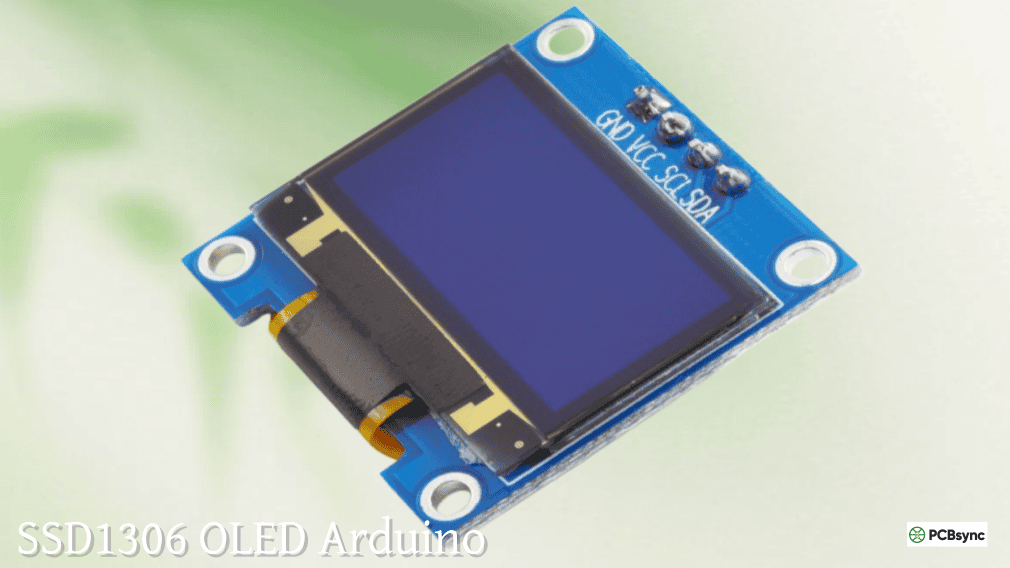
Adding OLED Display
For standalone operation, add an I2C OLED display:
OLED Display
Arduino Uno
VCC
3.3V or 5V
GND
GND
SDA
A4
SCL
A5
Understanding Modbus RTU Commands
The NPK sensor responds to Modbus RTU requests. Each nutrient requires a specific command frame to read its register.
Modbus Request Frame Structure
Field
Bytes
Description
Slave Address
1
Device address (default 0x01)
Function Code
1
Read Holding Registers (0x03)
Starting Address
2
Register address (high byte first)
Quantity
2
Number of registers to read
CRC
2
Error check (low byte first)
NPK Register Addresses and Commands
Nutrient
Register Address
Modbus Command (Hex)
Nitrogen
0x001E
01 03 00 1E 00 01 E4 0C
Phosphorus
0x001F
01 03 00 1F 00 01 B5 CC
Potassium
0x0020
01 03 00 20 00 01 85 C0
The last two bytes of each command are the CRC-16 checksum calculated using the Modbus polynomial.
NPK Sensor Arduino Code
This sketch reads all three nutrients and displays values on Serial Monitor:
Insert the probe vertically into undisturbed soil at root depth (typically 10-15 cm for vegetables, deeper for larger plants). Avoid areas near container edges where soil properties differ from the bulk.
For field deployment, dig a narrow pit, insert the sensor horizontally into the pit wall, then backfill tightly. This maintains natural soil structure around the sensing elements.
Never insert the probe into rocky soil or near large organic debris. The stainless steel probes can bend or break under force.
These conductivity-based NPK sensors provide approximate readings rather than laboratory-grade analysis. They’re useful for trending (watching values change over time) and rough categorization (low, medium, high) but shouldn’t be trusted for precise fertilizer calculations.
The sensor measures total electrical conductivity and estimates individual nutrients using calibration curves. If your soil has unusual mineral composition, readings will reflect that conductivity even if actual NPK is low.
For critical applications like commercial farming, use these sensors as screening tools and verify important decisions with professional soil laboratory testing.
Frequently Asked Questions
Why do I get 255 for all readings?
The value 255 (0xFF) typically indicates a communication failure. The sensor isn’t responding to commands. Check that the power supply provides sufficient voltage (9-24V), verify A and B wire connections aren’t reversed, ensure common ground between all components, and try different baud rates (4800 bps often works better than 9600 bps). Some sensors ship configured for 4800 bps despite documentation stating 9600 bps.
Can I connect multiple NPK sensors to one Arduino?
Yes, RS485 supports up to 32 devices on a single bus. Each sensor needs a unique Modbus address (configurable via the sensor’s PC software or through Modbus commands). Your code then sends requests to specific addresses and reads responses sequentially. This is valuable for monitoring multiple locations in a greenhouse or field.
How accurate are these sensors compared to lab testing?
These sensors provide ±2-5% accuracy under ideal conditions but can show much larger deviations in real-world use. Laboratory soil tests measure actual nutrient availability through chemical extraction, while these sensors estimate based on conductivity. They’re best for relative comparisons and trend monitoring rather than absolute measurements. For precision fertilizer recommendations, professional lab testing remains necessary.
Does soil moisture affect readings?
Significantly. Dry soil has very low conductivity regardless of nutrient content. The sensor requires soil moisture for ion mobility and electrical path completion. Water the test area and wait 30 minutes before measuring for consistent results. However, waterlogged soil can also give misleading readings due to dilution effects.
Can this sensor measure nutrients in hydroponics solutions?
No, these sensors are designed specifically for soil measurement. The probe construction and calibration assume soil conductivity characteristics. For hydroponic nutrient solutions, use dedicated EC (electrical conductivity) meters designed for liquids, combined with pH measurement. Attempting to use soil NPK sensors in water will produce inaccurate results and may damage the sensor’s calibration.
Building Effective Soil Monitoring Systems
An NPK sensor Arduino project provides valuable insight into soil fertility dynamics, even with the accuracy limitations of conductivity-based measurement. The real value comes from continuous monitoring that reveals trends: how nutrient levels change after fertilization, during crop growth, and across seasons.
Combine NPK sensing with soil moisture and temperature measurements for a complete soil health monitoring system. Add wireless capability using ESP32 or LoRa modules for remote field deployment. Log data over time to build understanding of your specific soil conditions and crop nutrient demands.
The technology continues improving, with newer sensors incorporating multiple sensing modalities for better accuracy. But even current-generation devices provide useful data when you understand their capabilities and limitations.
Inquire: Call 0086-755-23203480, or reach out via the form below/your sales contact to discuss our design, manufacturing, and assembly capabilities.
Quote: Email your PCB files to Sales@pcbsync.com (Preferred for large files) or submit online. We will contact you promptly. Please ensure your email is correct.
Notes: For PCB fabrication, we require PCB design file in Gerber RS-274X format (most preferred), *.PCB/DDB (Protel, inform your program version) format or *.BRD (Eagle) format. For PCB assembly, we require PCB design file in above mentioned format, drilling file and BOM. Click to download BOM template To avoid file missing, please include all files into one folder and compress it into .zip or .rar format.