Inquire: Call 0086-755-23203480, or reach out via the form below/your sales contact to discuss our design, manufacturing, and assembly capabilities.
Quote: Email your PCB files to Sales@pcbsync.com (Preferred for large files) or submit online. We will contact you promptly. Please ensure your email is correct.
Notes: For PCB fabrication, we require PCB design file in Gerber RS-274X format (most preferred), *.PCB/DDB (Protel, inform your program version) format or *.BRD (Eagle) format. For PCB assembly, we require PCB design file in above mentioned format, drilling file and BOM. Click to download BOM template To avoid file missing, please include all files into one folder and compress it into .zip or .rar format.
Nextion Display Arduino: Complete HMI Touchscreen Tutorial for Your Projects
Working with microcontrollers often means dealing with clunky interfaces—serial monitors, basic LEDs, or small character LCDs that look like they belong in the 1990s. After spending years designing embedded systems and PCBs, I can tell you that adding a proper human-machine interface changes everything. That’s where the Nextion Display Arduino combination comes in, and honestly, it’s become my go-to solution for projects that need a polished, professional look without the headache of complex graphics libraries.
In this tutorial, I’ll walk you through everything you need to know about connecting a Nextion HMI touchscreen to your Arduino board. We’ll cover the hardware setup, software configuration, wiring diagrams, and actual working code. By the end, you’ll have a solid foundation to build interactive interfaces for your own projects.
A Nextion display is a programmable TFT touchscreen module designed specifically for embedded applications. Unlike traditional displays that require your microcontroller to handle all the graphics rendering, Nextion displays have their own onboard processor that manages the GUI independently. Your Arduino only needs to send simple serial commands to update values, change pages, or respond to touch events.
This architecture is what makes the Nextion Display Arduino pairing so effective. The Arduino handles the logic, sensors, and control systems while the Nextion takes care of everything visual. It’s a clean separation of concerns that keeps your code manageable and your processor free for important tasks.
Nextion Display Models Comparison
Model
Screen Size
Resolution
Touch Type
Flash Memory
Best For
NX3224T024
2.4″
320×240
Resistive
4MB
Small projects, basic interfaces
NX4024T032
3.2″
400×240
Resistive
4MB
Medium complexity dashboards
NX4832T035
3.5″
480×320
Resistive
16MB
Industrial HMI panels
NX8048T050
5.0″
800×480
Resistive
16MB
Large data displays
NX8048T070
7.0″
800×480
Resistive
16MB
Control panels, kiosks
NX4024K032 (Enhanced)
3.2″
400×240
Resistive
16MB
GPIO expansion, RTC needed
The Enhanced series adds features like real-time clock, GPIO pins, and EEPROM, which can be useful if you want to reduce the load on your Arduino even further.
Why Choose Nextion Display Arduino Integration?
Having worked with various display solutions—from Nokia 5110 screens to full-blown Raspberry Pi setups—I keep coming back to Nextion for several practical reasons.
Simplified Communication Protocol
The serial communication between Nextion and Arduino uses a straightforward protocol. You send text commands terminated by three 0xFF bytes, and the display responds with touch events in the same format. No SPI timing issues, no I2C address conflicts, just clean UART communication at 9600 baud (adjustable up to 115200).
Reduced Processing Overhead
Graphics rendering is computationally expensive. When you use libraries like Adafruit GFX or UTFT on an Arduino, you’re eating into precious clock cycles. With Nextion, your Arduino sketch might only be a few hundred lines of code, even for complex interfaces.
Professional Appearance
Let’s be honest—most hobbyist projects look like hobbyist projects. A well-designed Nextion interface can make your prototype look production-ready. That matters when you’re presenting to clients, applying for funding, or just want something you’re proud to show off.
Hardware Requirements for Nextion Display Arduino Setup
Before we dive into connections, let’s gather everything you’ll need. I recommend having these components on hand:
Essential Components List
Component
Specification
Notes
Nextion Display
Any model (2.4″ recommended for beginners)
Comes with 4-pin cable
Arduino Board
Uno, Mega, or Nano
Mega recommended for complex projects
Jumper Wires
Male-to-Female
At least 4 wires
Power Supply
5V, 500mA minimum
USB power often insufficient for larger screens
MicroSD Card
Up to 32GB, FAT32 formatted
For uploading interface files
USB Cable
Type A to B (for Uno)
Programming and power
A word of caution from experience: larger Nextion displays (5″ and above) draw significant current. I’ve seen countless forum posts from frustrated makers whose displays flicker or reset randomly—almost always a power supply issue. Use a dedicated 5V supply rated for at least 1A if you’re working with anything larger than 3.5 inches.
Wiring the Nextion Display to Arduino
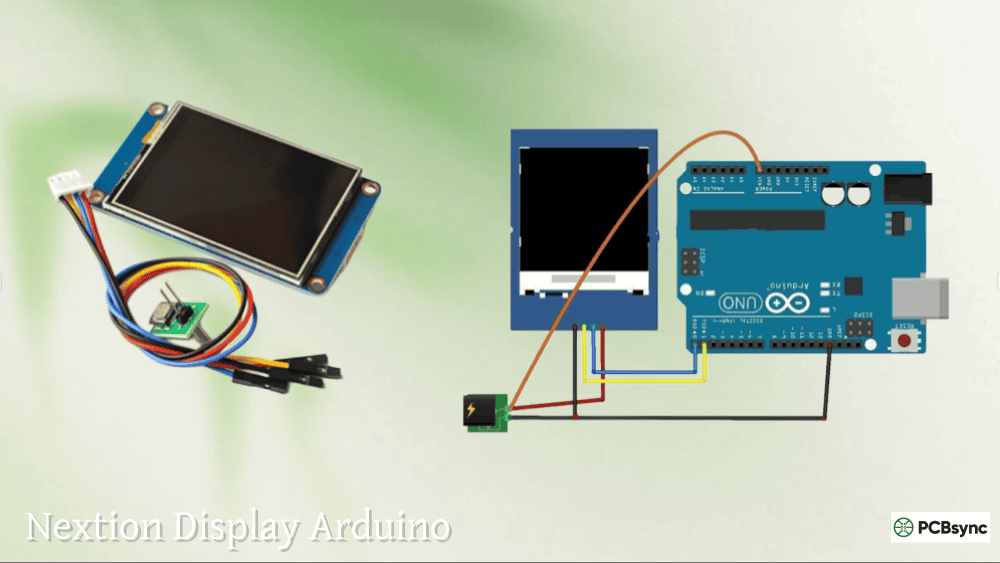
The wiring is refreshingly simple. Nextion displays use a 4-pin connector with power, ground, and two serial lines.
Nextion to Arduino Connection Table
Nextion Pin
Wire Color (Standard)
Arduino Uno Pin
Arduino Mega Pin
+5V
Red
5V
5V
GND
Black
GND
GND
TX
Yellow
Pin 2 (Software RX)
Pin 19 (RX1)
RX
Blue
Pin 3 (Software TX)
Pin 18 (TX1)
On the Arduino Uno, you’ll use SoftwareSerial since the hardware serial (pins 0 and 1) is used for programming and debugging. The Mega has multiple hardware serial ports, making it ideal for Nextion projects where you want reliable high-speed communication.
Important Wiring Considerations
Cross your TX and RX lines properly—Nextion TX goes to Arduino RX, and vice versa. This trips up beginners more often than you’d expect. Also, keep your serial wires short if possible. I’ve had issues with cables longer than 30cm at higher baud rates due to signal degradation.
Setting Up Nextion Editor Software
The Nextion Editor is a free Windows application where you design your interface. It’s not the most polished software you’ll ever use, but it gets the job done once you understand its quirks.
Nextion Editor Installation Steps
Download Nextion Editor from the official ITEAD website
Extract the ZIP file to a folder (no installation required)
Run NextionEditor.exe
Create a new project and select your display model
Choose the orientation (horizontal or vertical)
Understanding the Editor Interface
The workspace consists of several panels:
Toolbox Panel contains all the components you can add—buttons, text fields, gauges, sliders, progress bars, pictures, and more.
Page Panel shows all the pages in your project. Think of pages like screens in a mobile app—users navigate between them.
Attribute Panel displays properties for the selected component. This is where you set colors, fonts, variable names, and event handlers.
Output Panel shows compilation messages and errors.
Creating Your First Interface
For this tutorial, let’s build a simple temperature display with a button. Here’s the process:
Add a Text component (t0) for the temperature reading
Set the font size and color in the attributes
Add a Button component (b0) labeled “Refresh”
In the button’s Touch Release Event, add the code: print “refresh”
This sends the string “refresh” over serial whenever someone presses the button.
Arduino Code for Nextion Display Communication
Now let’s write the Arduino sketch to communicate with our interface. I’ll show you both the basic approach and a cleaner method using a library.
Basic Serial Communication Method
#include <SoftwareSerial.h>
SoftwareSerial nextionSerial(2, 3); // RX, TX
void setup() {
Serial.begin(9600);
nextionSerial.begin(9600);
delay(500);
// Clear any startup messages
sendCommand(“”);
}
void loop() {
// Simulate temperature reading
float temperature = 23.5 + random(-20, 20) / 10.0;
Let me share a real project I built using the Nextion Display Arduino combination—an environmental monitoring station for my workshop. It displays temperature, humidity, and air quality, with historical graphs and alert thresholds.
Component Integration
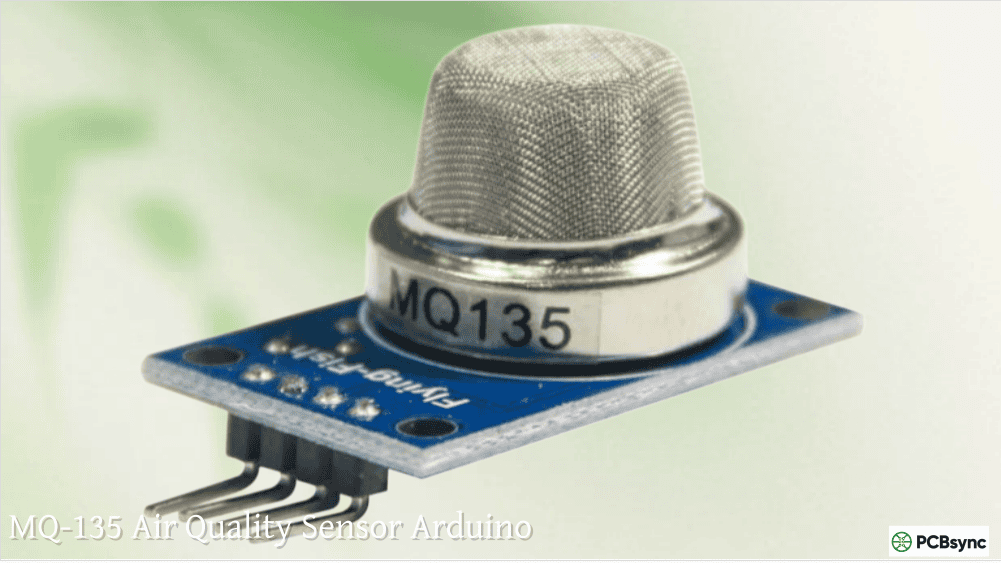
The system uses a DHT22 for temperature and humidity, an MQ-135 for air quality, and a 3.5″ Nextion display. The interface has three pages: a main dashboard, a settings page, and a graph page showing 24-hour trends.
Design Tips from Experience
Use global variables in Nextion for values that persist across pages. Define them in Program.s at startup.
Implement page change events to refresh data when users navigate. Nothing looks worse than stale numbers.
Add visual feedback for button presses. Even a simple color change confirms the touch registered.
Test with actual data ranges early in development. I’ve had gauges that looked perfect with placeholder values but couldn’t handle real sensor readings.
Troubleshooting Common Nextion Display Arduino Issues
After helping dozens of people on forums get their Nextion displays working, I’ve compiled the most common problems and their solutions.
Connection and Communication Problems
Symptom
Likely Cause
Solution
Display shows “Connecting…” forever
Wrong baud rate
Match baud rates in code and Nextion project
Blank screen, no backlight
Power issue
Use external 5V supply, check connections
Random resets during operation
Insufficient current
Upgrade power supply to 1A+
Commands ignored intermittently
Missing termination bytes
Ensure three 0xFF bytes after every command
Touch events not received
TX/RX swapped
Cross-check wiring diagram
Software and Programming Issues
Upload fails via SD card: Ensure the card is formatted FAT32, the TFT file is in the root directory, and the filename matches your display model.
Fonts not displaying: Import fonts in Nextion Editor before compiling. Each font uses Flash memory, so be selective.
Variables reset on page change: Use global variables (va0, va1, etc.) or store values in the Arduino and resend them.
Useful Resources for Nextion Display Arduino Projects
Here are resources I’ve bookmarked over the years that actually help:
Arduino Forum Displays Section: https://forum.arduino.cc/c/using-arduino/displays/
r/arduino subreddit: Active community for troubleshooting
Learning Materials
Random Nerd Tutorials: Excellent step-by-step guides
DroneBot Workshop YouTube: Visual explanations of Nextion projects
Frequently Asked Questions
Can I use Nextion Display with Arduino Nano?
Yes, the Arduino Nano works well with Nextion displays using SoftwareSerial. The main limitation is the Nano’s 5V pin current capacity—for displays larger than 3.2 inches, use an external power supply connected directly to the display while sharing a common ground with the Nano.
How do I update the Nextion firmware without an SD card?
You can upload directly via USB-to-TTL adapter by connecting it to the Nextion’s serial pins. In Nextion Editor, use the Upload function and select the appropriate COM port. This method is faster for development since you don’t need to swap SD cards constantly.
What’s the maximum cable length between Nextion and Arduino?
For reliable communication at 9600 baud, cables up to 50cm work fine with standard jumper wires. Beyond that, consider using shielded cable or lowering interference sources. At 115200 baud, keep cables under 20cm or use proper serial drivers.
Can Nextion displays show live camera feeds or video?
No, Nextion displays cannot process video streams. They’re designed for static and animated GUI elements, not real-time video. For video applications, consider Raspberry Pi with a TFT display instead.
How do I add custom fonts or images to my Nextion project?
In Nextion Editor, use the Fonts tab (Tools > Font Generator) to create custom fonts from TTF files. For images, use the Picture tab to import graphics. Both consume Flash memory, so optimize file sizes. Images must be converted to the Nextion format automatically by the editor during import.
Wrapping Up
The Nextion Display Arduino combination has earned its place in my toolkit because it solves a real problem: creating professional interfaces without professional budgets or complex code. Whether you’re building a home automation panel, a workshop monitoring system, or a product prototype, this approach delivers results that look and feel polished.
Start with a small display and a simple project. Get comfortable with the editor, understand the serial protocol, and then scale up to more ambitious interfaces. The learning curve is gentle, and the documentation, while not perfect, covers most scenarios you’ll encounter.
If you hit roadblocks, check the troubleshooting table above and visit the forums. Chances are someone else has solved your exact problem already. That’s the beauty of working with popular, well-supported hardware.
Suggested Meta Description:
Learn how to connect and program a Nextion Display Arduino project with this complete HMI touchscreen tutorial. Includes wiring diagrams, code examples, troubleshooting tips, and practical project ideas from a PCB engineer’s perspective.
Inquire: Call 0086-755-23203480, or reach out via the form below/your sales contact to discuss our design, manufacturing, and assembly capabilities.
Quote: Email your PCB files to Sales@pcbsync.com (Preferred for large files) or submit online. We will contact you promptly. Please ensure your email is correct.
Notes: For PCB fabrication, we require PCB design file in Gerber RS-274X format (most preferred), *.PCB/DDB (Protel, inform your program version) format or *.BRD (Eagle) format. For PCB assembly, we require PCB design file in above mentioned format, drilling file and BOM. Click to download BOM template To avoid file missing, please include all files into one folder and compress it into .zip or .rar format.