Inquire: Call 0086-755-23203480, or reach out via the form below/your sales contact to discuss our design, manufacturing, and assembly capabilities.
Quote: Email your PCB files to Sales@pcbsync.com (Preferred for large files) or submit online. We will contact you promptly. Please ensure your email is correct.
Notes: For PCB fabrication, we require PCB design file in Gerber RS-274X format (most preferred), *.PCB/DDB (Protel, inform your program version) format or *.BRD (Eagle) format. For PCB assembly, we require PCB design file in above mentioned format, drilling file and BOM. Click to download BOM template To avoid file missing, please include all files into one folder and compress it into .zip or .rar format.
If you’ve ever wondered how your smartphone knows which way is up, or how drones maintain stable flight in gusty conditions, you’ve encountered the magic of inertial measurement units. The MPU6050 Arduino combination has become the go-to solution for makers, engineers, and hobbyists who need reliable motion sensing without breaking the bank.
I’ve been designing PCBs and working with motion sensors for over a decade, and the MPU6050 remains one of my favorite components to recommend. It’s not the newest sensor on the market, but its mature ecosystem, excellent documentation, and rock-solid reliability make it perfect for learning and prototyping. Let me walk you through everything you need to know to get this sensor working with your Arduino projects.
The MPU6050 is a 6-axis Inertial Measurement Unit (IMU) manufactured by InvenSense (now TDK). It packs a 3-axis accelerometer and a 3-axis gyroscope into a tiny 4mm x 4mm package. What makes this chip particularly clever is its onboard Digital Motion Processor (DMP), which handles complex sensor fusion calculations internally.
For practical purposes, this means you can measure:
Linear acceleration along X, Y, and Z axes (how fast something speeds up or slows down)
Angular velocity around X, Y, and Z axes (how fast something rotates)
Temperature (built-in sensor for calibration purposes)
The MPU6050 GY-521 breakout module is what you’ll typically find at electronics suppliers. This module includes the chip, a 3.3V voltage regulator, and pull-up resistors for I2C communication. It’s ready to connect directly to your Arduino without additional components.
MPU6050 Technical Specifications
Understanding the specifications helps you choose appropriate settings for your project. Here’s what you’re working with:
Parameter
Specification
Operating Voltage
2.375V – 3.46V (chip), 3.3V – 5V (module)
Communication
I2C (up to 400kHz)
Accelerometer Range
±2g, ±4g, ±8g, ±16g (selectable)
Gyroscope Range
±250°/s, ±500°/s, ±1000°/s, ±2000°/s (selectable)
ADC Resolution
16-bit
Current Consumption
3.6mA (typical), 5μA (sleep mode)
I2C Address
0x68 (AD0 low) or 0x69 (AD0 high)
Temperature Range
-40°C to +85°C
Package Size
4mm x 4mm x 0.9mm (QFN)
The selectable ranges are worth understanding. For applications requiring high sensitivity (like measuring subtle vibrations or small movements), use the ±2g accelerometer range and ±250°/s gyroscope range. For fast-moving applications like drones or racing robots, you’ll need the higher ranges to avoid clipping.
Understanding How the MPU6050 Accelerometer Works
The accelerometer inside the MPU6050 uses MEMS (Micro-Electro-Mechanical Systems) technology. Picture a tiny mass suspended by microscopic springs inside the chip. When the sensor accelerates, this mass moves relative to its housing. Capacitive plates detect this movement and convert it to an electrical signal.
One thing that trips up beginners: the accelerometer always measures gravitational acceleration when stationary. If you hold the sensor flat, the Z-axis reads approximately 1g (9.8 m/s²), while X and Y read close to zero. Tilt the sensor 90 degrees, and different axes pick up that gravitational component.
This behavior is actually useful. By measuring which axis detects gravity, you can calculate the sensor’s orientation (roll and pitch angles) using basic trigonometry:
Roll = atan2(AccY, AccZ)
Pitch = atan2(-AccX, sqrt(AccY² + AccZ²))
The limitation? You cannot calculate yaw (rotation around the vertical axis) using accelerometer data alone. That requires either a gyroscope or magnetometer.
Understanding How the MPU6050 Gyroscope Works
The gyroscope operates on a different principle called the Coriolis effect. Inside the chip, tiny vibrating structures experience a force when the sensor rotates. This force is perpendicular to both the vibration direction and rotation axis, and it’s proportional to angular velocity.
The gyroscope measures how fast the sensor rotates, expressed in degrees per second (°/s). To get an actual angle, you need to integrate this value over time:
Here’s the catch: gyroscope measurements drift over time. Small errors accumulate with each integration step. Leave the sensor stationary for a few minutes, and your calculated angle will gradually diverge from reality. This drift is why we need sensor fusion techniques.
MPU6050 Arduino Wiring and Connections
Connecting the MPU6050 to Arduino uses the I2C protocol, which requires only four wires. Here’s the connection table for common Arduino boards:
MPU6050 Pin
Arduino Uno/Nano
Arduino Mega
Arduino Leonardo
VCC
5V
5V
5V
GND
GND
GND
GND
SCL
A5
21
3
SDA
A4
20
2
AD0
GND (optional)
GND (optional)
GND (optional)
INT
D2 (optional)
D2 (optional)
D7 (optional)
A few tips from experience:
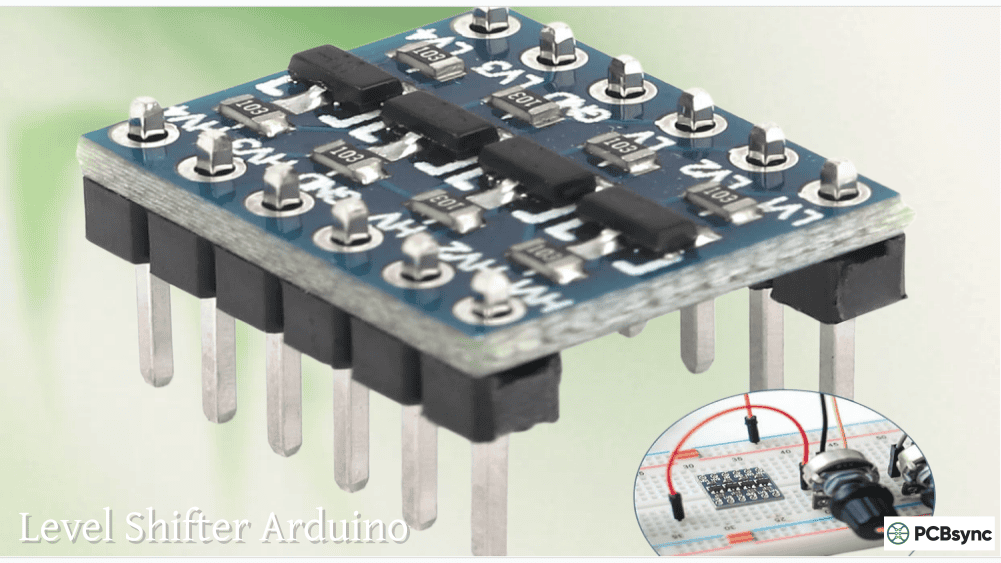
Keep your I2C wires short (under 50cm) to avoid communication errors. If you need longer runs, consider using a logic level shifter or I2C extender. Add 4.7kΩ pull-up resistors between SDA/SCL and VCC if you’re experiencing intermittent communication failures, although most GY-521 modules include these already.
The AD0 pin determines the I2C address. Leave it unconnected or tie it to GND for address 0x68. Connect it to VCC for address 0x69. This feature allows you to use two MPU6050 sensors on the same I2C bus.
Installing MPU6050 Arduino Libraries
Several libraries exist for the MPU6050. Here are the most popular options:
Library
Best For
Installation
Adafruit MPU6050
Beginners, quick prototyping
Arduino Library Manager
Jeff Rowberg I2Cdevlib
DMP features, advanced projects
GitHub manual install
ElectronicCats MPU6050
Lightweight, simple projects
Arduino Library Manager
For most beginners, I recommend the Adafruit library. Open the Arduino IDE, go to Sketch → Include Library → Manage Libraries, and search for “Adafruit MPU6050.” Install it along with “Adafruit Unified Sensor” and “Adafruit BusIO” when prompted.
Basic MPU6050 Arduino Code Example
Here’s a complete sketch that reads accelerometer, gyroscope, and temperature data:
Upload this code, open the Serial Monitor at 115200 baud, and you should see sensor readings scrolling by. Try tilting the sensor and observe how the values change.
Calculating Roll, Pitch, and Yaw Angles
Raw sensor data is useful, but most projects need orientation angles. Here’s how to calculate them using a complementary filter, which combines accelerometer and gyroscope data:
The complementary filter blends the gyroscope’s fast response with the accelerometer’s long-term stability. The alpha value (0.96 in this example) determines the blend ratio. Higher values trust the gyroscope more; lower values favor the accelerometer.
MPU6050 Calibration for Accurate Readings
Factory calibration gets you close, but for accurate results, you need to calibrate your specific sensor. Here’s a simple calibration routine:
Place the sensor on a flat, level surface
Keep it completely still for 10 seconds
Average the readings during this period
Subtract these offsets from future readings
void calibrateSensor() {
Serial.println(“Calibrating… Keep sensor still and level”);
Store these calibration values in EEPROM so you don’t need to recalibrate every power cycle. Temperature changes affect sensor accuracy, so consider recalibrating after significant temperature shifts.
The MPU6050 Arduino combination opens up countless project possibilities. Here are some practical applications I’ve built or helped others build:
Self-Balancing Robots
These two-wheeled robots use PID control combined with MPU6050 orientation data to stay upright. The sensor detects tilt angles hundreds of times per second, and the microcontroller adjusts motor speeds to compensate. This project teaches control theory fundamentals.
DIY Gimbal Stabilizers
Camera gimbals use three servo motors controlled by MPU6050 orientation data. When the sensor detects rotation, the servos move in the opposite direction to keep the camera level. Start with a simple single-axis stabilizer before attempting a full three-axis system.
Gesture-Controlled Devices
Attach an MPU6050 to a glove or wristband to detect hand movements. Specific gestures can trigger actions on connected devices. I’ve seen this used for controlling RC cars, smart home systems, and even musical instruments.
Drone Flight Controllers
While commercial flight controllers use more sophisticated IMUs, the MPU6050 works well for learning drone stabilization concepts. Combined with a barometer and GPS, you can build a basic autonomous quadcopter.
Motion-Activated Systems
Security systems, automatic lights, and activity monitors can all use the MPU6050 to detect movement or specific orientations. The low power consumption makes it suitable for battery-powered applications.
Troubleshooting Common MPU6050 Arduino Problems
After helping dozens of makers debug their MPU6050 projects, I’ve compiled the most common issues and solutions:
Problem
Likely Cause
Solution
“Failed to find MPU6050 chip”
Wiring error or wrong I2C address
Check connections, try address 0x69
Readings stuck at zero
Sensor in sleep mode
Write 0 to register 0x6B
Erratic or noisy data
Electrical interference
Add decoupling capacitors, shorten wires
Constant drift in angles
Normal gyroscope behavior
Implement complementary or Kalman filter
Communication timeouts
Pull-up resistor issues
Add 4.7kΩ pull-ups on SDA/SCL
Sensor works intermittently
Loose connections
Resolder joints, use better connectors
One issue that wastes hours: some cheap MPU6050 modules have manufacturing defects. If you’ve verified your wiring and code but still can’t communicate with the sensor, try a different module before diving deeper into troubleshooting.
Using the MPU6050 Digital Motion Processor (DMP)
The MPU6050’s onboard DMP can handle sensor fusion calculations internally, offloading work from your Arduino. Jeff Rowberg’s I2Cdevlib includes excellent DMP examples that output quaternions or Euler angles directly.
The DMP advantages include:
More accurate orientation calculations
Reduced Arduino processing load
Built-in calibration and filtering
Interrupt-driven data retrieval
The trade-off is complexity. DMP programming requires loading firmware to the chip and understanding quaternion mathematics. For beginners, stick with the simpler accelerometer/gyroscope approach first.
Filtering Techniques for Better MPU6050 Data
Raw sensor data is noisy. Several filtering techniques can improve accuracy:
Complementary Filter
Combines accelerometer stability with gyroscope responsiveness using a weighted average. Simple to implement and computationally light. Good for most hobbyist projects.
Kalman Filter
The gold standard for sensor fusion. It uses a mathematical model of the system to predict and correct state estimates. More accurate than complementary filters but requires more processing power and deeper mathematical understanding.
Low-Pass Filter
Removes high-frequency noise from sensor readings. The MPU6050 has a built-in digital low-pass filter (DLPF) that you can configure via register 0x1A. Options range from 5Hz to 260Hz bandwidth.
For most Arduino projects, start with the complementary filter. It provides a good balance between accuracy and simplicity. Move to Kalman filtering only if you need higher precision and have the processing headroom.
Useful Resources and Downloads
Here are the resources I keep bookmarked for MPU6050 development:
Resource
Description
Link
MPU6050 Datasheet
Official InvenSense documentation
invensense.com
Register Map
Detailed register descriptions
invensense.com
Adafruit Library
Beginner-friendly Arduino library
github.com/adafruit/Adafruit_MPU6050
I2Cdevlib
Advanced library with DMP support
github.com/jrowberg/i2cdevlib
Kalman Filter Library
TKJ Electronics implementation
github.com/TKJElectronics/KalmanFilter
Arduino Reference
Official Arduino documentation
arduino.cc/reference
Frequently Asked Questions
What is the difference between accelerometer and gyroscope in MPU6050?
The accelerometer measures linear acceleration (including gravity), telling you which direction is “down” and detecting movement. The gyroscope measures angular velocity, telling you how fast the sensor rotates. Together, they provide complete motion information. Neither sensor alone gives you full orientation data—that’s why the MPU6050 combines both.
How do I fix MPU6050 gyroscope drift?
Gyroscope drift is inherent to MEMS technology and cannot be eliminated completely. Implement a complementary filter or Kalman filter that uses accelerometer data to correct gyroscope-based angle calculations over time. For yaw drift specifically, add a magnetometer (like HMC5883L) to your system. The MPU6050’s DMP also includes drift correction algorithms.
Can I connect multiple MPU6050 sensors to one Arduino?
Yes, you can connect two MPU6050 sensors to the same I2C bus by setting different addresses. Connect one sensor’s AD0 pin to GND (address 0x68) and the other’s AD0 to VCC (address 0x69). For more than two sensors, use an I2C multiplexer like the TCA9548A.
Why does my MPU6050 show 16000+ raw values?
Raw values around 16000-32000 indicate the sensor is measuring at the edge of its range or there’s a communication issue. Check your wiring first. If connections are correct, verify you’re dividing raw values by the appropriate scale factor (16384 for ±2g accelerometer range, 131 for ±250°/s gyroscope range).
Is the MPU6050 suitable for commercial products?
The MPU6050 works well for prototypes and learning projects but has been discontinued by TDK for new designs. For commercial products, consider the MPU6500, ICM-20948, or LSM6DSO. These newer sensors offer better accuracy, lower power consumption, and active manufacturer support.
Advanced Tips for PCB Design with MPU6050
When you’re ready to move from breadboard prototypes to custom PCBs, keep these design considerations in mind:
Mounting Orientation Matters
Mount the MPU6050 away from heat sources like voltage regulators or motor drivers. Temperature gradients cause measurement drift. Place the sensor near the center of your PCB to minimize vibration-induced noise from board flexing.
Power Supply Filtering
Add a 100nF ceramic capacitor as close to the VCC pin as possible. For critical applications, include a ferrite bead in series with the power line to filter high-frequency noise from digital circuits.
Ground Plane Design
Use a solid ground plane under the MPU6050. Avoid routing high-speed digital signals directly beneath the sensor. Separate analog and digital grounds if your design includes motors or switching regulators.
I2C Layout Guidelines
Keep SDA and SCL traces parallel and close together. Avoid routing them near switching signals or motor drivers. If using trace lengths over 10cm, consider reducing I2C speed to 100kHz instead of 400kHz for improved reliability.
Comparing MPU6050 with Alternative IMU Sensors
While the MPU6050 serves most hobbyist needs well, you should know your alternatives:
Sensor
DOF
Features
Best For
MPU6050
6
Acc + Gyro, DMP
Learning, prototypes
MPU9250
9
Acc + Gyro + Mag
Projects needing compass
ICM-20948
9
Lower noise, newer chip
Commercial products
LSM6DSO
6
Ultra-low power
Wearables, IoT
BMI160
6
Very low power
Battery-powered devices
The MPU9250 adds a magnetometer for yaw correction, solving the drift problem. The ICM-20948 is essentially the modern replacement for the MPU9250 with improved specifications. For ultra-low-power applications, the LSM6DSO and BMI160 offer sleep currents measured in microamps.
Final Thoughts
The MPU6050 Arduino combination remains one of the best ways to learn motion sensing fundamentals. Its mature ecosystem, abundant tutorials, and forgiving nature make it perfect for beginners, while its capabilities satisfy many advanced projects.
Start with basic accelerometer and gyroscope readings, progress to complementary filtering for orientation, and eventually explore the DMP for production-quality results. Each step builds understanding that transfers to any motion sensor you’ll work with in the future.
Whether you’re building a self-balancing robot, developing a gesture control system, or simply learning how motion sensors work, the MPU6050 provides an accessible entry point into the fascinating world of inertial measurement. The sensor won’t last forever in the market, but the concepts you learn will serve you well regardless of which chip you use next.
Now grab your Arduino, wire up that MPU6050, and start experimenting. The best way to understand motion sensing is to build something that moves. Happy building!
Inquire: Call 0086-755-23203480, or reach out via the form below/your sales contact to discuss our design, manufacturing, and assembly capabilities.
Quote: Email your PCB files to Sales@pcbsync.com (Preferred for large files) or submit online. We will contact you promptly. Please ensure your email is correct.
Notes: For PCB fabrication, we require PCB design file in Gerber RS-274X format (most preferred), *.PCB/DDB (Protel, inform your program version) format or *.BRD (Eagle) format. For PCB assembly, we require PCB design file in above mentioned format, drilling file and BOM. Click to download BOM template To avoid file missing, please include all files into one folder and compress it into .zip or .rar format.