Inquire: Call 0086-755-23203480, or reach out via the form below/your sales contact to discuss our design, manufacturing, and assembly capabilities.
Quote: Email your PCB files to Sales@pcbsync.com (Preferred for large files) or submit online. We will contact you promptly. Please ensure your email is correct.
Notes: For PCB fabrication, we require PCB design file in Gerber RS-274X format (most preferred), *.PCB/DDB (Protel, inform your program version) format or *.BRD (Eagle) format. For PCB assembly, we require PCB design file in above mentioned format, drilling file and BOM. Click to download BOM template To avoid file missing, please include all files into one folder and compress it into .zip or .rar format.
MAX7219 LED Matrix Arduino: Complete 8×8 Display Projects Guide
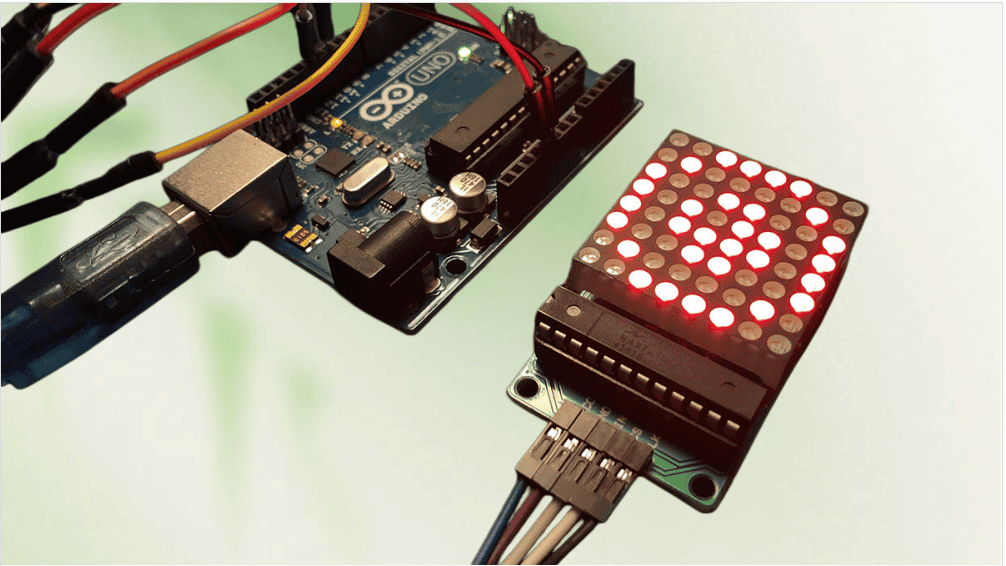
There’s something genuinely satisfying about watching a grid of LEDs come to life. I’ve been designing PCBs and embedded systems for over a decade, and despite working with high-resolution OLEDs and fancy TFT screens, I still reach for the humble MAX7219 LED Matrix Arduino combination when I need a display that’s visible across a room, dirt cheap to implement, and practically indestructible.
The MAX7219 chip has been around since the 1990s, and it’s still one of the most elegant solutions for driving LED matrices. In this tutorial, I’ll show you everything you need to know about wiring up 8×8 LED matrices to your Arduino, programming them with popular libraries, and building practical projects that actually get used rather than collecting dust on a shelf.
Before we start connecting wires, let’s understand what makes the MAX7219 special. An 8×8 LED matrix has 64 individual LEDs, and if you tried to control each one directly from an Arduino, you’d need 64 pins—obviously impossible on most boards. Even with multiplexing techniques using transistors, you’d still need 16 pins and write a lot of timing-critical code.
The MAX7219 handles all of this internally. It’s a serial input/output common-cathode display driver that can control up to 64 LEDs using just three data pins from your microcontroller. The chip takes care of multiplexing, current limiting, and brightness control, leaving your Arduino free to focus on what it should be doing—running your application logic.
MAX7219 Key Specifications
Parameter
Value
Notes
Operating Voltage
4.0V to 5.5V
5V recommended for Arduino
Maximum Segment Current
40mA per segment
Set by external resistor
Interface
SPI-compatible serial
3-wire interface
Maximum Cascade
8 devices (64 digits)
Theoretically unlimited with level shifting
Brightness Levels
16 steps
Digital brightness control
Display Test Mode
Yes
All LEDs on for testing
Shutdown Mode
Yes
Low power consumption
Operating Temperature
0°C to +70°C
Commercial grade
The chip uses a scan rate of 800Hz, fast enough that you won’t see any flicker, even in slow-motion video. This matters more than you’d think—I’ve had clients reject prototypes because the display flickered on camera during trade show demos.
Types of MAX7219 LED Matrix Modules
Walk into any electronics store or browse online, and you’ll find MAX7219 modules in several configurations. Knowing the differences helps you pick the right one for your project.
Common Module Configurations
Module Type
LED Size
Dimensions
Cascading
Best Use Case
Single 8×8 Matrix
3mm or 5mm
~32mm x 32mm
Via header pins
Learning, small displays
FC-16 (4-in-1)
3mm
~128mm x 32mm
Built-in daisy chain
Scrolling text, clocks
Generic 4-in-1
Various
~128mm x 32mm
Via solder pads
General purpose
Parola Style
5mm
~160mm x 40mm
Modular connectors
Large signage
The FC-16 module is probably the most popular choice. It comes as a single PCB with four 8×8 matrices and four MAX7219 chips already connected in series. You get 32×8 pixels out of the box with just three wires to the Arduino—perfect for scrolling messages or simple animations.
One thing that catches people off guard: not all modules have the same LED orientation. Some have the first matrix on the left, others on the right. Some have rows and columns swapped. This affects how text renders, and we’ll deal with it in the software section.
Hardware Setup: Wiring MAX7219 LED Matrix Arduino
The wiring couldn’t be simpler. The MAX7219 uses an SPI-like protocol (not true SPI, but close enough) with three signals plus power.
Basic Connection Diagram
MAX7219 Module Pin
Arduino Uno Pin
Arduino Mega Pin
Function
VCC
5V
5V
Power supply
GND
GND
GND
Ground
DIN
Pin 11
Pin 51
Data input (MOSI)
CS (LOAD)
Pin 10
Pin 53
Chip select
CLK
Pin 13
Pin 52
Clock signal
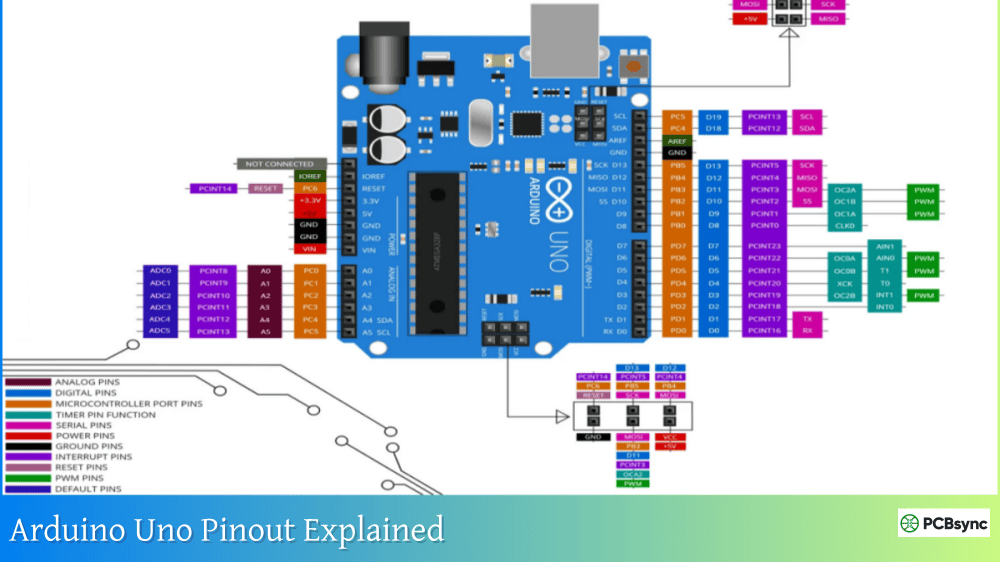
You can actually use any digital pins with software SPI, but using the hardware SPI pins gives you faster refresh rates and more efficient code. On the Uno, pins 11, 12, and 13 are the hardware SPI pins, though the MAX7219 only needs MOSI (pin 11) since it doesn’t send data back.
Cascading Multiple Modules
Here’s where the MAX7219 really shines. To add more displays, you simply daisy-chain them: connect DOUT of the first module to DIN of the second, and share the CLK and CS lines across all modules. VCC and GND also connect in parallel.
The data shifts through each chip in sequence. When you send 16 bits, the first chip grabs it. Send another 16 bits, and the first packet shifts to the second chip while the first chip takes the new data. It’s elegant, requires no additional Arduino pins, and scales up to impressive display sizes.
I once built a 96×16 pixel display using twelve 4-in-1 modules for a workshop notification board. Same three wires to the Arduino, just longer data transfers.
Power Considerations
Each LED in the matrix can draw up to 20mA when lit at full brightness. With 64 LEDs per module, that’s potentially 1.28A per module—though in practice, you’ll rarely light every LED simultaneously at maximum brightness.
For a single module, the Arduino’s 5V regulator can usually cope. For multiple modules or high-brightness applications, use an external 5V power supply. Connect it directly to the modules’ VCC and GND, with a common ground to the Arduino.
Number of Modules
Recommended Power Supply
1
USB power (500mA) often sufficient
2-4
5V 2A external supply
5-8
5V 3A external supply
8+
5V 5A+ supply with thick wires
Don’t cheap out on power supplies for large displays. Voltage drops cause dimming on the modules furthest from the supply, and brownouts can corrupt the MAX7219’s internal registers, causing random pixels to light up or sections to blank out.
Software Libraries for MAX7219 LED Matrix Arduino
Several libraries exist for controlling MAX7219 matrices, each with different strengths. After trying most of them, I have clear favorites depending on the project requirements.
Library Comparison Table
Library
Author
Ease of Use
Features
Memory Usage
Best For
MD_Parola
MajicDesigns
Medium
Excellent
Higher
Text animations, scrolling
MD_MAX72XX
MajicDesigns
Medium
Good
Medium
Custom graphics, games
LedControl
Eberhard Fahle
Easy
Basic
Low
Simple projects, learning
Max72xxPanel
Mark Ruys
Easy
Moderate
Medium
Adafruit GFX compatibility
FastLED Matrix
Daniel Garcia
Advanced
Excellent
Higher
Complex animations
For beginners, I recommend starting with LedControl. It’s straightforward, well-documented, and teaches you the fundamentals. Once you need scrolling text or complex animations, upgrade to MD_Parola—it’s the most fully-featured library available and handles the hardware variations between different modules gracefully.
Notice the HARDWARE_TYPE parameter. This tells the library how your specific module is wired internally. If your text appears backwards or upside down, try different hardware types: FC16_HW, PAROLA_HW, GENERIC_HW, or ICSTATION_HW.
Example 3: Custom Graphics
#include <LedControl.h>
LedControl lc = LedControl(11, 13, 10, 1);
// Smiley face bitmap
byte smiley[8] = {
B00111100,
B01000010,
B10100101,
B10000001,
B10100101,
B10011001,
B01000010,
B00111100
};
void setup() {
lc.shutdown(0, false);
lc.setIntensity(0, 8);
lc.clearDisplay(0);
// Display the bitmap
for (int row = 0; row < 8; row++) {
lc.setRow(0, row, smiley[row]);
}
}
void loop() {
// Static display, nothing to do
}
Creating custom bitmaps is easier with online tools. I use LED Matrix Editor websites where you click pixels on a grid, and it generates the byte array automatically.
Practical MAX7219 LED Matrix Arduino Projects
Theory is great, but let’s build something useful. Here are three projects I’ve actually deployed in real-world settings.
Project 1: Workshop Clock with Temperature
This project displays the time on a 4-module matrix and scrolls the temperature every minute. It uses a DS3231 RTC for accurate timekeeping and a DHT22 for temperature.
Key components:
FC-16 4-in-1 LED matrix
DS3231 RTC module
DHT22 sensor
Arduino Nano
The code alternates between showing static time (HH:MM) and scrolling the temperature. The brightness automatically adjusts based on ambient light from an LDR, dimming at night to avoid being distracting.
Project 2: Network Status Monitor
For my home server rack, I built a simple status display that shows which services are running. An ESP8266 replaces the Arduino, connecting to WiFi and pinging various servers. Green checkmarks scroll for healthy services; red X marks indicate problems.
This project demonstrates that MAX7219 modules work equally well with ESP8266 and ESP32 boards. The wiring is identical, though you’ll need to adjust the pin numbers in your code.
Project 3: Retro Game Console
An 8×8 matrix is perfect for simple games like Snake, Tetris (barely), or Pong. I built a two-player Pong game using two matrices side by side and analog joysticks for input. It’s surprisingly addictive and always gets attention at maker meetups.
The limited resolution forces you to think creatively about game design. Every pixel matters, and there’s no hiding behind fancy graphics.
Troubleshooting Common Issues
After answering hundreds of forum questions about MAX7219 displays, I’ve identified the most frequent problems.
Problem Resolution Guide
Symptom
Likely Cause
Solution
Display completely blank
Wiring error or no power
Check VCC/GND connections, verify 5V at module
Random pixels lighting up
Power supply issues
Use external supply, add 10μF capacitor near VCC
Text appears mirrored
Wrong hardware type in library
Try different HARDWARE_TYPE constants
Text upside down
Module orientation
Rotate physically or adjust in software
First module works, others don’t
Daisy chain broken
Check DOUT to DIN connections between modules
Display flickers
Insufficient current
Upgrade power supply, reduce brightness
Garbled display after running
Register corruption
Add decoupling capacitors, improve power supply
Works then fails after minutes
Overheating MAX7219
Reduce brightness, improve ventilation
Hardware Debugging Tips
When a display misbehaves, I follow this checklist:
Measure voltage at the module’s VCC pin while display is active
Try the display test mode by sending the test register command
Swap modules to isolate whether it’s the module or wiring
Reduce to single module to eliminate cascading issues
Try different Arduino pins to rule out dead I/O
Most problems trace back to power supply inadequacy or loose connections. A 10μF electrolytic capacitor and 100nF ceramic capacitor across VCC and GND at each module prevents many headaches.
Useful Resources for MAX7219 LED Matrix Arduino Projects
Here are the resources I keep bookmarked for LED matrix projects:
Instructables: Search for “MAX7219” for project ideas
Frequently Asked Questions
Can I use MAX7219 with 3.3V boards like ESP32?
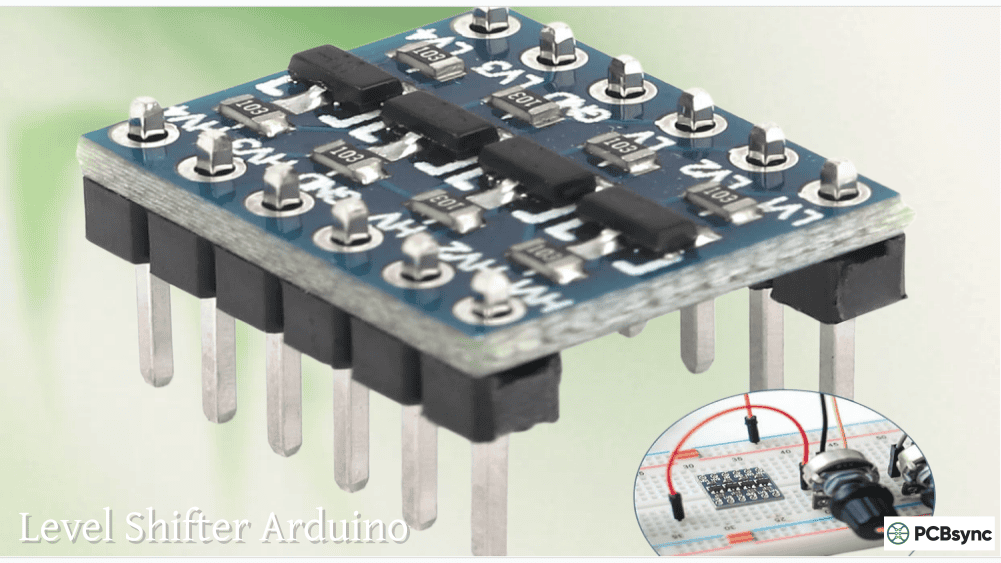
The MAX7219 is spec’d for 4V minimum, so 3.3V is technically out of range. However, many people report success with ESP32 and ESP8266 at 3.3V logic levels, especially if you power the module from 5V and only use 3.3V for the data lines. For reliable operation, use a level shifter or choose the MAX7221, which is rated for lower voltage logic.
How many MAX7219 modules can I chain together?
There’s no hard limit in the chip design. Practical limits come from signal integrity (long wires degrade clock signals) and memory (storing framebuffer data for many modules). I’ve seen working displays with 32+ modules. Beyond eight modules, consider using hardware SPI and keeping wires short.
Why is my LED matrix displaying text backwards?
Different manufacturers wire their modules differently. In MD_Parola, try changing the HARDWARE_TYPE parameter: FC16_HW, PAROLA_HW, GENERIC_HW, and ICSTATION_HW represent common configurations. One of them will match your module’s wiring.
Can I control RGB LED matrices with MAX7219?
No, the MAX7219 is designed for single-color LEDs only. For RGB matrices, look at WS2812B (NeoPixel) based panels or the HUB75 interface for larger RGB displays. These require different drivers and significantly more processing power.
How do I make the display brighter?
The MAX7219 has 16 brightness levels controllable via software (setIntensity function). If maximum software brightness isn’t enough, you can lower the current-limiting resistor value, though this risks overheating the LEDs and MAX7219. Better solutions include using modules with higher-efficiency LEDs or adding more modules to spread your message across a larger area.
Final Thoughts
The MAX7219 LED Matrix Arduino combination remains relevant because it solves a real problem elegantly. You get bright, visible displays with minimal wiring, straightforward code, and rock-solid reliability. These modules survive in environments that would kill fancier screens—I have one running in an unheated garage that’s been through three winters without issues.
Start with a single 4-in-1 module and the MD_Parola library. Get text scrolling, understand how the hardware types work, and then expand from there. Once you’re comfortable, the project possibilities are limited only by your imagination and how many modules you’re willing to chain together.
Whether you’re building an information display, a retro game, or just want your workshop to have that cyberpunk aesthetic, MAX7219 matrices deliver results without drama. And in embedded systems, boring reliability is exactly what you want.
Suggested Meta Description:
Master the MAX7219 LED Matrix Arduino with this complete tutorial. Learn wiring, libraries, code examples, and build practical 8×8 display projects. Includes troubleshooting tips and resources from an experienced PCB engineer.
Inquire: Call 0086-755-23203480, or reach out via the form below/your sales contact to discuss our design, manufacturing, and assembly capabilities.
Quote: Email your PCB files to Sales@pcbsync.com (Preferred for large files) or submit online. We will contact you promptly. Please ensure your email is correct.
Notes: For PCB fabrication, we require PCB design file in Gerber RS-274X format (most preferred), *.PCB/DDB (Protel, inform your program version) format or *.BRD (Eagle) format. For PCB assembly, we require PCB design file in above mentioned format, drilling file and BOM. Click to download BOM template To avoid file missing, please include all files into one folder and compress it into .zip or .rar format.