Inquire: Call 0086-755-23203480, or reach out via the form below/your sales contact to discuss our design, manufacturing, and assembly capabilities.
Quote: Email your PCB files to Sales@pcbsync.com (Preferred for large files) or submit online. We will contact you promptly. Please ensure your email is correct.
Notes: For PCB fabrication, we require PCB design file in Gerber RS-274X format (most preferred), *.PCB/DDB (Protel, inform your program version) format or *.BRD (Eagle) format. For PCB assembly, we require PCB design file in above mentioned format, drilling file and BOM. Click to download BOM template To avoid file missing, please include all files into one folder and compress it into .zip or .rar format.
After deploying dozens of LoRaWAN networks spanning agricultural fields to urban monitoring systems, I’ve learned that understanding LoRaWAN Arduino integration with The Things Network requires more than just copying example code. The difference between a prototype that works on your desk and a production system handling hundreds of nodes comes down to grasping network architecture, proper activation methods, and the subtle interplay between duty cycles, payload optimization, and regional regulations. This guide distills years of field experience into practical knowledge you can apply to your Arduino LoRaWAN projects today.
Understanding LoRaWAN vs LoRa: The Critical Distinction
Many engineers confuse LoRa with LoRaWAN—a fundamental misunderstanding that causes implementation headaches. LoRa represents the physical layer modulation technique using chirp spread spectrum to achieve long-range communication. LoRaWAN, conversely, defines the complete network protocol stack built atop LoRa radio technology. Think of it like comparing Ethernet physical signaling to TCP/IP networking protocols.
When you implement LoRaWAN Arduino systems, you’re joining a standardized network architecture maintained by the LoRa Alliance. This architecture includes end devices (your Arduino nodes), gateways that relay messages, network servers handling routing and security, and application servers where your data ultimately arrives. The Things Network provides free public infrastructure for these network and application server components, letting you focus on building end devices rather than managing backend infrastructure.
LoRaWAN Network Architecture Components
The Things Network operates as a crowdsourced global LoRaWAN network with over 22,000 public gateways worldwide. When your LoRaWAN Arduino device transmits, nearby gateways receive the packet—potentially multiple gateways simultaneously. Each gateway forwards the packet to The Things Network servers over the internet. The network server deduplicates these messages, verifies security credentials, and routes data to your application.
This architecture provides remarkable resilience. If one gateway fails or experiences connectivity issues, other gateways maintain coverage. Your end device requires no knowledge of which gateway receives its transmissions—the network infrastructure handles all routing transparently.
Compatible Arduino Boards for LoRaWAN
Not all Arduino boards work equally well with LoRaWAN. The protocol’s complexity and tight timing requirements favor boards with adequate processing power and memory.
Recommended Arduino Hardware
Board
Processor
LoRa Module
RAM
Flash
Notes
Arduino MKR WAN 1300
SAMD21
Murata CMWX1ZZABZ
32KB
256KB
Official Arduino, integrated LoRa
Arduino MKR WAN 1310
SAMD21
Murata CMWX1ZZABZ
32KB
256KB
Newer version, improved design
Adafruit Feather M0 LoRa
SAMD21
RFM95W
32KB
256KB
Popular third-party option
Arduino Pro Mini + LoRa
ATmega328P
RFM95/SX1278
2KB
32KB
Minimal RAM, requires careful coding
ESP32 + LoRa Module
ESP32
Various
520KB
4MB
Powerful but higher power consumption
The Arduino MKR WAN 1300/1310 boards provide the smoothest LoRaWAN experience. These boards integrate the Murata CMWX1ZZABZ module containing an STM32L0 microcontroller and SX1276 LoRa transceiver in a single package. The design includes secure element (ATECC608A) for cryptographic operations, crucial for production security.
The Adafruit Feather M0 with RFM95W offers similar capabilities at competitive pricing. Its form factor accommodates various FeatherWing accessories, making prototype development convenient.
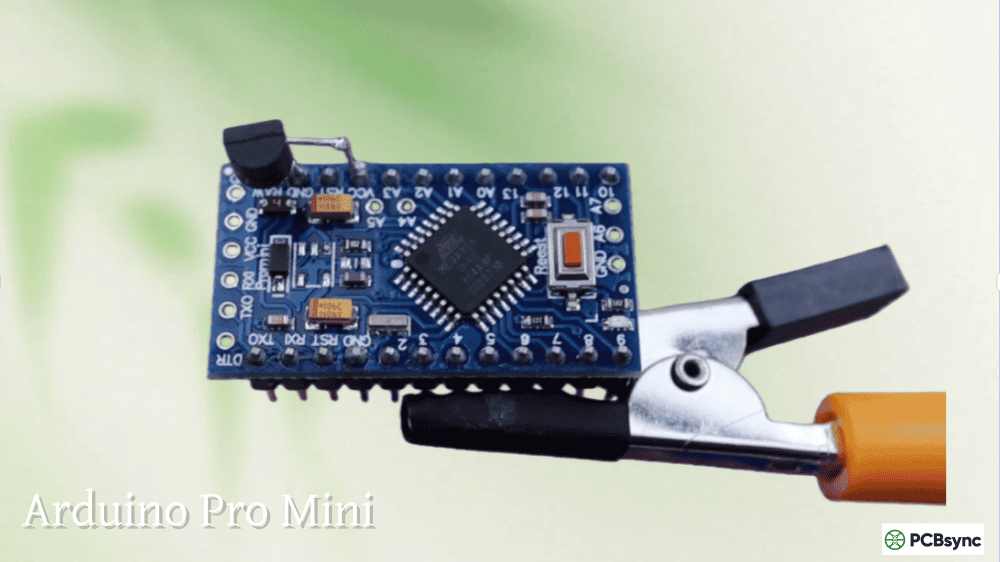
Arduino Uno and Pro Mini present challenges due to limited RAM (2KB). The LMIC (LoRaWAN-in-C) library consumes significant memory, leaving minimal space for application code. These boards work for basic demonstrations but struggle with complex applications requiring sensor libraries or data buffering.
LoRaWAN Activation Methods: OTAA vs ABP
LoRaWAN devices join networks using two activation methods: Over-The-Air Activation (OTAA) or Activation By Personalization (ABP). Choosing between them impacts security, scalability, and operational flexibility.
Over-The-Air Activation (OTAA)
OTAA represents the recommended approach for production deployments. The device stores three permanent credentials: DevEUI (unique device identifier), AppEUI/JoinEUI (application identifier), and AppKey (secret encryption key). When the device powers on, it broadcasts a join request containing DevEUI and AppEUI encrypted with AppKey.
The network server verifies credentials and responds with a join accept message containing session-specific keys (AppSKey for application data encryption, NwkSKey for network integrity). These session keys change with each join procedure, providing forward secrecy. If someone compromises session keys, historical and future communications remain protected.
Activation By Personalization (ABP)
ABP devices skip the join procedure by pre-configuring DevAddr (device address) and session keys directly into firmware. The device immediately transmits data without negotiating network access. This simplicity appeals to newcomers, but creates operational challenges.
Session keys never change in ABP unless you reprogram the device. Compromising these keys exposes all device communications indefinitely. Frame counter resets—occurring during power cycles if not properly managed—cause the network to reject subsequent messages, requiring manual intervention to restore connectivity.
Comparison: OTAA vs ABP
Factor
OTAA
ABP
Recommended For
Security
Excellent (dynamic keys)
Limited (static keys)
OTAA for production
Setup Complexity
Moderate (join procedure)
Simple (immediate TX)
ABP for quick testing
Network Roaming
Supported
Not supported
OTAA for flexibility
Frame Counter Management
Automatic
Manual (requires NVM storage)
OTAA for reliability
Power Consumption
Higher (join overhead)
Lower (no join)
ABP for battery-critical apps
Key Management
Automatic renewal
Manual firmware update
OTAA for maintenance
Despite ABP’s simplicity, I strongly recommend OTAA for any serious deployment. The security and operational advantages far outweigh the modest additional complexity. Reserve ABP for rapid prototyping or demonstrations where you’ll reprogram devices frequently.
Setting Up The Things Network Account
Before programming your LoRaWAN Arduino device, establish infrastructure on The Things Network. This free service provides the network and application servers your devices connect to.
Creating Your Application
Navigate to The Things Network Console (console.cloud.thethings.network) and create an account. Select the appropriate cluster for your region—the cluster should correspond to where your gateways operate. North American users typically select “nam1” while European users choose “eu1.”
Create a new application—this logical container groups related devices. For example, an agricultural monitoring deployment might contain all field sensor nodes within one application. The application ID must be globally unique across The Things Network. Choose something descriptive: “farm-sensors-iowa” rather than generic “test” which likely exists already.
Registering Your End Device
Within your application, register individual devices. Click “Add end device” and choose manual registration for LoRaWAN Arduino boards (the device repository primarily serves commercial products with pre-provisioned credentials).
Select the LoRaWAN version (1.0.3 or 1.1 depending on your library) and regional parameters (US915 for North America, EU868 for Europe, AS923 for Asia, AU915 for Australia). The frequency plan must match your hardware and local regulations.
For OTAA activation, The Things Network generates DevEUI, AppEUI, and AppKey. Click the eye icon next to each credential to reveal the value, then select “copy to clipboard” or toggle to different formats (hex, C-style byte array, etc.). You’ll paste these values into your Arduino code.
Programming LoRaWAN Arduino with MKRWAN Library
The official Arduino MKR WAN boards use the MKRWAN library, providing high-level abstractions that simplify LoRaWAN programming. Install the library through Arduino IDE’s Library Manager by searching “MKRWAN.”
delay(300000); // Wait 5 minutes between transmissions
}
This code establishes OTAA connection and transmits simple text messages. The modem.begin(EU868) initializes the LoRa module with European frequency plan—change to US915 or AS923 as appropriate. The modem.deviceEUI() retrieves the hardware’s unique identifier, which you registered on The Things Network.
The joinOTAA() function performs the network join procedure, blocking until success or timeout. Production code should implement retry logic with exponential backoff rather than hanging indefinitely on join failure.
LMIC Library for Non-MKR Arduino Boards
Boards without integrated LoRa modules—Arduino Uno with external RFM95, ESP32 with SX1276, etc.—require the LMIC (LoRaWAN-in-C) library. This low-level library offers flexibility but demands more configuration.
Installing and Configuring LMIC
Install the MCCI LoRaWAN LMIC library (not the original IBM version) through Library Manager. This fork includes crucial bug fixes and updated regional parameters.
After installation, navigate to the library’s folder and edit project_config/lmic_project_config.h. Comment out all regional defines except your target region:
// Select ONLY ONE region by uncommenting the appropriate line
The LMIC library operates through an event-driven architecture. The os_runloop_once() function processes radio events and timing. Never use delay() in the main loop—this disrupts LMIC’s precise timing requirements. Instead, schedule transmissions using LMIC’s timer facilities.
Critical configuration: verify the pin mapping matches your hardware. The .nss, .rst, and .dio pins must connect to the specified Arduino pins. Incorrect pin mapping causes initialization failures or erratic behavior.
US915 and AU915 bands divide 64 channels into 8 sub-bands of 8 channels each. The Things Network uses sub-band 2 (channels 8-15) in North America. After LMIC_reset(), select this sub-band:
LMIC_selectSubBand(1); // Sub-band 2 (0-indexed, so 1 = sub-band 2)
Omitting this configuration causes join failures as the device attempts connections on channels the network doesn’t monitor.
Payload Optimization: Airtime is Precious
LoRaWAN networks impose strict duty cycle limitations—devices can only transmit a small percentage of time. European regulations mandate 1% duty cycle (36 seconds per hour maximum transmission time). The Things Network’s Fair Access Policy recommends 30 seconds daily airtime per device.
These constraints demand efficient payload design. Transmitting “temperature: 23.5°C” as ASCII text wastes bytes. Instead, encode as binary: two bytes representing temperature in tenths of degrees yields identical information consuming 90% less airtime.
Efficient Data Encoding Example
// Inefficient: 24 bytes
char message[] = “Temp:23.5C Humidity:67%”;
// Efficient: 4 bytes
uint8_t payload[4];
int16_t temp = 235; // 23.5°C as tenths
uint8_t humidity = 67; // Direct percentage value
payload[0] = (temp >> 8) & 0xFF; // Temperature high byte
payload[1] = temp & 0xFF; // Temperature low byte
payload[2] = humidity; // Humidity
payload[3] = 0; // Reserved for future use
modem.beginPacket();
modem.write(payload, sizeof(payload));
modem.endPacket(false);
This binary encoding reduces airtime by 83%. Over thousands of transmissions across hundreds of nodes, this difference determines network capacity and compliance with duty cycle regulations.
Decoding Payloads on The Things Network
Binary payloads arriving at The Things Network appear as hexadecimal strings. Decoding happens server-side using JavaScript payload formatters, converting cryptic hex into human-readable JSON.
Navigate to your application’s “Payload formatters” section and select “Uplink” formatter. Enter JavaScript code that parses the binary data:
function decodeUplink(input) {
var data = {};
// Decode temperature (16-bit signed integer, tenths of degree)
var rawTemp = (input.bytes[0] << 8) | input.bytes[1];
After saving this formatter, The Things Network automatically decodes all incoming messages. Integrations with external services receive nicely formatted JSON rather than raw hex, simplifying data processing.
Essential Resources and Downloads
Software Libraries
MKRWAN Library: Official Arduino library for MKR WAN boards
Install via: Arduino IDE Library Manager → Search “MKRWAN”
Arduino MKR WAN 1310 Datasheet: Complete specifications for official Arduino LoRaWAN board including pinout, power consumption, and example circuits.
SX1276/SX1278 Datasheet: Semtech’s LoRa transceiver specifications, essential for understanding radio parameters and designing custom hardware.
RFM95W Datasheet: HopeRF module documentation, commonly used in third-party Arduino LoRa shields and breakouts.
LoRaWAN Specification: The official protocol specification from LoRa Alliance, necessary for understanding network behavior and implementing custom solutions.
Troubleshooting Common LoRaWAN Arduino Issues
Join Request Failures
Symptom: Device repeatedly sends join requests but never receives join accept, showing “Join failed” or remaining in EV_JOINING state indefinitely.
Solutions: First, verify you’re within range of a functioning gateway. Check TTN Mapper to confirm gateway coverage at your location. If no nearby gateways exist, you’ll need to deploy your own or relocate for testing. Second, ensure credentials (AppEUI, DevEUI, AppKey) match exactly between your code and TTN console. Pay attention to byte order—LMIC requires little-endian format while TTN displays big-endian by default. Use the byte order toggle button (<>) in TTN console to copy correct format. Third, confirm regional parameters match your location (EU868, US915, etc.) and that you’re using allowed channels. US915/AU915 users must configure correct sub-band.
Successful Join but No Data Reception
Symptom: Device joins network successfully but transmitted data never appears in TTN console.
Solutions: Check duty cycle compliance—transmitting too frequently causes the network to silently drop packets. Respect minimum intervals between transmissions (at least 60 seconds for testing, preferably 5+ minutes for production). Verify your transmission code actually sends data and waits for completion (modem.endPacket() for MKRWAN, LMIC_setTxData2() for LMIC). Review LMIC timing—never use delay() in the main loop as it disrupts radio timing. Ensure spreading factor isn’t excessively high, as this increases airtime and collision probability.
High Power Consumption
Symptom: Battery drains faster than expected, device unable to achieve advertised low-power operation.
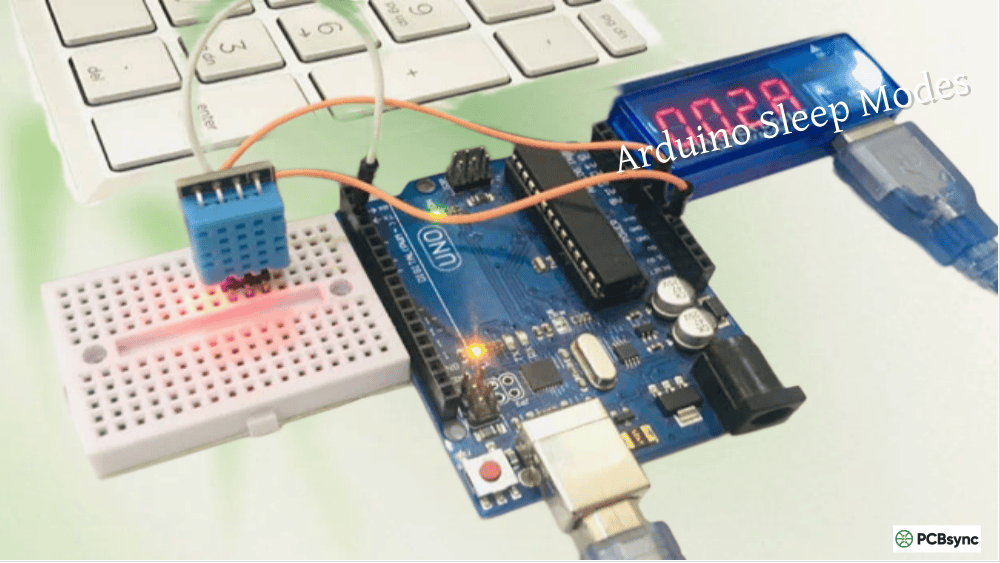
Solutions: Implement proper sleep mode between transmissions. The SAMD21 on MKR boards supports deep sleep via RTCZero library, reducing current from 45mA active to under 1mA sleep. For LMIC-based systems, enter sleep after EV_TXCOMPLETE events and wake via timer interrupt. Disable unnecessary peripherals—USB serial, LEDs, voltage regulators powering external sensors. Consider using confirmed transmissions sparingly—they double airtime by requiring acknowledgments. Unconfirmed transmissions typically suffice for sensor data where occasional packet loss is acceptable.
Advanced Topics: Integration and Scaling
Connecting TTN to External Services
The Things Network supports various integrations forwarding device data to cloud platforms. MQTT integration allows subscribing to device uplinks from custom applications. HTTP webhooks push data to web servers for processing. Storage integrations automatically log all messages to databases like InfluxDB.
For IoT platforms like Ubidots, TagoIO, or Cayenne, TTN provides pre-built integrations configured through the console. These services offer dashboard creation, alert rules, and data analysis without custom code.
Implementing Downlink Commands
LoRaWAN supports bidirectional communication—devices can receive downlinks from the application server. Class A devices (standard mode) only receive downlinks in response to uplinks, opening brief receive windows after each transmission. This limits real-time control but conserves power.
Schedule downlinks through TTN console or API. The device receives downlink data in the next receive window, processed via callback functions in your code. Common use cases include configuration updates, actuation commands (turn on pump, adjust setpoint), and firmware update initiation.
Managing Large Device Fleets
Production deployments with hundreds or thousands of nodes require systematic device provisioning and management. Consider using The Things Join Server or The Things Stack (commercial offering) for enterprise features including bulk device import, device templates, and advanced key management.
Implement device health monitoring by tracking metrics like RSSI, SNR, frame counters, and transmission frequency. Sudden changes indicate problems—weak signal strength suggests antenna issues, irregular transmission patterns may signal firmware bugs or power problems.
Frequently Asked Questions
Q: How many LoRaWAN Arduino devices can operate in the same area?
A: The number depends on transmission frequency and payload size. Each device consumes network capacity proportional to its airtime usage. Following The Things Network’s Fair Access Policy (30 seconds daily airtime per device), a single gateway theoretically supports thousands of devices. Practical limits range from 100-500 devices per gateway for applications transmitting every 10-15 minutes. LoRaWAN’s collision-resistant modulation (different spreading factors) allows dense deployments that would overwhelm protocols like WiFi. However, excessive device density increases collision probability even with spread spectrum. Deploy additional gateways when experiencing frame losses above 5-10%.
Q: Can I use any LoRa module with Arduino for LoRaWAN?
A: Most LoRa modules based on Semtech SX127x or SX126x chips work with appropriate libraries and configuration. Popular options include RFM95/96/98 (HopeRF), Ra-02 (Ai-Thinker), and E32 series (Ebyte). However, hardware design matters—proper RF layout, impedance matching, and antenna connections determine performance. Pre-made modules like Arduino MKR WAN or Adafruit Feather LoRa provide tested designs. If using bare LoRa chips or unproven modules, expect troubleshooting RF issues and careful PCB design. Verify your module supports your region’s frequency band—868MHz modules cannot operate on 915MHz and vice versa.
Q: What’s the maximum distance for LoRaWAN Arduino communication?
A: Distance depends on numerous factors: gateway antenna height and gain, end device antenna quality, spreading factor, transmission power, and environment. In ideal conditions (rural areas with line-of-sight), LoRaWAN achieves 10-15 kilometers with simple wire antennas, 20-30+ kilometers with directional antennas and elevated gateways. Urban environments with buildings reduce range to 2-5 kilometers typically. Indoor nodes may reach 500-2000 meters depending on building construction. World record LoRaWAN transmission exceeded 700 kilometers using high-altitude balloons, though this represents extreme conditions rather than typical deployments. For reliable operation, design for ranges 30-50% shorter than theoretical maximum to account for real-world conditions and fade margins.
Q: Why does my LoRaWAN Arduino fail to join after working previously?
A: Several factors cause join failures after successful operation. Frame counter mismatch is common—if your device resets without storing frame counters in non-volatile memory, the network rejects transmissions with lower counters than previously received (security feature preventing replay attacks). Reset frame counters on TTN console or implement proper frame counter storage. Gateway offline or moved creates coverage gaps. Check TTN Mapper for current gateway locations. Antenna damage or disconnection dramatically reduces signal strength—inspect physical connections. Interference from nearby transmitters (another device on same frequency) occasionally causes temporary join failures—wait and retry. For ABP devices, the network may have reset while the device retained old keys—re-provision with matching keys.
Q: How do I secure my LoRaWAN Arduino device for production?
A: LoRaWAN includes built-in encryption—all messages encrypt with AES-128. However, additional precautions protect production deployments. Always use OTAA rather than ABP—dynamic session keys provide better security than static keys. Store AppKey in secure elements (like ATECC608 on MKR WAN boards) rather than plain flash memory. Implement physical security—tamper detection, potted enclosures, or secure mounting prevents unauthorized access to hardware containing keys. Monitor for anomalies—unusual transmission patterns, invalid frame counters, or unexpected message content may indicate compromise. Regularly review device activity in TTN console. For critical applications, consider The Things Industries’ private network offering with enhanced security features and SLAs rather than public TTN.
Conclusion
LoRaWAN Arduino integration with The Things Network opens possibilities for wide-area IoT deployments without cellular costs or WiFi’s range limitations. The technology’s maturity and The Things Network’s free infrastructure lower barriers to building scalable sensor networks, smart city applications, and industrial monitoring systems.
Success requires understanding the complete stack—from radio modulation through network protocols to application integration. Proper activation method selection, payload optimization, and duty cycle management separate hobby projects from production deployments handling thousands of nodes reliably.
The resources, code examples, and troubleshooting guidance provided here condense years of field experience into actionable knowledge. Start with simple single-device experiments, master the fundamentals, then scale to multi-node deployments with confidence. The combination of Arduino’s accessibility and LoRaWAN’s capabilities democratizes long-range IoT development, making sophisticated wireless sensor networks achievable for makers and enterprises alike.
Inquire: Call 0086-755-23203480, or reach out via the form below/your sales contact to discuss our design, manufacturing, and assembly capabilities.
Quote: Email your PCB files to Sales@pcbsync.com (Preferred for large files) or submit online. We will contact you promptly. Please ensure your email is correct.
Notes: For PCB fabrication, we require PCB design file in Gerber RS-274X format (most preferred), *.PCB/DDB (Protel, inform your program version) format or *.BRD (Eagle) format. For PCB assembly, we require PCB design file in above mentioned format, drilling file and BOM. Click to download BOM template To avoid file missing, please include all files into one folder and compress it into .zip or .rar format.