Inquire: Call 0086-755-23203480, or reach out via the form below/your sales contact to discuss our design, manufacturing, and assembly capabilities.
Quote: Email your PCB files to Sales@pcbsync.com (Preferred for large files) or submit online. We will contact you promptly. Please ensure your email is correct.
Notes: For PCB fabrication, we require PCB design file in Gerber RS-274X format (most preferred), *.PCB/DDB (Protel, inform your program version) format or *.BRD (Eagle) format. For PCB assembly, we require PCB design file in above mentioned format, drilling file and BOM. Click to download BOM template To avoid file missing, please include all files into one folder and compress it into .zip or .rar format.
LCD Keypad Shield Arduino: Complete Menu System Tutorial
After spending countless hours debugging menu systems on embedded projects, I can tell you that the LCD Keypad Shield Arduino combo remains one of the most practical solutions for building interactive user interfaces. Whether you’re prototyping a home automation controller or developing a test bench for PCB inspection, this shield eliminates the headache of wiring individual buttons and LCD connections.
In this tutorial, I’ll walk you through everything from basic setup to building a fully functional multi-level menu system that you can adapt for your own projects.
The LCD Keypad Shield is a stackable module designed specifically for Arduino boards. It combines a 16×2 character LCD display with five navigation buttons (Select, Up, Down, Left, Right) plus a Reset button, all on a single PCB that plugs directly onto your Arduino Uno or compatible boards.
What makes this shield particularly clever from an engineering standpoint is its use of a resistor ladder network. Instead of consuming six digital pins for button inputs, all five navigation buttons connect to a single analog pin (A0). Each button produces a different voltage level through a voltage divider circuit, allowing the microcontroller to identify which button was pressed by reading the ADC value.
LCD Keypad Shield Arduino Pin Configuration
Understanding the pin mapping is essential before writing any code. Here’s the complete breakdown:
Pin
Function
Notes
D4
LCD Data 4
4-bit interface
D5
LCD Data 5
4-bit interface
D6
LCD Data 6
4-bit interface
D7
LCD Data 7
4-bit interface
D8
RS (Register Select)
Command/Data selection
D9
Enable
LCD strobe signal
D10
Backlight Control
PWM capable
A0
Button Input
Resistor ladder
The shield uses 4-bit parallel communication with the LCD, which is the standard configuration for the HD44780-compatible display controller. This leaves analog pins A1 through A5 available for sensors and other peripherals.
LCD Keypad Shield Arduino Button Analog Values
Here’s where things get interesting for those of us who’ve dealt with finicky input detection. The resistor ladder produces specific voltage levels that translate to ADC readings between 0 and 1023 on the Arduino’s 10-bit ADC.
Button
Typical ADC Value
Threshold Range
Right
0-5
< 60
Up
130-145
< 200
Down
305-320
< 400
Left
475-495
< 600
Select
720-740
< 800
None
1023
≥ 800
A word of caution from experience: these values can vary between manufacturers and even between production batches. I always recommend running a simple test sketch to read raw ADC values before implementing button detection in your final code. Resistor tolerances of ±5% can shift these readings enough to cause missed button presses if your thresholds are too tight.
Setting Up Your First LCD Keypad Shield Arduino Project
Let’s start with the basics. Before building a menu system, you need to verify that your hardware is working correctly.
Required Hardware
You’ll need the following components:
Component
Quantity
Purpose
Arduino Uno (or compatible)
1
Main controller
LCD Keypad Shield
1
Display and input
USB Cable
1
Programming and power
Required Software
The LiquidCrystal library comes pre-installed with the Arduino IDE, so no additional libraries are needed for basic operation. However, for advanced menu systems, several community libraries can save development time.
Basic Test Code for LCD Keypad Shield Arduino
This sketch initializes the display and shows which button is being pressed:
#include <LiquidCrystal.h>
// LCD pin configuration for the shield
LiquidCrystal lcd(8, 9, 4, 5, 6, 7);
void setup() {
lcd.begin(16, 2);
lcd.setCursor(0, 0);
lcd.print(“LCD Shield Test”);
lcd.setCursor(0, 1);
lcd.print(“Press any key…”);
}
void loop() {
int adcValue = analogRead(A0);
lcd.setCursor(10, 1);
if (adcValue < 60) {
lcd.print(“RIGHT “);
} else if (adcValue < 200) {
lcd.print(“UP “);
} else if (adcValue < 400) {
lcd.print(“DOWN “);
} else if (adcValue < 600) {
lcd.print(“LEFT “);
} else if (adcValue < 800) {
lcd.print(“SELECT”);
} else {
lcd.print(“NONE “);
}
delay(100);
}
Upload this code and verify that each button registers correctly. If you’re getting inconsistent readings, adjust the threshold values based on what you observe.
Building a Menu System for LCD Keypad Shield Arduino
Now let’s get into the meat of this tutorial. A proper menu system needs to handle navigation, selection, and value editing without blocking your main program loop.
Menu Structure Design
For embedded applications, I prefer using a state machine approach. This keeps the code organized and makes it easy to add new menu items later. Here’s the basic structure:
Reliable button detection requires proper debouncing. Without it, a single button press often registers multiple times due to mechanical contact bounce.
int readButtons() {
int adcValue = analogRead(A0);
if (adcValue < 60) return 1; // Right
else if (adcValue < 200) return 2; // Up
else if (adcValue < 400) return 3; // Down
else if (adcValue < 600) return 4; // Left
else if (adcValue < 800) return 5; // Select
return 0; // No button
}
int getButtonPress() {
int currentButton = readButtons();
if (currentButton != lastButtonState) {
if ((millis() – lastDebounceTime) > debounceDelay) {
lastDebounceTime = millis();
lastButtonState = currentButton;
return currentButton;
}
}
return 0;
}
Main Menu Display Function
The display function handles rendering the current menu state:
Add automatic return to the main screen after inactivity:
unsigned long lastActivityTime = 0;
const unsigned long menuTimeout = 30000; // 30 seconds
void loop() {
int button = getButtonPress();
if (button != 0) {
lastActivityTime = millis();
handleNavigation(button);
}
if (millis() – lastActivityTime > menuTimeout) {
currentMenu = MENU_MAIN;
menuIndex = 0;
displayMenu();
lastActivityTime = millis();
}
}
EEPROM Storage for Settings
Save user preferences so they persist after power cycles:
#include <EEPROM.h>
const int BRIGHTNESS_ADDR = 0;
const int CONTRAST_ADDR = 1;
void loadSettings() {
brightnessLevel = EEPROM.read(BRIGHTNESS_ADDR);
contrastLevel = EEPROM.read(CONTRAST_ADDR);
// Validate loaded values
if (brightnessLevel > 255) brightnessLevel = 128;
if (contrastLevel > 100) contrastLevel = 50;
}
void saveSettings() {
EEPROM.update(BRIGHTNESS_ADDR, brightnessLevel);
EEPROM.update(CONTRAST_ADDR, contrastLevel);
}
LCD Keypad Shield Arduino Menu Libraries
For complex projects, consider using established libraries rather than rolling your own:
Library
Features
Best For
LcdMenu
Nested menus, multiple item types
General purpose
MD_Menu
PROGMEM storage, callbacks
Memory-constrained projects
SimpleMenu
Lightweight, easy API
Quick prototypes
MENWIZ
EEPROM support, multi-language
Feature-rich applications
Useful Resources for LCD Keypad Shield Arduino Projects
Here are the resources I find myself returning to regularly:
Official Documentation: The DFRobot Wiki provides detailed specifications and example code for the original shield design (wiki.dfrobot.com/LCD_KeyPad_Shield_For_Arduino_SKU__DFR0009).
Library Downloads: The LcdMenu library on GitHub offers a modern, well-documented menu solution (github.com/forntoh/LcdMenu).
Community Projects: Instructables and Hackster.io host numerous practical project examples using the LCD Keypad Shield.
Datasheet Reference: The HD44780 datasheet covers the LCD controller protocol in detail for custom implementations.
Troubleshooting Common LCD Keypad Shield Arduino Issues
After helping colleagues debug their shields countless times, here are the problems I see most often.
Garbled or missing display: Usually a timing issue. Try adding a small delay in setup() before initializing the LCD. Some shields need 100ms or more for the display controller to stabilize after power-on.
Buttons not responding correctly: First, print raw ADC values to serial and compare with your thresholds. Manufacturing variations mean the values in tutorials may not match your specific shield.
Backlight flickering: If using PWM control on pin 10, ensure you’re not accidentally setting it as an input elsewhere in your code. Also check for power supply issues if using external power.
Interference with other shields: Pins D4-D10 and A0 are occupied by the LCD Keypad Shield. Plan your stack accordingly and check for conflicts before combining shields.
Frequently Asked Questions
Can I use the LCD Keypad Shield Arduino with boards other than the Uno?
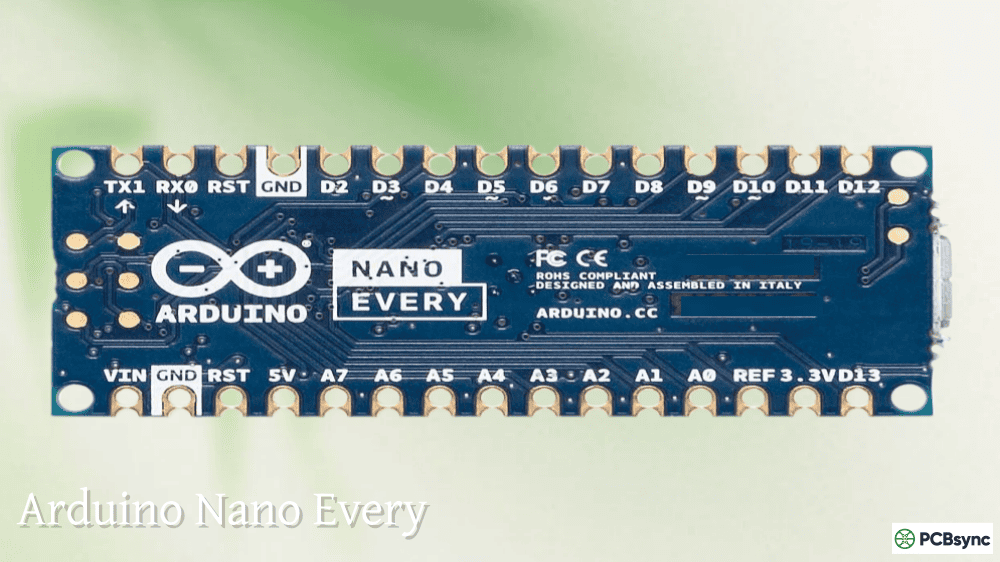
Yes, but with caveats. The shield physically fits the Uno form factor, so it works directly with the Leonardo, Mega (positioned over pins 0-13), and compatible clones. For boards like the Nano, you’ll need to wire it manually using the same pin assignments. The analog button reading works on any AVR-based Arduino with ADC capability.
Why does my button read different values than shown in tutorials?
Resistor tolerances and manufacturing variations cause this. Each shield may have slightly different resistor values in the voltage divider network. Always calibrate your code by reading actual ADC values from your specific shield rather than using generic threshold values.
How do I free up more pins when using the LCD Keypad Shield Arduino?
You’re limited on digital pins with this shield, but you can still use A1-A5 for analog sensors. For I2C devices, A4 (SDA) and A5 (SCL) remain available. If you need more digital I/O, consider using a port expander chip connected via I2C.
Can I adjust the LCD contrast on this shield?
Most LCD Keypad Shields include a small potentiometer (blue or white adjustment screw) on the back for contrast adjustment. Turn it slowly while viewing the display to find the optimal setting. Some versions allow software control through a PWM pin, but this isn’t standard across all manufacturers.
What’s the maximum cable length if I want to mount the display remotely?
The 4-bit parallel interface isn’t designed for long cable runs. Beyond about 30cm, you’ll likely experience signal integrity issues. For remote mounting, consider using a display with an I2C backpack instead, which can reliably operate over longer distances.
Building menu systems for the LCD Keypad Shield Arduino is one of those skills that transfers across countless projects. Once you understand the underlying principles of state machines and non-blocking input handling, you can adapt this code for anything from temperature controllers to CNC machine interfaces.
The key is starting simple, verifying each component works independently, and building up complexity only when the foundation is solid. Happy building.
Inquire: Call 0086-755-23203480, or reach out via the form below/your sales contact to discuss our design, manufacturing, and assembly capabilities.
Quote: Email your PCB files to Sales@pcbsync.com (Preferred for large files) or submit online. We will contact you promptly. Please ensure your email is correct.
Notes: For PCB fabrication, we require PCB design file in Gerber RS-274X format (most preferred), *.PCB/DDB (Protel, inform your program version) format or *.BRD (Eagle) format. For PCB assembly, we require PCB design file in above mentioned format, drilling file and BOM. Click to download BOM template To avoid file missing, please include all files into one folder and compress it into .zip or .rar format.