Inquire: Call 0086-755-23203480, or reach out via the form below/your sales contact to discuss our design, manufacturing, and assembly capabilities.
Quote: Email your PCB files to Sales@pcbsync.com (Preferred for large files) or submit online. We will contact you promptly. Please ensure your email is correct.
Notes: For PCB fabrication, we require PCB design file in Gerber RS-274X format (most preferred), *.PCB/DDB (Protel, inform your program version) format or *.BRD (Eagle) format. For PCB assembly, we require PCB design file in above mentioned format, drilling file and BOM. Click to download BOM template To avoid file missing, please include all files into one folder and compress it into .zip or .rar format.
If you’ve ever wanted to add a colorful graphical interface to your Arduino project without breaking the bank, the ILI9341 Arduino display combo is probably your best bet. I’ve worked with dozens of TFT displays over the years, and this particular module keeps showing up on my bench for good reason: it’s affordable, well-documented, and the community support is excellent.
The 2.4″ TFT display with the ILI9341 driver has become something of a standard in the hobbyist and prototyping world. Whether you’re building a weather station, a sensor dashboard, or even a simple game, this display delivers 240×320 pixels of vivid 65K color graphics through a straightforward SPI interface. Let me walk you through everything you need to know to get one working with your Arduino.
The ILI9341 is a 262,144-color single-chip SOC driver manufactured by ILI Technology Corp. It’s designed specifically for a-Si TFT liquid crystal displays with a resolution of 240×320 pixels. The chip handles all the heavy lifting of driving the LCD panel, including the 720-channel source driver, 320-channel gate driver, and 172,800 bytes of GRAM for storing pixel data.
What makes this controller popular among Arduino users is its support for the SPI (Serial Peripheral Interface) protocol. SPI requires only a handful of wires to communicate, which is a massive advantage when you’re already juggling sensors, buttons, and other peripherals on your microcontroller.
ILI9341 Arduino Display Specifications
Specification
Value
Display Size
2.4 inches (diagonal)
Resolution
240 x 320 pixels
Color Depth
16-bit (65K colors) / 18-bit (262K colors)
Interface
SPI (4-wire)
Operating Voltage
3.3V logic (module accepts 5V via onboard regulator)
Driver IC
ILI9341
Touch Controller
XPT2046 (on most modules)
Viewing Angle
12 o’clock direction
Backlight
LED
Current Consumption
~60-80mA
Operating Temperature
-20°C to 70°C
Most breakout boards you’ll find on the market include an onboard 3.3V LDO regulator (typically the XC6206P332MR), which means you can power the module from 5V even though the ILI9341 chip itself runs at 3.3V. However, the data lines are a different story, and that’s where many beginners run into trouble.
Hardware Requirements for ILI9341 Arduino Projects
Before you start wiring things up, make sure you have the following components on hand:
Essential Components:
Arduino UNO, Nano, Mega, or compatible board
2.4″ ILI9341 TFT LCD module (SPI version)
Jumper wires (male-to-female recommended)
Breadboard for prototyping
Recommended Additions:
Logic level converter (3.3V to 5V bidirectional) OR resistors for voltage dividers
Stylus pen (if your module has touch capability)
External 5V power supply (for projects requiring stable power)
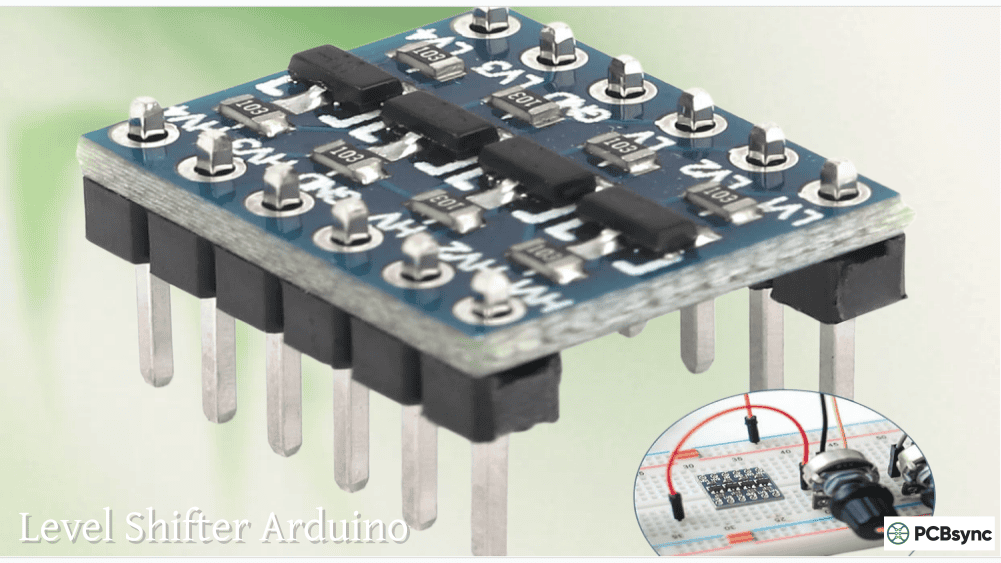
The logic level converter deserves special attention. The ILI9341 controller operates at 3.3V logic levels, but Arduino UNO pins output 5V. Connecting 5V signals directly to the display can damage the controller. You have two options: use a proper bidirectional logic level converter, or build simple voltage dividers using resistors. I’ll cover both approaches in the wiring section.
ILI9341 Arduino Pinout and Wiring Diagram
The 2.4″ ILI9341 module typically has 14 pins arranged in a single row. Understanding each pin’s function is critical before making any connections.
ILI9341 Display Pin Functions
Pin Name
Function
Connect To (Arduino UNO)
VCC
Power Supply (5V/3.3V)
5V
GND
Ground
GND
CS
Chip Select
D10 (via level shifter)
RESET
Display Reset
D9 (via level shifter)
DC (D/C)
Data/Command Select
D8 (via level shifter)
SDI (MOSI)
SPI Data In
D11 (via level shifter)
SCK
SPI Clock
D13 (via level shifter)
LED
Backlight Anode
3.3V or 5V
SDO (MISO)
SPI Data Out
D12 (direct connection OK)
The touch controller (XPT2046) uses separate pins:
Pin Name
Function
Connect To (Arduino UNO)
T_CLK
Touch SPI Clock
D13 (shared with display)
T_CS
Touch Chip Select
D4 (via level shifter)
T_DIN
Touch Data In
D11 (shared with display)
T_DO
Touch Data Out
D12 (direct connection OK)
T_IRQ
Touch Interrupt
D2
Voltage Level Shifting Options
Option 1: Resistor Voltage Divider
For each signal line going from Arduino to the display (CS, RESET, DC, MOSI, SCK), you can use a simple voltage divider:
2.2kΩ resistor between Arduino pin and display pin
3.3kΩ resistor between display pin and GND
This drops the 5V signal to approximately 3V, which is within the ILI9341’s acceptable range.
Option 2: Logic Level Converter
A dedicated bidirectional logic level converter (like the BSS138-based modules) provides cleaner signal conversion and is recommended for production projects or when you need reliable high-speed SPI communication.
Option 3: 3.3V Arduino
If you’re using an Arduino Pro Mini (3.3V version) or an ESP32/ESP8266, you can connect directly without any level shifting. This is the cleanest solution if your project allows for it.
Installing ILI9341 Arduino Libraries
Getting the software side ready involves installing two essential libraries through the Arduino IDE’s Library Manager.
Required Libraries
Adafruit ILI9341 Library
This is the primary driver library that handles communication with the ILI9341 controller. It provides functions for drawing pixels, shapes, text, and images.
Installation steps:
Open Arduino IDE
Navigate to Sketch → Include Library → Manage Libraries
Search for “Adafruit ILI9341”
Click Install on “Adafruit ILI9341” by Adafruit
Adafruit GFX Library
This is the core graphics library that works alongside the ILI9341 driver. It provides common drawing functions that are shared across all Adafruit display libraries.
If your module includes a touchscreen, you’ll need Paul Stoffregen’s touch library:
Search for “XPT2046” in Library Manager
Install “XPT2046_Touchscreen” by Paul Stoffregen
Alternative Libraries
While the Adafruit libraries are excellent for beginners, you might want to explore alternatives for better performance:
Library
Pros
Cons
Adafruit_ILI9341
Well documented, beginner-friendly
Slower than alternatives
TFT_eSPI by Bodmer
Much faster, more features
Complex configuration
TFT_ILI9341 by Bodmer
Optimized for AVR processors
Limited to specific boards
LCDWIKI libraries
Good examples included
Less community support
The TFT_eSPI library by Bodmer is particularly popular for ESP32 projects due to its DMA support and significantly faster refresh rates.
Basic ILI9341 Arduino Code Example
Let’s start with a simple example that initializes the display and shows some basic graphics. This code assumes you’re using the standard wiring described earlier.
Most 2.4″ ILI9341 modules come with a resistive touchscreen and the XPT2046 touch controller. Here’s how to read touch input and create interactive buttons.
The touch coordinates from the XPT2046 don’t directly correspond to screen pixels. You’ll need to calibrate by mapping the raw values to your display dimensions. The map() values in the example above are approximate and may need adjustment for your specific module.
Over the years, I’ve seen the same issues crop up repeatedly when people work with these displays. Here’s how to diagnose and fix them.
White Screen Problem
This is by far the most common issue. If your display stays white after uploading code:
Check SPI connections – Verify that MOSI, SCK, CS, DC, and RST are connected to the correct pins
Verify voltage levels – Ensure you’re using level shifters or voltage dividers for 5V Arduinos
Check power supply – The display needs adequate current; try an external 5V supply
Test with example code – Use the Adafruit graphicstest example first
Verify library installation – Make sure both Adafruit_ILI9341 and Adafruit_GFX are installed
Check pin definitions – Ensure your code matches your actual wiring
Display Shows Garbled Graphics
SPI clock might be too fast – some modules struggle with high speeds
Try adding tft.begin(10000000) to specify a slower SPI clock
Check for loose connections on the breadboard
Verify that MISO isn’t shorting to other pins
Touch Not Responding
Confirm T_CS is connected to a different pin than the display CS
Check that T_IRQ is properly connected
Verify the touch library is using the correct pins
Touch coordinates may need calibration – print raw values to Serial first
Display Works Initially Then Fails
Power supply issue – the backlight draws significant current
Try a more robust power source
Add a 100µF capacitor across VCC and GND
Practical ILI9341 Arduino Project Ideas
Now that you understand the basics, here are some project ideas to put your display to work:
Sensor Dashboard Create a real-time display showing temperature, humidity, and pressure from sensors like the BME280. The color display makes it easy to add visual indicators and graphs.
Weather Station Interface Combine the display with an ESP8266 or ESP32 to pull weather data from the internet and display forecasts with icons.
Game Console Build a simple handheld game console with the touch screen for controls. Snake, Tetris, and Pong are all achievable with the Arduino’s limited resources.
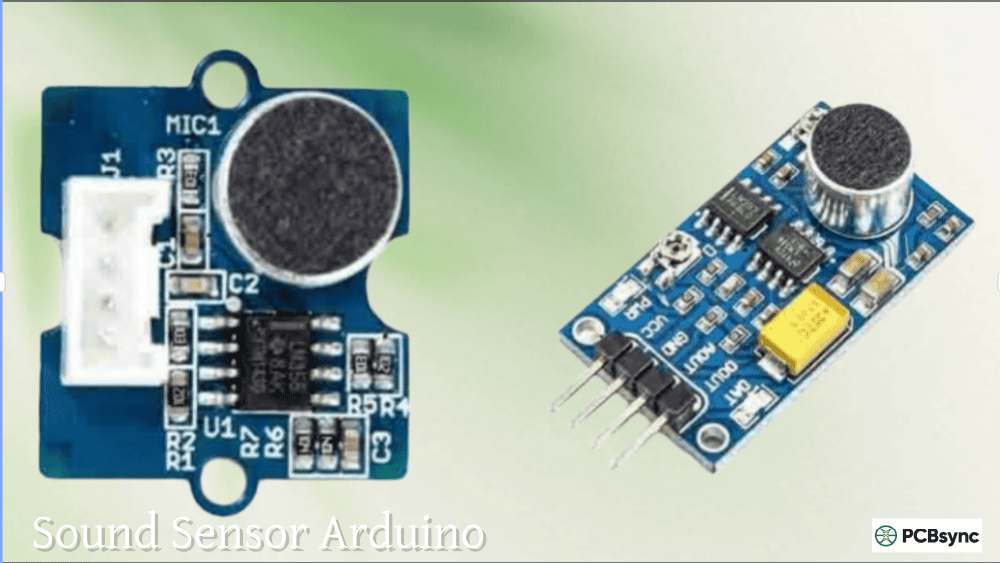
Audio Spectrum Analyzer Connect a microphone module and display audio frequencies as a colorful bar graph visualization.
Smart Home Controller Create a touch-based interface for controlling smart home devices, with buttons for lights, temperature, and scenes.
Data Logger Display Add a graphical interface to your data logging projects, showing real-time sensor values and historical trends.
Useful Resources and Downloads
To help you get started with your ILI9341 Arduino project, here are the most valuable resources:
Libraries and Code
Resource
Link
Adafruit ILI9341 Library
github.com/adafruit/Adafruit_ILI9341
Adafruit GFX Library
github.com/adafruit/Adafruit-GFX-Library
XPT2046 Touch Library
github.com/PaulStoffregen/XPT2046_Touchscreen
TFT_eSPI Library
github.com/Bodmer/TFT_eSPI
LCDWIKI Resources
lcdwiki.com
Documentation
Document
Description
ILI9341 Datasheet
Complete technical specifications from ILI Technology Corp
Adafruit GFX Guide
Comprehensive graphics library documentation
Arduino SPI Reference
Official SPI library documentation
Community Forums
Arduino Forum (forum.arduino.cc) – Active community for troubleshooting
Reddit r/arduino – Project sharing and help
ESP32 Forum – For ESP32-specific implementations
Frequently Asked Questions
Can I use the ILI9341 display with Arduino Nano?
Yes, the Arduino Nano works perfectly with the ILI9341. The SPI pins are in the same positions as the UNO (D11 for MOSI, D12 for MISO, D13 for SCK). Just remember that you still need level shifting since the Nano also operates at 5V logic.
Why does my ILI9341 display show only a white screen?
A white screen typically indicates that the display isn’t receiving valid SPI data. Check your wiring carefully, especially the CS, DC, and RST connections. Verify that you’re using proper level shifting for 5V Arduinos. Also confirm that your code has the correct pin definitions matching your physical wiring.
What’s the difference between SPI and parallel interface ILI9341 modules?
SPI modules use fewer pins (typically 5-7) and are easier to wire but have slower refresh rates. Parallel modules (8-bit or 16-bit) use more pins but can update the screen much faster. For most Arduino projects, SPI modules are preferred due to the limited I/O pins available.
Can I display images on the ILI9341 with Arduino?
Yes, but with limitations. The Arduino UNO has only 32KB of flash memory, so storing large images isn’t practical. You can display small icons or use an SD card to load images. The Adafruit_ImageReader library supports loading BMP images from SD cards.
How do I increase the display refresh speed?
Several options exist: use hardware SPI instead of software SPI, increase the SPI clock speed (though some modules max out around 40MHz), use a faster microcontroller like ESP32, or switch to the TFT_eSPI library which is optimized for speed. Also, updating only changed portions of the screen rather than redrawing everything helps significantly.
Conclusion
The ILI9341 Arduino combination opens up a world of possibilities for your embedded projects. While there’s a learning curve with the wiring and voltage level considerations, once you get past that initial hurdle, you’ll have a reliable and capable display platform to work with.
Start with the basic examples, make sure your wiring is correct (especially the level shifting), and don’t be afraid to experiment. The community around these displays is extensive, and chances are someone has already solved whatever problem you might encounter.
Whether you’re building a simple sensor readout or a complex touchscreen interface, the 2.4″ ILI9341 TFT display provides an excellent balance of features, cost, and ease of use that’s hard to beat in the Arduino ecosystem.
This tutorial covers the fundamentals of working with ILI9341 displays and Arduino. For more advanced topics like DMA transfers, custom fonts, or integration with specific sensors, check out the linked resources and community forums.
Inquire: Call 0086-755-23203480, or reach out via the form below/your sales contact to discuss our design, manufacturing, and assembly capabilities.
Quote: Email your PCB files to Sales@pcbsync.com (Preferred for large files) or submit online. We will contact you promptly. Please ensure your email is correct.
Notes: For PCB fabrication, we require PCB design file in Gerber RS-274X format (most preferred), *.PCB/DDB (Protel, inform your program version) format or *.BRD (Eagle) format. For PCB assembly, we require PCB design file in above mentioned format, drilling file and BOM. Click to download BOM template To avoid file missing, please include all files into one folder and compress it into .zip or .rar format.