Inquire: Call 0086-755-23203480, or reach out via the form below/your sales contact to discuss our design, manufacturing, and assembly capabilities.
Quote: Email your PCB files to Sales@pcbsync.com (Preferred for large files) or submit online. We will contact you promptly. Please ensure your email is correct.
Notes: For PCB fabrication, we require PCB design file in Gerber RS-274X format (most preferred), *.PCB/DDB (Protel, inform your program version) format or *.BRD (Eagle) format. For PCB assembly, we require PCB design file in above mentioned format, drilling file and BOM. Click to download BOM template To avoid file missing, please include all files into one folder and compress it into .zip or .rar format.
How to Program Arduino Uno: Step-by-Step for Absolute Beginners
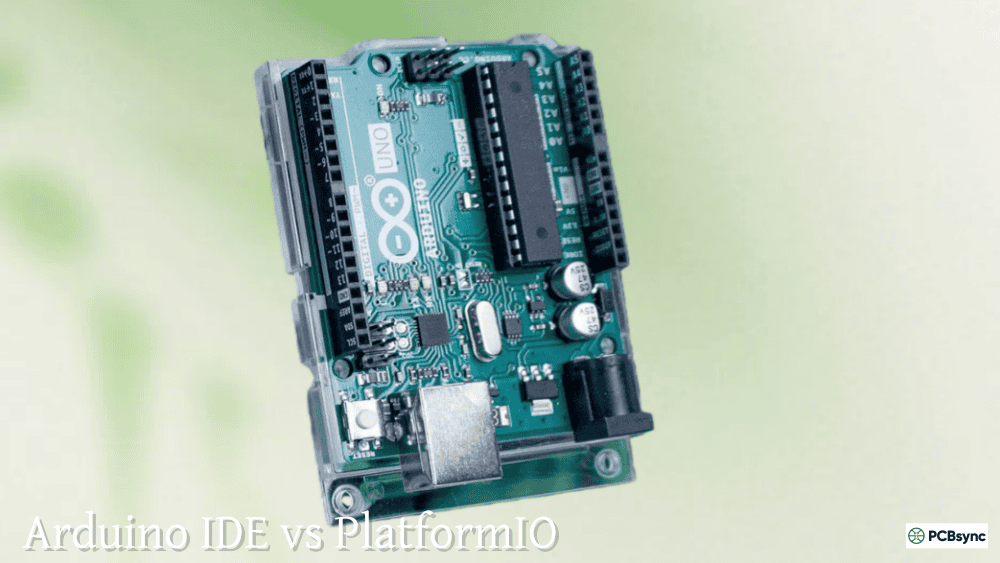
I still remember the first time I powered up an Arduino Uno on my workbench. After years of designing PCBs and working with professional development environments, this little blue board felt almost too simple. But that simplicity is exactly what makes the Arduino platform so powerful for learning embedded programming. You don’t need expensive tools or years of experience to get started.
If you’ve never written a line of code for a microcontroller before, this guide will teach you how to program Arduino Uno from scratch. By the end, you’ll understand the development environment, write your first program, and have the foundation to build projects limited only by your imagination.
What You Need Before You Start Programming Arduino Uno
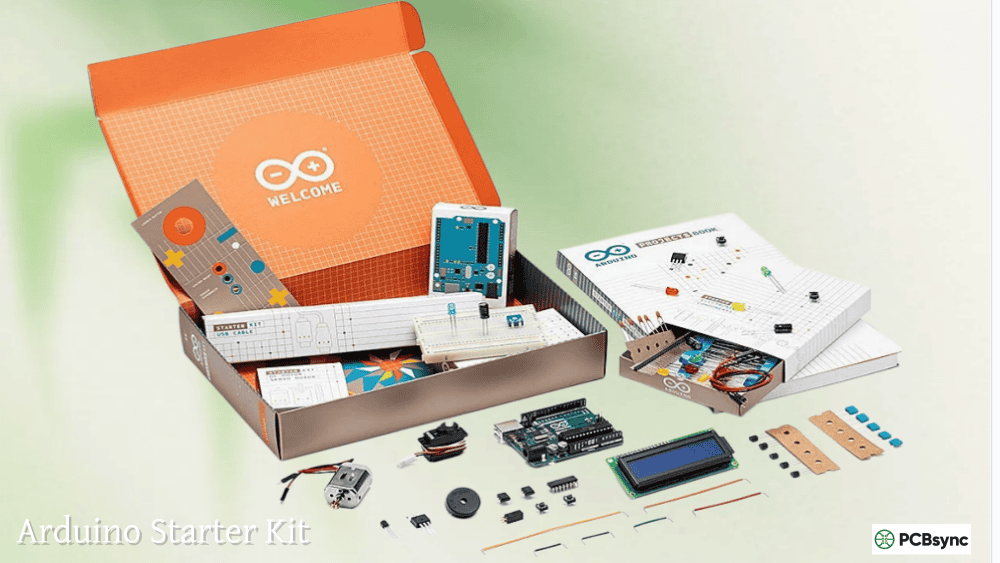
Before diving into code, let’s gather the essentials. Programming an Arduino Uno requires minimal equipment, which is part of what makes it such an accessible platform for beginners.
Hardware Requirements
Item
Purpose
Notes
Arduino Uno Board
The microcontroller you’ll program
Official or quality clone works fine
USB Type A-to-B Cable
Connects Arduino to computer
Same cable used by older printers
Computer (Windows/Mac/Linux)
Runs the development software
Any modern system works
LED (optional)
Visual feedback for first project
Built-in LED available on pin 13
220Ω Resistor (optional)
Current limiting for external LED
Only needed for external circuits
Breadboard (optional)
Prototyping connections
Useful for expanding beyond basics
The Arduino Uno has a built-in LED connected to digital pin 13, so you can complete your first program without any additional components. That said, having a breadboard and some LEDs makes experimentation more rewarding.
Software Requirements
You’ll need the Arduino IDE (Integrated Development Environment) installed on your computer. This free software is where you’ll write, verify, and upload your programs. The IDE supports Windows, macOS, and Linux, making it accessible regardless of your operating system.
Installing the Arduino IDE: Your First Step to Programming
The Arduino IDE is the gateway to programming your Uno. Here’s how to get it running on your system.
Downloading Arduino IDE
Visit the official Arduino website at arduino.cc/software and download the version appropriate for your operating system. You’ll see options for Windows (installer or ZIP), macOS, and various Linux distributions. The installer version is recommended for beginners since it handles driver installation automatically.
Installation Steps by Operating System
Windows Installation: Run the downloaded installer and accept the license agreement. When prompted about components, keep all options selected. The installer will ask about installing USB drivers. Click “Install” when the driver installation dialog appears. This driver allows Windows to communicate with your Arduino board.
macOS Installation: Open the downloaded DMG file and drag the Arduino application to your Applications folder. macOS may ask for permission to open software from an identified developer. Go to System Preferences, Security & Privacy, and click “Open Anyway” if prompted.
Linux Installation: Extract the downloaded archive to your preferred location. Open a terminal, navigate to the extracted folder, and run the install.sh script. You may need to add your user to the dialout group with the command sudo usermod -a -G dialout $USER then log out and back in.
Verifying Your Installation
Launch the Arduino IDE after installation completes. You should see a window with a white text area (where you’ll write code), a toolbar at the top, and a black console area at the bottom. If the application opens without errors, your installation succeeded.
Understanding the Arduino IDE Interface
Before writing code, take a moment to familiarize yourself with the Arduino IDE layout. Knowing where things are will save frustration later.
Key Interface Components
Component
Location
Function
Verify Button
Toolbar (checkmark icon)
Compiles code and checks for errors
Upload Button
Toolbar (arrow icon)
Sends compiled code to Arduino
New Sketch
Toolbar or File menu
Creates blank program file
Serial Monitor
Toolbar (magnifying glass)
Displays data from Arduino
Board Selector
Tools menu
Selects your Arduino model
Port Selector
Tools menu
Selects USB connection
Code Editor
Main white area
Where you write your program
Console Output
Black area at bottom
Shows errors and status messages
The verify and upload buttons are your most frequently used tools. Get comfortable locating them because you’ll click them hundreds of times as you learn.
Connecting Your Arduino Uno to the Computer
With the IDE installed, it’s time to establish communication between your computer and the Arduino board.
Physical Connection
Connect the USB Type A-to-B cable between your computer and the Arduino Uno. The larger rectangular end (Type A) goes into your computer. The squarish end (Type B) plugs into the Arduino’s USB port. When connected properly, you should see a green LED labeled “ON” illuminate on the board.
Configuring the IDE for Your Board
The Arduino IDE needs to know what board you’re using and which port it’s connected to.
Select the Board: Go to Tools, Board, and select “Arduino Uno” from the list. If you’re using a different board, select the appropriate option. Getting this wrong will cause upload failures.
Select the Port: Go to Tools, Port, and select the port showing your Arduino. On Windows, this typically appears as COM3, COM4, or similar. On macOS, look for something like /dev/cu.usbmodem followed by numbers. On Linux, it usually appears as /dev/ttyACM0 or /dev/ttyUSB0.
If you don’t see a port listed or aren’t sure which one is correct, disconnect the Arduino, check the menu, reconnect, and check again. The port that appears after reconnection is your Arduino.
How Arduino Programs Work: Understanding Sketches
Arduino programs are called “sketches” and they have a specific structure you need to understand. Every sketch you write will follow this same pattern.
The Two Essential Functions
Every Arduino sketch must contain two functions: setup() and loop(). Without both, your program won’t compile.
void setup() {
// Code here runs once when Arduino powers on or resets
}
void loop() {
// Code here runs repeatedly forever
}
The setup() Function: This function executes exactly once when the Arduino powers on or when you press the reset button. Use it to configure pin modes, initialize communication protocols, and set starting values for variables. Think of it as preparing the Arduino for its main job.
The loop() Function: After setup() completes, the loop() function begins executing. When it reaches the last line of code inside loop(), it immediately jumps back to the first line and runs again. This continues forever until you remove power or upload a new program.
The Programming Language
Arduino uses a simplified version of C/C++. If you’ve never programmed before, don’t worry. The basics are straightforward, and the Arduino community has created extensive documentation for every function.
Key syntax rules to remember:
Every statement ends with a semicolon (;)
Function code lives inside curly braces { }
Arduino is case-sensitive (pinMode is different from PinMode)
Comments start with // for single lines or /* */ for multiple lines
Writing Your First Arduino Program: The Blink Sketch
The traditional first program for any microcontroller is blinking an LED. It’s simple enough to understand immediately yet teaches fundamental concepts you’ll use in every future project.
Opening the Blink Example
The Arduino IDE includes pre-written example sketches. Go to File, Examples, 01.Basics, and select Blink. This opens a complete, working program that blinks the built-in LED.
Understanding the Blink Code
Let’s break down what each line does:
void setup() {
pinMode(LED_BUILTIN, OUTPUT); // Configure pin 13 as output
}
void loop() {
digitalWrite(LED_BUILTIN, HIGH); // Turn LED on
delay(1000); // Wait 1000 milliseconds (1 second)
digitalWrite(LED_BUILTIN, LOW); // Turn LED off
delay(1000); // Wait another second
}
pinMode(LED_BUILTIN, OUTPUT): This tells the Arduino that pin 13 (the built-in LED) will be used as an output. Outputs can send voltage to connected components. The alternative is INPUT, which reads voltage levels.
digitalWrite(LED_BUILTIN, HIGH): This sets pin 13 to HIGH, which means 5 volts. Since the LED is connected to this pin, applying voltage lights it up.
delay(1000): This pauses program execution for 1000 milliseconds (1 second). Without delays, the LED would toggle so fast your eyes couldn’t perceive it.
digitalWrite(LED_BUILTIN, LOW): This sets pin 13 to LOW (0 volts), turning the LED off.
Uploading Your First Sketch to Arduino Uno
You’ve written (or loaded) your program. Now it’s time to transfer it to the Arduino board.
Verify Before Upload
Click the Verify button (checkmark icon) or press Ctrl+R (Cmd+R on Mac). The IDE compiles your code and checks for syntax errors. The console at the bottom shows progress. If successful, you’ll see “Done compiling” and information about how much memory your sketch uses.
If you see error messages in orange text, something’s wrong with your code. Read the error carefully. It usually tells you the line number and type of problem.
Upload the Sketch
Click the Upload button (arrow icon) or press Ctrl+U (Cmd+U on Mac). The IDE compiles again, then transmits the program to your Arduino. You’ll see the TX and RX LEDs on the board blink rapidly during transfer. When complete, the console displays “Done uploading.”
Watch Your Arduino Come to Life
After successful upload, the program runs immediately. The built-in LED (labeled “L” on the board) should now blink on for one second, off for one second, repeating indefinitely. Congratulations, you’ve programmed your first microcontroller.
Essential Arduino Functions Every Beginner Must Know
Beyond the blink example, several core functions form the foundation of Arduino programming. Master these, and you can build most beginner to intermediate projects.
Digital I/O Functions
Function
Purpose
Example
pinMode(pin, mode)
Configures pin as INPUT or OUTPUT
pinMode(13, OUTPUT);
digitalWrite(pin, value)
Sets output pin HIGH or LOW
digitalWrite(13, HIGH);
digitalRead(pin)
Reads input pin state
int state = digitalRead(2);
Analog Functions
Function
Purpose
Example
analogRead(pin)
Reads analog voltage (0-1023)
int val = analogRead(A0);
analogWrite(pin, value)
Outputs PWM signal (0-255)
analogWrite(9, 128);
Timing Functions
Function
Purpose
Example
delay(ms)
Pauses execution for milliseconds
delay(1000);
delayMicroseconds(us)
Pauses for microseconds
delayMicroseconds(100);
millis()
Returns milliseconds since startup
unsigned long time = millis();
Serial Communication
Function
Purpose
Example
Serial.begin(baud)
Initializes serial at specified speed
Serial.begin(9600);
Serial.print(data)
Sends data to computer
Serial.print(“Hello”);
Serial.println(data)
Sends data with newline
Serial.println(sensorValue);
Serial.read()
Reads incoming serial data
char c = Serial.read();
Expanding Your Skills: A Second Project
Once blink works, try modifying it. Learning happens through experimentation.
Modify the Blink Timing
Change the delay values and upload again. Try delay(500) for faster blinking or delay(2000) for slower. Notice how the number directly controls timing. This immediate feedback between code changes and physical results is what makes Arduino so effective for learning.
Create a Pattern
void setup() {
pinMode(LED_BUILTIN, OUTPUT);
}
void loop() {
// Three quick blinks
for(int i = 0; i < 3; i++) {
digitalWrite(LED_BUILTIN, HIGH);
delay(200);
digitalWrite(LED_BUILTIN, LOW);
delay(200);
}
// Pause
delay(1000);
}
This sketch introduces the for loop, which repeats code a specified number of times. The LED blinks three times quickly, pauses, and repeats.
Troubleshooting Common Arduino Programming Problems
Even experienced engineers encounter upload failures and compilation errors. Knowing how to diagnose problems saves hours of frustration.
Upload Errors and Solutions
Error Message
Likely Cause
Solution
“Port not found”
Wrong port selected
Check Tools, Port menu
“avrdude: stk500_recv(): programmer is not responding”
Communication failure
Reset board, check cable, verify drivers
“Board not recognized”
Driver issues
Reinstall Arduino drivers
“Access denied”
Port in use
Close other programs using the port
“Sketch too big”
Program exceeds memory
Optimize code, remove unused libraries
Compilation Errors and Solutions
Error Type
Common Cause
Solution
“Expected ‘;'”
Missing semicolon
Add semicolon at end of line
“Was not declared”
Typo in function/variable name
Check spelling and capitalization
“Expected ‘}'”
Missing closing brace
Count opening and closing braces
“‘X’ does not name a type”
Missing library include
Add #include statement
General Troubleshooting Steps
When uploads fail consistently, work through this checklist:
Verify the USB cable works (try a different cable)
Confirm the correct board is selected in Tools menu
Confirm the correct port is selected
Press the reset button on the Arduino and try uploading immediately after
Close any other programs that might be using the serial port
Restart the Arduino IDE
Try a different USB port on your computer
On Windows, check Device Manager for driver issues
Using the Serial Monitor for Debugging
The Serial Monitor is invaluable for understanding what your program is doing. It lets you send messages from the Arduino to your computer screen.
Basic Serial Output
void setup() {
Serial.begin(9600); // Initialize serial communication
Serial.println(“Arduino has started!”);
}
void loop() {
int sensorValue = analogRead(A0);
Serial.print(“Sensor reading: “);
Serial.println(sensorValue);
delay(500);
}
Open the Serial Monitor by clicking the magnifying glass icon or pressing Ctrl+Shift+M. Set the baud rate dropdown to match your Serial.begin() value (9600 in this example). You’ll see messages from your Arduino appear in real-time.
Useful Resources for Learning Arduino Programming
These resources have helped countless beginners progress from blinking LEDs to building sophisticated projects.
Official Arduino Resources
Arduino Official Documentation: https://docs.arduino.cc/
Arduino Language Reference: https://www.arduino.cc/reference/en/
Frequently Asked Questions About Programming Arduino Uno
What programming language does Arduino Uno use?
Arduino Uno uses a simplified version of C/C++ through the Arduino programming language. The syntax follows standard C conventions with semicolons ending statements and curly braces defining code blocks. Arduino adds beginner-friendly functions like digitalWrite() and analogRead() that hide complex low-level operations. If you learn Arduino programming, you’re simultaneously learning transferable C/C++ fundamentals that apply to professional embedded development.
Can I program Arduino Uno without the Arduino IDE?
Yes, several alternatives exist. PlatformIO is a popular professional-grade IDE with advanced features like debugging and code completion. Visual Studio Code with the Arduino extension provides a more powerful editor while maintaining Arduino compatibility. Atmel Studio offers direct access to the ATmega328P’s capabilities for advanced users. However, the official Arduino IDE remains the best starting point for beginners due to its simplicity and extensive tutorial support.
Why won’t my Arduino Uno upload programs?
Upload failures typically stem from connection or configuration issues. First, verify you’ve selected the correct board (Arduino Uno) and port in the Tools menu. Check that your USB cable supports data transfer, not just charging. Ensure no other programs are using the serial port. Try pressing the reset button on the Arduino just before clicking upload. If problems persist, reinstall the Arduino drivers through Device Manager on Windows or check that your user has serial port permissions on Linux.
How do I know if my Arduino code is working correctly?
The Serial Monitor is your primary debugging tool. Add Serial.begin(9600) to your setup() function, then use Serial.println() statements throughout your code to output variable values and status messages. Open the Serial Monitor to watch this output in real-time. For visual feedback, toggle the built-in LED at different points in your program. Systematic debugging with serial output reveals exactly where code behaves unexpectedly.
What should I learn after mastering basic Arduino programming?
After blinking LEDs and reading sensors, explore these progressively challenging topics: reading buttons and implementing debouncing, controlling motors with PWM, using libraries for displays and communication modules, implementing state machines for complex behaviors, and interfacing with sensors over I2C and SPI protocols. Each skill builds on previous knowledge and opens new project possibilities. Eventually, you might explore bare-metal AVR programming to understand what happens beneath Arduino’s abstraction layer.
Moving Forward With Your Arduino Journey
Learning how to program Arduino Uno is just the beginning. The skills you’ve gained here transfer directly to more complex projects and professional embedded development. Start simple, build confidence through working projects, and gradually increase complexity.
The Arduino community has created an incredible ecosystem of libraries, tutorials, and example projects. When you encounter challenges, remember that thousands of beginners have faced the same problems. Solutions exist in forums, documentation, and video tutorials.
Every professional embedded engineer I know started somewhere. Most of them point to Arduino or similar platforms as their introduction to the field. The blinking LED you programmed today is the foundation for robots, automation systems, IoT devices, and countless other innovations.
Keep experimenting. Break things. Fix them. That’s how engineers learn. Your Arduino Uno is patient. It will wait while you figure things out, ready to execute whatever instructions you send its way. The only limit now is your curiosity.
Inquire: Call 0086-755-23203480, or reach out via the form below/your sales contact to discuss our design, manufacturing, and assembly capabilities.
Quote: Email your PCB files to Sales@pcbsync.com (Preferred for large files) or submit online. We will contact you promptly. Please ensure your email is correct.
Notes: For PCB fabrication, we require PCB design file in Gerber RS-274X format (most preferred), *.PCB/DDB (Protel, inform your program version) format or *.BRD (Eagle) format. For PCB assembly, we require PCB design file in above mentioned format, drilling file and BOM. Click to download BOM template To avoid file missing, please include all files into one folder and compress it into .zip or .rar format.