Inquire: Call 0086-755-23203480, or reach out via the form below/your sales contact to discuss our design, manufacturing, and assembly capabilities.
Quote: Email your PCB files to Sales@pcbsync.com (Preferred for large files) or submit online. We will contact you promptly. Please ensure your email is correct.
Notes: For PCB fabrication, we require PCB design file in Gerber RS-274X format (most preferred), *.PCB/DDB (Protel, inform your program version) format or *.BRD (Eagle) format. For PCB assembly, we require PCB design file in above mentioned format, drilling file and BOM. Click to download BOM template To avoid file missing, please include all files into one folder and compress it into .zip or .rar format.
Force Sensitive Resistor Arduino: Building Pressure-Sensing Projects
Pressure sensing opens up a world of project possibilities that buttons and switches simply can’t match. Whether you want to build electronic drum pads, smart furniture that knows when someone sits down, or a robotic gripper that detects grip strength, a force sensitive resistor Arduino combination gets you there without breaking the bank.
I’ve integrated FSRs into dozens of prototypes over the years, from medical device research to interactive art installations. This guide covers the practical knowledge needed to make these sensors work reliably in your own builds.
A force sensitive resistor (FSR) is a polymer thick film device that decreases in electrical resistance when pressure is applied to its active sensing area. The construction is deceptively simple: two flexible membranes separated by a thin air gap. One membrane carries interdigitated conductive traces, while the other is coated with a pressure-sensitive conductive ink.
When you press on the sensor, the ink contacts the traces, creating parallel resistance paths. Press harder, and more conductive particles make contact, lowering resistance further. Release the pressure, and resistance returns to its original high state.
This behavior makes FSRs ideal for detecting whether something has been pressed and roughly how hard, even though they’re not precision instruments.
FSR Characteristics You Need to Know
Property
Typical Value
No-pressure resistance
>10 MΩ (effectively open circuit)
Light pressure resistance
~100 kΩ
Maximum pressure resistance
~200 Ω
Force range
0.2 N to 100 N (varies by model)
Response time
<5 ms
Life cycle
>10 million actuations
Thickness
~0.5 mm
The relationship between force and resistance is logarithmic, not linear. There’s a steep drop in resistance with initial pressure, then a more gradual decrease as force increases. This characteristic affects how you design your voltage divider circuit.
Popular FSR Types for Arduino Projects
Several FSR models dominate the maker market. Understanding their differences helps you select the right sensor.
Model
Active Area
Force Range
Best For
FSR 400 (Short)
5mm diameter
0.2N – 20N
Button replacement
FSR 402
12.7mm diameter
0.2N – 20N
General purpose
FSR 406
38mm × 38mm square
0.2N – 20N
Large touch areas
FSR 408
609.6mm × 5.1mm strip
0.2N – 20N
Linear sensing
The Interlink FSR 402 remains the most common choice for Arduino projects due to its moderate size and wide availability. The square FSR 406 works well for dance pads and pressure mats where you need larger sensing areas.
Force Sensitive Resistor Arduino Wiring
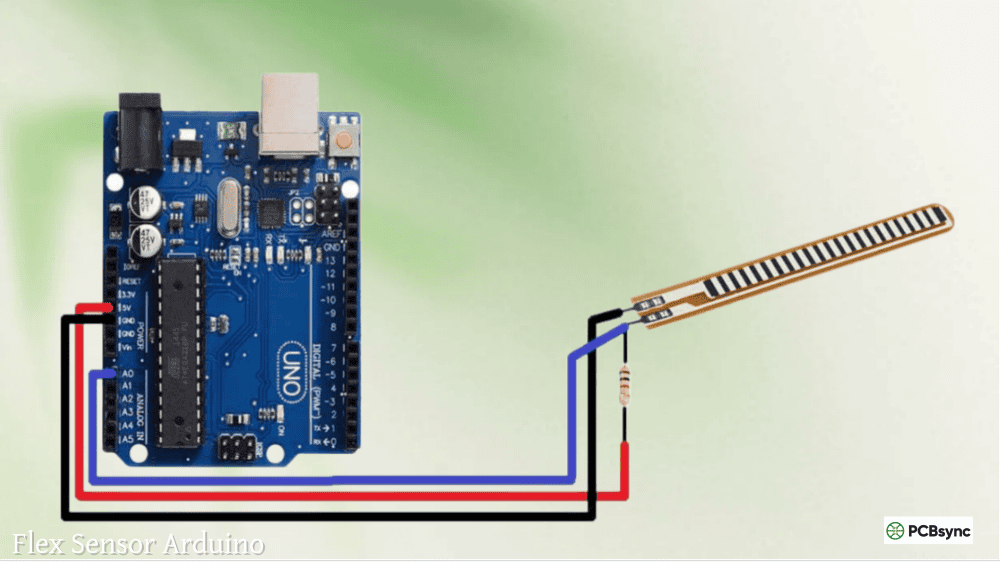
Connecting an FSR to Arduino requires a voltage divider circuit. Since the sensor acts as a variable resistor, this configuration converts resistance changes into voltage changes that Arduino’s ADC can read.
Basic Voltage Divider Connections
FSR Pin
Connection
Pin 1
Arduino 5V
Pin 2
Arduino Analog Pin (A0) AND Fixed Resistor
Fixed Resistor (other end)
Arduino GND
Since FSRs are non-polarized (just like regular resistors), you can connect either pin to power without worrying about direction.
Choosing the Fixed Resistor Value
The fixed resistor value determines your circuit’s sensitivity range. Here’s how different values affect the output:
Fixed Resistor
Best For
Voltage Range
1 kΩ
Heavy force detection
Narrow range, high pressure
10 kΩ
General purpose
Wide range, balanced
47 kΩ
Light touch detection
Sensitive to small forces
100 kΩ
Very light touch
Maximum sensitivity
For most projects, start with a 10kΩ resistor. This provides good sensitivity across the FSR’s usable force range. If you find readings cluster at one end of the scale, swap in a different value.
Voltage Output vs Applied Force
Understanding how voltage relates to force helps you interpret sensor readings:
Applied Force
FSR Resistance
Voltage (with 10kΩ)
None
>10 MΩ
~0V
Light touch (20g)
~100 kΩ
~0.45V
Light squeeze (100g)
~10 kΩ
~2.5V
Medium squeeze (1kg)
~2 kΩ
~4.17V
Hard press (10kg)
~250 Ω
~4.88V
Notice that most of the voltage change happens between light touch and medium squeeze. This non-linear response is characteristic of all FSRs.
Basic Force Sensitive Resistor Arduino Code
Here’s a straightforward sketch to read and categorize pressure levels:
// Basic FSR Reading with Pressure Categories
const int fsrPin = A0; // FSR connected to analog pin A0
int fsrReading; // Raw analog reading
void setup() {
Serial.begin(9600);
}
void loop() {
fsrReading = analogRead(fsrPin);
Serial.print(“Analog reading: “);
Serial.print(fsrReading);
// Categorize pressure levels
if (fsrReading < 10) {
Serial.println(” – No pressure”);
} else if (fsrReading < 200) {
Serial.println(” – Light touch”);
} else if (fsrReading < 500) {
Serial.println(” – Light squeeze”);
} else if (fsrReading < 800) {
Serial.println(” – Medium squeeze”);
} else {
Serial.println(” – Hard press”);
}
delay(200);
}
Upload this code, open Serial Monitor at 9600 baud, and press on your FSR. The threshold values above work for most FSR 402 sensors with 10kΩ resistors, but you may need to adjust based on your specific sensor and mounting.
Calculating Actual Force from FSR Readings
If you need approximate force values rather than qualitative categories, this more advanced sketch converts readings to Newtons:
// FSR Force Calculation
const int fsrPin = A0;
const float VCC = 5.0; // Arduino supply voltage
const float R_DIV = 10000.0; // Fixed resistor value (10kΩ)
void setup() {
Serial.begin(9600);
}
void loop() {
int fsrADC = analogRead(fsrPin);
if (fsrADC != 0) {
// Convert ADC value to voltage
float fsrVoltage = fsrADC * VCC / 1023.0;
// Calculate FSR resistance from voltage divider formula
float fsrConductance = 1000000.0 / fsrResistance; // in microMhos
// Approximate force using FSR characteristic curve
// This approximation works for FSR 402 in typical range
float force;
if (fsrConductance <= 1000) {
force = fsrConductance / 80.0;
} else {
force = (fsrConductance – 1000.0) / 30.0;
}
Serial.print(“Resistance: “);
Serial.print(fsrResistance);
Serial.print(” ohms | Force: “);
Serial.print(force);
Serial.println(” N”);
} else {
Serial.println(“No pressure detected”);
}
delay(250);
}
Keep in mind that FSRs have roughly ±10% accuracy between sensors, so these force values are estimates rather than precise measurements.
Project: LED Brightness Control with FSR
A practical demonstration of FSR pressure sensing: control LED brightness based on how hard you press.
LED Control Wiring
Component
Arduino Pin
FSR Pin 1
5V
FSR Pin 2
A0 + 10kΩ to GND
LED Anode
D9 (PWM pin)
LED Cathode
GND via 220Ω resistor
LED Brightness Code
// FSR-Controlled LED Brightness
const int fsrPin = A0;
const int ledPin = 9; // Must be PWM-capable pin
int fsrReading;
int ledBrightness;
void setup() {
pinMode(ledPin, OUTPUT);
Serial.begin(9600);
}
void loop() {
fsrReading = analogRead(fsrPin);
// Map FSR reading (0-1023) to LED brightness (0-255)
ledBrightness = map(fsrReading, 0, 1023, 0, 255);
// Apply brightness to LED
analogWrite(ledPin, ledBrightness);
Serial.print(“Pressure: “);
Serial.print(fsrReading);
Serial.print(” | Brightness: “);
Serial.println(ledBrightness);
delay(50);
}
Press lightly for a dim glow, press harder for full brightness. This demonstrates the fundamental principle used in velocity-sensitive drum pads and touch-responsive interfaces.
Project: FSR Toggle Switch
Use an FSR as a pressure-activated toggle switch with debouncing:
// FSR Toggle Switch with Debouncing
const int fsrPin = A0;
const int outputPin = 13;
const int pressThreshold = 200; // Adjust based on your sensor
const int releaseThreshold = 100; // Hysteresis prevents flickering
bool isPressed = false;
bool toggleState = false;
unsigned long lastToggleTime = 0;
const unsigned long debounceDelay = 300;
void setup() {
pinMode(outputPin, OUTPUT);
Serial.begin(9600);
}
void loop() {
int fsrReading = analogRead(fsrPin);
unsigned long currentTime = millis();
// Detect press with hysteresis
if (!isPressed && fsrReading > pressThreshold) {
isPressed = true;
// Toggle state if enough time has passed (debounce)
if (currentTime – lastToggleTime > debounceDelay) {
toggleState = !toggleState;
digitalWrite(outputPin, toggleState);
lastToggleTime = currentTime;
Serial.print(“Toggled: “);
Serial.println(toggleState ? “ON” : “OFF”);
}
}
// Detect release
if (isPressed && fsrReading < releaseThreshold) {
isPressed = false;
}
delay(10);
}
The hysteresis (different thresholds for press and release) prevents rapid toggling when pressure hovers near the threshold.
if (fsrReadings[i] > 50) { // Threshold for detection
Serial.print(padNames[i]);
Serial.print(“: “);
Serial.println(fsrReadings[i]);
}
}
delay(50);
}
FSR Applications in Real Projects
The force sensitive resistor Arduino pairing appears across diverse applications:
Electronic Drum Pads
FSRs detect both hit presence and velocity (how hard you strike). Combined with MIDI libraries, Arduino transforms pressure data into velocity-sensitive drum triggers for digital audio workstations.
Dance Pads
Gaming dance pads use FSRs under each arrow panel. The thin profile fits beneath pad surfaces without affecting playability, while variable sensitivity allows per-panel calibration.
Robotic Grippers
FSRs on gripper fingers provide feedback for grasping objects with appropriate force. The robot can grip firmly enough to hold objects without crushing delicate items.
Smart Furniture
Pressure sensors in chairs, beds, and floor mats detect occupancy and weight distribution. Applications range from smart home automation to healthcare monitoring.
Musical Instruments
Pressure-sensitive keyboards and wind instrument controllers use FSRs to capture expression data that MIDI velocity alone can’t provide.
Troubleshooting Force Sensitive Resistor Problems
Common issues and their solutions:
Readings Stay Near Zero
Possible Cause
Solution
Loose connections
Check breadboard contacts
Wrong analog pin in code
Verify pin matches wiring
FSR damaged at crimp tabs
Inspect connection point
Pull-down resistor missing
Add 10kΩ to GND
Readings Jump Erratically
Possible Cause
Solution
Poor ground connection
Use shorter ground wire
Electrical noise
Add 0.1µF capacitor across FSR
Floating analog pins
Ground unused analog inputs
Readings Max Out Too Easily
Possible Cause
Solution
Fixed resistor too large
Try smaller value (1kΩ)
Pressing too hard
Use lighter touch
FSR rated for lower force
Use different model
Important Handling Precautions
FSRs are sensitive to heat. Never solder directly to the sensor tabs unless you’re confident in your skills. Instead, use:
Breadboard insertion for prototyping
Clincher connectors for permanent installations
Screw terminals for field-serviceable designs
Alligator clips for testing
If you must solder, use a temperature-controlled iron, work quickly (under 2 seconds), and never reheat the same joint.
Useful Resources for FSR Arduino Projects
Resource
Link
Description
Interlink FSR Guide
sparkfun.com/datasheets
Integration manual with circuit designs
Adafruit FSR Tutorial
learn.adafruit.com
Comprehensive hookup guide
Arduino IDE
arduino.cc/software
Programming environment
FSR 402 Datasheet
cdn.sparkfun.com
Technical specifications
HelloDrum Library
github.com/RyoKosaka
FSR-compatible drum library
Component Sources
Component
Suppliers
Interlink FSR 402
SparkFun, Adafruit, Digi-Key
Square FSR 406
Adafruit, Mouser
FSR Adapter Boards
SparkFun
Resistor Kits
Amazon, electronics distributors
Frequently Asked Questions
How accurate are force sensitive resistors for measuring weight?
FSRs provide roughly ±10% accuracy at best, with significant variation between individual sensors. They excel at detecting relative pressure changes and threshold events but aren’t suitable for precision weight measurement. For applications requiring accurate force data, consider strain gauges or load cells instead.
Can I use multiple FSRs with one Arduino?
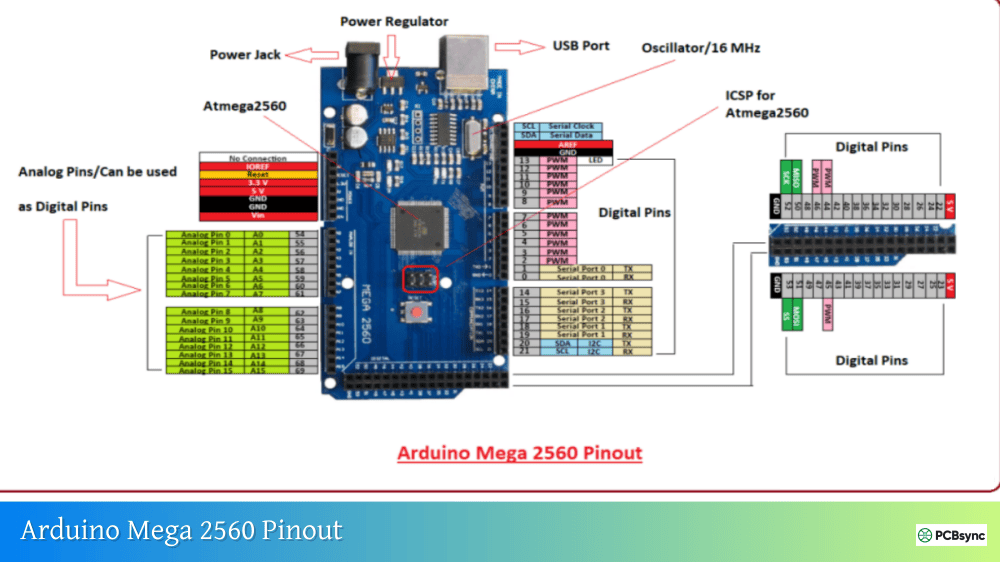
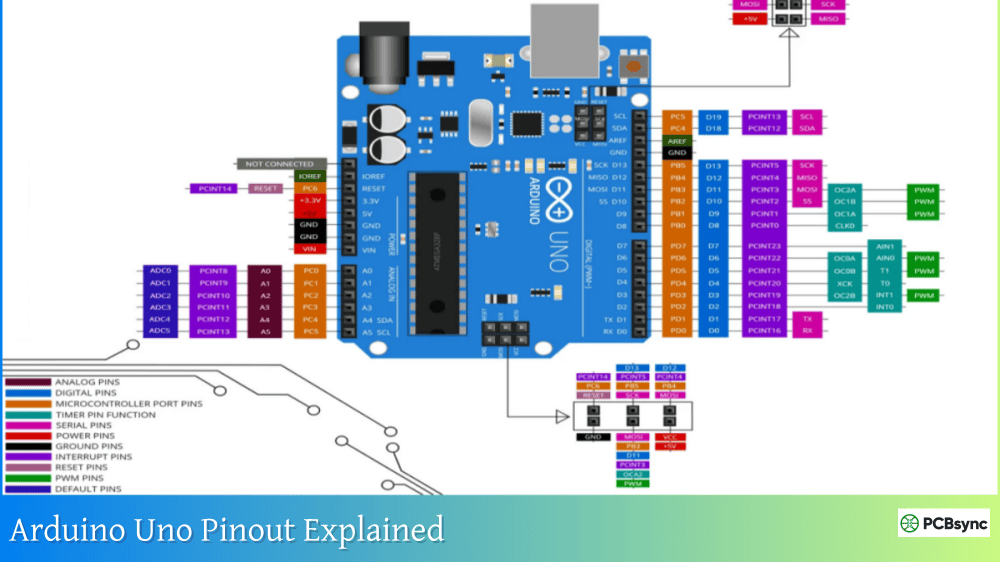
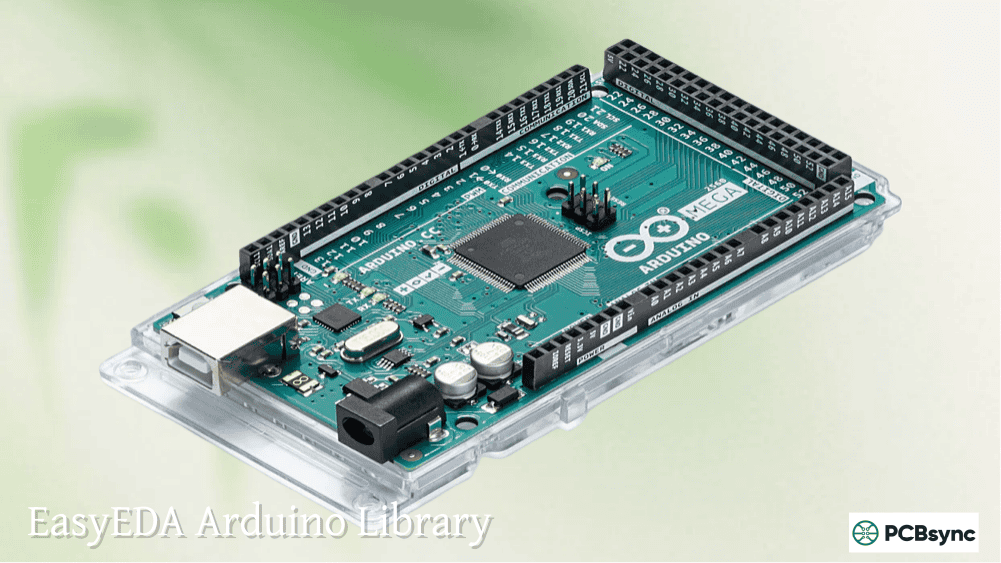
Yes, you can connect as many FSRs as you have analog input pins. Arduino Uno has six analog inputs (A0-A5), allowing six simultaneous pressure sensors. Each FSR needs its own pull-down resistor but can share a common 5V supply. For more sensors, use Arduino Mega (16 analog pins) or an analog multiplexer.
What resistor value should I use for my FSR circuit?
Start with 10kΩ for general-purpose applications. If your readings cluster near zero (not sensitive enough), try a larger resistor like 47kΩ or 100kΩ. If readings max out too easily, use a smaller value like 3.3kΩ or 1kΩ. The goal is to use the full ADC range across your expected force range.
Why do my FSR readings drift over time?
FSRs exhibit hysteresis and drift, especially under sustained pressure. The sensor’s resistance may slowly change while constant force is applied, then take time to return to baseline after release. For applications requiring stable readings, implement software averaging and avoid relying on absolute values for extended periods.
Can FSRs detect the location of pressure on the sensing area?
Standard FSRs only measure total force, not position. The entire active area contributes to one resistance reading. For position sensing, you need multiple smaller FSRs arranged in a grid, or a specialized linear position sensor like the FSR 408 strip, which can indicate where along its length pressure is applied.
Moving Forward with Pressure Sensing
The force sensitive resistor Arduino combination offers an accessible entry point into pressure-sensing electronics. While FSRs won’t replace precision instruments, their low cost, thin profile, and easy integration make them valuable for interactive projects, prototyping, and applications where detecting presence and relative force matters more than exact measurements.
Start with the basic voltage divider circuit and threshold detection code. Once that works, experiment with different resistor values to optimize sensitivity for your use case. From there, scale up to multi-sensor arrays, add MIDI output for musical applications, or integrate pressure feedback into robotic systems.
The simplicity of FSRs is their strength. A few dollars in components and an afternoon of experimentation can transform static projects into pressure-responsive systems that react naturally to human touch.
Inquire: Call 0086-755-23203480, or reach out via the form below/your sales contact to discuss our design, manufacturing, and assembly capabilities.
Quote: Email your PCB files to Sales@pcbsync.com (Preferred for large files) or submit online. We will contact you promptly. Please ensure your email is correct.
Notes: For PCB fabrication, we require PCB design file in Gerber RS-274X format (most preferred), *.PCB/DDB (Protel, inform your program version) format or *.BRD (Eagle) format. For PCB assembly, we require PCB design file in above mentioned format, drilling file and BOM. Click to download BOM template To avoid file missing, please include all files into one folder and compress it into .zip or .rar format.