Inquire: Call 0086-755-23203480, or reach out via the form below/your sales contact to discuss our design, manufacturing, and assembly capabilities.
Quote: Email your PCB files to Sales@pcbsync.com (Preferred for large files) or submit online. We will contact you promptly. Please ensure your email is correct.
Notes: For PCB fabrication, we require PCB design file in Gerber RS-274X format (most preferred), *.PCB/DDB (Protel, inform your program version) format or *.BRD (Eagle) format. For PCB assembly, we require PCB design file in above mentioned format, drilling file and BOM. Click to download BOM template To avoid file missing, please include all files into one folder and compress it into .zip or .rar format.
FastLED Library: Advanced LED Control Guide for Professional Projects
After years of designing PCBs for LED-based installations, I’ve tested practically every addressable LED library available for Arduino and microcontroller platforms. The FastLED library consistently stands out as the most powerful, flexible, and performance-optimized solution for professional LED control. Whether you’re building architectural lighting, stage effects, or embedded displays, understanding FastLED transforms your capabilities from basic blinking patterns to sophisticated, production-ready installations.
From a hardware engineer’s perspective, the FastLED library solves critical problems that basic LED libraries ignore. When you’re designing PCBs that drive hundreds or thousands of addressable LEDs, you need more than simple color control—you need precise timing, power management, and performance optimization that won’t choke your microcontroller.
The FastLED library delivers exceptional performance through ruthlessly optimized assembly code, supporting 50+ microcontroller platforms and virtually every addressable LED chipset available. Unlike Adafruit’s NeoPixel library, which prioritizes simplicity, FastLED focuses on speed, memory efficiency, and advanced features that professionals demand.
Key advantages for PCB designers:
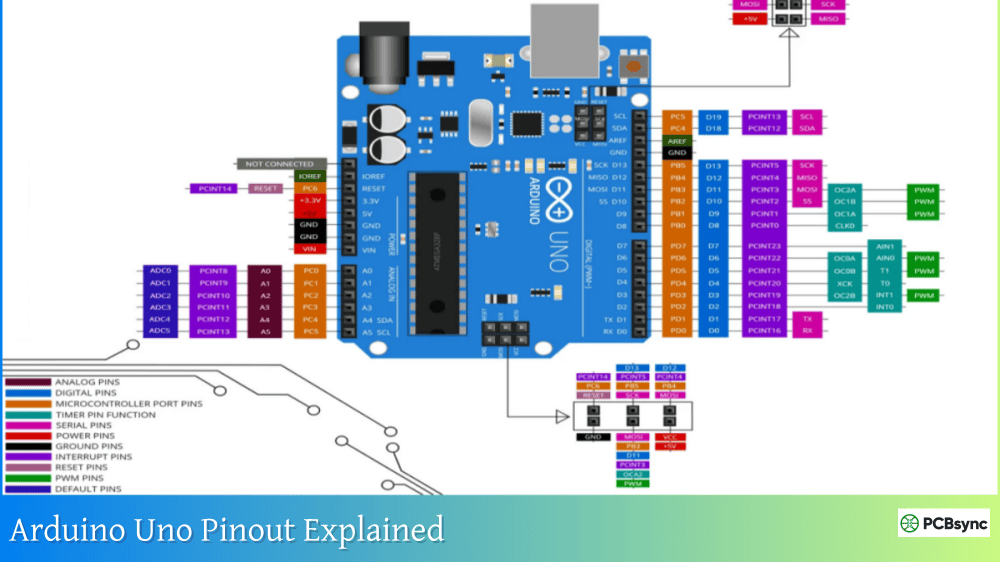
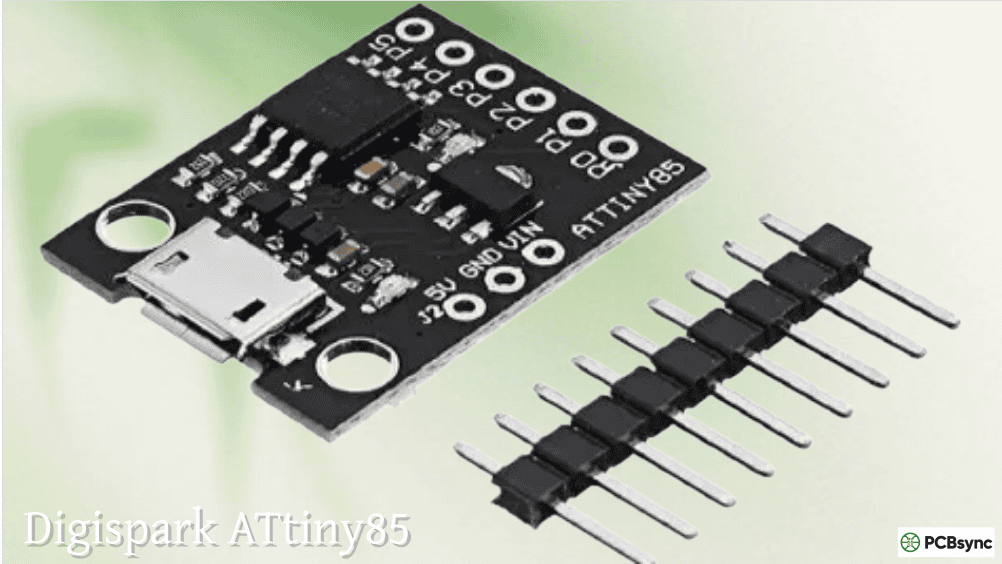
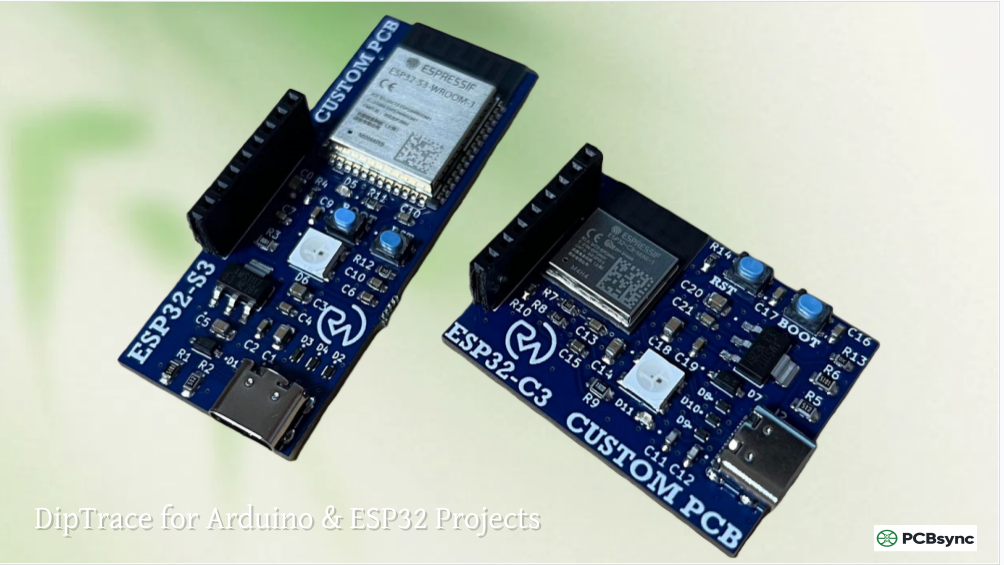
Platform flexibility: Works identically across Arduino Uno, ESP32, Teensy, STM32, and even sub-dollar ATtiny chips Chipset universality: Supports WS2812, APA102, SK6812, and 50+ other LED controllers with identical code Performance optimization: High-speed math functions run 10X faster than standard Arduino libraries Power management: Built-in functions prevent overcurrent situations that could damage your carefully designed power supplies Memory efficiency: Optimized for constrained environments where every byte counts
Supported LED Chipsets and Hardware Comparison
One area where the FastLED library truly excels is chipset support. Understanding chipset differences helps you specify the right components during PCB design phase.
Chipset
Protocol
Speed
Voltage
Best Use Case
FastLED Support
WS2812B
1-wire
800 kbps
5V
Cost-effective projects
Excellent
WS2813
1-wire + backup
800 kbps
5V
Reliability critical
Excellent
APA102
SPI (2-wire)
20+ Mbps
5V
High refresh rate, POV
Excellent
SK6812
1-wire
800 kbps
5V
RGBW applications
Excellent
WS2815
1-wire
800 kbps
12V
Long runs, power distribution
Excellent
HD107S
SPI
Variable
5V
High color depth
Good
APA107
1-wire
800 kbps
5V
RGBW with IC backup
Good
Engineering insight: For PCB designs with refresh rates above 400 Hz (POV displays, high-speed animations), I always specify APA102 over WS2812B. The SPI protocol handles timing variations much better, especially on platforms running WiFi or other interrupt-heavy tasks.
Installing FastLED Library: Multiple Methods
Installation varies slightly depending on your development environment:
Arduino IDE Installation
Open Arduino IDE
Navigate to Tools → Manage Libraries
Search for “FastLED”
Install the latest version (currently 3.7+)
Verify by checking File → Examples → FastLED
PlatformIO Installation
Add to your platformio.ini:
lib_deps =
fastled/FastLED@^3.7.0
Manual Installation (Advanced)
Clone from GitHub when you need bleeding-edge features:
cd ~/Arduino/libraries
git clone https://github.com/FastLED/FastLED.git
Critical note for ESP32 users: Some ESP32 Arduino core versions (3.10+) have compatibility issues with the I2S driver. If you experience flickering or crashes, downgrade to core 2.0.x or use the newer LCD driver by defining FASTLED_ESP32_RMT before including FastLED.
Basic FastLED Library Implementation
Let’s examine proper implementation from a hardware engineer’s perspective. This goes beyond “hello world” examples to show production-ready patterns.
Why HSV matters for engineers: Rotating through hue values creates smooth color transitions. In RGB space, this requires complex interpolation. HSV makes it trivial, reducing CPU load significantly.
Color Palettes for Professional Effects
Palettes define color schemes that can be applied programmatically:
This is where the FastLED library separates amateur projects from professional installations. Uncontrolled LED power draw damages power supplies and creates brownout conditions.
From designing hundreds of LED installations, I’ve learned these FastLED library optimization strategies:
Frame Rate Control
#define FRAMES_PER_SECOND 60
void loop() {
EVERY_N_MILLISECONDS(1000 / FRAMES_PER_SECOND) {
updateLEDs();
}
}
Engineering rationale: Human eyes perceive 24-30 fps as smooth motion. Running faster wastes CPU cycles. For POV displays, target 200+ fps.
Temporal Dithering
FastLED automatically implements temporal dithering when brightness is reduced, preserving color fidelity at low brightness levels. This hardware-accelerated feature improves visual quality with zero code overhead.
AliExpress (Budget option, verify chipset before purchasing)
Frequently Asked Questions (FAQs)
1. What’s the maximum number of LEDs I can control with FastLED library?
The limit depends on your microcontroller’s RAM and update rate requirements. Arduino Uno handles ~300 LEDs comfortably (900 bytes for CRGB array). ESP32 easily manages 1000+ LEDs. For larger installations, use parallel output on Teensy 4.1 (up to 8 strips simultaneously) or distribute control across multiple microcontrollers. I’ve personally designed systems with 10,000+ LEDs using networked ESP32 controllers.
2. Should I choose WS2812B or APA102 for my PCB design?
This decision fundamentally affects your PCB layout. WS2812B requires only one data line (plus power/ground), simplifying routing and reducing connector pin count. APA102 needs separate clock and data lines but offers superior performance—higher refresh rates (critical for POV displays), better color accuracy, and immunity to timing glitches from WiFi interrupts. For production designs prioritizing cost, choose WS2812B. For professional installations prioritizing performance, choose APA102.
3. How do I prevent flickering when using FastLED library with ESP32 WiFi?
Flickering with ESP32 + WiFi occurs because WiFi interrupts disrupt precise timing required by WS2812B. Solutions: (1) Use APA102 chipset instead—SPI protocol tolerates interrupts, (2) Define FASTLED_ESP32_RMT to use RMT peripheral instead of bit-banging, (3) Disable WiFi during critical LED updates, or (4) Implement task priorities with FreeRTOS to give LED updates higher priority than WiFi handling.
4. Can FastLED library control RGBW (4-channel) LED strips?
FastLED’s core CRGB structure is RGB-only (3 channels). However, SK6812 RGBW strips work by automatically calculating the white channel from RGB values. For manual white channel control, you’ll need to drop down to lower-level functions or use specialized libraries. Many PCB designers find that high-quality RGB LEDs (APA102 with proper color correction) produce better whites than RGBW strips anyway.
5. What causes the “slow blink” or “fast blink” error indicators?
These built-in diagnostic patterns signal critical failures. Slow blink (4-second cycle): Stack overflow—a task consumed more memory than allocated. Increase stack size or reduce local variables. Fast blink (100ms cycle): Heap allocation failure—ran out of RAM for dynamic memory. Reduce number of LEDs, palettes, or other memory-consuming structures. On production PCBs, I always include a debug LED connected to a dedicated pin for these indicators.
Conclusion
The FastLED library represents the pinnacle of addressable LED control for Arduino and compatible microcontroller platforms. From basic color setting to advanced palette manipulation, power management, and performance optimization, FastLED provides production-grade tools that basic libraries simply cannot match.
As a PCB engineer, I’ve designed FastLED into everything from architectural lighting to interactive art installations and commercial products. The library’s platform independence means your code works identically whether prototyping on Arduino Uno or deploying on ESP32. The comprehensive chipset support ensures you’re never locked into specific LED manufacturers.
Whether you’re building a simple LED strip decoration or a complex multi-controller installation with thousands of addressable pixels, mastering the FastLED library elevates your capabilities from hobbyist to professional. Start with basic examples, experiment with palettes and animations, implement proper power management, and gradually explore the advanced features that make FastLED the industry standard.
The active community, extensive documentation, and continuous development ensure FastLED remains the optimal choice for serious LED control projects. Your investment in learning this library pays dividends across every future LED project you design.
Inquire: Call 0086-755-23203480, or reach out via the form below/your sales contact to discuss our design, manufacturing, and assembly capabilities.
Quote: Email your PCB files to Sales@pcbsync.com (Preferred for large files) or submit online. We will contact you promptly. Please ensure your email is correct.
Notes: For PCB fabrication, we require PCB design file in Gerber RS-274X format (most preferred), *.PCB/DDB (Protel, inform your program version) format or *.BRD (Eagle) format. For PCB assembly, we require PCB design file in above mentioned format, drilling file and BOM. Click to download BOM template To avoid file missing, please include all files into one folder and compress it into .zip or .rar format.