Inquire: Call 0086-755-23203480, or reach out via the form below/your sales contact to discuss our design, manufacturing, and assembly capabilities.
Quote: Email your PCB files to Sales@pcbsync.com (Preferred for large files) or submit online. We will contact you promptly. Please ensure your email is correct.
Notes: For PCB fabrication, we require PCB design file in Gerber RS-274X format (most preferred), *.PCB/DDB (Protel, inform your program version) format or *.BRD (Eagle) format. For PCB assembly, we require PCB design file in above mentioned format, drilling file and BOM. Click to download BOM template To avoid file missing, please include all files into one folder and compress it into .zip or .rar format.
Adding WiFi capability to your projects was once expensive and complicated. Then the ESP8266 changed everything. After working with dozens of IoT prototypes, I can confidently say that the ESP8266 WiFi module Arduino combination remains one of the most cost-effective ways to bring internet connectivity to embedded systems. This guide covers everything from basic wiring to advanced configurations, drawing from real-world experience troubleshooting these modules on the bench.
The ESP8266 is a low-cost WiFi microcontroller developed by Espressif Systems. What makes it remarkable is that it’s not just a WiFi transceiver – it’s a complete System on Chip (SoC) with an integrated TCP/IP protocol stack, meaning it can function as either a standalone microcontroller or as a WiFi peripheral for another microcontroller like Arduino.
The chip is built around a Tensilica L106 32-bit RISC processor running at 80MHz (overclockable to 160MHz), which is actually more powerful than most Arduino boards. This processing capability, combined with its extremely low price point, revolutionized the maker community and kickstarted the affordable IoT movement.
ESP8266 Module Variants
Several manufacturers produce modules based on the ESP8266 chip. Understanding the differences helps you choose the right one for your project.
Module
GPIO Pins
Flash Memory
Form Factor
Best For
ESP-01
2 (GPIO0, GPIO2)
512KB – 1MB
24.8mm x 14.3mm
WiFi shield for Arduino
ESP-01S
2 (GPIO0, GPIO2)
1MB
24.8mm x 14.3mm
Improved ESP-01
ESP-07
9
4MB
20mm x 16mm
External antenna projects
ESP-12E
11
4MB
24mm x 16mm
Development boards
ESP-12F
11
4MB
24mm x 16mm
Improved antenna design
NodeMCU
11
4MB
49mm x 24mm
Standalone development
Wemos D1 Mini
11
4MB
34mm x 25mm
Compact development
The ESP-01 is the most common choice when using ESP8266 as a WiFi shield for Arduino because of its small size and low cost. The NodeMCU and Wemos D1 Mini are better suited for standalone projects where you want to program the ESP8266 directly.
ESP8266 ESP-01 Technical Specifications
For most ESP8266 WiFi module Arduino projects, the ESP-01 variant is the go-to choice. Here are its specifications:
Parameter
Specification
Processor
Tensilica L106 32-bit RISC
Clock Speed
80MHz (160MHz max)
Operating Voltage
2.5V to 3.6V
Operating Current
80mA average, 200mA+ peak
Flash Memory
512KB or 1MB (version dependent)
WiFi Standard
802.11 b/g/n
WiFi Frequency
2.4GHz
Security
WPA/WPA2
Network Protocols
TCP/IP, UDP
Operating Temperature
-40°C to +125°C
Default Baud Rate
115200 (older) / 9600 (newer firmware)
WiFi Range
~100m (open space)
ESP8266 ESP-01 Pinout Explained
The ESP-01 module has only 8 pins, making it compact but limited in GPIO availability. Understanding each pin is crucial for proper operation.
Pin
Name
Function
1
GND
Ground reference
2
GPIO2
General Purpose I/O (also used during boot)
3
GPIO0
General Purpose I/O / Programming mode select
4
RX
UART Receive (connect to Arduino TX)
5
TX
UART Transmit (connect to Arduino RX)
6
CH_PD/EN
Chip Enable (must be HIGH for operation)
7
RST
Reset (active LOW)
8
VCC
Power supply (3.3V ONLY)
Critical Pin Considerations
GPIO0: This pin serves dual purposes. During normal operation, it functions as a GPIO. However, if GPIO0 is held LOW during power-up or reset, the module enters programming (flash) mode. For normal operation, leave it floating or connect to 3.3V.
GPIO2: Must be HIGH or floating during boot. Do not connect to ground during power-up.
CH_PD/EN: This chip enable pin must be connected to 3.3V for the module to function. Leaving it floating will result in the module not responding.
ESP8266 WiFi Operating Modes
The ESP8266 supports three operating modes, which you can configure based on your project requirements.
Mode
Value
Description
Station (STA)
1
Connects to existing WiFi network
Access Point (AP)
2
Creates its own WiFi network
Both (AP + STA)
3
Simultaneously acts as station and access point
Station Mode is what you’ll use most often – your ESP8266 connects to your home router just like your phone does, allowing it to access the internet and communicate with other devices on your network.
Access Point Mode turns the ESP8266 into a mini router. Other devices can connect directly to it. This is useful for remote locations without existing WiFi or for initial device configuration.
Combined Mode allows the ESP8266 to connect to your network while simultaneously creating its own network for direct device connections.
Hardware Requirements for ESP8266 Arduino Setup
Before connecting your ESP8266 to Arduino, gather these components:
Component
Quantity
Purpose
Arduino Uno/Mega
1
Main microcontroller
ESP8266 ESP-01 Module
1
WiFi connectivity
3.3V Voltage Regulator (AMS1117)
1
Power supply for ESP8266
1kΩ Resistor
1
Voltage divider
2kΩ Resistor
1
Voltage divider
10µF Capacitor
1
Power supply filtering
Breadboard
1
Prototyping
Jumper Wires
Several
Connections
Why You Need a Separate Power Supply
This is where many beginners run into trouble. The ESP8266 draws up to 200mA or more during WiFi transmission peaks. The Arduino’s 3.3V pin can only supply about 50mA on most boards. Trying to power the ESP8266 from the Arduino’s 3.3V pin leads to brownouts, random resets, and failed WiFi connections.
Use a dedicated 3.3V regulator like the AMS1117-3.3 connected to the Arduino’s 5V rail or an external power source. Add a 10µF capacitor across the power rails close to the ESP8266 to handle current spikes.
Wiring ESP8266 to Arduino Uno
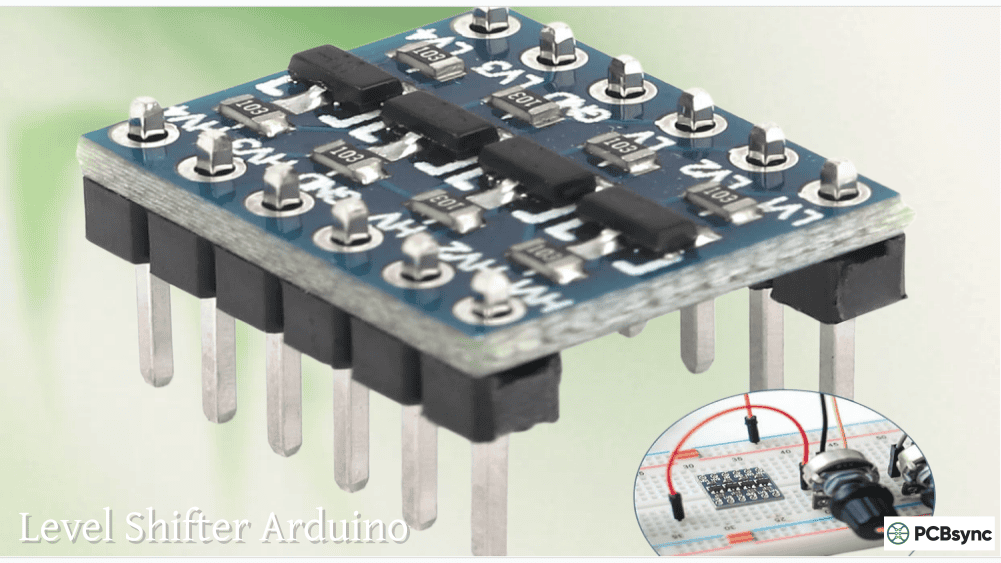
The connection requires careful attention to voltage levels. The ESP8266 operates at 3.3V logic, while the Arduino Uno uses 5V. Connecting the Arduino’s 5V TX directly to the ESP8266’s RX pin can damage the module over time.
ESP8266 Arduino Connection Table
ESP-01 Pin
Arduino Uno Pin
Notes
VCC
3.3V Regulator Output
NOT Arduino 3.3V pin
GND
GND
Common ground required
CH_PD/EN
3.3V
Always HIGH for operation
RST
3.3V (through 10k pullup)
Or leave floating
TX
Pin 10 (Software Serial RX)
Direct connection OK
RX
Pin 11 (through voltage divider)
5V to 3.3V conversion needed
GPIO0
Not connected
Float for normal operation
GPIO2
Not connected
Float for normal operation
Building the Voltage Divider
Connect a 1kΩ resistor between Arduino pin 11 and the ESP-01 RX pin, then connect a 2kΩ resistor between the ESP-01 RX pin and ground. This creates a voltage divider that converts the Arduino’s 5V signal to approximately 3.3V.
The math: Vout = 5V × (2kΩ / (1kΩ + 2kΩ)) = 3.33V
Installing ESP8266 Board Package in Arduino IDE
If you want to program the ESP8266 directly (instead of using AT commands through Arduino), you need to install the ESP8266 board package.
Step 1: Open Arduino IDE and go to File > Preferences.
Step 2: In the “Additional Boards Manager URLs” field, add:
Step 4: Search for “ESP8266” and install “esp8266 by ESP8266 Community”.
Step 5: After installation, select your board under Tools > Board > ESP8266 Boards.
Using ESP8266 with AT Commands
The ESP8266 comes with factory firmware that responds to AT commands. This allows you to use the ESP8266 as a WiFi modem controlled by your Arduino, without programming the ESP8266 itself.
Basic AT Commands Reference
Command
Function
Expected Response
AT
Test communication
OK
AT+RST
Reset module
OK + ready
AT+GMR
Check firmware version
Version info + OK
AT+CWMODE=1
Set Station mode
OK
AT+CWMODE=2
Set Access Point mode
OK
AT+CWMODE=3
Set AP + Station mode
OK
AT+CWLAP
List available networks
Network list + OK
AT+CWJAP=”ssid”,”password”
Connect to WiFi
WIFI CONNECTED + OK
AT+CIFSR
Get IP address
IP address + OK
AT+CIPMUX=1
Enable multiple connections
OK
AT+CIPSERVER=1,80
Start server on port 80
OK
AT+CIPSEND=0,length
Send data on connection 0
> (prompt)
AT+CIPCLOSE=0
Close connection 0
OK
Arduino Code for AT Command Communication
This sketch allows you to send AT commands to the ESP8266 through the Arduino Serial Monitor:
For more advanced projects, you can program the ESP8266 directly, treating it as a standalone microcontroller. This requires putting the module in programming mode and using a USB-to-serial adapter.
ESP8266 Programming Mode Connections
ESP-01 Pin
Connection
VCC
3.3V
GND
GND
CH_PD/EN
3.3V
RST
3.3V (release to run)
TX
USB-TTL RX
RX
USB-TTL TX (through voltage divider)
GPIO0
GND (for programming mode)
GPIO2
Floating or 3.3V
After uploading, disconnect GPIO0 from ground and reset the module to run your program.
Basic WiFi Connection Code (Direct Programming)
#include <ESP8266WiFi.h>
const char* ssid = “YourNetworkName”;
const char* password = “YourPassword”;
void setup() {
Serial.begin(115200);
delay(100);
Serial.println();
Serial.print(“Connecting to “);
Serial.println(ssid);
WiFi.begin(ssid, password);
while (WiFi.status() != WL_CONNECTED) {
delay(500);
Serial.print(“.”);
}
Serial.println();
Serial.println(“WiFi connected!”);
Serial.print(“IP address: “);
Serial.println(WiFi.localIP());
}
void loop() {
// Your main code here
}
Creating a Simple Web Server
One of the most popular ESP8266 WiFi module Arduino applications is creating a web server to control devices remotely:
#include <ESP8266WiFi.h>
#include <ESP8266WebServer.h>
const char* ssid = “YourNetworkName”;
const char* password = “YourPassword”;
ESP8266WebServer server(80);
int ledPin = 2; // GPIO2 on ESP-01
void setup() {
Serial.begin(115200);
pinMode(ledPin, OUTPUT);
digitalWrite(ledPin, HIGH); // LED off (active LOW)
WiFi.begin(ssid, password);
while (WiFi.status() != WL_CONNECTED) {
delay(500);
Serial.print(“.”);
}
Serial.println();
Serial.print(“Connected! IP: “);
Serial.println(WiFi.localIP());
server.on(“/”, handleRoot);
server.on(“/led/on”, handleLedOn);
server.on(“/led/off”, handleLedOff);
server.begin();
Serial.println(“HTTP server started”);
}
void loop() {
server.handleClient();
}
void handleRoot() {
String html = “<html><body>”;
html += “<h1>ESP8266 Web Server</h1>”;
html += “<p><a href=’/led/on’>Turn LED ON</a></p>”;
html += “<p><a href=’/led/off’>Turn LED OFF</a></p>”;
html += “</body></html>”;
server.send(200, “text/html”, html);
}
void handleLedOn() {
digitalWrite(ledPin, LOW); // Active LOW
server.send(200, “text/html”, “LED is ON. <a href=’/’>Back</a>”);
}
void handleLedOff() {
digitalWrite(ledPin, HIGH);
server.send(200, “text/html”, “LED is OFF. <a href=’/’>Back</a>”);
Over years of working with these modules, I’ve encountered virtually every possible issue. Here’s how to solve the most common problems:
Problem: Module Not Responding to AT Commands
Possible Cause
Solution
Wrong baud rate
Try 115200, 9600, or 74880
Insufficient power
Use dedicated 3.3V regulator
CH_PD not connected
Connect CH_PD to 3.3V
Wrong TX/RX connections
Verify TX goes to RX and vice versa
Module in wrong mode
Reset by pulling RST LOW briefly
Problem: “espcomm_sync failed” Upload Error
This error indicates the module isn’t entering programming mode properly. Check that GPIO0 is connected to ground before powering up or resetting the module. Release GPIO0 after the upload begins.
Problem: Module Keeps Resetting
Power supply issues cause 90% of random reset problems. The ESP8266 can draw over 200mA during WiFi transmission. Add a larger capacitor (100µF or more) across the power rails and ensure your regulator can handle peak current.
Problem: Garbled Characters in Serial Monitor
Baud rate mismatch is the usual culprit. Try different baud rates: 9600, 57600, 74880, and 115200. The module outputs boot messages at 74880 baud, then switches to its configured rate.
Problem: WiFi Connects but Disconnects Randomly
Check for interference from nearby 2.4GHz devices. Ensure adequate power supply. If using deep sleep, verify your wake-up configuration. Some routers have compatibility issues – try a different WiFi channel.
If you’re starting a new project, you might wonder whether to use ESP8266 or its successor, ESP32.
Feature
ESP8266
ESP32
WiFi
Yes
Yes
Bluetooth
No
Yes (Classic + BLE)
CPU Cores
1
2
Clock Speed
80/160 MHz
160/240 MHz
GPIO Pins
17
34
ADC Channels
1
18
DAC
No
2 channels
Price
~$2-3
~$4-6
Power Consumption
Lower
Higher
The ESP8266 remains excellent for simple WiFi projects where cost and power consumption matter. Choose ESP32 when you need Bluetooth, more GPIO pins, or additional processing power.
Frequently Asked Questions
Can I power the ESP8266 directly from Arduino’s 3.3V pin?
No, this is not recommended. The Arduino Uno’s 3.3V regulator can only supply about 50mA, while the ESP8266 can draw over 200mA during WiFi transmission peaks. Using the Arduino’s 3.3V pin will cause brownouts, random resets, and unreliable operation. Always use a dedicated 3.3V regulator that can supply at least 500mA.
Why does my ESP8266 only show garbage characters in the Serial Monitor?
This typically indicates a baud rate mismatch. The ESP8266 may be configured for a different baud rate than your Serial Monitor. Try common rates: 9600, 57600, 74880, and 115200. Note that the module outputs boot messages at 74880 baud before switching to its configured rate, which can cause initial garbage characters even with correct settings.
Can the ESP8266 and HC-05 Bluetooth module work together with Arduino?
Yes, but with limitations. Both modules communicate via UART, so you’ll need to use Software Serial for at least one of them. The Arduino Uno has limited memory and processing power, so running both modules simultaneously with complex code may cause stability issues. Consider using an Arduino Mega with multiple hardware serial ports, or better yet, upgrade to an ESP32 which has built-in WiFi and Bluetooth.
How do I reset the ESP8266 to factory settings?
Send the AT command “AT+RESTORE” to reset the module to its factory default settings. This restores default baud rate, WiFi mode, and clears any saved network credentials. After the command executes, the module will restart automatically. If you’ve overwritten the AT firmware with custom code, you’ll need to reflash the original firmware using esptool.
What is the maximum range of the ESP8266 WiFi module?
Under ideal conditions (open space, no interference), the ESP8266 can achieve ranges of 100 meters or more. In typical indoor environments with walls and interference, expect 20-30 meters. Range depends on several factors including antenna design (the ESP-07 with external antenna performs better than ESP-01’s PCB antenna), obstacles, interference from other 2.4GHz devices, and the access point’s transmit power.
Project Ideas for ESP8266 WiFi Module Arduino
Once you’ve mastered the basics, consider these project ideas:
IoT Weather Station: Connect temperature, humidity, and pressure sensors to the ESP8266 and upload data to cloud services like ThingSpeak or Blynk.
Smart Home Controller: Create a web interface to control lights, fans, and appliances through relay modules.
WiFi Doorbell: Build a doorbell that sends notifications to your smartphone when someone presses the button.
Remote Monitoring System: Monitor sensors remotely and receive alerts when values exceed thresholds.
OTA Update Server: Implement over-the-air firmware updates so you can update your ESP8266 devices without physical access.
Final Thoughts
The ESP8266 WiFi module Arduino combination opened up IoT development to hobbyists and professionals alike. Despite newer chips entering the market, the ESP8266 remains relevant due to its low cost, extensive community support, and proven reliability.
The key to success lies in understanding the power requirements and voltage level differences between the ESP8266 and Arduino. Get the hardware right, and the software becomes straightforward. Start with simple AT command communication to verify your hardware works, then progress to direct programming for more sophisticated applications.
Whether you’re building a simple WiFi-connected sensor or a complex home automation system, the ESP8266 provides an excellent foundation. The skills you develop working with this module transfer directly to more advanced platforms like the ESP32, making it an ideal learning platform for anyone entering the IoT space.
Inquire: Call 0086-755-23203480, or reach out via the form below/your sales contact to discuss our design, manufacturing, and assembly capabilities.
Quote: Email your PCB files to Sales@pcbsync.com (Preferred for large files) or submit online. We will contact you promptly. Please ensure your email is correct.
Notes: For PCB fabrication, we require PCB design file in Gerber RS-274X format (most preferred), *.PCB/DDB (Protel, inform your program version) format or *.BRD (Eagle) format. For PCB assembly, we require PCB design file in above mentioned format, drilling file and BOM. Click to download BOM template To avoid file missing, please include all files into one folder and compress it into .zip or .rar format.