Inquire: Call 0086-755-23203480, or reach out via the form below/your sales contact to discuss our design, manufacturing, and assembly capabilities.
Quote: Email your PCB files to Sales@pcbsync.com (Preferred for large files) or submit online. We will contact you promptly. Please ensure your email is correct.
Notes: For PCB fabrication, we require PCB design file in Gerber RS-274X format (most preferred), *.PCB/DDB (Protel, inform your program version) format or *.BRD (Eagle) format. For PCB assembly, we require PCB design file in above mentioned format, drilling file and BOM. Click to download BOM template To avoid file missing, please include all files into one folder and compress it into .zip or .rar format.
ESP8266 vs ESP32: Which WiFi Module Should You Choose?
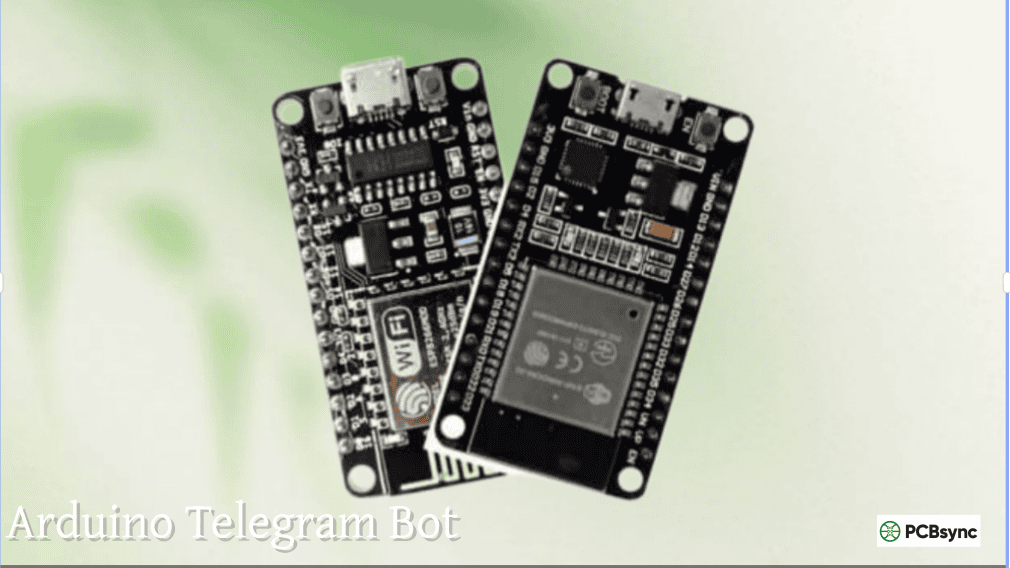
After designing dozens of IoT boards over the past few years, I’ve lost count of how many times clients have asked me: “Should I go with the ESP8266 or ESP32?” It’s a fair question, and honestly, the answer isn’t always straightforward. Both modules come from Espressif Systems, both are incredibly affordable, and both have built loyal communities of makers and professionals alike. But they’re built for different purposes, and choosing the wrong one can cost you time, money, and a lot of frustration during PCB layout.
In this guide, I’ll break down the ESP8266 vs ESP32 comparison from a practical engineering standpoint. We’ll look at specifications, real-world performance, power consumption, and most importantly, which projects each module handles best.
The ESP8266 hit the market in August 2014 and essentially democratized IoT development. Before this chip showed up, adding WiFi to a microcontroller project meant spending $50+ on shields or modules. The ESP8266 changed that overnight by offering a 32-bit processor with integrated WiFi for just a few dollars.
At its core, the ESP8266 uses a Tensilica L106 Diamond series processor running at 80MHz (overclockable to 160MHz). It’s a single-core chip with about 160KB of RAM and typically 4MB of external flash. The module handles 802.11 b/g/n WiFi and includes a basic set of peripherals that works fine for straightforward IoT applications.
What made the ESP8266 special wasn’t raw power—it was accessibility. The chip works seamlessly with the Arduino IDE, which meant thousands of hobbyists could suddenly build WiFi-connected devices without learning complex embedded frameworks.
What is the ESP32?
Espressif released the ESP32 in September 2016 as the ESP8266’s successor, and they didn’t hold back on improvements. The ESP32 packs a dual-core Tensilica Xtensa LX6 processor running at up to 240MHz, roughly 520KB of SRAM, and integrated Bluetooth alongside WiFi.
The ESP32 addressed nearly every limitation of the ESP8266: more GPIO pins, better ADC resolution, hardware encryption, touch sensors, and significantly improved power management. It’s become the go-to chip for serious IoT products that need to handle multiple tasks simultaneously without breaking a sweat.
ESP8266 vs ESP32: Technical Specifications Compared
When you’re laying out a PCB, specifications matter more than marketing claims. Here’s how these two modules stack up:
Core Processor and Performance
Specification
ESP8266
ESP32
Processor
Tensilica L106
Tensilica LX6
Cores
Single-core
Dual-core
Clock Speed
80-160 MHz
160-240 MHz
Architecture
32-bit RISC
32-bit RISC
Performance
~80 MIPS
Up to 600 DMIPS
Operating Voltage
3.0-3.6V
2.2-3.6V
The dual-core architecture on the ESP32 is genuinely useful in practice. I typically dedicate one core to handling WiFi/Bluetooth stack operations while the other runs application code. This separation prevents the connectivity stack from blocking time-critical operations—something that caused me headaches on early ESP8266 projects.
Memory Specifications
Memory Type
ESP8266
ESP32
RAM
160 KB
520 KB
External Flash
Up to 16 MB
Up to 16 MB
ROM
64 KB
448 KB
PSRAM Support
No
Yes (up to 4 MB)
That extra RAM on the ESP32 isn’t just nice to have—it’s essential for running HTTPS connections, handling JSON parsing of complex payloads, or implementing any kind of buffering for audio/video applications.
Wireless Connectivity Features
Feature
ESP8266
ESP32
WiFi Standard
802.11 b/g/n
802.11 b/g/n
WiFi Frequency
2.4 GHz
2.4 GHz
Max PHY Rate
~72 Mbps (HT20)
~150 Mbps (HT40)
Bluetooth
Not available
Bluetooth 4.2 + BLE
WiFi Direct
Limited
Full support
The absence of Bluetooth on the ESP8266 is a hard limitation. If your product needs BLE beacons, smartphone pairing during setup, or any Bluetooth functionality, the ESP32 is your only option.
GPIO and Peripheral Support
Feature
ESP8266
ESP32
Total GPIO Pins
17 (11 usable)
34 (25+ usable)
ADC Channels
1 (10-bit)
18 (12-bit)
DAC Channels
0
2
Touch Sensors
0
10
PWM Channels
Software (all GPIO)
16 hardware
UART
1.5 (one TX-only)
3
I2C
Software
2 hardware
SPI
1 (2 internal)
4
CAN Bus
Not available
1 (TWAI)
From a PCB design perspective, the ESP8266’s limited GPIO count is its biggest constraint. After accounting for boot pins, flash interface, and serial programming, you’re left with precious few pins for your actual application. The ESP32 gives you room to breathe.
Power Consumption Analysis
Battery-powered projects demand careful attention to power consumption. Here’s what I’ve measured across multiple designs:
Power Mode
ESP8266
ESP32
Active (WiFi TX)
70-170 mA
160-260 mA
Active (WiFi RX)
50-56 mA
95-100 mA
Modem Sleep
~15 mA
~20 mA
Light Sleep
0.4-2 mA
0.8-3 mA
Deep Sleep
~20 µA
~10 µA
Here’s the interesting part: while the ESP32 draws more current during active operation, it actually achieves lower deep sleep consumption. For sensor nodes that wake up briefly, transmit data, and sleep for minutes, the ESP32 can deliver better overall battery life despite its higher active power draw.
ESP8266 vs ESP32: Which Module Fits Your Project?
When the ESP8266 Makes Sense
After years of deploying both chips, I still reach for the ESP8266 in specific situations:
Simple WiFi Sensors: Temperature/humidity monitors, door sensors, or any device that wakes up periodically, sends a small data packet, and goes back to sleep. The ESP8266 handles these tasks efficiently and costs less at scale.
Budget-Constrained Products: When you’re building thousands of units and every cent matters, the 30-50% price difference between ESP8266 and ESP32 adds up quickly. For a basic smart plug or switch, the ESP8266 does the job.
Space-Limited Designs: The ESP8266 modules (especially ESP-12F and ESP-07) have smaller footprints. When board real estate is tight, this matters.
Existing Codebases: If you’ve got proven ESP8266 firmware running in production, migrating to ESP32 means rewriting and retesting. Sometimes the devil you know is better.
When the ESP32 is the Better Choice
For most new designs in 2025 and beyond, I default to the ESP32 family:
Bluetooth Requirements: Any project needing BLE for smartphone configuration, beacons, or mesh networking requires ESP32. There’s no workaround on the ESP8266.
Multiple Sensors and Peripherals: If you’re connecting more than a handful of sensors, actuators, or displays, the ESP32’s abundant GPIO and peripheral options simplify both hardware and firmware design.
Complex Processing: Web servers with TLS, OTA updates over HTTPS, real-time audio processing, or machine learning inference at the edge—the ESP32’s dual cores and extra RAM handle these without choking.
Security-Sensitive Applications: The ESP32’s hardware crypto acceleration, secure boot, and flash encryption aren’t just checkboxes. For commercial products handling user data, these features can be compliance requirements.
Camera and Display Projects: ESP32-CAM modules have made video surveillance and image capture accessible to hobbyists and pros alike. The original ESP8266 simply can’t process image data fast enough.
Development Environment and Programming
Both modules work with multiple development frameworks, which is great for flexibility:
The Arduino ecosystem compatibility is what makes both chips so accessible. You can prototype with familiar syntax and libraries, then optimize with ESP-IDF later if needed.
One gotcha: code written for ESP8266 doesn’t just compile and run on ESP32. Pin mappings differ, some libraries are platform-specific, and the dual-core architecture may require code restructuring. Plan for some porting effort if you’re migrating existing projects.
Not directly. While both support the Arduino framework, pin assignments differ, some libraries are platform-specific, and the ESP32’s dual-core architecture may require code restructuring. Simple projects might need only minor tweaks, but complex firmware usually requires more substantial modifications. Budget time for testing and debugging when migrating.
Which module has better WiFi range?
In my testing, the ESP32 shows 15-20% better range than the ESP8266 in typical indoor environments. The ESP32 also maintains more stable connections in congested RF environments. However, antenna design on your PCB or module selection often has a bigger impact than the chip itself. An ESP8266 module with a good external antenna can outperform an ESP32 with a poor PCB trace antenna.
Is the ESP8266 becoming obsolete?
Not yet, but it’s being phased out for new commercial designs. Espressif continues supporting it, and millions of devices run on ESP8266 in production. For hobbyist projects and simple WiFi sensors, it remains perfectly viable. However, for products with a 5+ year lifespan, the ESP32 family offers better long-term support and component availability.
Can I run machine learning on these modules?
The ESP32-S3 is specifically designed for edge AI applications with vector instructions that accelerate neural network inference. The original ESP32 can run simple models with TensorFlow Lite Micro, but it’s limited. The ESP8266 lacks the memory and processing power for practical ML applications. If AI at the edge is your goal, look at the ESP32-S3.
How do I choose between ESP32 variants?
Start with your requirements: Need Bluetooth? Original ESP32 or C3. Need maximum processing power? ESP32-S3. Building for Matter/Thread ecosystem? ESP32-C6 or H2. Want the lowest cost with BLE? ESP32-C3. For general-purpose projects where you’re not sure yet what you’ll need, the original ESP32 provides the most flexibility.
Final Verdict: Making Your Decision
The ESP8266 vs ESP32 decision comes down to matching capabilities to requirements. The ESP8266 isn’t obsolete—it’s still the right tool for simple, cost-sensitive WiFi applications where Bluetooth isn’t needed and GPIO count isn’t a constraint.
But for most new projects in 2025, the ESP32 family is the smarter foundation. The small additional cost buys you dual cores, Bluetooth, more GPIO, better security, and room to grow. When a client asks what I recommend, I typically say: prototype with whatever you have on hand, but design your production PCB around ESP32 unless there’s a specific reason not to.
Both chips have transformed what’s possible in IoT development. They’ve turned ideas that once required expensive proprietary modules and significant investment into weekend projects anyone can build. That accessibility is why I still get excited about Espressif’s roadmap, even after designing with these chips for years.
Choose the module that fits your project’s needs today while leaving room for tomorrow’s feature requests. Your future self will thank you.
Inquire: Call 0086-755-23203480, or reach out via the form below/your sales contact to discuss our design, manufacturing, and assembly capabilities.
Quote: Email your PCB files to Sales@pcbsync.com (Preferred for large files) or submit online. We will contact you promptly. Please ensure your email is correct.
Notes: For PCB fabrication, we require PCB design file in Gerber RS-274X format (most preferred), *.PCB/DDB (Protel, inform your program version) format or *.BRD (Eagle) format. For PCB assembly, we require PCB design file in above mentioned format, drilling file and BOM. Click to download BOM template To avoid file missing, please include all files into one folder and compress it into .zip or .rar format.