Inquire: Call 0086-755-23203480, or reach out via the form below/your sales contact to discuss our design, manufacturing, and assembly capabilities.
Quote: Email your PCB files to Sales@pcbsync.com (Preferred for large files) or submit online. We will contact you promptly. Please ensure your email is correct.
Notes: For PCB fabrication, we require PCB design file in Gerber RS-274X format (most preferred), *.PCB/DDB (Protel, inform your program version) format or *.BRD (Eagle) format. For PCB assembly, we require PCB design file in above mentioned format, drilling file and BOM. Click to download BOM template To avoid file missing, please include all files into one folder and compress it into .zip or .rar format.
The ESP8266 NodeMCU has revolutionized how we approach IoT projects. As someone who has spent years designing PCBs and working with microcontrollers, I can tell you that few boards have made such an impact on the maker community. This WiFi-enabled development board costs less than a coffee but packs serious punch for wireless projects.
In this guide, I’ll walk you through everything you need to know about programming the ESP8266 NodeMCU with the Arduino IDE. Whether you’re building your first IoT project or transitioning from traditional Arduino boards, this tutorial will get you up and running quickly.
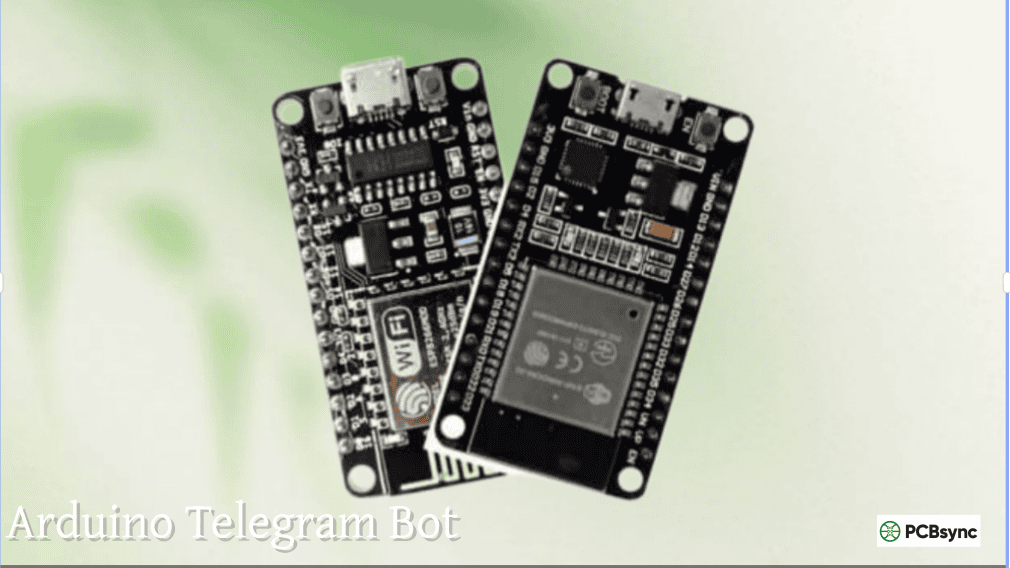
The ESP8266 NodeMCU is an open-source development board built around the ESP8266 WiFi chip manufactured by Espressif Systems. This board combines the powerful ESP-12E module with essential development features including USB connectivity, voltage regulation, and easy-to-access GPIO pins.
What makes the ESP8266 NodeMCU special is its complete TCP/IP stack and microcontroller capability packed into a single, affordable package. Unlike basic Arduino boards that require external WiFi shields, the ESP8266 NodeMCU has wireless connectivity built right in.
The term “NodeMCU” originally referred to the Lua-based firmware developed for the ESP8266. However, most makers today use “NodeMCU” to describe the physical development board itself. The beauty of this board is that you can program it using familiar Arduino C/C++ syntax instead of learning Lua scripting.
ESP8266 NodeMCU Technical Specifications
Understanding the hardware specifications helps you make the most of your projects. Here’s what the ESP8266 NodeMCU brings to the table:
Specification
Details
Microcontroller
Tensilica Xtensa LX106 32-bit RISC
Clock Speed
80 MHz (can be overclocked to 160 MHz)
Flash Memory
4 MB
RAM
128 KB
Operating Voltage
3.3V
Input Voltage
4.5V to 10V (via VIN pin)
GPIO Pins
17 (11 usable for general I/O)
ADC Channel
1 (10-bit resolution)
PWM Channels
Up to 10
Communication
UART, SPI, I2C
WiFi Standard
802.11 b/g/n
WiFi Modes
Station, Access Point, Station+AP
The processor runs at 80 MHz by default, but you can push it to 160 MHz when your application demands more processing power. With 128 KB of RAM and 4 MB of flash storage, you have plenty of room for complex applications including web servers and data logging.
ESP8266 NodeMCU Pinout Reference
One thing that trips up beginners is the ESP8266 NodeMCU pin mapping. The labels printed on the board don’t match the GPIO numbers you use in code. Getting this right saves hours of debugging frustration.
GPIO Pin Mapping Table
Board Label
GPIO Number
Special Functions
Boot Behavior
D0
GPIO16
Wake from deep sleep
HIGH at boot
D1
GPIO5
I2C SCL (default)
Safe to use
D2
GPIO4
I2C SDA (default)
Safe to use
D3
GPIO0
Flash mode control
Must be HIGH for normal boot
D4
GPIO2
Built-in LED, TX1
Must be HIGH at boot
D5
GPIO14
SPI CLK
Safe to use
D6
GPIO12
SPI MISO
Safe to use
D7
GPIO13
SPI MOSI
Safe to use
D8
GPIO15
SPI CS
Must be LOW at boot
RX
GPIO3
UART RX
Used for programming
TX
GPIO1
UART TX
Used for programming
A0
ADC0
Analog input (0-1V)
Analog only
Which GPIO Pins Should You Use?
From my experience working with dozens of ESP8266 NodeMCU boards, here’s my practical recommendation:
Best pins for general use: D1 (GPIO5), D2 (GPIO4), D5 (GPIO14), D6 (GPIO12), and D7 (GPIO13). These pins have no special boot requirements and work reliably for both input and output.
Use with caution: D0 (GPIO16), D3 (GPIO0), D4 (GPIO2), and D8 (GPIO15). These pins affect boot behavior. If you pull D3 or D4 LOW during power-up, your board won’t boot properly. Similarly, D8 must stay LOW during boot.
Avoid for general I/O: GPIO6 through GPIO11. These pins connect to the internal flash memory chip. Using them will crash your board or corrupt the flash.
The single ADC pin (A0) accepts voltages from 0 to 1V on the raw ESP8266 chip. However, the NodeMCU board includes a voltage divider that extends this range to 0-3.3V, making it easier to interface with common sensors.
Setting Up Arduino IDE for ESP8266 NodeMCU
Before writing your first program, you need to configure the Arduino IDE to recognize and communicate with your ESP8266 NodeMCU board.
Step 1: Install Arduino IDE
Download the latest Arduino IDE from the official Arduino website. Install it using the default settings. Older versions may have compatibility issues, so stick with version 1.8.x or later.
Step 2: Add ESP8266 Board Manager URL
Open Arduino IDE and navigate to File > Preferences. In the “Additional Boards Manager URLs” field, paste this URL:
If you already have other URLs there, separate them with commas. Click OK to save.
Step 3: Install ESP8266 Board Package
Go to Tools > Board > Boards Manager. Type “ESP8266” in the search box. You’ll see the “esp8266 by ESP8266 Community” package. Click Install and wait for the download to complete.
This package includes all the necessary tools, libraries, and board definitions for programming ESP8266-based boards including the NodeMCU, Wemos D1 Mini, and various ESP-01 modules.
Step 4: Install USB Drivers
The ESP8266 NodeMCU typically uses either the CP2102 or CH340G USB-to-serial converter chip. Check your board to identify which chip it has:
Chip
Appearance
Driver Source
CP2102
Small square chip near USB
Silicon Labs website
CH340G
Rectangular chip near USB
WCH website or GitHub
Most modern operating systems recognize the CP2102 automatically. The CH340G might require manual driver installation, especially on Windows.
Step 5: Select Your Board
Connect your ESP8266 NodeMCU to your computer using a micro-USB cable. In Arduino IDE, go to Tools > Board and select “NodeMCU 1.0 (ESP-12E Module)” from the ESP8266 boards list.
Configure these additional settings under the Tools menu:
Setting
Recommended Value
CPU Frequency
80 MHz (or 160 MHz if needed)
Flash Size
4MB (FS:2MB OTA:~1019KB)
Upload Speed
115200
Port
Your COM port number
Your First ESP8266 NodeMCU Program
Let’s write a simple program to verify everything works correctly. The classic LED blink example is perfect for testing.
Blinking the Built-in LED
The ESP8266 NodeMCU has a built-in LED connected to GPIO2 (board label D4). This LED operates in active-LOW logic, meaning it turns ON when the pin is LOW and OFF when the pin is HIGH.
// ESP8266 NodeMCU Built-in LED Blink
// LED is connected to GPIO2 (D4) – active LOW
void setup() {
pinMode(LED_BUILTIN, OUTPUT); // Initialize LED pin as output
}
void loop() {
digitalWrite(LED_BUILTIN, LOW); // Turn LED ON (active LOW)
delay(500); // Wait 500 milliseconds
digitalWrite(LED_BUILTIN, HIGH); // Turn LED OFF
delay(500); // Wait 500 milliseconds
}
Click the Upload button. The IDE compiles your code and uploads it to the board. Watch the TX/RX LEDs flicker during upload. Once complete, the built-in LED should start blinking.
If the upload fails, try pressing the RST (reset) button on your board just as the IDE shows “Connecting…” in the status bar. Some boards need this manual intervention to enter programming mode.
Connecting ESP8266 NodeMCU to WiFi
The real power of the ESP8266 NodeMCU lies in its WiFi capability. Let’s connect to a wireless network.
Station Mode Connection
In Station Mode (STA), your ESP8266 NodeMCU joins an existing WiFi network like any other device in your home.
#include <ESP8266WiFi.h>
const char* ssid = “YourNetworkName”;
const char* password = “YourPassword”;
void setup() {
Serial.begin(115200);
delay(100);
Serial.println();
Serial.print(“Connecting to “);
Serial.println(ssid);
WiFi.begin(ssid, password);
while (WiFi.status() != WL_CONNECTED) {
delay(500);
Serial.print(“.”);
}
Serial.println(“”);
Serial.println(“WiFi connected!”);
Serial.print(“IP address: “);
Serial.println(WiFi.localIP());
}
void loop() {
// Your main code here
}
Replace the SSID and password with your actual network credentials. Open the Serial Monitor at 115200 baud to see the connection status and the IP address assigned to your board.
Access Point Mode
Sometimes you want the ESP8266 NodeMCU to create its own WiFi network. This is useful for configuration portals or direct device-to-device communication.
#include <ESP8266WiFi.h>
const char* ap_ssid = “ESP8266_AP”;
const char* ap_password = “12345678”;
void setup() {
Serial.begin(115200);
WiFi.softAP(ap_ssid, ap_password);
Serial.println();
Serial.print(“Access Point started. IP: “);
Serial.println(WiFi.softAPIP());
}
void loop() {
// Your main code here
}
Other devices can now connect to the “ESP8266_AP” network. The default gateway IP is usually 192.168.4.1.
Building a Web Server with ESP8266 NodeMCU
Creating a web server lets you control your ESP8266 NodeMCU from any web browser. This is the foundation of countless home automation projects.
Simple Web Server Example
This example creates a web page with buttons to control an LED connected to GPIO5 (D1):
#include <ESP8266WiFi.h>
#include <ESP8266WebServer.h>
const char* ssid = “YourNetworkName”;
const char* password = “YourPassword”;
ESP8266WebServer server(80);
int ledPin = 5; // GPIO5 = D1
bool ledState = false;
void handleRoot() {
String html = “<!DOCTYPE html><html><head>”;
html += “<title>ESP8266 Control</title>”;
html += “<meta name=’viewport’ content=’width=device-width’>”;
html += “</head><body>”;
html += “<h1>ESP8266 NodeMCU Web Server</h1>”;
html += “<p>LED is currently: ” + String(ledState ? “ON” : “OFF”) + “</p>”;
html += “<p><a href=’/led/on’><button>Turn ON</button></a></p>”;
html += “<p><a href=’/led/off’><button>Turn OFF</button></a></p>”;
html += “</body></html>”;
server.send(200, “text/html”, html);
}
void handleLedOn() {
ledState = true;
digitalWrite(ledPin, HIGH);
handleRoot();
}
void handleLedOff() {
ledState = false;
digitalWrite(ledPin, LOW);
handleRoot();
}
void setup() {
Serial.begin(115200);
pinMode(ledPin, OUTPUT);
digitalWrite(ledPin, LOW);
WiFi.begin(ssid, password);
while (WiFi.status() != WL_CONNECTED) {
delay(500);
Serial.print(“.”);
}
Serial.println(“”);
Serial.print(“Connected! IP: “);
Serial.println(WiFi.localIP());
server.on(“/”, handleRoot);
server.on(“/led/on”, handleLedOn);
server.on(“/led/off”, handleLedOff);
server.begin();
Serial.println(“HTTP server started”);
}
void loop() {
server.handleClient();
}
After uploading, open a web browser and enter the IP address shown in the Serial Monitor. You’ll see a simple web page with buttons to control the LED.
The ESP8266 NodeMCU interfaces easily with common sensors. Here are practical examples for the most popular choices.
Reading Analog Sensors
The single ADC pin reads values from 0 to 1023, corresponding to 0-3.3V input:
int sensorValue = 0;
void setup() {
Serial.begin(115200);
}
void loop() {
sensorValue = analogRead(A0);
float voltage = sensorValue * (3.3 / 1023.0);
Serial.print(“Raw: “);
Serial.print(sensorValue);
Serial.print(” | Voltage: “);
Serial.println(voltage);
delay(1000);
}
I2C Sensor Communication
Many sensors use the I2C protocol. The ESP8266 NodeMCU defaults to GPIO4 (D2) for SDA and GPIO5 (D1) for SCL:
#include <Wire.h>
void setup() {
Serial.begin(115200);
Wire.begin(4, 5); // SDA = GPIO4, SCL = GPIO5
// I2C scanner
Serial.println(“Scanning I2C bus…”);
for (byte address = 1; address < 127; address++) {
Wire.beginTransmission(address);
if (Wire.endTransmission() == 0) {
Serial.print(“Device found at 0x”);
Serial.println(address, HEX);
}
}
}
void loop() {
// Sensor reading code here
}
ESP8266 NodeMCU Power Modes and Sleep Functions
Battery-powered projects benefit enormously from the ESP8266’s sleep capabilities. Understanding these modes extends battery life from hours to months.
Power Mode
Current Draw
Wake Sources
Use Case
Active
~70-80 mA
N/A
Normal operation
Modem Sleep
~15 mA
Timer, GPIO
Periodic data transmission
Light Sleep
~0.4 mA
Timer, GPIO
Infrequent updates
Deep Sleep
~20 µA
Timer, RST pin
Battery sensors
Deep Sleep Implementation
For deep sleep, connect GPIO16 (D0) to the RST pin with a jumper wire:
void setup() {
Serial.begin(115200);
Serial.println(“Waking up…”);
// Do your sensor reading or data transmission here
Serial.println(“Going to deep sleep for 30 seconds…”);
ESP.deepSleep(30e6); // Sleep for 30 seconds (microseconds)
}
void loop() {
// Never reaches here in deep sleep mode
}
When the timer expires, GPIO16 pulses LOW, triggering a reset that restarts your program.
Common ESP8266 NodeMCU Problems and Solutions
After working with hundreds of these boards, I’ve encountered most failure modes. Here’s how to solve them:
Board Not Detected by Computer
This usually indicates a driver or cable issue. USB cables for phone charging often lack data lines. Test with a cable you know works for data transfer. If using a CH340G-based board on Windows, download fresh drivers from the manufacturer.
Upload Fails at “Connecting…”
The ESP8266 isn’t entering bootloader mode. Try holding the FLASH button while pressing and releasing RST. Some boards auto-reset properly; others need manual help. If problems persist, add a 10µF capacitor between EN and GND.
Brownout Resets During WiFi Operations
WiFi transmission draws peak currents exceeding 400mA. USB ports sometimes can’t supply enough current. Use a quality USB cable and consider adding a 100µF capacitor across the 3.3V and GND pins.
Random Crashes and Watchdog Resets
Long-running operations without yielding processor time trigger the watchdog timer. Add yield() or delay(0) calls in lengthy loops. Also ensure your power supply provides stable 3.3V under load.
GPIO Pin Doesn’t Work
Double-check your pin mapping. Remember that D5 isn’t GPIO5—it’s GPIO14. Also verify the pin isn’t restricted during boot or reserved for flash memory.
Useful Resources and Downloads
Here are essential resources for ESP8266 NodeMCU development:
What is the difference between ESP8266 and NodeMCU?
The ESP8266 is the WiFi chip manufactured by Espressif Systems. NodeMCU refers to both a Lua-based firmware and a specific development board design. The NodeMCU board contains the ESP8266 chip (specifically the ESP-12E module) along with USB connectivity, voltage regulation, and convenient pin headers. When people say “ESP8266 NodeMCU,” they typically mean the complete development board.
Can I use 5V sensors with ESP8266 NodeMCU?
No, the ESP8266 GPIO pins are not 5V tolerant. Connecting 5V directly to any GPIO pin will damage your board permanently. Use a logic level converter or voltage divider when interfacing with 5V devices. Some sensors offer both 3.3V and 5V versions—always choose the 3.3V variant for ESP8266 projects.
How many devices can connect to ESP8266 NodeMCU in Access Point mode?
The ESP8266 in soft-AP mode supports up to 8 simultaneous connections by default. However, practical performance degrades beyond 4-5 connections. For applications requiring many clients, consider using the ESP8266 in station mode and letting your router handle the connections.
Why does my ESP8266 NodeMCU keep resetting?
Frequent resets usually stem from power supply issues or watchdog timeout. Ensure your USB cable supports data and power delivery. Add bulk capacitors (100-470µF) near the board’s power pins. If running long loops without delays, insert yield() calls to feed the watchdog timer. Memory leaks from String concatenation in loops can also cause resets—use character arrays instead.
What is the maximum WiFi range of ESP8266 NodeMCU?
Under ideal conditions with clear line of sight, the ESP8266 NodeMCU achieves roughly 400 meters range outdoors and 50-100 meters indoors. Real-world performance varies based on obstacles, interference, and antenna design. The PCB antenna on most NodeMCU boards works adequately for typical indoor applications. For extended range, consider modules with external antenna connectors.
Conclusion
The ESP8266 NodeMCU delivers remarkable capability at an unbeatable price point. Its combination of WiFi connectivity, sufficient processing power, and Arduino compatibility makes it ideal for IoT projects ranging from simple sensors to sophisticated home automation systems.
Start with the basics covered in this guide, then expand into more complex applications. The ESP8266 community has produced thousands of tutorials, libraries, and example projects to learn from. Every project you complete builds skills for the next one.
Keep your power supply robust, double-check your pin mappings, and remember that the most common problems have simple solutions. Happy building!
Meta Description Suggestion:
Master ESP8266 NodeMCU programming with Arduino IDE. Complete guide covering pinout, WiFi setup, web server creation, troubleshooting, and practical code examples for IoT projects.
Inquire: Call 0086-755-23203480, or reach out via the form below/your sales contact to discuss our design, manufacturing, and assembly capabilities.
Quote: Email your PCB files to Sales@pcbsync.com (Preferred for large files) or submit online. We will contact you promptly. Please ensure your email is correct.
Notes: For PCB fabrication, we require PCB design file in Gerber RS-274X format (most preferred), *.PCB/DDB (Protel, inform your program version) format or *.BRD (Eagle) format. For PCB assembly, we require PCB design file in above mentioned format, drilling file and BOM. Click to download BOM template To avoid file missing, please include all files into one folder and compress it into .zip or .rar format.