Inquire: Call 0086-755-23203480, or reach out via the form below/your sales contact to discuss our design, manufacturing, and assembly capabilities.
Quote: Email your PCB files to Sales@pcbsync.com (Preferred for large files) or submit online. We will contact you promptly. Please ensure your email is correct.
Notes: For PCB fabrication, we require PCB design file in Gerber RS-274X format (most preferred), *.PCB/DDB (Protel, inform your program version) format or *.BRD (Eagle) format. For PCB assembly, we require PCB design file in above mentioned format, drilling file and BOM. Click to download BOM template To avoid file missing, please include all files into one folder and compress it into .zip or .rar format.
E-Ink Display Arduino: Building Low-Power E-Paper Projects That Last
There’s something deeply satisfying about a display that holds its image with zero power. I’ve been designing battery-powered devices for years, and the E-Ink display Arduino combination has become my go-to solution for any project where battery life matters more than refresh speed. Weather stations, price tags, room signs, environmental monitors — if it only needs occasional updates and needs to run for months on batteries, e-paper is the answer.
This guide covers everything I’ve learned about integrating e-ink displays with Arduino: the hardware considerations, wiring specifics, library choices, and the low-power tricks that make the difference between a project that lasts weeks versus one that lasts years.
E-Ink (also called e-paper or EPD — electrophoretic display) works fundamentally differently from LCDs or OLEDs. Instead of emitting light, it moves tiny charged particles to create an image. Black particles move up, white particles move down, and the image stays put even after you cut the power completely.
The E-Ink display Arduino pairing makes sense for specific applications. Arduino boards provide flexible programming and extensive library support, while e-ink displays deliver the ultra-low power consumption that batteries demand. You won’t build a video game with this combo, but you will build devices that run for 6-12 months on a coin cell.
E-Ink vs Traditional Displays: When to Choose What
I get asked constantly whether e-ink is the right choice. Here’s my decision matrix after dozens of projects:
Factor
E-Ink Display
LCD/TFT
OLED
Power When Static
0 mW
20-100 mW
10-50 mW
Power During Update
20-40 mW
20-100 mW
10-50 mW
Refresh Speed
1-15 seconds
Instant
Instant
Sunlight Readability
Excellent
Poor-Medium
Poor
Color Options
B/W, 3-color, 7-color
Full color
Full color
Viewing Angle
180°
Limited
Wide
Cost (2.9″ module)
$15-25
$8-15
$10-20
Ideal Update Frequency
Minutes to hours
Real-time
Real-time
Choose e-ink when updates happen infrequently (temperature readings, calendar displays, status indicators) and when the device needs to survive on batteries. Choose LCD/OLED when you need animation, fast response, or video.
Types of E-Ink Displays for Arduino Projects
Not all e-paper displays are created equal. Understanding the differences saves you from buying the wrong module for your application.
Display Technology Variants
Type
Colors
Refresh Time
Best For
Black/White
2
1-3 seconds
Text, simple graphics
Black/White/Red
3
10-15 seconds
Signs, alerts, warnings
Black/White/Yellow
3
10-15 seconds
Retail displays
Grayscale
16 levels
2-5 seconds
Images, charts
7-Color (ACeP)
7
15-30 seconds
Full-color graphics
For most E-Ink display Arduino projects, I recommend starting with black/white modules. They’re fastest, cheapest, and have the best library support. The tri-color displays look striking but that 15-second refresh time gets old fast during development.
Popular E-Ink Module Sizes
Size
Resolution
Typical Use
1.54″
200×200
Wearables, small indicators
2.13″
250×122
Name badges, shelf labels
2.9″
296×128
Weather stations, dashboards
4.2″
400×300
Room signs, calendars
7.5″
800×480
Large displays, art frames
The 2.9″ size hits the sweet spot for most projects: big enough to display useful information, small enough to keep costs reasonable, and widely available from multiple manufacturers.
E-Ink Display Arduino Hardware Setup
Getting the physical connections right is crucial. E-ink displays are more particular about wiring than simple LCDs.
Understanding E-Paper Pinouts
Most e-ink modules use SPI communication plus a few control pins:
Pin
Function
Description
VCC
Power
3.3V (some accept 5V)
GND
Ground
Common ground
DIN/MOSI
Data In
SPI data to display
CLK/SCK
Clock
SPI clock signal
CS
Chip Select
Enables the display
DC
Data/Command
Tells display what’s coming
RST
Reset
Hardware reset
BUSY
Busy Signal
Display processing indicator
The BUSY pin is critical and often overlooked. E-ink displays take time to update, and the BUSY pin tells your Arduino when the display is ready for the next command. Ignore it and you’ll get corrupted images or missed updates.
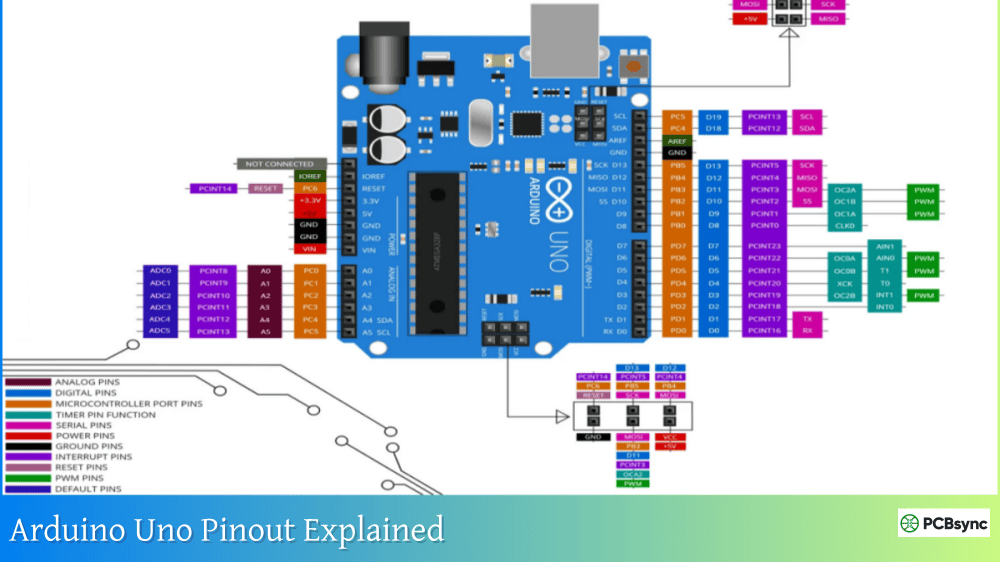
Wiring an E-Ink Display to Arduino Uno
Here’s my standard wiring for Waveshare/Good Display modules on Arduino Uno:
E-Ink Pin
Arduino Uno Pin
Notes
VCC
3.3V
NOT 5V for most modules
GND
GND
DIN
11 (MOSI)
Hardware SPI
CLK
13 (SCK)
Hardware SPI
CS
10
Can change in code
DC
9
Can change in code
RST
8
Can change in code
BUSY
7
Can change in code
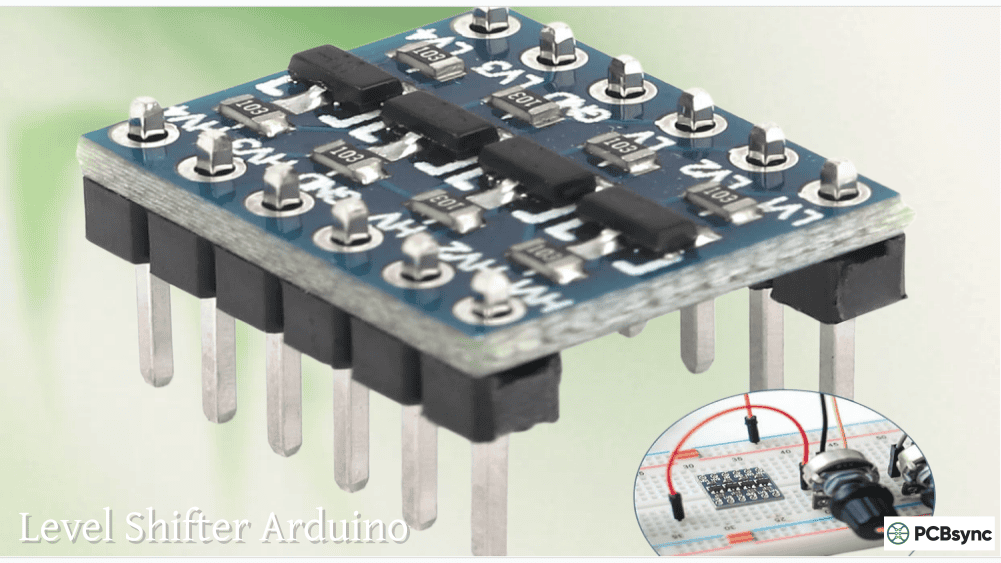
Important voltage warning: Most e-ink modules run on 3.3V logic. The Arduino Uno outputs 5V on its digital pins. You need level shifters or a voltage divider on the data lines, or you risk damaging the display. I’ve killed two modules learning this lesson.
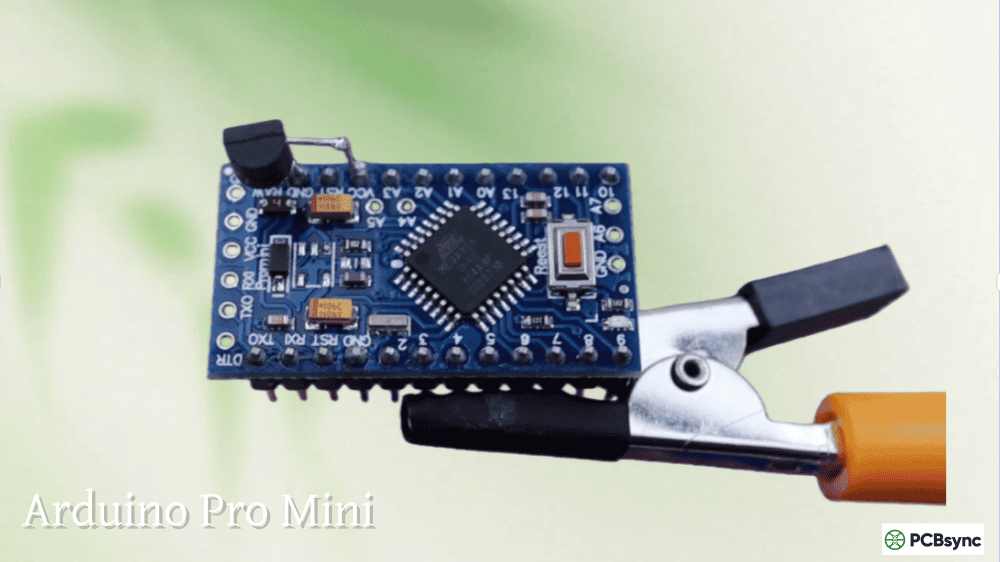
For 3.3V boards like Arduino Pro Mini (3.3V version), ESP32, or ESP8266, you can connect directly without level shifting.
Wiring Tips From Real-World Builds
Keep SPI lines short. E-ink displays are sensitive to signal integrity. Jumper wires over 15cm can cause communication failures. On PCBs, route SPI traces carefully and keep them away from noisy signals.
Decouple the power supply. Add a 10µF electrolytic and a 100nF ceramic capacitor close to the display’s VCC pin. E-ink updates draw current spikes that can cause brownouts on weak supplies.
Don’t forget the BUSY pin. Some tutorials skip it and use fixed delays instead. This works until it doesn’t — different temperatures and different batches of displays have different refresh times. Poll the BUSY pin properly.
Programming E-Ink Displays With Arduino
Now let’s get pixels on that display.
Choosing the Right Library
Several libraries exist for E-Ink display Arduino projects. Here’s what I use:
Library
Pros
Cons
Best For
GxEPD2
Comprehensive, many displays
Large memory footprint
Most projects
Adafruit EPD
Clean API, good docs
Limited display support
Adafruit modules
Waveshare examples
Works with Waveshare displays
Poorly structured code
Quick tests only
U8g2
Lightweight, familiar API
Limited e-ink support
Memory-constrained
GxEPD2 by Jean-Marc Zingg is my go-to. It supports virtually every e-ink display on the market and handles partial refresh properly.
Installing GxEPD2
Open Arduino IDE
Go to Sketch → Include Library → Manage Libraries
Search “GxEPD2”
Install GxEPD2 by Jean-Marc Zingg
Also install “Adafruit GFX Library” (required dependency)
Basic Code Example: Hello World
Here’s a minimal E-Ink display Arduino sketch for a 2.9″ Waveshare display:
The display.hibernate() call at the end is essential for low-power operation. It puts the display controller into deep sleep, dropping current consumption to microamps.
Partial Refresh for Faster Updates
Full refreshes take 2-3 seconds and cause that characteristic black-white-black flash. Partial refresh updates only changed areas in under a second without flashing:
void updateTemperature(float temp) {
// Define update area (x, y, width, height)
display.setPartialWindow(10, 50, 100, 30);
display.firstPage();
do {
display.fillScreen(GxEPD_WHITE);
display.setCursor(15, 70);
display.print(temp, 1);
display.print(” C”);
} while (display.nextPage());
}
Partial refresh caveat: After 10-20 partial updates, ghosting accumulates. You’ll need a full refresh to clear it. I typically do a full refresh every hour or every 20 partial updates, whichever comes first.
Low-Power Techniques for E-Ink Arduino Projects
Here’s where the real battery life gains happen. The display itself uses zero power when static, but your Arduino doesn’t — unless you make it.
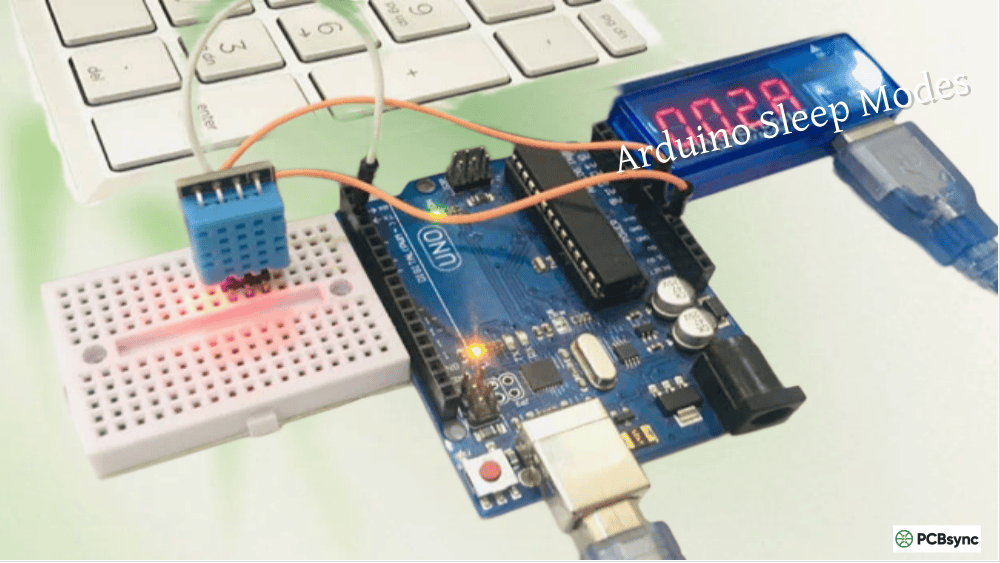
Arduino Sleep Modes
Sleep Mode
Current Draw
Wake Sources
Active
15-20 mA
Always running
Idle
6-8 mA
Any interrupt
Power-down
0.1-0.5 µA
External interrupt, WDT
For serious battery life, you need power-down sleep with watchdog timer wakeup:
#include <avr/sleep.h>
#include <avr/wdt.h>
void enterSleep() {
display.hibernate(); // Put display to sleep first
set_sleep_mode(SLEEP_MODE_PWR_DOWN);
sleep_enable();
// Setup watchdog for 8-second wake
wdt_enable(WDTO_8S);
WDTCSR |= (1 << WDIE);
sleep_cpu();
// Execution continues here after wake
sleep_disable();
wdt_disable();
}
ISR(WDT_vect) {
// Watchdog interrupt – just wake up
}
Power Budget Calculation
Let’s calculate real-world battery life for a weather station updating every 15 minutes:
State
Duration
Current
Energy
Sleep
899 seconds
5 µA
4.5 µA·h
Wake + sensor read
0.5 seconds
10 mA
1.4 µA·h
Display update
0.5 seconds
25 mA
3.5 µA·h
Per cycle total
900 seconds
—
9.4 µA·h
Average current: approximately 38 µA. With a 2000mAh battery: 2000000 / 38 = 52,631 hours = 6 years theoretical.
In practice, expect 1-2 years due to battery self-discharge and real-world inefficiencies. Still impressive.
Let me share some builds where e-ink really shines.
Battery-Powered Weather Station
Combine a BME280 sensor with an e-ink display for a weather station that runs for over a year on 3 AA batteries. Update every 30 minutes, display temperature, humidity, and pressure with trend arrows.
Smart Shelf Label System
Perfect for home inventory or small retail. ESP32 with e-ink displays and WiFi — update prices or descriptions remotely. The display holds the image indefinitely, only waking for updates.
Meeting Room Availability Sign
4.2″ e-ink display outside conference rooms showing current booking status. Connects to calendar APIs, updates every 5 minutes. No need for wall power — runs on rechargeable batteries for months.
Solar-Powered Environmental Monitor
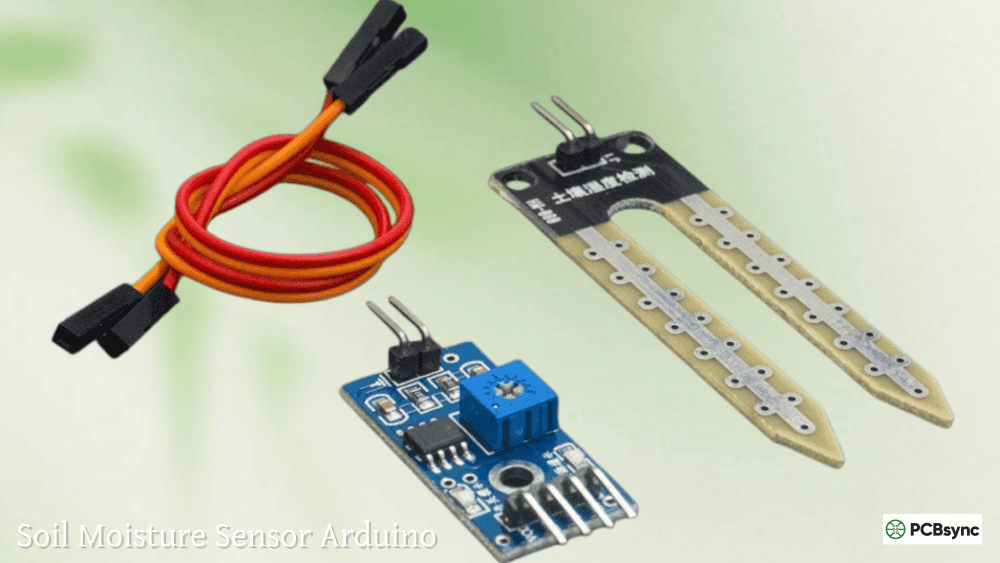
Pair a small solar panel with a LiPo battery and e-ink display. Monitor soil moisture, light levels, or air quality. The ultra-low power consumption means even a tiny solar cell keeps it running indefinitely.
Useful Resources for E-Ink Display Arduino Projects
Here are the resources I actually reference during builds:
Resource
Description
Where to Find
GxEPD2 Library
Primary Arduino library
github.com/ZinggJM/GxEPD2
Good Display Wiki
Display datasheets, specs
good-display.com
Waveshare Wiki
Tutorials, example code
waveshare.com/wiki
E-Paper Displays Reddit
Community troubleshooting
r/eink
Image2Cpp
Convert images to code
javl.github.io/image2cpp
PCBSync Arduino Guides
Arduino tutorials
pcbsync.com/arduino
For sourcing displays, Good Display is the OEM manufacturer for most e-ink modules. Waveshare resells with better documentation. AliExpress has the lowest prices but longer shipping.
FAQs About E-Ink Display Arduino Projects
How long do e-ink displays last before wearing out?
Most manufacturers spec 1 million refresh cycles. At 100 updates per day, that’s 27 years. Realistically, you’ll replace the battery or the project will become obsolete long before the display wears out. I’ve never worn one out in normal use.
Can I display images on an e-ink screen?
Yes, but with limitations. Convert your image to a bitmap matching your display’s resolution and color depth. The Image2Cpp tool generates the byte array you need. Keep in mind that e-ink has no grayscale on basic modules — everything becomes black or white through dithering.
Why does my e-ink display show ghosting or burn-in?
Ghosting happens when partial refreshes accumulate without full refreshes. Run a full refresh cycle periodically to clear it. Burn-in is usually temporary on e-ink — leave the display powered off for a few hours and it typically fades. Severe burn-in may need multiple full refresh cycles.
Which Arduino board is best for e-ink low-power projects?
For ultimate battery life, use an Arduino Pro Mini 3.3V with the power LED and regulator removed — draws under 5µA in sleep. For wireless projects, ESP32 variants with deep sleep work well. Avoid Arduino Uno for battery projects; its USB chip and regulator waste power even in sleep.
Can e-ink displays work in extreme temperatures?
Standard e-ink works from 0°C to 50°C reliably. Below freezing, refresh times increase dramatically and image quality suffers. Some industrial displays are rated for -25°C to 60°C. For outdoor projects in cold climates, consider a small heater circuit or accept that winter updates will be slow.
Final Thoughts on E-Ink Arduino Development
The E-Ink display Arduino combination unlocks a category of projects that simply aren’t possible with traditional displays. When battery life matters — and it matters more often than most makers realize — e-paper delivers performance that seems almost magical. Months or years of operation from a single battery charge changes what’s practical to build.
Start with a simple project: a desk clock, a temperature display, a daily quote frame. Get comfortable with the refresh timing and sleep modes. Then scale up to wireless, solar-powered, or multi-display projects. The learning curve is manageable, and the results are worth the effort.
The display holds the image. Your project keeps running. That’s the beauty of e-ink.
Inquire: Call 0086-755-23203480, or reach out via the form below/your sales contact to discuss our design, manufacturing, and assembly capabilities.
Quote: Email your PCB files to Sales@pcbsync.com (Preferred for large files) or submit online. We will contact you promptly. Please ensure your email is correct.
Notes: For PCB fabrication, we require PCB design file in Gerber RS-274X format (most preferred), *.PCB/DDB (Protel, inform your program version) format or *.BRD (Eagle) format. For PCB assembly, we require PCB design file in above mentioned format, drilling file and BOM. Click to download BOM template To avoid file missing, please include all files into one folder and compress it into .zip or .rar format.