Inquire: Call 0086-755-23203480, or reach out via the form below/your sales contact to discuss our design, manufacturing, and assembly capabilities.
Quote: Email your PCB files to Sales@pcbsync.com (Preferred for large files) or submit online. We will contact you promptly. Please ensure your email is correct.
Notes: For PCB fabrication, we require PCB design file in Gerber RS-274X format (most preferred), *.PCB/DDB (Protel, inform your program version) format or *.BRD (Eagle) format. For PCB assembly, we require PCB design file in above mentioned format, drilling file and BOM. Click to download BOM template To avoid file missing, please include all files into one folder and compress it into .zip or .rar format.
After working with dozens of environmental sensors across various PCB projects, the BMP280 Arduino combination remains my go-to solution for barometric pressure measurement. This sensor from Bosch delivers professional-grade accuracy at a fraction of the cost of industrial barometers, making it ideal for weather stations, altimeters, and IoT environmental monitoring.
The BMP280 represents the evolution of the BMP085/BMP180/BMP183 sensor family, bringing improved accuracy, lower power consumption, and more flexible configuration options. Unlike simpler analog sensors, the BMP280 handles all the complex compensation mathematics internally, delivering calibrated pressure and temperature readings over I2C or SPI interfaces.
The BMP280 is a digital barometric pressure and temperature sensor designed by Bosch Sensortec for portable and wearable applications. At its core sits a piezoresistive sensing element paired with a mixed-signal ASIC that handles analog-to-digital conversion, calibration compensation, and digital communication.
What makes this sensor particularly useful for Arduino projects is the internal calibration data stored in non-volatile memory. Every BMP280 chip contains factory-programmed compensation parameters that account for manufacturing variations, so you get accurate readings straight out of the package without manual calibration.
The sensor measures atmospheric pressure by detecting how a silicon diaphragm deforms under pressure. This deformation changes the electrical resistance of piezoresistive elements integrated into the diaphragm, which the internal ADC converts to digital values. The built-in temperature sensor provides data for compensating pressure readings against thermal drift.
BMP280 Technical Specifications
Before integrating any sensor into a PCB design, understanding the electrical characteristics prevents problems during prototyping:
Parameter
Value
Supply Voltage (VDD)
1.71V – 3.6V
Interface Voltage (VDDIO)
1.2V – 3.6V
Pressure Range
300 – 1100 hPa
Pressure Accuracy
±1 hPa (typical)
Pressure Resolution
0.16 Pa
Temperature Range
-40°C to +85°C
Temperature Accuracy
±1.0°C
Temperature Resolution
0.01°C
Current (Normal Mode)
2.74 µA @ 1Hz
Current (Sleep Mode)
0.1 µA
I2C Speed
Up to 3.4 MHz
SPI Speed
Up to 10 MHz
One specification that catches many engineers off guard: the BMP280 is NOT 5V tolerant. Operating from 3.3V is mandatory. Most breakout modules include onboard voltage regulators, but if you’re designing a custom PCB, plan your power rails accordingly.
BMP280 Module Pinout Configuration
Most BMP280 breakout boards expose six pins:
Pin
Name
Function
VCC
Power Supply
3.3V – 5V (with onboard regulator)
GND
Ground
Common ground reference
SCL
I2C Clock / SPI Clock
Serial clock input
SDA
I2C Data / SPI MOSI
Serial data (bidirectional for I2C)
CSB
Chip Select
LOW for SPI, HIGH for I2C
SDO
SPI MISO / I2C Address
Data out for SPI, address select for I2C
The CSB and SDO pins serve dual purposes depending on your communication protocol choice. For I2C operation, CSB must be pulled HIGH (most modules do this internally), and SDO determines the I2C address.
BMP280 I2C Address Selection
SDO Pin State
I2C Address
Connected to GND
0x76
Connected to VDD
0x77
Most budget modules pull SDO to GND by default, giving address 0x76. If you’re using multiple BMP280 sensors on the same I2C bus, connect SDO to VDD on one sensor to get address 0x77.
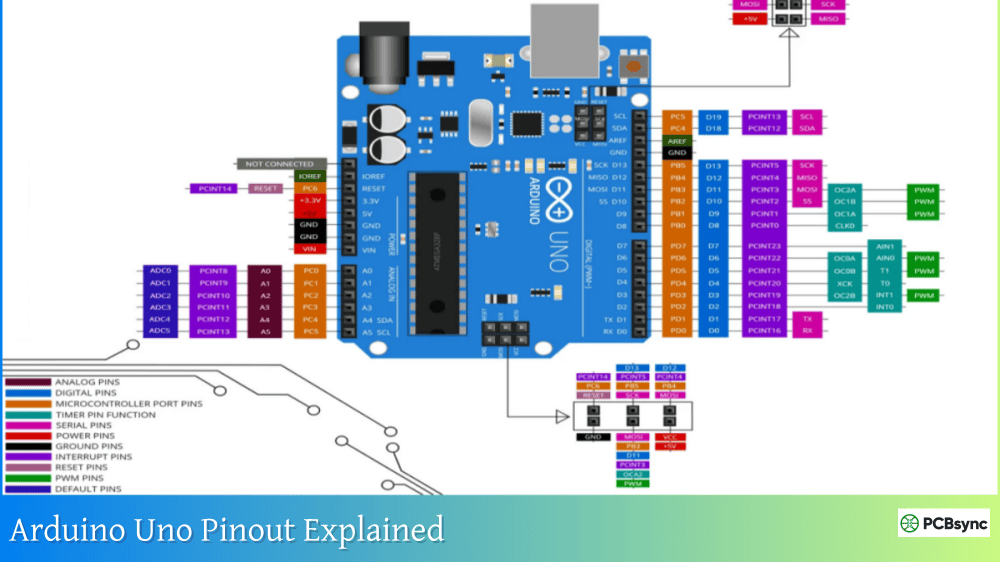
Wiring BMP280 to Arduino
The I2C connection requires just four wires and works reliably in most configurations:
I2C Wiring Configuration
BMP280 Pin
Arduino UNO
Arduino Mega
Arduino Leonardo
VCC
3.3V or 5V*
3.3V or 5V*
3.3V or 5V*
GND
GND
GND
GND
SCL
A5
D21
D3
SDA
A4
D20
D2
CSB
Not connected
Not connected
Not connected
SDO
Not connected
Not connected
Not connected
*With breakout module that has onboard regulator
SPI Wiring Configuration
BMP280 Pin
Arduino UNO
Arduino Mega
VCC
3.3V or 5V*
3.3V or 5V*
GND
GND
GND
SCL (SCK)
D13
D52
SDA (MOSI)
D11
D51
SDO (MISO)
D12
D50
CSB (CS)
D10
D53
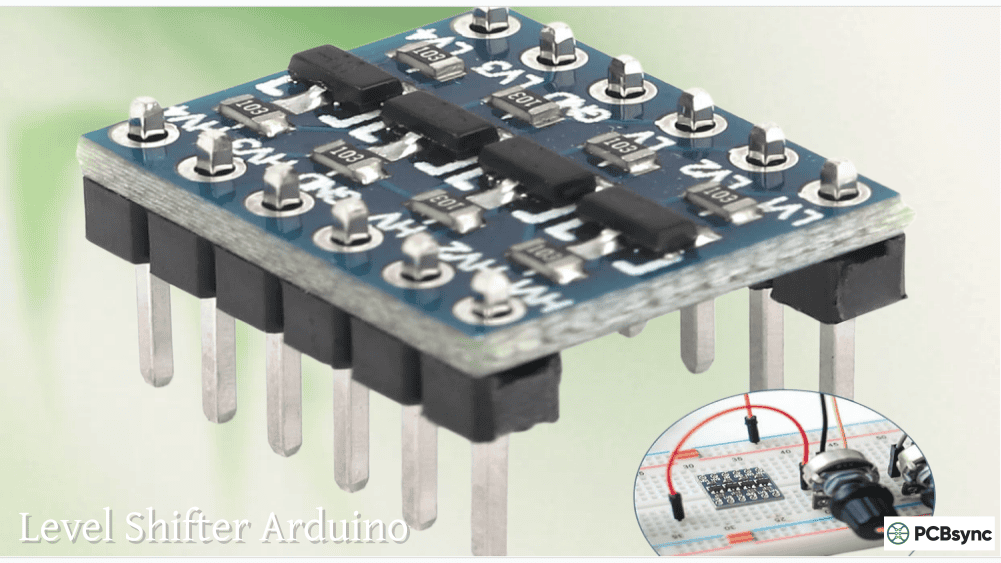
For bare BMP280 chips without a breakout board, never exceed 3.6V on any pin. Level shifters are mandatory when interfacing with 5V Arduino boards.
BMP280 Operating Modes
The BMP280 offers three power modes that balance measurement frequency against power consumption:
Mode
Description
Use Case
Sleep
No measurements, lowest power
Battery standby
Forced
Single measurement, returns to sleep
Periodic sampling
Normal
Continuous measurements with standby
Real-time monitoring
Sleep Mode draws only 0.1µA, making it ideal for battery-powered applications where measurements happen infrequently.
Forced Mode performs one measurement when triggered and automatically returns to sleep. This gives you precise control over sampling timing and is useful when synchronizing with other sensors.
Normal Mode continuously cycles between measurement and standby periods. The IIR filter works best in this mode, smoothing out short-term pressure fluctuations caused by wind or door slams.
Oversampling and IIR Filter Settings
The BMP280 provides extensive configuration options for balancing accuracy, noise, and power consumption:
Oversampling Options
Setting
Multiplier
Noise Reduction
Power Increase
Ultra Low Power
x1
Minimal
Lowest
Low Power
x2
Low
Low
Standard
x4
Medium
Medium
High Resolution
x8
High
High
Ultra High Resolution
x16
Maximum
Highest
Higher oversampling reduces noise by averaging multiple internal measurements, but increases current consumption and measurement time.
IIR Filter Coefficients
Filter Setting
Response Time
Noise Filtering
Off
Fastest
None
2x
Fast
Light
4x
Medium
Moderate
8x
Slow
Strong
16x
Slowest
Maximum
The IIR (Infinite Impulse Response) filter is particularly valuable for altitude measurements. It smooths out rapid pressure changes from environmental disturbances while still tracking gradual changes in altitude.
Basic BMP280 Arduino Code
Here’s a tested starting point using the Adafruit library:
Barometric pressure gets reported in various units depending on the application:
Unit
Abbreviation
Conversion from Pascal
Pascal
Pa
Base unit
Hectopascal
hPa
Pa / 100
Millibar
mbar
Pa / 100 (same as hPa)
Atmosphere
atm
Pa / 101325
Inches of Mercury
inHg
Pa / 3386.39
Millimeters of Mercury
mmHg
Pa / 133.322
The BMP280 library returns pressure in Pascals (Pa). Weather reports typically use hectopascals (hPa) or millibars (mbar), which are numerically identical. Standard atmospheric pressure at sea level is 1013.25 hPa.
Calculating Altitude from Pressure
The relationship between atmospheric pressure and altitude follows a well-defined physical formula. The BMP280 library includes an altitude function, but understanding the math helps with troubleshooting:
Critical point: Accurate altitude calculation requires knowing the current sea-level pressure at your location. Weather services report this value, which changes daily with weather patterns. Using an incorrect sea-level pressure introduces significant altitude errors.
For relative altitude measurements (detecting floor changes, elevator movement), the absolute accuracy matters less than consistency. Store a reference pressure at your starting point and calculate altitude changes relative to that baseline.
BMP280 vs BME280 Comparison
The BME280 is the humidity-sensing sibling of the BMP280:
Feature
BMP280
BME280
Temperature
Yes
Yes
Pressure
Yes
Yes
Humidity
No
Yes
I2C Address
0x76/0x77
0x76/0x77
Package
LGA
LGA
Price
Lower
Higher
If your project needs humidity data, the BME280 is worth the extra cost. For pure pressure and temperature measurements, the BMP280 delivers identical performance at a lower price point.
Both sensors share the same footprint and are largely code-compatible. The Adafruit BME280 library works with BMP280 sensors for temperature and pressure readings.
Common Troubleshooting Issues
From debugging numerous BMP280 installations, these problems appear most frequently:
Sensor Not Found Error: The most common cause is incorrect I2C address. Try both 0x76 and 0x77. Also verify that CSB is not accidentally pulled LOW, which puts the sensor in SPI mode.
Inconsistent Readings: Check your power supply stability. The BMP280 is sensitive to voltage ripple, especially during ADC conversion. Add a 100nF decoupling capacitor close to the VDD pin.
Temperature Reading Too High: The BMP280 measures its own die temperature, not ambient temperature. Self-heating from the internal heater and nearby components can raise readings several degrees above ambient.
Altitude Drift: Barometric pressure changes with weather, causing altitude readings to drift even when stationary. For accurate absolute altitude, update the sea-level pressure reference regularly from weather services.
First Reading Invalid: After power-on or mode change, the first reading may contain stale or invalid data. Discard the first reading and use subsequent measurements.
Practical Applications for BMP280 Arduino Projects
Based on deployment experience, these applications work well with the BMP280:
Weather Station
Monitor barometric pressure trends for local weather forecasting. Rapidly falling pressure often precedes storms, while rising pressure suggests fair weather approaching.
Drone Altitude Hold
The high-resolution pressure measurements enable altitude hold functionality in multirotor aircraft. The fast response time and IIR filter help maintain stable hover height.
Indoor Navigation
Detect floor changes in buildings using pressure differences. Each floor typically represents about 3-4 meters of altitude change, which the BMP280 resolves easily.
HVAC Monitoring
Monitor differential pressure across air filters to detect when replacement is needed. Clean filters show minimal pressure drop, while clogged filters exhibit increased resistance.
Rocket Altimetry
Record peak altitude of model rockets. The fast sampling rate captures rapid altitude changes during flight.
Useful Resources and Downloads
Datasheets and Documentation
Bosch BMP280 Datasheet: Complete technical specifications and register descriptions
Adafruit BMP280 Learning Guide: Step-by-step tutorial with wiring diagrams
Bosch Sensortec GitHub: Official API and driver code
Arduino Libraries
Adafruit BMP280 Library: Available via Arduino Library Manager
BMP280_DEV Library: Non-blocking operation with advanced features
SparkFun BME280 Library: Compatible with BMP280 sensors
Breakout Boards
Adafruit BMP280 Breakout: Includes voltage regulator and level shifters
GY-BMP280 Module: Budget option, verify voltage compatibility
SparkFun BMP280 Breakout: Qwiic connector for easy wiring
Frequently Asked Questions
What is the difference between BMP280 and BME280?
The BMP280 measures temperature and barometric pressure, while the BME280 adds humidity sensing capability. Both sensors share the same physical package, pinout, and pressure/temperature specifications. The BME280 costs slightly more due to the additional humidity sensor. If your project requires humidity data, choose the BME280. For pressure and temperature only, the BMP280 is more cost-effective.
Why does my BMP280 show wrong altitude readings?
Altitude calculations depend on knowing the current sea-level pressure at your location. The readAltitude() function uses a reference pressure value that must match actual local conditions. Weather-related pressure changes cause altitude drift, so absolute altitude accuracy requires regular reference updates. For relative altitude measurements (floor detection, elevator tracking), use a baseline pressure reading from a known reference point instead of absolute altitude.
Can I use BMP280 with 5V Arduino boards?
The BMP280 chip itself operates at 3.3V maximum and is not 5V tolerant. However, most breakout modules include onboard voltage regulators and level shifters that allow safe connection to 5V Arduino boards like the Uno or Mega. Always check your specific module’s documentation. If using a bare BMP280 chip or module without level shifting, you must use external level shifters for 5V compatibility.
How do I improve BMP280 measurement accuracy?
Increase pressure oversampling to x16 and enable the IIR filter with coefficient x16 for maximum noise reduction. Ensure stable power supply with adequate decoupling capacitors. Allow the sensor to stabilize for several minutes after power-on before taking critical measurements. For temperature-sensitive applications, account for self-heating effects by comparing readings against a separate ambient temperature sensor.
Why does my BMP280 initialization fail with “sensor not found” error?
This typically indicates an I2C communication problem. First, verify wiring connections to the correct I2C pins for your Arduino board (A4/A5 for Uno, 20/21 for Mega). Try both I2C addresses (0x76 and 0x77) as different modules use different defaults. Ensure the CSB pin is HIGH or unconnected for I2C mode. Run an I2C scanner sketch to verify the sensor appears on the bus. Check for missing or inadequate pull-up resistors on the I2C lines.
Final Thoughts
The BMP280 Arduino combination delivers exceptional pressure measurement capability for the price point. The sensor’s built-in calibration, flexible operating modes, and comprehensive filtering options make it suitable for everything from simple weather monitoring to demanding aerospace applications.
Success with the BMP280 comes down to proper power supply design, understanding the relationship between oversampling settings and noise performance, and recognizing that altitude calculations require accurate sea-level pressure references. Get these fundamentals right, and you’ll have reliable barometric data for your environmental monitoring, drone control, or weather station projects.
The sensor’s low power consumption also makes it excellent for battery-powered IoT applications where long runtime matters. Combined with sleep mode and forced measurement triggering, a BMP280-based weather logger can run for months on modest battery capacity while still providing accurate atmospheric data.
Inquire: Call 0086-755-23203480, or reach out via the form below/your sales contact to discuss our design, manufacturing, and assembly capabilities.
Quote: Email your PCB files to Sales@pcbsync.com (Preferred for large files) or submit online. We will contact you promptly. Please ensure your email is correct.
Notes: For PCB fabrication, we require PCB design file in Gerber RS-274X format (most preferred), *.PCB/DDB (Protel, inform your program version) format or *.BRD (Eagle) format. For PCB assembly, we require PCB design file in above mentioned format, drilling file and BOM. Click to download BOM template To avoid file missing, please include all files into one folder and compress it into .zip or .rar format.