Inquire: Call 0086-755-23203480, or reach out via the form below/your sales contact to discuss our design, manufacturing, and assembly capabilities.
Quote: Email your PCB files to Sales@pcbsync.com (Preferred for large files) or submit online. We will contact you promptly. Please ensure your email is correct.
Notes: For PCB fabrication, we require PCB design file in Gerber RS-274X format (most preferred), *.PCB/DDB (Protel, inform your program version) format or *.BRD (Eagle) format. For PCB assembly, we require PCB design file in above mentioned format, drilling file and BOM. Click to download BOM template To avoid file missing, please include all files into one folder and compress it into .zip or .rar format.
Arduino Zero: SAMD21 Programming & Advanced Features
After years of designing boards around 8-bit AVR microcontrollers, the first time I powered up an Arduino Zero genuinely changed my perspective on what Arduino-compatible platforms could accomplish. The 32-bit ARM Cortex-M0+ core inside the SAMD21 wasn’t just incrementally faster—it fundamentally expanded what I could build. True analog output from a real DAC. 12-bit ADC resolution for precision measurements. Configurable serial interfaces that adapt to your hardware needs. On-chip debugging without expensive external tools.
If you’ve reached the limits of what the Uno can do and want to understand what modern ARM-based Arduino development offers, the Zero is where that journey properly begins. Let me walk you through what makes this board special and how to leverage its advanced capabilities in real projects.
What Makes the Arduino Zero Different from Other Boards
The Arduino Zero represents Arduino’s decisive departure from the 8-bit AVR architecture that powered everything from the original Diecimila through the Uno. At its core sits the Atmel (now Microchip) SAMD21G18A—a 32-bit ARM Cortex-M0+ processor running at 48MHz.
This isn’t merely a faster processor dropped into the same framework. The SAMD21 architecture brings capabilities that simply weren’t possible on AVR hardware: native USB support without requiring a secondary chip, a true digital-to-analog converter for real analog output, significantly higher analog input resolution, and a remarkably flexible serial communication system called SERCOM that lets you configure interfaces on the fly.
The Zero also includes something rarely found on development boards at this price point: an integrated Atmel Embedded Debugger (EDBG). This means you can set breakpoints, inspect variables during execution, and step through code line-by-line without purchasing additional debugging hardware. For anyone doing serious firmware development, this capability alone is transformative.
Arduino Zero Technical Specifications
Understanding the hardware specifications helps contextualize why certain features matter for your projects:
Specification
Arduino Zero
Arduino Uno (comparison)
Microcontroller
ATSAMD21G18A
ATmega328P
Architecture
32-bit ARM Cortex-M0+
8-bit AVR
Clock Speed
48 MHz
16 MHz
Flash Memory
256 KB
32 KB
SRAM
32 KB
2 KB
EEPROM
None (Flash emulation)
1 KB
Operating Voltage
3.3V
5V
Digital I/O Pins
20
14
PWM Outputs
18
6
Analog Input Pins
6 (12 total capable)
6
ADC Resolution
Up to 12-bit (4096 levels)
10-bit (1024 levels)
DAC Channels
1 (10-bit resolution)
None
USB Ports
2 (Native + Programming)
1
Debugger
Integrated EDBG
None
The numbers tell a compelling story: 8x more Flash memory, 16x more RAM, 3x the clock speed, and analog capabilities that simply didn’t exist on AVR platforms.
Understanding the Dual USB Port Configuration
One of the most confusing aspects of the Arduino Zero for newcomers is its two USB ports. Both can connect to your computer, both can upload sketches, but they serve fundamentally different purposes and require different approaches.
Programming Port (EDBG)
The Programming Port connects to the onboard Atmel Embedded Debugger. This is the recommended port for most development work because it provides:
Reliable uploads even when your sketch crashes or hangs
Full debugging capabilities through Atmel Studio
Communication via the standard Serial object
Recovery from bricked states since EDBG operates independently
When connecting to this port, select “Arduino Zero (Programming Port)” in the Arduino IDE.
Native USB Port
The Native Port connects directly to the SAMD21 microcontroller itself, enabling the board to function as a USB device. Use this port when:
Building USB HID devices like keyboards, mice, or game controllers
Implementing USB host functionality to connect peripherals
Using SerialUSB for faster serial communication
Developing custom USB device classes
Critical Note: When using the Native USB port, you must use SerialUSB instead of Serial for computer communication. Mixing these up is a common source of “nothing appears in Serial Monitor” problems.
SAMD21 Analog Capabilities: DAC and 12-Bit ADC
The analog subsystem is where the SAMD21 genuinely shines compared to its AVR predecessors. These aren’t incremental improvements—they enable entirely new project categories.
Unlocking 12-Bit ADC Resolution
While the Uno’s 10-bit ADC provides 1024 distinct values across its input range, the Zero’s 12-bit ADC delivers 4096 levels of resolution. For a 3.3V reference voltage, this translates to approximately 0.8mV per step—six times finer than what the Uno can achieve.
Unlike PWM-based “analog” output that only approximates continuous voltage through rapid on-off switching, the SAMD21’s DAC generates actual analog voltage levels. This opens applications that were genuinely impossible on AVR:
Audio waveform synthesis and playback
Precision voltage reference generation
Analog signal conditioning circuits
Function generator and test equipment projects
The DAC operates exclusively on pin A0 with up to 10-bit resolution (1024 voltage levels):
int dacValue = (sin(rad) + 1.0) * 511.5; // Scale to 0-1023
analogWrite(A0, dacValue);
delayMicroseconds(50);
}
}
ADC Accuracy Considerations
I should mention something that caught me off guard when I first started using the Zero: earlier versions of the Arduino SAMD core contained bugs that caused ADC offset errors of 25-57mV. If you’re seeing unexpected readings that seem consistently off, make sure your board package is updated to version 1.8.4 or later where these calibration issues were fixed.
SERCOM: The Flexible Serial Communication System
Perhaps the SAMD21’s most powerful feature for hardware designers is SERCOM (SERial COMmunication). The chip contains six independent SERCOM modules, and each one can be individually configured as:
UART (asynchronous serial communication)
SPI master or slave
I2C master or slave
This flexibility means you’re no longer limited to single instances of each interface.
SERCOM Module
Default Assignment on Zero
Can Reconfigure?
SERCOM0
Available
Yes
SERCOM1
Available
Yes
SERCOM2
Available
Yes
SERCOM3
I2C (Wire library)
With caution
SERCOM4
SPI interface
With caution
SERCOM5
Programming Port UART
Not recommended
Adding Extra Serial Ports with SERCOM
Need multiple UART ports for GPS, Bluetooth, and a sensor module simultaneously? Here’s how to create an additional hardware serial port:
#include <Arduino.h>
#include “wiring_private.h”
// Create Serial2 on SERCOM1, pins D10 (TX) and D11 (RX)
The same SERCOM flexibility extends to SPI and I2C. You could theoretically run three separate SPI buses for high-speed peripherals that can’t share a bus, or multiple I2C networks at different speeds for sensors with conflicting requirements.
On-Chip Debugging with the Embedded Debugger
The integrated EDBG transforms firmware development from guesswork into precision engineering. Through Atmel Studio or compatible tools, you gain:
Debugging Feature
What It Enables
Breakpoints
Pause execution at specific code lines
Variable Watch
Inspect RAM contents in real-time
Step Execution
Execute code one line at a time
Memory Browser
Read/write any memory location directly
Call Stack
View function call hierarchy
Register View
Monitor processor state
For professional development, this eliminates the endless cycle of adding Serial.println() statements and re-uploading to diagnose issues.
Programming Differences: AVR vs ARM Architecture
Transitioning from AVR to ARM requires awareness of some fundamental differences that can cause subtle bugs:
Data Type Size Changes
On the SAMD21, int is 32 bits (4 bytes), not 16 bits as on AVR. This affects memory allocation and can cause issues when porting code:
Data Type
AVR Size
ARM Size
Notes
char
8-bit
8-bit
Same
int
16-bit
32-bit
Different!
long
32-bit
32-bit
Same
float
32-bit
32-bit
Same
double
32-bit
64-bit
Different!
Serial Object Differences
The dual USB configuration means different Serial objects for different ports:
Serial → Programming Port (through EDBG)
SerialUSB → Native USB Port (direct to SAMD21)
Serial1 → Hardware UART on pins 0/1
No Hardware EEPROM
The SAMD21 lacks dedicated EEPROM memory. Arduino provides the FlashStorage library to emulate EEPROM using a portion of Flash memory, but Flash has significantly lower write endurance (~10,000 cycles versus EEPROM’s ~100,000 cycles). Design accordingly if your application writes frequently.
Can I use 5V sensors and modules with the Arduino Zero?
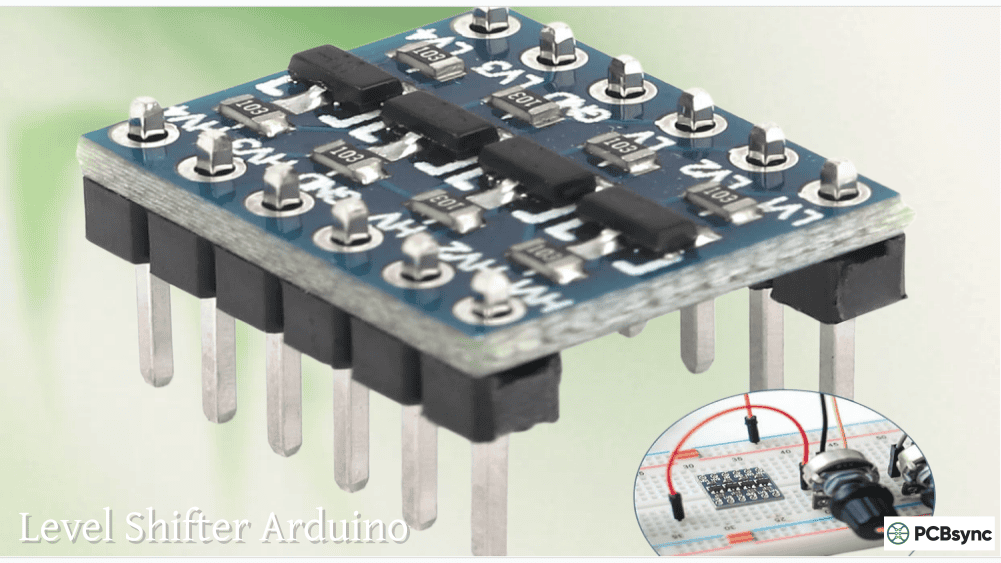
No—not without level shifting. The SAMD21 operates at 3.3V and its I/O pins are absolutely not 5V tolerant. Connecting 5V signals directly will damage the microcontroller permanently. For 5V peripherals, you’ll need bidirectional level shifters like the TXB0108 for data lines, or simple resistor voltage dividers for input-only signals. The good news is that most modern sensors now support 3.3V operation natively, so check datasheets before assuming you need level conversion.
Why won’t my sketch upload through the Native USB port?
The Native USB port requires the bootloader to be running for uploads to work. If your sketch crashes, disables USB, or enters an infinite loop early in execution, the port becomes unresponsive. The solution is to double-tap the reset button rapidly—this forces the board into bootloader mode, indicated by a pulsing LED. The board will enumerate as a different COM port while in bootloader mode. For more reliable development, use the Programming Port instead, which always works through the EDBG regardless of what your sketch does.
How does the Arduino Zero compare to MKR series boards?
Both use the same SAMD21 processor, but they target different use cases. The Zero maintains the classic Arduino Uno form factor for shield compatibility and includes the full EDBG debugger for professional development. MKR boards are significantly smaller, designed for IoT and battery-powered applications, and many include built-in wireless connectivity (WiFi, LoRa, cellular). Choose the Zero if you need debugging capabilities or existing shields. Choose MKR boards for compact wireless projects or low-power embedded applications.
What’s the best way to store persistent data without EEPROM?
Since the SAMD21 lacks hardware EEPROM, you have several options. The FlashStorage library emulates EEPROM using Flash memory—it’s drop-in compatible but limited to about 10,000 write cycles. For applications requiring frequent writes, consider adding external I2C EEPROM (like the AT24C256) or FRAM for virtually unlimited write endurance. For larger data, an SD card provides massive storage with reasonable write durability. Choose based on your data size and write frequency requirements.
Is the Arduino Zero appropriate for someone just starting with Arduino?
Honestly, I’d recommend starting with an Arduino Uno if you’re completely new to microcontrollers. The Zero’s 3.3V logic level complicates interfacing with many beginner tutorials and components written for 5V systems. The dual USB ports cause confusion about which Serial object to use. Troubleshooting is more complex because ARM architecture differs from the AVR code examples found everywhere online. Once you’re comfortable with basic Arduino concepts and ready for more advanced projects—particularly those requiring better analog performance, USB device functionality, or multiple serial ports—the Zero makes an excellent progression.
Final Thoughts on Arduino Zero Development
The Arduino Zero occupies a strategic position in the Arduino ecosystem. It’s not the cheapest option, not the smallest form factor, and not the most powerful ARM-based board Arduino produces. What it delivers is a thoughtfully designed platform for learning 32-bit ARM development while retaining the accessibility of the Arduino programming environment.
The SAMD21’s SERCOM flexibility alone makes the Zero invaluable for projects requiring multiple serial interfaces without resorting to software bit-banging. The true DAC output enables audio and precision analog applications that were simply impossible on AVR hardware. The integrated debugger accelerates development in ways that Serial.println debugging never can.
For engineers transitioning from 8-bit to 32-bit embedded systems, or makers whose projects have genuinely outgrown what the Uno can deliver, the Arduino Zero represents a logical and well-supported next step. The learning curve is real—3.3V logic compatibility, ARM architecture differences, and debugging workflows all require adjustment—but the expanded capabilities justify that investment.
Master the Zero’s features, and you’ll be well-prepared for whatever ARM-based embedded projects come next.
Inquire: Call 0086-755-23203480, or reach out via the form below/your sales contact to discuss our design, manufacturing, and assembly capabilities.
Quote: Email your PCB files to Sales@pcbsync.com (Preferred for large files) or submit online. We will contact you promptly. Please ensure your email is correct.
Notes: For PCB fabrication, we require PCB design file in Gerber RS-274X format (most preferred), *.PCB/DDB (Protel, inform your program version) format or *.BRD (Eagle) format. For PCB assembly, we require PCB design file in above mentioned format, drilling file and BOM. Click to download BOM template To avoid file missing, please include all files into one folder and compress it into .zip or .rar format.