Inquire: Call 0086-755-23203480, or reach out via the form below/your sales contact to discuss our design, manufacturing, and assembly capabilities.
Quote: Email your PCB files to Sales@pcbsync.com (Preferred for large files) or submit online. We will contact you promptly. Please ensure your email is correct.
Notes: For PCB fabrication, we require PCB design file in Gerber RS-274X format (most preferred), *.PCB/DDB (Protel, inform your program version) format or *.BRD (Eagle) format. For PCB assembly, we require PCB design file in above mentioned format, drilling file and BOM. Click to download BOM template To avoid file missing, please include all files into one folder and compress it into .zip or .rar format.
Arduino Uno WiFi Rev2: Setup, Features & IoT Projects
After spending years designing PCBs and working with various microcontroller platforms, I can confidently say that the Arduino Uno WiFi Rev2 represents a significant leap forward for makers entering the IoT space. This board takes everything we loved about the classic Uno and adds built-in wireless connectivity—eliminating the frustration of dealing with external WiFi shields or modules.
In this comprehensive guide, I’ll walk you through everything you need to know about the Arduino Uno WiFi Rev2, from initial setup to building your first IoT project. Whether you’re connecting sensors to your home network or building Bluetooth-enabled devices, this board has you covered.
The Arduino Uno WiFi Rev2 is a microcontroller development board designed as the easiest entry point into IoT development while maintaining the familiar Uno form factor. Released by Arduino, this board combines the traditional Uno experience with integrated WiFi and Bluetooth connectivity.
Unlike the original Uno R3 that uses the ATmega328P, the Arduino Uno WiFi Rev2 features the more powerful ATmega4809 microcontroller from Microchip. This newer processor offers enhanced performance while maintaining backward compatibility with most existing Uno sketches through a compatibility layer built into the Arduino core.
What makes this board particularly attractive for IoT applications is its onboard u-blox NINA-W102 WiFi module, which includes a complete TCP/IP protocol stack. This means you can connect to WiFi networks or even configure the board as an access point right out of the box—no additional hardware required.
Arduino Uno WiFi Rev2 Technical Specifications
Understanding the specifications helps you determine if this board fits your project requirements. Here’s a complete breakdown:
Core Specifications Table
Parameter
Specification
Microcontroller
ATmega4809
Operating Voltage
5V
Input Voltage (Recommended)
6-20V
Digital I/O Pins
14 (5 PWM capable)
Analog Input Pins
6
DC Current per I/O Pin
20mA
DC Current for 3.3V Pin
50mA
Flash Memory
48KB
SRAM
6,144 Bytes
EEPROM
256 Bytes
Clock Speed
16MHz
WiFi Module
u-blox NINA-W102
Crypto Chip
ATECC608A
IMU
LSM6DS3TR
Board Dimensions
68.6mm x 53.4mm
Weight
25g
Key Hardware Components
The Arduino Uno WiFi Rev2 packs several specialized components that set it apart from the standard Uno:
ATmega4809 Microcontroller: This 8-bit processor offers 48KB of flash memory (compared to 32KB on the ATmega328P), 6KB of SRAM, and improved peripheral options. The additional memory gives you more room for complex IoT applications that require handling network protocols.
u-blox NINA-W102 WiFi Module: This self-contained System-on-Chip includes an integrated TCP/IP stack, enabling direct WiFi network access or access point configuration. It supports both 2.4GHz WiFi and Bluetooth/Bluetooth Low Energy.
ATECC608A Crypto Chip: Security is crucial for IoT devices, and this hardware-based crypto accelerator provides secure key storage and cryptographic operations. It protects your network credentials and ensures encrypted communications.
LSM6DS3TR IMU: The onboard 6-axis Inertial Measurement Unit combines a 3-axis accelerometer and 3-axis gyroscope, enabling motion detection applications without additional sensors.
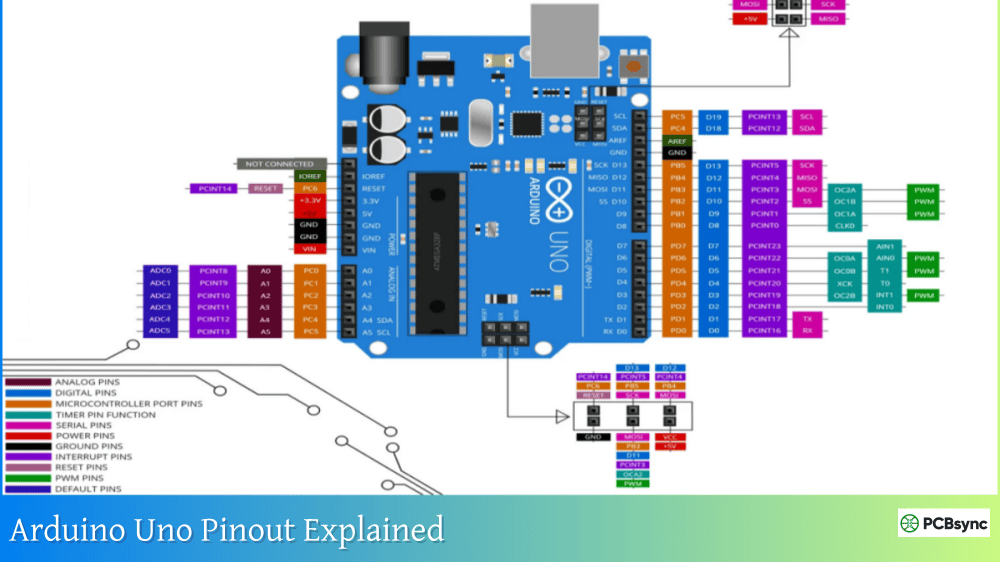
Arduino Uno WiFi Rev2 Pinout Guide
The pinout follows the standard Uno form factor with some important differences:
Digital Pins
Pin
Function
Notes
D0
RX (Serial)
Hardware serial receive
D1
TX (Serial)
Hardware serial transmit
D2
Digital I/O
External interrupt capable
D3
PWM, Digital I/O
PWM output
D4
Digital I/O
General purpose
D5
PWM, Digital I/O
PWM output
D6
PWM, Digital I/O
PWM output
D7
Digital I/O
General purpose
D8
Digital I/O
General purpose
D9
PWM, Digital I/O
PWM output
D10
PWM, Digital I/O
PWM output, SPI SS
D11
SPI MOSI
Note: NOT PWM capable
D12
SPI MISO
General purpose
D13
SPI SCK
Built-in LED
Important Note: Unlike the classic Uno, pin 11 on the Arduino Uno WiFi Rev2 does NOT support PWM. The available PWM pins are 3, 5, 6, 9, and 10. Some early board batches were incorrectly marked, so keep this in mind when planning your projects.
Analog Pins and I2C
Pin
Function
Notes
A0-A3
Analog Input
10-bit ADC (0-1023)
A4
Analog Input
Available when using dedicated I2C
A5
Analog Input
Available when using dedicated I2C
SDA
I2C Data
Dedicated I2C pin (near AREF)
SCL
I2C Clock
Dedicated I2C pin (near AREF)
One significant improvement over the classic Uno is that the I2C interface has dedicated SDA and SCL pins near the AREF header. This means pins A4 and A5 remain available for analog readings even when using I2C devices—a common limitation on older Uno boards.
Setting Up Your Arduino Uno WiFi Rev2
Getting started with the Arduino Uno WiFi Rev2 requires a few specific steps beyond the standard Arduino setup.
Step 1: Install the Arduino IDE
Download and install the latest Arduino IDE from the official Arduino website. Both the desktop IDE and the web-based Arduino Cloud Editor support this board.
Step 2: Install the megaAVR Core
The Arduino Uno WiFi Rev2 uses the megaAVR architecture, which requires a specific board package:
Open Arduino IDE and navigate to Tools → Board → Boards Manager
Search for “Arduino megaAVR Boards”
Install the package (version 1.8.7 or later recommended)
Step 3: Install Required Libraries
For WiFi functionality, you’ll need the WiFiNINA library:
Go to Tools → Manage Libraries
Search for “WiFiNINA”
Install the library by Arduino
For Bluetooth projects, also install:
ArduinoBLE (for Bluetooth Low Energy applications)
For IMU functionality:
Arduino_LSM6DS3 (for accelerometer and gyroscope readings)
Step 4: Connect and Configure
Connect your Arduino Uno WiFi Rev2 using a USB Type-B cable. In the IDE:
Troubleshooting Tip: On Windows, if the port doesn’t appear, try rebooting your computer after driver installation. On Linux, ensure port 5353 isn’t blocked by your firewall.
Connecting to WiFi Networks
The WiFiNINA library makes network connectivity straightforward. Here’s a basic connection example:
#include <WiFiNINA.h>
// Network credentials
char ssid[] = “YourNetworkName”;
char pass[] = “YourPassword”;
int status = WL_IDLE_STATUS;
void setup() {
Serial.begin(9600);
while (!Serial);
// Check for WiFi module
if (WiFi.status() == WL_NO_MODULE) {
Serial.println(“WiFi module not found!”);
while (true);
}
// Connect to network
while (status != WL_CONNECTED) {
Serial.print(“Connecting to “);
Serial.println(ssid);
status = WiFi.begin(ssid, pass);
delay(5000);
}
Serial.println(“Connected!”);
Serial.print(“IP Address: “);
Serial.println(WiFi.localIP());
}
void loop() {
// Your code here
}
Security Best Practice: Store your network credentials in a separate file called arduino_secrets.h and include it in your sketch. This prevents accidentally sharing passwords when publishing code.
The combination of WiFi, Bluetooth, and onboard sensors opens up numerous project possibilities.
Project 1: Web-Based Sensor Monitor
Create a web server that displays real-time sensor data accessible from any device on your network. The Arduino Uno WiFi Rev2 can host a simple webpage showing temperature, motion data from the IMU, or readings from external sensors.
Project 2: Smart Home Controller
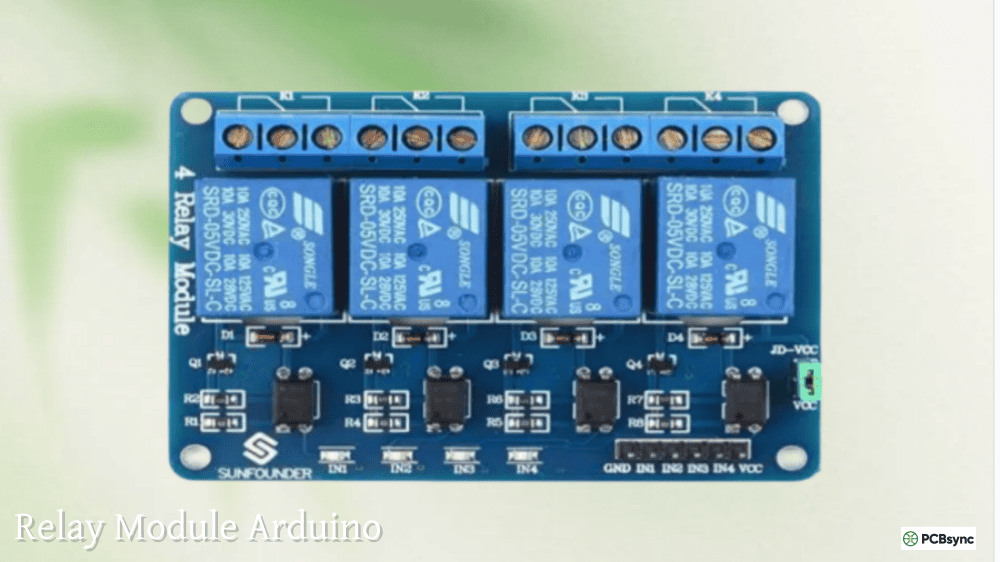
Build a WiFi-controlled relay system to manage lights, fans, or other appliances. The board can receive commands from a smartphone app or web interface, making home automation accessible without expensive commercial solutions.
Project 3: Motion-Activated Alert System
Leverage the onboard LSM6DS3TR IMU to detect movement and send notifications. Applications include door opening alarms, fall detection for elderly care, or step counters for fitness tracking.
Project 4: Bluetooth Environmental Sensor
Use the Bluetooth Low Energy capability to create a battery-efficient sensor that broadcasts temperature and humidity data to a smartphone app. The ArduinoBLE library makes implementing BLE peripherals surprisingly simple.
Project 5: Cloud-Connected Data Logger
Connect to cloud platforms like AWS IoT, Google Cloud, or Azure IoT Hub to store and visualize sensor data. The ATECC608A crypto chip ensures secure authentication with these services.
Arduino Uno WiFi Rev2 vs Other Boards
How does this board compare to alternatives?
Feature
Uno WiFi Rev2
Uno R3
MKR WiFi 1010
Nano 33 IoT
Microcontroller
ATmega4809
ATmega328P
SAMD21
SAMD21
Flash Memory
48KB
32KB
256KB
256KB
SRAM
6KB
2KB
32KB
32KB
WiFi
Built-in
Requires shield
Built-in
Built-in
Bluetooth
Yes
No
Yes
Yes
IMU
Built-in
No
No
Built-in
Crypto Chip
Yes
No
Yes
Yes
Shield Compatible
Yes
Yes
No
No
Price Range
~$45
~$25
~$35
~$20
The Arduino Uno WiFi Rev2 shines when you need the Uno form factor for shield compatibility while requiring wireless connectivity. If size is a priority, consider the Nano 33 IoT. For more processing power and memory, the MKR WiFi 1010 offers a compelling alternative.
Useful Resources for Arduino Uno WiFi Rev2
Resource
Description
Arduino Documentation
Official tutorials and API reference
WiFiNINA Library Reference
Complete function documentation
ArduinoBLE Library
Bluetooth Low Energy examples
Arduino Project Hub
Community project showcase
Arduino Forum
Community support and discussions
ATmega4809 Datasheet
Microcontroller specifications
NINA-W102 Datasheet
WiFi module technical details
Board Schematic (PDF)
Hardware design files
Pinout Diagram (PDF)
Visual pin reference
Frequently Asked Questions
Can I use sketches written for Arduino Uno R3 on the WiFi Rev2?
Most sketches designed for the Arduino Uno R3 will work on the Arduino Uno WiFi Rev2 thanks to the compatibility layer in the megaAVR core. However, there are exceptions—particularly sketches that directly manipulate ATmega328P registers or rely on pin 11 for PWM output. Test your existing projects and be prepared to make minor adjustments.
Does the Arduino Uno WiFi Rev2 support 5GHz WiFi networks?
No, the u-blox NINA-W102 module only supports 2.4GHz WiFi networks. This is common among IoT devices because 2.4GHz offers better range and wall penetration compared to 5GHz, which is more suitable for IoT applications where devices may be positioned throughout a building.
How do I update the WiFi module firmware?
The NINA-W102 firmware can be updated through the Arduino IDE using the WiFiNINA library’s FirmwareUpdater example. Navigate to File → Examples → WiFiNINA → FirmwareUpdater and follow the instructions. Keeping firmware updated ensures compatibility with the latest library features and security patches.
Can the board work as both WiFi client and access point simultaneously?
The Arduino Uno WiFi Rev2 can operate in either client mode (connecting to an existing network) or access point mode (creating its own network), but not both simultaneously. For projects requiring both capabilities, you’ll need to switch between modes programmatically.
What’s the range of the WiFi and Bluetooth connections?
WiFi range typically reaches 30-50 meters indoors depending on obstacles and interference, similar to standard WiFi devices. Bluetooth Low Energy range is approximately 10-30 meters. For extended range applications, consider adding an external antenna or using WiFi repeaters.
Conclusion
The Arduino Uno WiFi Rev2 successfully bridges the gap between traditional Arduino development and modern IoT requirements. Its familiar form factor means existing shields and accessories remain compatible, while the integrated WiFi, Bluetooth, and security features eliminate the complexity of adding these capabilities externally.
For beginners entering IoT development, this board offers a gentle learning curve with extensive documentation and community support. Experienced developers will appreciate the improved ATmega4809 processor, onboard IMU, and hardware crypto acceleration that enable more sophisticated applications.
The main considerations are price (higher than the basic Uno) and the learning curve for networking concepts. However, if your projects require wireless connectivity, investing in the Arduino Uno WiFi Rev2 saves the hassle and potential compatibility issues of cobbling together separate components.
Start with simple projects like WiFi-connected LED control or sensor monitoring, then gradually explore more advanced topics like MQTT messaging, cloud integration, and Bluetooth peripherals. The skills you develop transfer directly to professional IoT development, making this an excellent platform for both learning and prototyping production devices.
Suggested Meta Description
Option 1 (158 characters):
Learn Arduino Uno WiFi Rev2 setup, features, and IoT projects. Complete guide covering specifications, pinout, WiFi configuration, and practical project ideas.
Option 2 (155 characters):
Master the Arduino Uno WiFi Rev2 with this complete guide. Setup instructions, technical specs, pinout diagram, and beginner-friendly IoT project tutorials.
Option 3 (160 characters):
Arduino Uno WiFi Rev2 complete guide: ATmega4809 specs, WiFi setup, Bluetooth features, and step-by-step IoT project tutorials for beginners and makers.
Inquire: Call 0086-755-23203480, or reach out via the form below/your sales contact to discuss our design, manufacturing, and assembly capabilities.
Quote: Email your PCB files to Sales@pcbsync.com (Preferred for large files) or submit online. We will contact you promptly. Please ensure your email is correct.
Notes: For PCB fabrication, we require PCB design file in Gerber RS-274X format (most preferred), *.PCB/DDB (Protel, inform your program version) format or *.BRD (Eagle) format. For PCB assembly, we require PCB design file in above mentioned format, drilling file and BOM. Click to download BOM template To avoid file missing, please include all files into one folder and compress it into .zip or .rar format.