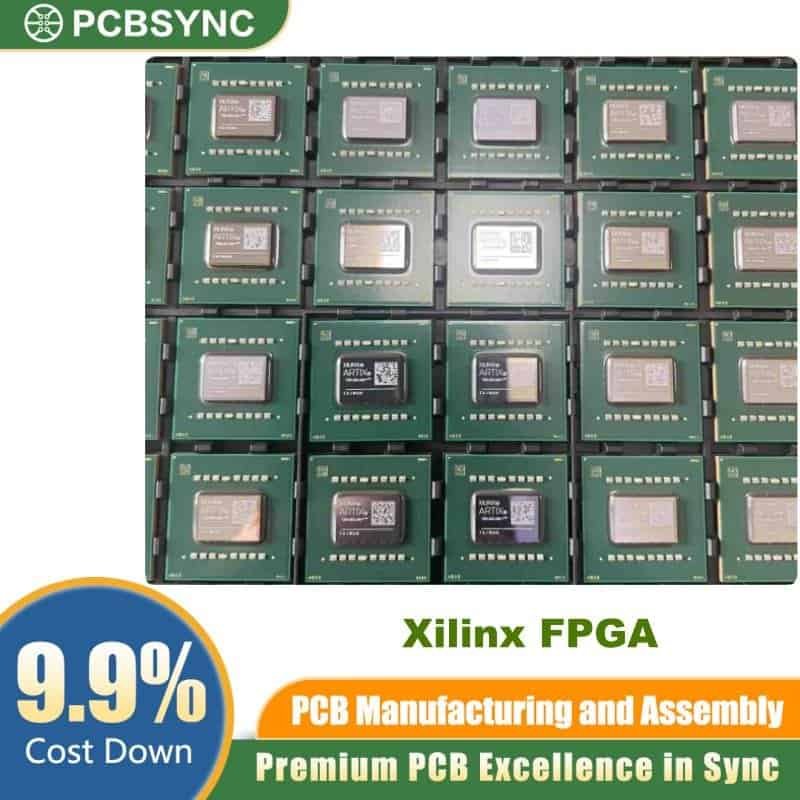
Overview of XCV1000E-6FG680C Field Programmable Gate Array
The XCV1000E-6FG680C represents a pinnacle achievement in the Virtex-E family of field-programmable gate arrays, delivering exceptional performance for complex digital system designs. This high-capacity FPGA combines advanced 0.18µm CMOS technology with robust programmable logic resources, making it an ideal solution for telecommunications, industrial automation, data processing, and enterprise computing applications.
Manufactured by AMD (formerly Xilinx), this FPGA integrates 331.776K gates across 27,648 logic cells, providing engineers with substantial design flexibility while maintaining optimal performance characteristics at 357MHz operating frequency.
Technical Specifications and Key Features
Core Performance Parameters
| Specification |
Value |
| Part Number |
XCV1000E-6FG680C |
| Manufacturer |
AMD (Xilinx) |
| Product Series |
Virtex®-E |
| Logic Gates |
331,776K (1,569,178 gates) |
| Logic Cells/Elements |
27,648 |
| Configurable Logic Blocks (CLBs) |
6,144 |
| Maximum I/O Pins |
512 |
| User I/O |
393,216 |
| Operating Frequency |
357MHz |
| Technology Node |
0.18µm CMOS |
| Supply Voltage |
1.8V (1.71V ~ 1.89V) |
| Operating Temperature |
0°C to 85°C (TJ) |
| Package Type |
680-FTEBGA / 680-LBGA Exposed Pad |
| Package Dimensions |
40mm x 40mm |
| Mounting Type |
Surface Mount |
| Total RAM Bits |
48kB embedded memory |
Advanced Architecture Features
The XCV1000E-6FG680C leverages an advanced six-layer metal architecture that dramatically enhances silicon efficiency and routing capabilities. This sophisticated design enables:
- Optimized Place-and-Route Efficiency: Advanced interconnect hierarchy reduces congestion and improves timing closure
- High-Speed Block RAM: Integrated memory blocks for data buffering and storage applications
- Flexible I/O Standards: Support for multiple voltage levels and signaling standards
- Dedicated Carry Logic: Accelerated arithmetic operations for DSP and computation-intensive tasks
- Clock Management Resources: Multiple DLLs (Delay-Locked Loops) for precise clock distribution
Detailed Pin Configuration and Package Information
Package Specifications Table
| Package Feature |
Specification |
| Package Code |
FBGA-680 |
| Pin Count |
680 pins |
| Package Type |
Fine-pitch Ball Grid Array |
| Footprint |
40mm x 40mm |
| Ball Pitch |
Fine pitch configuration |
| Exposed Pad |
Yes (thermal enhancement) |
| RoHS Compliance |
RoHS non-compliant (legacy product) |
| Moisture Sensitivity Level |
Per JEDEC standards |
| Packaging Method |
Tray packaging |
Application Areas and Use Cases
Primary Industry Applications
The XCV1000E-6FG680C FPGA excels in diverse application domains:
Telecommunications Infrastructure
- High-speed data routing and switching
- Protocol conversion and processing
- Base station signal processing
- Network interface controllers
Industrial Automation and Control
- Factory automation systems
- Programmable logic controllers (PLC) replacement
- Motor control and drive systems
- Real-time monitoring and control
Enterprise Computing
- Data center acceleration
- Server-side processing
- Storage controller implementation
- Hardware security modules
Personal Electronics and Consumer Devices
- High-definition video processing
- Tablet and embedded system controllers
- Digital signal processing applications
Performance Benchmarks and Operating Characteristics
Speed Grade Comparison
| Speed Grade |
Max Frequency |
Typical Applications |
| -6 (XCV1000E-6FG680C) |
357MHz |
Balanced performance/power applications |
| -7 |
400MHz |
High-performance computing |
| -8 |
416MHz |
Maximum speed requirements |
The -6 speed grade designation indicates this device operates at 357MHz maximum frequency, offering an optimal balance between performance and power consumption for most commercial applications.
Design Tools and Development Support
Compatible Software Platforms
Engineers working with the XCV1000E-6FG680C can leverage industry-standard FPGA development tools:
- Xilinx ISE Design Suite: Primary development environment for Virtex-E family
- HDL Support: VHDL and Verilog synthesis
- Simulation Tools: ModelSim, ISim integration
- Timing Analysis: Advanced static timing analysis capabilities
- IP Core Library: Pre-verified functional blocks
For comprehensive guidance on Xilinx FPGA development methodologies, design best practices, and implementation strategies, refer to specialized resources that cover the complete development workflow from concept to production.
Resource Utilization and Configuration
Logic Resource Distribution
| Resource Type |
Quantity |
Description |
| CLBs (Configurable Logic Blocks) |
6,144 |
Primary logic building blocks |
| Logic Cells |
27,648 |
Equivalent gate count metric |
| Block RAM |
48kB |
Distributed memory resources |
| I/O Banks |
Multiple |
Voltage-independent I/O grouping |
| DLLs |
4-8 |
Digital clock management |
| Global Clocks |
16 |
Low-skew clock distribution |
Power Consumption and Thermal Management
Power Supply Requirements
| Power Rail |
Voltage Range |
Typical Current |
| VCCINT (Core) |
1.71V – 1.89V |
Application dependent |
| VCCO (I/O) |
Variable |
Based on I/O standards |
| VCCAUX (Auxiliary) |
Per datasheet |
Clock and DLL circuits |
The 680-LBGA package features an exposed thermal pad that facilitates efficient heat dissipation, critical for maintaining performance in thermally challenging environments. Proper PCB thermal design ensures the junction temperature remains within the 0°C to 85°C operating range.
Comparison with Related Virtex-E Family Members
XCV1000E Variant Comparison
| Part Number |
Speed Grade |
Package |
I/O Count |
Primary Difference |
| XCV1000E-6FG680C |
-6 (357MHz) |
680-FBGA |
512 |
Standard commercial grade |
| XCV1000E-7FG680C |
-7 (400MHz) |
680-FBGA |
512 |
Higher performance variant |
| XCV1000E-6BG560C |
-6 (357MHz) |
560-BGA |
Lower |
Smaller package option |
| XCV1000E-6HQ240C |
-6 (357MHz) |
240-PQFP |
Lower |
Reduced pin count package |
Product Status and Availability
Lifecycle Information
Product Status: Obsolete (Not recommended for new designs)
The XCV1000E-6FG680C has reached obsolescence status in AMD/Xilinx’s product lifecycle. While existing inventory remains available through authorized distributors and surplus channels, designers are encouraged to consider current-generation alternatives such as:
- Artix-7 family for cost-sensitive applications
- Kintex-7 family for mid-range performance
- Virtex-7 family for high-performance requirements
- UltraScale and UltraScale+ families for cutting-edge applications
Availability and Sourcing
Despite obsolescence status, the XCV1000E-6FG680C remains available through:
- Authorized electronic component distributors
- Surplus and excess inventory specialists
- Component brokers with certified stock
- Manufacturer’s last-time-buy programs
Quality and Reliability Standards
Manufacturing Quality Assurance
| Quality Metric |
Standard |
| Manufacturing Process |
ISO 9001 certified |
| Component Grading |
Commercial temperature range |
| Quality Grade |
Industrial grade reliability |
| Testing |
100% factory tested |
| Warranty Period |
Typically 1 year (distributor dependent) |
| Packaging Integrity |
ESD protection, anti-static bags |
PCB Design Considerations
Layout and Routing Guidelines
When implementing the XCV1000E-6FG680C in PCB designs, engineers should consider:
Power Distribution Network (PDN)
- Multiple decoupling capacitors per power rail
- Low-impedance power plane design
- Adequate copper weight for current carrying
Signal Integrity
- Controlled impedance traces for high-speed signals
- Proper termination networks
- Ground plane continuity
Thermal Management
- Thermal vias connecting exposed pad to ground plane
- Adequate copper pour for heat spreading
- Optional heatsink attachment provisions
BGA Assembly
- X-ray inspection recommended
- Proper reflow profile following JEDEC standards
- Solder ball coplanarity verification
Migration and Replacement Options
Modern Equivalents and Alternatives
For engineers maintaining legacy designs or seeking current alternatives:
Direct Functional Replacements
- Verify pin compatibility with migration guides
- Review I/O standard support
- Confirm timing requirements can be met
- Validate power supply compatibility
Modern Architecture Benefits
- Higher logic density in smaller packages
- Improved power efficiency
- Advanced DSP blocks
- High-speed serial transceivers
- Embedded ARM processors (Zynq family)
Environmental and Compliance Information
Regulatory Compliance Status
| Compliance Aspect |
Status |
| RoHS Compliance |
Non-compliant (legacy product) |
| Lead-Free |
No |
| REACH Compliance |
Check current status |
| Conflict Minerals |
Supplier declaration available |
| ECCN Code |
3A991.D (export control) |
Frequently Asked Questions
What makes the XCV1000E-6FG680C suitable for industrial applications?
The device combines commercial temperature range operation (0°C to 85°C), robust logic capacity, and proven reliability, making it appropriate for factory automation, control systems, and industrial computing applications where environmental conditions are controlled.
Can the XCV1000E-6FG680C be programmed multiple times?
Yes, as a field-programmable gate array, the XCV1000E-6FG680C supports unlimited reprogramming cycles during development. Production devices can be configured once (one-time programmable) or reconfigured as needed depending on the bitstream storage method (PROM, Flash, or volatile SRAM-based).
What is the difference between -6, -7, and -8 speed grades?
Speed grades indicate maximum operating frequency: -6 operates at 357MHz, -7 at 400MHz, and -8 at 416MHz. Higher speed grades support faster clock rates and tighter timing requirements but may consume more power and cost more.
Is technical support available for this obsolete FPGA?
While AMD/Xilinx has discontinued active development support, extensive documentation, datasheets, application notes, and community resources remain available. Many distributors and third-party engineering firms specialize in legacy FPGA support.
What shipping options are available for bulk orders?
Authorized distributors typically offer multiple shipping options including DHL, FedEx, UPS, and TNT express services, with delivery times ranging from 2-7 business days depending on destination. ESD-protected packaging ensures component integrity during transit.
Procurement and Supply Chain Information
Ordering Information
When requesting quotes or placing orders for XCV1000E-6FG680C:
Required Information
- Complete part number (XCV1000E-6FG680C)
- Quantity required
- Target price (if applicable)
- Delivery timeline
- Payment terms preference
- Destination country/region
Due Diligence for Surplus Components
- Request date codes for aging inventory
- Verify proper storage conditions
- Confirm authenticity certification
- Inspect packaging condition
- Test sample units before volume purchase
Lead Time Expectations
| Order Type |
Typical Lead Time |
| Distributor Stock |
2-5 business days |
| Small Quantities (<100) |
1-2 weeks |
| Volume Orders (>1000) |
4-8 weeks |
| Custom Requests |
Varies by availability |
Technical Documentation and Resources
Essential Documentation
- Datasheet: Complete electrical specifications, AC/DC parameters, package drawings
- User Guide: Architecture overview, resource utilization, configuration
- Application Notes: Design best practices, common implementations
- PCB Footprint: CAD library files for major EDA platforms
- IBIS Models: Signal integrity simulation models
- Timing Models: Static timing analysis files
Conclusion: XCV1000E-6FG680C for Legacy and Maintenance Applications
The XCV1000E-6FG680C FPGA represents mature, proven technology for engineers supporting existing designs or working with legacy systems. While classified as obsolete for new design starts, this Virtex-E family member continues to serve critical roles in deployed systems requiring long-term maintenance support.
With 331.776K gates, 512 I/O pins, and 357MHz performance in a compact 680-ball FBGA package, the XCV1000E-6FG680C delivers robust programmable logic capability for applications where design changes are minimal and proven reliability is paramount.
For new projects, designers should evaluate current-generation AMD/Xilinx FPGA families that offer enhanced performance, lower power consumption, and modern development tool support while maintaining the programmable logic advantages that make FPGAs indispensable in digital design.