Inquire: Call 0086-755-23203480, or reach out via the form below/your sales contact to discuss our design, manufacturing, and assembly capabilities.
Quote: Email your PCB files to Sales@pcbsync.com (Preferred for large files) or submit online. We will contact you promptly. Please ensure your email is correct.
Notes: For PCB fabrication, we require PCB design file in Gerber RS-274X format (most preferred), *.PCB/DDB (Protel, inform your program version) format or *.BRD (Eagle) format. For PCB assembly, we require PCB design file in above mentioned format, drilling file and BOM. Click to download BOM template To avoid file missing, please include all files into one folder and compress it into .zip or .rar format.
Building an Arduino Traffic Light is one of the most rewarding first projects for anyone entering the world of microcontrollers and electronics. As a PCB engineer with years of experience, I’ve seen countless beginners struggle with complex projects, but the traffic light system offers the perfect balance of simplicity and learning value. This project teaches fundamental concepts like digital output control, sequential programming, and circuit design without overwhelming you with complexity.
The beauty of an Arduino Traffic Light project lies in its practical application. Traffic lights are something we encounter daily, making the concept immediately relatable. From an engineering perspective, this project introduces core competencies that form the foundation of more advanced embedded systems work. You’ll learn timing control, state management, and basic circuit protection—skills that transfer directly to professional PCB design and firmware development.
Understanding the Arduino Traffic Light System
Core Concepts Behind Traffic Light Sequencing
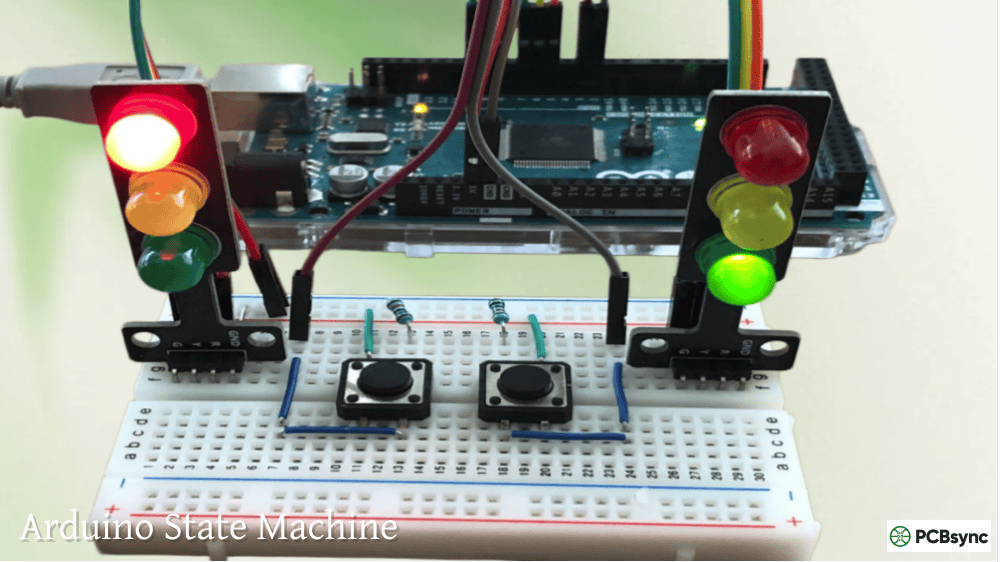
Real traffic lights operate on carefully timed sequences to maintain safe traffic flow. Your Arduino Traffic Light replicates this behavior through programmed delays and state transitions. The typical sequence follows: green light (go), yellow light (caution), red light (stop), then back to green. Some regions add a red-yellow combination before returning to green, which we’ll explore in the advanced variations.
From a circuit design perspective, each LED represents a load that the Arduino must drive through its digital output pins. Understanding current limiting and proper resistor selection is crucial for preventing component failure—something that’s often glossed over in beginner tutorials but critical for real-world applications.
Required Components and Tools
Essential Components List
Component
Quantity
Specifications
Purpose
Arduino UNO
1
ATmega328P based
Main controller
Red LED
1
5mm, 2V forward voltage
Stop signal
Yellow LED
1
5mm, 2V forward voltage
Caution signal
Green LED
1
5mm, 2V forward voltage
Go signal
Resistors
3
220Ω (preferred) or 100Ω
Current limiting
Breadboard
1
Half-size or full
Prototyping platform
Jumper Wires
6-10
Male-to-male
Connections
USB Cable
1
Type A to Type B
Programming/Power
Why These Resistor Values Matter
As a PCB engineer, I can’t stress enough the importance of proper resistor selection. The Arduino UNO outputs 5V from its digital pins, while typical LEDs have a forward voltage around 2V and optimal current around 20mA. Using Ohm’s Law (V = IR), we calculate:
Resistor = (Supply Voltage – LED Forward Voltage) / Desired Current
For 100Ω: (5V – 2V) / 0.030A = 100Ω (brighter, but within spec)
The 220Ω resistor provides better long-term reliability and lower power consumption, while 100Ω offers brighter LEDs with slightly higher current draw. Both are acceptable choices for this project.
Circuit Assembly: Step-by-Step Wiring Guide
Understanding LED Polarity
LEDs are polarized components—they only work when connected correctly. The longer leg is the anode (positive), and the shorter leg is the cathode (negative). Reversing these connections won’t damage the LED, but it won’t light up either. This is your first lesson in component polarity, critical knowledge for any electronics work.
Breadboard Wiring Instructions
Step 1: Position Your Components Place your LEDs on the breadboard with adequate spacing. Insert the red LED in row 10, yellow in row 15, and green in row 20. This spacing prevents confusion and makes troubleshooting easier.
Step 2: Connect Current-Limiting Resistors For each LED, connect one leg of the 220Ω resistor to the cathode (shorter leg). Connect the other end of all three resistors to the breadboard’s ground rail (usually marked blue or with a minus sign).
Step 3: Wire the Arduino Connections Using jumper wires, connect:
Red LED anode → Arduino Pin 2
Yellow LED anode → Arduino Pin 3
Green LED anode → Arduino Pin 4
Breadboard ground rail → Arduino GND pin
Pin Selection Strategy
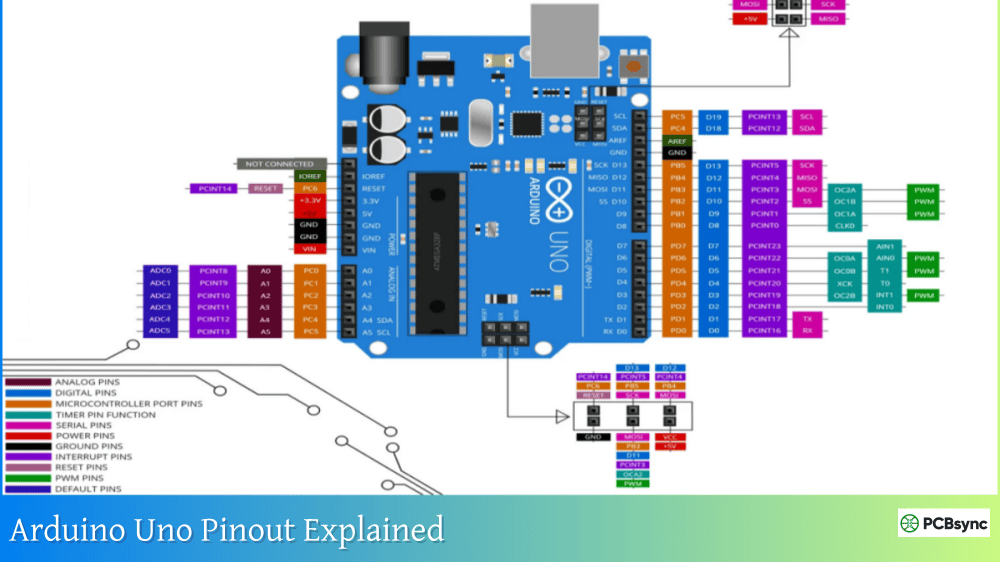
You might wonder why pins 2, 3, and 4? This choice is intentional. Arduino pins 0 and 1 are reserved for serial communication, and keeping your outputs grouped (pins 2-4) makes the code more logical and easier to debug. In professional PCB design, this kind of systematic pin assignment becomes even more critical when managing dozens of I/O lines.
Programming Your Arduino Traffic Light
Setting Up the Arduino IDE
Before coding, ensure you have the Arduino IDE installed and your board properly configured. Select “Arduino UNO” under Tools > Board and choose the correct COM port under Tools > Port. These fundamental setup steps prevent countless headaches during debugging.
Basic Traffic Light Code
Here’s the foundational code for your Arduino Traffic Light:
// Pin definitions
const int RED_PIN = 2;
const int YELLOW_PIN = 3;
const int GREEN_PIN = 4;
// Timing definitions (milliseconds)
const int GREEN_TIME = 5000; // 5 seconds
const int YELLOW_TIME = 2000; // 2 seconds
const int RED_TIME = 5000; // 5 seconds
void setup() {
// Configure pins as outputs
pinMode(RED_PIN, OUTPUT);
pinMode(YELLOW_PIN, OUTPUT);
pinMode(GREEN_PIN, OUTPUT);
// Initialize all lights to OFF
digitalWrite(RED_PIN, LOW);
digitalWrite(YELLOW_PIN, LOW);
digitalWrite(GREEN_PIN, LOW);
}
void loop() {
// Green light phase
digitalWrite(GREEN_PIN, HIGH);
digitalWrite(YELLOW_PIN, LOW);
digitalWrite(RED_PIN, LOW);
delay(GREEN_TIME);
// Yellow light phase
digitalWrite(GREEN_PIN, LOW);
digitalWrite(YELLOW_PIN, HIGH);
digitalWrite(RED_PIN, LOW);
delay(YELLOW_TIME);
// Red light phase
digitalWrite(GREEN_PIN, LOW);
digitalWrite(YELLOW_PIN, LOW);
digitalWrite(RED_PIN, HIGH);
delay(RED_TIME);
}
Code Breakdown and Best Practices
The const keyword declares constants that won’t change during execution. This practice improves code readability and makes timing adjustments simple—just modify the constant values rather than hunting through delay() calls. In professional firmware development, this becomes even more important when managing complex state machines.
The pinMode() function configures each pin as OUTPUT, telling the Arduino these pins will source current to drive LEDs rather than reading sensor values. The digitalWrite() function controls the state: HIGH (5V, LED on) or LOW (0V, LED off).
Many European countries use a red-yellow combination before returning to green, giving drivers advance warning. Here’s the modified loop:
void loop() {
// Green light
greenLight();
delay(GREEN_TIME);
// Yellow warning
yellowLight();
delay(YELLOW_TIME);
// Red light
redLight();
delay(RED_TIME);
// Red and Yellow together
redYellowLight();
delay(2000);
}
void redYellowLight() {
digitalWrite(GREEN_PIN, LOW);
digitalWrite(YELLOW_PIN, HIGH);
digitalWrite(RED_PIN, HIGH);
}
Adding Pedestrian Control
For more complexity, integrate a pushbutton that triggers a pedestrian crossing sequence. This introduces interrupt handling and state management, bridging the gap between basic sequencing and real-world traffic control systems.
Common Issues and Troubleshooting
LED Troubleshooting Table
Problem
Possible Cause
Solution
LED not lighting
Wrong polarity
Flip LED orientation
All LEDs dim
Wrong resistor value
Use 220Ω or 100Ω resistors
Sequence out of order
Pin assignment error
Verify pin connections match code
No response
Power issue
Check USB connection, verify board selection
Erratic behavior
Breadboard contact
Push components firmly into breadboard
Debugging Strategy
From an engineering perspective, systematic debugging saves time. Start with the power supply—verify 5V between Arduino 5V pin and GND. Next, test each LED individually by modifying code to turn on one LED at a time. This isolates hardware issues from software problems, a critical skill in professional development.
Code Optimization Techniques
Using Functions for Cleaner Code
Professional code emphasizes readability and maintainability. Instead of repeating digitalWrite() calls, create functions:
void greenLight() {
digitalWrite(GREEN_PIN, HIGH);
digitalWrite(YELLOW_PIN, LOW);
digitalWrite(RED_PIN, LOW);
}
void yellowLight() {
digitalWrite(GREEN_PIN, LOW);
digitalWrite(YELLOW_PIN, HIGH);
digitalWrite(RED_PIN, LOW);
}
void redLight() {
digitalWrite(GREEN_PIN, LOW);
digitalWrite(YELLOW_PIN, LOW);
digitalWrite(RED_PIN, HIGH);
}
Array-Based Control
For scalability, use arrays to manage multiple traffic lights:
const int pins[] = {RED_PIN, YELLOW_PIN, GREEN_PIN};
const int times[] = {RED_TIME, YELLOW_TIME, GREEN_TIME};
void loop() {
for (int i = 0; i < 3; i++) {
turnOnLight(pins[i]);
delay(times[i]);
}
}
This approach becomes invaluable when managing complex multi-intersection systems or transitioning to more advanced projects.
Expanding Your Traffic Light System
Multi-Way Intersection Control
Once comfortable with basic sequencing, consider building a four-way intersection. This requires:
12 LEDs total (3 colors × 4 directions)
Coordinated timing to prevent collisions
State machine logic for traffic flow management
This expansion teaches concurrent state management and prepares you for real-time embedded systems design.
Integration With Sensors
Add ultrasonic sensors or IR sensors to create adaptive traffic control that responds to vehicle presence. This introduces analog-to-digital conversion (ADC) and conditional logic based on real-world inputs.
Real-World Applications and Learning Outcomes
Skills You’ve Developed
Completing this Arduino Traffic Light project teaches:
Digital output control and timing
Circuit design and component selection
Resistor calculation using Ohm’s Law
Sequential logic programming
Debugging systematic approach
Code organization and optimization
These fundamentals apply directly to industrial automation, IoT device development, and professional PCB design work.
Career Relevance
As a PCB engineer, I regularly use these exact skills. Traffic light systems are state machines—the same concept underlying PLC programming, FPGA design, and embedded firmware development. This seemingly simple project introduces industry-standard concepts in an accessible way.
Absolutely! While red-yellow-green is traditional, you can use any colors. Just ensure you calculate the correct resistor values, as different LED colors have different forward voltages. Blue and white LEDs typically have higher forward voltages around 3.2V, requiring lower resistance values.
Why does my Arduino reset when I upload code?
This is normal behavior. During programming, the Arduino automatically resets to enter bootloader mode. Your traffic light will restart its sequence from the beginning after each upload.
Can I run this project from a battery?
Yes! The Arduino UNO can be powered from a 7-12V battery connected to the barrel jack, or from a USB power bank. For extended battery life, calculate your total current draw (approximately 60-90mA with three LEDs) and choose an appropriately sized battery.
How do I make the lights change faster or slower?
Simply modify the timing constants at the top of your code. Change GREEN_TIME, YELLOW_TIME, and RED_TIME to your desired durations in milliseconds. Remember: 1000 milliseconds = 1 second.
What’s the difference between delay() and millis()?
The delay() function pauses your entire program, making it simple but inflexible. The millis() function returns the time since the Arduino started, allowing non-blocking code execution. For basic traffic lights, delay() works perfectly, but millis() becomes essential when adding buttons or sensors that need constant monitoring.
Conclusion: Your Journey Begins Here
Building an Arduino Traffic Light represents more than just blinking LEDs—it’s your entry point into embedded systems development. You’ve learned circuit design principles, programming fundamentals, and debugging strategies that professional engineers use daily. The skills from this project scale upward: today’s traffic light becomes tomorrow’s home automation system, robot controller, or industrial monitoring equipment.
From my experience as a PCB engineer, I’ve watched countless professionals start exactly where you are now. The key differentiator isn’t talent—it’s persistence and systematic learning. Take this project, modify it, break it, fix it, and make it your own. That hands-on experimentation builds the intuition that separates adequate engineers from exceptional ones.
Now that you’ve mastered basic sequencing, challenge yourself: add sensors, implement pedestrian crossings, or design a custom PCB to make your traffic light permanent. Each iteration deepens your understanding and expands your capabilities. Welcome to the world of Arduino—you’ve taken the first step on an exciting journey.
Inquire: Call 0086-755-23203480, or reach out via the form below/your sales contact to discuss our design, manufacturing, and assembly capabilities.
Quote: Email your PCB files to Sales@pcbsync.com (Preferred for large files) or submit online. We will contact you promptly. Please ensure your email is correct.
Notes: For PCB fabrication, we require PCB design file in Gerber RS-274X format (most preferred), *.PCB/DDB (Protel, inform your program version) format or *.BRD (Eagle) format. For PCB assembly, we require PCB design file in above mentioned format, drilling file and BOM. Click to download BOM template To avoid file missing, please include all files into one folder and compress it into .zip or .rar format.