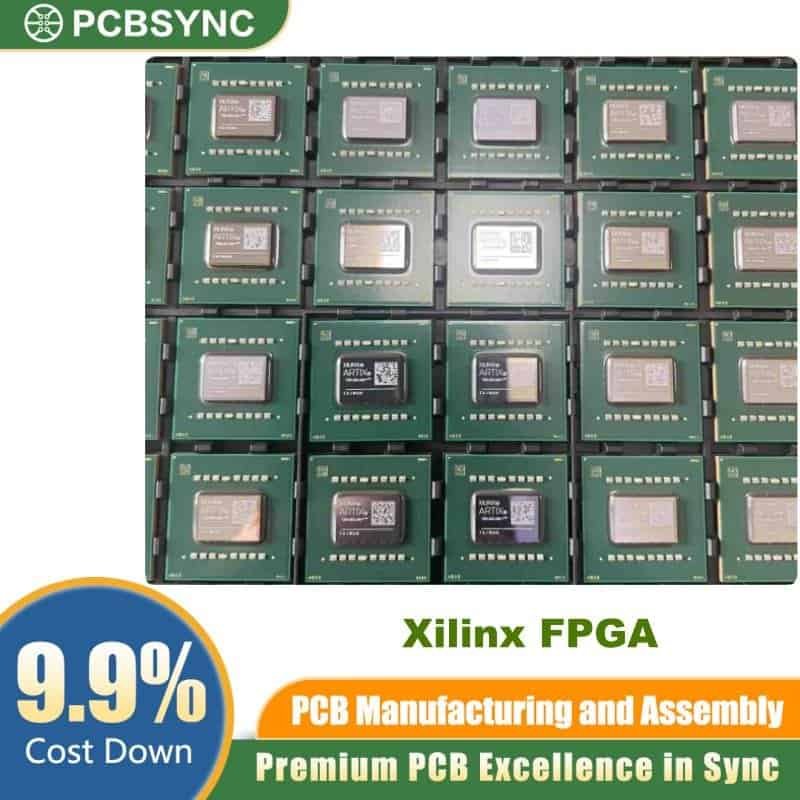
Overview of XCV50E-6CS144C FPGA
The XCV50E-6CS144C is a high-performance Field Programmable Gate Array (FPGA) from AMD’s (formerly Xilinx) Virtex-E family. This commercial-grade device delivers exceptional programmable logic capabilities with 71,693 system gates, 1,728 logic cells, and 65,536 RAM bits in a compact 144-pin TFBGA/CSPBGA package. Designed for applications requiring reliable performance and flexibility, this FPGA combines advanced 0.18µm CMOS process technology with low-power 1.8V operation.
Key Features and Specifications
Core Architecture Specifications
| Parameter |
Specification |
| Part Number |
XCV50E-6CS144C |
| Family |
Virtex-E |
| System Gates |
71,693 |
| Logic Cells/Elements |
1,728 |
| CLB Array |
16 x 24 (384 CLBs) |
| Total RAM Bits |
65,536 |
| Speed Grade |
-6 |
| Operating Voltage |
1.71V ~ 1.89V (1.8V nominal) |
Package and Physical Characteristics
| Specification |
Details |
| Package Type |
144-TFBGA, CSPBGA |
| Supplier Package |
144-LCSBGA (12×12) |
| Mounting Type |
Surface Mount |
| Operating Temperature |
0°C ~ 85°C (TJ) – Commercial Grade |
| Packaging |
Tray |
Performance Characteristics
| Feature |
Value |
| Process Technology |
0.18µm, 6-layer metal CMOS |
| Maximum Clock Frequency |
Up to 357 MHz |
| I/O Standards Support |
LVDS, BLVDS, LVPECL, and more |
| Dynamic Reconfiguration |
Yes |
| Configuration Memory |
SRAM-based |
Technical Architecture and Design
Advanced Virtex-E FPGA Architecture
The XCV50E-6CS144C leverages the proven Virtex-E architecture, optimized for place-and-route efficiency. The device features a hierarchical interconnect structure that provides fast, flexible routing between logic blocks. With 384 Configurable Logic Blocks (CLBs) arranged in a 16×24 array, designers can implement complex digital logic circuits with minimal routing delays.
Memory and Storage Capabilities
This Xilinx FPGA incorporates 65,536 bits of distributed block RAM, enabling efficient data buffering and storage within the programmable fabric. The embedded memory blocks support various configurations, allowing designers to optimize memory organization for specific application requirements.
I/O Flexibility and SelectI/O+ Technology
The XCV50E-6CS144C features 94 user I/O pins with SelectI/O+ technology, supporting multiple industry-standard I/O interfaces. This flexibility enables seamless integration with various peripheral devices and communication protocols, making it ideal for mixed-signal and multi-standard applications.
Application Areas
Industrial Control Systems
The XCV50E-6CS144C excels in industrial automation and control applications where reliability and processing power are critical. Its ability to handle complex control algorithms and interface with multiple sensors makes it suitable for factory automation, robotics control, and process monitoring systems.
Digital Signal Processing (DSP)
With its high-speed architecture and distributed RAM, this FPGA is well-suited for DSP applications including digital filtering, signal encoding/decoding, and real-time data processing. The device’s performance characteristics support demanding signal processing tasks in telecommunications and audio/video processing.
Communication Infrastructure
The FPGA’s support for multiple I/O standards and high-speed operation makes it ideal for communication systems. Applications include protocol conversion, data packet processing, and baseband signal processing in wireless and wired communication equipment.
Medical Equipment
In medical imaging and diagnostic equipment, the XCV50E-6CS144C provides the computational power needed for image processing algorithms while maintaining the reliability required in healthcare applications.
Legacy System Maintenance
As a mature product in the Virtex-E family, the XCV50E-6CS144C remains available for maintaining and upgrading existing systems originally designed with Virtex-E FPGAs, ensuring continuity and minimizing redesign costs.
Design and Programming
Development Tools
The XCV50E-6CS144C is compatible with Xilinx ISE Design Suite, including Foundation Series and Alliance Series tools. Designers can use schematic entry or Hardware Description Languages (HDL) such as VHDL and Verilog for design implementation.
Programming and Configuration
Configuration is accomplished through SRAM-based memory, requiring external configuration devices or direct JTAG programming. The device supports various configuration modes including master serial, slave serial, and boundary-scan modes for maximum flexibility.
Technical Advantages
High Silicon Efficiency
The Virtex-E architecture achieves dramatic increases in silicon efficiency through optimized placement algorithms and the aggressive 6-layer metal 0.18µm CMOS process. This results in better performance per gate compared to previous FPGA generations.
Low Power Operation
Operating at 1.8V nominal voltage, the XCV50E-6CS144C provides excellent performance while maintaining relatively low power consumption, important for portable and power-sensitive applications.
Proven Reliability
The commercial temperature range (0°C to 85°C) and mature manufacturing process ensure reliable operation in standard industrial environments.
Comparison Table: XCV50E Speed Grades
| Feature |
XCV50E-6CS144C |
XCV50E-7CS144C |
XCV50E-8CS144C |
| Speed Grade |
-6 |
-7 |
-8 |
| Max Frequency |
~357 MHz |
~400 MHz |
~285 MHz |
| Performance |
High |
Higher |
Standard |
| Power |
Moderate |
Higher |
Lower |
| Applications |
Balanced performance |
High-speed required |
Power-sensitive |
Pin Configuration and Package Details
The 144-pin LCSBGA package (12mm × 12mm) provides a compact footprint suitable for space-constrained designs. The ball grid array configuration ensures reliable connections and good thermal performance, making it ideal for industrial PCB designs.
Availability and Support
While the Virtex-E family is considered mature and not recommended for new designs by AMD, the XCV50E-6CS144C remains available through authorized distributors and specialty suppliers. This availability is crucial for:
- Legacy system maintenance and repair
- Replacement component sourcing
- Continued production of existing designs
- Upgrade paths for proven architectures
Selection Guide: When to Choose XCV50E-6CS144C
Ideal Applications:
- Existing designs requiring replacement parts
- Cost-sensitive projects with moderate performance needs
- Industrial control with proven design requirements
- Systems requiring 144-pin CSPBGA package
Consider Alternatives When:
- Designing new products from scratch
- Requiring latest FPGA features
- Needing higher density (>100K gates)
- Power consumption is most critical factor
Technical Support and Resources
Engineers working with the XCV50E-6CS144C have access to comprehensive documentation including detailed datasheets, application notes, and design reference materials. The device is fully documented with pinout information, timing specifications, and electrical characteristics.
Conclusion
The XCV50E-6CS144C represents a reliable, proven FPGA solution for applications requiring moderate complexity and commercial-grade performance. Its combination of 71,693 system gates, 1,728 logic cells, and 94 I/O pins in a compact 144-pin package makes it particularly suitable for industrial control, signal processing, and legacy system support. While newer FPGA families offer enhanced features, the XCV50E-6CS144C continues to serve an important role in maintaining existing systems and supporting cost-effective designs where its specifications meet application requirements.
For engineers seeking a dependable FPGA with proven architecture, broad I/O support, and continued availability, the XCV50E-6CS144C remains a practical choice in the programmable logic landscape.