Inquire: Call 0086-755-23203480, or reach out via the form below/your sales contact to discuss our design, manufacturing, and assembly capabilities.
Quote: Email your PCB files to Sales@pcbsync.com (Preferred for large files) or submit online. We will contact you promptly. Please ensure your email is correct.
Notes: For PCB fabrication, we require PCB design file in Gerber RS-274X format (most preferred), *.PCB/DDB (Protel, inform your program version) format or *.BRD (Eagle) format. For PCB assembly, we require PCB design file in above mentioned format, drilling file and BOM. Click to download BOM template To avoid file missing, please include all files into one folder and compress it into .zip or .rar format.
When you’re deep into a project that requires custom circuitry on top of your Arduino board, breadboards can only take you so far. That’s where the Arduino Proto Shield becomes invaluable. As a PCB engineer who’s designed countless Arduino-based systems, I’ve learned that the bridge between breadboard prototypes and production PCBs is where most projects either succeed or stall. The Arduino Proto Shield sits right in that sweet spot.
An Arduino Proto Shield is a blank prototyping board designed to stack directly onto Arduino development boards, providing a dedicated area to build and test custom circuits. Think of it as a permanent breadboard that interfaces seamlessly with your Arduino’s pinout while offering the stability and reliability of a proper PCB.
Unlike functional shields that add specific capabilities (WiFi, motor control, displays), the Proto Shield serves one primary purpose: giving you a clean canvas to prototype and implement custom electronics without the hassle of designing a full custom PCB from scratch.
Core Components of an Arduino Proto Shield
Every Arduino Proto Shield shares several fundamental features that make it effective for prototyping:
Component
Function
Engineering Benefit
Prototyping Grid
0.1″ (2.54mm) pitch through-hole pattern
Standard component spacing for easy soldering
Power Rails
Dedicated 5V/3.3V and GND distribution
Simplified power routing across circuits
Pin Breakouts
All Arduino pins duplicated on the shield
Direct access without removing the shield
ICSP Header
In-Circuit Serial Programming connections
AVR programming and shield stacking capability
SMD Footprints
SOIC integrated circuit patterns
Support for surface-mount components
Reset Button
Shield-level reset switch
Eliminates need to access Arduino’s reset
Why PCB Engineers Choose Arduino Proto Shield
After spending years designing custom boards, I can tell you that the Arduino Proto Shield fills a specific niche in the development workflow. Here’s why it matters from an engineering perspective:
Rapid Iteration Without Full PCB Design
Designing a custom PCB involves schematic capture, layout, ordering, assembly, and debugging. That’s a minimum two-week cycle even with fast turnaround services. The Arduino Proto Shield lets you test circuit topologies in hours instead of weeks. When you’re exploring sensor integration, analog filtering, or signal conditioning circuits, this speed advantage compounds quickly.
Real-World Testing Environment
Breadboards introduce parasitic capacitance and poor connections that can mask real-world issues. The Proto Shield provides proper solder joints and shorter traces, revealing problems that would otherwise only appear in production. I’ve caught ground loop issues, power supply noise, and signal integrity problems on Proto Shields that were completely invisible on breadboards.
Production Pathfinding
Once your Proto Shield circuit works reliably, you have a proven reference design for your eventual production PCB. The component placement, routing strategies, and power distribution you worked out on the shield translate directly into your CAD tool of choice. This dramatically reduces the risk of first-pass PCB failures.
Types of Arduino Proto Shields
Different Arduino boards require different Proto Shield form factors. Understanding the variations helps you select the right shield for your specific application.
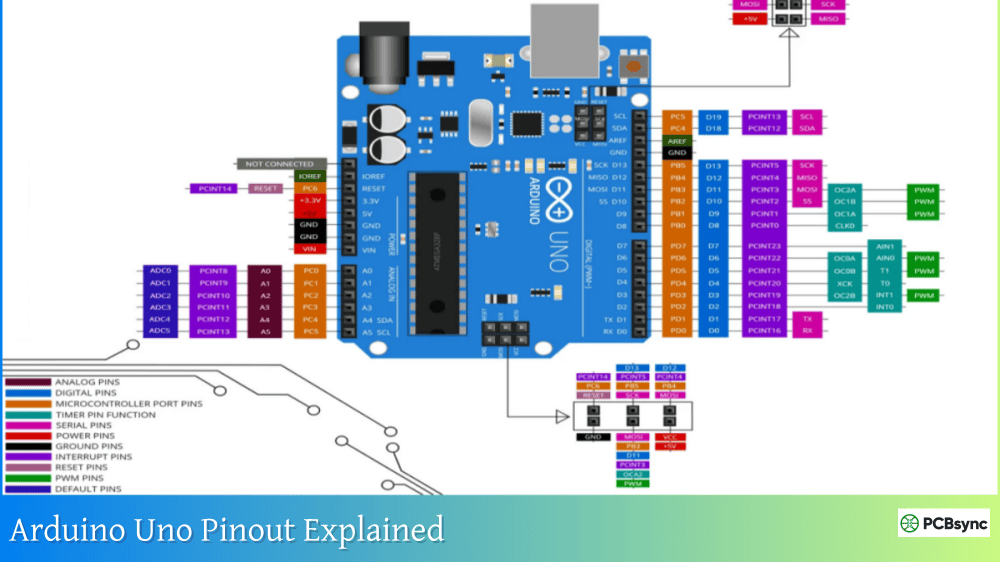
UNO R3 Proto Shield
The most common variant, designed for the Arduino UNO R3 footprint. Key specifications:
Dimensions: 2.7″ × 2.1″ (68.6mm × 53.3mm)
Compatible with: UNO, Leonardo, Duemilanove
Features: IOREF voltage reference pin for 3.3V/5V compatibility
The IOREF pin is particularly important if you’re working with mixed-voltage systems. It automatically adapts to whether your board runs at 5V or 3.3V logic levels.
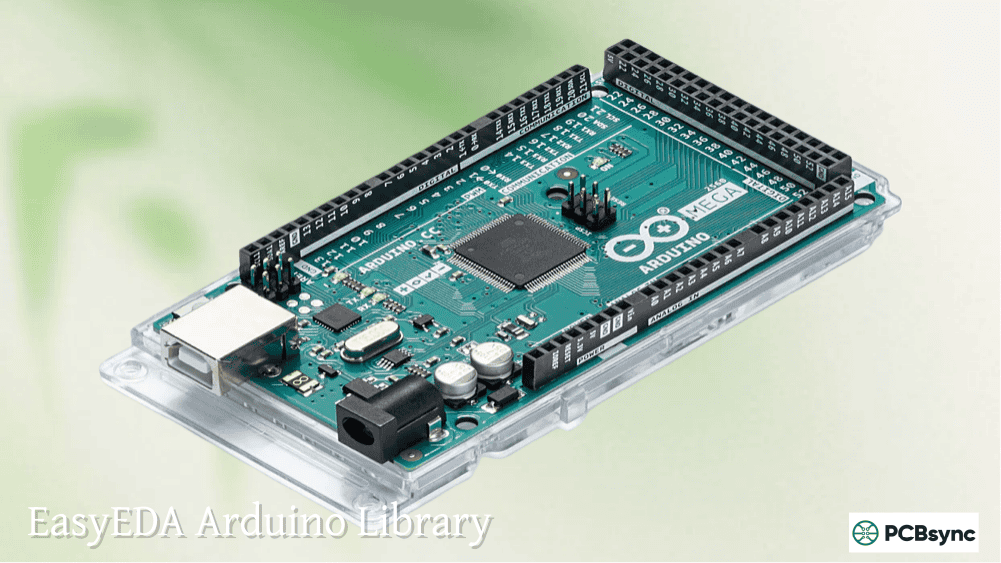
MEGA Proto Shield
Designed for the larger Arduino MEGA footprint with significantly more I/O pins:
Dimensions: 4.0″ × 2.1″ (101.6mm × 53.3mm)
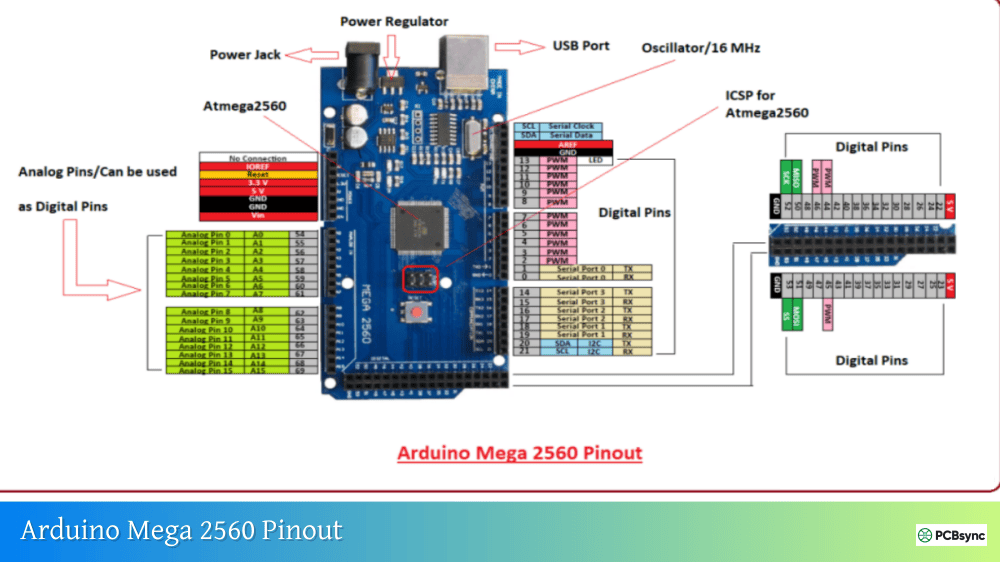
Pin compatibility: All 54 digital and 16 analog pins
Important note: Pin spacing between D7 and D8 is 160 mil, not standard 100 mil
Prototyping area: ~1500 plated through-holes
The non-standard pin spacing on MEGA boards catches many engineers off guard. Plan your component placement accordingly.
MKR Proto Shield
For Arduino’s MKR family, which uses a compact form factor:
Dimensions: 2.5″ × 1.0″ (63.5mm × 25.4mm)
Pin pitch: Standard 0.1″ grid
Power: 3.3V logic level only
Best for: IoT and battery-powered applications
The MKR Proto Shield is ideal when size constraints matter, though the reduced prototyping area requires more careful planning.
Key Features for Circuit Development
Let me walk you through the features that actually matter when you’re building circuits on these shields.
Through-Hole Prototyping Area
The standard 0.1″ pitch grid accepts nearly every through-hole component you’ll encounter. The quality of the pad adhesion varies by manufacturer, so I always recommend authentic Arduino or established third-party brands like Adafruit and SparkFun. Cheap knockoffs sometimes have poor copper adhesion that fails during rework.
From a practical standpoint, the prototyping area typically provides:
DIP IC socket compatibility (up to 28-pin wide configuration)
Resistor and capacitor spacing options
Jumper wire routing flexibility
Component mounting holes for mechanical stability
SMD Component Support
Most Arduino Proto Shields include footprints for SOIC packages, typically accommodating:
SOIC-8 to SOIC-24 components
1.27mm pitch (50 mil)
Adjacent through-hole pads for breakout connections
This is where the Proto Shield really shines for modern circuit development. You can integrate SMD sensors, amplifiers, or communication ICs directly, then break out the signals to your through-hole prototyping area for interfacing.
I’ve used this approach extensively for precision analog circuits where SMD op-amps provide better performance than through-hole equivalents, while keeping the rest of the circuit easily modifiable.
Power Distribution System
The power rails on quality Proto Shields typically provide:
Primary Power Buses:
VCC rail (5V or IOREF-dependent)
3.3V rail (when available)
Multiple GND rails
Key Design Considerations:
The power distribution should use copper pours rather than just traces. Check for this before purchasing. A proper ground plane reduces noise coupling and provides stable reference for sensitive circuits.
For high-current applications (motor drivers, high-brightness LEDs), verify the current capacity of the power traces. Standard Proto Shield traces handle 1A comfortably, but push beyond that and you’ll need supplemental wiring or custom copper jumpers.
Stacking Header Options
Most Proto Shields ship with both standard and stacking headers. The stacking headers are crucial if you plan to:
Layer multiple shields in a single system
Access the Arduino’s pins while the shield is mounted
Maintain ICSP programming capability
Stacking introduces its own challenges. Each additional shield adds ~0.6″ of height and increases mechanical stress on the header connections. I generally limit systems to three shields maximum before switching to a backplane architecture or custom PCB.
Practical Applications in Development
Here’s where the rubber meets the road. These are the scenarios where I reach for an Arduino Proto Shield over other prototyping methods.
Sensor Interface Development
When integrating new sensors, especially those requiring signal conditioning:
Analog Sensors: Build precision amplification and filtering circuits directly on the shield
Digital Sensors: Create level shifters and pull-up networks for I2C/SPI communication
Environmental Isolation: Add RC filters to reduce electrical noise from the Arduino’s switching regulator
Example: I recently developed an industrial vibration sensor interface that required a three-stage anti-aliasing filter before the Arduino’s ADC. The Proto Shield let me iterate through component values while maintaining stable connections that a breadboard couldn’t provide.
Power Supply Prototyping
Arduino boards provide regulated 5V and 3.3V, but many projects need additional voltage rails. The Proto Shield makes an excellent platform for:
Just remember to account for heat dissipation. Linear regulators can run hot, and the Proto Shield has limited thermal mass. I add heatsinks or relocate high-power components off-shield when necessary.
Communication Bridge Circuits
The Proto Shield excels at creating interface bridges:
RS-232/RS-485 Serial Interfaces:
MAX232 or equivalent level shifters
Terminal blocks for robust connections
Protection circuits against industrial noise
Wireless Module Integration:
Bluetooth or WiFi module breakouts
Antenna routing considerations
Power filtering for RF cleanliness
CAN Bus or LIN Interfaces:
Transceiver ICs (MCP2551, TJA1050)
Termination resistor networks
Differential pair routing on the shield
Production Testing Fixtures
One underutilized application: Proto Shields make excellent test fixtures. When you’re manufacturing small batches of custom Arduino-based products, a Proto Shield configured as a test jig provides:
Pogo pin contact arrays for board testing
Status LED indicators
Automated test sequence triggers
Data logging capability via Arduino
Arduino Proto Shield vs. Custom PCB: When to Use Each
This is the question I get most often. Here’s my decision framework:
Choose Arduino Proto Shield When:
Early Development Phase:
Circuit topology is still evolving
Component values need frequent adjustment
You’re learning how new ICs behave in your system
Low Volume Production (< 50 units):
Custom PCB design costs exceed Proto Shield assembly time
Check for cold solder joints (dull, crystalline appearance)
Confirm component values match design
Advanced Techniques for Proto Shield Design
Once you’ve mastered basic assembly, these techniques unlock additional capability:
Implementing Ground Planes
While Proto Shields don’t have dedicated ground layers, you can create pseudo ground planes:
Use wire-wrapping wire to connect multiple ground pads in a grid pattern
Fill unused prototyping area with solder to create ground islands
Connect islands with short jumper wires to create continuous ground reference
This significantly improves high-frequency circuit performance and reduces EMI.
Multi-Layer Circuit Strategies
When single-layer routing becomes impractical:
Use insulated wire for crossovers (like vias in a PCB)
Implement daughter boards for complex sub-circuits
Stack component layers using standoffs for 3D assembly
Create functional blocks connected with ribbon cables
Integrating Purchased Modules
Modern development often involves breakout boards for complex ICs:
Best Practices:
Mount modules on female headers for replaceability
Create adapter areas on the Proto Shield for module pinouts
Route module signals to Arduino pins via labeled traces
Document module orientation and connections on the shield surface
Future-Proofing Your Proto Shield Projects
As your prototype evolves toward production, maintain flexibility:
Documentation Standards
Document while building, not after:
Photograph the shield before and after each major assembly session
Label all connections with masking tape during assembly
Maintain a schematic that reflects actual build (use Fritzing or Eagle)
Record component values and part numbers in a bill of materials
Versioning Strategy
Track iterations systematically:
Use revision numbers on the shield surface (Sharpie or label maker)
Photograph each version from multiple angles
Maintain a changelog documenting modifications
Archive working firmware versions with corresponding hardware revisions
Transition Planning to Production PCB
When the time comes to move to custom PCB:
Your Proto Shield becomes the electrical verification model
Use it to validate the production PCB design before ordering
Keep it as a reference standard for troubleshooting production units
Document any performance differences between proto and production
Frequently Asked Questions
Can I use an Arduino Proto Shield with Arduino clones?
Yes, as long as the clone maintains the standard Arduino pinout. Most Chinese clones like Elegoo or SainSmart use identical footprints. However, verify that the pin spacing matches exactly, particularly if using off-brand boards. The ICSP header location can vary on some clones, which may cause interference with shields that have components near that area.
How many components can I fit on a single Proto Shield?
This depends heavily on component size and circuit complexity. As a rough guideline, a UNO-sized Proto Shield typically accommodates 15-20 DIL IC packages (14-16 pin), or 30-50 discrete components (resistors, capacitors, small transistors), or 5-10 SMD ICs with supporting passives. Complex mixed-signal circuits often fill the available space quickly. If you’re running out of room, consider using daughter boards or transitioning to a custom PCB.
What’s the maximum current I can draw through a Proto Shield?
The limiting factors are typically the Arduino’s voltage regulator (around 500mA for most boards when powered via USB, up to 1A via barrel jack) and the Proto Shield’s header pins (rated for 1-2A per pin typically). The shield traces themselves can handle several amps if they’re wide enough, but always verify with your specific manufacturer’s datasheet. For high-current applications like motor control, implement direct power connections rather than routing through the shield headers.
Can I create a production product using just Proto Shields?
For very low volumes (under 10 units), it’s economically viable but not recommended for products requiring reliability or professional appearance. Proto Shields lack the consistency, mechanical robustness, and professional finish of custom PCBs. They work well for functional prototypes, trade show demonstrations, or custom one-off installations where field modifications are expected. For any product facing commercial use or certification requirements, transition to a properly designed PCB.
How do I handle heat dissipation on a Proto Shield?
Proto Shields have minimal thermal mass compared to custom PCBs with dedicated copper pours. For components dissipating more than 0.5W, add heatsinks directly to the component or mount the component off-shield on a separate heatsink assembly. Consider using thermal vias (fill vias with solder) to conduct heat to unused copper areas. For power-intensive applications, position hot components near the edge of the shield for better airflow, and never stack additional shields directly above high-power components without thermal management.
Conclusion
The Arduino Proto Shield occupies a critical position in the hardware development workflow. It transforms the Arduino platform from a simple microcontroller board into a complete development system for custom electronics. From initial concept validation through small-scale production, the Proto Shield provides the mechanical stability and electrical performance that breadboards can’t match while maintaining the flexibility that custom PCBs sacrifice.
For PCB engineers, the Proto Shield serves as both a proving ground for circuit concepts and a pathway to production design. The techniques you develop working with these shields, the debugging strategies you refine, and the practical understanding of component behavior you gain all translate directly into better production designs when the time comes to create custom boards.
Whether you’re developing sensor interfaces, power supply circuits, communication bridges, or complete embedded systems, mastering the Arduino Proto Shield will accelerate your development process and reduce the risk of costly design errors. The investment in quality shields, proper tools, and systematic assembly practices pays dividends across every project you build.
Start with simple circuits, document everything, and gradually increase complexity as you build confidence. The Arduino Proto Shield isn’t just a tool—it’s a complete development methodology that bridges the gap between concept and reality in embedded systems design.
Inquire: Call 0086-755-23203480, or reach out via the form below/your sales contact to discuss our design, manufacturing, and assembly capabilities.
Quote: Email your PCB files to Sales@pcbsync.com (Preferred for large files) or submit online. We will contact you promptly. Please ensure your email is correct.
Notes: For PCB fabrication, we require PCB design file in Gerber RS-274X format (most preferred), *.PCB/DDB (Protel, inform your program version) format or *.BRD (Eagle) format. For PCB assembly, we require PCB design file in above mentioned format, drilling file and BOM. Click to download BOM template To avoid file missing, please include all files into one folder and compress it into .zip or .rar format.