Inquire: Call 0086-755-23203480, or reach out via the form below/your sales contact to discuss our design, manufacturing, and assembly capabilities.
Quote: Email your PCB files to Sales@pcbsync.com (Preferred for large files) or submit online. We will contact you promptly. Please ensure your email is correct.
Notes: For PCB fabrication, we require PCB design file in Gerber RS-274X format (most preferred), *.PCB/DDB (Protel, inform your program version) format or *.BRD (Eagle) format. For PCB assembly, we require PCB design file in above mentioned format, drilling file and BOM. Click to download BOM template To avoid file missing, please include all files into one folder and compress it into .zip or .rar format.
Arduino Nicla Sense ME: Tiny Sensor Powerhouse Guide
The first time I held the Arduino Nicla Sense ME in my hand, I genuinely couldn’t believe what I was looking at. Four industrial-grade Bosch sensors, a Bluetooth-enabled microcontroller, and AI capabilities built directly into the sensor hardware—all packed into a board measuring just 22.86 × 22.86 mm and weighing a mere 2 grams. After decades of building sensor systems that required multiple breakout boards, custom wiring, and substantial real estate, this tiny package felt almost like cheating.
The Arduino Nicla Sense ME represents a fundamental shift in how we approach sensor-based IoT development. Rather than assembling discrete sensors and hoping they play well together, you get a pre-integrated, factory-calibrated sensor fusion platform that’s ready to deploy out of the box. For engineers tired of debugging I2C conflicts and calibrating sensor combinations, this board is genuinely transformative.
The Arduino Nicla Sense ME is the first board in Arduino’s Nicla family—a line of ultra-compact, specialized modules designed for wireless sensor networks and edge AI applications. The “ME” in the name stands for “Motion” and “Environment,” reflecting the board’s dual focus on movement sensing and environmental monitoring.
What makes this board exceptional isn’t just the sensor count—it’s the intelligence embedded within those sensors. The Bosch BHI260AP and BME688 both include onboard AI capabilities that can learn patterns and detect anomalies without burdening the main processor. This self-learning capability means the sensors actually improve their accuracy over time as they’re exposed to your specific application environment.
The board was developed in partnership with Bosch Sensortec, combining Arduino’s accessible development environment with Bosch’s industrial-grade sensing technology. The result is professional-quality sensing in a package accessible to makers, researchers, and product developers alike.
Arduino Nicla Sense ME Technical Specifications
Understanding the Nicla Sense ME’s architecture reveals how much engineering went into this tiny package:
The nRF52832 provides more than enough processing power for sensor fusion while maintaining the ultra-low power consumption necessary for battery-operated deployments. The castellated edge connections enable direct soldering onto carrier boards, making the Nicla Sense ME ideal for integration into custom products.
Integrated Bosch Sensortec Sensor Suite
The Nicla Sense ME’s four sensors work together to provide comprehensive environmental and motion awareness:
BHI260AP AI Smart Sensor Hub
Feature
Specification
IMU
6-axis (3-axis accelerometer + 3-axis gyroscope)
Processor
32-bit Synopsys DesignWare ARC EM4 CPU
AI Capability
Self-learning activity recognition
Pre-loaded Firmware
Step counter, activity detection, orientation
Power Consumption
Ultra-low power with wake-on-motion
The BHI260AP isn’t just an IMU—it’s a complete smart sensor system with its own processor dedicated to motion analysis. The embedded AI engine can detect activities like walking, running, and cycling, and learns to distinguish between them more accurately over time. This offloads significant processing from the main nRF52832, preserving battery life and freeing computational resources.
BME688 4-in-1 Environmental Sensor with AI
Parameter
Range
Accuracy
Temperature
-40°C to +85°C
±0.5°C
Humidity
0-100% RH
±3% RH
Pressure
300-1100 hPa
±0.5 hPa
Gas Sensor
VOCs, CO, H2, ethanol
ppb level detection
AI Feature
Self-learning gas classification
The BME688 is Bosch’s most advanced environmental sensor. Its gas sensing element detects Volatile Organic Compounds (VOCs), carbon monoxide, hydrogen, and numerous other gases at parts-per-billion concentrations. The integrated AI can be trained using Bosch’s BME AI-Studio to recognize specific gas signatures—distinguishing coffee from tea, for example, or detecting specific industrial chemical exposures.
BMM150 3-Axis Magnetometer
Parameter
Specification
Range (X,Y)
±1300 µT
Range (Z)
±2500 µT
Resolution
0.3 µT
Applications
Compass, heading detection, magnetic field mapping
The magnetometer completes the 9-axis motion sensing capability, enabling true heading calculation and compass functionality. Combined with the accelerometer and gyroscope, it provides complete spatial orientation without drift.
The BMP390 provides exceptional pressure measurement accuracy, enabling altitude detection with approximately 30cm resolution. This enables applications from drone altitude hold to indoor floor-level detection in building navigation systems.
Sensor Fusion Capabilities
The real power of the Nicla Sense ME emerges when its sensors work together:
Fusion Capability
Sensors Combined
Application
9-DoF Orientation
BHI260AP + BMM150
True heading, tilt-compensated compass
Altitude + Activity
BMP390 + BHI260AP
Floor-counting during stair climbing
Environmental Context
BME688 + BHI260AP
Activity recognition with environmental awareness
Indoor Positioning
All four sensors
Multi-floor indoor navigation
The BHI260AP’s dedicated processor handles sensor fusion calculations, delivering orientation quaternions and activity classifications directly without burdening the main MCU. This architecture enables sophisticated sensing applications on minimal power budgets.
Wireless Connectivity and Power Management
Bluetooth Low Energy
The nRF52832 provides robust BLE connectivity for wireless data transmission:
BLE Feature
Specification
Standard
Bluetooth 5.0
Range
Up to 100m (line of sight)
Data Rate
Up to 2 Mbps
Concurrent Connections
Multiple peripheral support
Power Modes
Ultra-low power sleep with wake triggers
BLE enables the Nicla Sense ME to function as a wireless sensor node, transmitting data to smartphones, gateways, or other BLE-enabled devices. The WebBLE capability also enables over-the-air firmware updates through web browsers.
Battery Operation
Power Feature
Details
Battery Input
3.7V Li-Po via connector
Charging
USB charging supported
Sleep Current
Microamperes in deep sleep
Wake Triggers
Motion, timer, BLE
The combination of ultra-low-power sensors and efficient power management enables months of battery life in duty-cycled applications. The BHI260AP’s wake-on-motion feature allows the system to remain in deep sleep until movement is detected.
Practical Applications for Arduino Nicla Sense ME
The Nicla Sense ME’s sensor combination enables diverse applications:
What’s the difference between Nicla Sense ME and Nicla Vision?
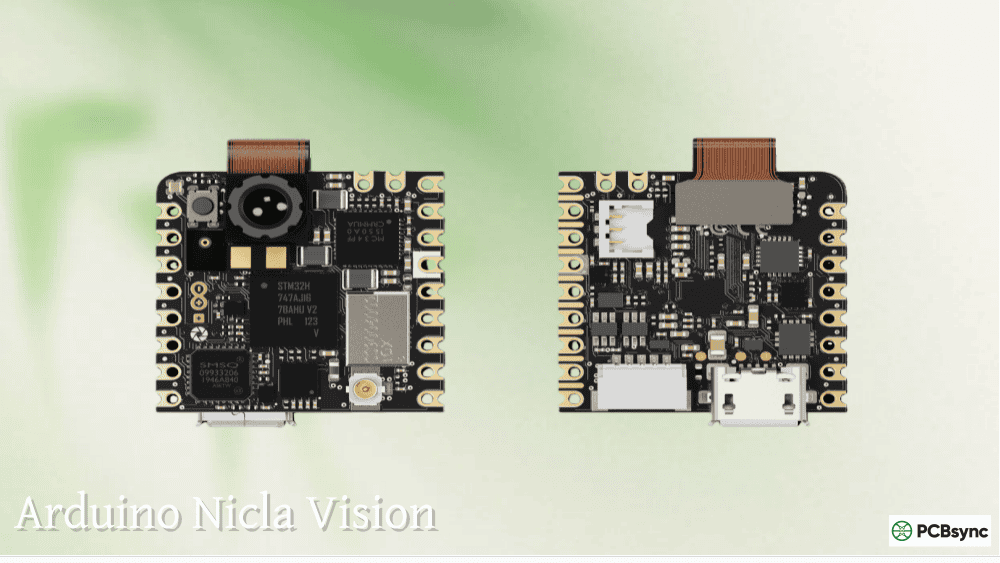
The Nicla Sense ME and Nicla Vision serve different purposes despite sharing the same form factor. The Nicla Sense ME focuses on environmental and motion sensing without a camera—it includes the BHI260AP IMU, BME688 gas sensor, BMM150 magnetometer, and BMP390 pressure sensor. The Nicla Vision, by contrast, centers on computer vision with a 2MP camera, ToF distance sensor, and microphone but lacks the sophisticated gas sensing and magnetometer. Choose Nicla Sense ME for environmental monitoring, activity tracking, and air quality applications; choose Nicla Vision for image classification, object detection, and visual inspection tasks.
Can I train custom gas recognition models for the BME688?
Yes, Bosch provides the BME AI-Studio software specifically for training custom gas recognition models. The workflow involves collecting raw sensor data from the BME688, importing it into BME AI-Studio, training a classification algorithm, and generating a configuration string that’s loaded onto the sensor. This enables applications like detecting specific chemicals in industrial settings, identifying food freshness, or distinguishing between different beverage types. The trained model runs directly on the BHI260AP’s embedded processor, not on the main MCU, preserving battery life.
How long can the Nicla Sense ME run on battery power?
Battery life depends heavily on your application’s duty cycle and which sensors are active. In deep sleep with wake-on-motion, the board draws microamperes and can run for months on a small Li-Po battery. With continuous sensor reading and BLE transmission every second, expect days to weeks depending on battery capacity. For maximum battery life, use the BHI260AP’s activity detection to trigger measurements only when meaningful motion occurs, and implement appropriate sleep modes between data transmissions. A 500mAh Li-Po battery can easily provide weeks of operation in typical IoT sensor node applications.
Can I solder the Nicla Sense ME directly onto my custom PCB?
Yes, the castellated edge connections are specifically designed for direct PCB soldering. This enables you to integrate the Nicla Sense ME into custom products without headers or connectors, reducing size and improving reliability. Design your carrier board with matching pads for the castellated holes, and use standard reflow soldering processes. Arduino provides detailed mechanical drawings in the datasheet to ensure proper footprint design. Many developers use the Nicla Sense ME for prototyping, then transition to this soldered configuration for production units.
Is the Nicla Sense ME compatible with other Arduino boards?
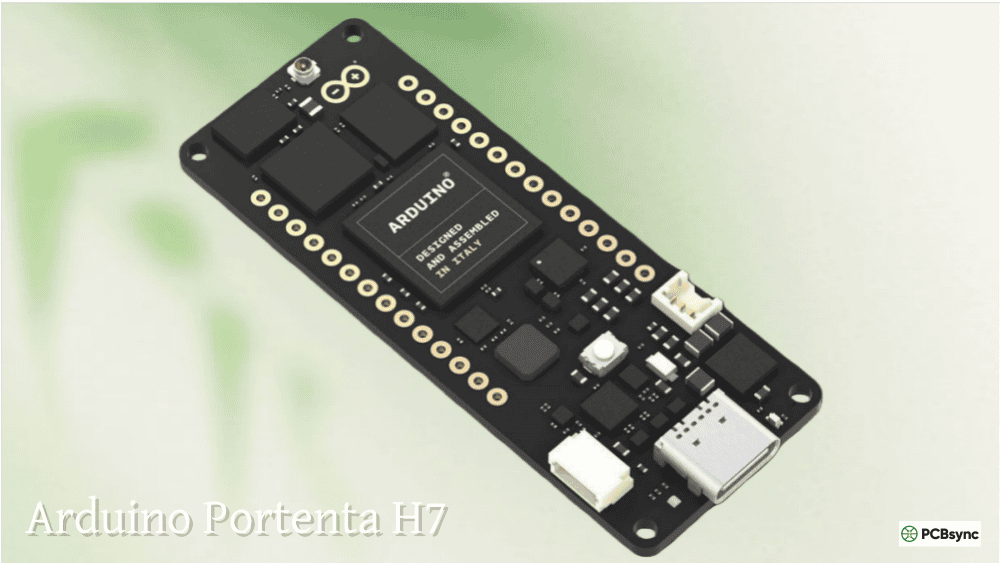
The Nicla Sense ME can communicate with other Arduino boards through several methods. Via BLE, it can wirelessly transmit sensor data to any BLE-capable device including Arduino Nano 33 IoT, MKR WiFi 1010, or Portenta H7. For wired connections, the Nicla Sense ME can act as a sensor expansion through ESLOV (I2C) or SPI interfaces when used with Portenta or MKR carriers. Arduino provides the Arduino_BHY2Host library specifically for reading Nicla Sense ME data from Portenta boards. This flexibility enables architectures where the Nicla Sense ME handles sensing while a more powerful board manages connectivity and complex processing.
Final Thoughts on Arduino Nicla Sense ME
After integrating the Nicla Sense ME into several projects—from industrial vibration monitoring to wearable activity trackers—I’ve come to appreciate just how much this tiny board simplifies sensor-based development. The pre-integrated, factory-calibrated sensor suite eliminates weeks of work that would otherwise go into sensor selection, integration, and calibration.
The embedded AI capabilities in both the BHI260AP and BME688 represent a genuine advancement in edge sensing. Having pattern recognition run directly on sensor hardware, independent of the main processor, fundamentally changes what’s possible in battery-powered applications. Activities can be classified, anomalies detected, and gases identified without the power-hungry inference cycles that typically limit edge AI.
Is it perfect? The compact form factor means limited GPIO expansion, and the BLE-only connectivity won’t suit applications requiring WiFi or cellular. The BME688’s gas sensing requires careful training for reliable results in specific applications. But for the vast majority of motion and environmental sensing use cases, the Nicla Sense ME delivers capabilities that would have required a stack of separate boards and extensive custom firmware just a few years ago.
For engineers and makers building the next generation of smart sensors, wearables, or IoT devices, the Arduino Nicla Sense ME deserves serious consideration. Its combination of industrial-grade sensors, embedded intelligence, and Arduino accessibility creates opportunities that simply weren’t practical before at this size and price point.
Inquire: Call 0086-755-23203480, or reach out via the form below/your sales contact to discuss our design, manufacturing, and assembly capabilities.
Quote: Email your PCB files to Sales@pcbsync.com (Preferred for large files) or submit online. We will contact you promptly. Please ensure your email is correct.
Notes: For PCB fabrication, we require PCB design file in Gerber RS-274X format (most preferred), *.PCB/DDB (Protel, inform your program version) format or *.BRD (Eagle) format. For PCB assembly, we require PCB design file in above mentioned format, drilling file and BOM. Click to download BOM template To avoid file missing, please include all files into one folder and compress it into .zip or .rar format.