Inquire: Call 0086-755-23203480, or reach out via the form below/your sales contact to discuss our design, manufacturing, and assembly capabilities.
Quote: Email your PCB files to Sales@pcbsync.com (Preferred for large files) or submit online. We will contact you promptly. Please ensure your email is correct.
Notes: For PCB fabrication, we require PCB design file in Gerber RS-274X format (most preferred), *.PCB/DDB (Protel, inform your program version) format or *.BRD (Eagle) format. For PCB assembly, we require PCB design file in above mentioned format, drilling file and BOM. Click to download BOM template To avoid file missing, please include all files into one folder and compress it into .zip or .rar format.
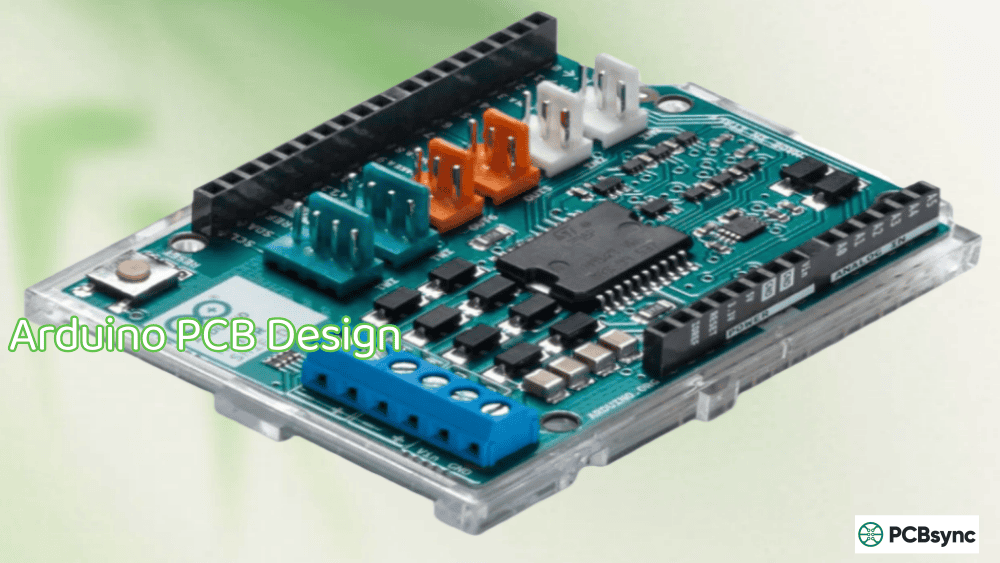
After designing custom motor control PCBs for years, I’ve developed a deep appreciation for the Arduino Motor Shield Rev3. It’s not just a convenient add-on—it’s a well-engineered solution that demonstrates thoughtful design choices at every level. The shield eliminates hours of breadboard wiring, reduces component count, and provides features like current sensing that would require additional circuitry to implement from scratch.
When I first examined the Arduino Motor Shield Rev3’s schematic, the design philosophy became clear. Arduino didn’t just slap an L298 driver onto a PCB and call it done. They added current sensing, brake control, TinkerKit compatibility, and configurable jumpers that give you real control over pin usage and power routing. For anyone working with motor control on Arduino, this shield represents the official reference implementation—and it’s worth understanding thoroughly.
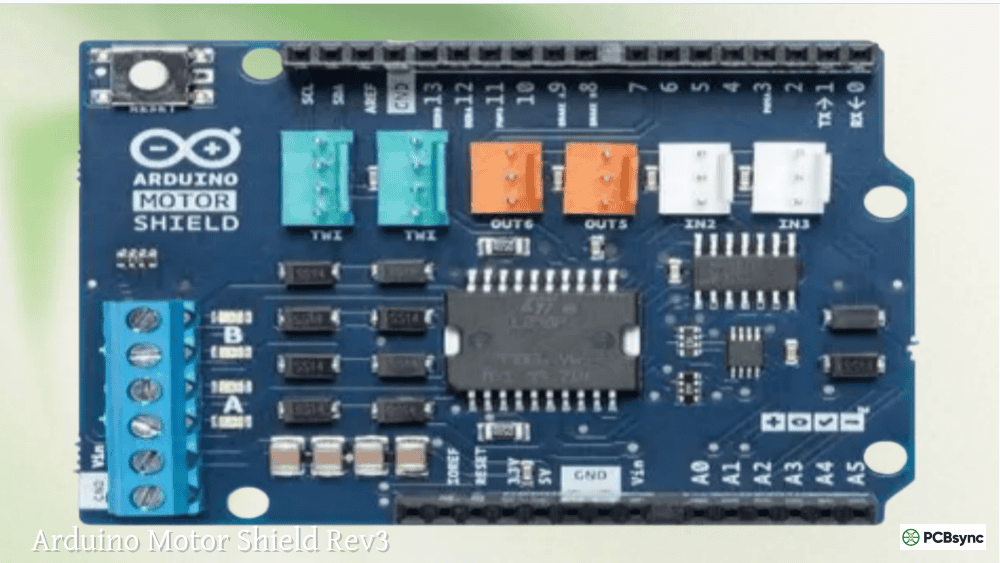
The Arduino Motor Shield Rev3 builds around the L298P dual H-bridge driver from STMicroelectronics. This chip provides two independent full-bridge circuits, each capable of driving 2A continuous current at voltages from 7V to 12V (with an absolute maximum of 18V at the screw terminals).
What makes this shield special isn’t just the L298P—it’s the peripheral circuitry. The designers included current sense resistors (0.27Ω) in series with each channel output, connected through an amplification network to Arduino analog pins A0 and A1. This feature allows you to monitor motor current draw in real-time, enabling overcurrent protection, stall detection, and torque estimation without external instrumentation.
The brake functionality represents another thoughtful addition. Rather than relying solely on PWM duty cycle to slow motors, the shield includes dedicated brake pins that short both motor terminals together through the H-bridge when activated. This creates electromagnetic braking, stopping motors faster than simple coasting would allow.
Voltage Regulation and Power Architecture
Understanding the power routing prevents the most common shield failures. The L298P requires two separate power domains: logic power (for the internal control circuitry) and motor power (for the H-bridge outputs).
By default, the “Vin Connect” jumper on the shield’s underside connects these domains. When intact, motor supply voltage also powers the Arduino through its VIN pin. This works perfectly for 7-12V systems where you want simplified wiring. However, for motors requiring higher voltages (13-18V), you must cut this jumper to prevent overvoltage damage to Arduino’s 12V maximum VIN rating.
Complete Pin Assignment and Functions
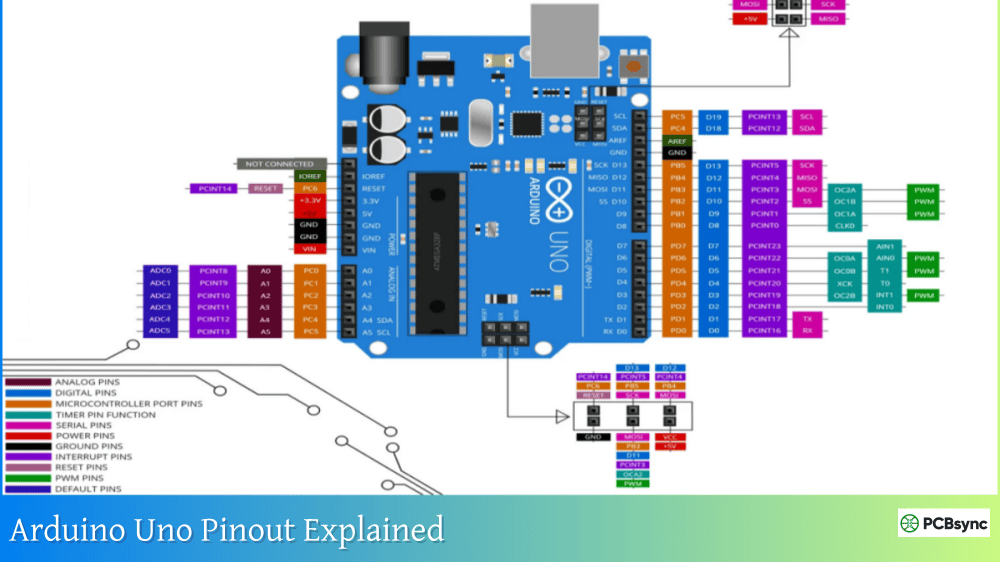
The Arduino Motor Shield Rev3 uses eight Arduino pins for motor control, plus two analog inputs for current sensing. Here’s the complete breakdown:
Pin
Function
Channel
Type
Description
D12
DIR A
A
Digital Output
Direction control for Motor A (HIGH = forward)
D13
DIR B
B
Digital Output
Direction control for Motor B (HIGH = forward)
D3
PWM A
A
PWM Output
Speed control for Motor A (0-255)
D11
PWM B
B
PWM Output
Speed control for Motor B (0-255)
D9
BRAKE A
A
Digital Output
Brake control Motor A (HIGH = brake engaged)
D8
BRAKE B
B
Digital Output
Brake control Motor B (HIGH = brake engaged)
A0
SNS A
A
Analog Input
Current sensing Motor A (3.3V = 2A)
A1
SNS B
B
Analog Input
Current sensing Motor B (3.3V = 2A)
TinkerKit Compatibility Connectors
The shield includes six TinkerKit connectors that provide quick prototyping capability:
Two analog inputs (white connectors) → Connected to A2 and A3
Two analog outputs (orange connectors) → Connected to PWM pins D5 and D6
Two TWI/I2C connectors (green) → Connected to SDA and SCL
These connectors accept TinkerKit modules directly, eliminating breadboard wiring for sensors and outputs in rapid prototyping scenarios.
Jumper Configuration Options
The shield’s underside contains several jumpers that modify functionality:
Vin Connect Jumper: Bridges motor power to Arduino VIN. Cut when using motor voltages >12V.
Brake A/B Jumpers: Connect brake functionality to pins D9 and D8. Cut to reclaim these pins for other uses if brake functionality isn’t needed.
Current Sensing Jumpers: Connect SNS0/SNS1 to analog pins A0/A1. Cut to reclaim analog pins if current monitoring isn’t required.
Technical Specifications and Ratings
Parameter
Specification
Notes
Motor Supply Voltage (VIN)
7V – 12V recommended
Absolute maximum 18V at screw terminals
Logic Supply Voltage
5V
Powered from Arduino
Continuous Current per Channel
2A
At 25°C ambient with proper ventilation
Peak Current per Channel
3A
Brief duration (<1 second)
Total Shield Current
4A maximum
Both channels combined
Voltage Drop (L298P)
1.8V – 4V
Depends on load current
PWM Frequency
490Hz (D3), 980Hz (D11)
Arduino default frequencies
Current Sense Calibration
3.3V = 2A
Linear relationship
Current Sense Resolution
~2mA per ADC count
10-bit ADC: 2000mA / 1023
Operating Temperature
-25°C to 130°C
L298P junction temperature
PCB Dimensions
68.6mm × 53.3mm
2.7″ × 2.1″
Weight
30g
Without Arduino
Current Rating Reality and Thermal Considerations
The 2A continuous rating assumes adequate cooling and 25°C ambient temperature. In enclosed spaces or higher ambient temperatures, you must derate this specification.
From thermal calculations: at 2A with 2V drop, each channel dissipates 4W. Both channels at full load generate 8W total heat dissipation. The L298P’s thermal resistance (junction-to-ambient) is approximately 35°C/W for the PowerSO20 package used on the shield.
Temperature rise calculation: ΔT = Power × Thermal Resistance = 8W × 35°C/W = 280°C rise above ambient. This exceeds the junction temperature limit significantly, which explains why sustained 2A operation requires heatsinking or reduced ambient temperature.
Practical guideline: For continuous operation in typical environments (25°C ambient), limit each channel to 1.5A without heatsinking, or 2A with proper heatsink and airflow.
Wiring and Power Connection
Proper wiring sequence prevents damage and ensures reliable operation.
Basic Dual Motor Setup
Shield Installation:
1. Align shield pins with Arduino UNO headers
2. Press down firmly until fully seated
3. Verify no pins are bent or missed sockets
Power Connections:
1. Motor supply positive → VIN screw terminal
2. Motor supply negative → GND screw terminal
3. Arduino USB or external power → Arduino power jack
Motor Connections:
– Motor A positive → Channel A (+) screw terminal
– Motor A negative → Channel A (-) screw terminal
– Motor B positive → Channel B (+) screw terminal
– Motor B negative → Channel B (-) screw terminal
Note: Motor polarity determines “forward” direction
Reversing wires changes which direction is “forward”
Power Supply Selection
For 6V motors: Use 7.5-9V supply to account for 1.8-2V L298P voltage drop.
For 12V motors: Use 14V supply for full performance, or separate Arduino and motor supplies by cutting Vin Connect jumper.
Current capacity: Minimum 2A per motor, 4A total recommended for dual motor operation. Use switching power supplies or lithium battery packs, not 9V alkaline batteries (insufficient current capacity).
Basic Motor Control Code
The Arduino Motor Shield Rev3 doesn’t require external libraries for basic operation—just standard Arduino functions.
Single Motor Control Example
// Arduino Motor Shield Rev3 – Single Motor Control
// Channel A demonstration
// Pin definitions for Channel A
const int dirA = 12; // Direction control
const int pwmA = 3; // Speed control (PWM)
const int brakeA = 9; // Brake control
const int snsA = A0; // Current sensing
void setup() {
// Configure motor control pins
pinMode(dirA, OUTPUT);
pinMode(pwmA, OUTPUT);
pinMode(brakeA, OUTPUT);
Serial.begin(9600);
Serial.println(“Arduino Motor Shield Rev3 Ready”);
// Initialize motor stopped with brake released
digitalWrite(dirA, LOW);
digitalWrite(brakeA, LOW);
analogWrite(pwmA, 0);
}
void loop() {
// Forward at 70% speed
digitalWrite(dirA, HIGH); // Set forward direction
// Normal operation continues if current acceptable
}
Stall Detection for Robotics
float readMotorCurrent(int sensePin) {
int rawValue = analogRead(sensePin);
return (rawValue * 2.0) / 1023.0; // Convert to amperes
}
void detectStall() {
float current = readMotorCurrent(A0);
int motorSpeed = 200; // Current PWM value
// Stall detection: high current with low/medium speed
if (current > 1.5 && motorSpeed < 220) {
Serial.println(“Motor stall detected – obstacle or mechanical binding”);
digitalWrite(brakeA, HIGH);
analogWrite(pwmA, 0);
// Implement recovery strategy here
}
}
Common Problems and Solutions
Motors Don’t Run
Symptom: No motor movement despite code uploading successfully.
Diagnostic steps:
Verify external power supply connected to VIN and GND screw terminals
Check power LED on shield—should illuminate when power applied
Measure voltage at VIN terminal with multimeter (should read 7-12V)
Confirm brake pins set LOW in code (HIGH = brake engaged)
Verify PWM values >0 (analogWrite must be >50 for most motors)
Common causes:
USB power only (insufficient current for motors)
Brake accidentally engaged in code
Power supply current limiting (use 2A+ supply)
Motors Run Weakly or Inconsistently
Root cause: Insufficient supply voltage accounting for L298P voltage drop.
Solution: For 6V motors, use minimum 8V supply. For 12V motors, use 14V supply or expect reduced performance.
Alternative cause: Power supply voltage sag under load. Measure VIN voltage while motors running—should remain stable. If voltage drops >1V, power supply has insufficient current capacity.
Shield Overheating
Thermal management required: The L298P generates significant heat at high currents.
Solutions:
Add heatsink to L298P package (PowerSO20 package on shield)
Reduce motor current by using lower supply voltage
Implement PWM-based current limiting
Ensure adequate ventilation around shield
For sustained 2A operation, use external fan
Random Resets or Erratic Behavior
Typical cause: Ground loop issues or EMI from motors.
Fixes:
Add 100μF electrolytic capacitor across VIN and GND screw terminals
Add 0.1μF ceramic capacitors directly across motor terminals
Use separate power supplies for Arduino (USB) and motors (external)
Ensure all grounds connected at single star-ground point
Keep motor wires twisted together to reduce EMI radiation
Q: Can I use the Arduino Motor Shield Rev3 with Arduino boards other than UNO?
Yes, but with caveats. The shield is designed for Arduino UNO Rev3 with the standard pin layout including the newer IOREF pin. It works with Arduino Mega by stacking normally—the shield only uses pins it needs. For older Arduino boards (pre-Rev3 UNO), the IOREF and duplicate I2C pins won’t align, but the shield functions if you carefully align the main pin headers. Leonardo and Due boards may have compatibility issues due to different pin assignments for PWM and I2C.
Q: How do I calculate actual motor current from the analog reading?
The current sense pins (A0 and A1) output 3.3V at maximum rated current (2A). Using Arduino’s 10-bit ADC (0-1023), the relationship is linear: Current (A) = (analogRead value × 2.0) / 1023. For example, analogRead(A0) = 512 indicates (512 × 2.0) / 1023 = 1.0A. Each ADC count represents approximately 1.95mA. For precise measurements, calibrate against known current using multimeter in series with motor.
Q: Can I parallel both channels to drive a single high-current motor?
No, this is not recommended and not officially supported. The L298P channels lack current-sharing circuitry needed for safe paralleling. Small timing differences between channels can cause one to carry most current, leading to thermal shutdown or damage. For motors requiring >2A, use a higher-current driver like VNH5019 (12A capability) or BTS7960 (43A capability) instead of attempting to parallel Motor Shield Rev3 channels.
Q: What’s the maximum voltage I can safely apply to the shield?
The absolute maximum voltage at the VIN screw terminals is 18V according to the datasheet. However, practical recommendations differ based on configuration: With Vin Connect jumper intact (default), use 7-12V maximum to stay within Arduino’s VIN rating. With Vin Connect jumper cut, you can use up to 18V for the motors while powering Arduino separately via USB or its own power supply. Exceeding 18V risks damaging the L298P driver IC and protection diodes.
Q: Why does my stepper motor vibrate or make noise but doesn’t rotate smoothly?
This typically indicates incorrect coil identification or wiring. Bipolar steppers have two coils that must be correctly identified and connected to separate channels. Use a multimeter to measure resistance between wire pairs—wires belonging to the same coil will show low resistance (typically 10-100Ω), while wires from different coils show infinite resistance. Verify coil A connects to Channel A terminals and coil B connects to Channel B terminals. Also ensure your code sends proper stepping sequences and that motor voltage/current ratings match your power supply.
Conclusion
The Arduino Motor Shield Rev3 represents thoughtful engineering that goes beyond simply mounting an H-bridge driver on a PCB. The integrated current sensing, brake control, and TinkerKit compatibility demonstrate Arduino’s understanding of real-world motor control requirements. These features would require additional components and custom PCB design to implement from discrete parts.
From a PCB engineer’s perspective, the shield showcases good design practices: proper thermal relief on the power traces, adequate copper weight for high-current paths, and accessible jumpers for configuration flexibility. The decision to include current sense resistors and amplification circuitry adds minimal BOM cost while enabling sophisticated control strategies like stall detection and overcurrent protection.
Understanding the voltage drop characteristics of the L298P is critical for successful implementation. This isn’t unique to the Motor Shield Rev3—all L298-based drivers exhibit 2-4V drops at load. Account for this in your power supply design by providing 2-3V headroom above your motor’s rated voltage.
The 2A per channel rating represents continuous operation under ideal thermal conditions. Real-world applications in enclosed spaces or elevated ambient temperatures require conservative derating to 1.5A or active cooling solutions. Monitor current via the sense pins and implement protective logic to prevent thermal damage during development.
For Arduino users graduating from basic LED blinkers to mechatronic systems, the Motor Shield Rev3 provides professional-grade motor control without the complexity of designing custom driver circuits. The shield’s open-source hardware license means you can study the schematic, understand the design decisions, and eventually create custom solutions when project requirements exceed the shield’s specifications.
Inquire: Call 0086-755-23203480, or reach out via the form below/your sales contact to discuss our design, manufacturing, and assembly capabilities.
Quote: Email your PCB files to Sales@pcbsync.com (Preferred for large files) or submit online. We will contact you promptly. Please ensure your email is correct.
Notes: For PCB fabrication, we require PCB design file in Gerber RS-274X format (most preferred), *.PCB/DDB (Protel, inform your program version) format or *.BRD (Eagle) format. For PCB assembly, we require PCB design file in above mentioned format, drilling file and BOM. Click to download BOM template To avoid file missing, please include all files into one folder and compress it into .zip or .rar format.