Inquire: Call 0086-755-23203480, or reach out via the form below/your sales contact to discuss our design, manufacturing, and assembly capabilities.
Quote: Email your PCB files to Sales@pcbsync.com (Preferred for large files) or submit online. We will contact you promptly. Please ensure your email is correct.
Notes: For PCB fabrication, we require PCB design file in Gerber RS-274X format (most preferred), *.PCB/DDB (Protel, inform your program version) format or *.BRD (Eagle) format. For PCB assembly, we require PCB design file in above mentioned format, drilling file and BOM. Click to download BOM template To avoid file missing, please include all files into one folder and compress it into .zip or .rar format.
The first time I needed to add WiFi connectivity to an embedded project, I spent more time wrestling with external modules and unreliable connections than actually building the application. Shield stacking, antenna placement issues, power supply headaches—it was frustrating. Then the Arduino MKR1000 landed on my bench, and suddenly IoT development became what it should have been all along: straightforward.
The MKR1000 integrates everything you need for wireless connectivity into a compact, battery-ready form factor. No shield stacking, no separate WiFi modules to configure, no wasted GPIO pins on communication interfaces. Just a single board that connects to your network and lets you focus on what matters—building your IoT application.
What Makes the Arduino MKR1000 Special for IoT Development
The Arduino MKR1000 was designed from the ground up for Internet of Things applications. Unlike retrofit solutions that bolt WiFi capability onto existing platforms, the MKR1000 combines processing power, wireless connectivity, and security hardware into a single optimized package.
At the heart of this integration lies the Atmel ATSAMW25 System-on-Chip, which bundles three critical components: the SAMD21 ARM processor (the same chip powering the Arduino Zero), the WINC1500 WiFi module, and an ECC508 cryptographic authentication chip. This isn’t just convenience—it’s a cohesive architecture where each component was selected to work together efficiently.
The result is a board that draws minimal power while sleeping, wakes quickly for data transmission, and returns to low-power mode—exactly the behavior pattern that battery-powered IoT devices require.
Arduino MKR1000 Technical Specifications
Understanding the MKR1000’s capabilities helps you evaluate whether it fits your project requirements:
The compact 61.5 × 25mm form factor—what Arduino calls the “MKR form factor”—enables integration into enclosures where traditional Arduino boards simply won’t fit.
WINC1500 WiFi Module Capabilities
The integrated WINC1500 handles all wireless communication, offloading network processing from the main SAMD21 processor:
The hardware SSL acceleration deserves particular attention. Unlike software-only SSL implementations that consume substantial processor cycles, the WINC1500 handles encryption and certificate verification in dedicated hardware. This means your main processor remains available for application logic even during secure HTTPS communications.
Built-in Battery Management for Portable IoT
One feature that immediately distinguishes the MKR1000 from competitor boards is its integrated lithium-polymer battery charging circuit. This isn’t an afterthought—it’s a properly engineered power management system.
Power Feature
Details
USB Input
5V via Micro-USB
VIN Input
5V-6V (USB disconnects when VIN powered)
Battery Type
Single-cell Li-Po (3.7V nominal)
Charge Current
350mA fixed
Minimum Battery Capacity
700mAh (critical!)
Charge Timeout
4 hours (then auto-sleep)
Power Source Switching
Automatic
Critical Warning: The 350mA charging current is fixed, not adjustable. Connecting batteries smaller than 700mAh can cause overheating, swelling, or fire. I’ve seen cheap 300mAh cells puff up alarmingly when charged at this rate. Always use batteries rated at 700mAh or higher.
The automatic power source switching is genuinely useful. Connect USB power while running on battery, and the board seamlessly switches sources while simultaneously charging the battery. Remove USB, and battery power takes over without reset or interruption.
Setting Up the Arduino MKR1000 Development Environment
Getting the MKR1000 running requires a few more steps than traditional Arduino boards, but the process is straightforward.
Installing Board Support
In the Arduino IDE, navigate to Tools → Board → Boards Manager and search for “Arduino SAMD Boards.” Install this package to add MKR1000 support. On Windows, driver installation happens automatically during this process; macOS and Linux typically require no additional drivers.
Essential Libraries
The MKR1000 relies on several libraries for WiFi functionality:
Library
Purpose
Installation
WiFi101
Core WiFi connectivity
Library Manager
ArduinoHttpClient
HTTP/HTTPS requests
Library Manager
ArduinoMqttClient
MQTT protocol
Library Manager
ArduinoJson
JSON parsing
Library Manager
ArduinoIoTCloud
Arduino Cloud integration
Library Manager
Firmware and Certificate Updates
The WINC1500 module runs its own firmware, and SSL certificates are stored in its flash memory. Before connecting to HTTPS endpoints, verify your firmware is current and required certificates are installed.
Load the “FirmwareUpdater” sketch from File → Examples → WiFi101, then use Tools → WiFi101 Firmware Updater to update firmware and add certificates for your target servers.
Basic WiFi Connection Code
Here’s a minimal example demonstrating WiFi connectivity:
#include <WiFi101.h>
char ssid[] = “YourNetworkName”;
char pass[] = “YourPassword”;
void setup() {
Serial.begin(9600);
while (!Serial);
// Check for WiFi module
if (WiFi.status() == WL_NO_SHIELD) {
Serial.println(“WiFi module not detected”);
while (true);
}
// Connect to network
Serial.print(“Connecting to “);
Serial.println(ssid);
while (WiFi.begin(ssid, pass) != WL_CONNECTED) {
Serial.print(“.”);
delay(5000);
}
Serial.println(“\nConnected!”);
Serial.print(“IP Address: “);
Serial.println(WiFi.localIP());
}
void loop() {
// Your application code here
}
Practical Arduino MKR1000 IoT Project Ideas
The MKR1000’s combination of processing power, WiFi, and battery support enables diverse IoT applications:
Project Category
Example Applications
Environmental Monitoring
Temperature/humidity loggers, air quality sensors
Home Automation
Smart switches, garage door controllers, irrigation systems
Security
Door/window sensors, motion detectors with cloud alerts
Asset Tracking
GPS trackers with cellular-free WiFi reporting
Industrial IoT
Machine status monitoring, predictive maintenance sensors
Wearables
Fitness trackers, medical monitoring devices
Project Example: Cloud-Connected Temperature Logger
A practical IoT application involves reading sensor data and transmitting it to a cloud service. Here’s a framework for a temperature logger:
The MKR1000 integrates seamlessly with Arduino IoT Cloud, Arduino’s official cloud platform for connected devices. This integration provides:
Dashboard widgets for real-time data visualization
Over-the-air variable synchronization
Webhook triggers for external service integration
Mobile app access via Arduino IoT Remote
Setting up Arduino IoT Cloud requires creating a “Thing” (your device configuration), defining “Properties” (synchronized variables), and letting the platform generate connection code automatically. For beginners, this removes much of the complexity around MQTT configuration and security credentials.
Connecting to Third-Party Cloud Services
Beyond Arduino’s own cloud, the MKR1000 works with major IoT platforms:
Cloud Platform
Connection Method
Key Library
AWS IoT Core
MQTT over TLS
ArduinoBearSSL, ArduinoMqttClient
Azure IoT Hub
MQTT over TLS
WiFi101 SSL Client
Google Cloud IoT
MQTT over TLS
ArduinoMqttClient
IFTTT
HTTPS Webhooks
ArduinoHttpClient
ThingSpeak
HTTP API
WiFi101
Blynk
Blynk Protocol
Blynk Library
Note that connecting to AWS and similar platforms requiring client certificate authentication needs the ECC508 crypto chip, which the MKR1000 includes. This hardware-based security is a significant advantage over boards that store credentials in accessible flash memory.
Firmware Updater: Built into Arduino IDE (Tools menu)
SSL Certificate Uploader: Included with Firmware Updater
Community Resources
Arduino Forum MKR Section: forum.arduino.cc/c/hardware/mkr-boards
Arduino Project Hub: projecthub.arduino.cc
FAQs About Arduino MKR1000
Can I use 5V sensors with the Arduino MKR1000?
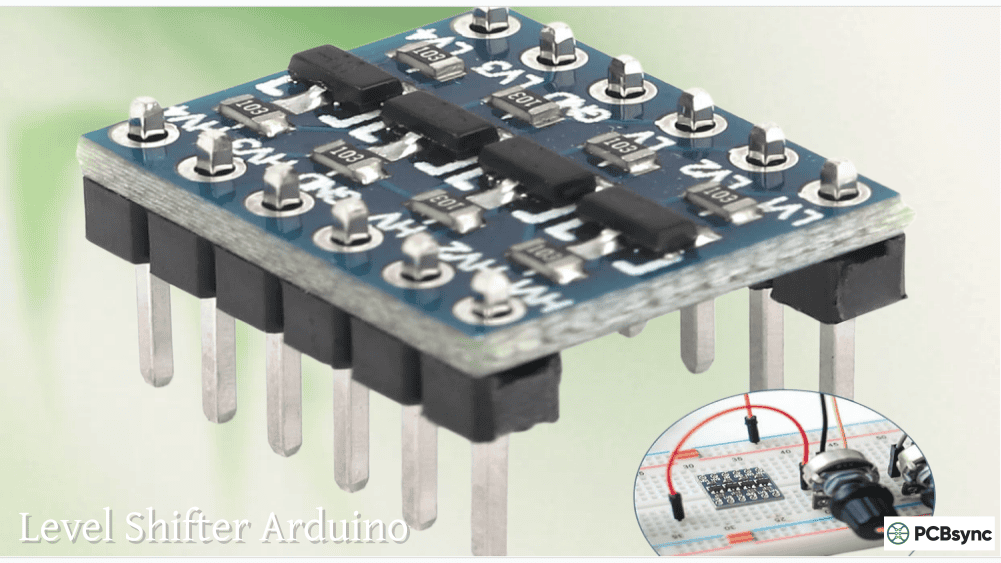
No—the MKR1000 operates exclusively at 3.3V, and its I/O pins are not 5V tolerant. Connecting 5V signals directly will damage the board permanently. You’ll need level shifters for bidirectional communication with 5V devices, or voltage dividers for input-only signals. Many modern sensors support 3.3V operation, so check datasheets before purchasing components. The 5V output pin on the board is for powering external devices, not a signal level reference.
What’s the difference between MKR1000 and MKR WiFi 1010?
Both boards share the MKR form factor and SAMD21 processor, but differ in their WiFi implementation. The MKR1000 uses the WINC1500 module with an ECC508 crypto chip, while the MKR WiFi 1010 uses the newer U-BLOX NINA-W102 module with an ECC608 crypto chip. The 1010 generally offers better WiFi performance and is recommended for new designs, but the MKR1000 remains fully supported and functions perfectly for most applications. If you already own an MKR1000, there’s no compelling reason to upgrade unless you need the 1010’s improved range or newer crypto features.
How long will my MKR1000 run on battery power?
This depends entirely on your application’s power profile. Continuous WiFi operation with active processing draws 50-80mA, giving roughly 25-40 hours on a 2000mAh battery. However, well-designed IoT applications spend most time asleep. A sensor that wakes every 15 minutes, takes readings, transmits data, and returns to sleep might achieve 3-6 months on the same battery. The key is minimizing WiFi active time—each connection cycle consumes significant energy, so batch data when possible and optimize transmission frequency.
Why can’t my MKR1000 connect to certain HTTPS websites?
The WINC1500’s SSL implementation requires root certificates to be pre-loaded into the module’s flash memory. The board ships with common certificate authorities installed, but some websites use less common certificates. Use the WiFi101 Firmware Updater tool (Tools → WiFi101 Firmware Updater in Arduino IDE) to add certificates for specific domains. Load the FirmwareUpdater sketch first, then use the tool to add certificates by entering the website’s address. Remember that certificates expire, so updates may be necessary periodically.
Is the MKR1000 suitable for outdoor or industrial environments?
The MKR1000 is designed for general-purpose development and hobby use, not industrial deployment. The board lacks conformal coating, has no specified temperature range beyond typical consumer electronics limits, and offers no ingress protection. For outdoor or industrial applications, you’ll need appropriate enclosures with proper sealing, consider operating temperature effects on battery chemistry (Li-Po cells don’t perform well below freezing), and potentially add protection circuitry for voltage transients. Production IoT deployments typically use the MKR1000 for prototyping, then transition to custom PCB designs incorporating the same ATSAMW25 chip with appropriate environmental protection.
Final Thoughts on Arduino MKR1000 for IoT
After building numerous connected devices with the MKR1000, I’ve come to appreciate its particular strengths. The integrated WiFi eliminates the reliability headaches of external modules. The built-in battery charging enables genuinely portable deployments. The ECC508 crypto chip provides hardware security that software solutions can’t match.
Is it perfect? No. The 3.3V limitation complicates interfacing with some legacy sensors. The WINC1500 isn’t the newest WiFi silicon available. The MKR form factor, while compact, means fewer GPIO pins than traditional Arduino boards.
But for what it’s designed to do—enable rapid development of battery-powered, WiFi-connected IoT devices—the MKR1000 executes remarkably well. You can go from concept to working prototype in an afternoon, then deploy that same board in the field with confidence in its reliability.
For anyone serious about IoT development within the Arduino ecosystem, the MKR1000 deserves a place on your bench. It won’t be the last board you ever need, but it might be the one that finally makes wireless connectivity feel easy.
Inquire: Call 0086-755-23203480, or reach out via the form below/your sales contact to discuss our design, manufacturing, and assembly capabilities.
Quote: Email your PCB files to Sales@pcbsync.com (Preferred for large files) or submit online. We will contact you promptly. Please ensure your email is correct.
Notes: For PCB fabrication, we require PCB design file in Gerber RS-274X format (most preferred), *.PCB/DDB (Protel, inform your program version) format or *.BRD (Eagle) format. For PCB assembly, we require PCB design file in above mentioned format, drilling file and BOM. Click to download BOM template To avoid file missing, please include all files into one folder and compress it into .zip or .rar format.